

On this page
Emergency Red Flags After Eating
- Sudden, severe shortness of breath or a feeling you can’t get air
- Chest pain or pressure that spreads to the jaw, arm, back, or between the shoulders
- Fainting, confusion, or severe dizziness
- Blue or gray lips or nails (cyanosis)
- Trouble speaking full sentences or gasping
- Throat or tongue swelling, hives, hoarseness, wheezing, a tight throat, or noisy, high-pitched breathing (stridor) after a likely allergen
- Choking, inability to swallow or clear the airway, or a wet, weak cough after food goes down the wrong way
- Severe breathlessness after recent long travel, surgery, immobilization, or injury, which can signal a pulmonary embolism
Why Eating Can Make Breathing Feel Harder
Shortness of breath after eating can happen when a full stomach limits diaphragm movement or when reflux, lung disease, allergy, or heart strain affects breathing.
The Stomach and Diaphragm Connection
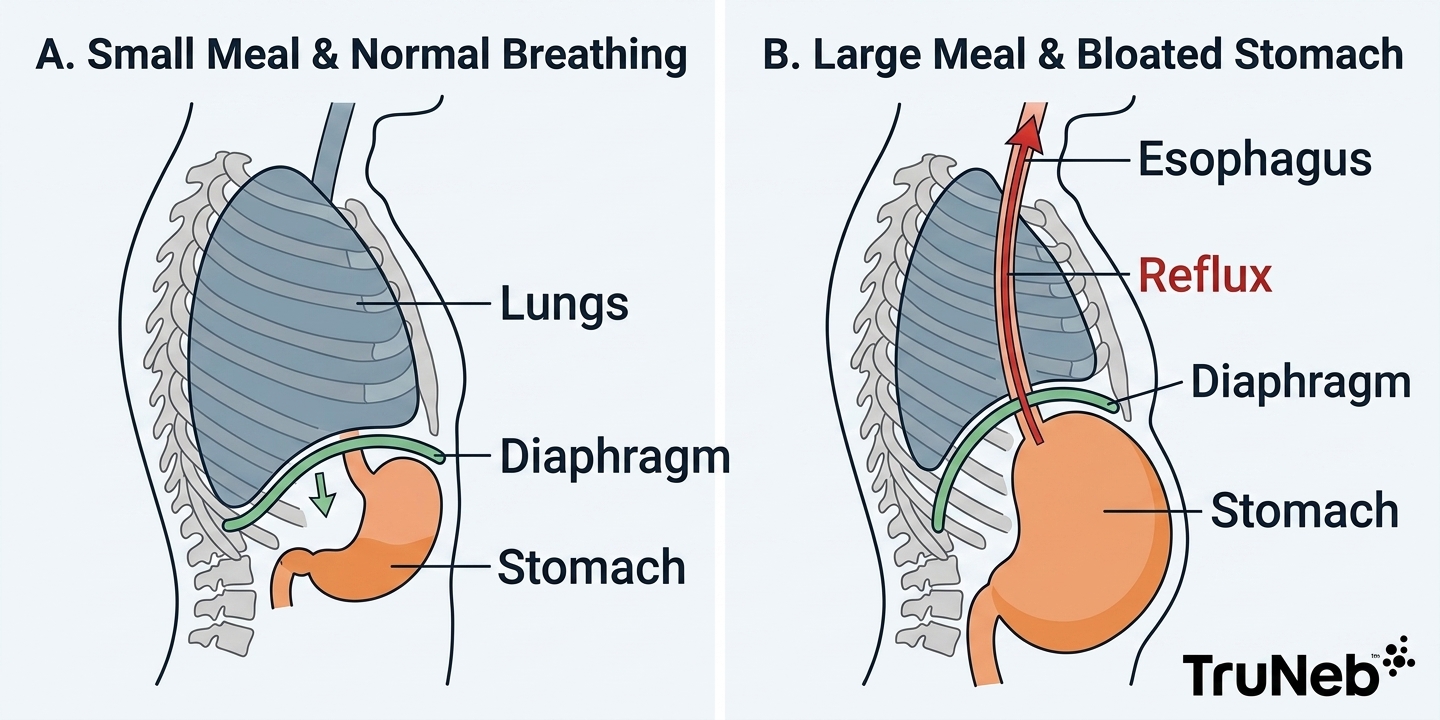
Your diaphragm is the main breathing muscle under your lungs. A very full or bloated stomach can push upward and limit how far the diaphragm can move, so deep breaths feel harder. This pressure is more noticeable with COPD, obesity (extra abdominal weight), pregnancy, reflux, or slumped posture.
The Airway, Heart, and Esophagus Connection
GERD can send stomach acid up the esophagus and irritate the throat, which can set off cough, hoarseness, or even wheeze, especially after large or late meals. If you have asthma or COPD, the effort of eating, talking, and digesting can push you over your usual limit, especially if mucus is part of your symptoms. Heart strain can also show up around meals, and lying down afterward can make symptoms worse.
Think of it as three kinds of pressure: stomach pressure pushing up, airway pressure from asthma or mucus, and circulation pressure from heart problems. A meal can uncover one or more of these at the same time. If breathing mechanics are a recurring issue, learning pursed lip breathing techniques may help you stay calmer while you seek medical guidance.
Common Causes of Shortness of Breath After Eating
The most common causes of shortness of breath after eating include overeating, reflux, food allergy, asthma, COPD, heart problems, aspiration, and anxiety.
See comparison table
| Cause | Typical clues after meals | Urgent signs |
|---|---|---|
| Overeating/bloating | Chest tightness, shallow breaths, pressure that eases as digestion moves | Severe pain, vomiting with choking, blue lips |
| GERD | Heartburn, sour taste, regurgitation, cough/hoarseness, worse lying down | Chest pain that feels like pressure, trouble swallowing, vomiting blood |
| Hiatal hernia | Chest pressure, burping, reflux-like symptoms, worse after meals or bending | Severe chest pain, persistent vomiting, black stools |
| Food allergy/anaphylaxis | Hives, swelling, wheeze, hoarseness, throat tightness | Throat swelling, stridor, fainting, call 911 |
| Asthma/COPD | Wheeze, cough, chest tightness; bloating or reflux may worsen symptoms | Severe wheeze, inability to speak full sentences, blue lips |
| Heart conditions | Pressure, palpitations, breathlessness worse lying flat (orthopnea) | Crushing chest pain, fainting, leg swelling with worsening breathlessness |
| Aspiration/choking | Sudden coughing, choking, wet voice during/after swallowing | Can’t clear airway, failing breathing, call 911 |
| Anxiety/panic | Fast, shallow breathing, tingling, dizziness; improves as body calms | Don’t assume anxiety if red flags are present |
Overeating and Bloating
Overeating and bloating can stretch the stomach and add gas volume. The extra pressure pushes up on the diaphragm, so you may feel chest tightness, shallow breaths, or a heavy feeling that eases as digestion moves along. Smaller, slower meals can help.
GERD and Acid Reflux
GERD and acid reflux may bring burning, sour taste, regurgitation, burping, cough, hoarseness, or throat clearing. It often flares after fatty, spicy, or acidic meals and when you lie down. Reflux can irritate the throat and airways and sometimes worsen asthma-like symptoms. If symptoms keep coming back, see your doctor. Related patterns are also discussed in our guide to wheezing when lying down.
Hiatal Hernia
Hiatal hernia happens when part of the stomach slides up through the diaphragm. It can overlap with reflux symptoms and may cause chest pressure, burping, or breathlessness that worsens after meals or when bending or lying down. A doctor can check for this and discuss treatment options if needed.
Food Allergy and Anaphylaxis
Food allergy and anaphylaxis can cause hives, itching, swelling, cough, wheeze, hoarseness, vomiting, or diarrhea. Trouble breathing with throat or tongue swelling, stridor, or a tight throat is an emergency. Common allergens include milk, eggs, fish, shellfish, tree nuts, peanuts, wheat, soy, and sesame. Use epinephrine if prescribed and call 911. A doctor may recommend allergy testing for follow-up.
Asthma and COPD
Asthma and COPD bring wheeze, chest tightness, and cough. COPD can trap air (hyperinflation), leaving less room when the stomach is full. If mucus is part of your usual lung condition, your doctor may include inhaled or nebulized medication, airway clearance, or other breathing support in your care plan. If your doctor has prescribed inhaled or nebulized medication, use it only as directed. Don’t self-treat new or severe symptoms at home. If you need a refresher on the difference between these conditions, see asthma vs COPD.
Heart Conditions
Heart problems such as heart failure, coronary disease (including angina), and arrhythmias can cause breathlessness, especially with chest pressure, palpitations, fainting, blue lips, or leg swelling. Reflux more often causes burning and a sour taste; heart-related causes are more concerning when breathlessness comes with pressure, exertional symptoms, palpitations, fainting, leg swelling, or orthopnea. Doctors may check tests such as an ECG, blood tests, or an echocardiogram.
Aspiration or Choking
Aspiration or choking occurs when food or drink enters the airway. It can cause sudden coughing, a choking sensation, a wet voice, and later fever or chest infection. Coughing during meals, a wet voice after swallowing, or repeated chest infections can point to aspiration and should be checked by a doctor. If you cannot clear the airway or breathing is failing, it’s an emergency.
Anxiety and Panic
Anxiety and panic can follow fullness, reflux, palpitations, or fear of allergy. Fast, shallow breathing and air hunger may improve in 10 to 30 minutes as the body calms down. Never assume anxiety if red flags are present or symptoms are new or severe. It can also help to understand the overlap in panic attack vs asthma attack.
Key point: If red flags are present at any time, get emergency care.
Feeling Full and Breathless After Eating
Feeling full and breathless after eating usually happens because stomach pressure makes it harder for the diaphragm to move freely.
Why Fullness Can Affect Breathing
Feeling stuffed can make breathing feel tight. A full stomach raises pressure in the belly and nudges the diaphragm upward, so your lungs can’t expand as easily on the next breath. The effect is stronger if you have COPD or extra weight around the waist, if you eat quickly and swallow more air, or if you slump while seated. Extra abdominal weight can further limit diaphragm movement, especially when slouched or lying back.
What Helps
Gentle changes can help some people. Smaller, more frequent meals with slower chewing can reduce pressure. Carbonated drinks can worsen bloating for some people. Notice which foods make you feel gassy and scale them back. Sit upright during and after meals so gravity helps. A short, easy walk can move gas along and ease pressure. If even small meals leave you breathless or very full, talk with your doctor to check for reflux, hiatal hernia, gastroparesis, or other causes.
Takeaway: If fullness alone keeps making you breathless, bring it up with your doctor.
Shortness of Breath After Eating and Lying Down
Breathlessness that gets worse when you lie down after eating can point to reflux, stomach pressure on the diaphragm, COPD, obesity, or heart-related orthopnea.
Why Lying Down Can Make Symptoms Worse
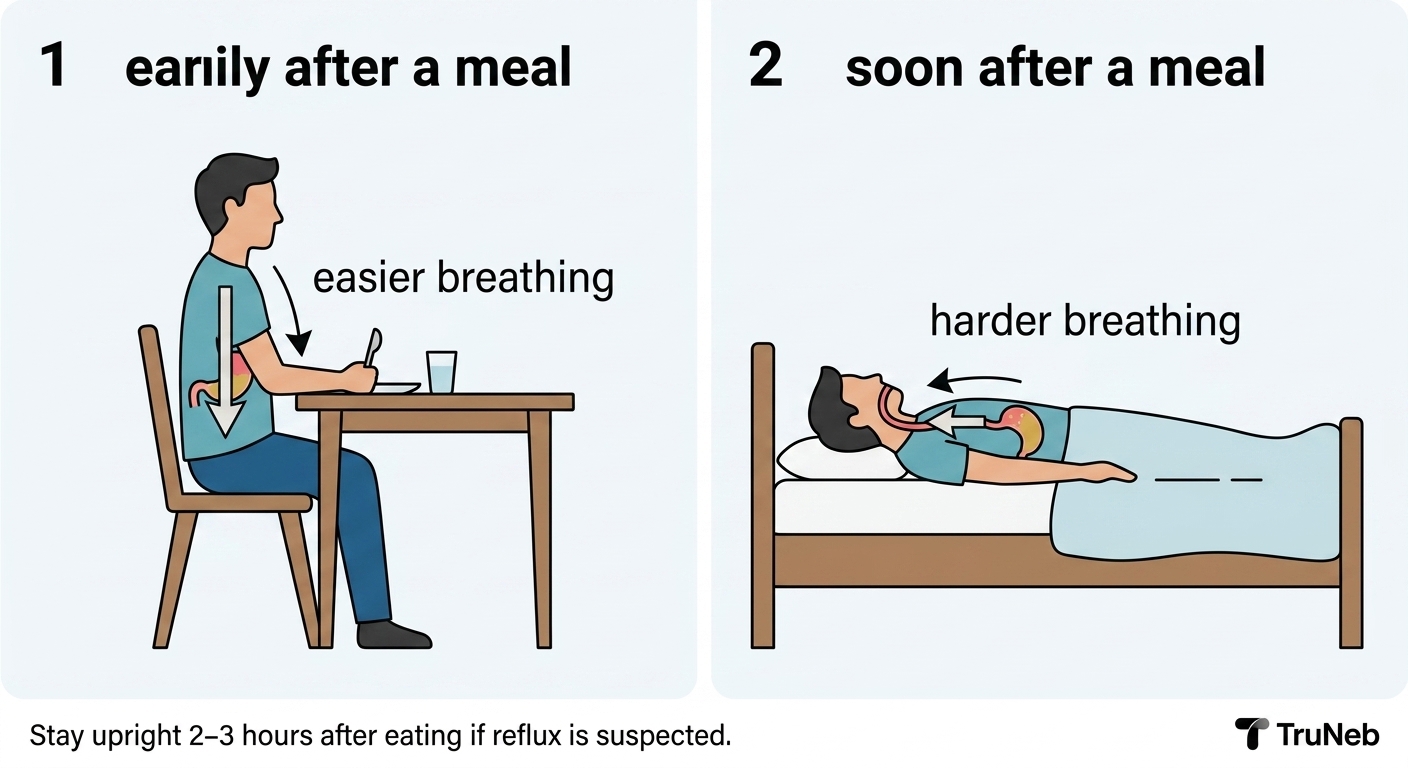
Lying flat soon after a meal can make symptoms worse. Reflux flows more easily upward when you are horizontal. Pressure in your belly also pushes the diaphragm in a different way when you lie down, leaving less room to breathe. COPD, obesity, and heart failure can each add to this effect.
When Lying-Down Breathlessness Is Concerning
Orthopnea is the word for shortness of breath that improves when you sit up. A new need for extra pillows, waking up gasping, or feeling chest pressure when flat are warning signs. New or worsening orthopnea should be checked by a doctor, especially if you also notice leg swelling, sudden weight changes, or a cough that keeps coming back.
Safer Positioning After Meals
Staying upright for 2 to 3 hours after eating can help when reflux seems involved. For night symptoms, raise the head of the bed. Sit with your shoulders relaxed and your back supported. Avoid bending over right after meals. These simple shifts can ease reflux and breathing effort. For more on this symptom pattern, read shortness of breath when lying down.
Takeaway: If lying down makes breathing harder after meals, see your doctor to sort out reflux, lung, or heart causes.
GERD Shortness of Breath After Eating
GERD can contribute to shortness of breath after eating when reflux irritates the esophagus, throat, or airways.
How Reflux Can Affect Breathing
GERD happens when the valve between the esophagus and stomach doesn’t stay closed well. Reflux may bring heartburn, sour taste, regurgitation, hoarseness, or a dry cough. In some people, reflux can also worsen wheeze or asthma‑type symptoms. When reflux reaches the throat or voice box, it’s sometimes called laryngopharyngeal reflux.
Chest discomfort after eating is not always reflux, especially if it feels like pressure, spreads to the arm or jaw, or comes with sweating, fainting, or severe shortness of breath.
Clues Your Symptoms May Be Reflux Related
Burning in the chest, a lump‑in‑the‑throat feeling, throat clearing, regurgitation, or a cough that’s worse at night can point to reflux. Symptoms that improve with upright posture or head‑of‑bed elevation also support reflux. Trouble swallowing (dysphagia), weight loss, vomiting blood, or black stools need prompt medical care.
What to Do
What helps for many people: smaller meals; avoiding late meals; finding and limiting your trigger foods; and raising the head of your bed for nighttime symptoms. Some people improve with antacids, H2 blockers, or proton pump inhibitors. Talk to your doctor about safe options and whether tests like an upper endoscopy are needed if symptoms keep coming back or warning signs are present.
Takeaway: If reflux seems linked to your breathing, simple changes can help—but new, severe, or persistent symptoms should be checked by a doctor.
Shortness of Breath After Eating Anxiety
Anxiety can cause fast, shallow breathing after meals, but it should not be assumed when symptoms are new, severe, or paired with red flags.
Why Eating Can Trigger Anxiety Breathing
Fullness, reflux, skipped beats, or fear of an allergic reaction can trigger fast, shallow breathing and a feeling of air hunger. Hyperventilation may bring tingling in the hands or face, dizziness, chest tightness, and a wave of dread. These sensations can be intense but often improve within 10–30 minutes as the body calms down.
Clues It May Be Anxiety
A sudden start tied to worry or a stress spike; shallow, rapid breaths; improvement with grounding, slow nasal breathing, or a short walk; and no red flags like hives with swelling, blue lips, severe wheeze, or chest pain that keeps going.
When Not to Assume Anxiety
Don’t assume anxiety if symptoms are new, severe, unusual for you, or come with red flags. Breathlessness with fainting, blue lips, leg swelling, or chest pressure needs urgent evaluation.
Calming Steps That Are Low Risk
Some people find slow breathing patterns, such as box breathing, helpful in the moment. If anxiety feels likely but keeps returning, talk with your doctor about structured breathing practice, therapy, or other supports.
Takeaway: Rule out emergencies first; then address anxiety patterns with your doctor if they keep coming back.
Shortness of Breath After Eating a Small Meal
Shortness of breath after a small meal is more likely to need medical evaluation than breathlessness after overeating.
Why Small-Meal Breathlessness Deserves Attention
Mild breathlessness after a very large meal is often mechanical. But if a small meal leaves you short of breath, that deserves attention. Possible causes include GERD, hiatal hernia, gastroparesis, COPD hyperinflation, heart failure, ascites, anxiety, or diaphragm dysfunction. Getting full unusually fast (early satiety) paired with breathlessness should be checked by a doctor.
Clues to Track Before Your Appointment
Before your appointment, track a few details. Note what you ate, how much, and when symptoms began. Record whether lying down, bending, or talking made things worse. Mark any wheeze, cough, heartburn, or palpitations. Track weight changes, ankle swelling, fever, or early satiety. If you already monitor oxygen saturation as part of your care plan, write down those readings during symptoms. Bring this log to your doctor. It can help point the workup in the right direction, from reflux testing or endoscopy to lung tests (including spirometry) and heart checks such as an echocardiogram. If you already use home monitoring, our pulse oximeter readings chart may help you record values clearly.
Takeaway: Small‑meal breathlessness is a clear reason to make an appointment with your doctor.
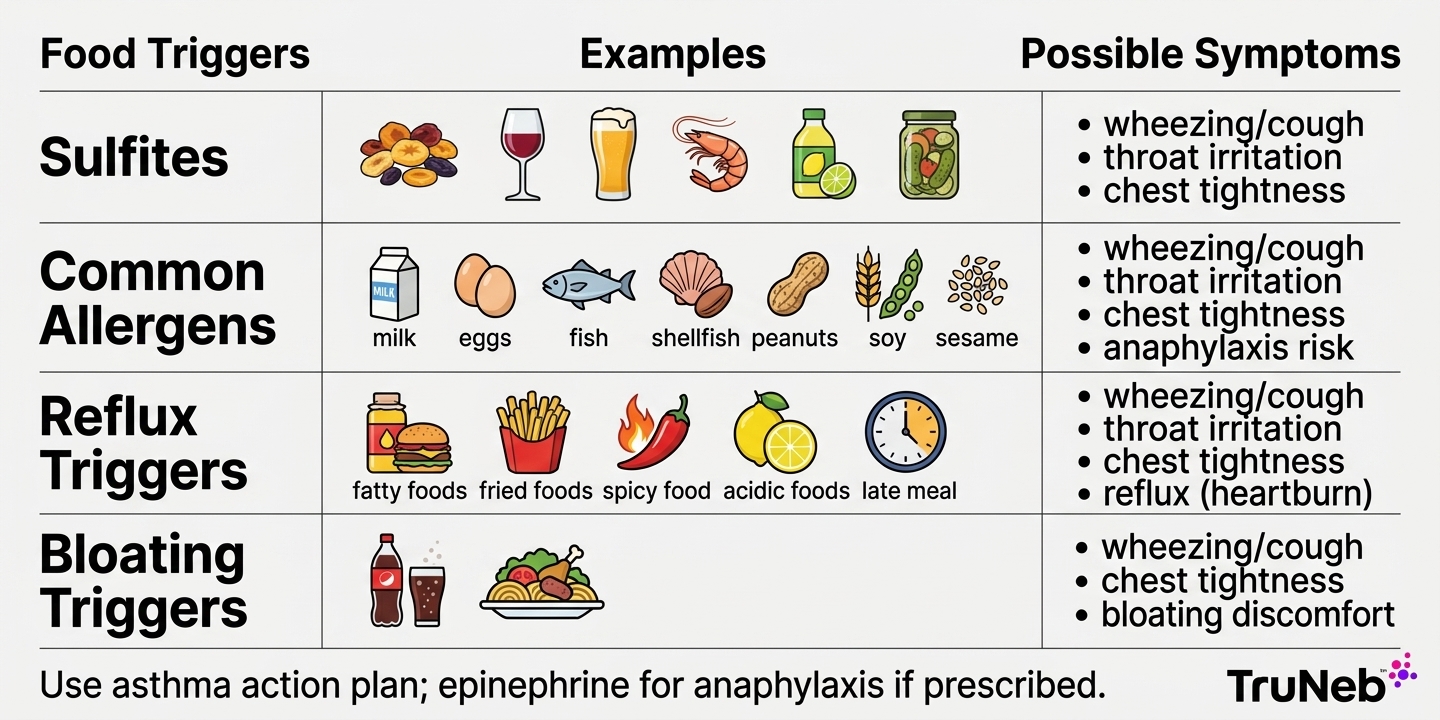
Food Triggers for Asthma Wheeze After Eating
Food is not a common asthma trigger for most people, but allergies, sulfites, reflux, and bloating can worsen symptoms in some people.
Food Is Not a Common Asthma Trigger for Everyone
For many, food isn’t a direct asthma trigger. When food does play a role, it’s often through reflux, bloating, or a true food allergy.
Foods and Additives That May Matter
Foods and additives that may matter include sulfite-containing items like dried fruits, certain wines and beers, shrimp, bottled lemon or lime juice, pickled foods, and some packaged potatoes. Classic allergens include milk, eggs, fish, shellfish, tree nuts, peanuts, wheat, soy, and sesame. Reflux-triggering foods (fatty, fried, spicy, acidic) and bloating triggers (carbonated drinks, very large portions) can also worsen breathing in some people. If you suspect allergy, talk with your doctor; they may suggest allergy testing.
Asthma Action Plan and Prescribed Nebulizer Use
If you already have an asthma action plan, follow the plan your doctor gave you and use prescribed medication only as directed. A portable nebulizer such as TruNeb™ can be a convenient way to take prescribed nebulized medication when it’s part of your doctor’s plan. Never use a nebulizer as a substitute for epinephrine in anaphylaxis or for emergency care. Seek urgent help for throat swelling, hives with breathing trouble, blue lips, severe chest pain, or fainting. If you’re comparing delivery options, see nebulizer vs inhaler when to use.
Takeaway: Most people’s asthma isn’t triggered by food, but known allergies, sulfites, reflux, or bloating can make symptoms worse.
COPD and Chronic Lung Disease After Meals
COPD can make breathing after meals harder because hyperinflated lungs and a full stomach leave less room for the diaphragm to move.
Why COPD Can Make Meals Harder
With COPD, lungs can stay partially filled with air (hyperinflation). A full stomach then has less space to share with hyperinflated lungs, so the diaphragm can’t drop as far. That’s why meals can make you feel winded. Chewing, talking, and digestion all use energy. Salt and carbonated drinks can add bloating or fluid shifts that make breathing feel harder.
Meal Tips for Easier Breathing
Practical meal rhythm helps. Rest before you eat. Take smaller bites and pace yourself. Choose foods that are easier to chew if you tire easily. Carbonated drinks and gas-producing foods can add pressure for some people. Limit extra salt if your care team advises it. If you use oxygen as part of your plan, confirm settings with your doctor and use it as directed during meals. Keep rescue medication accessible if prescribed. If mucus is part of your usual lung condition, your doctor may include inhaled or nebulized medication, airway clearance, or other breathing support in your care plan.
Where TruNeb Fits
If your doctor has prescribed nebulized medication for COPD, asthma, or mucus-related symptoms, a portable nebulizer can help you take that medication as directed. A portable nebulizer such as TruNeb™ can be a convenient way to take prescribed nebulized medication when it’s part of your doctor’s plan. TruNeb™ is not a treatment for GERD, food allergy, choking, heart-related symptoms, or unexplained severe shortness of breath. Nebulized therapy is not a home fix for sudden, severe, or unexplained breathlessness. Get medical help right away for red flags. You can learn more about the device on the TruNeb portable mesh nebulizer page.
Takeaway: Plan meals, reduce bloating triggers, and follow your doctor’s plan; use prescribed treatments only as directed.
Diaphragm Dysfunction After Meals
Diaphragm dysfunction is a less common cause of post-meal breathlessness, but it should be considered when symptoms worsen lying down, after small meals, or after chest or neck surgery.
When the Diaphragm Itself May Be the Problem
True diaphragm problems are uncommon, but they matter. The diaphragm can be weak or even paralyzed on one side from phrenic nerve injury, surgery, or neuromuscular disease. Symptoms often worsen when lying down, bending, or after eating because the stomach and belly pressure push upward.
Signs That Need Medical Evaluation
Warning signs include unexplained breathlessness, orthopnea, a fluttering feeling under the ribs, persistent hiccups, trouble bending, or recurrent pneumonias. Risk is higher if you’ve had neck, chest, or heart surgery or have a known neuromuscular condition.
How Doctors Evaluate It
Doctors may check with chest imaging, spirometry and other pulmonary function tests while sitting and lying down, diaphragm ultrasound, a fluoroscopy sniff test, sleep studies, or phrenic nerve testing in specialized centers. Treatment depends on the cause and can range from observation and respiratory rehab to CPAP/BiPAP support, or, in select cases, procedures.
Takeaway: Bring up patterns tied to lying down or small meals. Your doctor can assess diaphragm function and related causes.
What to Do When You Feel Short of Breath After Eating
For mild symptoms, stop eating, sit upright, slow your breathing, avoid lying down, and get urgent help if red flags appear. A nebulizer should not be used as a substitute for emergency care when symptoms are severe, sudden, or unexplained.
Immediate Steps for Mild Symptoms
- Stop eating and sit upright with your back supported and shoulders relaxed. Loosen tight waistbands.
- Take slow nasal breaths and exhale gently through pursed lips. Avoid lying down for 2–3 hours.
- Sip room‑temperature water if swallowing is normal and you are not choking. Use your prescribed inhaler, nebulizer, or oxygen only as directed by your doctor. If symptoms worsen or red flags appear, get emergency care.
Prevention Steps
Smaller, more frequent meals can help some people. Keep a simple food and symptom diary so you and your doctor can spot trends. Carbonated drinks can worsen bloating for some people. Don’t lie down soon after eating. Elevate the head of your bed if nighttime reflux is a pattern. If you already have an asthma or COPD action plan, follow the plan your doctor gave you and use prescribed medication only as directed.
What to Tell Your Doctor
Share specifics: what you ate, how much, when symptoms started, whether lying down or bending made it worse, and whether wheeze, cough, chest pain, heartburn, hives, or palpitations were present. Bring current medications and note how prescribed inhalers or nebulized treatments affected the episode.
If shortness of breath keeps happening after meals, gets worse, or starts after small meals, make an appointment with your doctor.
Talk to your doctor before trying any new medication.
Takeaway: Use low‑risk steps for mild symptoms, but escalate fast if red flags appear or symptoms keep coming back.
Frequently Asked Questions
Tap or click a question below to see the answer:
Call 911 now if breathing trouble is sudden or severe, or if it comes with chest pain, fainting, blue or gray lips, throat or tongue swelling, hives with breathing trouble, choking, or severe wheezing.
See a doctor soon if symptoms keep coming back, are getting worse, happen when you lie flat, start after small meals, or don’t respond to your usual asthma or COPD plan.
Yes. Reflux can irritate the esophagus and throat and may worsen cough, hoarseness, or wheeze, especially after larger or late meals or when you lie down.
Lying flat makes reflux more likely and changes belly pressure on the diaphragm, leaving less room for your lungs to expand. This is more noticeable with COPD, obesity, or heart failure.
Small‑meal breathlessness is more concerning than after overeating. It can point to reflux, hiatal hernia, gastroparesis, COPD, heart or diaphragm issues, or anxiety. Keep a symptom log and make an appointment.
It can. Fullness, reflux, or worry may trigger fast, shallow breaths. Don’t assume anxiety if symptoms are new, severe, or include red flags—get medical help.
Not everyone has food‑related triggers. For some, sulfites, classic allergens (like milk, eggs, fish, shellfish, tree nuts, peanuts, wheat, soy, sesame), reflux triggers, or bloating triggers can worsen symptoms.
Only when breathlessness is tied to a diagnosed lung condition like asthma or COPD and your doctor has prescribed nebulized medication. A nebulizer does not treat anaphylaxis, GERD itself, choking, heart attack symptoms, or unexplained severe breathlessness.
Disclaimer: This article is for informational purposes only and is not a substitute for medical advice, diagnosis, or treatment. Always talk with your doctor about symptoms, medications, and treatment decisions.