

On this page
What a COPD Action Plan Is
A Written Roadmap Made With Your Doctor
A COPD action plan is a personalized written roadmap you create with your doctor. It explains what to do when symptoms are stable, when they worsen, and when you need urgent medical care.
Your pulmonologist, primary care doctor, respiratory nurse, pharmacist, or another healthcare professional involved in your care can help personalize the plan. It should reflect your normal day-to-day symptoms, not someone else's.
What the Plan Should and Should Not Do
A COPD action plan is part of a broader COPD self-management plan, with a more specific purpose: recognizing symptom changes and following clear next steps. Evidence reviewed by Cochrane suggests that action plans paired with brief education can help people respond to flare-ups and reduce some COPD-related emergency visits or hospital care.
The plan does not replace emergency care or serve as a do-it-yourself prescription guide. Medication changes, oxygen instructions, antibiotics, steroids, and nebulized treatments belong in the plan only when a healthcare professional has written them there.
Key takeaway: A COPD action plan helps you recognize stable symptoms, early flare-up warning signs, and emergency symptoms, then follow instructions written for you by your doctor.
Sources: American Lung Association COPD Action Plan & Management Tools; Lung Foundation Australia COPD Action Plan; Cochrane Review, Action plans with brief patient education for exacerbations in chronic obstructive pulmonary disease.
Why the Green, Yellow, and Red Zones Matter
How the Zone System Works
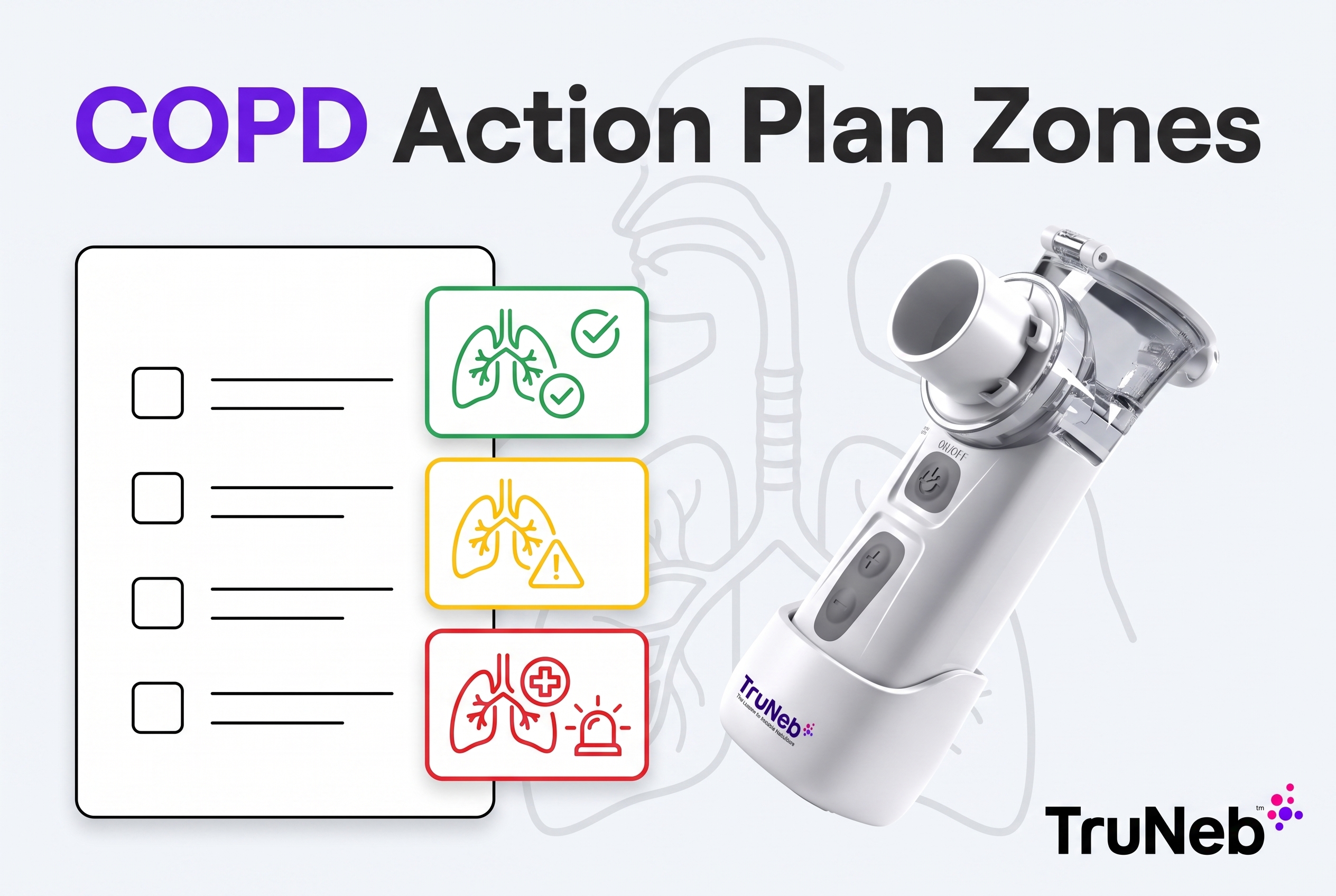
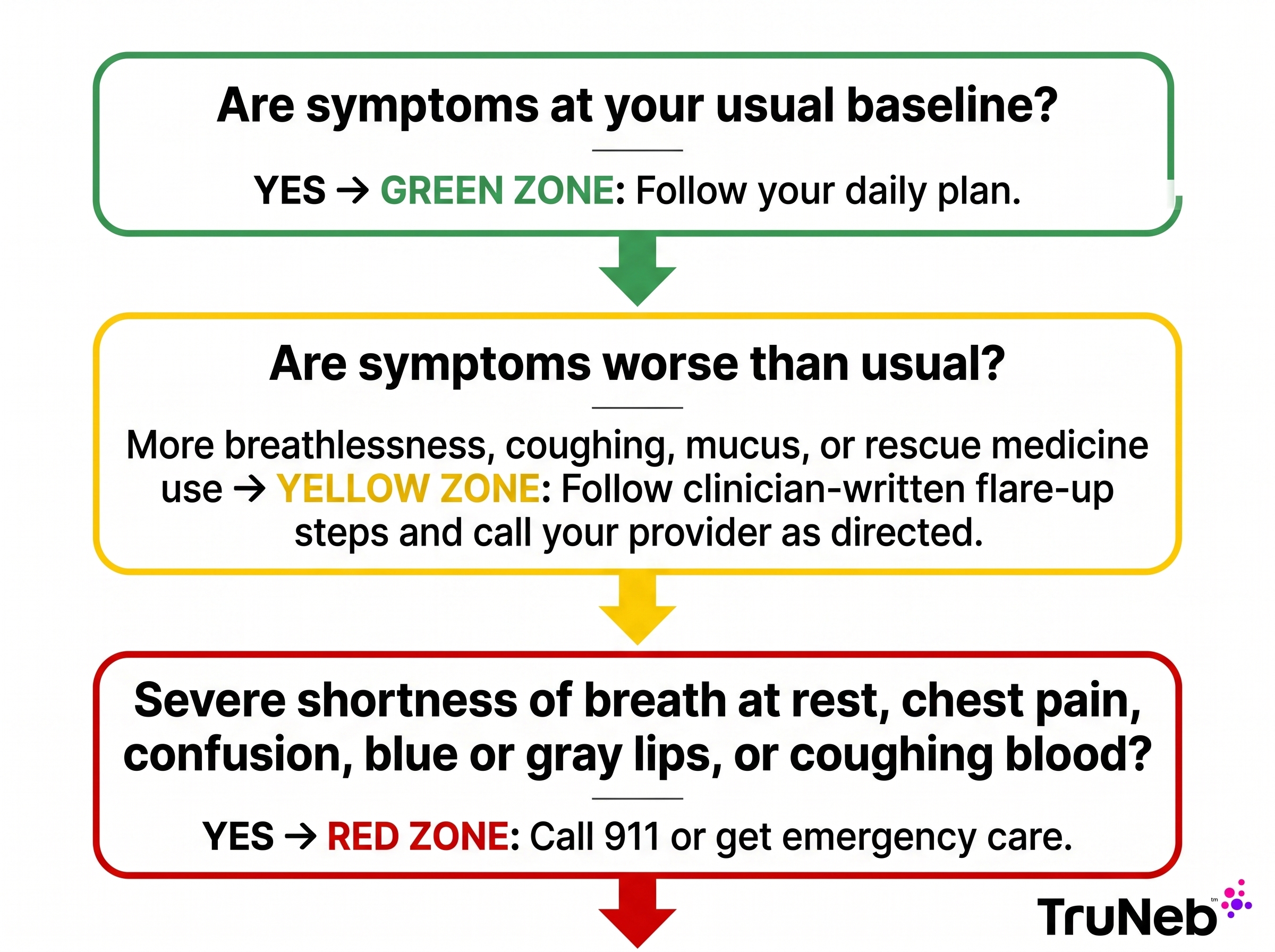
The green, yellow, and red zones turn symptoms into decisions. Instead of guessing how serious a day is, you match your symptoms to a color zone and follow the instructions your doctor wrote for that zone.
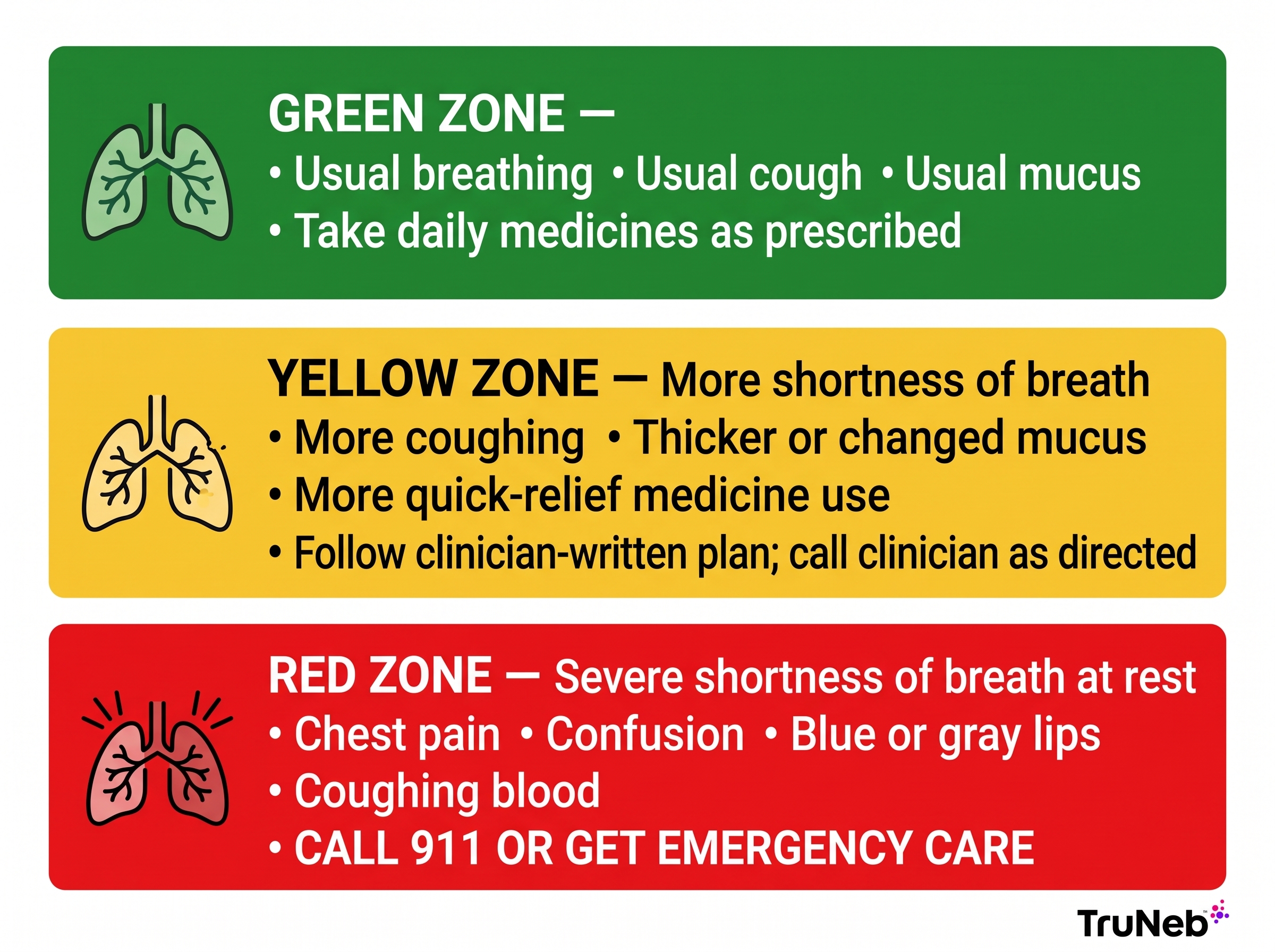
Green means your symptoms are at baseline. Yellow means something has changed and could signal a flare-up. Red means symptoms could be urgent or life-threatening.
Your Baseline Makes the Zones Personal
The zones must be built around your normal symptoms. Some people with advanced COPD have daily shortness of breath, a regular cough, or limited activity tolerance. Those symptoms do not automatically place them in the yellow zone.
Look for a change from normal, such as more breathlessness, thicker mucus, or more quick-relief medicine use. Use the visual zone guide below as a quick reference, then follow your personalized written instructions.
Key takeaway: In a COPD action plan, the zones are based on your personal baseline, not a generic symptom list.
Green Zone Means Your Usual Baseline
What Belongs in Your Green Zone
The green zone means your COPD symptoms are at your usual baseline. It does not mean you feel perfect. It means you feel like yourself on a typical day.
Your green zone can include your usual activity level, cough, mucus amount and color, sleep, appetite, and level of breathlessness. If you use oxygen, list your regular prescribed oxygen use. Include daily maintenance medicines exactly as your care team has directed.
Use a COPD Daily Symptom Tracker
A COPD daily symptom tracker can help you notice patterns between appointments. Record how your breathing compares with usual, how often you cough, mucus amount or color, sleep, appetite, energy, and rescue inhaler use.
Some people are asked to track oxygen saturation with a pulse oximeter. Follow your doctor's instructions, and do not use a saturation number in place of symptom-based emergency decisions. For everyday support, include the habits your doctor recommends for oxygen use with COPD.
Key takeaway: The green zone describes your normal breathing, cough, mucus, activity, sleep, appetite, and prescribed daily treatment.
Yellow Zone Means Symptoms Are Getting Worse
Common Yellow-Zone Warning Signs
The yellow zone means symptoms are worse than usual and could signal a COPD flare-up, also called an exacerbation.
Warning signs can include:
- More shortness of breath, coughing, wheezing, or rescue inhaler use
- More sputum, thicker mucus, or a change in sputum color
- Lower energy, poor sleep, poor appetite, or swollen ankles
- Feeling different from your normal pattern, especially if this has happened with past flare-ups
A COPD flare-up checklist can make these changes easier to spot. For more detail, review signs COPD is getting worse and how long a COPD flare-up lasts with your doctor.
What Your Doctor Can Write in the Yellow Zone
Your doctor can write instructions for:
- When to call the office
- How to use prescribed quick-relief medicine
- Whether prescribed antibiotics or oral corticosteroids are part of your plan
- Whether the plan includes clinician-written oxygen instructions
- Which prescribed nebulized medicine to use
- When to check in again if symptoms do not improve
The article can explain the plan structure, but treatment details must come from your doctor. A rapid worsening or any red-zone symptom should not be managed as a routine yellow-zone flare-up. Ask your doctor about COPD when to call doctor guidance and COPD flare-up treatment that is appropriate for you.
Why Yellow-Zone Symptoms Need Early Attention
Written action plans paired with education can help people recognize worsening symptoms and respond as their doctor intended. They cannot tell you the cause of symptoms or guarantee that a flare-up will stay mild.
Key takeaway: Symptoms that are worse than usual should be handled according to your clinician-written yellow-zone instructions, including when to call your doctor.
Source: Cochrane Review, Action plans with brief patient education for exacerbations in chronic obstructive pulmonary disease.
Red Zone Means Get Urgent Medical Care
Red-Zone Symptoms to Treat as Urgent
The red zone means symptoms could be serious or life-threatening. It should be easy to spot and easy to follow.
⚠️ Call 911 or seek emergency care right away for severe shortness of breath at rest, chest pain, confusion, blue or gray lips or fingernails, coughing blood, or extreme drowsiness.
Other symptoms, such as fever or shaking chills, should be addressed according to your plan, especially when paired with worsening breathing or feeling severely unwell. Being unable to speak because of breathing trouble, symptoms that are not improving after following written instructions, or a sudden change that feels different from your COPD also need urgent assessment.
Why Red-Zone Symptoms May Not Be COPD Alone
Pneumonia, heart attack, heart failure, pulmonary embolism, severe infection, and other conditions can cause serious breathing symptoms. Anxiety or panic can also feel like breathing distress. Severe or unfamiliar symptoms need urgent assessment because the cause cannot be determined at home.
What the Red Zone Should Say
Your red zone should list when to call 911, emergency contacts, a preferred hospital if relevant, and any emergency oxygen instructions written by your doctor. It can include basic steps for waiting for help when those directions come from your care team.
Key takeaway: Red-zone symptoms require emergency action, not home troubleshooting or waiting for symptoms to pass.
Sources: American Lung Association COPD Action Plan & Management Tools; MedlinePlus COPD; CDC COPD.
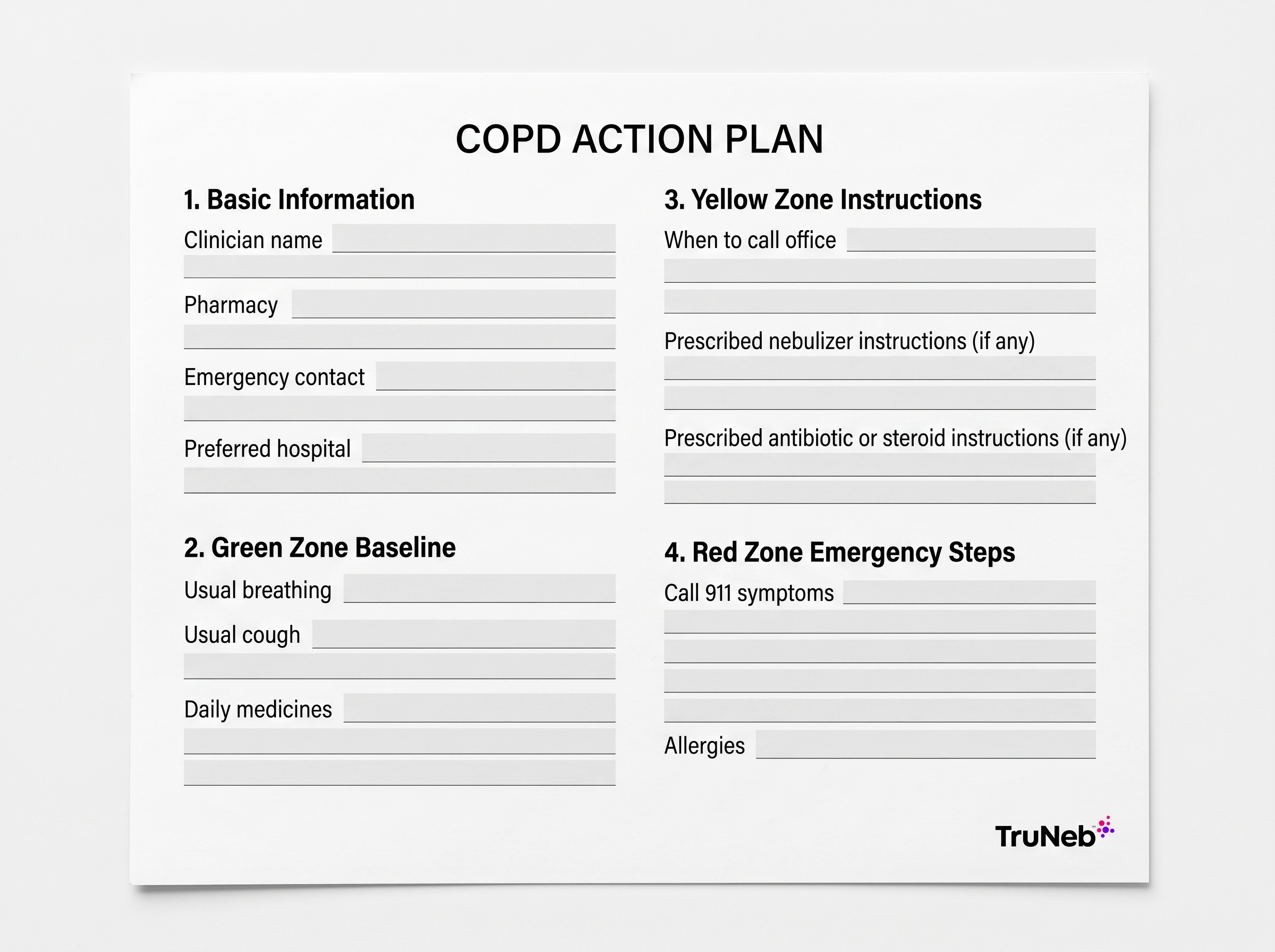
Sample COPD Action Plan Layout
Four Parts of a Discussion Worksheet
A COPD action plan template should be easy to scan during a stressful moment. A COPD action plan printable or PDF can be a useful discussion worksheet, but it is not a finished treatment plan until your doctor personalizes it.
- Basic information: Name, doctor, pulmonologist if applicable, pharmacy, emergency contact, preferred hospital, oxygen supplier if applicable, date reviewed, and next review date.
- Green-zone baseline: Usual breathing, cough, mucus, activity, sleep, appetite, daily medicines, and regular prescribed oxygen use.
- Yellow-zone instructions: Personal flare-up symptoms, when to call the office, and doctor-written instructions for quick-relief medicine, antibiotics, steroids, oxygen, or nebulized medicine if applicable.
- Red-zone emergency steps: Call 911 symptoms, emergency contacts, medication list, allergies, major diagnoses, and what to bring to emergency care.
Add the name and contact information for a caregiver or family member who has a copy of the plan.
Quick Comparison of Plan Sections
View the COPD action plan section guide
| Plan section | What to record | What it helps with |
|---|---|---|
| Green zone | Usual symptoms and daily treatment | Defines your baseline |
| Yellow zone | Personal warning signs and doctor-written steps | Guides a worsening day |
| Red zone | Emergency symptoms and 911 instructions | Speeds urgent action |
| Contacts and review dates | Doctor, pharmacy, caregiver, date reviewed | Keeps the plan current |
Key takeaway: A personalized COPD action plan includes your baseline, flare-up instructions, emergency red flags, contacts, review dates, and any doctor-written oxygen or nebulizer directions.
What to Ask Your Healthcare Provider
What to Bring
Bring these items to help your doctor personalize or update your plan:
- Your current medication list, inhalers, and breathing devices
- Your oxygen prescription, if you use oxygen
- Recent flare-up dates and emergency visits or hospital stays
- Notes about mucus, sleep, appetite, and rescue medicine use
- Your vaccination history
- Questions from a caregiver who helps at home
Questions to Ask
Ask your doctor:
- What is my green-zone baseline?
- Which changes put me in the yellow zone?
- When should I call the office, and when should I call 911?
- Which quick-relief medicines, antibiotics, steroids, oxygen instructions, or nebulized medicines belong in my plan?
- Should I review inhaler technique, nebulizer technique guidance, pulmonary rehabilitation, or vaccines?
- How often should the plan be reviewed?
COPD symptoms can overlap with heart disease, pneumonia, GERD, anxiety, and sleep apnea. Your plan should be clear enough for a caregiver to follow during a difficult day.
Key takeaway: A COPD action plan works best when you bring your current symptoms, medicines, devices, vaccination history, and flare-up history to your doctor, then leave with clear instructions for worsening and emergency symptoms.
Home Preparedness Checklist
Keep the Latest Plan Easy to Find
Keep a printed copy near your medication area or refrigerator, save one on your phone, and pack one when you travel. A caregiver or travel companion should know where the latest plan is kept and which red-zone symptoms require calling 911.
Check Supplies and Equipment
Review these items before travel and at regular intervals:
- Inhalers and a spacer, if prescribed
- A nebulizer, cups, tubing, and prescribed medicine, if applicable
- Charging cables, batteries, or another approved power source
- Oxygen equipment, if prescribed
- A pulse oximeter, if your doctor recommends one
- Current medication and allergy lists
- Doctor and pharmacy phone numbers
- Cleaning supplies for breathing equipment
Check device condition, power sources, and supplies according to the device instructions and your doctor's plan. COPD breathing devices are useful only when they are ready to use and included in your care routine.
For people who already have doctor-directed nebulized therapy, a portable TruNeb™ mesh nebulizer is one equipment option. A nebulizer is not automatically part of every COPD plan. Use nebulized medicine or saline only when your doctor has included it in your written instructions.
Key takeaway: Home preparedness means keeping your plan, contacts, prescribed medicines, and equipment ready and easy to find.
What Not to Do During a COPD Flare-Up
Avoid Guessing About Treatment
A flare-up can feel stressful, which is why a clear written plan matters. Antibiotics, steroids, oxygen settings, and another person's medication plan should not be used unless your doctor has written instructions for you.
Old pills in a cabinet are not a current treatment plan. Oxygen flow should stay at the setting your doctor prescribed unless your written plan or doctor says otherwise. Your baseline symptoms, prescriptions, and risks are personal.
Use the Red Zone for Emergencies
A sudden or severe breathing change can have causes beyond COPD, including pneumonia, heart problems, or pulmonary embolism. If you have red-zone symptoms, call 911 or seek emergency care right away.
Key takeaway: Medication and oxygen instructions should be written for you by a healthcare professional, not guessed during a flare-up.
How to Track and Update Your COPD Action Plan
What to Track Between Appointments
Use your COPD daily symptom tracker to record changes from your usual breathing, cough, mucus, sleep, appetite, energy, and rescue-medication use. Track oxygen saturation only if your doctor has asked you to do so.
When to Review the Plan
Bring the plan to COPD appointments and review it after:
- Hospitalization or emergency care
- Medication changes
- A new oxygen or nebulizer prescription
- Repeated flare-ups
- A new diagnosis that affects breathing
- Travel, when appropriate
Update old pharmacy numbers, medication lists, emergency contacts, and vague instructions so the plan stays usable.
Key takeaway: If your symptoms, treatment, equipment, contacts, or travel needs change, ask your doctor to review your written COPD action plan.
Key Terms to Know
Common COPD Action Plan Words
COPD exacerbation: A worsening of symptoms beyond normal day-to-day changes that can require a treatment change from a doctor.
Baseline symptoms: Your usual day-to-day symptoms when your condition is stable. In an action plan, baseline is the reference point for every zone.
Quick-relief inhaler: A doctor-prescribed inhaler used for fast symptom relief when breathing suddenly gets worse. It is also called a bronchodilator because it helps relax and open the airways.
Maintenance medication: Daily or regular medicine taken as prescribed to help manage COPD over time.
Nebulized medication: Medicine delivered as a mist through a nebulizer when it has been prescribed for you. Your plan should state what to use, when to use it, and when to call for help.
Key takeaway: Knowing the words in your COPD action plan makes it easier to follow the right instructions on a stressful day.
Frequently Asked Questions
Tap or click a question below to see the answer:
Keep a printed copy where medicines are stored or on the refrigerator, save a copy on your phone, and give the latest version to a caregiver or travel companion.
Yes. A caregiver can use the plan to recognize your baseline, follow doctor-written yellow-zone steps, and call 911 for red-zone symptoms. Review the plan together after every update.
Bring your medication list, inhalers and devices, oxygen prescription if applicable, recent flare-up history, vaccination history, and notes about symptom changes or rescue medicine use.
Track breathlessness compared with usual, cough and mucus changes, sleep, appetite, energy, and rescue medicine use. Track oxygen saturation only if your doctor asks you to.
Yes. A COPD action plan PDF or printable worksheet can start a useful conversation with your doctor. It should not be treated as a finished treatment plan until your doctor personalizes it.
Call 911 or seek emergency care right away for severe shortness of breath at rest, chest pain, confusion, blue or gray lips or fingernails, coughing blood, or extreme drowsiness.
Disclaimer: This article is for informational purposes only and is not a substitute for medical advice. Talk to your doctor about your COPD symptoms, medicines, oxygen, and treatment plan. Call 911 or seek emergency care for severe breathing trouble, chest pain, confusion, blue or gray lips, coughing blood, or extreme drowsiness.