

On this page
Can You Use CPAP With an Oxygen Concentrator
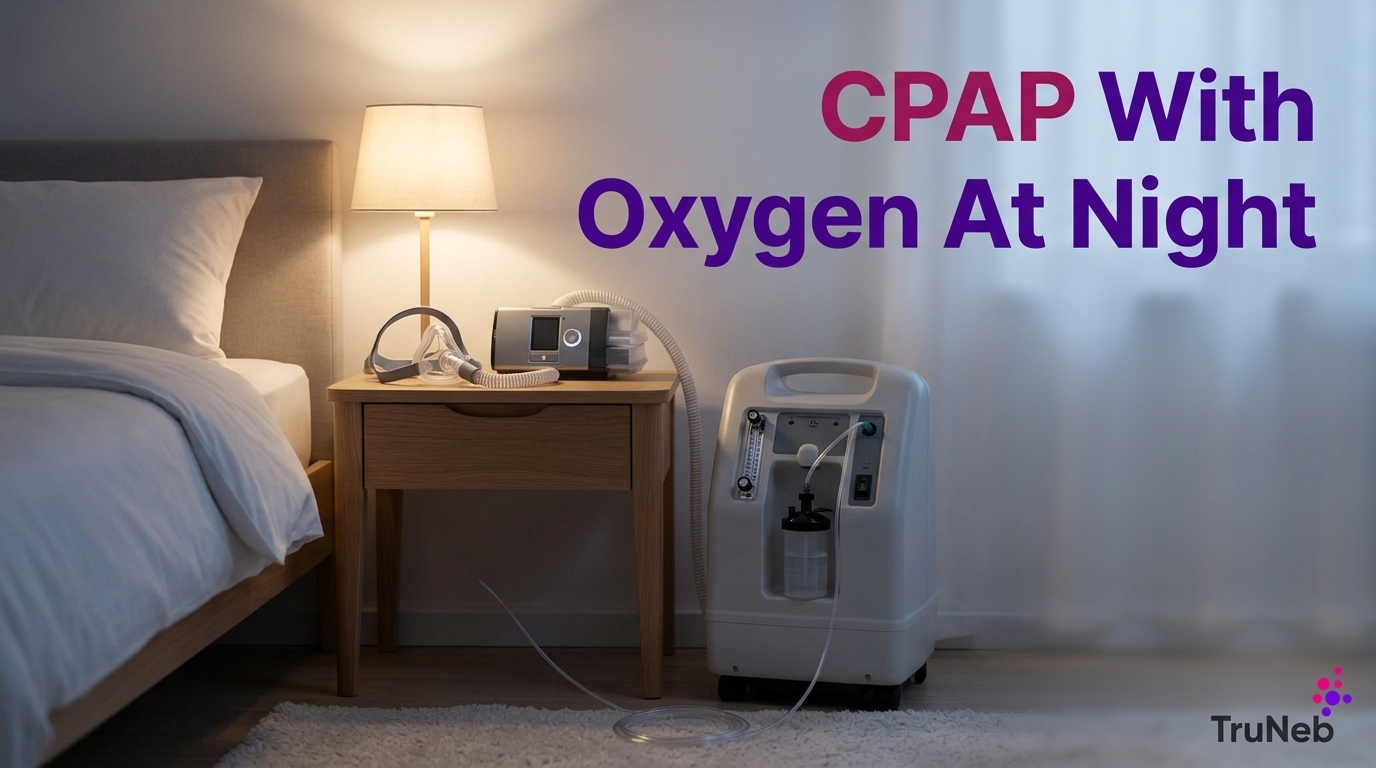
Yes. You can use CPAP with an oxygen concentrator when your doctor prescribes it. Many people ask about CPAP with oxygen concentrator setups for night use. CPAP is continuous positive airway pressure. It uses pressurized room air to keep your upper airway open during sleep. An oxygen concentrator is different. It concentrates oxygen from room air to raise the oxygen you breathe. Together, they can help when you have both airway collapse and low blood oxygen at night.
Think of it this way. CPAP treats the airway problem. Oxygen treats the oxygen problem. Some people have both problems during sleep. That is why a sleep specialist or pulmonologist might add oxygen to CPAP after testing.
This is not a DIY setup. You need a prescription and the right hardware. Your oxygen supplier can use a bleed‑in adapter or a mask or hose with an oxygen port. They will set the oxygen flow your doctor orders. Do not change your CPAP pressure or oxygen flow on your own.
Safety note: Oxygen is a medicine and a fire accelerant. Keep it away from heat and flames. Follow your device manuals and your doctor’s plan. Talk to your doctor before trying a new medication or changing any therapy setting.
One-liner: CPAP keeps the airway open; supplemental oxygen raises oxygen levels—your doctor might pair them when both are needed.
CPAP vs Oxygen at Night
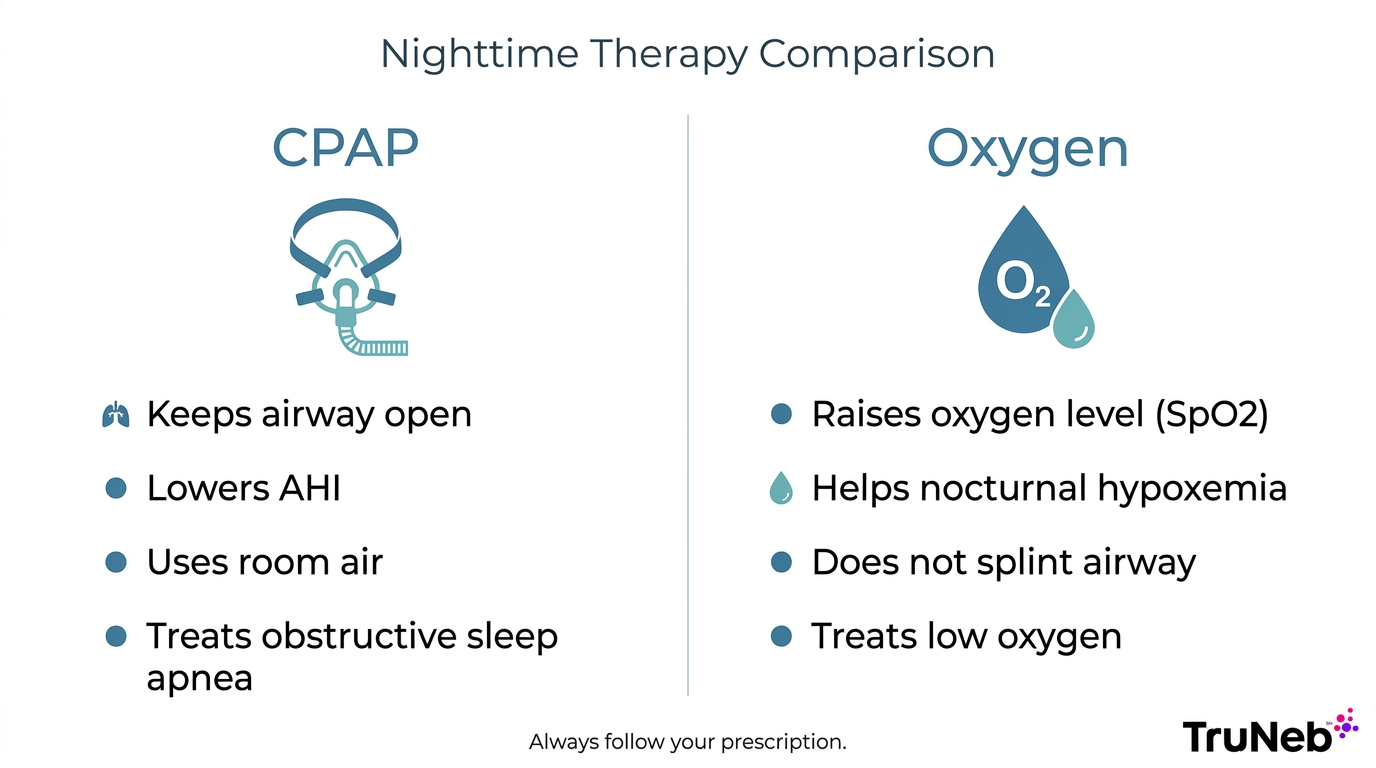
CPAP and oxygen do different jobs at night:
- CPAP uses pressurized room air to keep your airway open and lower AHI.
- Oxygen therapy increases the oxygen concentration you breathe to improve SpO2.
What CPAP Treats
CPAP is designed for obstructive sleep apnea (OSA). It splints the airway open so it does not collapse. That lowers the apnea‑hypopnea index (AHI), reduces snoring, and limits wake‑ups from breathing pauses.
What Oxygen Treats
Supplemental oxygen is used to correct low blood oxygen (SpO2). It helps people with nocturnal hypoxemia from lung disease, heart disease, altitude, or other causes. Oxygen does not hold the airway open. It can improve oxygen levels but does not stop obstructive events by itself.
Why Some People Need Both
You might have OSA plus COPD (overlap syndrome). You might have OSA plus heart failure. Or your AHI can be well controlled on CPAP, yet your oxygen still drops during sleep. In these cases, a doctor might add oxygen to CPAP after reviewing your sleep study or overnight oximetry.
Here’s the difference in plain terms: CPAP’s job is pressure to prevent collapse. Oxygen’s job is to raise oxygen concentration when it stays low. If your airway is stable but your oxygen dips, oxygen can be added. If your oxygen is fine but your airway collapses, CPAP alone can be enough.
Key takeaway: CPAP prevents airway collapse with pressurized room air, while oxygen therapy increases the oxygen you breathe — they solve different problems.
| Therapy | Air source | Main goal at night | Does not | Typical equipment |
|---|---|---|---|---|
| CPAP | Pressurized room air | Keep airway open; lower AHI | Add extra oxygen | CPAP machine, hose, mask, humidifier (optional) |
| Oxygen therapy | Concentrated O2 from a concentrator, tank, or liquid oxygen | Raise SpO2 when oxygen stays low | Hold the airway open | Oxygen source, tubing, bleed‑in adapter or mask/hoses with O2 port |
Use only as prescribed by your doctor and equipment supplier.
One-liner: CPAP lowers AHI by stopping airway collapse; oxygen raises SpO2 when blood oxygen stays low.
Can Oxygen Replace CPAP
For obstructive sleep apnea, oxygen usually cannot replace CPAP. Oxygen can raise your blood oxygen level, but it does not prevent the airway from collapsing. Obstructive events and arousals can still happen even if the oxygen number looks better.
Research shows the difference. In the HeartBEAT trial, people with OSA who used CPAP had lower 24‑hour blood pressure compared with control and oxygen. Oxygen alone did not significantly reduce blood pressure. A systematic review also found that oxygen improves saturation but CPAP is superior for reducing AHI. In some studies, oxygen prolonged the length of apnea or hypopnea events in certain patients.
If CPAP is hard to tolerate, there are options. Mask refitting, humidity changes, pressure adjustments under supervision, APAP or BiPAP, oral appliance therapy, positional strategies, weight management, or surgery can help—always with a doctor guiding the plan.
Key point: Oxygen can help low SpO2, but it does not fix the airway collapse that defines obstructive sleep apnea.
One-liner: Oxygen can raise SpO2, but CPAP treats the airway problem—so oxygen is not a one‑to‑one substitute for CPAP in OSA.
When Doctors Add Oxygen to CPAP
Low Oxygen During Sleep Despite CPAP
Sometimes CPAP controls obstructive events, yet oxygen still drops. This can happen with lung disease, hypoventilation, heart failure, altitude, or severe baseline oxygen issues. Nocturnal hypoxemia means your oxygen level stays low during sleep. Your doctor might check overnight oximetry or adjust therapy in a sleep lab (polysomnography) to see what’s really happening before prescribing oxygen.
COPD and Sleep Apnea Overlap Syndrome
People with COPD can have both airway collapse and low oxygen at night. CPAP or BiPAP helps the airway. Oxygen is added to correct hypoxemia. Because some people with COPD retain carbon dioxide (CO2), oxygen and ventilation need to be managed together by a doctor. Report morning headaches, unusual sleepiness, or confusion.
Central Sleep Apnea and Heart Failure
In select cases of central sleep apnea or Cheyne‑Stokes breathing with heart failure, oxygen can be considered as part of a broader plan. The choice depends on your overall condition and sleep study results.
The key is close doctor supervision. Your prescription sets the oxygen flow rate, the connection point, and the follow‑up plan.
One-liner: Doctors add oxygen to CPAP when sleep testing shows oxygen stays low at night even after airway collapse is treated.
How Bleed-In Oxygen With CPAP Works
Bleed‑In Adapter
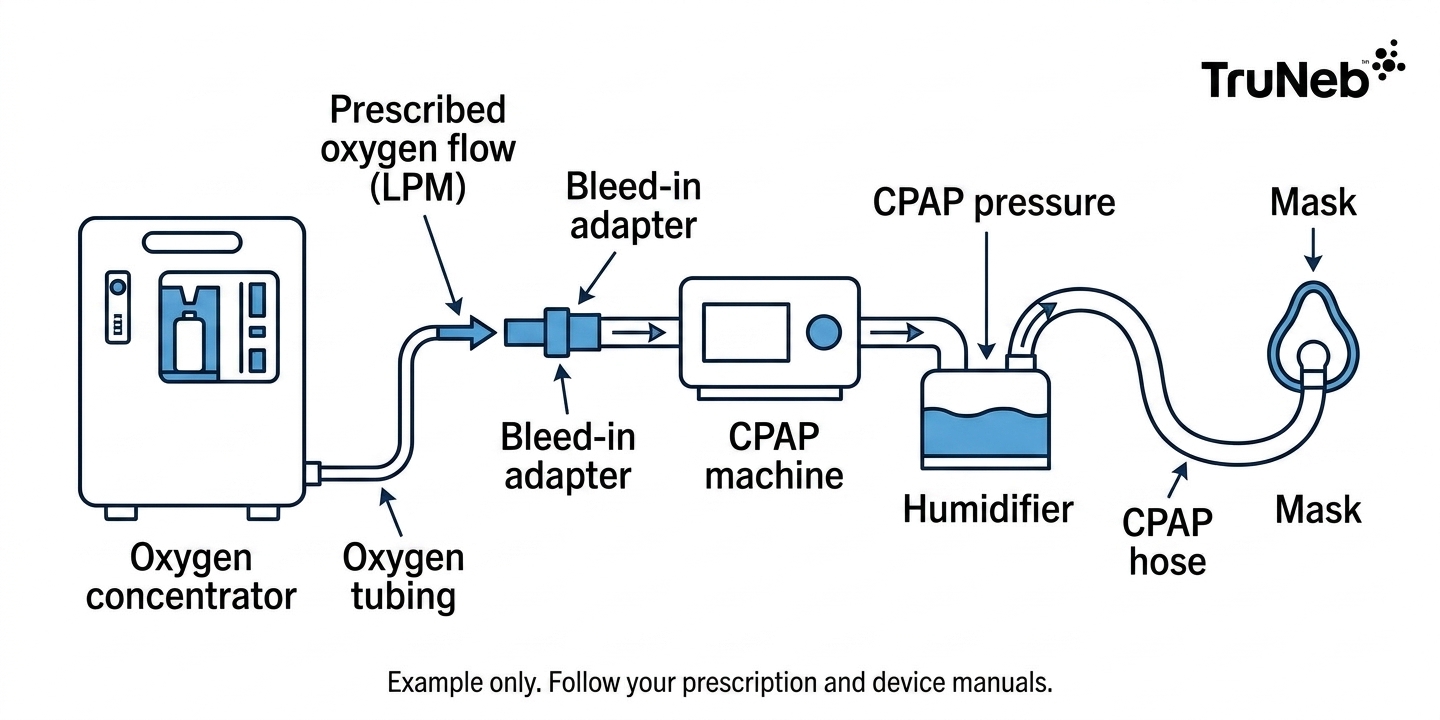
A bleed‑in (oxygen enrichment) adapter is a small connector placed in line with the CPAP tubing. It provides an oxygen port so the prescribed oxygen mixes with the pressurized airflow before you inhale. Your equipment provider will show you where it goes for your machine and hose.
Oxygen Port on Mask or Heated Hose
Some masks or heated hoses include a built‑in oxygen port. When available, this can replace a separate adapter. Always follow the mask or hose manufacturer’s instructions so oxygen enters at the approved spot.
Continuous Flow vs Pulse Dose
Most CPAP setups require continuous‑flow oxygen so the added oxygen is present with each breath. Pulse‑dose concentrators often do not trigger correctly with CPAP because the constant airflow can confuse breath detection. Ask your doctor and oxygen supplier which oxygen source is compatible with your setup.
Note: Depending on your prescription, oxygen can come from a concentrator, a compressed oxygen tank, or liquid oxygen.
Safety tip: Keep oxygen away from heat, flames, oils, and aerosols. Place equipment in a ventilated area. Follow your oxygen prescription exactly.
One-liner: A bleed‑in adapter or approved oxygen port lets prescribed oxygen mix into CPAP airflow before it reaches your mask.
How to Set Up CPAP With Oxygen Safely
Important: Setup varies by prescription, CPAP model, oxygen source, humidifier, heated hose, and mask. Follow your doctor’s plan, your oxygen supplier’s instructions, and your device manuals. Oxygen is a medicine and a fire risk.
Before You Start
Confirm your oxygen prescription and flow rate. Make sure your concentrator provides continuous flow if required. Use the correct adapter or oxygen port. Place devices in a ventilated space and check for leaks.
The exact connection and startup sequence depends on your machine, oxygen source, and prescription, so use these steps only as a general example.
Basic Setup Sequence
- Place the CPAP and oxygen concentrator where air can circulate.
- Attach the bleed‑in adapter or connect to the approved oxygen port.
- Connect the CPAP hose and your mask.
- Connect the oxygen tubing to the adapter or port.
- Turn on CPAP first if your supplier instructs this.
- Turn on oxygen and set only the prescribed flow.
- Put on your mask and check airflow.
- In the morning, turn oxygen off first if instructed, then CPAP after airflow clears.
What Not to Do
Do not tape oxygen tubing into a mask. Do not raise oxygen flow to chase pulse oximeter numbers. Do not use unapproved adapters. Do not smoke or use oxygen near flames, oils, or aerosols. Do not assume all portable concentrators work with CPAP.
One-liner: CPAP with oxygen should only be connected at approved points and used exactly as prescribed by your doctor and equipment supplier.
Medical disclaimer: Talk to your doctor before trying a new medication, and never change oxygen or CPAP settings without medical guidance. According to FDA guidance, oxygen should be prescribed and monitored.
How Many Liters of Oxygen Are Used With CPAP
There is no universal oxygen flow rate for sleep. Oxygen flow is measured in liters per minute (LPM), but the right number depends on your condition and your test results. Your doctor prescribes a flow based on sleep study data, PAP titration, overnight oximetry, and your health history. Device capacity (for example, 0.5–5 LPM) only shows the range a concentrator can deliver. It is not your prescription. The number on the device isn’t your dose—your doctor’s order is.
Why the rate must be prescribed: Too little oxygen can leave you hypoxemic. Too much oxygen can be harmful in some situations, especially if you retain carbon dioxide. People with COPD or hypoventilation might need careful CO2 monitoring. That is why your prescription, and sometimes repeat overnight checks, are essential.
Doctors might review your residual AHI on CPAP, lowest SpO2, time below 90%, overnight oximetry, resting and exertional oximetry, and sometimes a blood gas test. They also consider altitude, heart or lung disease, and symptoms.
Key point: The correct oxygen flow for CPAP is prescribed from your data—never guessed or self‑titrated.
One-liner: The “right LPM” is the one your doctor orders after testing, not a default number from the device.
AHI vs Oxygen Saturation
What AHI Means
AHI is the number of apneas plus hypopneas per hour of sleep. Adults are often classified as: normal (fewer than 5), mild (5 to fewer than 15), moderate (15 to fewer than 30), and severe (30 or more). Your CPAP machine’s AHI is an estimate and should be reviewed with your doctor.
What Oxygen Saturation Means
SpO2 is the estimated percentage of hemoglobin carrying oxygen. At sea level, saturation is commonly around 96% to 97% when awake and healthy. In sleep studies, desaturations that do not go below 90% are often considered mild; 80% to 89% moderate; and below 80% severe. Consumer pulse oximeters can help, but they have limits and can be inaccurate in some situations.
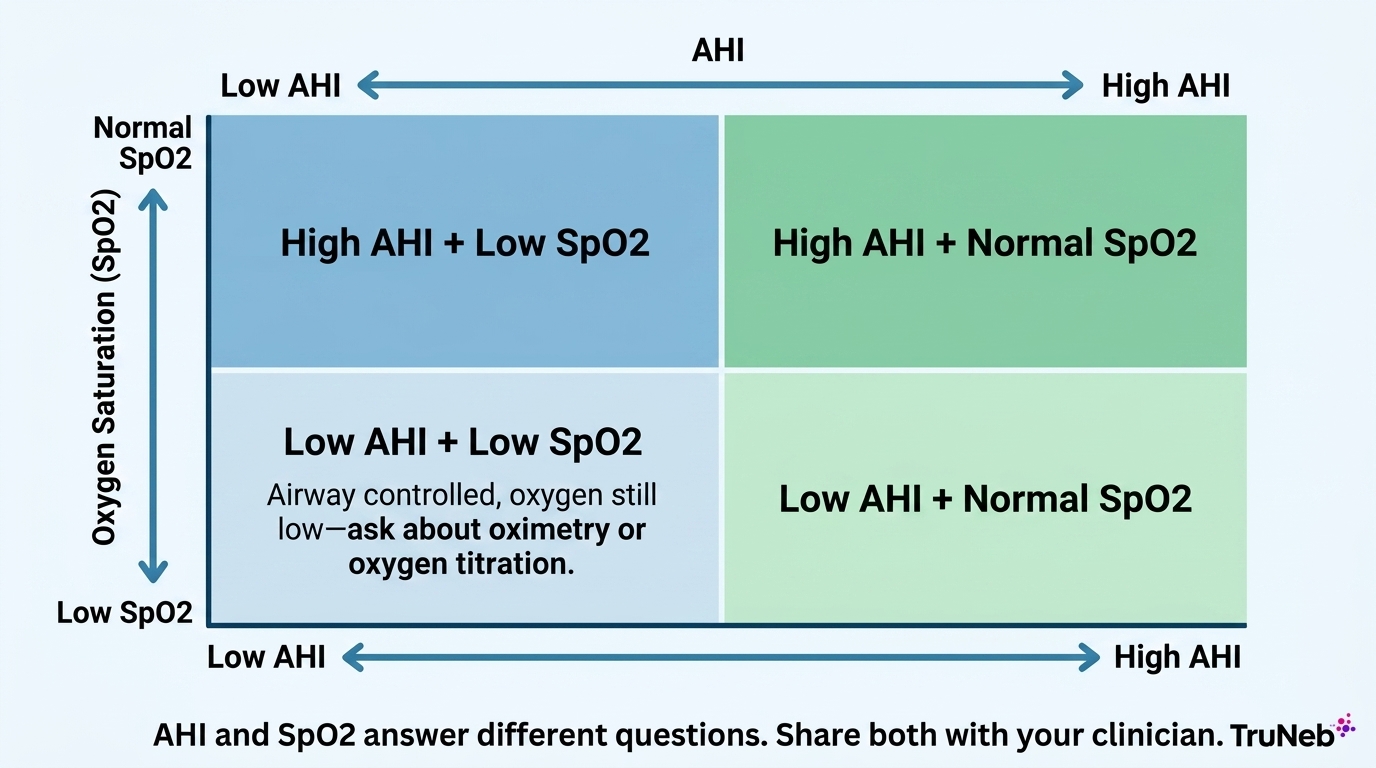
AHI measures breathing interruptions, while SpO2 measures how well oxygen stays in your blood.
Why AHI Can Look Good While Oxygen Is Still Low
Possible reasons include:
- COPD or another lung disease that limits oxygen transfer
- Obesity hypoventilation or heart failure
- Altitude effects
- Large mask or mouth leak reducing effective therapy
- Oxygen flow set too low for your needs
- Equipment connected in the wrong place
- Central events or hypoventilation not fully captured by your machine’s estimate
- Oximeter artifact or poor sensor signal
Bring your numbers to your visit. Residual AHI, lowest SpO2, time below 90%, and the oxygen desaturation index (ODI, how often oxygen drops during sleep) tell different parts of the story. Together, they help your doctor decide if pressure changes, oxygen titration, or another evaluation is needed. Home pulse oximeters can miss context and aren’t a substitute for a sleep study, overnight oximetry, or medical review. Home CPAP AHI and wearable oximeter readings are helpful signals, not full diagnosis tools.
One-liner: AHI counts how often breathing is interrupted; SpO2 shows how well oxygen is maintained—both numbers matter.
Side Effects and Safety Concerns
Common CPAP Side Effects
CPAP can cause dry mouth, nasal congestion or runny nose, nosebleeds, skin irritation from masks, swallowed air discomfort (aerophagia, with bloating), and feelings of claustrophobia. Mask leak can worsen symptoms and reduce therapy quality.
Oxygen Therapy Side Effects and Risks
Oxygen therapy can cause nasal dryness and nosebleeds. Tubing can become a trip hazard. Oxygen is a fire accelerant, so keep it away from flames, heat, oils, and aerosols. Incorrect use can pose risks, which is why oxygen requires a prescription and monitoring.
Combination Setup Issues
Combining CPAP and oxygen adds tubing and connection points. That can increase leak risk and bedside clutter. A stationary concentrator adds noise. Extra airflow can contribute to dryness without humidity. A simple setup plan and routine checks can improve comfort and safety.
COPD and CO2 Retention Warning
People with COPD or hypoventilation need added caution. Oxygen can improve SpO2 but not fix ventilation. Rising CO2 can cause headaches, confusion, or worsening sleepiness. If you notice these, contact your doctor. Your team might adjust pressure support, oxygen flow, or monitoring based on your condition.
If you develop severe shortness of breath, chest pain, blue lips, confusion, or rapidly worsening symptoms, seek emergency care right away.
One-liner: Watch dryness, leaks, fire safety, and CO2 concerns—report new or worsening symptoms to your doctor.
Managing Dryness, Irritation, and Thick Mucus
CPAP and oxygen can dry out your nose and mouth. They can also make thick mucus feel worse for some users. A nebulizer can help with mucus or inhaled medicine, but it doesn’t treat sleep apnea and it doesn’t replace prescribed oxygen. A steam inhaler is not the same thing as a nebulizer, and neither one replaces CPAP or oxygen.
Simple comfort steps help. Use your humidifier and adjust the level as advised. Refit your mask to reduce leaks. Stay well hydrated during the day. Ask your doctor about gentle nasal care.
People with COPD, chronic bronchitis, or bronchiectasis might need airway clearance support. Under doctor guidance, nebulized saline can loosen thick mucus so it is easier to clear. A portable mesh nebulizer makes these treatments simple at home or on the go.
If your doctor recommends nebulized saline for mucus clearance, TruNeb portable mesh nebulizer options and 3% or 7% saline products are examples of tools that can fit into that plan. They do not replace CPAP, oxygen, prescribed inhalers, or emergency care. If CPAP or oxygen leaves you dealing with thick mucus, ask your doctor whether hypertonic saline nebulizer therapy or other airway clearance steps fit your plan.
One-liner: Humidification, better mask fit, and doctor‑guided saline can improve comfort, but they do not replace CPAP or prescribed oxygen.
Medical disclaimer: Talk to your doctor before trying a new medication, including hypertonic saline.
What to Ask Your Doctor Before Adding Oxygen to CPAP
Bring a short list to your visit and include your key numbers:
- Why oxygen is being added and whether your AHI is controlled on CPAP
- Your lowest SpO2 and how long you were below 90%
- The prescribed flow in liters per minute, whether it is continuous flow, and which oxygen source you will use
- Exactly where oxygen connects in your setup and the startup and shutdown sequence to follow
- Whether to repeat overnight oximetry after starting oxygen
- Whether you need evaluation for COPD, hypoventilation, or CO2 retention
- Which side effects to report right away
- How to travel safely with CPAP and oxygen
One-liner: Bring your numbers and focused questions so your doctor can tailor your CPAP‑plus‑oxygen plan.
Note: Ask your provider for a printed setup and safety sheet you can keep at the bedside.
When to Seek Medical Help
Get urgent help if you have severe shortness of breath, chest pain, blue lips or face, confusion, fainting, or fast‑worsening morning headaches. Follow your doctor’s thresholds for low oxygen. If equipment smells like smoke or feels hot, disconnect from oxygen and power and follow your supplier’s safety steps. Do not wait on new or rapidly worsening symptoms.
Call your care team if your oxygen drops at night despite following your plan, if you suspect a leak or bad connection, or if side effects keep you from using your therapy. Early contact prevents bigger problems.
One-liner: Severe shortness of breath, chest pain, blue lips, or confusion during CPAP and oxygen therapy need urgent medical care.
Frequently Asked Questions
Tap or click a question below to see the answer:
Usually no for obstructive sleep apnea. Oxygen can raise SpO2, but it doesn’t keep the airway from collapsing. CPAP is better at lowering AHI and treating obstructive events.
There isn’t a universal number. Flow is prescribed from your sleep data and health history—don’t self‑set the LPM.
Not always. Many setups need continuous‑flow oxygen. Pulse‑dose units often won’t trigger with CPAP’s constant airflow. Confirm compatibility with your doctor and oxygen supplier.
Into a bleed‑in adapter in the hose, a mask oxygen port, or a heated hose port—whichever your equipment provider specifies for your setup. The oxygen source can be a concentrator, compressed oxygen tank, or liquid oxygen, depending on your prescription.
Follow your supplier’s plan. Many use CPAP on first, then oxygen; in the morning, oxygen off first, then CPAP. Some suppliers use this sequence to reduce oxygen pooling risk.
AHI and SpO2 measure different things. Low oxygen with a low AHI can point to lung disease, hypoventilation, heart failure, altitude effects, leaks, or an oxygen setting/connection issue. Share your data with your doctor.
It can help when prescribed, but some people with COPD retain CO2. They need careful monitoring and a plan that addresses both oxygen and ventilation.
Yes. Humidification, better mask fit, hydration, and doctor‑guided airway clearance steps, like nebulized saline, can improve comfort.
No. A nebulizer can help with mucus or medicines, but it doesn’t treat sleep apnea and it doesn’t replace prescribed oxygen.