


On this page
What Does Yellow Phlegm Mean?
Yellow phlegm usually means your immune system is fighting an infection. The yellow tint comes from white blood cells and debris your body is clearing out. Viruses and bacteria can both cause this.
Color alone can’t tell you which type of infection you have, and it doesn’t prove you need antibiotics. Phlegm is mucus from your airways that you cough up; nasal mucus sits higher in your nose and sinuses.
Key point: Mucus color by itself does not diagnose a bacterial infection.
In short: Yellow phlegm signals immune activity, not a guaranteed bacterial infection.
Infection or Recovery: Why Mucus Turns Yellow
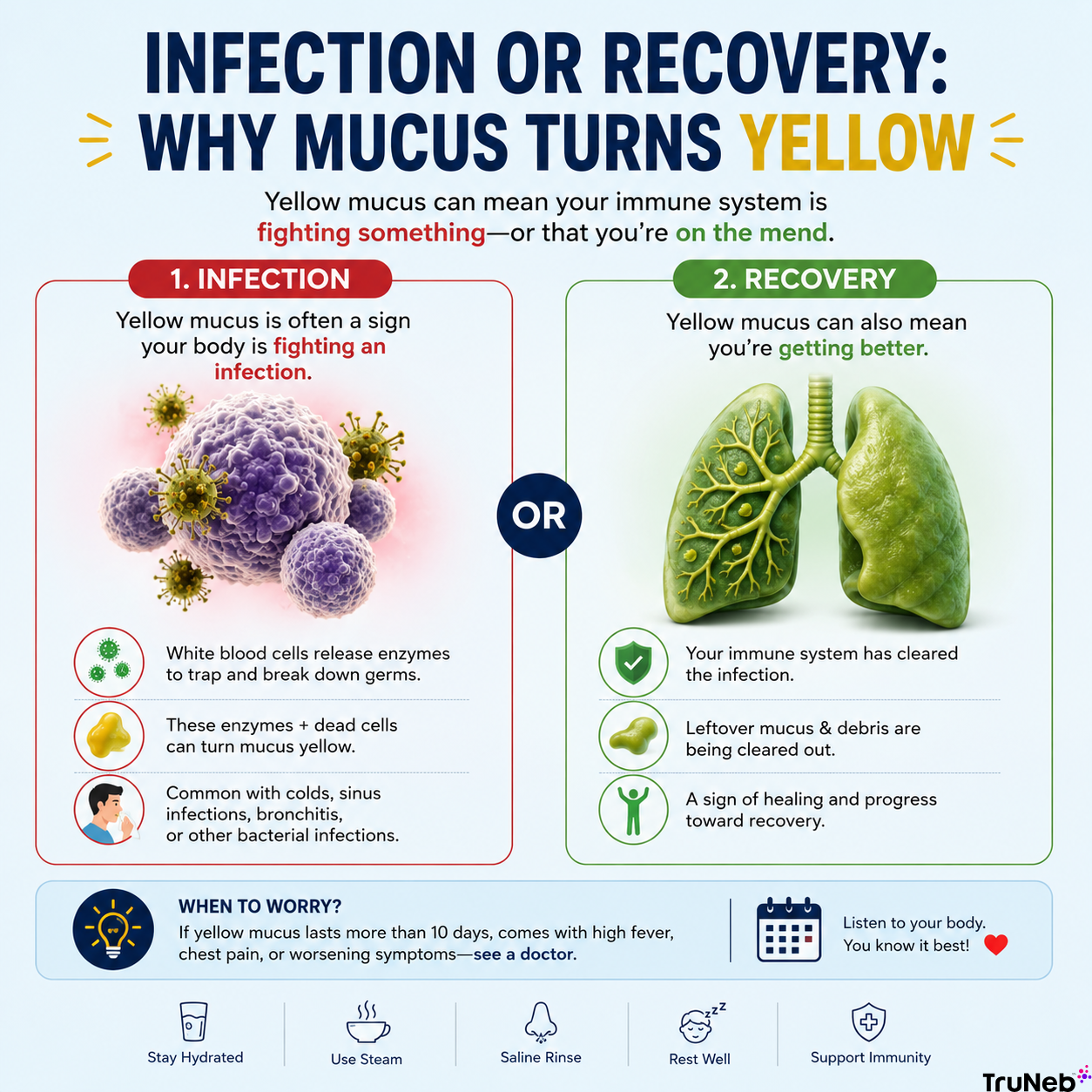
During a cold or flu, mucus typically changes over time. Early on it is clear. A few days in, it can turn yellow as more immune cells move in. If the fight lasts, it may look green. As you recover, it usually thins and clears again. Color patterns vary by person and illness, so the sequence isn’t exact for everyone.
Does yellow mucus mean you are getting better? It can, if your fever is down, your energy is up, and breathing feels easier. If symptoms are getting worse, yellow can also mean the infection is ramping up or a sinus infection is starting. Watch the trend, not just the color.
In short: Yellow mucus usually shows up mid-illness; judge progress by how all your symptoms are changing, not color alone.

Why Am I Coughing Up Yellow Mucus?
Common causes of coughing up yellow mucus include:
- Viral cold or flu: typically turns mucus yellow around days three to five, with a runny or stuffy nose and a cough.
- Sinus infection (acute sinusitis): thick yellow or green nasal mucus with facial pressure and a blocked nose, especially if it lasts more than 10 days.
- Acute bronchitis: deep cough with yellow phlegm and chest tightness, usually with only a mild fever.
- Pneumonia: a lung infection that can cause yellow, green, or rusty phlegm with high fever, chills, chest pain, and shortness of breath.
- Chronic bronchitis from COPD or smoking: a daily cough is common; a switch to yellow can signal a flare or infection.
- Asthma flare: a virus can trigger asthma symptoms and yellow mucus during a flare.
- Bronchiectasis or cystic fibrosis: frequent, thick, yellow-green sputum from chronic infection and inflammation.
- COVID-19: COVID-19 and its complications can also lead to colored mucus (see the COVID section below for details).
In short: Most cases come from colds, sinusitis, or bronchitis, but serious lung infections can do it too.
Yellow vs Green Mucus: Is There a Difference?
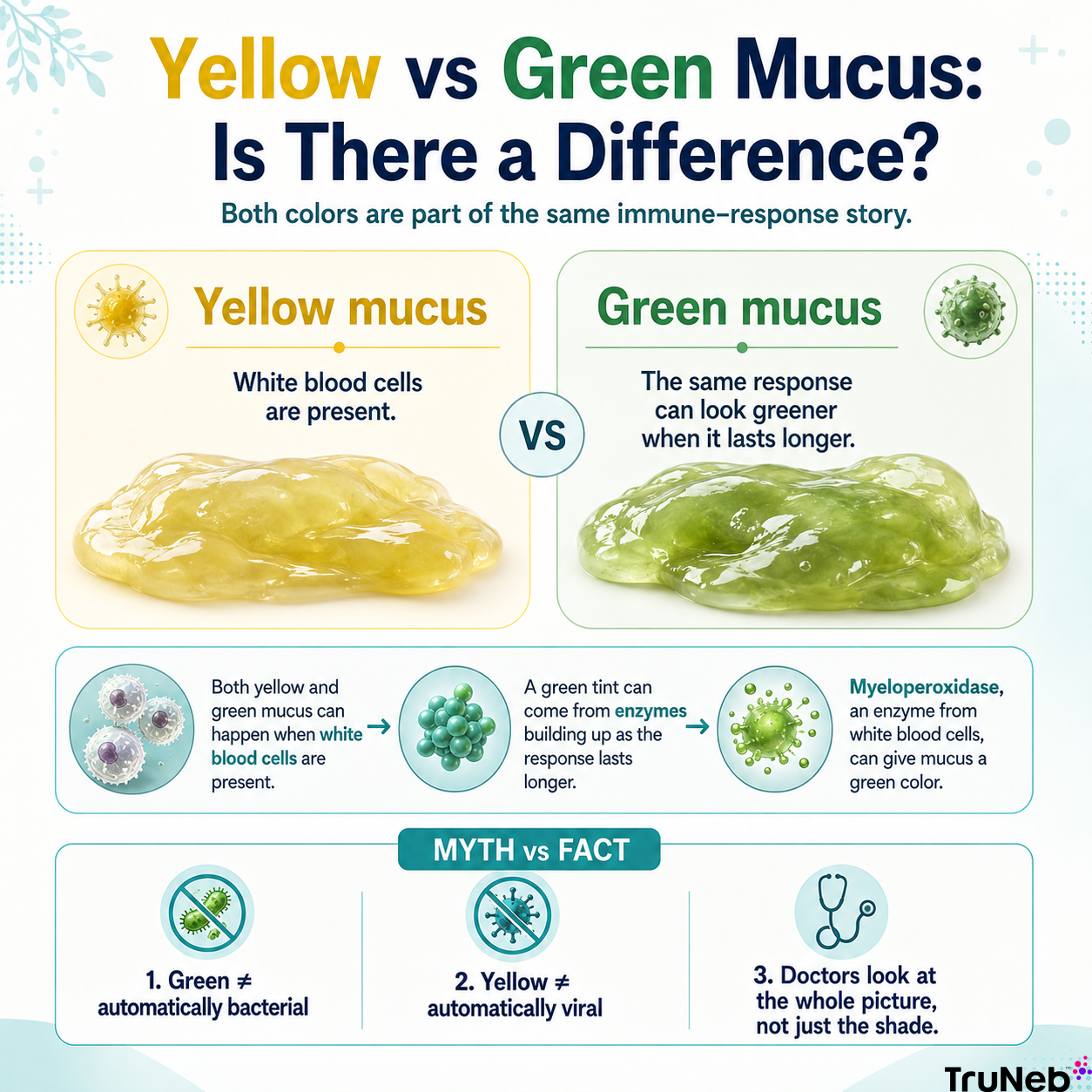
Yellow and green mucus are part of the same story. Both colors mean white blood cells are present. A green tint can come from enzymes in those cells building up when the response lasts longer. One enzyme from white blood cells, called myeloperoxidase, can give mucus a green color. Green is not automatically bacterial, and yellow is not automatically viral. Doctors look at the whole picture, not the exact shade.
In short: Yellow and green mucus are both signs of immune activity and don’t, by themselves, tell you if an infection is bacterial.
Yellow Phlegm but No Fever: Should You Worry?
You can have yellow phlegm without a fever. Many sinus infections and mild bronchitis do not raise your temperature much. If you feel well otherwise and breathing is comfortable, home care is reasonable for a few days. If symptoms linger, worsen, or new problems appear, check in with your doctor. Older adults or people with weak immune systems can have serious infections without much fever, so be extra mindful of other red-flag symptoms.
In short: No fever doesn’t rule out infection; watch duration and how you feel.
Why Is My Phlegm Yellow Only in the Morning?
Overnight, mucus pools and thickens because you are not drinking or clearing your throat. In the morning it can look more yellow when you first cough or blow your nose, then lighten as you hydrate and move around. Post-nasal drip from allergies or sinusitis can leave yellow mucus in your throat after sleep. Dry indoor air and smoking make morning phlegm thicker. A bedside humidifier, good hydration, and sleeping with your head slightly raised can help. If morning yellow phlegm is daily and paired with cough or breathlessness, ask your doctor about chronic bronchitis or sinusitis.
In short: Morning yellow mucus usually reflects overnight buildup that clears once you’re up, moving, and hydrated.
Yellow Phlegm and COVID-19: Is It a Symptom?
Yellow phlegm is not a specific sign of COVID-19. Early COVID usually causes a dry cough. Colored mucus can appear later with lung irritation or a secondary infection. If you think you were exposed or have other COVID symptoms, use a test and talk with your doctor or follow local public health guidance based on your full symptom picture, not mucus color alone.
If your breathing gets worse, you feel chest pain, or you’re struggling to speak in full sentences, get urgent medical care.
In short: Yellow mucus does not confirm COVID; test and assess all symptoms.
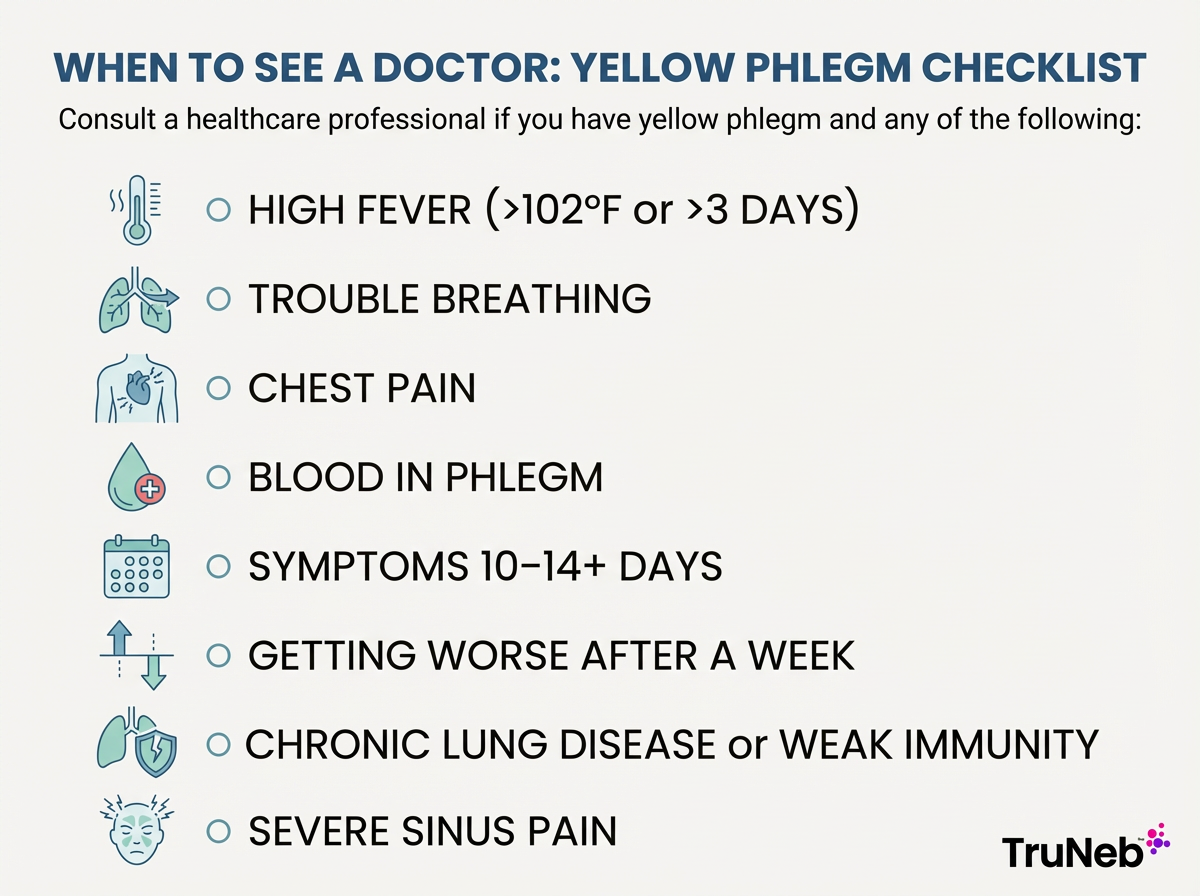
When To See a Doctor for Yellow Phlegm
Most mild cases improve with rest and fluids. Some signs mean you should get care.
Key point: Get help fast if breathing is hard, chest pain appears, or you see blood.
- Fever over 102°F or any fever lasting more than 3 days
- Trouble breathing, fast breathing, or wheezing that is not improving
- Chest pain, especially when you breathe or cough
- Blood in phlegm or rust-colored sputum
- Yellow or green mucus lasting more than 10–14 days
- Symptoms getting worse after the first week
- You have asthma, COPD, or a weak immune system
- Severe sinus pain or headache with thick yellow nasal discharge
⚠️ If you have severe trouble breathing, chest pain, confusion, or blue lips or face, seek emergency medical care right away (call 911 or your local emergency number).
In short: Breathing trouble, chest pain, blood, high fever, or long lasting phlegm are red flags.
How To Get Rid of Yellow Phlegm
Try these steps to thin, loosen, and clear yellow mucus while your body heals:
- Drink water regularly to thin sticky phlegm.
- Sip warm fluids with honey to soothe your throat and help mobilize mucus. Do not give honey to children under 1.
- Inhale steam from a hot shower or a bowl for 5–10 minutes. Be careful with heat. ⚠️ Steam inhalers and nebulizers aren’t the same. Don’t put medications into a steam inhaler—medications or saline should only go into a nebulizer as directed by your doctor.
- Use a clean cool mist humidifier, especially at night.
- Rinse your nose with saline to flush thick nasal mucus. Use distilled or previously boiled and cooled water to make saline.
- Consider an expectorant like guaifenesin to thin chest mucus. Follow the label. If you’re not sure which product is safe for you, ask your doctor or pharmacist.
- Use controlled huff coughs to bring sputum up without straining.
- Ask your doctor about nebulized saline if mucus is very thick. A portable mesh nebulizer like the TruNeb™ portable mesh nebulizer can deliver a fine saline mist to help loosen phlegm as part of a doctor-guided plan.
- Rest and sleep to support healing.
- Avoid smoke and other airway irritants.
Safety note: Talk to your doctor before trying a new medication or hypertonic saline.
In short: Thin, loosen, and clear—simple steps help while your body heals.
Takeaway: Simple tools like water, steam, saline rinses, and a nebulizer can make thick mucus easier to clear.
| Device | What it delivers | Medications allowed? | Typical uses | Cleaning |
|---|---|---|---|---|
| Steam inhaler | Warm, moist air | No — never add medications | Nasal and throat moisture, comfort | Empty and dry after use; descale per maker |
| Nebulizer (mesh or jet) | Fine aerosol mist to the lungs | Yes — only as prescribed or per label | Deliver saline or respiratory medications to airways | Disassemble and clean after each use; disinfect as directed |
* Follow your doctor’s instructions for any nebulized medication. Do not pour medication into a steam device.
Frequently Asked Questions
Tap or click a question below to see the answer:
Usually, yes—yellow means immune cells are in your mucus, which is common with colds, sinusitis, or bronchitis. Color alone can’t tell viral vs bacterial, and heavy irritation (for example from smoking) can rarely make mucus look yellow even without an active infection.
Not based on color alone. Many cases are viral. Your doctor decides on antibiotics using your overall symptoms and exam findings.
In a cold, usually a few days. If it lasts more than 10–14 days or worsens, see your doctor.
The mucus isn’t, but the germ can be. Cover coughs, toss used tissues, and wash hands.
Allergies usually cause clear mucus. Yellow mucus suggests a secondary infection or another illness on top of allergies.
An expectorant like guaifenesin can help thin mucus. Antibiotics are only for confirmed bacterial infections. Talk to your doctor before trying a new medication.
Mucus is the slippery fluid your body makes. Phlegm is mucus from your airways that you cough up, also called sputum.
Disclaimer: This article is for informational purposes only and is not a substitute for professional medical advice, diagnosis, or treatment. Always talk with your doctor about your symptoms, questions, and treatment options.