


On this page
What White Foamy or Bubbly Mucus Means
Quick Answer
White foamy mucus usually means air has mixed with mucus while you cough, clear your throat, or breathe through irritated airways. If you are coughing up white phlegm with bubbles, the bubbles alone do not tell you the cause.
White bubbly phlegm can come from the throat, chest, or lower airways. White phlegm in the throat often points to postnasal drip, allergies, sinusitis, or GERD, while white mucus from lungs or white mucus from chest is more likely to show up with chest congestion, wheezing, or a cough that brings up sputum.
Some causes are more serious. Persistent frothy sputum can occur with COPD, bronchiectasis, pneumonia, pulmonary edema, heart failure, cystic fibrosis, or other lung conditions. Clear foamy sputum or bubbly phlegm from lungs becomes more concerning when it occurs with shortness of breath, chest pain, blue lips, swelling, fever, or coughing blood.
One-sentence answer: White phlegm with bubbles usually means air has mixed with mucus, but large or persistent amounts of frothy sputum can sometimes point to a lung or heart problem.
Key point: The bubbles matter less than the symptoms around them.
Why Bubbles Appear in Phlegm
Air Mixing With Mucus
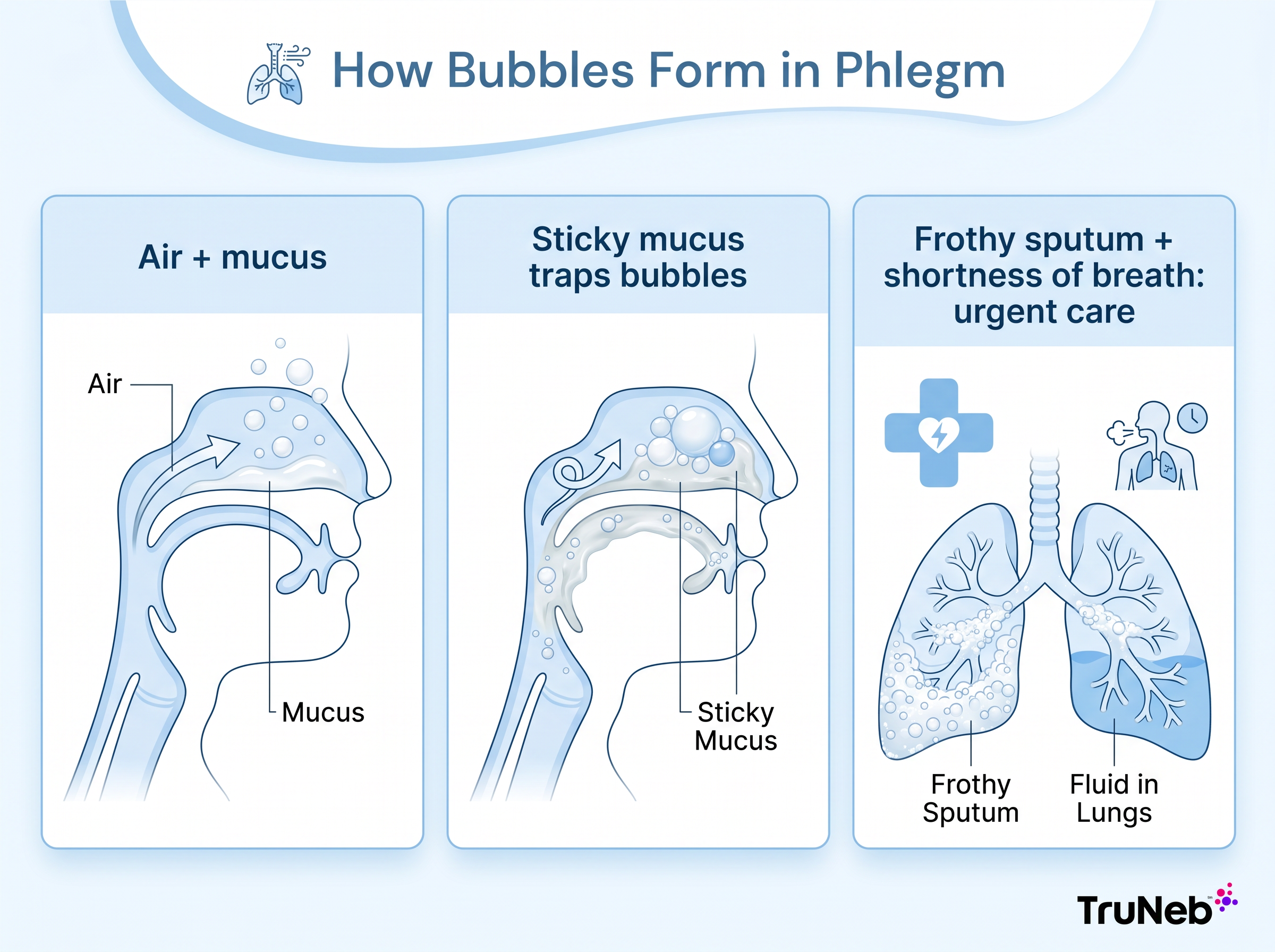
Bubbles usually form when air moves through mucus. Thin mucus lets bubbles pop quickly, while sticky mucus can trap them longer. That is why white sputum meaning can vary from simple irritation to an underlying airway condition.
Mucous membranes line the airways, including the bronchi and bronchioles. Mucin and cilia help move mucus through the respiratory tract. When mucus thickens from dehydration, dry air, inflammation, or irritation, it can hold air pockets more easily.
Frequent throat clearing, coughing after postnasal drip, GERD, bronchitis, or asthma may create bubbly mucus without indicating a serious problem.
When Froth Is More Concerning
Persistent froth is different. Frothy sputum that keeps returning, appears in larger amounts, or occurs with breathlessness may signal fluid reaching the alveoli. That can happen in pulmonary edema and requires prompt medical attention.
Frothy sputum is mucus or phlegm that looks foamy because air or fluid has mixed with respiratory secretions.
If the foam is white or clear and you also feel very short of breath, dizzy, weak, or tight in the chest, seek medical care.
How Bubbles Form in Phlegm
When Foamy Mucus Needs Urgent Care
Emergency Warning Signs
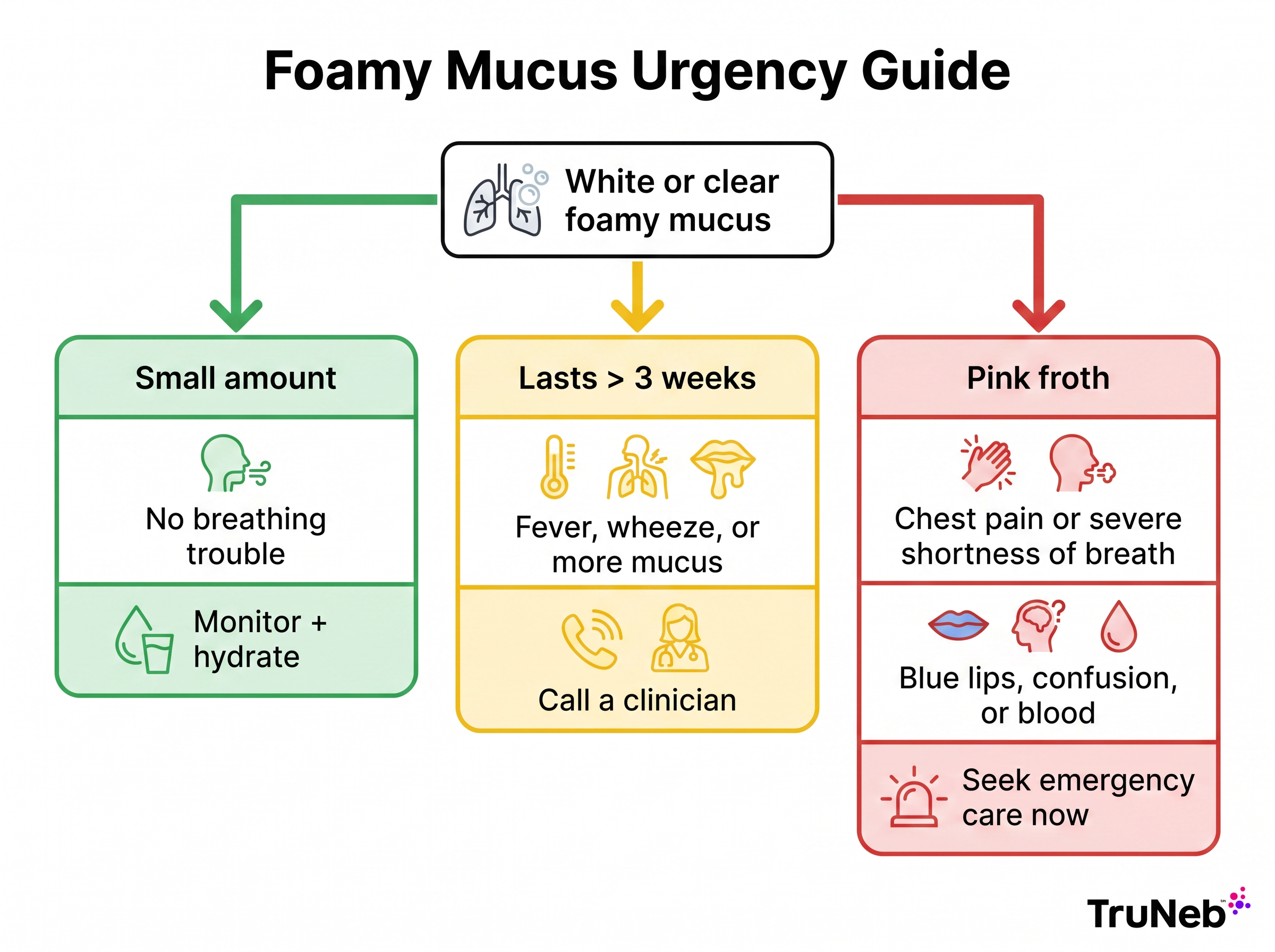
Most white foamy mucus is not an emergency, but some symptom combinations need fast action.
⚠️ Seek emergency medical care immediately if foamy mucus occurs with severe shortness of breath, chest pain, blue lips, confusion, fainting, coughing blood, or pink frothy sputum.
These symptoms can occur with pulmonary edema, pulmonary embolism, severe pneumonia, or another serious condition. Learn more about pink frothy sputum emergency signs.
When to Call a Doctor
Contact a doctor if your cough lasts more than three weeks, sputum production keeps increasing, or you develop fever, chills, worsening fatigue, wheezing, or repeated chest infections. People with COPD, asthma, heart failure, bronchiectasis, or weakened immune systems should have a lower threshold for evaluation.
Hemoptysis means coughing blood. Even small amounts deserve attention.
A simple takeaway: mild symptoms with a small amount of bubbly mucus are often less urgent, but breathing changes or persistent symptoms should be checked.
Foamy Mucus Urgency Guide
Common Causes of White Foamy Mucus
Common causes include postnasal drip, allergies, dry air, dehydration, viral infections, bronchitis, asthma, GERD, COPD, and chronic airway irritation.
White Phlegm in the Throat
Excessive white phlegm in throat symptoms are commonly linked to postnasal drip, allergies, sinusitis, or reflux. People often notice throat clearing, drainage, hoarseness, or a lump-in-the-throat sensation.
White foamy mucus from the throat is commonly linked to drainage or reflux, while mucus coming from deeper in the chest is more likely to be related to the airways or lungs.
Throat vs lung source comparison:
- Throat source: frequent throat clearing, drainage sensation, symptoms worse after lying down.
- Lung source: chest congestion, deeper cough, wheezing, shortness of breath, or sputum production.
Asthma and COPD may also contribute to white foamy phlegm in morning symptoms, especially when mucus is difficult to clear. For related breathing symptoms, see wheezing when lying down causes.
Talk with your doctor before starting new medications or treatments.
Serious Causes to Know
Some causes of frothy sputum affect the lungs or heart more deeply and deserve prompt attention.
Pulmonary edema can create white or pink frothy sputum when fluid mixes with air inside the lungs. Heart failure is a common reason this occurs.
Pneumonia may also produce white mucus. Doctors look at fever, breathing symptoms, oxygen levels, and imaging rather than mucus appearance alone. Additional information is available in this guide to bronchitis vs pneumonia differences.
Bronchiectasis, cystic fibrosis, fungal infection, and other chronic lung diseases can cause ongoing mucus production. CT scans, sputum culture, Gram stain testing, and airway clearance planning may be part of evaluation.
Pulmonary embolism may cause sudden shortness of breath, chest pain, rapid heartbeat, and sometimes hemoptysis.
Serious causes of white foamy mucus are usually identified by the symptoms that occur alongside the mucus, not by the mucus alone.
Why It Happens in the Morning
Overnight Mucus Pooling
Morning white phlegm is common because mucus has hours to collect while you sleep. Postnasal drip, reflux, dry air, and mouth breathing may all contribute.
White foamy phlegm in morning hours often reflects mucus that pooled overnight and mixed with air during the first coughs of the day.
Chronic Morning Phlegm
Chronic morning sputum can occur with chronic bronchitis, COPD, smoking exposure, bronchiectasis, pneumoconiosis, or other chronic airway conditions.
Takeaway: Morning white bubbly phlegm is often related to overnight mucus pooling, but daily symptoms that persist deserve medical evaluation.
Is White Foamy Mucus a Sign of Lung Cancer
White Phlegm Alone Is Usually Not Enough to Suggest Cancer
Usually not. White phlegm alone rarely suggests lung cancer. More common causes include postnasal drip, GERD, asthma, viral illness, bronchitis, and COPD.
Symptoms That Need Medical Evaluation
A cough lasting more than three weeks, coughing blood, unexplained weight loss, chest pain, hoarseness, worsening shortness of breath, repeated pneumonia, or significant smoking history should be evaluated by a doctor.
Mucinous Adenocarcinoma and Excess Watery Sputum
A rare form of lung cancer called mucinous adenocarcinoma can sometimes cause bronchorrhea, which is the production of large amounts of watery sputum. This is uncommon and should not be assumed based on simple white bubbly mucus.
Takeaway: White phlegm alone is usually not a reliable sign of lung cancer.
What Mucus Texture and Color Can Tell You
White, Clear, Yellow, Green, Brown, Red, and Black Mucus
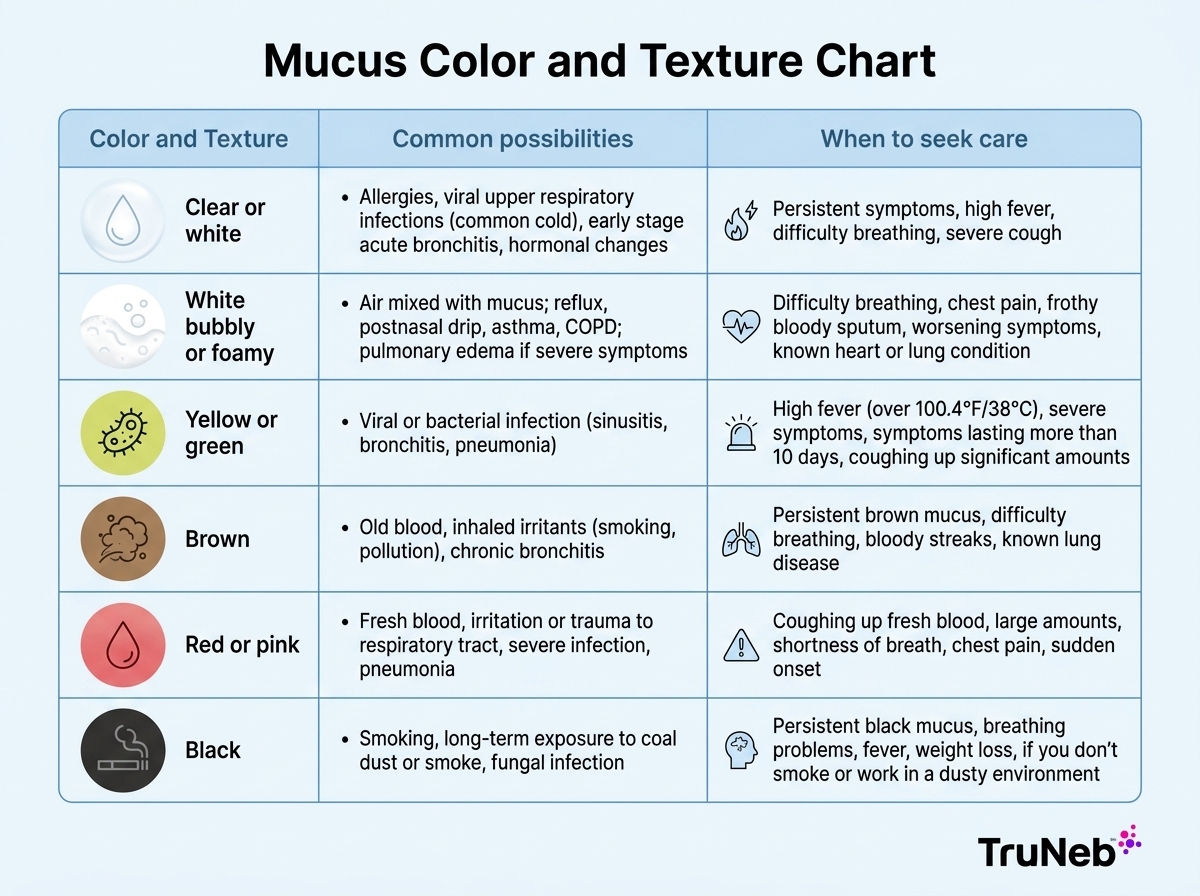
White or clear mucus may occur with allergies, irritation, viral infections, asthma, COPD, or normal mucus production. Yellow or green mucus may accompany inflammation or infection. Brown, red, pink, and black mucus have different potential causes and may require medical evaluation depending on symptoms. You can compare colors in this phlegm color chart guide or learn about yellow phlegm causes and relief.
Color Is a Clue, Not a Diagnosis
Texture also matters.
Key takeaway: Texture patterns may provide clues, but symptoms and medical evaluation are more important than appearance alone.
| Texture | What It Looks Like | Common Associations |
|---|---|---|
| Bubbly mucus | Visible air bubbles | Coughing, throat clearing, postnasal drip |
| Foamy mucus | Light foam with bubbles | Air mixed with mucus, irritation |
| Frothy sputum | Persistent foam | Pulmonary edema or other lung conditions when severe symptoms are present |
| Thick mucus | Sticky and dense | Dehydration, inflammation |
| Watery mucus | Thin and runny | Drainage, irritation, some lung disorders |
Takeaway: Appearance helps, but symptoms, duration, and medical history provide the most useful information.
Mucus Color and Texture Chart
What You Can Do to Loosen and Clear Mucus
At Home Steps That Can Help
People commonly find symptom relief by staying hydrated, avoiding smoke exposure, using humidified air when dryness is a trigger, and addressing postnasal drainage or reflux when appropriate.
Medicines and Treatments Depend on the Cause
Honey, guaifenesin, inhalers, reflux treatment, antibiotics, mucolytics, or other therapies may be considered depending on the underlying cause. Treatment should match the diagnosis.
Airway Clearance Options to Discuss With a Doctor
Airway clearance techniques may include huff coughing, breathing exercises, chest physiotherapy, pulmonary rehabilitation, and a positive expiratory pressure device. Some people are prescribed nebulized saline before airway clearance sessions.
If a doctor recommends nebulized saline or another prescribed nebulized solution, a portable mesh nebulizer such as TruNeb portable mesh nebulizer may be one option to discuss for delivery convenience. TruNeb™ is a portable nebulizer device and should be used only as directed by a healthcare professional. You may also find it helpful to read about whether a nebulizer helps lung mucus.
Takeaway: Clearing mucus works best when the underlying cause is identified and treated.
How Doctors Evaluate Persistent Foamy Phlegm
Questions a Doctor May Ask
Doctors often ask how long symptoms have been present, whether they are worse in the morning, how much sputum is produced, and whether there are symptoms such as fever, wheezing, chest pain, reflux, or shortness of breath.
Tests That May Be Used
Testing may include pulse oximetry, sputum culture, Gram stain testing, chest X-ray, CT scan, blood work, spirometry, and other pulmonary function testing. Depending on symptoms, heart testing may also be considered. Patients monitoring oxygen levels may benefit from understanding normal pulse oximeter ranges.
Doctors diagnose persistent foamy phlegm by combining symptoms, examination findings, and testing rather than relying on mucus appearance alone.
Key Takeaways
White foamy mucus often occurs because air mixes with mucus during coughing or throat clearing.
Seek urgent care for severe shortness of breath, chest pain, blue lips, confusion, pink frothy sputum, or coughing blood.
White phlegm alone is usually not a sign of lung cancer.
Persistent symptoms may require testing such as pulse oximetry, sputum culture, Gram stain, chest X-ray, CT scan, spirometry, or pulmonary function testing.
When prescribed by a healthcare professional, airway clearance approaches and devices like TruNeb™ can be part of a treatment plan.
Disclaimer: This article is for informational purposes only and is not a substitute for professional medical advice, diagnosis, or treatment. Always talk with your doctor about symptoms, medications, and treatment decisions.
Frequently Asked Questions
These quick answers cover the most common questions about white bubbly phlegm and frothy sputum. Tap or click a question below to see the answer:
It usually means air has mixed with mucus. Common causes include postnasal drip, allergies, reflux, asthma, bronchitis, and COPD.
Not always. Emergency evaluation is needed when it occurs with severe shortness of breath, chest pain, blue lips, confusion, coughing blood, or pink frothy sputum.
Yes. Reflux can irritate the throat and lead to mucus, throat clearing, cough, and morning symptoms.
Morning symptoms are often linked to overnight mucus pooling from postnasal drip, reflux, dry air, or chronic airway conditions.
Usually not. White phlegm alone is a weak indicator. Persistent cough, coughing blood, weight loss, and other warning signs are more important.