

On this page
Why You May Cough Mucus After Eating
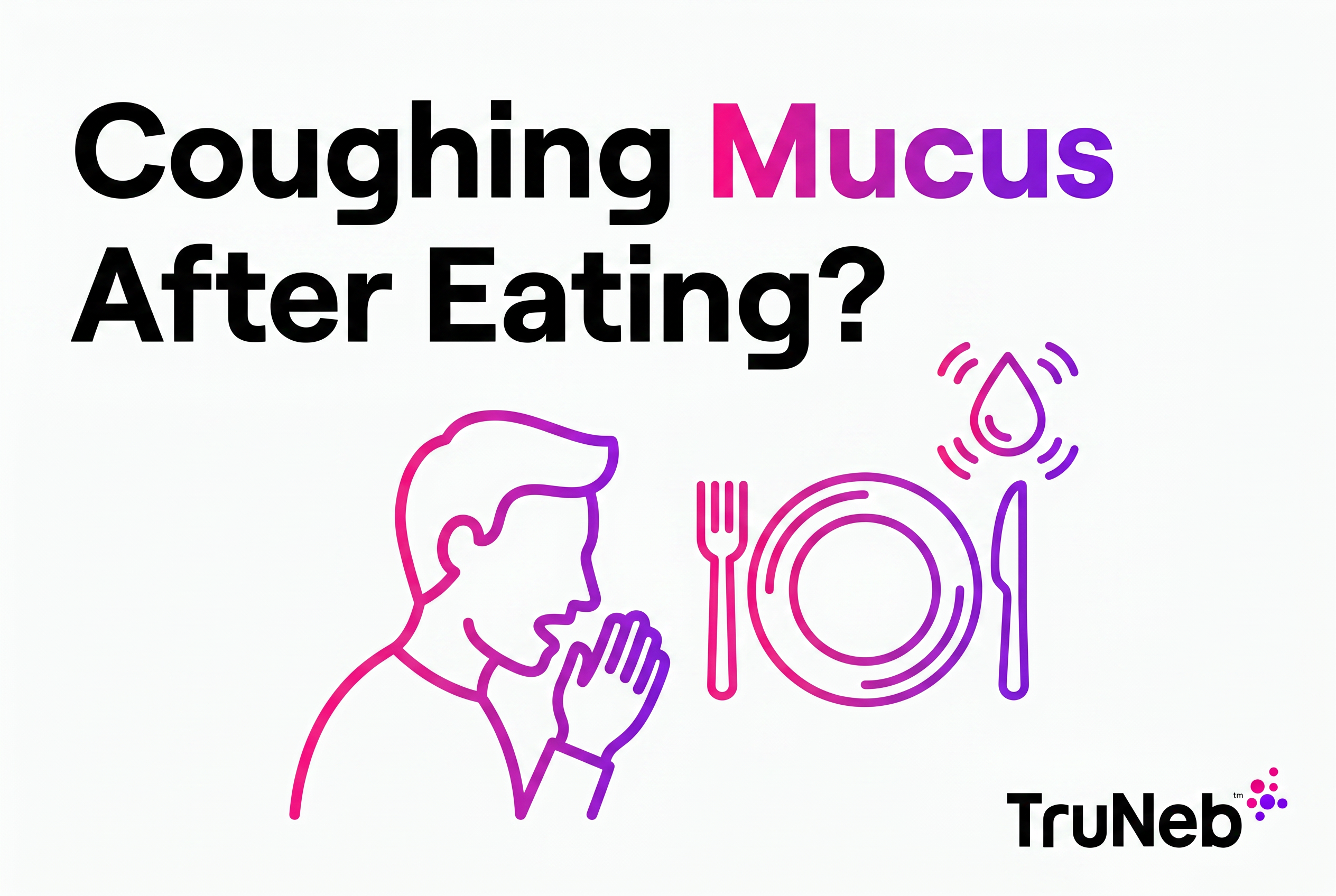
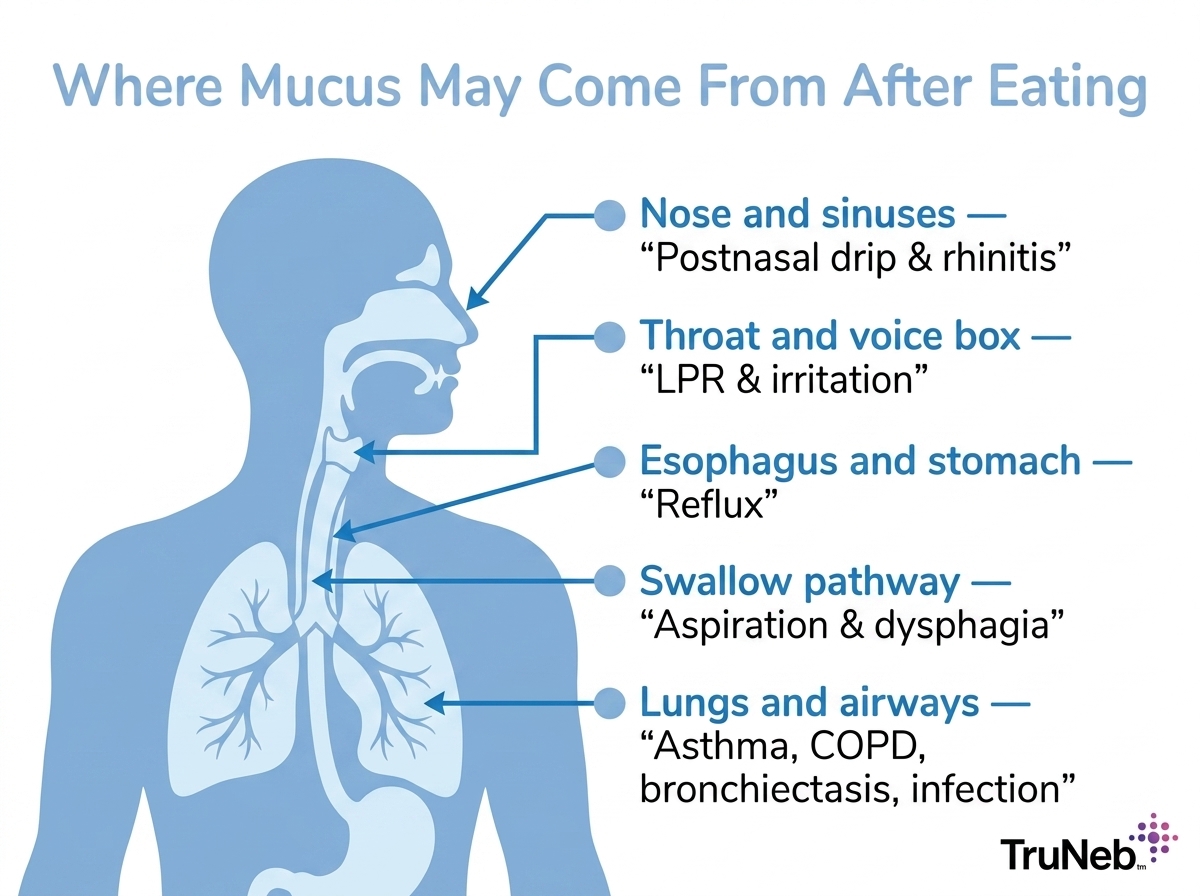
Coughing mucus after eating usually points to one of a few common causes. The big ones are reflux, laryngopharyngeal reflux, postnasal drip, throat irritation from certain foods, aspiration, dysphagia, asthma, COPD, chronic bronchitis, bronchiectasis, or a respiratory infection. Sometimes the meal is not creating new mucus at all. It is simply making mucus that is already there easier to notice or cough up.
Mucus is made by mucous membranes in the nose, throat, and airways. In the lungs, tiny hair-like structures called cilia normally help move mucus up and out so it can be cleared.
A helpful way to sort this out is to look at four clues: timing, location, texture, and other symptoms. If the cough starts during swallowing, aspiration or a swallowing problem moves higher on the list. If you feel mucus in your throat after eating, postnasal drip or silent reflux is usually higher on the list. If you have a deep wet cough with chest congestion after eating, asthma, COPD, chronic bronchitis, bronchiectasis, or infection may be part of the overall picture.
Coughing phlegm after eating can feel strange and even embarrassing, but the source is not always your lungs. In medical terms, phlegm usually means mucus from the lower airways, while throat mucus may come from the sinuses, the voice box, or reflux reaching the throat.
One isolated episode is usually less concerning than symptoms that keep returning, happen with most meals, or come with red flags.
Coughing mucus after eating does not always mean one thing. The safest next step is to match the timing and symptoms with the most likely source.
https://www.youtube.com/watch?v=90GMOC15Vx8
First, Figure Out What You Are Coughing Up
This is the part most people get stuck on. What feels like phlegm after eating is not always true sputum from the lungs. It may be throat mucus, reflux foam, saliva, or chest phlegm. The difference matters because each one can point to a different cause.
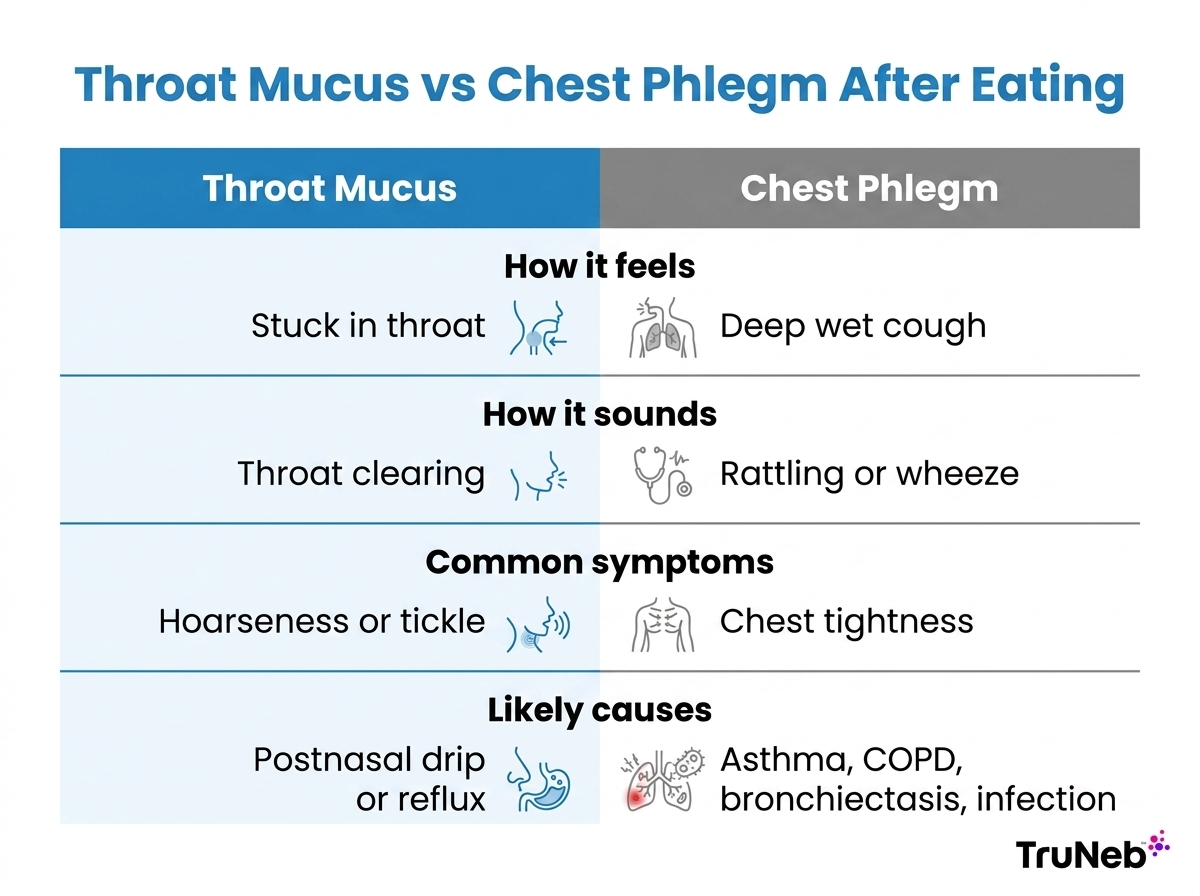
Throat mucus usually feels stuck high in the back of your throat. You may keep clearing your throat, feel a tickle, or notice a lump sensation. Mucus in throat after eating is often linked to postnasal drip, allergies, rhinitis, or laryngopharyngeal reflux. It can also seem worse after spicy foods or when you lie down later.
Reflux foam or saliva often looks white, foamy, frothy, or bubbly. People sometimes describe it as thick spit rather than chest mucus. This can happen when refluxate, saliva, and irritated throat mucus mix together. You may also notice burping, a sour taste, hoarseness, or a burning feeling higher in the throat than in the chest.
Chest phlegm or sputum feels deeper. The cough usually sounds wetter, and you may feel rattling, wheezing, or chest tightness. Chest congestion after eating can happen in people with asthma, COPD, chronic bronchitis, bronchiectasis, or a respiratory infection. Colored sputum, blood, or symptoms that keep getting worse need medical attention.
In medical terms, phlegm usually refers to mucus from the lower airways. Saliva and throat mucus can feel similar, but they do not always point to the same problem.
If you are not sure what you are coughing up and it keeps happening, get evaluated instead of trying to self-diagnose it.
Key point: not all post-meal mucus comes from the lungs.
Where Mucus May Come From After Eating
Timing Clues That Help Narrow the Cause
When the cough shows up can tell you a lot. If you cough during the meal, right after eating, or only after lying down later, the list of likely causes changes.
| When it happens | What it may suggest | Clues to mention |
|---|---|---|
| During the meal | Aspiration or dysphagia | Coughing with liquids, choking, wet voice, food sticking |
| Right after eating | LPR, throat irritation, postnasal drip, asthma, airway sensitivity | Throat clearing, hoarseness, wheeze, mucus already present |
| 30 to 60 minutes later | GERD, LPR, postnasal drip | Sour taste, burping, throat mucus, cough after larger meals |
| After lying down | Reflux or drainage shifting in the throat | Night cough, hoarseness, throat clearing, symptoms after late meals |
Coughing during the meal raises the question of aspiration or dysphagia. This means food, liquid, saliva, or stomach contents may be getting too close to the airway or going into it. The epiglottis is supposed to help protect the trachea when you swallow, but that system does not always work perfectly. If liquids cause more trouble than solids, or if you often cough after drinking water, that is worth mentioning to your doctor.
Coughing right after eating is more mixed. LPR, throat irritation, postnasal drip shifting with swallowing, asthma, and airway sensitivity can all do this. In some people, the act of coughing after the first bite simply brings up mucus that was already sitting in the throat or chest.
Coughing later, especially 30 to 60 minutes after a meal or after lying down, leans more toward GERD, LPR, or postnasal drip. Large dinners, late meals, and nighttime symptoms fit that picture. Hoarseness, throat clearing, or a sour taste also make reflux more likely.
A simple rule of thumb: cough during swallowing points more toward aspiration or dysphagia, while cough later after meals or when lying down points more toward reflux.
If the same timing keeps happening with every meal, do not brush it off as random.
Reflux and Silent Reflux Are Common Causes
Reflux is one of the most common answers when you cough after eating. With GERD, stomach contents move back up into the esophagus. The lower esophageal sphincter is the muscle valve that helps keep stomach contents down, and reflux can happen when that valve relaxes or does not close well. Reflux can irritate the lining, trigger the cough reflex, and leave you with a burning feeling, sour taste, regurgitation, or mucus that seems to show up after meals.
Laryngopharyngeal reflux, often called LPR or silent reflux, is a little different. Instead of stopping lower down, the reflux reaches the throat, larynx, or vocal cords. This can lead to throat clearing, hoarseness, a lump-in-the-throat feeling, and mucus in throat after eating even when you do not have classic heartburn. This is one reason people ask what color is GERD mucus or what does a GERD cough sound like. Reflux mucus is often clear or white and may feel foamy, but color alone cannot confirm reflux.
A reflux-related cough may sound dry, throaty, or repetitive. Some people notice it most after large meals, late meals, bending over, or lying down. A hiatal hernia can also raise the chance of reflux.
Reflux can feel almost the same as postnasal drip. Both can cause throat clearing, hoarseness, and a steady need to swallow or clear mucus. Swallowing problems can overlap with these symptoms too, which is why the whole combination of symptoms matters.
Reflux-related cough usually develops after meals or when lying down because stomach contents irritate the throat.
Talk to your doctor before trying a new medication.
Mucus in Your Throat After Eating
If the feeling stays in your throat instead of your chest, postnasal drip is high on the list. Postnasal drip means mucus is draining from the sinuses and nasal passages down the back of the throat. Swallowing during a meal can make that drainage suddenly more noticeable. You may feel constant throat clearing, a sore throat, a tickle, or a lump sensation.
Upper airway cough syndrome is the medical name often used when nasal drainage leads to cough. Allergic rhinitis, nonallergic rhinitis, sinus irritation, viral illness, and reflux can all play a part. In some cases, a doctor may discuss allergy care or nasal saline irrigation as part of a broader plan, but it should fit your symptoms and medical history.
Gustatory rhinitis is another overlooked cause. This is a type of nonallergic rhinitis where hot or spicy foods trigger a runny nose or more drainage after eating. In that case, you may feel phlegmy after eating, but the source is often your nose and throat, not your lungs.
Food texture can matter too. Very spicy, acidic, hot, cold, dry, or crumbly foods can irritate the throat and larynx. Capsaicin in spicy food, citrus, or vinegar-heavy foods may make the throat feel raw and set off coughing for a while.
Swallowing problems and reflux can sometimes mimic postnasal drip, so throat mucus after meals is not always a sinus problem.
Mucus high in the throat after eating is more commonly linked to postnasal drip or reflux than lung disease.
Coughing Phlegm From Your Chest After Eating
A deep wet cough feels different from throat clearing. If the sound comes from your chest and you feel rattling, wheezing, or tightness, true sputum from the lower airways becomes more likely.
Asthma can cause coughing phlegm after eating in some people, especially if the airways are already sensitive. The act of swallowing, a food trigger, or reflux landing on already irritated airways can all make coughing flare up. Chest tightness and wheezing support that idea.
COPD and chronic bronchitis can also cause chest congestion after eating. These conditions already involve extra mucus and inflamed airways. A meal may change your breathing enough to bring that mucus up. Bronchiectasis is another important cause. In bronchiectasis, mucus can pool in widened airways and become hard to clear, so coughing during or after meals may reveal mucus that was already sitting there.
Cilia normally help move mucus out of the lungs. When the airways are inflamed, damaged, or overloaded with thick secretions, that clearing system may not work as well.
Infections matter too. If you have fever, fatigue, chest pain, shortness of breath, or worsening yellow or green sputum, a respiratory infection or pneumonia needs to be considered.
If your doctor has already diagnosed a mucus-producing airway condition, the meal itself may not be the root cause. It may just be one of the times your body starts moving mucus.
A deep wet cough with chest mucus points toward lower airway conditions rather than throat irritation.
Throat Mucus vs Chest Phlegm After Eating
When Coughing After Eating Could Mean Aspiration or Dysphagia
Aspiration means food, liquid, saliva, or stomach contents enter the airway instead of going cleanly down the esophagus. A cough can be the body's alarm system. One wrong-pipe moment can happen to anyone. Repeated episodes are different.
Dysphagia means difficulty swallowing. When dysphagia is involved, you may cough during meals, choke on liquids, feel food sticking, or notice a wet or gurgly voice after swallowing. Some people also have drooling, unexplained weight loss, or repeated chest infections. Silent aspiration is harder because material can slip into the airway without a strong cough at all.
These clues deserve attention because repeated aspiration can lead to aspiration pneumonia. People with neurologic disease, older adults, and people with known swallowing problems may be at higher risk, but it can happen outside those groups too.
A doctor may look at this with a speech-language pathologist, ENT, gastroenterologist, pulmonologist, or primary care doctor. Tests may include a modified barium swallow, FEES, a chest X-ray if pneumonia is suspected, or reflux testing if the symptoms overlap with GERD.
Call a doctor promptly if coughing after meals happens repeatedly with choking, a wet voice, trouble swallowing, recurrent pneumonia, unexplained weight loss, fever, chest pain, or shortness of breath.
Repeated coughing during swallowing deserves medical evaluation because food or liquid may be entering the airway.
What Mucus Color and Texture Can Tell You
Color and texture can give clues, but they cannot diagnose the cause on their own.
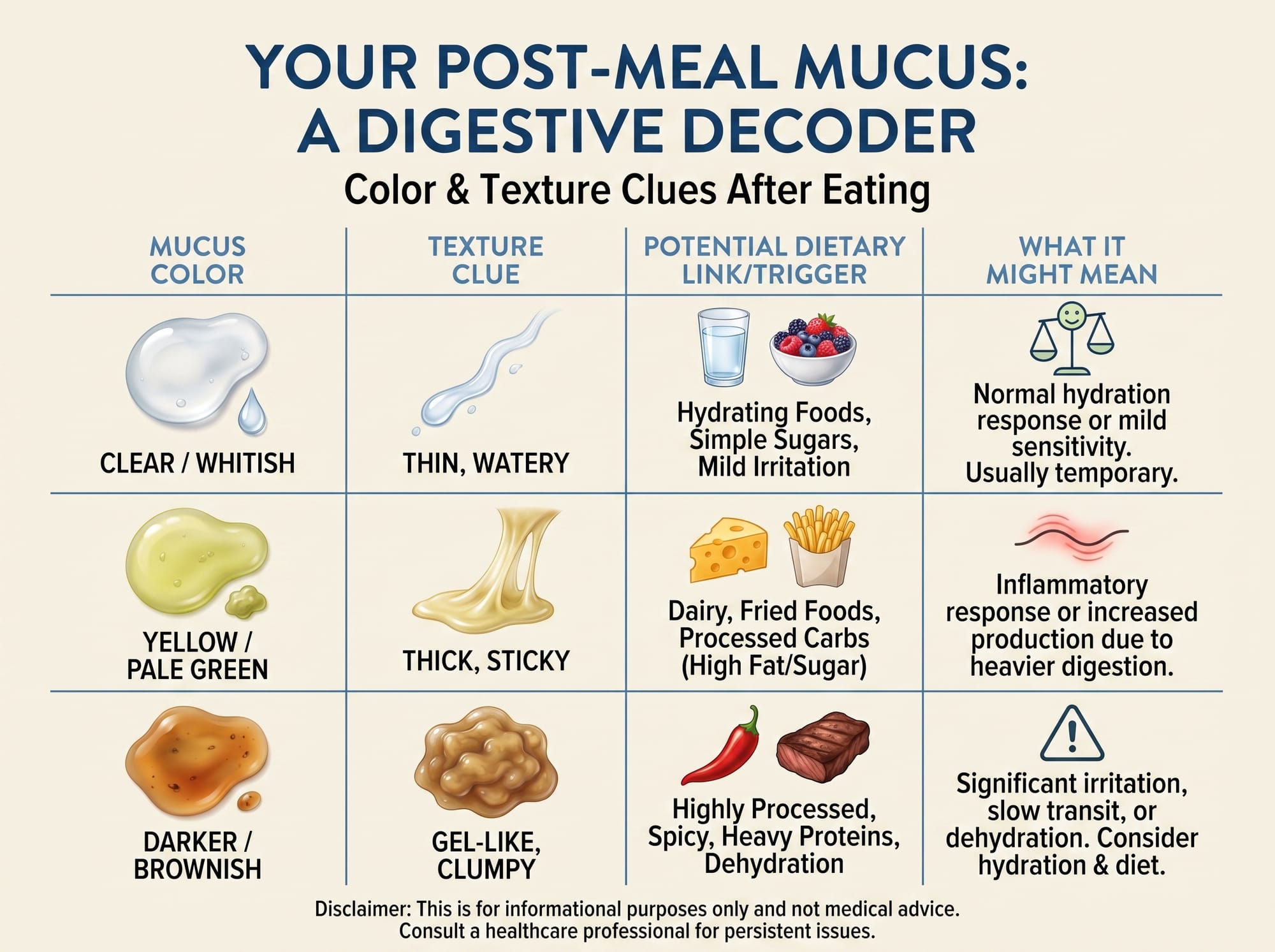
Clear or white mucus can show up with normal airway mucus, allergies, viral illness, dehydration, throat irritation, reflux, or postnasal drip. White foamy mucus after eating may be saliva mixed with reflux or irritated throat secretions rather than true lung sputum.
Yellow or green phlegm can happen with infection or inflammation, but it does not prove a bacterial infection by itself. If yellow or green mucus keeps showing up, gets thicker, or comes with fever, chest pain, shortness of breath, or a chronic lung condition, it should be checked.
Pink or red mucus may contain blood. Brown mucus may reflect old blood or inhaled irritants. Black mucus can be linked to smoke, heavy dust exposure, or, rarely, certain fungal infections. Blood in phlegm always deserves medical advice, and persistent black mucus is uncommon enough to be evaluated.
Texture matters too. Thick sticky mucus can happen when you are dehydrated or when chronic airway disease is part of the picture. Watery secretions lean more toward saliva, rhinitis, or postnasal drip.
Key point: mucus color is a clue, not a diagnosis.
Mucus Color and Texture Clues After Eating
Food Triggers That Can Make Coughing or Mucus More Noticeable
Some foods do not create a disease, but they can make symptoms easier to notice.
Dairy is a good example. Some people feel a thicker coating in the throat after milk, cheese, or cream. That sensation is real, but dairy does not necessarily increase lung mucus production in everyone. That is different from a true food allergy.
Spicy foods can trigger gustatory rhinitis, which means more runny nose and postnasal drip right after eating. Acidic foods may bother people who already deal with reflux. Very hot, very cold, dry, or crumbly foods can also irritate the throat and trigger coughing.
Food allergy is a different level of concern. Cough with hives, swelling, throat tightness, wheezing, vomiting, dizziness, or trouble breathing can point to an allergic reaction. Anaphylaxis is an emergency.
If you feel phlegmy after eating only with certain foods, track the clues instead of cutting out large food groups on your own.
Food triggers can make mucus feel worse, but they do not always mean the food is creating lung mucus.
Red Flags That Need Medical Care
Some post-meal coughing is mild and short-lived. Some is a warning sign.
⚠️ Seek emergency care immediately if you have severe trouble breathing, choking that does not resolve, blue lips or face, severe chest pain, or signs of anaphylaxis.
Seek prompt medical care if you have shortness of breath, chest pain, fever, trouble breathing while lying down, blood in mucus, worsening yellow or green phlegm, a wet voice after swallowing, repeated coughing during meals, trouble swallowing, food sticking in your throat, recurrent pneumonia, unexplained weight loss, or symptoms that keep returning for weeks.
Get emergency care for severe choking, inability to breathe, blue lips or face, throat swelling or closing, fainting, or severe chest pain. Severe allergic symptoms can turn dangerous fast.
These signs do not tell you the exact cause, but they do tell you the problem should not wait.
What You Can Do Safely While You Track Symptoms
While you wait for an appointment, focus on clues and safety.
Track what happens with meals, including the time, the food or drink, when the cough starts, where the mucus seems to be, its color and texture, and any related signs like heartburn, a sour taste, nasal drainage, wheezing, choking, or a wet voice. If you already have asthma, COPD, bronchiectasis, allergies, or reflux, write that down too.
These habits can help some people observe symptoms more clearly while waiting for evaluation. Eat slowly. Chew well. Sit upright. Avoid talking while chewing. If reflux seems likely, smaller meals and staying upright after eating may reduce irritation. If you already have a care plan for reflux, asthma, COPD, or allergies, follow that plan rather than making changes on your own.
Avoid unsafe home nebulizer remedies. Do not nebulize essential oils, hydrogen peroxide, Vicks, herbs, tap water, or homemade mixtures. Use only products made for nebulizer use and only when they fit your doctor's advice.
A symptom tracker often helps more than guessing. It gives your doctor something concrete to work with, especially when timing, foods, mucus color, and swallowing symptoms vary from meal to meal.
Tracking symptoms is not treatment, but it can make your appointment more useful.
When Airway Clearance and Nebulized Saline May Be Relevant
Airway clearance fits one specific group of people: those with a diagnosed mucus-producing airway condition. That may include chronic bronchitis, COPD, bronchiectasis, cystic fibrosis, or some asthma cases where thick secretions are part of the problem.
In those cases, a doctor may recommend an airway clearance plan. That can include breathing techniques, huff coughing, devices, vest therapy, or nebulized saline. Sterile saline or hypertonic saline may help loosen thick airway mucus so it is easier to clear.
What it cannot do is just as important. Nebulized saline does not treat reflux, LPR, aspiration, dysphagia, food allergy, sinus allergies, or an undiagnosed cough after eating. If saline seems to worsen coughing, wheezing, throat symptoms, or breathing, stop and contact your doctor.
Steam inhalers are not the same as medication nebulizers. A nebulizer is designed to deliver products made for nebulizer use, not oils, homemade mixtures, or steam remedies.
TruNeb™ offers portable mesh nebulizers and medical-grade 3% and 7% hypertonic saline designed for nebulizer use. These are most relevant when a healthcare professional has already recommended nebulized saline as part of an airway clearance plan for thick mucus. They are not a substitute for finding the reason you are coughing mucus after eating.
Nebulized saline is only relevant for certain diagnosed airway mucus problems, not for reflux, aspiration, food allergy, or unexplained post-meal cough.
How a Clinician May Diagnose the Cause
Diagnosis usually starts with the story. A doctor may ask when the cough happens, what foods trigger it, whether liquids are worse than solids, what the mucus looks like, and whether you also have heartburn, hoarseness, nasal symptoms, wheezing, weight loss, fever, or past pneumonia.
From there, the next step depends on the clues. A swallowing concern may lead to a modified barium swallow or FEES. Chest symptoms may lead to a chest X-ray, sputum culture, or pulmonary function testing. Nasal and throat symptoms may lead to nasal endoscopy or allergy testing when allergies seem likely. If reflux seems likely, upper endoscopy, pH monitoring, or manometry may be considered.
The right specialist can vary. That may be primary care, an ENT, a gastroenterologist, a pulmonologist, or a speech-language pathologist. Less common causes, such as vocal cord dysfunction, can also resemble throat irritation, wheezing, or chronic cough and may need specialist evaluation.
The goal is not just to name the symptom. It is to find where the mucus is coming from and why the cough happens around meals.
The right test depends on whether the symptoms point toward reflux, swallowing problems, allergies, or lung disease.
Key Takeaways
Coughing mucus after eating can come from more than one place. Sometimes it is throat mucus from reflux or postnasal drip. Sometimes it is saliva or foamy reflux material. Sometimes it is true chest phlegm tied to asthma, COPD, chronic bronchitis, bronchiectasis, or infection.
The fastest way to narrow it down is to notice the clues. Timing, location, color, texture, and other symptoms can point you in the right direction. Immediate coughing, choking, a wet voice, trouble swallowing, or repeated pneumonia need more urgent attention because aspiration or dysphagia may be involved.
Chest phlegm with wheezing, shortness of breath, fever, or lasting yellow or green sputum also needs medical evaluation. And if you have a diagnosed mucus-producing lung condition, airway clearance may help, but only as part of a doctor-approved plan.
The main takeaway is simple: not all mucus after eating means the same thing, and the safest next step is to match the clues with the right kind of care.
Disclaimer: This article is for informational purposes only and is not a substitute for medical advice, diagnosis, or treatment. Always talk with your doctor about symptoms or treatment decisions.
Frequently Asked Questions
Tap or click a question below to see the answer:
Common causes include reflux, LPR, postnasal drip, throat irritation, aspiration, dysphagia, asthma, COPD, chronic bronchitis, bronchiectasis, infection, or mucus that was already present and gets stirred up by coughing after a meal.
No. Throat mucus often comes from postnasal drip, rhinitis, or reflux reaching the throat. Chest phlegm usually feels deeper and may come with a wet cough, rattling, wheezing, or shortness of breath.
It is more serious when it happens with choking, trouble swallowing, a wet voice, recurrent pneumonia, blood in mucus, fever, chest pain, shortness of breath, unexplained weight loss, or frequent repeat episodes. Seek emergency care for severe trouble breathing, choking that does not resolve, blue lips or face, severe chest pain, or signs of anaphylaxis.
GERD or LPR mucus is often clear or white. Some people describe it as foamy or mixed with saliva. Color alone cannot confirm reflux, so the full set of symptoms matters more.
It may sound dry, throaty, or like repeated throat clearing. It often shows up after meals, when lying down, or at night. Hoarseness, sour taste, and a lump-in-the-throat feeling can also point to reflux.
Chest congestion after eating may be linked to reflux irritating the airway, asthma, COPD, chronic bronchitis, bronchiectasis, infection, or aspiration. If it comes with fever, chest pain, shortness of breath, or lasting colored mucus, get checked.
Dairy can make the throat feel thicker for some people, but it does not necessarily increase lung mucus production in everyone. A true food allergy is different and may include hives, swelling, vomiting, wheezing, or trouble breathing.
Nebulized sterile saline or hypertonic saline may help loosen thick airway mucus when a doctor recommends it for a diagnosed mucus-producing airway condition such as bronchiectasis or chronic bronchitis. It does not treat reflux, aspiration, food allergy, dysphagia, or an undiagnosed post-meal cough.