

On this page
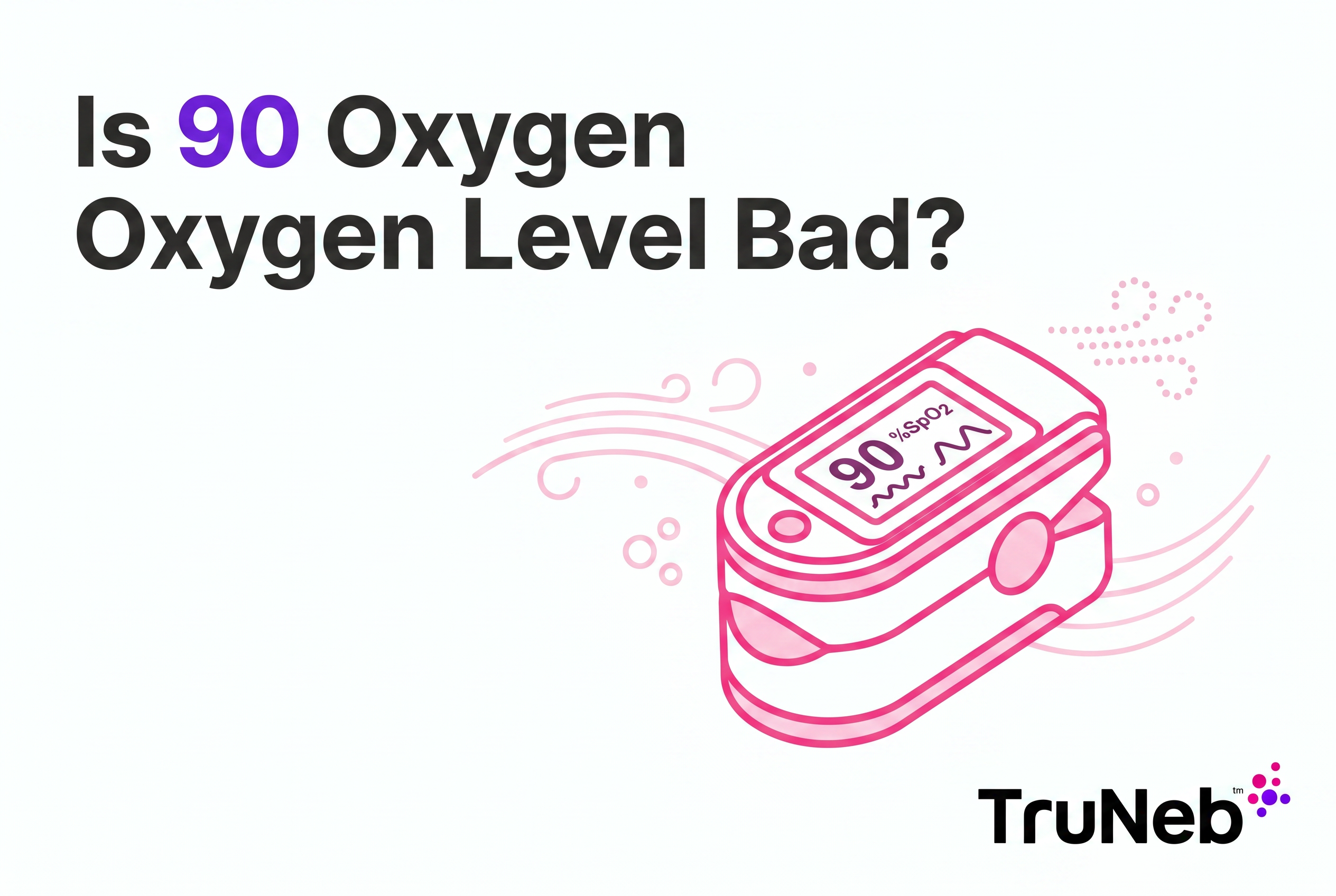
Is 90 Oxygen Level Bad?
For most adults, an oxygen level of 90% on a pulse oximeter is low. A blood oxygen level 90 means your oxygen saturation is lower than expected, and in medical terms, that can point to hypoxemia.
That doesn’t always mean an emergency from one reading alone. A pulse oximeter can be off by a few points, especially if your hands are cold, the device shifts, or the reading was taken while you were moving. But if SpO2 90 stays there after you recheck, it deserves attention.
It matters even more if you also have shortness of breath, chest pain, blue lips or face, confusion, rapid breathing, or symptoms that are getting worse. Those signs can matter as much as the number.
Some people with COPD, chronic lung disease, sleep apnea, or high altitude exposure have a lower doctor-approved baseline. Still, don’t assume an O2 level 90 is normal for you unless a doctor has already told you that.
For most adults, SpO2 90 is lower than expected, so it should be rechecked and taken seriously if it persists or comes with symptoms.
Oxygen Level Chart
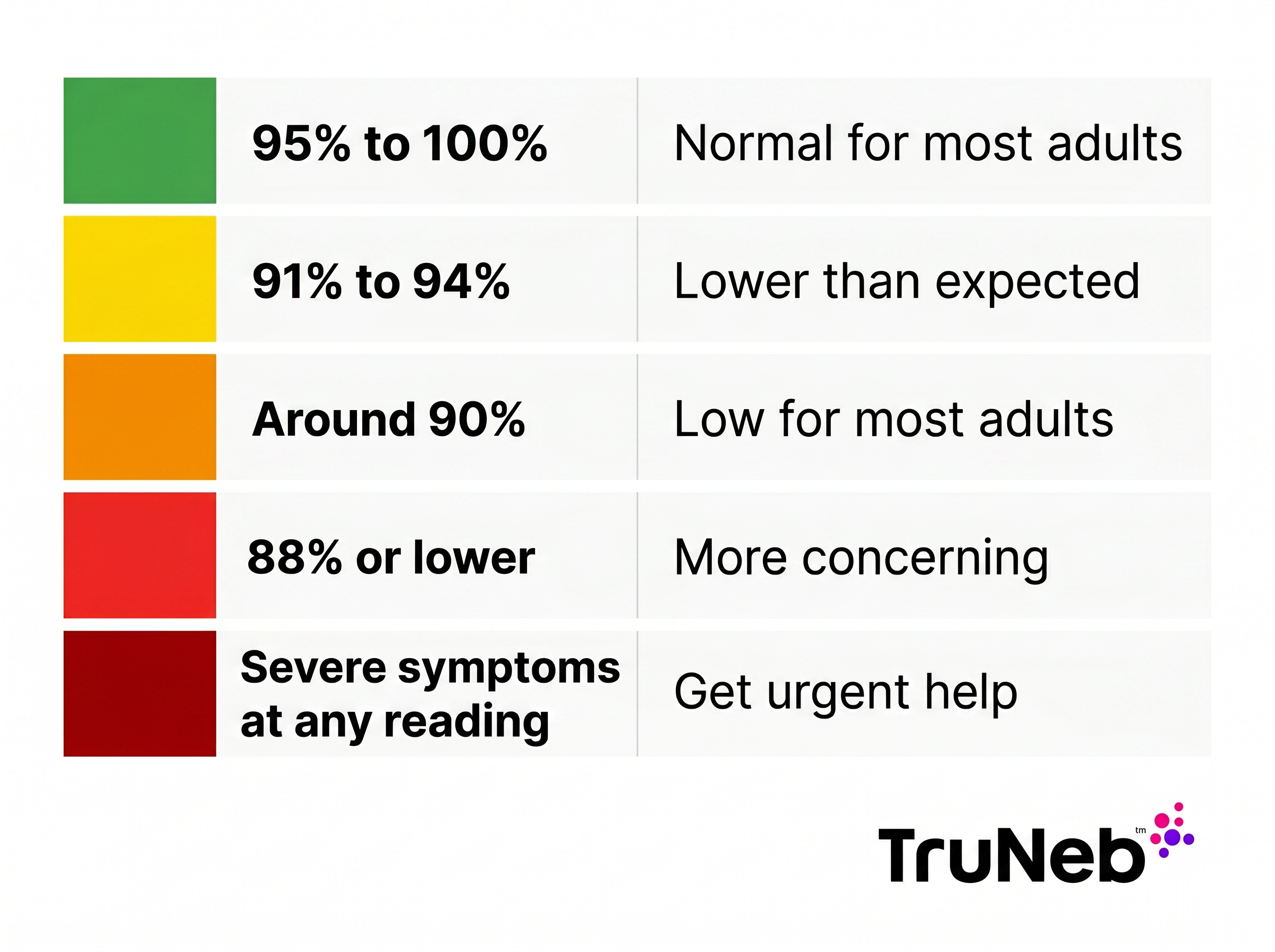
Here’s a simple blood oxygen range chart to help you understand what’s normal, what’s low, and when to get help. For most adults, readings below 95% are lower than expected, and readings around 90% are low. For more context, see this pulse oximeter readings chart.
| SpO2 reading | What it means | What to do |
|---|---|---|
| 95% to 100% | Typical for most healthy adults | No urgent action if you feel well |
| 91% to 94% | Lower than expected | Recheck and call your doctor if it persists, you’re high-risk, or you feel unwell |
| Around 90% | Low for most adults | Recheck carefully and get medical advice if it stays there or symptoms appear |
| 88% or lower | More concerning, even without dramatic symptoms | Seek urgent medical guidance, especially if it’s new or below your usual target |
| Any low reading with severe symptoms | Possible emergency | Call emergency services or go to the ER now |
You’ll see slightly different cutoffs from different medical sources. In general, 95% to 100% is typical for most healthy adults, around 90% is low, 92% or lower is commonly used as a call-your-doctor threshold, and around 88% or lower is more urgent, especially if it’s new or you have symptoms.
This chart is general. If you have chronic lung disease, use supplemental oxygen, or already have a target range from your care team, follow that plan.
Key point: The difference between 92, 90, and 88 matters, but symptoms still guide how urgent the situation is.
What Is a Normal Oxygen Level?
Blood oxygen saturation is the percentage of hemoglobin in your blood that is carrying oxygen. On a pulse oximeter, this number is shown as SpO2.
For most healthy adults at sea level, a normal blood oxygen level is about 95% to 100%. Some people run lower, especially with COPD, other chronic lung disease, sleep apnea, or time spent at high elevation. That’s why your usual baseline matters.
Hypoxemia means low oxygen in the blood. Hypoxia means body tissues aren’t getting enough oxygen.
Most pulse oximeters also show pulse rate, but the oxygen number and your symptoms are the main focus when checking a low SpO2 reading.
A home pulse oximeter gives an estimate. It’s helpful, but it isn’t the same as an arterial blood gas test done in a medical setting. An arterial blood gas can measure oxygen more precisely.
For most healthy adults, a normal oxygen level is about 95% to 100%, but your doctor can set a different target if you have chronic lung disease or use oxygen therapy.
Recheck the Reading Before You Panic
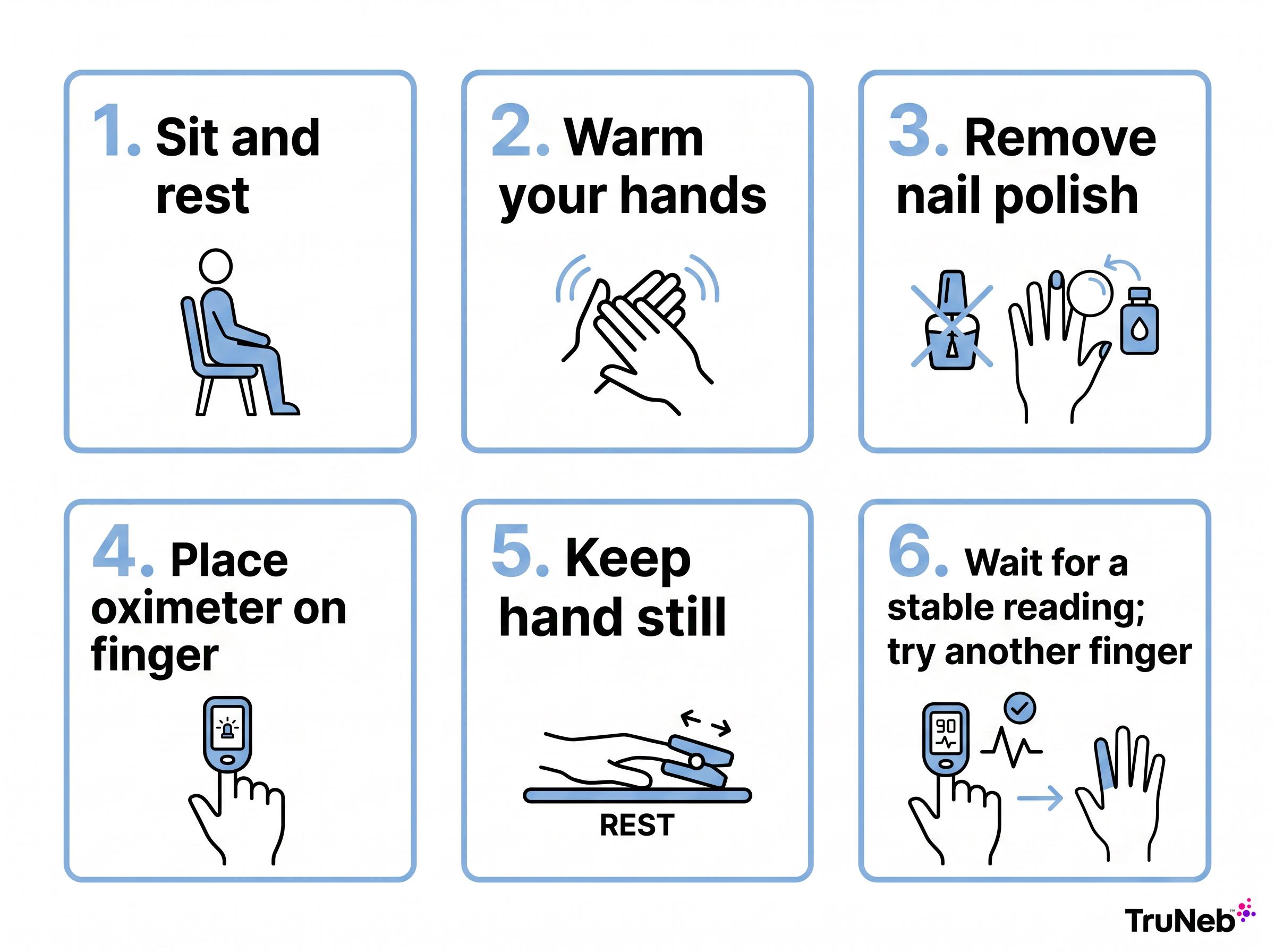
A pulse oximeter reading 90 can be real, but it can also be off. Before you react to one number, recheck it the right way.
- Sit upright and rest for a few minutes.
- Warm your hands if they feel cold.
- Remove nail polish or artificial nails if you can.
- Place the device on your index finger or middle finger.
- Keep your hand still and wait until the number stops changing.
- Try another finger.
- If the device battery is low, charge it or replace it.
Readings can be affected by cold fingers, poor circulation, movement, bright light, low battery, and poor finger placement. Consumer wearables and smartwatches can be less reliable than a finger pulse oximeter. For medical decisions, a reliable finger pulse oximeter is usually more useful than a consumer wearable. Even FDA-cleared finger pulse oximeters can be affected by technique and circulation.
Skin pigmentation can also affect pulse oximeter accuracy, which means some readings can look more reassuring than they really are. A smartwatch reading isn’t enough to make medical decisions if you feel short of breath or unwell.
Carbon monoxide exposure is a special case: a pulse oximeter can look misleadingly normal even when oxygen delivery is dangerous. If carbon monoxide exposure is possible, get emergency help right away.
A stable reading after resting tells you more than one quick check while walking around. Compare the new number with your baseline and how you feel.
If you feel very short of breath, confused, have chest pain, or notice blue lips, don’t spend a long time troubleshooting the device at home.
What to Do If Your Oxygen Level Is 90
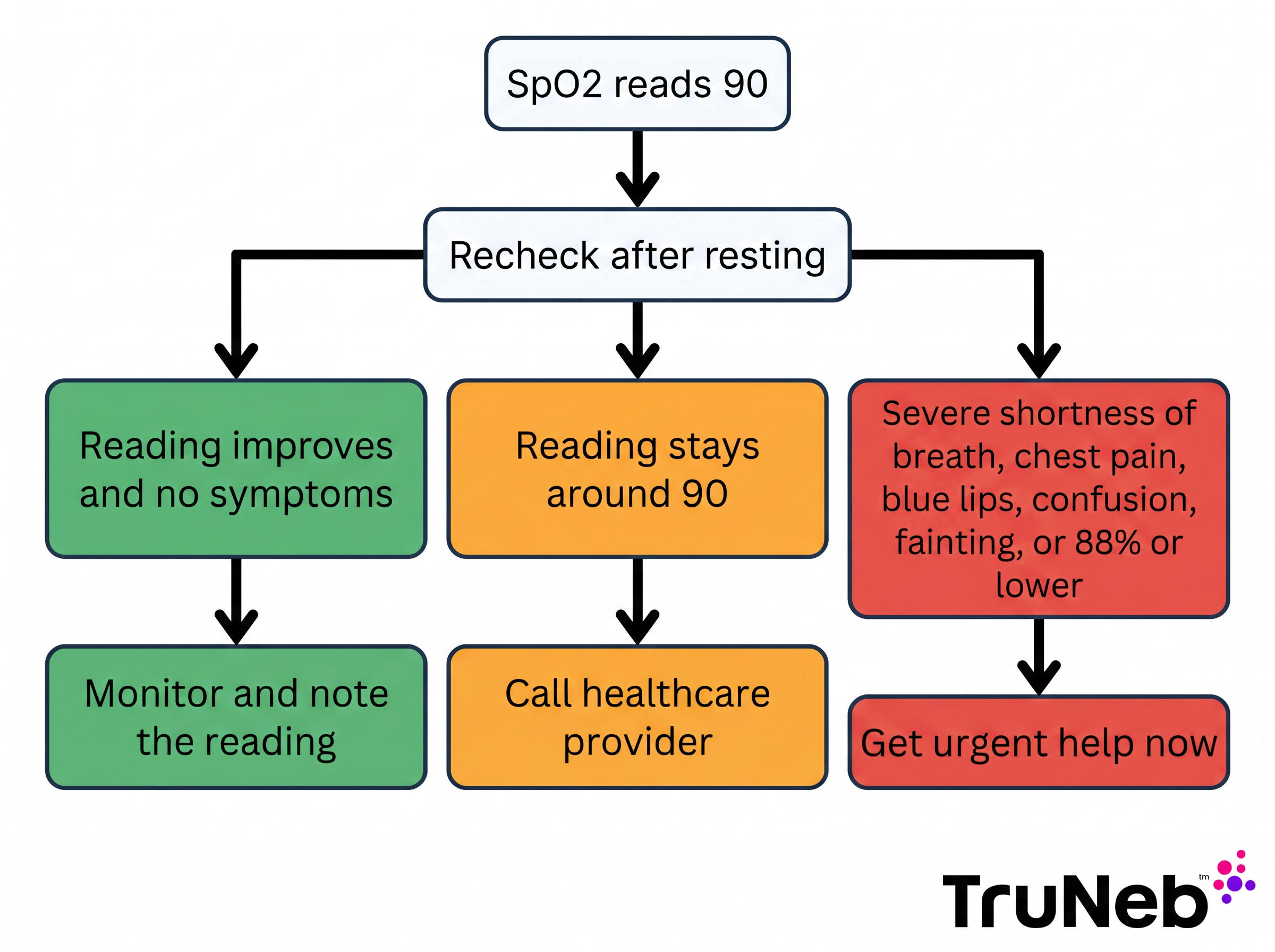
If your oxygen level goes up after you recheck and you feel fine, keep an eye on it. Write down the time, your SpO2, and any symptoms. A trend tells you more than one isolated number.
If it stays around 90 after a careful recheck, call your doctor promptly, even if symptoms are mild. That matters even more if this is new for you or below your normal baseline.
If you have COPD, asthma, heart disease, or another lung condition, follow your prescribed action plan. Use prescribed medications as directed. Don’t change oxygen settings, start a new treatment, or stop a medication on your own.
Keep these safety points in mind:
- Don’t assume a persistent 90 is harmless.
- Don’t rely on a smartwatch alone for medical decisions.
- Don’t use breathing exercises, a nebulizer, or saline as a substitute for urgent care.
- Don’t change oxygen settings unless your doctor told you to.
Talk to your doctor before trying a new medication.
Quick rule: Recheck first, compare the number with your symptoms and baseline, and call a doctor or seek urgent help if SpO2 stays around 90.
Common Reasons Oxygen Can Drop to 90
An oxygen level of 90 can happen for a lot of reasons. The number alone doesn’t tell you the cause.
Lung-related causes
COPD, emphysema, an asthma flare, pneumonia, COVID-19, bronchitis, pulmonary fibrosis, and bronchiectasis can all lower oxygen. A pulmonary embolism can also cause a sudden low reading and can be serious.
Cough, fever, wheezing, or worsening fatigue can give your doctor clues, but the pulse oximeter number alone can’t diagnose the cause.
Heart and blood-related causes
Heart failure can make it harder for your body to move oxygen well. Anemia can leave you feeling weak or short of breath, even though the problem isn’t always obvious from one pulse oximeter check.
Sleep, altitude, and medication causes
Sleep apnea can cause nighttime drops. High altitude means there is less oxygen in the air, so your reading can run lower than it would at sea level. Opioids and sedatives can slow breathing and bring oxygen down. If nighttime readings are part of the concern, this guide to normal oxygen levels during sleep may help you understand what to ask your doctor.
Reading-related causes
Sometimes the reason is the reading itself. Cold hands, motion, nail polish, poor circulation, or poor device placement can make SpO2 90 look worse than it is.
Key point: A pulse oximeter can show low oxygen saturation, but it cannot diagnose why it is happening.
When to Call a Doctor or Get Urgent Help
⚠️ If you have severe shortness of breath, chest pain, blue lips or face, confusion, fainting, or trouble staying awake, call emergency services or seek emergency care right away.
Call a doctor if
Call a doctor if your reading stays around 90 after you recheck it, or if it keeps falling below your normal baseline. That is especially important if you have COPD, asthma, heart disease, sleep apnea, pneumonia, or a recent respiratory infection. If you’re not sure what your normal target should be, ask.
This is the simplest answer to when to call doctor for oxygen level concerns: call promptly when a careful recheck stays around 90, drops below your usual range, or comes with symptoms.
Seek urgent help now if
Call emergency services or go to the ER now if you have severe shortness of breath, chest pain or pressure, blue lips or face, bluish fingernails, confusion, fainting, trouble staying awake, trouble speaking full sentences, severe wheezing, a fast heartbeat at rest, or symptoms that are getting worse fast.
An oxygen level below 90 is more concerning, and around 88 or lower is treated as an urgent threshold, especially if it’s new or not part of a doctor-set baseline. A low number with serious symptoms can signal respiratory distress. In that situation, don’t wait around for several more checks.
Symptoms matter as much as the number. Shortness of breath, chest pain, blue lips, confusion, fainting, fast heartbeat at rest, or rapid worsening make a low oxygen reading more urgent.
Where Nebulizers Fit In
A nebulizer does not replace oxygen therapy. It also does not directly raise oxygen levels or treat hypoxemia. If you are trying to understand oxygen support options, this article on whether you can use a nebulizer with oxygen explains the difference.
That matters if you are thinking about a low reading and trying to decide what to do next. A portable mesh nebulizer like TruNeb™ can support a respiratory routine when a doctor has already recommended nebulized medication or saline for a diagnosed condition. That can include asthma, COPD, bronchiectasis, cystic fibrosis, or other mucus-heavy airway problems. You can learn more about the TruNeb portable mesh nebulizer.
TruNeb’s portable mesh nebulizer and sterile saline options, including 3% and 7% hypertonic saline, are designed for doctor-directed nebulizer routines when appropriate. But they should not be treated as an emergency response to a persistent SpO2 of 90 with chest pain, blue lips, confusion, or worsening breathing. For more on saline routines, see TruNeb’s 3% hypertonic saline solution and 7% hypertonic saline solution.
Low oxygen needs medical guidance based on the cause. If your doctor has recommended nebulized therapy, TruNeb can be part of that routine without replacing the care you need for true low oxygen.
Frequently Asked Questions
Tap or click a question below to see the answer:
Not always from one reading alone, but 90 is low for most adults. Recheck it correctly. If it stays around 90 and you have shortness of breath, chest pain, blue lips, confusion, fainting, trouble speaking, or worsening symptoms, seek urgent help.
It means your blood can be carrying less oxygen than expected. A blood oxygen level 90 can happen with lung disease, infection, sleep apnea, heart problems, altitude, medication effects, or a faulty reading. Persistent low readings need medical guidance.
Yes. Cold fingers, movement, nail polish, artificial nails, poor circulation, low battery, poor finger placement, and device limits can affect the reading. Recheck after resting with warm hands and a steady finger.
Brief dips can happen during sleep, especially with sleep apnea or chronic lung disease. Repeated or prolonged readings around 90 should be discussed with your doctor.
No. A nebulizer does not provide oxygen and should not be used as a fix for low oxygen saturation. It can support prescribed respiratory care, but persistent low oxygen needs medical guidance.
Disclaimer: This article is for informational purposes only and isn’t a substitute for professional medical advice. Always talk with your doctor about symptoms, oxygen levels, and treatment decisions.