


On this page
What Mullein Is and How It's Traditionally Associated With the Lungs
Mullein is a tall flowering plant in the Verbascum genus, and the one people usually mean is common mullein, or Verbascum thapsus. You will spot it growing wild along roadsides and in open fields, with soft fuzzy leaves and bright yellow flowers. People have been using it for breathing comfort for a very long time, across Europe, Asia, and North America, and in Spanish folk medicine it goes by the name gordolobo.
When people talk about mullein for lungs, they usually mean the leaf or the flower. Those are the parts traditionally used for coughs, bronchitis, sore throat, hoarseness, and stubborn mucus. The seeds are a different story, and we'll get to why you should leave those alone later on.
Mullein is an herb traditionally used as an expectorant and a soothing agent for irritated airways. That word "traditionally" matters. Much of what we know comes from long-time folk use plus lab and preclinical studies. Human clinical evidence for treating lung disease is still limited, so it helps to keep expectations realistic.
Why People Use Mullein for Breathing
The draw is simple. A warm cup of mullein tea can feel soothing when your throat is raw and your chest feels tight from coughing. People use it during colds, after a respiratory bug, or when mucus feels stuck. According to Cleveland Clinic, mullein has been used for centuries as a respiratory remedy, mostly in tea form.
What Mullein Is Thought to Do
There are a few reasons mullein gets attention. Its leaves and flowers contain mucilage, a gel-like substance that can coat and calm irritated mucous membranes. That soothing action is called a demulcent effect. Mullein is also considered an expectorant, which means it can help loosen mucus and make a cough more productive so phlegm is easier to bring up. It also contains saponins, traditionally linked to that expectorant action.
Mullein also contains flavonoids and polyphenols like quercetin, luteolin, apigenin, and verbascoside. In lab and preclinical settings, these compounds show anti-inflammatory and antioxidant activity. Some studies also point to antimicrobial and antiviral effects, but again, that work is mostly done in test tubes, not in people. That's interesting, not a treatment. Evidence level: traditional use plus lab and preclinical studies, with limited human evidence.
Key point: Mullein may support lung comfort by helping loosen mucus and soothing irritated airway linings, but it has not been proven to cure asthma, COPD, pneumonia, bronchitis, or any lung disease.
The Forms of Mullein and How They Stack Up
There is no single best medical form of mullein. Each one gets marketed for a slightly different reason, and which you pick mostly comes down to taste and habit. The rundown below is just to help you have a smarter conversation with your doctor or pharmacist, not to talk you into dosing yourself.
Mullein shows up in more shapes than you might guess. You can sip it as tea, take it as drops, swallow a capsule, chew a gummy, or breathe it in as steam. Here is how each one stacks up.
Tea
Tea is the most traditional way to use mullein. It's gentle, hydrating, and cheap. The catch is that you must strain it well to remove the fine leaf hairs, and it doesn't keep long once brewed.
Drops and Tinctures
Drops, also called tinctures or liquid extracts, are concentrated and quick. You add them to water or juice. The downside is that label doses vary a lot from brand to brand, and some contain alcohol.
Capsules
Capsules are for the set-it-and-forget-it crowd. They are tasteless and easy to toss in a bag. They will not soothe a sore throat the way a warm cup does, and the strength depends entirely on the extract inside.
Gummies
Gummies taste good and feel effortless, which is exactly why it's easy to take too many. They usually carry added sugar and other ingredients, and they cost more.
Steam Inhalation
Steam can ease nasal and throat dryness for a short while. It doesn't deliver a measured dose deep into the lungs, and it carries a real burn risk. Anyone with asthma should be careful, since steam can trigger irritation. If you are weighing a steam bowl against a device, this nebulizer versus steam inhaler comparison explains the difference.
Syrup
Mullein syrup, usually made with honey, can be soothing for a cough. Keep in mind it usually contains sugar, and honey should never be given to infants under one year old.
| Form | Best for | Pros | Cons | Potency and absorption | Safety note |
|---|---|---|---|---|---|
| Tea | Soothing throat and mild congestion | Hydrating, traditional, inexpensive | Must strain well, short shelf life | Gentle, water extraction | Use a coffee filter to remove hairs |
| Drops or tincture | Convenience and concentrated serving | Easy to add to water or juice | Label doses vary, can contain alcohol | More concentrated than tea | Start low and follow the label |
| Capsules | Routine use | Tasteless, portable | Less soothing to throat | Depends on extract strength | Check fillers and dose |
| Gummies | Taste and convenience | Easy daily routine | Sugar, additives, dose variability | Usually standardized per serving | Keep away from kids since they look like candy |
| Steam | Temporary nasal and throat moisture | No ingestion required | Burn risk, asthma irritation risk | Local steam comfort, not true lower-lung dosing | Never put herbs in a nebulizer |
| Syrup | Taste and cough comfort | Soothing with honey | Sugar, not for infants under 1 year | Gentle | Avoid if sugar restriction applies |
How Mullein Tea for Lungs Was Traditionally Made
Tea is the form old references describe most, and the one detail everyone agrees on is the straining step, because those leaf hairs are the usual culprit behind a scratchy throat. What follows is how the preparation is generally described, not a recipe you should treat as a recommendation. How much, and whether it is right for you at all, is a call for your doctor.
Traditional references usually describe steeping dried mullein leaf or flower in hot water for several minutes, then straining the liquid through a coffee filter or layered cheesecloth before drinking. Some suggest keeping it to the short term. Since everyone's situation is different, the smart move is to ask your doctor whether mullein makes sense for you, and how much, if any, is reasonable.
Mullein Tea Ingredients
You only need a few things to brew a cup:
- 1 to 2 teaspoons of dried mullein leaf or flower
- 1 cup of hot water
- A coffee filter or several layers of cheesecloth
- Optional honey or lemon for taste
Mullein Tea Steps
Start by adding 1 to 2 teaspoons of dried mullein to a mug. Pour about 8 oz of hot water over the herb, then cover it and let it steep for 10 to 15 minutes. Next comes the important part: strain it through a coffee filter or layered cheesecloth. Drink it warm, and add honey or lemon if you like. Most references suggest up to 2 to 3 cups a day for short-term use, but check with your doctor first and stop if your throat feels worse.
Why Straining Matters
Mullein leaves are covered in tiny hairs. If those hairs end up in your cup, they can scratch and irritate your throat, which is the opposite of what you want. A regular mesh strainer usually lets them slip through. That's why WebMD and Banner Health both recommend a coffee filter or fine cheesecloth instead. It takes one extra minute and saves you a lot of throat tickle.
If your cough lasts more than a few weeks or comes with fever, chest pain, or shortness of breath, skip the home remedies and call your doctor. Run it by your doctor first if you have a lung condition or take prescription medication.
A Word on Mullein Drops and Extracts
Drops are the form you will find most on store shelves, and they win on convenience: a few drops in your water and you are done. Dosing is where people get tangled up, though, because no two bottles are quite alike. Everything below is descriptive. If you do use them, follow the label and your doctor's guidance.
Mullein drops are sold as dietary supplements, not medications. The labels usually tell you to dilute the drops in water, tea, or juice and stick to the serving size on the bottle. Because extract strength varies so much between brands, a dropper from one product is nothing like a dropper from another. Follow the specific label, and check with a healthcare provider, especially if you have a chronic lung condition or take prescriptions.
Drops Versus Tinctures
The words drops, tincture, and extract get used loosely, and that causes mix-ups. A tincture is usually an alcohol-based extract. If you want to skip the alcohol, look for an alcohol-free version made with glycerin. Extract strength swings widely too, from a gentle 1:1 ratio to a concentrated 15X. That means a dropper from one brand is not the same as a dropper from another. Always read the supplement facts before you copy a dose you saw somewhere else.
Who Should Be Cautious With Drops
Some people should check with a doctor before reaching for mullein drops. That includes anyone who is pregnant or breastfeeding, children, and people who avoid alcohol or have liver concerns. It also includes anyone taking prescription medication or living with asthma or COPD. These are not reasons to panic, just reasons to ask first. Check with your doctor before starting a new supplement if any of these apply to you.
How to Use Mullein Capsules and Gummies
Capsules and gummies are convenient ways to take mullein, but they aren't stronger or more effective than tea or drops.
If tea feels like too much fuss and droppers aren't your thing, capsules and gummies offer a hands-off way to take mullein. They're easy to pack and easy to remember. Just know that easy doesn't mean stronger, and the details on the label still matter.
Capsules
Capsules are the low-key option. Follow the serving size on the bottle and take them with water. Look for a label that names the plant part used and lists a clear extract strength, so you actually know what you're getting. If you have a sensitive stomach, scan the other ingredients and pick a brand with fewer unnecessary fillers.
Gummies
Gummies are the crowd-pleaser because they taste like candy, and that's exactly the catch. It's easy to chew a couple extra without thinking. Stick to the serving size and check the label for sugar, sweeteners, added flavors, and any extra botanicals you didn't bargain for. Keep them well out of reach of kids, since they look and taste like treats.
Capsule or Gummy?
It really comes down to what fits your day. Capsules are the better pick if you want to keep sugar low and just take it and go. Gummies make sense if taste is what keeps you consistent. Tea still wins when your throat needs soothing, and drops give you the most flexibility on serving size. Pick the one you'll actually stick with. For broader habits, you might also look at the best supplements for respiratory health.
Using Steam Safely, and the One Hard Rule
Breathing in steam from mullein can feel nice when your nose and throat are dry and scratchy. It's a simple comfort trick, but it comes with two warnings: watch the heat, and never confuse a steam bowl with a nebulizer. Those are not the same thing, and treating them the same can hurt you.
Steam Inhalation Steps
Start by adding dried mullein leaves to a bowl of hot water, or brew a strong cup of tea. Let the water cool for a moment first, because steam burns are easy to get and no fun. Keep your face at a comfortable distance, not hovering right over the surface. Breathe the steam gently for 5 to 10 minutes. If you start wheezing, feel chest tightness, get dizzy, or notice any irritation, stop right away. Anyone with shortness of breath should seek medical attention.
Steam Safety Warnings for COPDers and Asthmatics
Hot water is a hazard here, so handle the bowl carefully and keep it away from children unless a doctor says it's fine. People with asthma or COPD should generally not use mullein in steam, since it can set off airway irritation.
Do Not Put Mullein in a Nebulizer
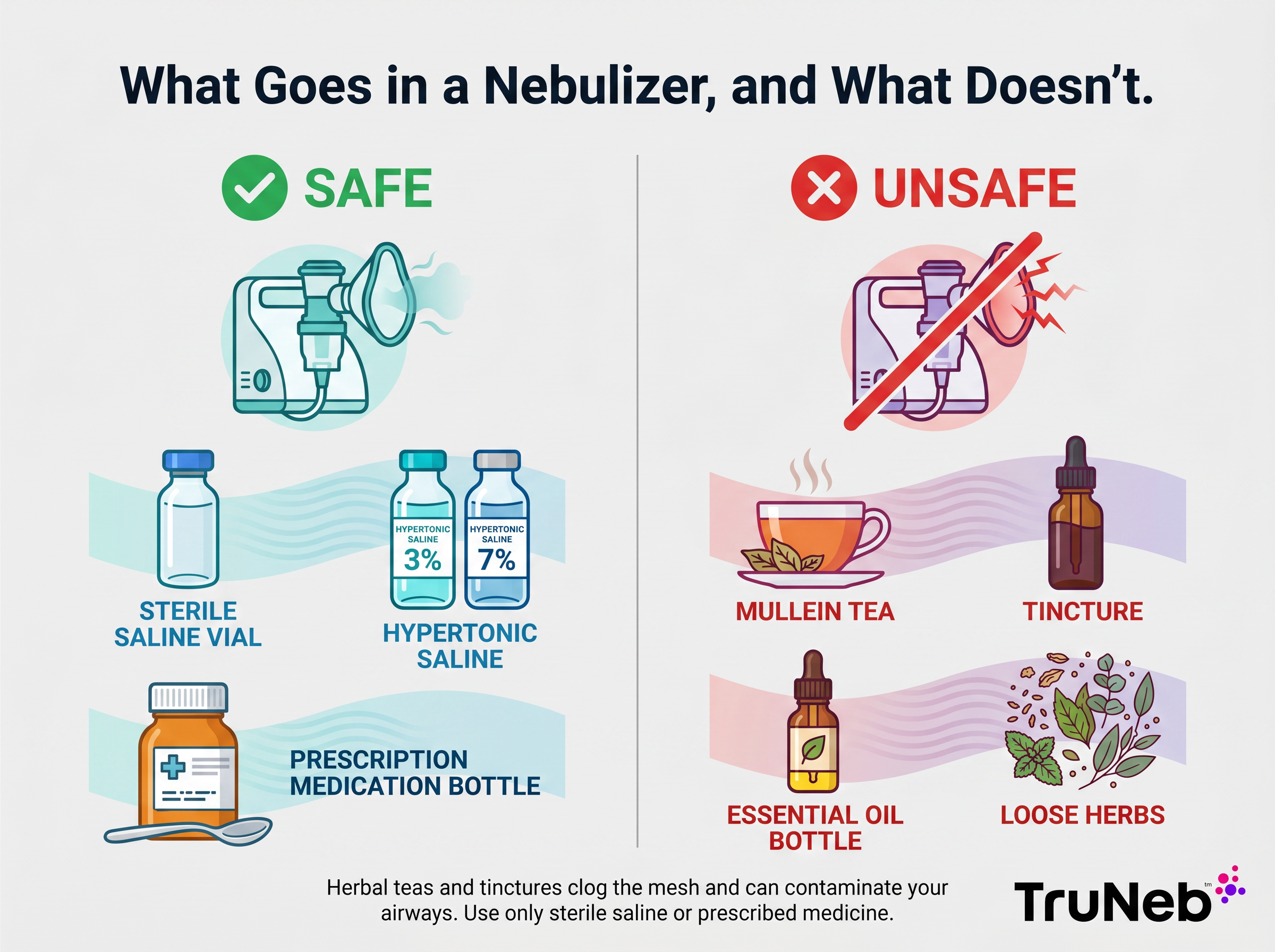
This is the part too many guides leave out. Homemade teas, tinctures, essential oils, and loose-herb infusions should never go into a nebulizer. They aren't sterile. They contain plant particles that can clog a portable mesh nebulizer, and worse, they can irritate or contaminate your lower airways. Nebulizers are built for sterile saline or medications your doctor prescribes, not kitchen brews. The same caution applies to putting essential oils in a nebulizer.
Key point: Do NOT put mullein tea, tinctures, essential oils, or loose herbs into a nebulizer. Nebulizers should only be used with sterile saline or prescribed medication.
If you use a portable mesh nebulizer like the TruNeb™ portable mesh nebulizer, keep herbal teas and tinctures out of the device. A nebulizer is for sterile saline or prescribed respiratory medication only.
How Long Mullein Takes to Work
One of the most common questions is how fast mullein actually works. The honest answer depends on what you are hoping for. Some effects can feel quick, while real changes in mucus take longer, and chronic problems need a doctor rather than patience.
Short-Term Comfort
If your throat is dry or scratchy, a warm cup of mullein tea or a few minutes of steam can feel soothing the same day. That comfort comes mostly from the warmth, the moisture, and the gentle coating action of the mucilage. Drops are convenient too, though how much they help varies a lot from person to person.
Mucus Changes
When mullein does help with mucus, it usually shows up over a few days, not in one cup. You might notice phlegm feels a little easier to cough up. Mullein works better when you support it. Hydration thins mucus, so drink plenty of fluids and stay away from smoke (see the mucus section below for more).
When Not to Wait
Mullein is for mild, short-term comfort, not for chasing down a problem that keeps growing. See your doctor if your cough lasts more than a few weeks, gets worse instead of better, or comes with fever, chest pain, shortness of breath, coughing up blood, or unexplained weight loss. Those are signals to get checked, not to brew another cup.
Does Mullein Get Rid of Mucus
Plenty of people search for mullein hoping it will flush their lungs clean. Here's the straight answer: mullein can help mucus move, but it doesn't vacuum your lungs out, and it doesn't "detox" them. Your lungs already have their own cleaning system, and mullein simply gives that system a small nudge.
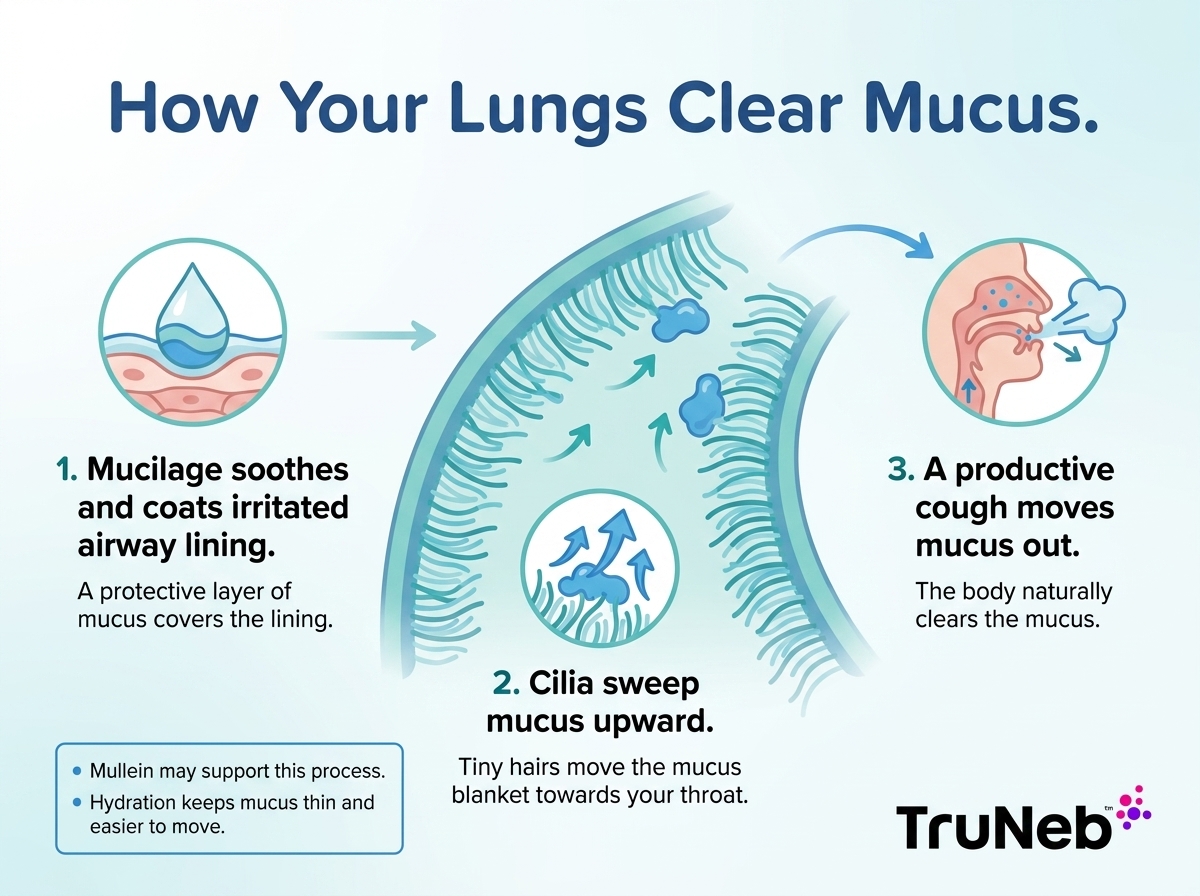
Key point: Mullein may help mucus move by supporting productive coughing, but the lungs clear themselves through cilia, mucus, and cough rather than through an herbal detox.
Mullein May Help Mucus Move, Not Vacuum It Out
Mullein is traditionally considered an expectorant. An expectorant is a substance that supports a productive cough, meaning it helps you bring phlegm up rather than fighting a dry, useless cough. The actual clearing is done by your body. Tiny hair-like structures called cilia line your airways and sweep mucus upward, and your cough reflex finishes the job. Mullein can make that process a little easier, but it's the cilia and the cough doing the heavy lifting. If congestion is your main concern, here are practical ways to get rid of lung mucus fast.
Why Hydration Matters
Thick mucus is sticky and hard to move. Thin mucus slides out far more easily. That's why fluids matter so much. Drinking water, breathing humidified air, and following doctor-recommended therapies can all help thin mucus so your cilia and cough can clear it.
When Sterile Nebulized Saline May Be More Appropriate
Lots of people researching mullein are really dealing with thick, stubborn mucus or chest congestion. If that's you, the evidence-based airway-delivery option is not nebulized mullein. The medical choice is often nebulized sterile saline or hypertonic saline in a nebulizer, delivered through a clean device (when approved by your doctor). Saline doesn't cure lung disease. When your doctor recommends it, though, it can help hydrate and loosen mucus in a way a cup of tea cannot.
Mullein Side Effects and Who Should Avoid It
Mullein is generally gentle, but its seeds can be toxic, and people who are pregnant, breastfeeding, or managing asthma or COPD should check with a doctor first.
"Gentle" is not the same as "risk-free." Knowing the side effects and who should steer clear helps you use it wisely.
Common Side Effects
Most side effects are mild. Some people get an upset stomach. Handling the raw plant can cause skin irritation, and an allergic reaction is possible, especially for people sensitive to plants in the figwort family (Scrophulariaceae). The most preventable one is throat irritation from poorly strained tea, thanks to those fine leaf hairs. In sensitive people, inhaling steam or strong preparations can worsen a cough rather than calm it.
Seed Toxicity Warning
This one deserves a clear callout. Do not ingest mullein seeds. They are considered potentially toxic and have traditionally been used as a fish poison, which tells you plenty. Stick to leaves and flowers from a reputable source. Avoid foraging unless you are certain of both the plant and the part you are picking, because guessing here isn't worth the risk.
Who Should Avoid or Ask a Doctor First
Some people should talk to a doctor before using mullein at all. That list includes pregnant and breastfeeding people, since there isn't enough safety data. It also includes children, people with asthma or COPD, anyone taking prescription medications, people with plant allergies, and anyone dealing with serious lung symptoms. Banner Health notes mullein can interact with diuretics and certain anti-inflammatory drugs, which is another reason to check first if you take regular medication.
Red Flags That Need Medical Care
Some symptoms mean it's time to stop home remedies and get help now. Watch for shortness of breath at rest, chest pain, coughing up blood, and blue or gray lips or fingers. Fever, chills, night sweats, unintentional weight loss, and breathing that is rapidly getting worse all belong on this list too. These are not "sip more tea" situations. They are "call your doctor or seek emergency care" situations. Get medical advice before trying mullein if you have any chronic condition or take medication.
How to Choose a Quality Mullein Product
Because supplements aren't regulated like medicines, look for third-party testing, a clear plant part and serving size, and no lung-detox claims.
Supplements are not held to the same standards as medications, so quality is all over the map. Two bottles labeled "mullein for lungs" can be wildly different inside. A short checklist saves you from wasting money and from products that overpromise.
Quality Checklist
Before you buy, look for these signs of a trustworthy product:
- Organic or responsibly sourced, with the plant part clearly listed
- Third-party tested, ideally with a USP or NSF mark and made under CGMP standards
- A clear serving size and extract ratio or herb strength
- Batch testing for heavy metals, pesticides, and microbes
- Honest labeling with no "lung detox cure" claims and a transparent list of other ingredients
Remember that the FDA doesn't evaluate supplement claims the way it does drugs, so a confident label is not proof of anything. The NCCIH recommends sticking with reputable brands that test their products.
Tea Quality
For tea, choose whole or cut leaf from a brand you can verify. Skip anything that looks dusty, smells musty, or could be moldy. Store your mullein dry and sealed so it stays fresh and free of contamination.
Drops Quality
For drops, check the extract strength and serving size first, then see whether the base is alcohol or glycerin. Look for third-party testing, and walk away from any product leaning on vague "clears your lungs fast" promises.
Gummies and Capsules Quality
For gummies and capsules, read how much mullein is actually in each serving, since some products use very little. Review the sugar, fillers, and any added herbs or stimulants. And as always, keep gummies out of reach of children.
Mullein and Evidence-Based Lung Support
Mullein is a comfort tool, not a cure, and it can't replace the medications, inhalers, or oxygen a doctor prescribes. Most people with chronic lung illness should avoid it unless directed by a physician.
Mullein can be a comforting tool, but it works best as part of a bigger picture. The strongest things you can do for your lungs are not herbal at all. They are everyday habits and, when needed, proven medical care.
What Mullein Can and Cannot Do
Mullein can support comfort and help loosen mucus, and for a lot of people that's genuinely useful during a cold or a lingering cough. What it cannot do is detox your lungs, and it cannot replace inhalers, antibiotics, oxygen, or any treatment your doctor prescribes. Thinking of it as a comfort tool, not a cure, keeps you safe and keeps your expectations grounded.
Evidence-Based Habits That Support Lung Health
The habits that actually move the needle are not flashy. Quitting smoking and vaping protects your lungs more than any herb ever could. Staying hydrated thins mucus. Avoiding smoke and pollutants, using HEPA filtration when the air is bad, and exercising within your tolerance all help your lungs do their job. If you have asthma or COPD, following your doctor's plan and using your prescribed medications matters most of all. A clean device also matters, so it helps to know how to clean a nebulizer properly.
Where TruNeb Fits
There is one spot where a device beats a teacup. If a doctor recommends nebulized saline for thick mucus, a portable mesh nebulizer paired with sterile saline for a nebulizer can support an airway-hydration routine at home. It's not a replacement for medical advice, and saline doesn't cure lung disease. It's simply a clean, practical way to follow the plan your doctor gives you, without ever putting herbs anywhere near the device.
Disclaimer: This article is for informational purposes only and isn't a substitute for professional medical advice. Always talk to your doctor about your health and any treatments.
Frequently Asked Questions
Tap or click a question below to see the answer:
There's no single proven best form. Tea soothes a sore throat, drops add convenience, capsules and gummies suit a daily routine, and steam offers temporary upper-airway comfort. Match the form to your goal and pick the one you'll actually use.
Steep 1 to 2 teaspoons of dried leaf or flower in 8 oz of hot water for 10 to 15 minutes, then strain through a coffee filter to remove the leaf hairs.
No, only sterile saline or prescribed medicine. Teas, tinctures, oils, and loose herbs aren't sterile and can clog the mesh and contaminate your airways.
It can help loosen mucus and support a productive cough, but it doesn't detox your lungs. Your lungs clear themselves through cilia, mucus, and coughing, and hydration helps that process.
Soothing comfort can show up the same day with tea or steam. Changes in how easily mucus moves can take several days. Chronic or worsening symptoms need a medical evaluation, not more waiting.
References suggest up to 2 to 3 cups daily for short-term use. Follow your doctor's guidance, especially with a lung condition, and stop if you notice throat or stomach irritation.
Follow the label directions, dilute the drops in water, juice, or tea, and start with the lowest serving. Don't exceed the recommended dose, and never copy a dose from a different brand since extract strengths vary widely.
They're convenient, but the evidence doesn't show gummies beat tea or drops. Check the mullein per serving, watch the sugar and fillers, and keep them away from children since they taste like candy.
Possible side effects include upset stomach, allergic reaction, skin irritation from handling the plant, and throat irritation from poorly strained tea. In sensitive people, it can worsen airway irritation.
Pregnant or breastfeeding people, children unless a doctor approves, people with asthma or COPD, anyone taking prescription medication, and anyone with red-flag symptoms should talk to a doctor before using mullein.
Yes. Mullein seeds are considered potentially toxic and should not be ingested. Stick to leaves and flowers from a reputable source.
Long-term daily use hasn't been well studied. Follow the label, use it short term, and check with a doctor before making it a daily habit, especially with a chronic condition.