


On this page
Yes, you can have a sinus infection with clear mucus. Clear mucus can occur early in sinusitis or when sinus inflammation is linked to a virus, allergies, or irritation. Mucus color alone cannot confirm or rule out a sinus infection.
Yes, You Can Have a Sinus Infection With Clear Mucus
Clear Mucus Does Not Rule Out Sinusitis
Yes, you can have a sinus infection with clear mucus. Clear mucus can happen early in sinusitis or when sinus inflammation is linked to a viral infection, allergies, or irritants. Clear mucus alone does not prove you have a sinus infection, but it doesn't rule one out either.
Sinusitis is inflammation of the tissue lining the sinuses. In medical terms, it is also called rhinosinusitis. When the nasal cavity, nasal passages, and sinus openings become irritated or swollen, mucus can stay thin and clear, especially at the start of symptoms.
Mucus Color Alone Cannot Diagnose the Cause
Doctors don't diagnose sinusitis by mucus color alone. They look at the full pattern instead. Nasal congestion, facial pressure, postnasal drip, headache, reduced smell, fever, and how long symptoms last matter more.
Clear mucus does not always mean you only have a cold or allergies. At the same time, yellow or green mucus does not automatically mean you need antibiotics. Many sinus infections improve without antibiotics.
For sinusitis, the timeline usually matters more than the tissue. Symptoms that last more than 10 days, get worse after getting better, or come with severe pain deserve closer attention.
One-liner: Clear mucus can happen with sinusitis, and mucus color alone cannot confirm or rule out a sinus infection.
What Clear Mucus Usually Means
Clear Mucus Can Be Normal
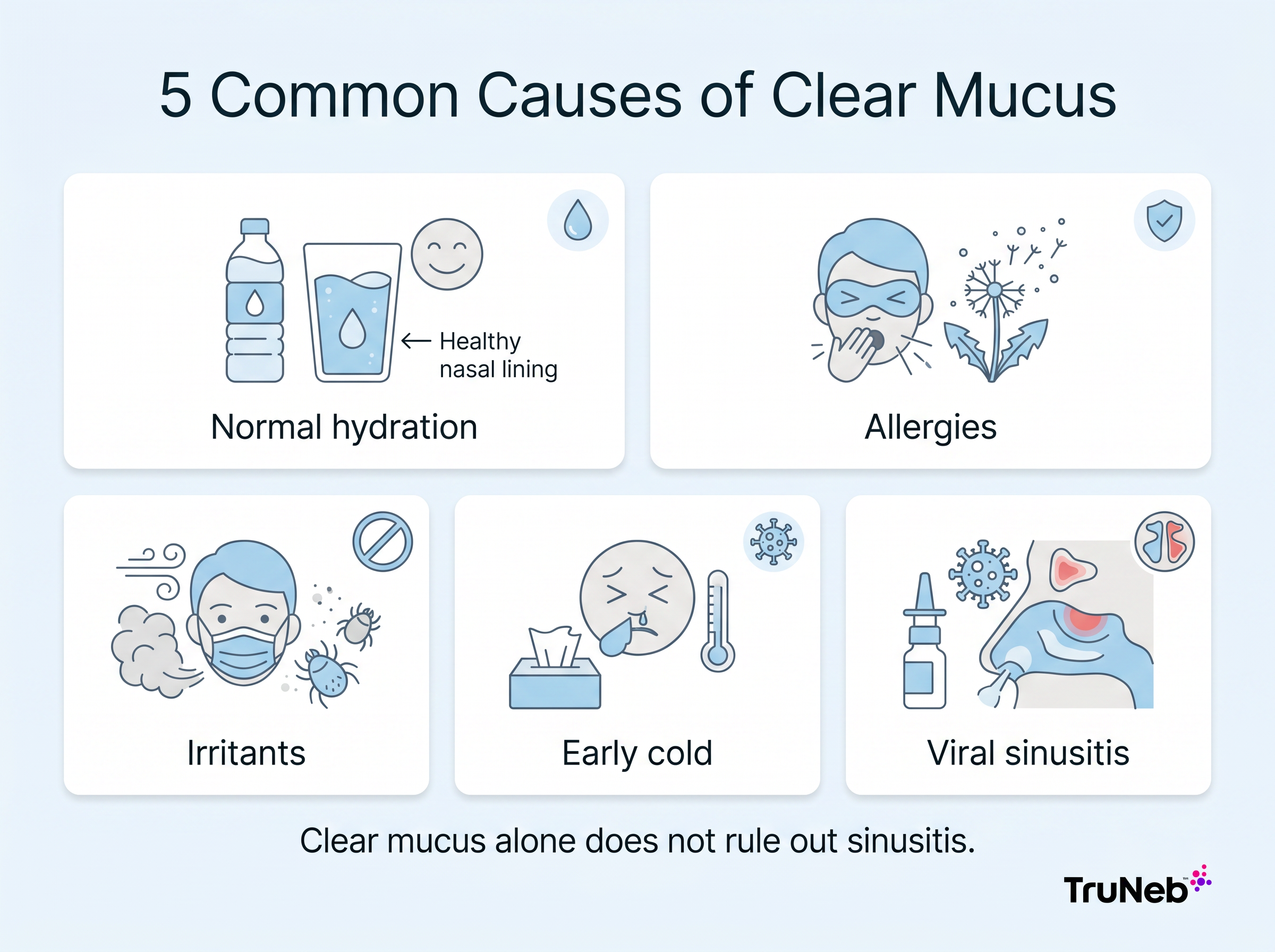
Clear mucus is a normal part of how your nose works. It helps keep your nasal passages moist and traps dust, pollen, and germs before they move deeper into your airway.
Clear Mucus Can Increase With Allergies or Irritation
Allergies are one of the most common reasons for clear nasal discharge. You are more likely to notice sneezing, an itchy nose, and itchy or watery eyes. Irritation from smoke, perfume, dust, dry air, or pollution can cause similar drainage.
Clear Mucus Can Appear Early in a Cold or Viral Sinusitis
Clear mucus can also show up early in a cold or viral sinusitis. In the first few days of a viral illness, drainage can stay clear before it becomes thicker or cloudy. That change does not always mean the illness has turned bacterial.
Key takeaway: Clear mucus can be normal, allergy-related, irritation-related, or part of a viral sinus infection.
One-liner: Clear mucus from the nose is common with normal nasal function, allergies, irritants, and early viral illness.
Why Mucus Color Is Not Enough to Identify a Sinus Infection
Yellow or Green Mucus Does Not Always Mean Bacteria
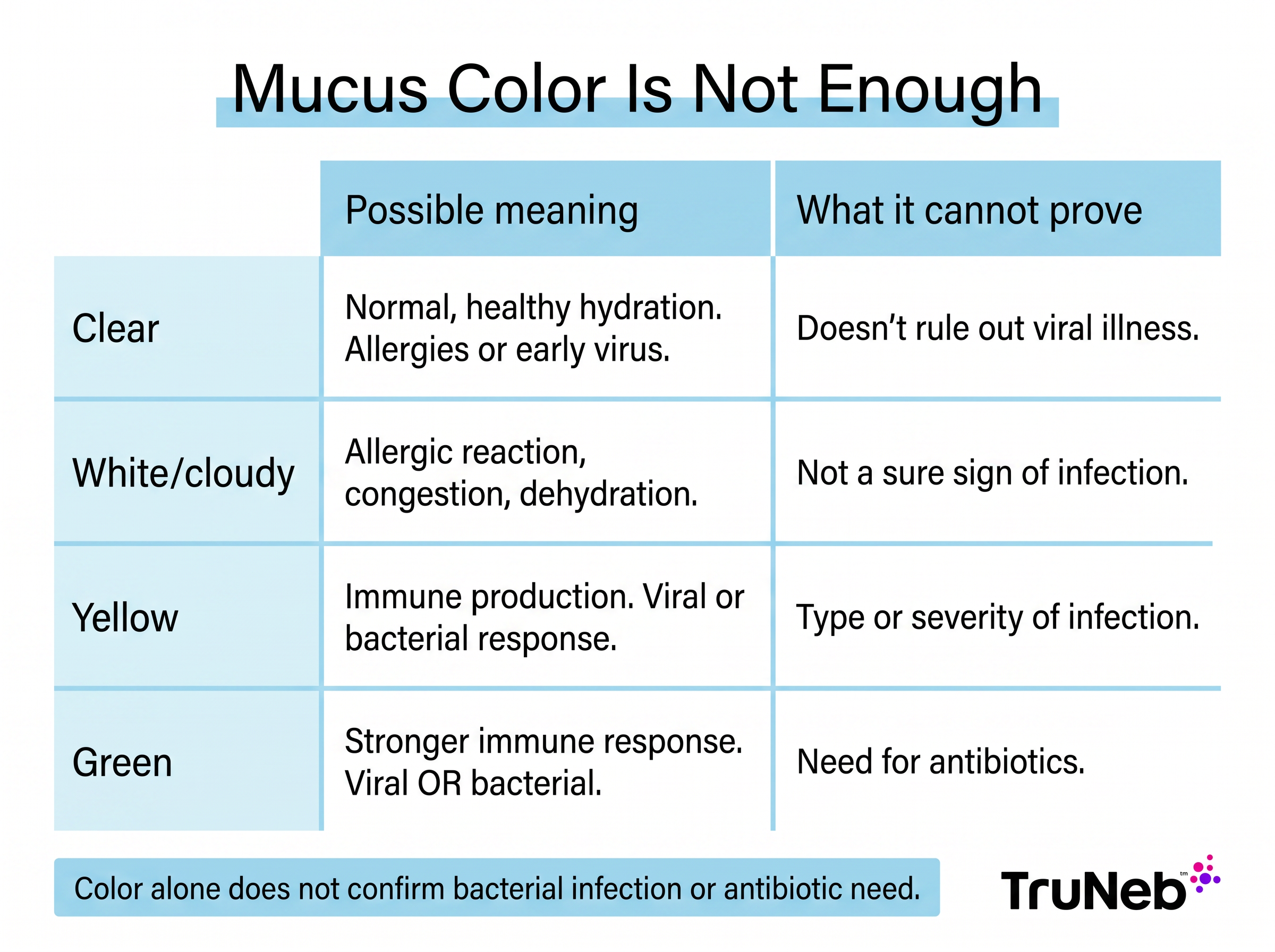
A lot of people look at the tissue and try to figure out what color means. That makes sense, but it is not a reliable way to tell what is going on.
Yellow or green mucus does not always mean a bacterial sinus infection. That color can come from inflammation and immune cells, including neutrophils. Viral infections can cause the same color change. For a deeper look at color changes in mucus, see this guide on phlegm color meanings.
Clear Mucus Does Not Always Mean No Infection
Clear mucus does not always mean there is no infection. Viral sinusitis can start with clear drainage. Some people also have clear mucus along with strong facial pressure and congestion.
Consistency and Symptom Pattern Matter More
Thin, clear drainage with sneezing and itchy eyes points more toward allergic rhinitis. Clear mucus with a stuffy nose, facial pressure, postnasal drip, and symptoms after a cold can fit sinusitis. Thick or cloudy mucus may show that inflammation is building, but it still does not tell you if bacteria are the cause.
Antibiotics are not based on mucus color alone. Doctors look at timing, severity, fever pattern, and whether symptoms are improving or getting worse.
One-liner: Yellow or green mucus can happen with viruses, and clear mucus can happen with sinusitis, so color alone is not enough to make the call.
Symptoms That Matter More Than Clear Mucus
If you are trying to figure out whether you might have sinusitis, pay more attention to pressure, congestion, and timing than mucus color.
Common symptoms include a stuffy nose, runny nose, facial pain or pressure, headache, postnasal drip, sore throat, cough, bad breath, tooth pain, upper jaw pain, reduced smell, reduced taste, fatigue, ear pressure, and sometimes fever.
Pressure can occur in the maxillary sinuses (cheeks), frontal sinuses (forehead), ethmoid sinuses (between the eyes), and sphenoid sinuses (deeper behind the eyes). These are the main groups of paranasal sinuses.
Postnasal drip can lead to throat clearing, a sore throat, or a cough that seems worse at night. Readers dealing with persistent drainage may also find helpful information in this article about post-nasal drip and night cough relief.
You can notice clear mucus and still feel miserable because swelling is blocking normal sinus drainage.
One-liner: With sinusitis, pressure, congestion, postnasal drip, and symptom duration usually matter more than whether mucus is clear.
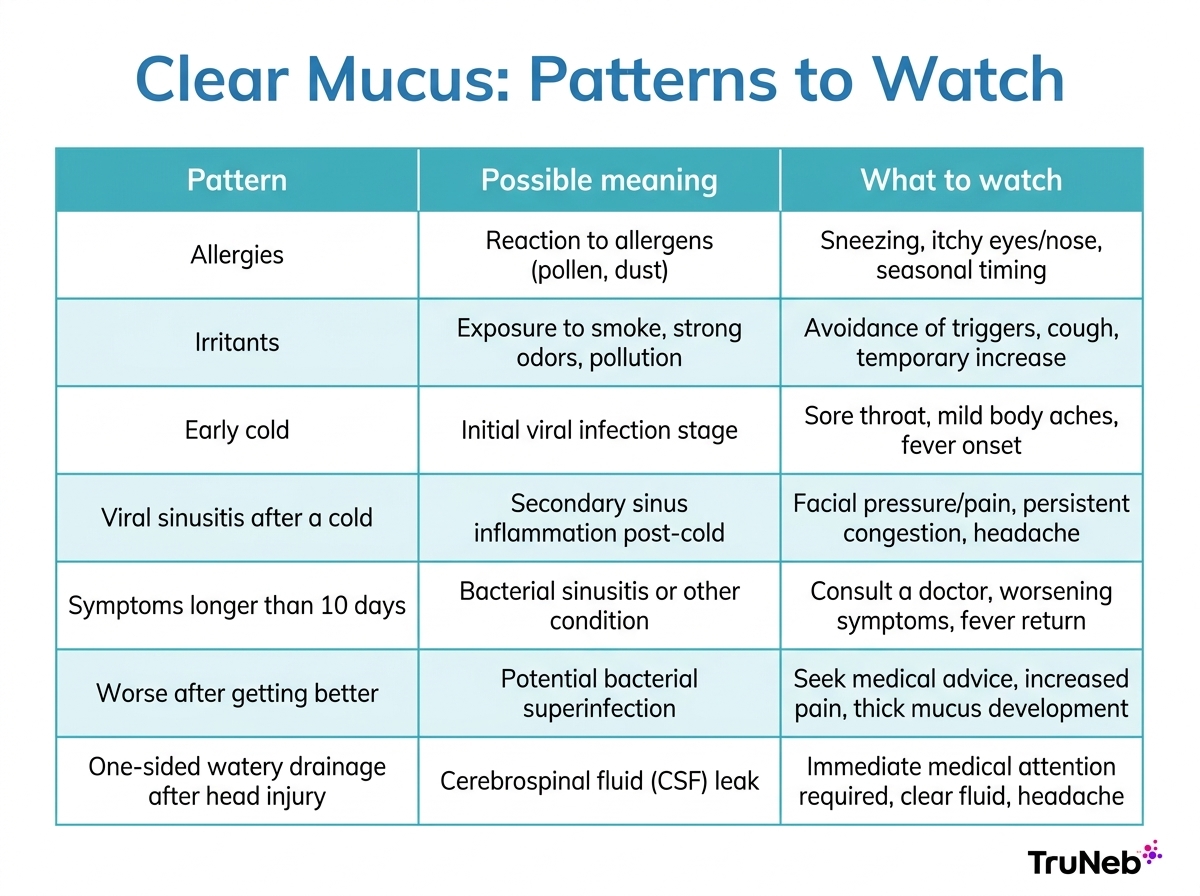
Clear Mucus Decision Table
This quick table can help you think about the pattern, not just the color.
Key takeaway: The combination of symptoms and timing is more useful than mucus color alone.
| Pattern | Possible Meaning | What to Watch |
|---|---|---|
| Clear mucus, itchy eyes, sneezing | Allergies | Seasonal or trigger-related symptoms |
| Clear mucus after smoke or perfume | Nonallergic irritation | Improves when trigger is removed |
| Early cold symptoms | Viral infection | Usually improves within 7–10 days |
| Pressure and congestion after a cold | Viral sinusitis | Monitor symptom timeline |
| Symptoms longer than 10 days | Possible bacterial sinusitis | Contact your doctor |
| Better, then worse | Acute bacterial rhinosinusitis | Medical evaluation |
COVID-19 can overlap with several of these patterns. A runny or stuffy nose, fatigue, sore throat, and smell changes can all happen with COVID-19.
Key takeaway: The best clue is the full symptom pattern plus how long it lasts.
One-liner: Clear mucus with itchy eyes leans toward allergies, while clear mucus with facial pressure that lasts or worsens deserves closer attention.
Viral, Allergic, Cold, COVID, and Bacterial Sinus Patterns
Most sinus symptoms start with a virus, not bacteria.
Viral sinusitis usually starts improving within 7 to 10 days.
Allergy-related sinus symptoms can feel similar, but itching and sneezing stand out more.
A cold can cause congestion, a runny nose, cough, sore throat, and fatigue.
COVID-19 can overlap with all of these. If symptoms match or you have an exposure, testing is reasonable.
Influenza (flu) and RSV can also cause congestion, runny nose, cough, and sinus pressure. Fungal sinusitis is much less common but can require prompt medical attention in certain high-risk people.
Possible bacterial sinusitis, also called acute bacterial rhinosinusitis, is more likely when symptoms last more than 10 days without improvement, feel severe from the start, or get worse after you were starting to feel better. Common bacteria include Streptococcus pneumoniae, Haemophilus influenzae, and Moraxella catarrhalis.
One-liner: Viral causes are most common, and bacterial sinusitis is more likely when symptoms persist, are severe, or worsen after early improvement.
When to Seek Medical Care
Some sinus symptoms can be watched at home, but some should not be ignored.
Contact your doctor if symptoms last more than 10 days without getting better, get worse after improving, or include fever that lasts longer than 3 to 4 days. If you keep getting sinus infections, you may need a checkup for chronic sinusitis, nasal polyps, allergies, or another underlying issue.
Acute sinusitis typically lasts less than 4 weeks. Chronic sinusitis generally lasts 12 weeks or longer. Recurrent acute sinusitis means repeated episodes that keep returning and deserve medical evaluation.
⚠️ Seek emergency medical care immediately for:
- Vision changes
- Swelling around the eyes
- Severe facial swelling
- Confusion
- Stiff neck
- Seizures
- Severe unusual headache
- Clear watery drainage from one nostril after a head injury
Talk to your doctor before trying a new medication.
One-liner: Sinus symptoms that last more than 10 days, worsen after improvement, or come with eye symptoms, swelling, or severe pain need medical care.
Safe Ways to Manage Sinus Mucus and Pressure
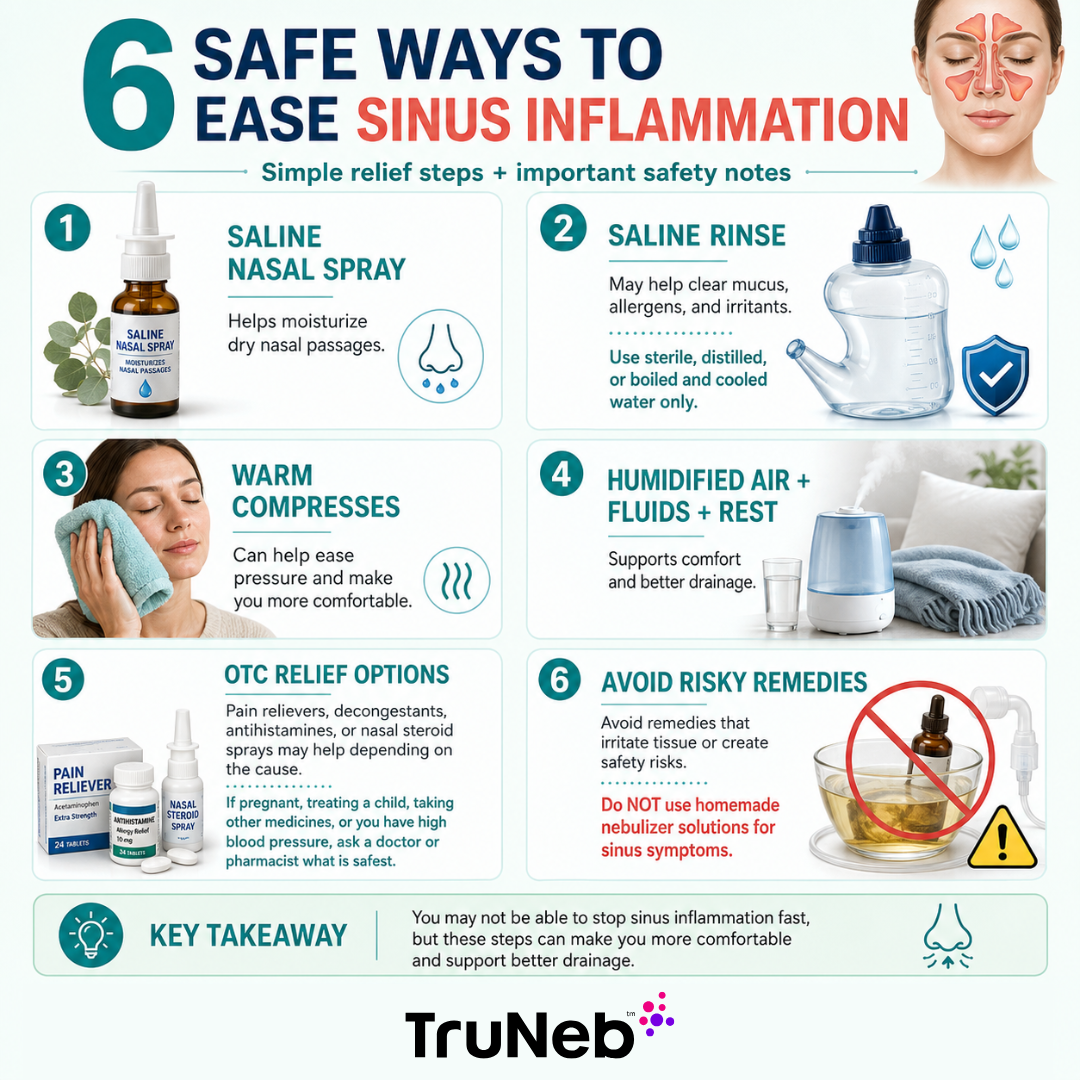
You cannot always stop sinus inflammation fast, but you can make yourself more comfortable and support better drainage.
Saline nasal spray can help moisturize dry nasal passages. A saline rinse may help clear mucus, allergens, and irritants from the nose. Use only sterile water, distilled water, or previously boiled and cooled water.
Warm compresses, humidified air, fluids, and rest can help ease symptoms.
Over-the-counter pain relievers, decongestants, antihistamines, or nasal corticosteroid sprays may help depending on the cause. If you have high blood pressure, are pregnant, take other medicines, or are treating a child, ask your doctor or pharmacist what is safest.
Avoid remedies that can irritate tissue or create safety risks. Do not use homemade nebulizer solutions for sinus symptoms. Learn more about why tap water should not be used in a nebulizer.
⚠️ Steam inhalers are not the same as nebulizers and should not be used for nebulized medications. See the comparison between nebulizers and steam inhalers for additional safety information.
Talk to your doctor if symptoms aren't improving, keep returning, or if you're considering changing treatments.
One-liner: Safe sinus care usually means saline, moisture, rest, fluids, and over-the-counter medicines used the right way.
Do You Need Antibiotics if Your Mucus Is Clear
Clear mucus does not mean antibiotics are needed, and it does not prove they are not needed either.
Antibiotics do not treat viral sinus infections. Doctors look for patterns that raise more concern for bacteria, like symptoms lasting more than 10 days, severe symptoms, or symptoms that get worse after improving.
A doctor may also consider your age, immune status, history of recurrent infections, and other medical risks.
Unnecessary antibiotics can cause side effects and contribute to antibiotic resistance.
One-liner: Antibiotics are based on symptom pattern and timing, not on clear mucus alone.
Are Sinus Infections Contagious
Sinusitis itself is not usually something you catch from another person the way you catch a cold.
If your sinus symptoms started with a viral upper respiratory infection, that virus can spread through respiratory droplets, close contact, and contaminated hands or surfaces. Colds, flu, and some COVID-19 infections can spread this way. For more information, read about upper respiratory infection contagiousness.
Bacterial sinusitis is usually not considered contagious.
One-liner: A sinus infection itself usually is not contagious, but the virus that triggers it often is.
Signs Your Sinus Symptoms Are Getting Better
Improvement usually shows up in small ways first. You may feel less facial pressure, breathe more easily through your nose, and notice less postnasal drip.
Mucus may become easier to clear. The bigger clue is that pressure, congestion, and overall symptoms are easing.
Most viral cases start improving within 7 to 10 days. If that is not happening, check in with your doctor.
One-liner: Sinus symptoms are usually getting better when pressure, congestion, postnasal drip, and fever start easing.
Nebulizers, Saline, and Sinus Infection Safety
A nebulizer is not a sinus infection treatment, and it cannot diagnose why your mucus is clear.
Only use prescribed medications or solutions that are specifically intended for nebulizer use.
If your doctor has prescribed nebulized medication or doctor-approved sterile nebulizer-intended saline for respiratory care, a TruNeb portable mesh nebulizer may help you stay on schedule with those treatments. It is part of prescribed respiratory care, not a treatment for sinusitis.
A good rule is simple: if a solution was not prescribed for nebulizing or clearly labeled for nebulizer use, do not use it in your device. You can also review general nebulizer cleaning instructions to help keep your device safe to use.
One-liner: A nebulizer should only be used with prescribed or nebulizer-intended solutions, and it should not be treated as a sinus infection remedy.
Disclaimer: This article is for informational purposes only and is not a substitute for medical advice, diagnosis, or treatment. Always consult your doctor about symptoms, medications, or treatment decisions.
Frequently Asked Questions
Tap or click a question below to see the answer:
Yes. Clear mucus can happen with sinusitis, especially early on or when inflammation is linked to viruses, allergies, or irritation.
No. Clear mucus can occur with viral illness, allergies, irritants, and some sinus infections.
It can be clear, white, cloudy, yellow, or green. Color alone does not diagnose bacterial sinusitis.
Contact your doctor if symptoms last more than 10 days, worsen after improving, or include fever, swelling, severe pain, or vision changes.