

On this page
Quick Answer for Dry Nose Treatment
Dry nose treatment usually starts with simple moisture. In most cases, the safest first steps are a saline nasal spray, a saline gel or water-based nasal moisturizer, better indoor humidity, and less irritation from wiping or picking.
Dry nose is defined as dryness or irritation of the nasal lining. In practical terms, the nasal mucosa can start to burn, sting, crust, or crack when it loses moisture.
⚠️ Red Flags and Emergency Warning
Seek emergency medical care immediately if nosebleeding is severe, follows significant trauma, causes breathing difficulty, or does not stop after appropriate first-aid measures.
Seek prompt medical evaluation if dryness comes with repeated bleeding, foul odor, pus, severe pain, one-sided symptoms, or symptoms that keep returning.
If your dry nostrils feel irritated today, focus on a few basics:
- Use a saline nasal spray to moisten dry nasal passages.
- Add a saline gel or water-based nasal moisturizer if dryness keeps coming back.
- Run a humidifier if your air feels dry, especially at night.
- Drink fluids and take a warm shower or brief steam session.
- Use soft tissues and avoid picking at crusts.
The safest first-line dry nose treatments are non-medicated saline nasal spray, saline gel or a water-based nasal moisturizer, bedroom humidity control, hydration, and avoiding irritation from picking or overused decongestant sprays.
Key point: If dryness comes with epistaxis, thick crusting, foul smell, pus, pain, recent nasal surgery, or symptoms that do not improve, home care may not be enough.
A humidifier can help dry nose when indoor air is too dry, but it works best as part of a full plan. It adds moisture to the air, while saline spray and nasal gel directly help the inside of your nose.
If you are also managing respiratory care at home, a guide on nebulizer vs humidifier differences may help you understand which tool does what. If your dryness comes with throat drip or coughing after bed, a post nasal drip at night guide may also be useful.
Find Where the Dryness Is Coming From
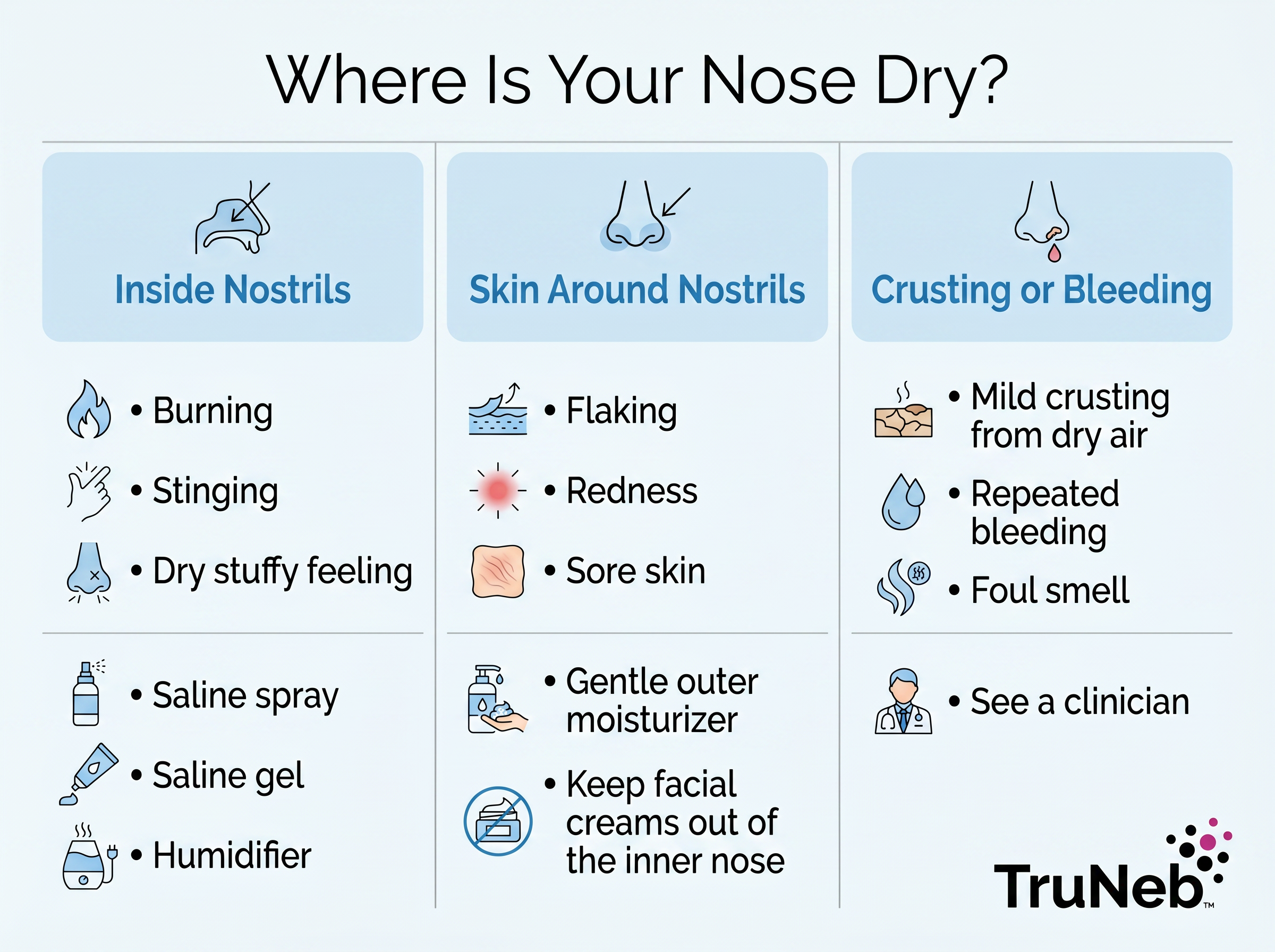
Treat the location, not just the symptom. Dryness inside the nose, dry skin around the nostrils, and dry bloody crusting do not always need the same fix.
Dryness Inside the Nose
This is the kind most people mean when they search for dry nose symptoms. You may feel burning, stinging, itching, a dry stuffy feeling, or crusting deeper in the nostrils. The nasal mucosa gets irritated, and the inside of the nose can feel open and dry instead of congested.
Some people also notice a dry throat, dry mouth, headache, facial pressure, reduced sense of smell, or sleep disruption when nasal dryness becomes persistent.
Saline spray, saline gel, and a humidifier can help most here. If you use a decongestant spray often, that can make the problem worse over time. Rhinitis sicca can also describe this kind of dry nasal lining.
Dry Skin Around the Nostrils
Sometimes the problem is not the nasal passages at all. The skin barrier around the nostrils can get red, flaky, and sore from cold weather, wind, allergies, or repeated nose wiping. In that case, a gentle skin moisturizer or balm on the outside can help more than a nasal spray.
Keep facial creams and scented products out of the inner nose unless they are made for intranasal use. What helps the skin outside the nose is not always safe deeper inside.
Dryness With Crusting or Blood
Mild crusting can happen when dry air irritates the nose. A small crack can also lead to a little bleeding. But thick crusts, repeated epistaxis, bad odor, pain, or pus need more attention.
Persistent crusty nose inside the nostrils can sometimes point to atrophic rhinitis, infection, or another medical issue rather than simple dryness.
Takeaway: dryness inside the nose usually calls for saline moisture, dryness outside the nose usually calls for skin care, and crusting with blood or odor deserves closer medical review.
Common Causes of a Dry Nose
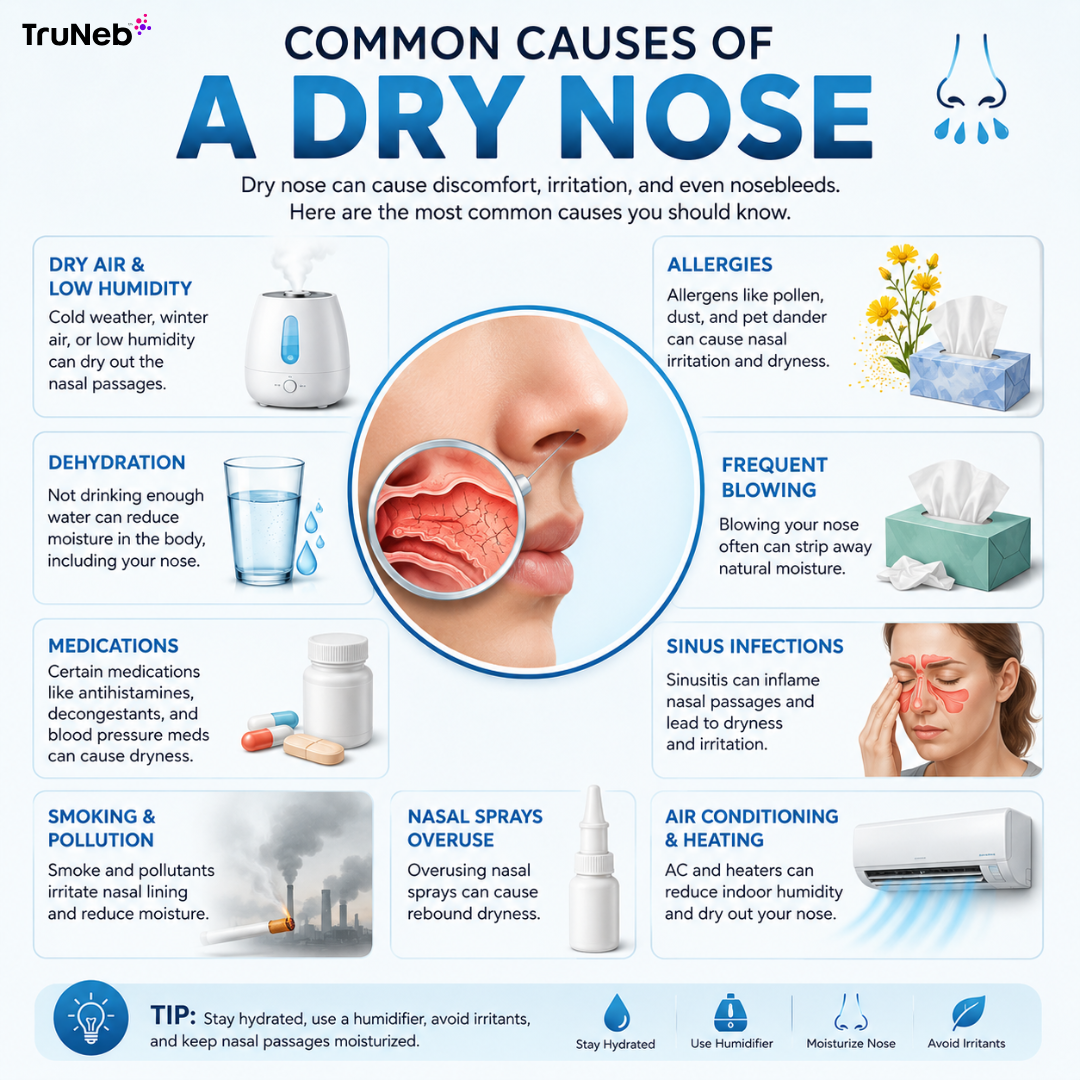
If you keep wondering why your nose is dry inside, the answer is often a mix of air, irritation, and airflow. Sometimes a dry nose has one clear cause. Often, it is a stack of small things happening at once.
Dry nose is most commonly caused by low humidity, irritation, medications, airflow devices like CPAP, or underlying nasal conditions.
Dry Air, Indoor Heat, and Low Humidity
This is one of the most common causes. Winter heat, air conditioning, high altitude, and dry climates can all pull moisture from the nasal passages. When humidity drops too low, the nasal membranes dry out faster and may crack more easily.
Many people feel much worse overnight or first thing in the morning because the bedroom air is simply too dry.
Allergies, Colds, and Frequent Nose Blowing
Allergic rhinitis, a cold, or another upper respiratory infection can leave the nose irritated even when it is running. Constant blowing and wiping can strip moisture from the tissue and leave the inside raw. The same thing can happen during flu or COVID-19 when nasal symptoms linger.
Soft tissues help. Better control of allergy triggers can help too.
Medications That Can Dry the Nose
Some dry nose medicine can actually be part of the problem. Antihistamines may dry the nose while they dry other mucous membranes too. Decongestants can reduce swelling, but they can also leave the nose drier. Some nasal steroid sprays may cause irritation or light bleeding if technique is off or the spray hits the septum.
Blood thinners do not usually cause dryness, but they can raise the chance that a dry crack turns into a nosebleed. Don't stop, start, or change prescription medicines on your own. Talk to your doctor before trying a new medication.
CPAP, Oxygen Therapy, and Mouth Breathing
Dry nose from CPAP is very common, especially if humidification is low or the mask fit is off. Oxygen therapy and a nasal cannula can also dry the nose. Mouth breathing makes nighttime dryness worse because air keeps moving past already irritated tissue.
Water-based nasal moisturizers can be a better fit than oily products for some oxygen users, but your clinician should guide you if sores or bleeding keep happening.
Medical Conditions and Nasal Procedures
Sometimes dryness points to something deeper. Sjögren’s syndrome can dry many mucous membranes, including the nose. Atrophic rhinitis can cause chronic crusting and odor. Empty nose syndrome, recent sinus surgery, turbinate reduction, a deviated septum, nasal polyps, chronic sinusitis, nonallergic rhinitis, or chronic rhinitis can all change airflow and moisture balance.
If your dry nose causes keep changing or the problem stays one-sided, it is worth getting checked.
Best Home Remedies for Dry Nose
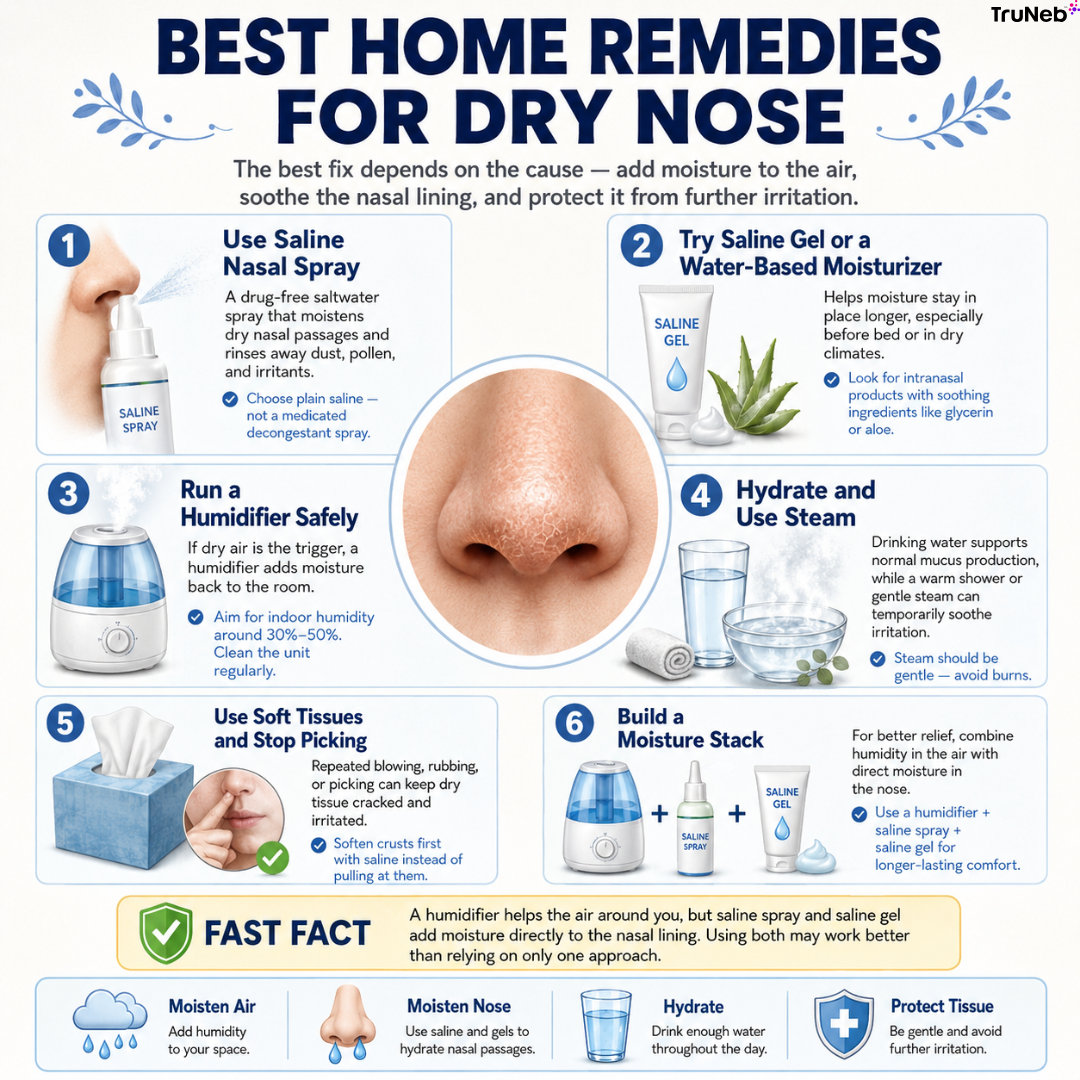
Home remedies for dry nose work best when they match the cause. If the air is dry, you need more humidity. If the lining inside your nose is dry, you need safe moisture right where the irritation is.
Use Saline Nasal Spray
Saline nasal spray is a non-medicated saltwater spray that helps moisten dry nasal passages. It can also rinse out dust, pollen, and other irritants. This is often the easiest dry nose spray to start with because it is drug-free and widely available.
Decongestant nasal sprays are different from saline sprays. They are designed to shrink swollen tissue for short-term congestion relief, not to moisturize dry nostrils.
Follow the label directions. If you are using it several times a day, check that it is a plain saline product and not a medicated spray.
Try Saline Gel or a Water-Based Nasal Moisturizer
A saline gel may last longer than a spray, which is why many people like it before bed or in a dry climate. If you keep asking how to rehydrate inside your nose, this is often the next step after saline mist alone.
Look for products labeled for intranasal use. Some include ingredients like glycerin, aloe vera, sodium hyaluronate, xylitol, or ectoine to help moisture stay in place longer. A moisturizer for dry nose should feel soothing, not sting sharply.
Run a Humidifier Safely
A humidifier for dry nose can help when low indoor humidity is the real trigger.
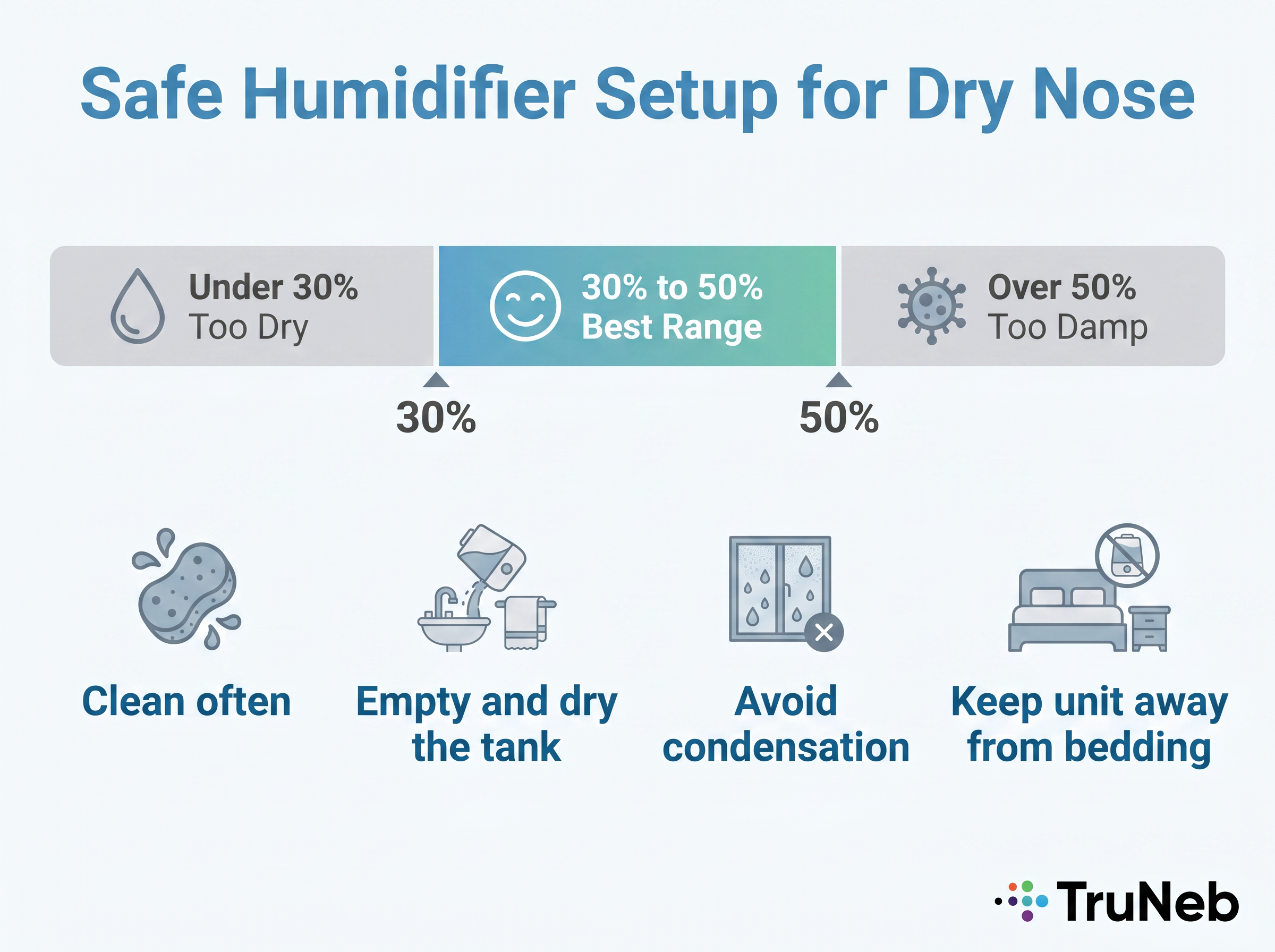
Aim for indoor humidity around 30 to 50 percent. Too low can worsen dryness. Too high can encourage mold and dust mites.
Cool-mist and warm-mist humidifiers can both add moisture to indoor air when used correctly.
Empty and dry the unit often, clean it as the manufacturer says, and avoid visible condensation on windows or walls. Some units work best with distilled or demineralized water, so check the instructions.
Hydrate and Use Steam
Drinking water supports normal mucus production, but it does not instantly wet the inside of your nose. Think of hydration as background support, not fast relief.
A warm shower or a few minutes of steam inhalation can help loosen thick mucus and temporarily soothe irritation. Keep steam gentle. Burns are not worth the risk.
Use Soft Tissues and Stop Picking
Dry tissue breaks easily. Repeated blowing, rubbing, and picking can keep the nose stuck in a cycle of cracking and healing. Soft tissues are gentler than paper towels or rough napkins. If crusts bother you, soften them first with saline instead of pulling at them.
A practical approach is a moisture stack: add moisture to the air with a humidifier, add direct moisture with saline spray, and use a saline gel or water-based moisturizer when you need longer-lasting comfort.
If you are comparing devices for room moisture, a room moisture device comparison can help. They are not the same tool, and they do very different jobs.
Dry Nose Spray, Gel, or Humidifier
Saline spray and gels directly moisturize the nose, while humidifiers improve the surrounding air.
The product aisle mixes dry nose spray, dry nose medicine, allergy sprays, and congestion sprays together, even though they do very different things.
Saline nasal spray is usually the simplest first choice for dry nasal passages. Saline gel or a water-based nasal moisturizer may work better when dryness keeps coming back because it tends to stay in place longer.
A humidifier helps the room, not the nose directly. That can still matter a lot if dry air is the root problem.
Nasal irrigation can help some people with thick mucus or heavy crusting. Common options include a neti pot or squeeze bottle. Use only sterile, distilled, or previously boiled water for nasal rinsing.
Nasal steroid sprays such as fluticasone and antihistamine products such as azelastine can help allergy-related inflammation, but they are not moisturizers.
| Option | Best For | How It Helps | Safety Notes | Daily Use? |
|---|---|---|---|---|
| Saline nasal spray | Quick dryness relief | Adds moisture and rinses irritants | Use plain saline product | Usually yes |
| Saline gel | Longer-lasting moisture | Coats and hydrates nasal lining | Use products labeled for intranasal use | Usually yes |
| Water-based nasal moisturizer | Recurring dryness | Helps retain moisture | Choose intranasal formulations | Usually yes |
| Humidifier | Dry indoor air | Adds moisture to room air | Clean regularly and monitor humidity | Yes when needed |
| Nasal irrigation | Thick mucus or crusting | Flushes nasal passages | Use sterile, distilled, or boiled water | Depends on situation |
| Decongestant spray | Short-term congestion | Shrinks swollen tissue | Overuse can cause rebound congestion | No, not for routine use |
| Nasal steroid spray | Allergy inflammation | Reduces inflammation | Can irritate if used incorrectly | As directed by clinician |
| Antihistamine spray or pills | Allergy symptoms | Reduces allergy response | Can contribute to dryness | As directed |
Takeaway: Match the product to the cause. Moisturizers treat dryness, while medicated products target congestion or allergies.
If you are also reading about saline for respiratory care, keep the categories separate. Nasal products are for the nose. Nebulizer solutions are for nebulizer use as directed. You can learn more in this guide to sterile saline for nebulizer use.
What Causes Dry Nose at Night
Dry nose at night is usually linked to dry air, mouth breathing, CPAP use, or nasal airflow problems.
Nighttime Dry Nose Routine
Start with your bedroom. If the air is dry, a humidifier can help bring humidity into a better range. Then add direct moisture before bed with a saline spray or saline gel.
Try not to blow or pick at your nose right before sleep. That can leave the lining more irritated for the rest of the night. Some people also notice that alcohol near bedtime makes dryness feel worse.
If you use CPAP, check the humidifier settings and mask fit with your equipment provider or clinician. Dry nose from CPAP often improves when heated humidification is adjusted the right way. If you use oxygen therapy, ask about safe options if the nasal cannula is causing soreness.
When Nighttime Dryness Points to Another Issue
Repeated waking with a dry mouth can suggest mouth breathing. Snoring, sleep apnea, or nasal obstruction can all play a part. A deviated septum, allergies, or one-sided blockage may also be why your dry nose while sleeping keeps returning.
Persistent bloody crusting, pain, or sores are not something to brush off, especially with CPAP or oxygen use. If the problem is waking you up night after night, there may be more going on than dry air alone.
Takeaway: If humidity and bedtime moisture do not help, it may be time to evaluate airflow, blockage, allergies, or device settings.
Dry Bloody Nose Remedy
A dry bloody nose usually means the nasal lining cracked and exposed small blood vessels. Epistaxis is the medical term for nosebleed, and the front part of the nose contains delicate vessels in an area called Kiesselbach’s plexus.
If Your Nose Is Bleeding Now
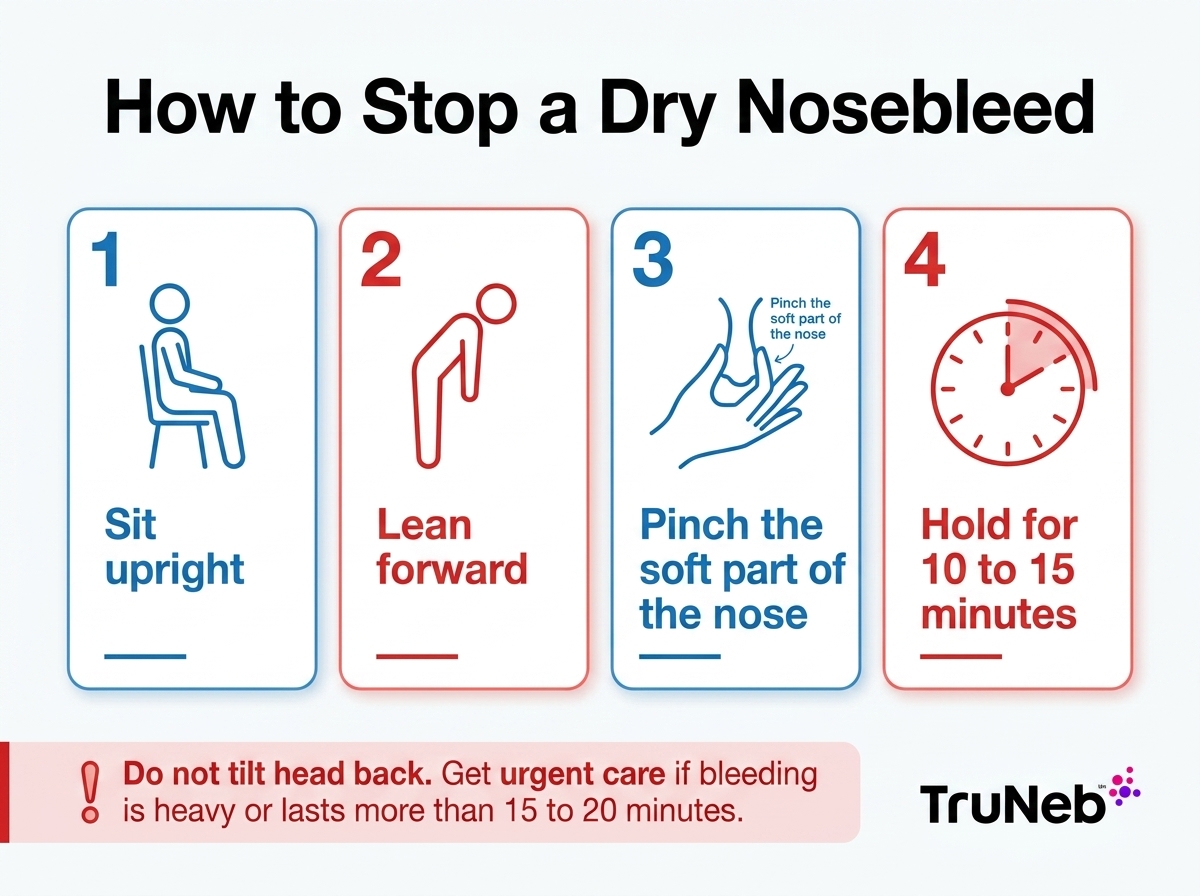
Sit upright and lean forward. Pinch the soft part of your nose and keep steady pressure for 10 to 15 minutes while breathing through your mouth. Do not tilt your head back. Do not keep checking every few seconds to see if it stopped.
If bleeding is still going after 15 to 20 minutes, if it is heavy, if it started after trauma, if it makes breathing hard, or if you take blood thinners or have a bleeding disorder, seek urgent care.
If you swallow blood, it can upset your stomach and may even lead to vomiting blood later. That is one more reason leaning forward matters.
How to Prevent Dry Nosebleeds
Once the bleeding stops, prevention becomes the goal. Saline spray can help keep the lining moist. A humidifier at night can help if dry air is the trigger. A nasal gel or other intranasal moisturizer may also lower the chance of cracking.
Avoid forceful nose blowing for a while. Avoid picking at scabs. If allergies keep making you rub and blow your nose, getting better control of those symptoms can help too.
People who take aspirin, NSAIDs, or warfarin may bleed more easily once the lining is irritated. That does not mean the medicine caused the dryness, but it can make a dry crack more noticeable.
The nosebleed first-aid rule is simple and worth remembering: if a dry nose is bleeding, sit upright, lean forward, pinch the soft part of the nose, and hold steady pressure for 10 to 15 minutes.
If nosebleeds keep returning, home care is no longer the whole answer. Frequent bleeding deserves a clinician review.
What Not to Put in Your Nose or Nebulizer
Safe moisture works best when the right product is used in the right place.
Do not put essential oils directly inside your nose. They can irritate the lining, and oils do not belong in a nebulizer unless a healthcare provider and the device instructions clearly allow it.
Do not use tap water for nasal irrigation. The CDC recommends sterile, distilled, or previously boiled water for nasal rinsing.
Do not put hydrogen peroxide, rubbing alcohol, garlic, or other harsh home mixtures inside the nose. These can damage already irritated tissue.
Petroleum jelly may temporarily seal moisture near the nostril opening, but frequent or deep use inside the nose is not ideal because inhaled oily substances can rarely cause lung problems, including lipoid pneumonia. Water-based or saline gels are often a better fit for repeated intranasal use. If you use oxygen therapy, have lung disease, or are at risk for aspiration, ask your clinician before using petrolatum products inside the nose.
Decongestant overuse is another common mistake. Rhinitis medicamentosa can occur when decongestant sprays are overused, and that can leave your nose even more irritated.
TruNeb™ Safety Note
Nasal saline sprays, gels, and irrigation are common first-line options for dry nostrils. TruNeb portable mesh nebulizer products and TruNeb sterile saline are intended for nebulizer-based respiratory care. TruNeb should not be used as a direct replacement for nasal sprays, gels, or nasal irrigation unless a healthcare provider recommends that use. Do not add oils, tap water, homemade mixtures, or non-approved substances to any nebulizer.
When to See a Clinician
Most dry nose treatment can start at home, but some symptoms should not be left to guesswork.
See a clinician if your dry nose lasts more than 10 days even after saline, humidity, and gentle care. You should also get checked for repeated or heavy nosebleeds, bleeding that will not stop, or crusting that keeps coming back.
Foul smell, pus, or thick discolored drainage can point to infection or a condition like atrophic rhinitis. Severe pain, swelling, warmth, or fever also deserve prompt care.
Recent nasal or sinus surgery changes the picture. Symptoms after turbinate reduction, persistent dryness after a procedure, or sores from CPAP or oxygen therapy may need a targeted plan instead of general home remedies.
One-sided symptoms matter too. If dryness, blockage, bleeding, or loss of smell happens mostly on one side, a clinician may want to look for a deviated septum, nasal polyps, chronic sinusitis, or a less common problem.
People with Sjögren’s syndrome, autoimmune disease, blood thinners, or bleeding disorders should be more cautious about ongoing dryness and epistaxis. Children under 2 with nosebleeds should also be evaluated.
Persistent dryness, recurrent bleeding, foul odor, severe pain, or one-sided symptoms should be medically evaluated.
Disclaimer: This article is for informational purposes only and is not a substitute for professional medical advice, diagnosis, or treatment. Always consult your doctor regarding symptoms, medications, or treatment decisions.
Frequently Asked Questions
Tap or click a question below to see the answer:
Non-medicated saline spray is commonly used as a first step. Saline gel, water-based moisturizers, and better humidity can also help.
Saline sprays and saline gels made for intranasal use provide direct moisture. A humidifier helps the surrounding air.
It may temporarily hold moisture near the nostril opening, but water-based or saline nasal gels are generally preferred for repeated intranasal use.
Use products labeled for intranasal use and avoid alcohol, peroxide, essential oils, or homemade mixtures.
Dry air, irritation, allergies, infections, and medication overuse can all contribute. Persistent crusting with odor, pain, or bleeding should be evaluated.
Yes, especially when low indoor humidity is contributing to symptoms. Keep humidity around 30% to 50% and clean the unit regularly.
For many people, a plain saline nasal spray is the most common starting option for moisture and irritation relief.
Yes. Dryness can crack the nasal lining and expose fragile blood vessels, increasing the risk of nosebleeds.
TruNeb is intended for nebulizer-based respiratory care and should not replace nasal sprays, gels, or nasal irrigation unless a healthcare provider recommends that use.