

On this page
Can Reflux Cause Difficulty Breathing?
Yes. Acid reflux and GERD can contribute to difficulty breathing in some people. This can happen when reflux irritates the throat, vocal cords, or airways, or when it makes asthma-like symptoms worse.
In medical terms, shortness of breath is called dyspnea. With reflux-related breathing symptoms, people often describe it as chest tightness, air hunger, trouble getting a full breath, wheezing, or a cough that gets worse after meals or when lying down.
Acid reflux is when stomach contents move backward into the esophagus. GERD is a more ongoing form of reflux that can damage tissues over time. GERD can sometimes show up with symptoms outside the chest and stomach, including chronic cough, throat irritation, hoarseness, wheezing, and shortness of breath.
Breathing problems can also come from asthma, COPD, bronchitis, pneumonia, heart problems, pulmonary embolism, anxiety, food allergy, or aspiration. That is why new, severe, or unexplained shortness of breath should never be brushed off as heartburn.
A helpful clue is timing. If breathing discomfort happens after eating, after bending over, or when you lie flat at night, reflux may be part of the picture. If it comes with a sour taste, regurgitation, throat clearing, or hoarseness, that clue gets stronger. But patterns are not a diagnosis.
Bottom line: Reflux can contribute to breathing difficulty, but it should not be assumed to be the cause of new or severe shortness of breath.
How Acid Reflux Can Affect Breathing
Microaspiration and Airway Irritation
One way this happens is microaspiration. That means tiny amounts of refluxed material move high enough to reach the throat or airway. Even small droplets can irritate the trachea, bronchi, and lungs. This may lead to coughing, throat burning, wheezing, or a feeling that your breathing is tight. Repeated aspiration may increase the risk of aspiration pneumonia in some people.
Vagus Nerve Reflex and Bronchoconstriction
The esophagus and airways share nerve connections. When acid irritates the esophagus, it may trigger an esophageal-bronchial reflex. In plain English, irritation in the esophagus can signal the airways to narrow even if stomach contents never enter the lungs. This narrowing is called bronchoconstriction.
LPR, Vocal Cords, and Laryngospasm
Reflux can inflame the throat and voice box. This is often called laryngopharyngeal reflux (LPR). You may notice hoarseness, throat clearing, a lump-in-the-throat feeling, chronic cough, or a sudden choking sensation. Some people develop laryngospasm, where the vocal cords briefly tighten and make breathing feel difficult. Recurrent episodes warrant medical evaluation. Vocal cord dysfunction can also cause similar symptoms.
Asthma and Diaphragm Effects
GERD can make asthma or asthma-like symptoms worse. Large meals may also increase pressure against the diaphragm, especially in people with obesity, pregnancy, COPD, anxiety, bloating, or a hiatal hernia.
Bottom line: Reflux may affect breathing through microaspiration, airway inflammation, vagus nerve reflexes, and worsening of existing respiratory disease.
Talk to your doctor before trying a new medication or changing one you already take.
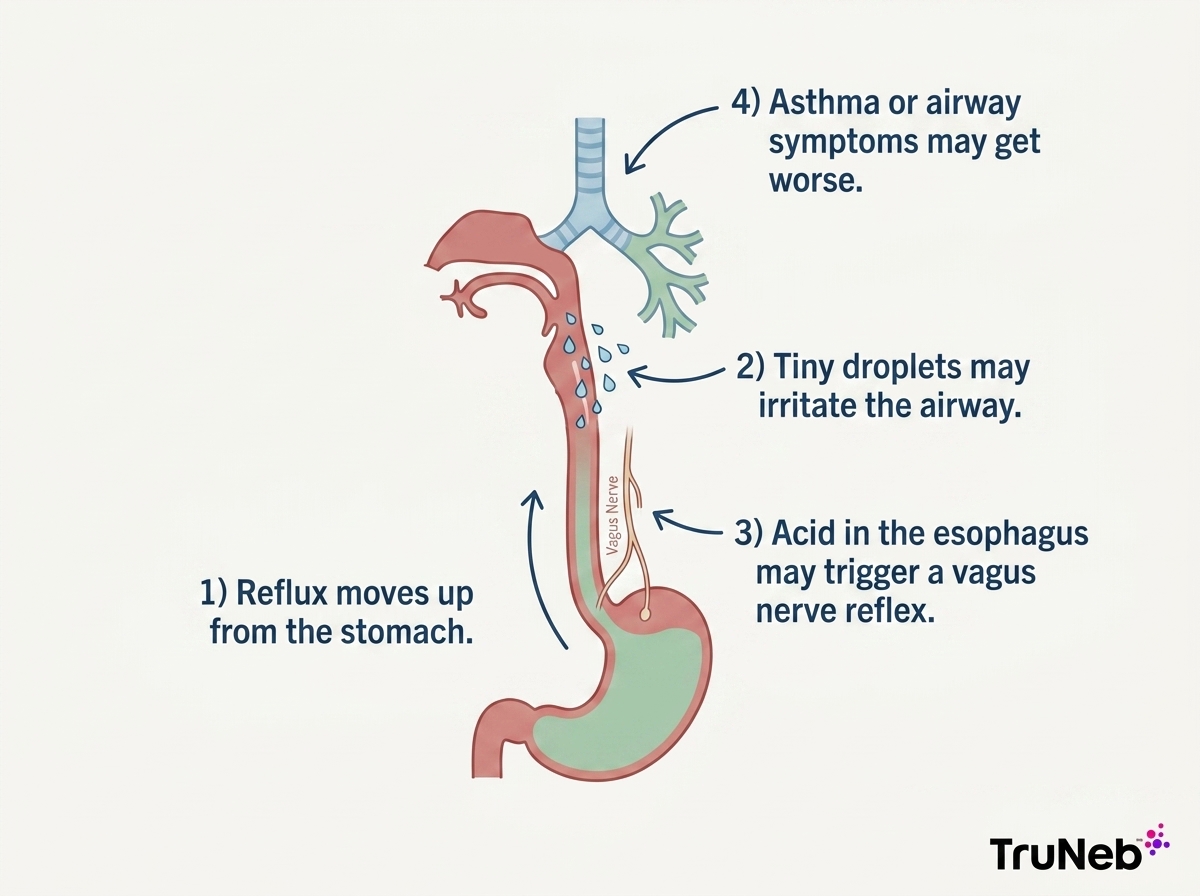
Key takeaway: Reflux can affect breathing through several different pathways, not just heartburn.
| Mechanism | What Happens | Possible Symptoms |
|---|---|---|
| Microaspiration | Tiny droplets reach the airway | Cough, wheeze, irritation |
| Vagus nerve reflex | Esophagus signals airway narrowing | Chest tightness, shortness of breath |
| Airway inflammation | Throat and airway irritation | Hoarseness, cough |
| Asthma worsening | Increased airway sensitivity | Wheeze, asthma flare symptoms |
| Diaphragm pressure | Stomach pressure affects breathing comfort | Breathlessness after meals |
Symptoms That Suggest Reflux May Be Involved
Timing of Symptoms
Reflux becomes more likely when breathing symptoms follow a pattern.
Digestive and Throat Clues
If you feel shortness of breath after eating, wheezing after a big meal, or chest tightness after certain foods, reflux may be involved. Symptoms that appear when you bend over, lie down, or wake you from sleep also fit the pattern. For more on meal-related breathlessness, see shortness of breath after eating causes.
Heartburn, regurgitation, sour taste, burping, nausea, hoarseness, chronic throat clearing, a morning sore throat, globus sensation, and trouble swallowing can all point toward reflux. Persistent swallowing difficulty should be evaluated by your doctor.
Silent Reflux and Nighttime Symptoms
With LPR, you may have breathing discomfort, cough, hoarseness, or throat irritation without classic heartburn. Nighttime symptoms can overlap with obstructive sleep apnea, which may also cause disrupted sleep and breathing complaints. Similar patterns may occur with shortness of breath when lying down.
Bottom line: Reflux is more likely when breathing symptoms happen after meals, when lying down, or along with sour taste, cough, hoarseness, or heartburn.
Key takeaway: The timing of symptoms can provide important clues.
| When Symptoms Occur | Possible Reflux Clue |
|---|---|
| After meals | Stomach contents move upward |
| Bending over | Pressure increases reflux |
| Lying down | Gravity no longer helps keep contents down |
| Nighttime | Reflux may reach the throat or airway |
| Morning | Hoarseness, cough, sore throat |
Breathing Symptoms That Need Urgent Medical Care
Emergency Warning Signs
⚠️ Seek emergency medical care immediately for severe shortness of breath, chest pain, blue or gray lips, fainting, throat swelling, severe wheezing, coughing blood, confusion, or signs of low oxygen.
Call emergency services right away for sudden or severe shortness of breath, chest pain or pressure, pain spreading to the arm, jaw, back, or shoulder, swelling of the lips or tongue, hives, or a fast heartbeat with dizziness.
Conditions That Can Mimic Reflux
These symptoms can occur with heart attack, pulmonary embolism, anaphylaxis, pneumonia, aspiration pneumonia, severe asthma attacks, heart failure, or other serious conditions.
Bottom line: Do not assume shortness of breath is from reflux if it is sudden, severe, or accompanied by warning signs.
Reflux Versus Asthma, COPD, Heart Problems, Anxiety, and Allergies
Reflux Versus Lung Conditions
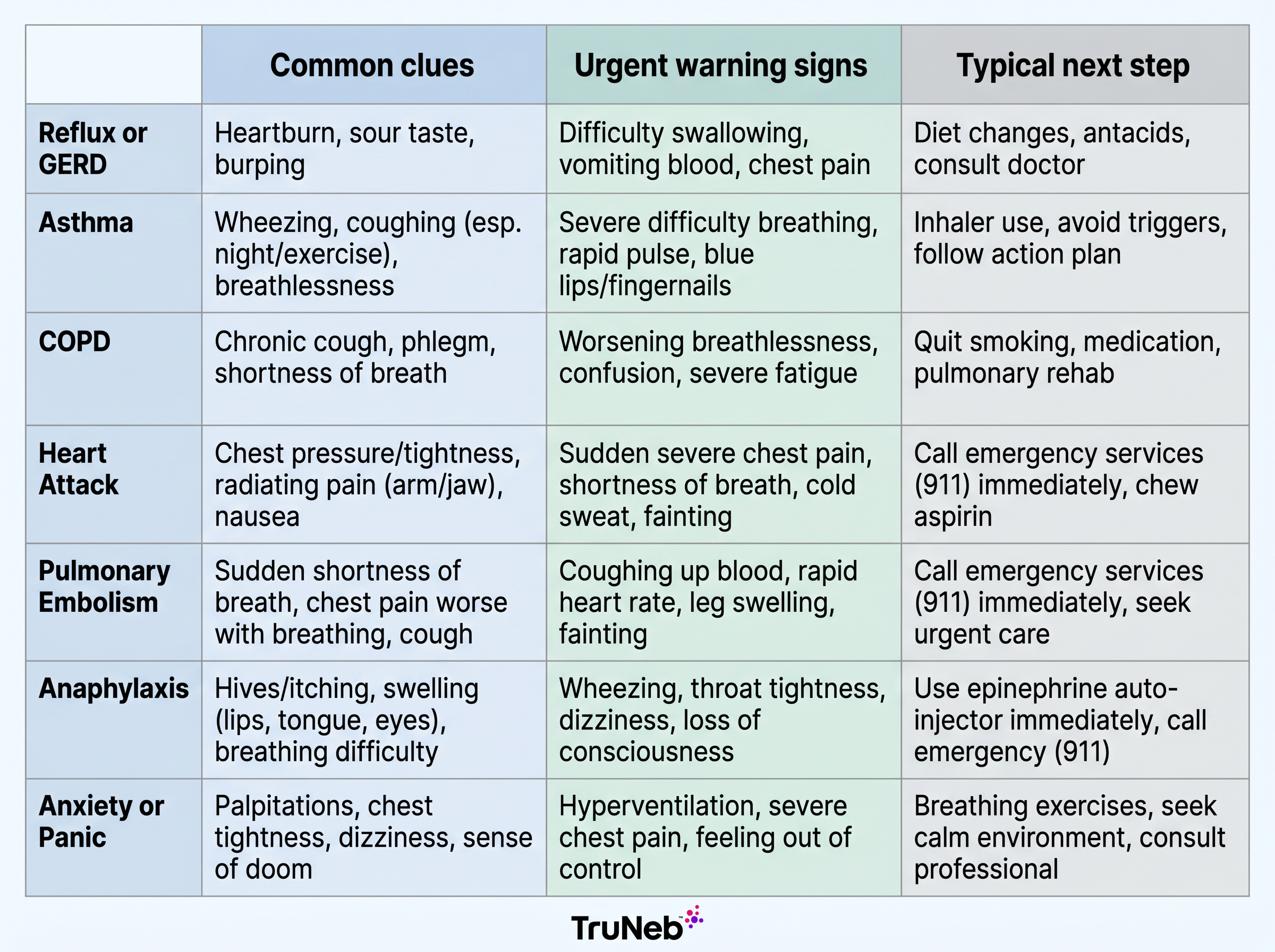
Reflux often gets worse after meals, when lying down, or when bending over. Asthma usually has trigger patterns such as exercise, cold air, pollen, or smoke. COPD more commonly causes chronic cough, mucus production, and exertional shortness of breath. Readers may also find wheezing when lying down causes and relief helpful.
Reflux Versus Heart Conditions
Heart attack symptoms may include pressure, sweating, nausea, or spreading pain. Heart failure may cause swelling, shortness of breath when lying flat, fatigue, and fluid retention.
Reflux Versus Allergy and Anxiety Conditions
Anaphylaxis often follows an allergy trigger and may include swelling, hives, or severe wheezing. Anxiety or panic can cause chest tightness and rapid breathing, but serious medical causes should be considered first.
Food allergy, aspiration, bronchitis, hiatal hernia, gastroparesis, arrhythmia, heart failure, and COPD can also make breathing feel harder after a meal.
Bottom line: Breathlessness is a symptom, not a diagnosis. Reflux is only one possible explanation.
Key takeaway: Breathlessness can have many causes, and symptom patterns help guide evaluation.
| Condition | Common Clues | Urgent Concerns |
|---|---|---|
| GERD | After meals, lying down, sour taste | Severe swallowing problems |
| Asthma | Wheeze, trigger exposure | Severe breathing distress |
| COPD | Chronic cough, mucus | Low oxygen symptoms |
| Heart problems | Pressure, swelling, exertional symptoms | Chest pain, fainting |
| Allergic reaction | Hives, swelling | Anaphylaxis |
| Anxiety | Rapid breathing, fear | Rule out medical causes |
How Doctors Diagnose Reflux-Related Breathing Problems
Medical History and Alarm Symptoms
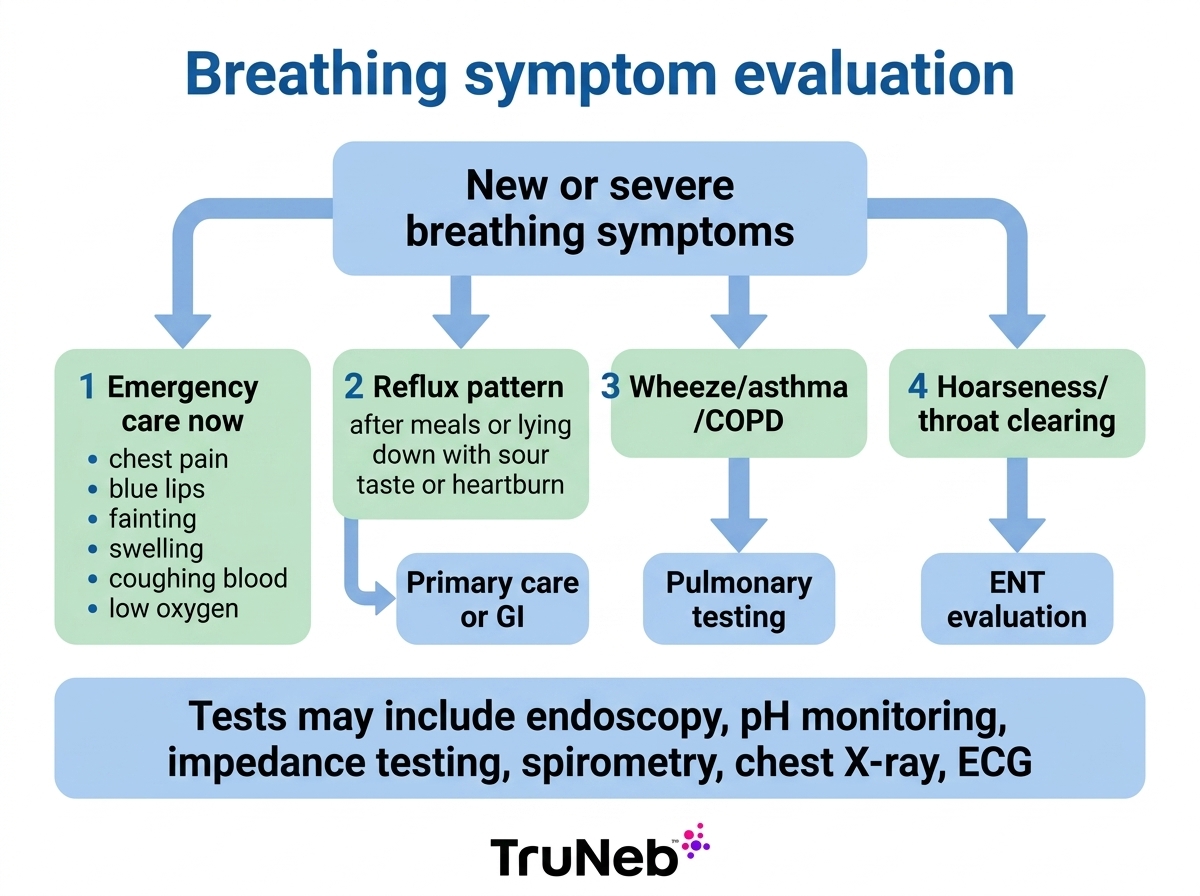
Doctors start by reviewing symptom patterns and looking for alarm symptoms such as trouble swallowing, weight loss, vomiting blood, black stools, severe chest pain, or repeated choking episodes.
GI Testing
Upper endoscopy, pH monitoring, pH impedance monitoring, Bravo capsule testing, esophageal manometry, and barium swallow studies may help evaluate reflux.
Lung and Heart Testing
Spirometry, pulmonary function testing, chest X-rays, CT scans, ECGs, and other heart evaluations may be used when appropriate.
ENT and Allergy Evaluation
If hoarseness, throat clearing, or choking is prominent, an ENT may perform laryngoscopy. Allergy testing may be considered when allergy-related symptoms overlap with breathing complaints.
Bottom line: Doctors may evaluate both reflux and non-reflux causes with GI, lung, heart, allergy, and ENT testing.
Treatment Options for GERD and Reflux-Related Breathing Symptoms
Lifestyle Measures
Smaller meals, avoiding late meals, staying upright after eating, elevating the head of the bed, sleeping on the left side, limiting alcohol, quitting smoking, and weight management may help reduce reflux.
Medications
Antacids, alginates, H2 blockers, and proton pump inhibitors may be recommended depending on the situation.
Procedures
Fundoplication, LINX, TIF, or hiatal hernia repair may be considered in selected cases after evaluation.
Respiratory Treatments
Nebulizers do not treat acid reflux or GERD.
Some people with reflux also have asthma, COPD, bronchiectasis, cystic fibrosis, or chronic mucus problems. In that setting, a doctor may prescribe nebulized therapy. A portable mesh nebulizer like TruNeb portable mesh nebulizer may support clinician-directed respiratory treatment, but it is not a reflux treatment.
Bottom line: Reflux treatment focuses on reducing reflux exposure, while respiratory treatments address separate airway conditions.
Talk to your doctor before trying a new medication.
What to Do When Reflux Seems to Trigger Breathing Discomfort
Immediate Steps
If this feels like a mild, familiar reflux episode, sit up or stand up, loosen tight clothing, and avoid lying flat.
Follow Your Existing Care Plan
If you have a doctor-approved plan for asthma or COPD, follow that plan.
Use a Symptom Tracker
Track foods, meal size, timing, posture changes, cough, wheeze, hoarseness, sour taste, chest tightness, and any oxygen readings if you already use a pulse oximeter. You can learn more about normal pulse oximeter readings.
Questions to Ask Your Doctor
- Could reflux be contributing to my breathing symptoms?
- Do I need reflux testing?
- Should I be evaluated for asthma, sleep apnea, allergies, or vocal cord dysfunction?
- What symptoms should prompt urgent care?
Bottom line: Pattern tracking can help your doctor tell the difference between reflux-related breathing symptoms and other possible causes.
Preventing Reflux-Related Breathing Symptoms
Meal Habits
Eating smaller meals, slowing down, avoiding large fatty meals, and limiting late-night eating may reduce reflux episodes.
Sleep Positioning
Elevating the head of the bed and sleeping on the left side may help some people.
Trigger Management
Smoking, vaping, dust, fumes, and strong scents can worsen airway irritation. Good asthma or COPD control may also help reduce symptom overlap. Some patients also benefit from learning pursed-lip breathing techniques during episodes of breathlessness.
Bottom line: Smaller meals, earlier dinners, healthy weight management, better sleep positioning, and trigger control may reduce reflux-related breathing symptoms over time.
Key Terms to Know
Acid reflux: Stomach contents flow backward into the esophagus.
GERD: Frequent or ongoing reflux that can irritate tissues over time.
LPR: Reflux that reaches the throat and voice box.
Dyspnea: The medical term for shortness of breath.
Wheezing: A whistling sound caused by narrowed airways. See also ways to stop wheezing immediately.
Microaspiration: Tiny amounts of refluxed material entering the airway.
Bronchoconstriction: Airway narrowing that can make breathing feel tight.
Lower esophageal sphincter: The valve-like muscle that helps keep stomach contents from moving upward.
Hiatal hernia: Part of the stomach pushes through the diaphragm and may increase reflux risk.
pH impedance monitoring: A test that tracks acid and non-acid reflux over time.
Bottom line: Knowing the basic terms makes it easier to understand how a stomach problem can sometimes feel like an airway problem.
Medical Disclaimer: This article is for educational purposes only and is not medical advice. Always talk to your doctor about breathing symptoms, swallowing problems, reflux concerns, or treatment decisions. Seek emergency care for severe or sudden symptoms.
Frequently Asked Questions
Tap or click a question below to see the answer:
Reflux can contribute to breathing symptoms, but sudden or severe shortness of breath should always be evaluated promptly.
Yes. Reflux may irritate the throat or airways, trigger nerve reflexes, or worsen asthma symptoms.
Yes. GERD can contribute to wheezing, especially when reflux affects the airway or overlaps with asthma.
Yes. LPR can cause cough, hoarseness, throat clearing, and breathing discomfort even without heartburn.
Reflux is one possibility, but food allergy, asthma, COPD, heart conditions, aspiration, and other causes may also contribute.
Reflux often follows meals or lying down, while asthma commonly follows trigger exposure and may improve with prescribed inhalers.
Typical reflux usually does not. Low oxygen symptoms should be evaluated urgently.
Yes, but chest tightness can also come from heart or lung conditions and may require urgent evaluation.
Smaller meals, avoiding late eating, staying upright after meals, and doctor-recommended reflux treatment may help.
No. Nebulizers do not treat reflux or GERD. They may be used for separate respiratory conditions when prescribed.
Talk to your doctor if symptoms are frequent, worsening, occur at night, or happen with trouble swallowing, cough, wheeze, hoarseness, or heartburn.