

On this page
How to Improve Lung Health: Daily Habits, Exercises, Foods, and Recovery Steps
Table of Contents
- Start With the Highest Impact Lung Health Actions
- Know What Lung Health Actually Means
- Use Exercise to Train Your Heart, Lungs, and Breathing Muscles
- Practice Breathing Exercises That Improve Control and Efficiency
- Eat for Lower Inflammation, Better Immunity, and Easier Breathing
- Reduce Airway Irritants Indoors and Outdoors
- Support Lung Recovery After Smoking, Vaping, or Respiratory Illness
- Adjust Lung Health Strategies for COPD, Asthma, and Chronic Mucus
- Track Progress and Know When to Get Medical Care
- Build a 30 Day Lung Health Plan
- Frequently Asked Questions
Start With the Highest Impact Lung Health Actions
The best ways to improve lung health are to stop smoking, avoid polluted air, exercise regularly, stay hydrated, practice breathing exercises, prevent respiratory infections, and get medical care for persistent symptoms.
That answer sounds simple because the basics really do matter most. Your lungs work better when they are not dealing with cigarette smoke, secondhand smoke, thick mucus, repeated infections, and poor air quality all at the same time. People concerned about mucus buildup may also find it helpful to learn more about clearing lung mucus effectively.
Know What Lung Health Actually Means
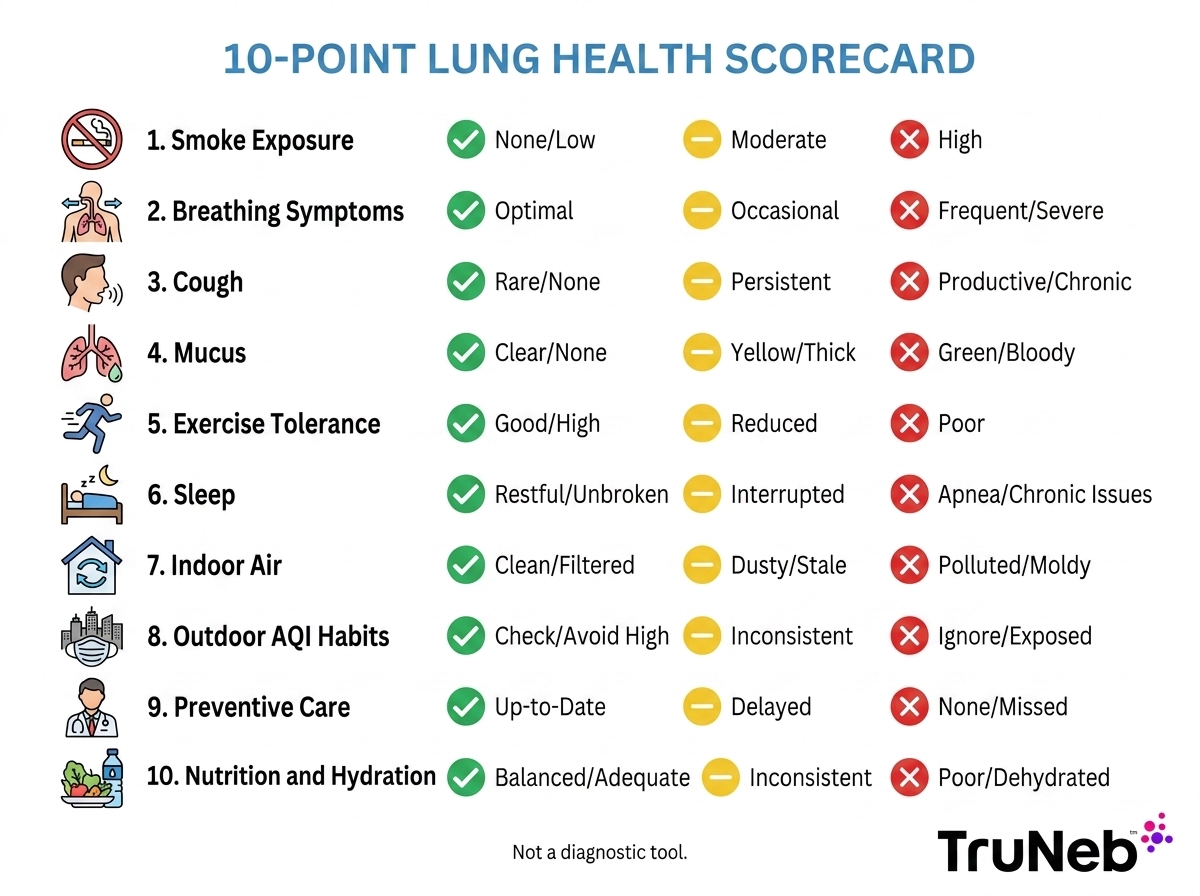
Lung health is the ability of your lungs and airways to move air efficiently, exchange oxygen and carbon dioxide, clear mucus, and support daily activity without concerning symptoms.
That means lung health is bigger than one number. It includes how open your airways are, how well your alveoli move oxygen into your blood, how your diaphragm and intercostal muscles help you breathe, and how much inflammation or mucus is getting in the way.
Use Exercise to Train Your Heart, Lungs, and Breathing Muscles
Exercise is one of the best tools to improve lung health because it trains your whole oxygen system, not just your lungs.
Best Exercises for General Lung Health
Brisk walking is a strong place to start for most people. Cycling, swimming, dancing, and stair climbing can also help. For many adults, 150 minutes of moderate-intensity activity each week is a common public health goal. Structured routines such as pulmonary rehabilitation exercises at home may offer additional guidance for some individuals.
Practice Breathing Exercises That Improve Control and Efficiency
Breathing exercises can help you improve control, reduce shallow breathing, and make it easier to handle mild shortness of breath.
Diaphragmatic Breathing
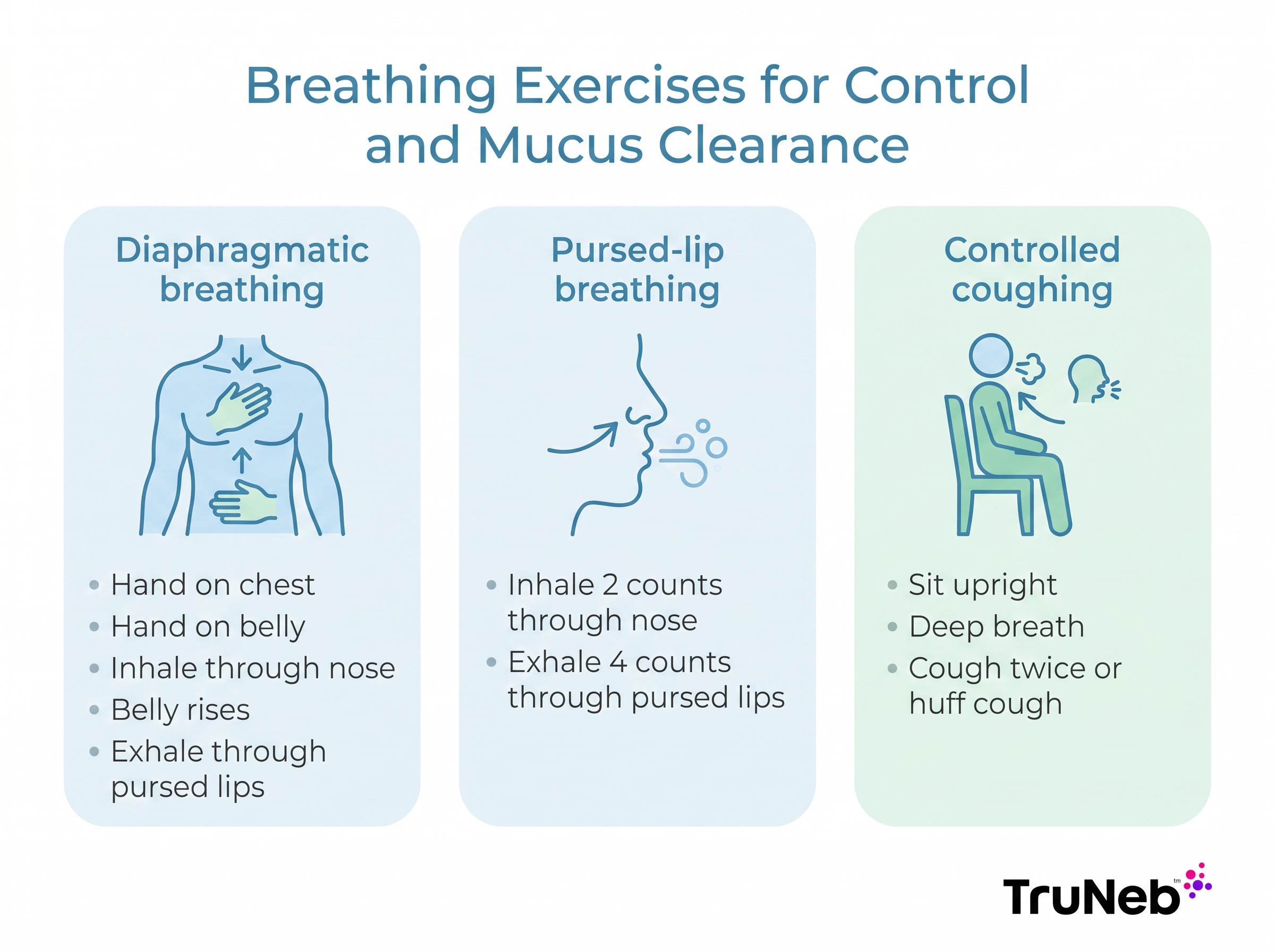
A common diaphragmatic breathing technique involves sitting or lying comfortably, placing one hand on the chest and one on the belly, breathing in through the nose, and allowing the belly to rise more than the chest.
Pursed-Lip Breathing
Pursed-lip breathing is especially useful when you feel winded during activity. Breathe in through your nose, then exhale slowly through lightly pursed lips. For a deeper explanation, see this guide to pursed-lip breathing technique.
Box Breathing for Stress-Related Shallow Breathing
Box breathing is more of a breathing-control and relaxation tool than a lung disease treatment.
Controlled Coughing for Mucus
Controlled coughing and huff coughing can help move mucus when airway clearance is a goal.
Safety matters here. Stop if you feel dizzy, have chest pain, feel panicky, or get severely short of breath. Talk to your doctor if you have questions about which techniques fit your situation.
One-sentence takeaway: The best breathing exercises to strengthen lungs are the ones that improve diaphragm use, ease exhalation, and help clear mucus when needed.
Eat for Lower Inflammation, Better Immunity, and Easier Breathing
There is no single healthy lungs food, but your overall eating pattern can support lung health.
Foods That Support Lung Health
Think of a simple plate: fill half with fruits and vegetables, include a source of protein, add fiber-rich grains or legumes, and drink fluids regularly.
Foods rich in antioxidants can help protect cells from oxidative stress. Sources include berries, leafy greens, peppers, tomatoes, vitamin E-containing nuts and seeds, and vitamin D sources such as fatty fish, fortified dairy products, and fortified alternatives. Green tea contains EGCG, a plant compound often discussed as part of a balanced diet. Beets and leafy greens also contain naturally occurring nitrates.
Foods and Drinks That May Make Breathing Feel Worse
Very salty meals can increase fluid retention in some cases. Carbonated drinks may cause bloating. Large meals, greasy foods, and late-night eating can worsen reflux, which can irritate the airways.
Hydration and Mucus Thickness
Drinking enough water supports the mucosal lining and can help keep mucus thinner and easier to clear.
One-sentence takeaway: The best foods for lung health are part of a steady eating pattern built around plants, fiber, protein, healthy fats, and hydration.
Reduce Airway Irritants Indoors and Outdoors
Outdoor Air Protection
Outdoor air pollution can inflame the airways even in healthy people. Ozone, traffic pollution, PM2.5, and wildfire smoke can all make breathing harder. During wildfire events, using a protective wildfire smoke mask may help reduce exposure.
Indoor Air Protection
Indoor air can be just as important as outdoor air. A smoke-free home is one of the biggest wins. Mold, radon, dust, pet dander, strong cleaning chemicals, and occupational exposures such as silica dust can affect respiratory health.
One-sentence takeaway: Protecting lung health often starts with lowering the irritant burden from smoke, pollution, mold, radon, dust, silica, and chemical fumes.
Support Lung Recovery After Smoking, Vaping, or Respiratory Illness
Your lungs do not need a detox. They need time, support, and less exposure to the things that keep injuring them.
What Improves After You Quit Smoking
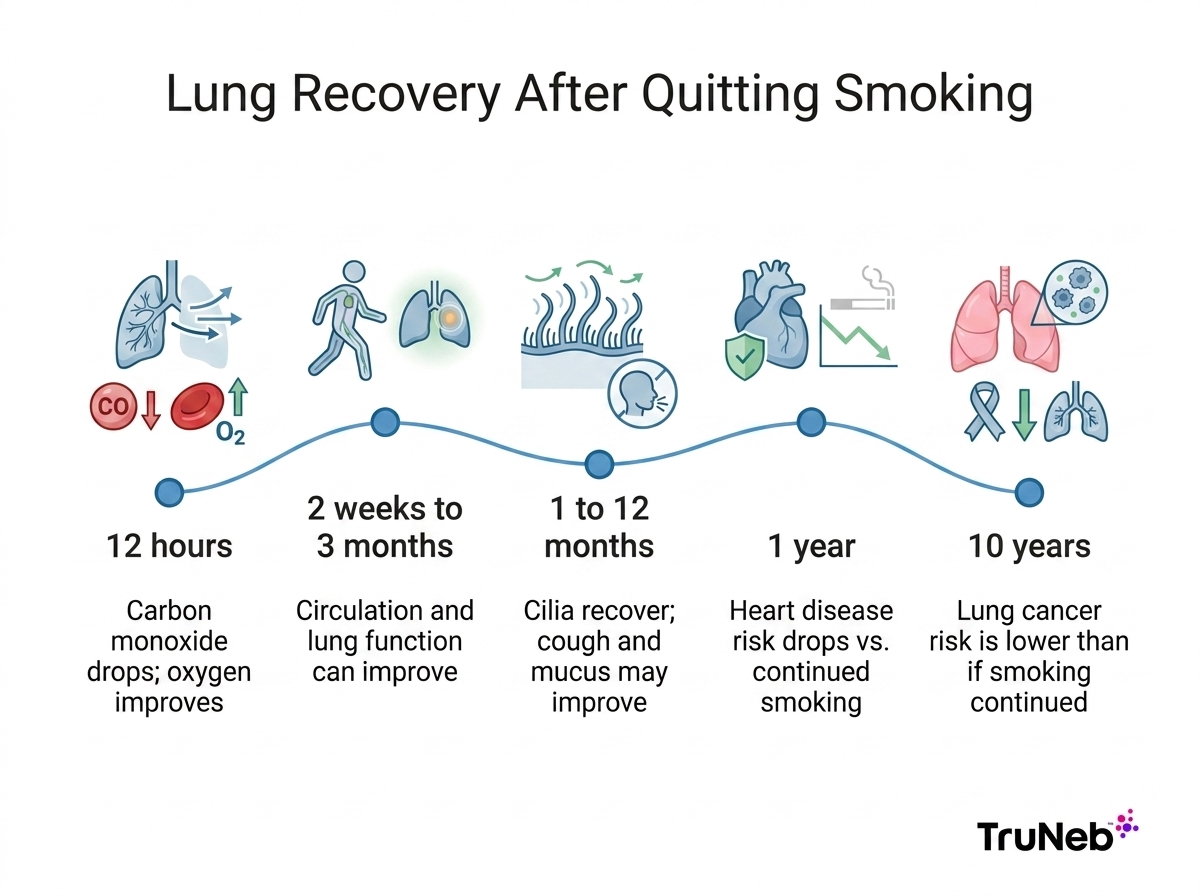
Carbon monoxide levels drop, oxygen delivery improves, cilia start recovering, and airway inflammation can begin to settle.
What May Not Fully Reverse
Some changes may not fully reverse. Emphysema can damage alveoli permanently. Chronic bronchitis and airway remodeling can leave lasting effects.
How to Support Recovery Without Detox Claims
What helps most after smoking or illness is not a cleanse, tea, or supplement. It is staying smoke-free, walking regularly, eating well, drinking enough fluids, avoiding pollution, and keeping up with screening or follow-up care.
One-sentence takeaway: There is no proven lung detox, but the lungs can begin repairing after smoking stops through lower carbon monoxide, improved cilia activity, better mucus clearance, and less inflammation. Those recovering from vaping may also be interested in understanding how lungs heal after vaping.
Adjust Lung Health Strategies for COPD, Asthma, and Chronic Mucus
COPD
For COPD, the best approach usually includes smoking cessation, prescribed medications, activity, vaccines, and pulmonary rehabilitation when needed. People prescribed oxygen therapy should follow their doctor's instructions.
Asthma
For asthma, trigger control matters along with medication adherence.
Chronic Mucus and Airway Clearance
Chronic mucus needs its own strategy. Hydration, activity, controlled coughing, and huff coughing may help support airway clearance.
Some people with chronic lung disease may discuss provider-guided airway clearance tools or therapies. This can include pulmonary rehab techniques, bronchodilators before airway clearance, or nebulized saline in certain cases. These therapies are used for specific conditions and are not appropriate for everyone. Nebulizers are medical delivery devices, not general wellness tools. TruNeb portable mesh nebulizers and hypertonic saline solutions are examples of tools and solutions used in provider-guided airway clearance conversations.
One-sentence takeaway: People with COPD, asthma, or chronic mucus often do best with a tailored plan that combines daily habits, prescribed care, and airway clearance strategies when appropriate.
Track Progress and Know When to Get Medical Care
⚠️ Seek emergency medical care immediately for severe breathing difficulty, chest pain, confusion, blue lips, or rapidly worsening symptoms.
Symptoms That Should Not Be Ignored
Shortness of breath that keeps getting worse should not be ignored. The same goes for wheezing, a chronic cough, chest pain, coughing blood, blue lips, frequent respiratory infections, unexplained weight loss, or a drop in oxygen levels.
Tests That Measure Lung Health
Spirometry is a basic lung function test. Pulmonary function tests may include spirometry and other measurements. Peak flow testing is another tool sometimes used, especially in asthma management. Sputum evaluation may be considered when persistent mucus or infection concerns are present.
Preventive Care Checklist
Vaccines for influenza, COVID-19, pneumococcal disease, and RSV may be important depending on your age and risk factors. A pulmonologist referral may be considered when symptoms are persistent, unexplained, or difficult to control.
Key takeaway: Common lung tests help identify problems, while preventive care helps reduce future risk.
| Test | What It Measures | Common Use |
|---|---|---|
| Spirometry | Airflow and exhalation | COPD and asthma evaluation |
| Peak Flow | How fast air moves out | Asthma monitoring |
| Pulse Oximetry | Blood oxygen level | Oxygen assessment |
| LDCT | Lung imaging | Lung cancer screening |
| Sputum Evaluation | Mucus sample analysis | Infection or mucus concerns |
One-sentence takeaway: Home tracking can help you notice patterns, but tests like spirometry, pulmonary function tests, and LDCT provide a clearer picture when symptoms or risk factors are present. Home monitoring tools such as a pulse oximeter for home use may help track oxygen levels between visits.
Build a 30 Day Lung Health Plan
A simple 30-day lung health plan can help turn healthy habits into a sustainable routine.
Week 1 Set Your Baseline
Use the lung health scorecard and note symptoms, activity, and exposures.
Week 2 Build Breathing and Movement
Add daily walks and breathing practice that fit your situation.
Week 3 Upgrade Food and Air Quality
Improve nutrition, hydration, and indoor air habits.
Week 4 Lock In Prevention
Review vaccines, screenings, and follow-up care needs.
One-sentence takeaway: Consistent small actions over 30 days can build a routine that supports long-term lung health.
Frequently Asked Questions
Tap or click a question below to see the answer:
Stop smoking, avoid secondhand smoke, reduce exposure to polluted air, stay active, and address ongoing symptoms early.
They can improve breathing control and efficiency, but they do not cure lung disease.
Fruits, vegetables, legumes, whole grains, healthy fats, and adequate protein fit well into a lung-supportive eating pattern.
See a doctor for persistent shortness of breath, wheezing, chronic cough, chest pain, coughing blood, or recurrent infections.
Nebulizers are medical delivery devices used when a clinician recommends medication or saline. Some provider-guided discussions may include TruNeb™ portable mesh nebulizers.
The biggest lung-health gains usually come from reducing irritants, staying active, preventing infections, and addressing symptoms early.
One-sentence takeaway: Most people can improve lung health with steady daily habits, but chronic symptoms, COPD, asthma, or long smoking history call for more personalized medical guidance.
Disclaimer: This article is for informational purposes only and is not a substitute for medical advice, diagnosis, or treatment. Talk to your doctor about symptoms, medications, and treatment decisions.