

On this page
Chest Burning Pain: Causes, Warning Signs, and What to Do Next
Call 911 Now If Chest Burning Comes With These Symptoms
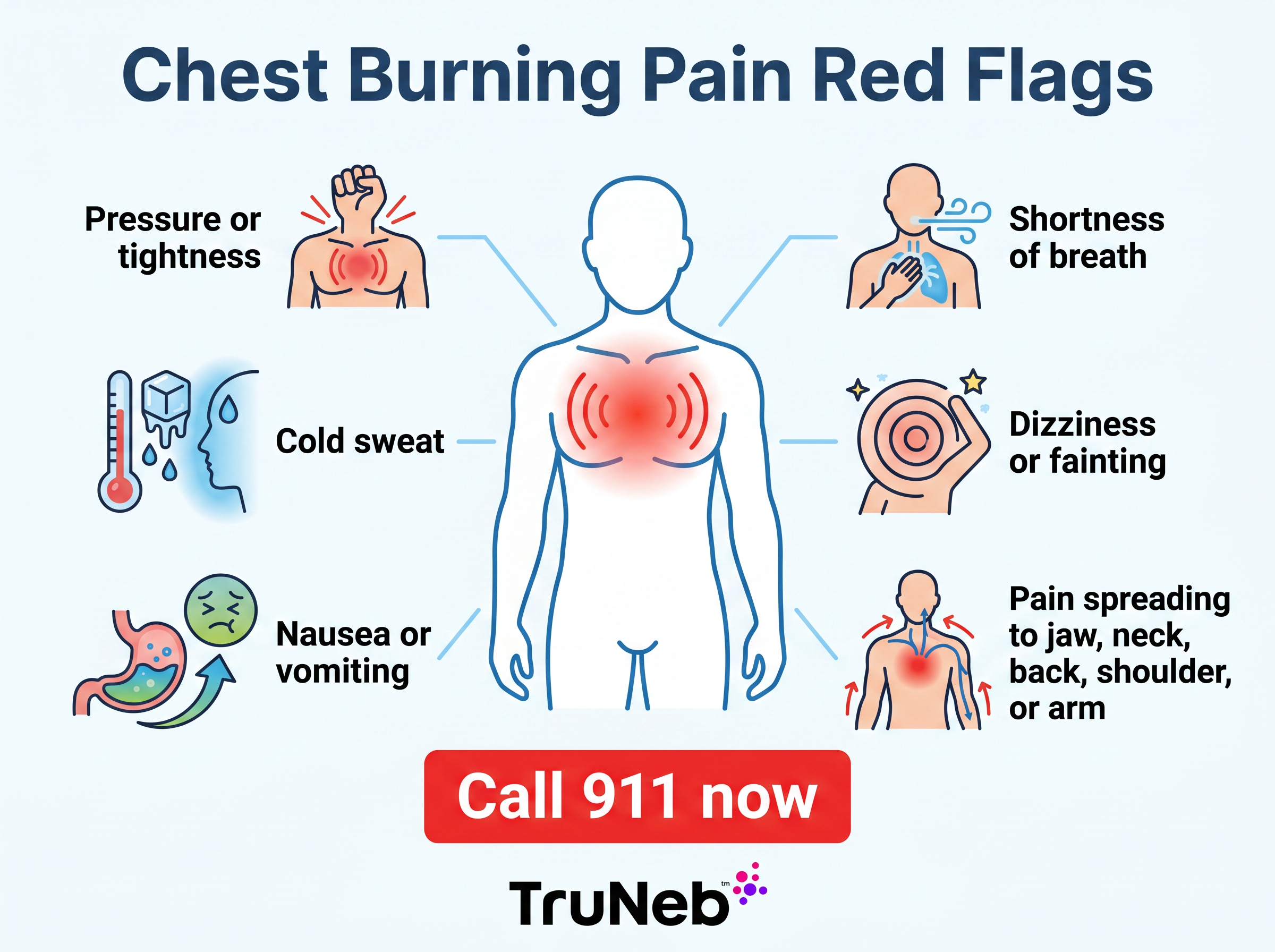
Chest burning pain can be heartburn, but it can also be a heart attack or angina. If the burning comes with pressure, tightness, heaviness, squeezing, shortness of breath, sweating, dizziness, fainting, nausea, vomiting, or pain that spreads to your jaw, neck, back, shoulder, or arm, call 911 right away.
That matters because heartburn and heart attack can feel similar at first. A burning sensation in chest and back is not something to brush off if it is new, severe, or getting worse.
Women, older adults, and people with diabetes may have less typical symptoms. You may feel burning, unusual tiredness, nausea, back pain, or shortness of breath without the classic crushing chest pain.
Do not wait to see if antacids work when symptoms look suspicious. Symptoms can come and go and still represent a cardiac emergency. Do not drive yourself if you think you may be having a heart attack. Emergency medical services can start care on the way, and the hospital may use an electrocardiogram (ECG) and troponin blood tests to check for a myocardial infarction.
Call 911 for chest burning pain that occurs with shortness of breath, sweating, dizziness, fainting, nausea, or pain spreading to the jaw, neck, back, shoulder, or arm.
One simple rule helps here: new or unexplained chest burning pain with red flags should be treated like an emergency until proven otherwise.
This article is educational and should not replace emergency care.
Chest Burning Pain Is a Symptom, Not a Diagnosis
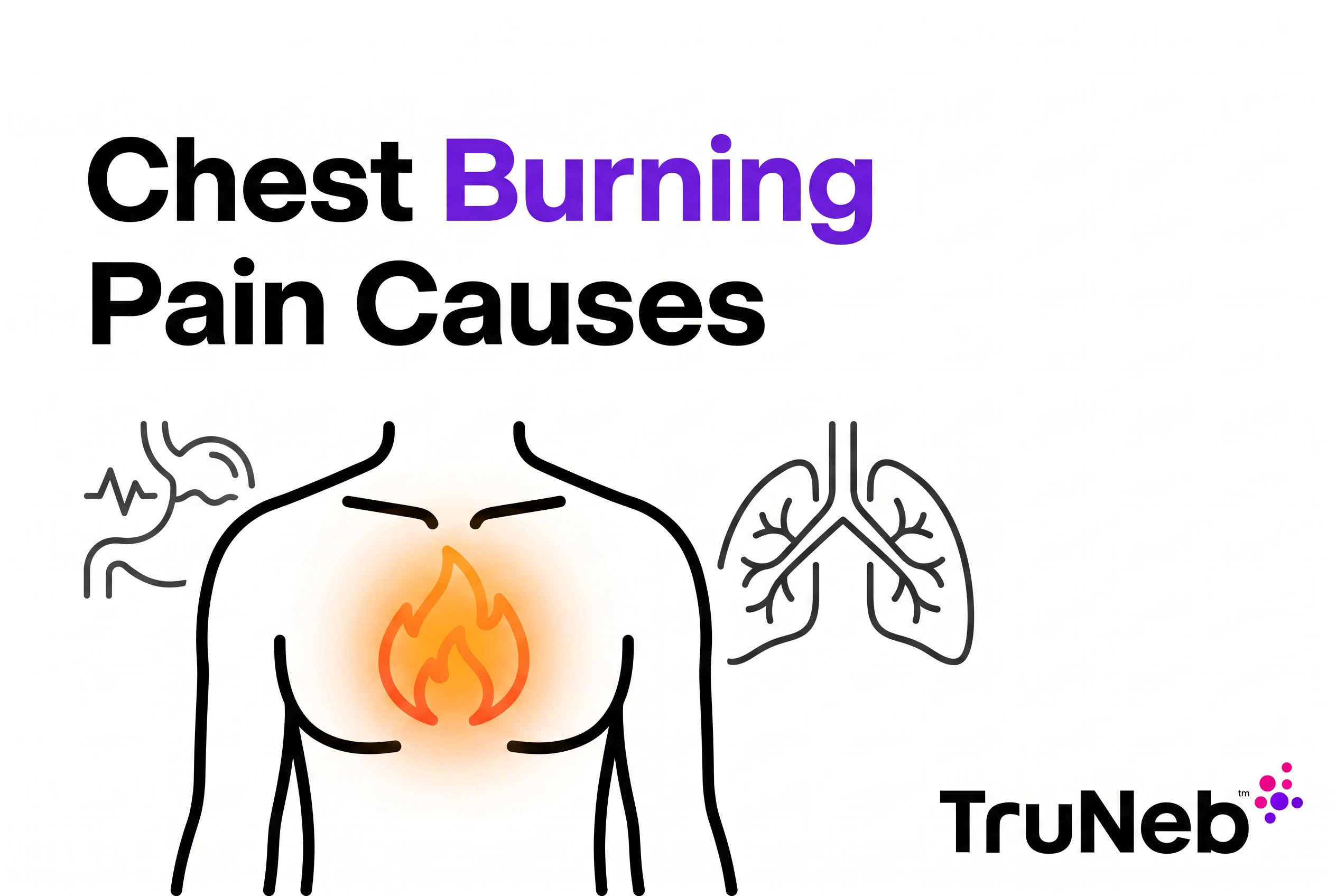
Chest burning pain is a symptom, not a diagnosis.
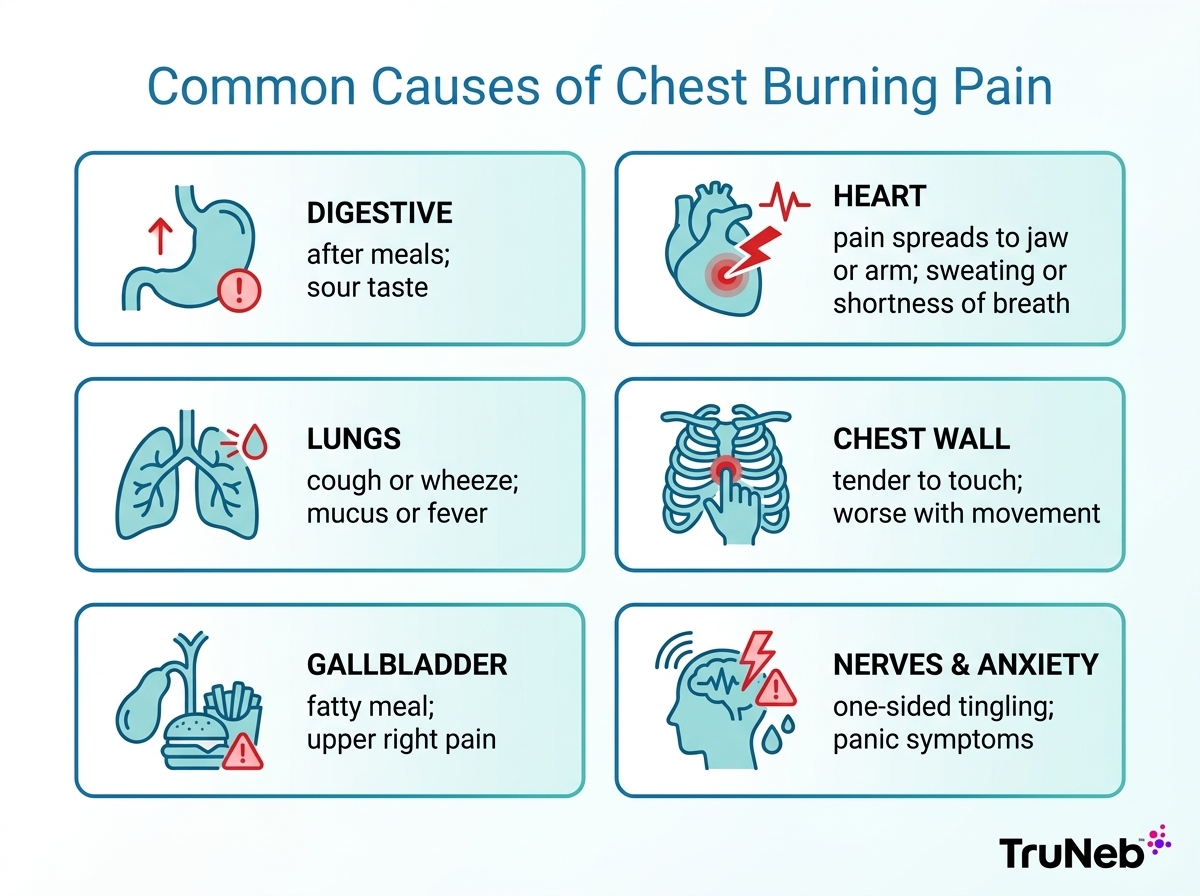
That burning can start in the esophagus, heart, lungs, chest wall, nerves, gallbladder, stomach, or even your body's anxiety response. Burning does not automatically mean heartburn.
Doctors look at the pattern. Did it start after eating? Does it happen when you lie down? Is the burning pain in the middle of the chest, or off to one side? Does it spread to the back, jaw, or arm? Is there cough, wheezing, fever, sour taste, trouble swallowing, or shortness of breath?
Your age and risk factors matter too. A younger person with burning after pizza and a sour taste may be dealing with reflux. A person with diabetes, high blood pressure, smoking history, or known heart disease needs a more careful look, even if the feeling seems mild.
New symptoms deserve more caution than familiar ones. Recurrent burning sensation in chest that always shows up after a heavy meal points in one direction. Burning chest pain after exercise, wakes you from sleep, or feels different than usual points in another.
The safest way to think about what causes burning chest pain is this: first rule out danger, then narrow the cause.
Key takeaway: Symptoms overlap, so heartburn relief does not prove chest symptoms are harmless.
| Feature | More Typical of Heartburn | More Concerning for Heart Attack |
|---|---|---|
| Feeling | Burning, acidic sensation | Pressure, tightness, heaviness, burning |
| Location | Behind breastbone or upper abdomen | Center or left chest |
| Spread | May rise toward throat | Jaw, neck, back, shoulder, or arm |
| Trigger | After meals, lying down | Exercise, stress, rest, or no trigger |
| Associated symptoms | Sour taste, burping | Shortness of breath, sweating, nausea, dizziness |
| Relief | May improve with antacids | Often does not improve with antacids |
Heartburn usually burns behind the breastbone and may come with a sour taste, burping, or regurgitation. A burning sensation in chest and back can happen with reflux, but pain that spreads to the back, jaw, shoulder, neck, or arm is more concerning.
A heart attack does not always feel dramatic. Even clinicians often rely on ECGs and troponin testing because symptoms alone are not always enough to tell the difference.
Key point: antacids can ease reflux, but they do not rule out a heart attack.
Chest burning pain can come from digestive, heart, lung, chest wall, nerve, or anxiety-related conditions.
| Cause | Common Clues | Urgency |
|---|---|---|
| Acid reflux | After meals, sour taste | Usually non-emergency |
| Heart attack or angina | Spreading pain, sweating, shortness of breath | Emergency |
| Esophagitis | Painful swallowing | Needs evaluation |
| Ulcer or gastritis | Burning upper stomach pain | Urgent if bleeding signs |
| Bronchitis or pneumonia | Cough, mucus, fever | Can be urgent |
| Asthma or COPD flare | Wheezing, breathlessness | Can become urgent |
| Anxiety or panic attack | Racing heart, fear | Needs assessment if unclear |
| Costochondritis | Tender chest wall | Usually non-emergency |
| Gallbladder attack | Fatty meal, right-sided pain | Can be urgent |
| Shingles | One-sided burning, rash | Medical evaluation |
The big takeaway is simple: chest burning medicine only helps if the cause is actually reflux.
Digestive Causes of Chest Burning Pain
Acid Reflux and Heartburn
Digestive problems are one of the most common reasons for a burning sensation in chest. Acid reflux happens when stomach acid moves up into the esophagus. Heartburn is the symptom that results.
Reflux-related chest burning typically happens when stomach acid irritates the esophagus.
A hiatal hernia can make reflux more likely in some people. Symptoms often worsen after meals, when lying down, or at night.
GERD and Esophagitis
GERD is the term doctors use when reflux happens often or starts causing complications. Frequent heartburn, chest burning at night, or chest burning antacid not helping may suggest GERD.
Esophagitis means inflammation of the esophagus. Swallowing can hurt, and food may feel stuck. Persistent symptoms may lead a doctor to recommend an endoscopy to look for irritation or damage.
Long-term GERD can increase the risk of Barrett’s esophagus, a condition involving changes in the esophageal lining. Less common causes of esophagitis include eosinophilic esophagitis.
Ulcers and gastritis can cause burning upper stomach and chest pain. NSAIDs and H. pylori infection are common risk factors.
Gallbladder pain can also mimic chest discomfort. Gallstones are a common cause and may trigger pain after a fatty meal, along with nausea and pain that spreads to the shoulder or back.
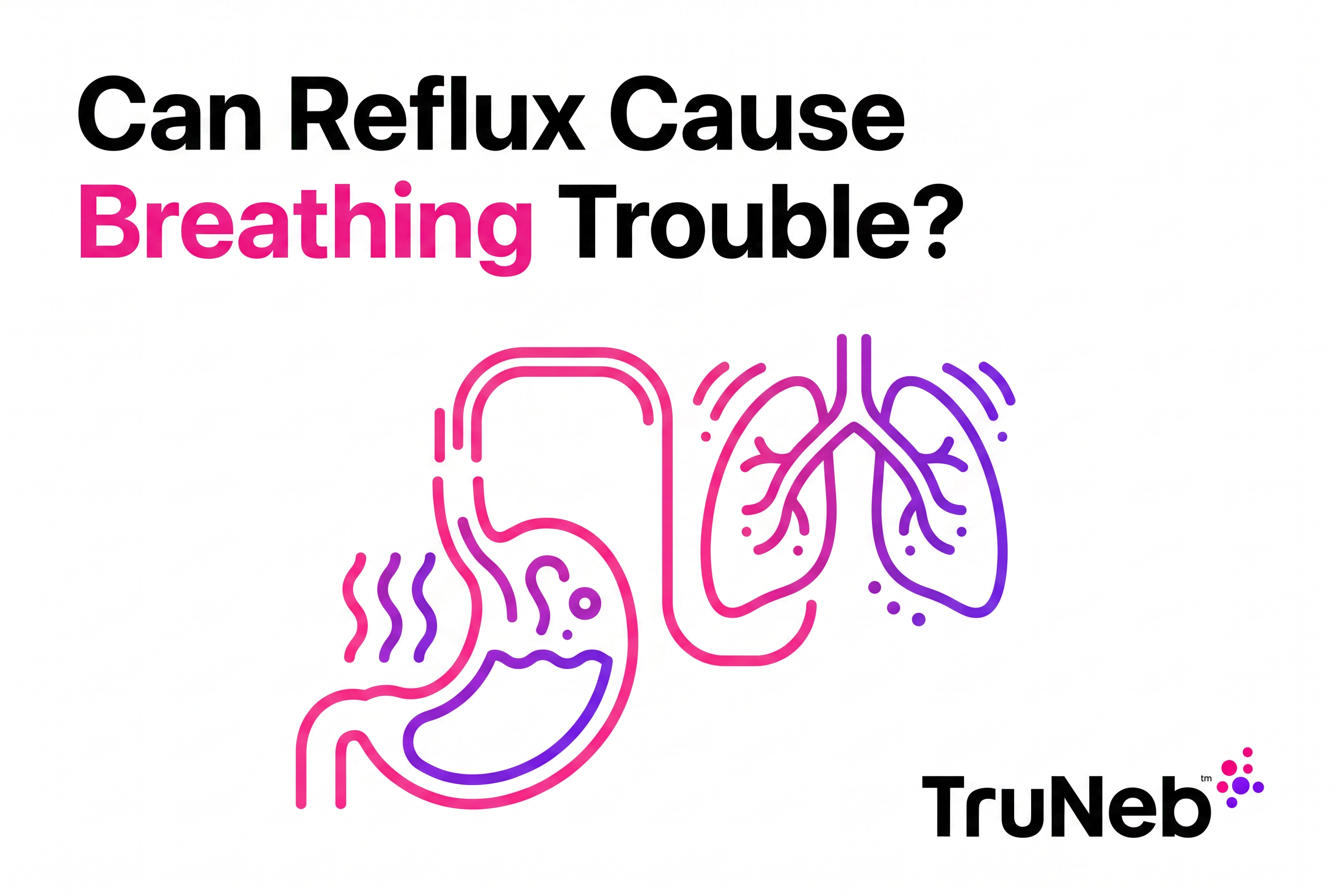
OTC medicine can help when reflux is the likely cause. Trouble swallowing, black stools, vomiting blood, or unexplained weight loss should be checked by a doctor. Some people with reflux-related breathing complaints may also benefit from understanding how reflux can affect breathing.
Respiratory Causes With Cough, Wheezing, or Mucus
Bronchitis and Respiratory Infections
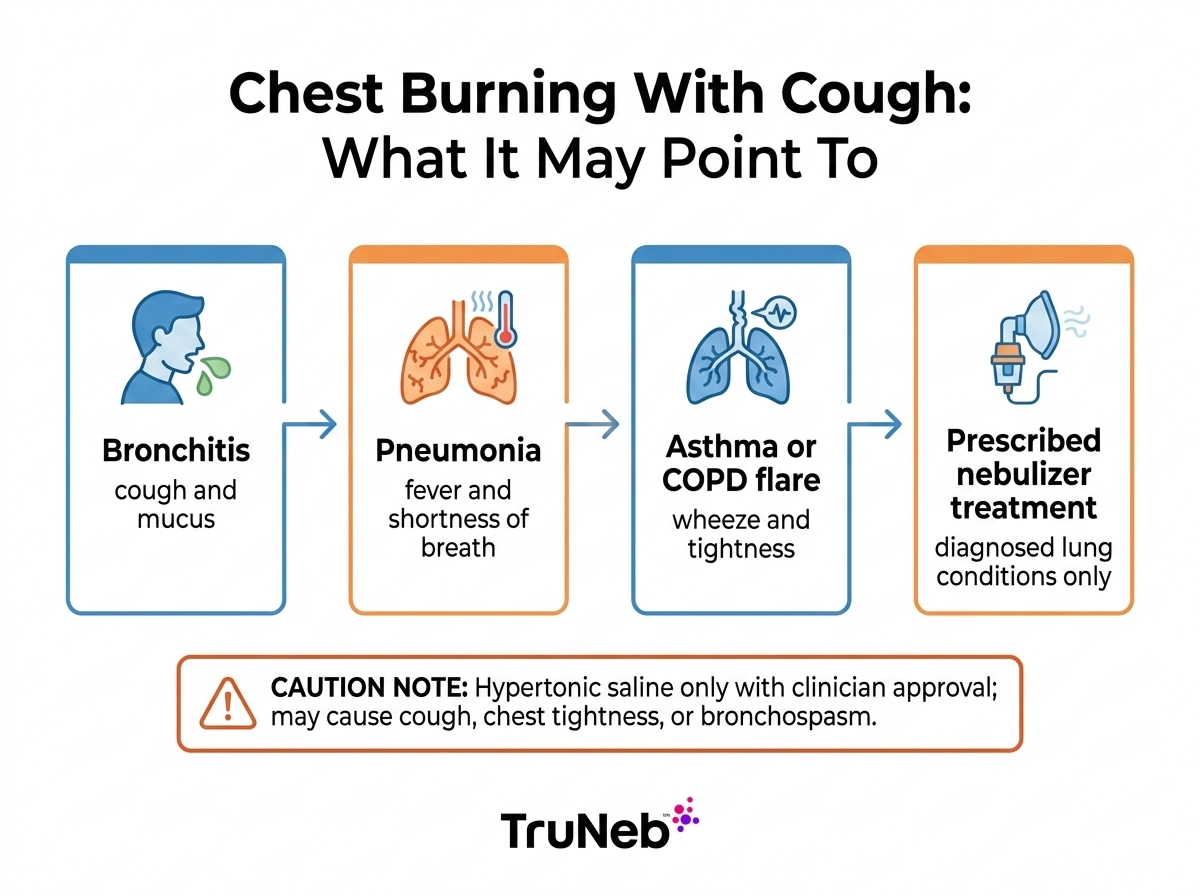
Chest burning with cough often points toward irritated airways or inflamed lungs.
Bronchitis commonly develops after a respiratory infection. Repeated coughing can leave the airways raw and create a burning feeling.
Asthma or COPD Flare Symptoms
Asthma and COPD can cause burning chest pain with wheezing, chest tightness, cough, breathlessness, and mucus. Related symptoms are discussed in guides covering ways to address wheezing symptoms and shortness of breath when lying down.
Seek emergency care for severe breathing difficulty, blue lips, confusion, or rapidly worsening symptoms.
Prescribed Nebulized Treatments and Saline
If your doctor has diagnosed a respiratory condition and prescribed nebulized medication or saline, a portable mesh nebulizer can help with treatment consistency. TruNeb™ is one option people use for prescribed breathing treatments.
Hypertonic saline may help mucus clearance in some doctor-approved cases, including certain people with bronchiectasis or cystic fibrosis. It can also cause cough, chest tightness, or bronchospasm. Learn more about hypertonic saline for bronchiectasis if it has been recommended by your clinician.
Key point: a nebulizer can support prescribed treatment for a diagnosed lung condition, but it should never be used to guess the cause of chest burning.
Other Possible Causes of Chest Burning Pain
Anxiety and Panic Attacks
Anxiety and panic attacks can cause chest tightness, burning, shortness of breath, sweating, trembling, and a racing heartbeat. People who are unsure whether symptoms stem from anxiety or breathing issues may find it helpful to review the differences between a panic attack and asthma attack.
Costochondritis and Chest Wall Pain
Costochondritis is inflammation where the ribs meet the breastbone. The pain may feel sharp, sore, or burning and often gets worse with touch or movement.
Shingles
Shingles is caused by reactivation of the varicella-zoster virus. One-sided burning, tingling, or skin sensitivity can appear before the rash.
Anxiety, costochondritis, and shingles can cause chest burning symptoms, but new chest symptoms should not be assumed to be harmless.
What to Do Now for a Burning Sensation in the Chest
Start with the safety check. If chest burning pain comes with pressure, shortness of breath, sweating, dizziness, fainting, nausea, or pain spreading to the jaw, neck, back, shoulder, or arm, call 911.
If symptoms are mild, familiar, and clearly reflux-like, sit upright and avoid lying down. Skip more food for the moment, especially greasy, spicy, or acidic foods.
If appropriate for you, an OTC heartburn product may help. Relief does not prove it was harmless, and no heartburn product can rule out a heart attack.
Use prescribed inhalers or nebulized medication only as directed. If breathing worsens, get help. Patients prescribed aerosol treatments may benefit from reviewing proper nebulizer use techniques.
A simple rule of thumb works well here: first look for danger, then use symptom clues, then get medical help if the story does not fit your usual pattern.
Chest Burning Medicine and Treatment Options
Medicines Used for Heartburn
Chest burning medicine depends on the cause.
These medicines are used for reflux-related symptoms, not unexplained chest pain.
| Medicine Type | Best For | Notes |
|---|---|---|
| Antacids | Quick relief | Short acting |
| Alginates | Post-meal reflux | Create a barrier |
| H2 blockers | Longer relief | Reduce acid production |
| PPIs | Frequent GERD | Help heal irritation |
Famotidine is a common H2 blocker. Common PPIs include omeprazole, esomeprazole, and pantoprazole.
If you need chest burning medicine often, GERD, esophagitis, ulcers, or another condition may need further testing.
Avoid using supplements, herbs, essential oils, or non-prescribed nebulized substances for chest burning pain. For example, resources discussing essential oils in nebulizers explain why these products are not appropriate substitutes for medical evaluation.
Talk to your doctor before trying a new medication.
When to See a Doctor
You do not need to wait for a full emergency to get medical help. Chest burning pain that keeps returning, hangs on for days, gets worse, or does not make sense should be evaluated.
See a doctor if heartburn happens weekly or more, symptoms keep breaking through OTC treatment, or the burning affects sleep or daily life.
Get checked sooner if you have trouble swallowing, painful swallowing, food sticking, vomiting, black stools, unexplained weight loss, or chest burning pain not going away.
Persistent cough, wheezing, mucus, fever, or shortness of breath can point to bronchitis, pneumonia, asthma, or COPD. Monitoring tools such as a pulse oximeter readings guide may help people understand oxygen numbers, but they do not replace medical evaluation.
New, severe, or concerning chest symptoms during pregnancy should be evaluated promptly. Burning chest pain pregnancy symptoms are often related to reflux, but other causes need consideration.
A doctor may order tests based on the pattern. That can include an ECG, troponin blood tests, chest X-ray, endoscopy, pH monitoring, spirometry, or an oxygen level check.
When chest burning pain does not fit a simple, familiar pattern, getting answers early is usually the safer path.
Prevention Steps for Reflux-Related Chest Burning
If your chest burning pain is reflux-related, a few daily habits can lower the odds of it coming back.
Smaller meals, avoiding late-night eating, and staying upright after meals can help. Many people notice chest burning at night improves with these changes.
Trigger foods vary, but high-fat, spicy, and acidic foods are common problems.
Prevention strategies can reduce reflux-related burning but do not apply to every cause of chest burning pain.
Frequently Asked Questions
Tap or click a question below to see the answer:
Heartburn often causes burning behind the breastbone with a sour taste. A heart attack may cause burning, pressure, shortness of breath, sweating, nausea, dizziness, or pain spreading to the jaw, neck, back, shoulder, or arm. If you are not sure, call 911.
Check for emergency symptoms first. If symptoms are mild and reflux-like, sit upright and avoid lying down. Call 911 for red-flag symptoms.
Yes. Bronchitis, pneumonia, asthma, COPD, and reflux can all contribute to chest burning with cough.
If reflux is the likely cause, antacids, alginates, H2 blockers, or PPIs may help. The best option depends on the cause.
No. A nebulizer is not a treatment for heartburn or unexplained chest pain. A TruNeb™ portable mesh nebulizer may help deliver prescribed respiratory treatments for diagnosed lung conditions.
Disclaimer: This article is for informational purposes only and is not a substitute for professional medical advice, diagnosis, or treatment. Always consult your doctor about symptoms, medications, and treatment decisions.