

On this page
How Many Inhalers Can You Take on a Plane
Quick Answer: TSA does not set a fixed inhaler limit. Travelers can bring multiple inhalers on a plane when they are medically necessary and carried in reasonable quantities for the trip. In most cases, that means enough medication for the trip plus a reasonable backup supply, and it's best to keep respiratory medications in carry-on luggage.
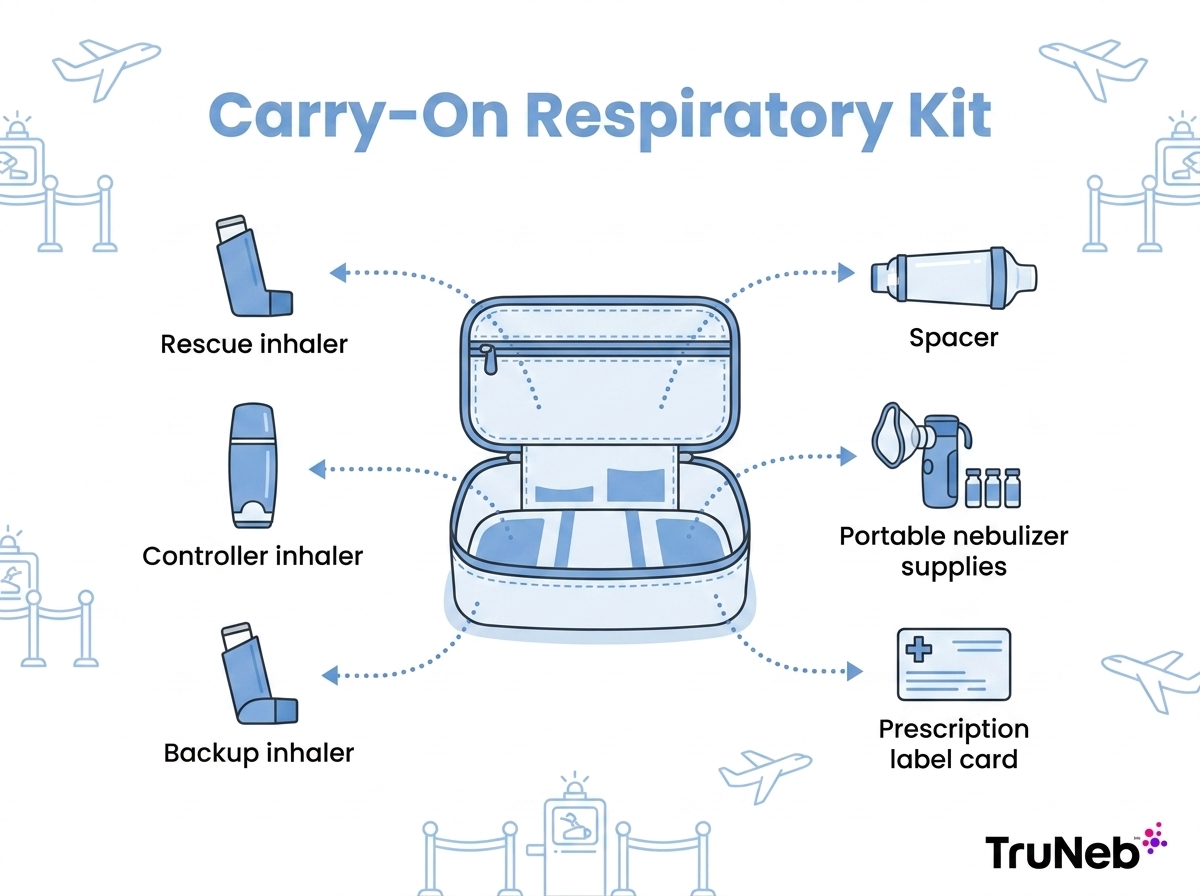
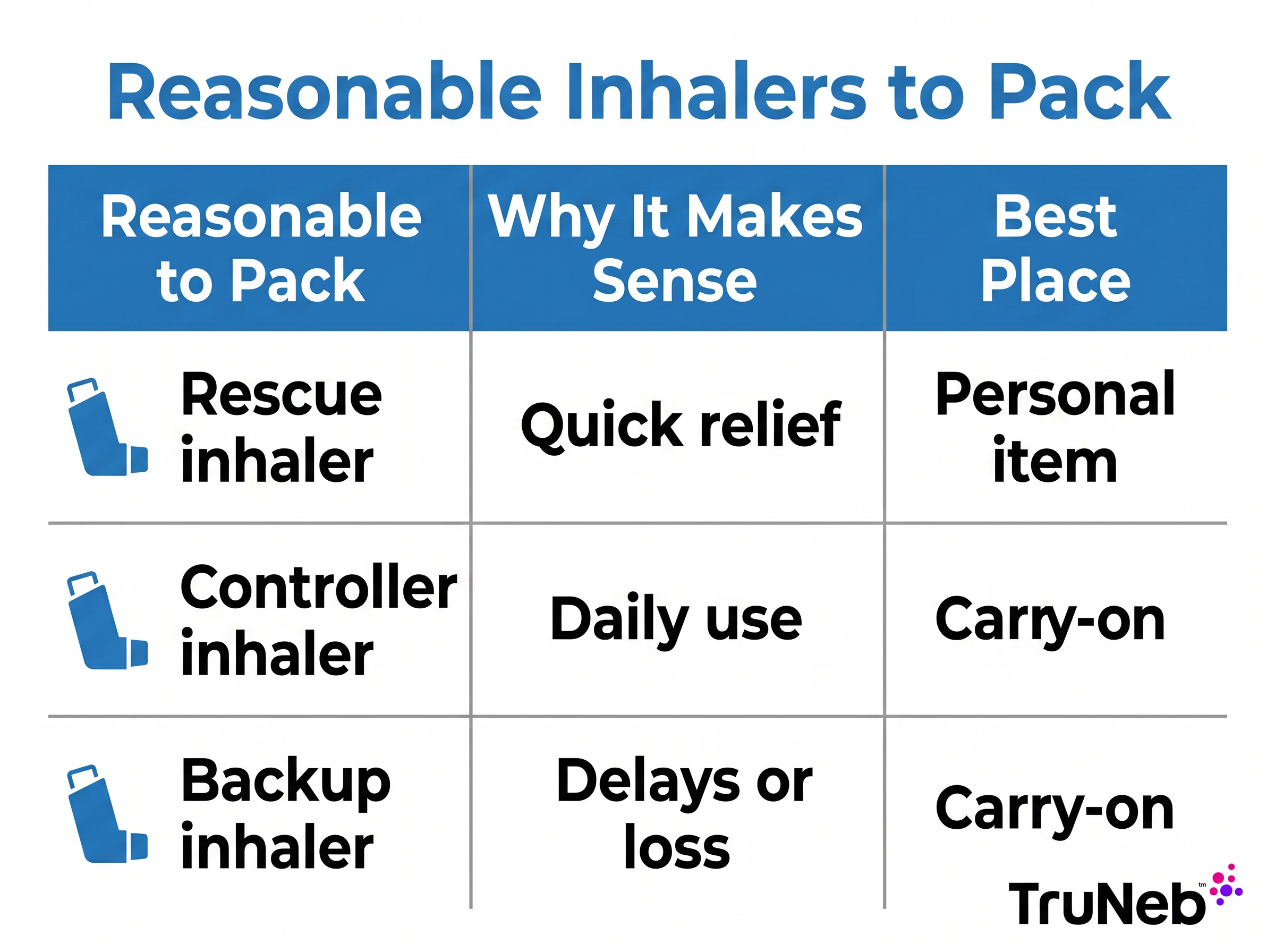
You can take multiple inhalers on a plane because TSA allows medically necessary items in reasonable quantities for your trip. TSA does not set a fixed inhaler limit. In practical terms, that usually means the medications you actually need, such as a rescue inhaler, a controller inhaler, and a backup inhaler if your doctor recommends carrying one. Whether you use a metered-dose inhaler or a dry powder inhaler, TSA focuses on medical need and trip length rather than a strict count. Avoid packing a large supply that doesn't match your travel plans. Travelers who use devices discussed in our MDI vs DPI inhaler guide may find it helpful to review the differences before flying.
Key takeaway: TSA does not set a fixed inhaler limit, and reasonable quantities usually mean enough for your trip plus a practical backup.
| Item | Why Bring It | Best Location |
|---|---|---|
| Rescue inhaler | Quick-relief medication | Personal item or carry-on |
| Controller inhaler | Routine daily use | Carry-on |
| Backup inhaler | Extra supply for delays | Carry-on |
| Spacer | Used with some inhalers | Carry-on |
| Nebulizer solution | Medically necessary medication | Carry-on for screening access |
Carry-On Versus Checked Bags
Yes, you can bring an inhaler on a plane in both carry-on and checked bags. Access matters more than permission. If a checked bag is delayed, lost, or unavailable, your medication may not be easy to reach when you need it. Travelers often keep rescue medications, spacers, portable nebulizer supplies, and other respiratory items in a personal item or carry-on bag. Travelers who already use a portable nebulizer, such as TruNeb™, may find it helpful to keep it with their other respiratory supplies in a carry-on bag. For additional guidance, see these travel tips for respiratory conditions.
Inhalers are allowed in checked bags, but keeping them in your carry-on makes them easier to access if you need them during travel. Those traveling with aerosol medications may also benefit from reviewing advice about a spacer for inhaler use.
TSA Screening Tips for Inhalers
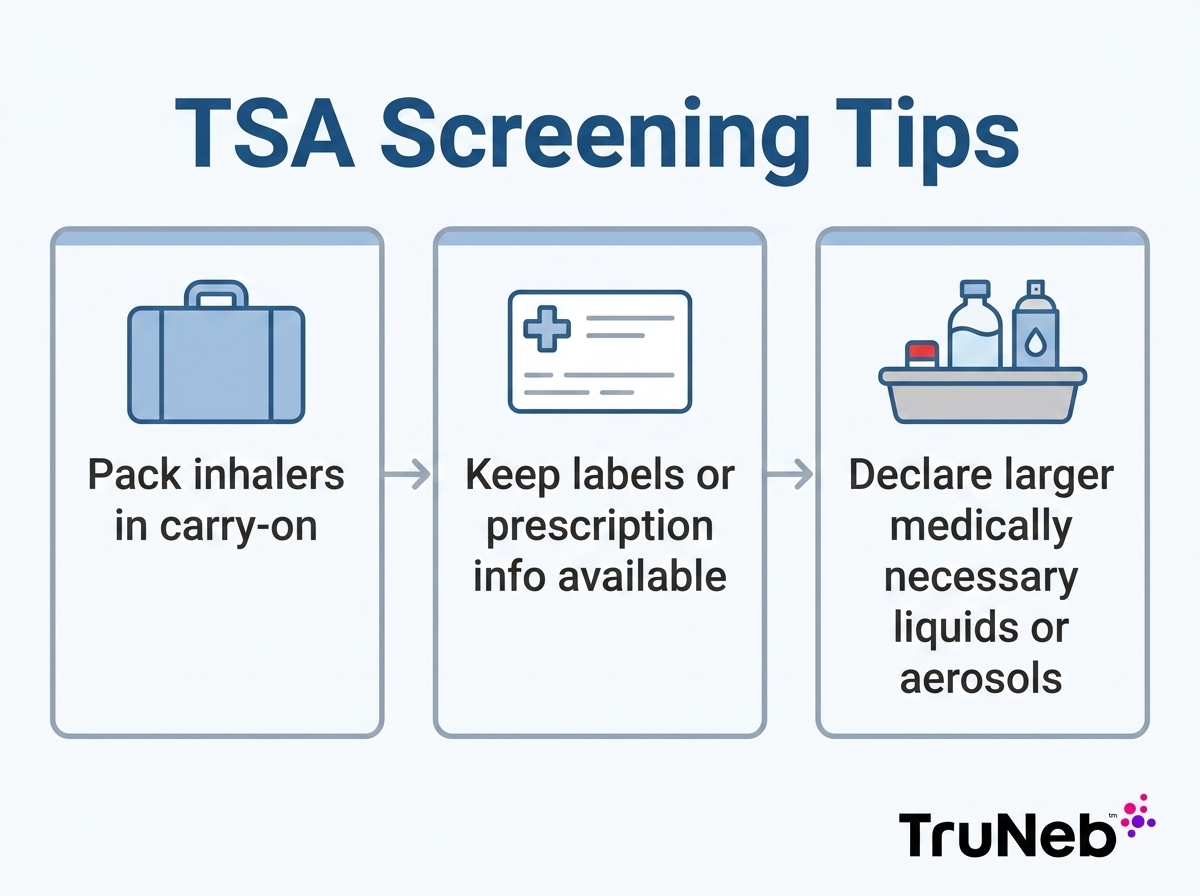
TSA medication rules allow inhalers and other medically necessary aerosols through airport security screening. Keep medications easy to reach at the TSA checkpoint in case an officer wants to inspect them. Prescription labels are recommended but not required, and original packaging can help identify medications during screening. If you are carrying medically necessary liquids, gels, aerosols, or nebulizer solution in larger amounts, declare them during screening. This is more likely to apply to nebulizer solutions than standard inhalers. The final screening decision is made by the TSA officer. Travelers bringing a nebulizer may also want to read about how to bring a nebulizer on a plane.
TSA recommends keeping medications accessible and declaring larger medically necessary liquids or aerosols during screening. Travelers using respiratory devices can learn more about the TruNeb portable mesh nebulizer for travel-friendly treatments.
Can You Use an Inhaler During the Flight
Yes, you can use an inhaler during the flight if you need it. Travelers typically keep rescue inhalers in a personal item or under-seat bag so they remain accessible during the flight. If asthma symptoms, bronchospasm, or breathing discomfort occur, use your medication as directed by your healthcare professional. If symptoms do not improve, notify a flight attendant and follow your asthma action plan. Talk to your doctor before traveling with a new medication.
⚠️ If you experience severe breathing difficulty or symptoms that do not improve, seek immediate medical assistance and notify flight crew right away.
Travelers can use a rescue inhaler during a flight if needed and should alert the crew if symptoms do not improve. If you're preparing for air travel, review what to pack when flying with a nebulizer and learn how to use an inhaler with a spacer effectively.
Frequently Asked Questions
Tap or click a question below to see the answer:
No. Inhalers are allowed by TSA in carry-on and checked bags. Normal commercial cabin pressure is not a reason to leave your medication behind, though most travelers keep it with them for easy access.
Yes. TSA generally allows over-the-counter medication in carry-on and checked bags. Liquid medicine over standard limits may be permitted when it is medically necessary and declared during screening.
Usually, yes. TSA rules apply when departing from the United States, but destination country laws and customs requirements may differ. The CDC recommends checking medication requirements before international travel, keeping medicines in original packaging when possible, and carrying prescription information if needed.
Disclaimer: This article is for informational purposes only and is not a substitute for professional medical advice. Talk to your doctor about medications, travel planning, and respiratory conditions.