

On this page
⚠️ Seek emergency medical care if chest pain comes with severe breathing problems, blue lips, fainting, confusion, chest pressure, or significant coughing up blood.
Why Your Lungs Hurt When You Cough
The pain may come from your chest wall, airways, or lung lining
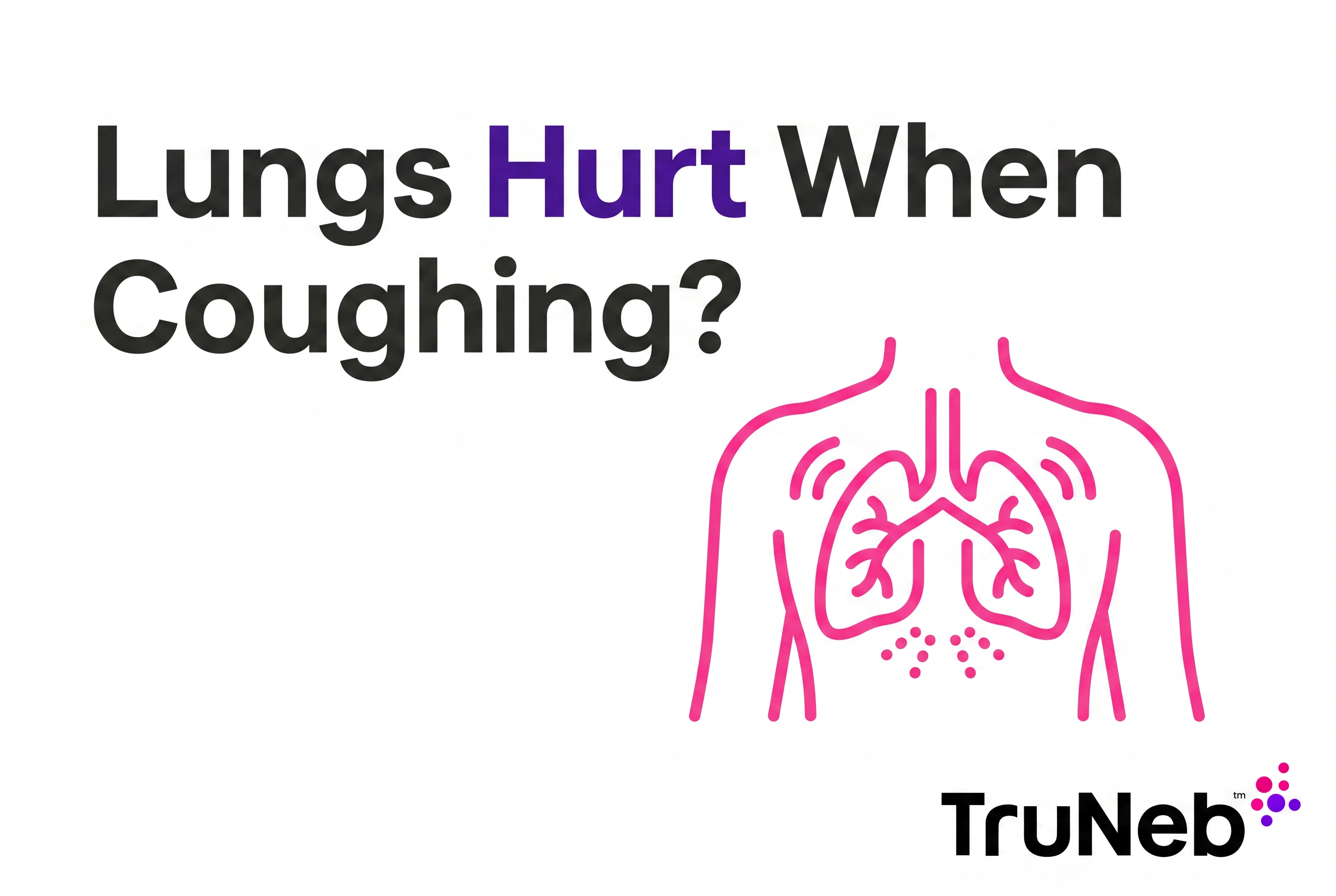
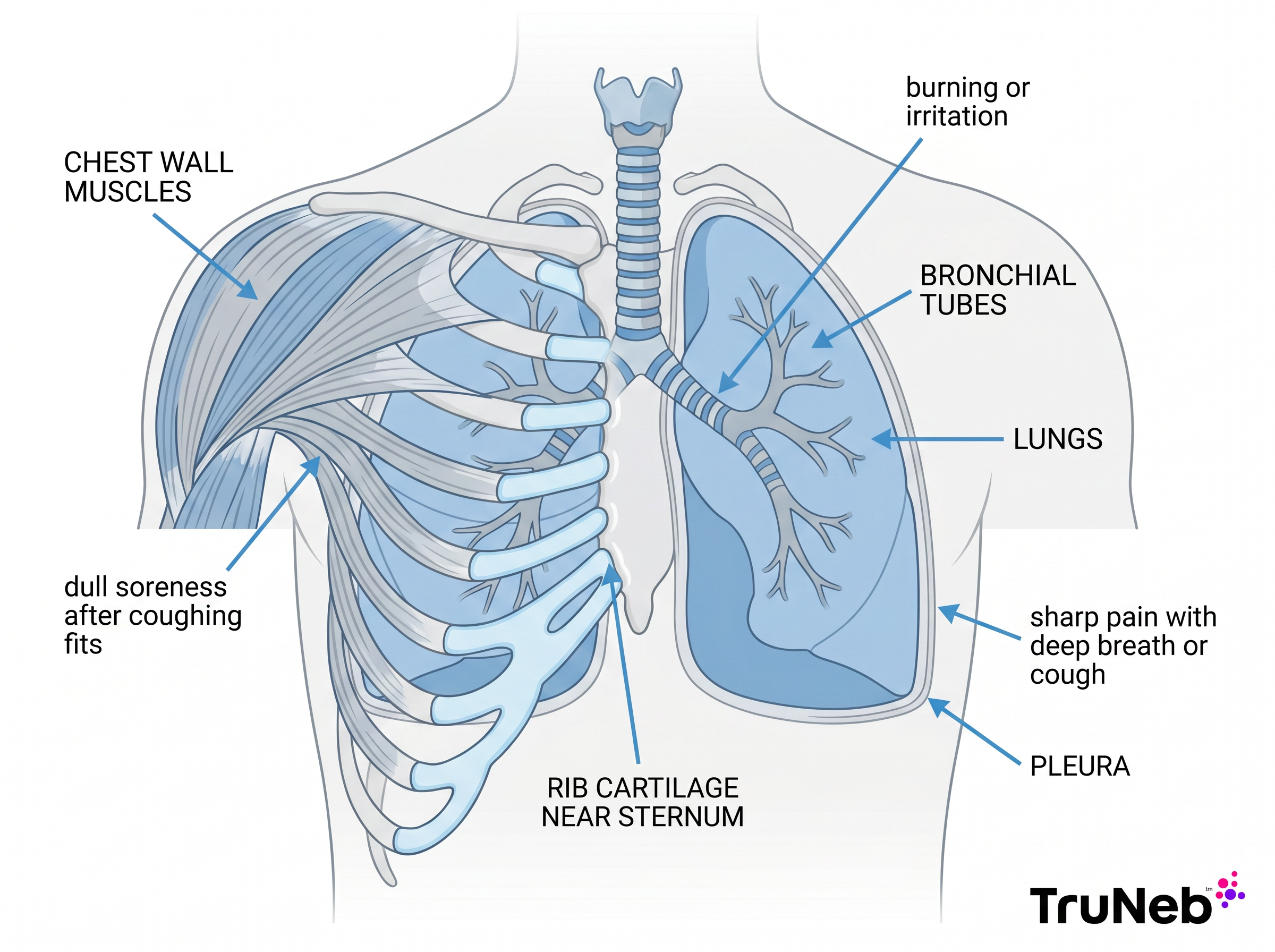
If your lungs hurt when you cough, the pain is often not coming from the lung tissue itself. It usually comes from the chest wall, the airways, the rib cartilage, or the lining around the lungs. Chest pain from coughing can be mild and sore, or sharp and hard to ignore. The type of pain can provide useful clues.
People often say, "my lungs hurt when I cough," but that feeling can come from a few nearby areas. The bronchi and smaller bronchioles can become inflamed during a common cold, influenza, COVID-19, RSV infection, or acute bronchitis. The pleura and pleural space can become irritated and cause sharp pain. The intercostal muscles between your ribs can get overworked after days of coughing. Even the costal cartilage near the breastbone can become sore and inflamed.
Coughing is a forceful body movement, not just a throat symptom. Every cough squeezes your chest wall, tightens your abdominal muscles, and pushes air through irritated airways.
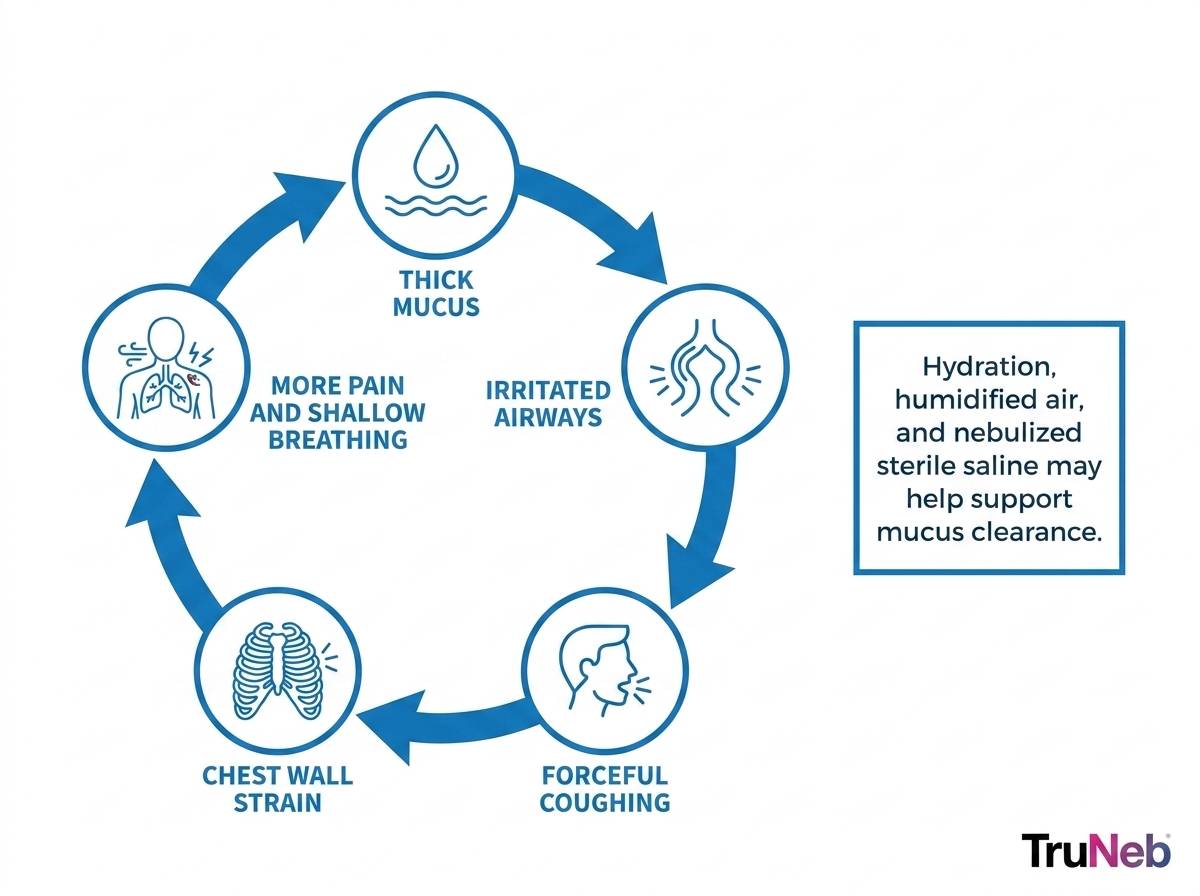
Forceful coughing can create a pain cycle
Thick mucus irritates the airways. Irritated airways trigger more coughing. Repeated coughing strains the chest wall and makes the area feel even more tender. Then the soreness can make you take shallower breaths, which may leave mucus sitting in the chest longer.
Pain with coughing often comes from strained chest muscles, inflamed airways, irritated rib cartilage, or the pleura rather than the lung tissue itself.
A dull ache after repeated coughing fits often points to muscle strain or chest wall pain. Chest tightness can happen when the airways narrow or swell, which is more common with asthma, COPD, or bronchitis. Sharp pain when taking a deep breath or coughing can happen with pleurisy or pneumonia.
Key point: if your lungs hurt when you cough and the pain is dull and tied to coughing fits, it is often muscular. If the pain is sharp, comes with fever, shortness of breath, or bloody mucus, it should be checked by a doctor.
This article is for education and does not replace medical care.
What Different Types of Cough Pain Can Mean
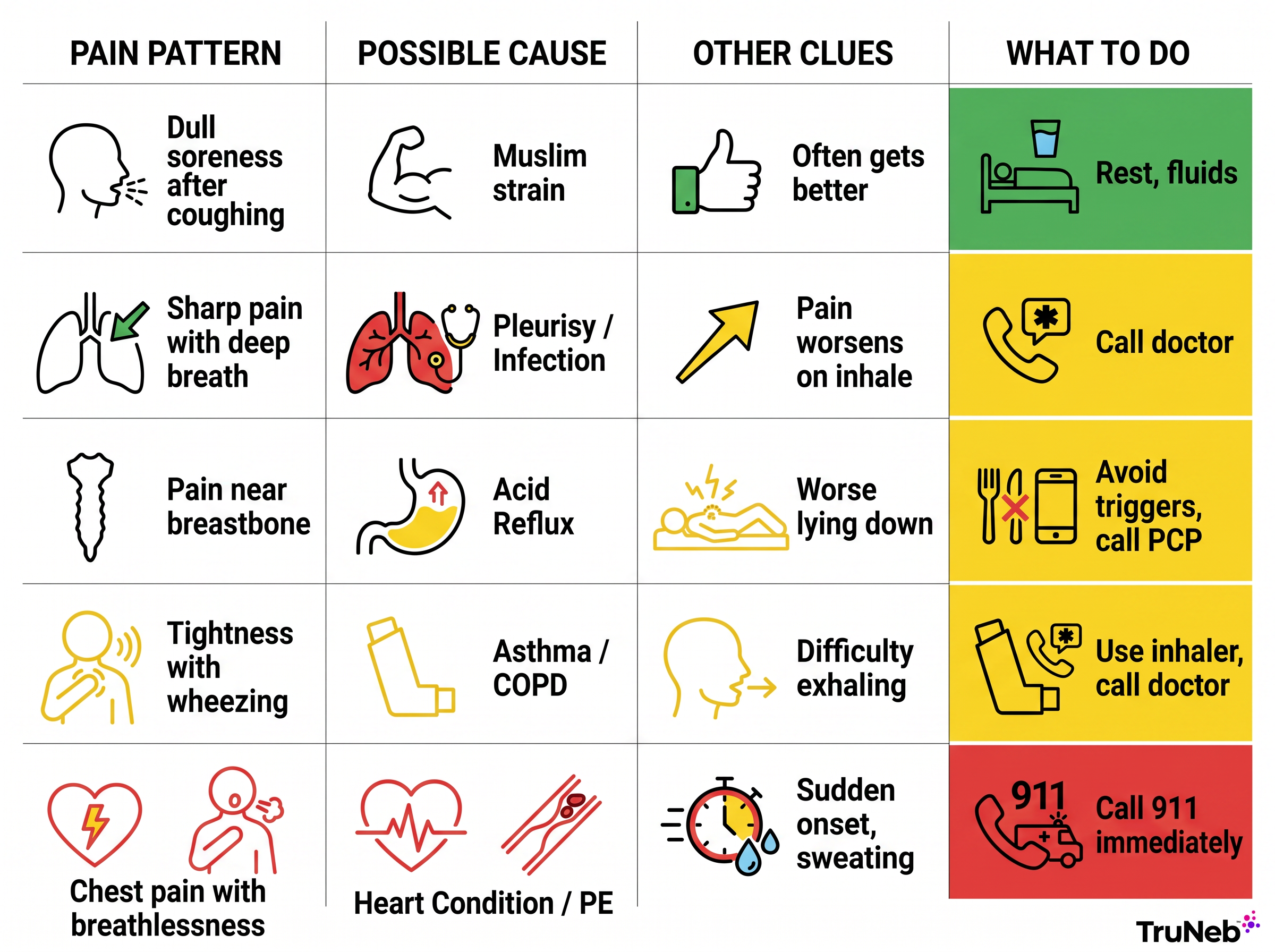
The type of pain gives clues, even though it cannot confirm a diagnosis on its own. If your chest hurts when coughing, pay attention to where the pain is, how it feels, and what else is happening at the same time.
Dull soreness after coughing fits
Dull soreness often points to muscle strain. Your ribs, chest wall, back, or upper stomach muscles may feel sore after a long stretch of forceful coughing. It often feels worse when you move, twist, or cough again.
Sharp pain when coughing or breathing deeply
Sharp pain that worsens with breathing or coughing is often called pleuritic chest pain. Pleurisy is one cause, but pneumonia can do this too. More serious problems like a pulmonary embolism or pneumothorax can also cause sudden, sharp pain.
Tender pain near the breastbone
Tender pain near the breastbone can point to costochondritis. The area may hurt more when you press on it, stretch, cough, or take a deep breath. Tenderness can be a clue, but it does not confirm a diagnosis.
Tightness with wheezing or shortness of breath
Chest tightness can happen when the airways are irritated or narrowed. This is common in asthma, COPD, and sometimes bronchitis. Tightness often comes with wheezing or the feeling that you cannot take in a full breath.
Here is a simple rule of thumb: dull soreness usually points to strained muscles, while sharp pain with breathing or coughing needs closer attention.
Key takeaway: The location and pattern of pain can help guide next steps, but symptoms alone cannot confirm the cause.
| Pain pattern | Possible cause | Common clues | Action |
|---|---|---|---|
| Dull soreness | Muscle strain | After coughing fits | Home care if mild |
| Sharp with deep breaths | Pleurisy, pneumonia | Breathing pain | Medical evaluation |
| Tender near breastbone | Costochondritis | Pain with pressure | Doctor if persistent |
| Tightness and wheezing | Asthma, COPD | Shortness of breath | Follow treatment plan |
| Sharp pain with breathlessness | Pulmonary embolism, pneumothorax | Sudden symptoms | Emergency care |
Common Reasons Your Chest or Lungs Hurt When You Cough
The most common reasons your chest or lungs hurt when you cough are muscle strain, acute bronchitis, pleurisy, pneumonia, costochondritis, asthma, and COPD.
Muscle strain from repeated coughing
Repeated coughing can strain the intercostal muscles between your ribs and the abdominal muscles below your chest. The pain often peaks during the cough itself and eases between coughs.
Acute bronchitis
Acute bronchitis is inflammation of the airways that often causes cough and mucus. When the bronchial tubes swell, coughing becomes more frequent and the chest may feel sore, tight, or irritated. Bronchitis home care focuses on symptom relief and watching for warning signs. Learn more about bronchitis versus pneumonia differences.
Pleurisy
Pleurisy is inflammation of the pleura, the thin lining around the lungs and inside the chest wall. It is a classic cause of sharp pain when coughing. Additional details are available in this guide to pleurisy symptoms and treatment.
Pneumonia
Pneumonia is an infection that inflames the air sacs in the lungs. It can cause a wet cough, fever, chills, fatigue, and shortness of breath. Chest pain often feels deeper than simple soreness.
Costochondritis
Costochondritis from coughing happens when rib cartilage near the sternum becomes inflamed. The pain is often in the front of the chest and may be tender to touch.
Asthma and COPD
Asthma and COPD can cause chest tightness, wheezing, mucus production, and cough-related discomfort. If wheezing is present, see these tips on ways to reduce wheezing symptoms.
Less common but serious causes
Less common but serious causes include pulmonary embolism, pneumothorax, heart attack, pericarditis, and lung cancer.
Takeaway: Most cough-related chest pain comes from inflammation or strain, but severe or unexplained symptoms deserve medical evaluation.
When Chest Pain With Cough Needs Medical Care
Some causes of chest pain from coughing are mild. Some are not.
Go to emergency care now
Go to emergency care if you have severe or sudden chest pain, crushing chest pressure, severe trouble breathing, blue lips or fingertips, confusion, fainting, chest pain spreading to the arm or jaw, or significant coughing up blood.
Call a doctor or urgent care soon
Call a doctor if you have a high fever, symptoms lasting more than 3 weeks, worsening shortness of breath, worsening wheezing, chest pain that is not improving, or concerning mucus.
Extra caution for high-risk groups
Be extra careful if you are age 65 or older, pregnant, immunocompromised, or living with asthma, COPD, bronchiectasis, cystic fibrosis, heart disease, or cancer.
Severe chest pain, trouble breathing, fever, confusion, blue lips, or coughing blood are warning signs that need prompt medical attention.
Key takeaway: Matching symptoms to the right level of care can help you act quickly when needed.
| Situation | Examples | Recommended action |
|---|---|---|
| Home care | Mild soreness, improving cough | Monitor and rest |
| Doctor soon | Persistent fever, worsening symptoms | Schedule evaluation |
| Emergency care | Severe breathing trouble, blue lips, major bleeding | Seek emergency help |
How to Relieve Chest Pain From Coughing at Home
If your symptoms are mild and you are not dealing with emergency warning signs, home care may help.
Reduce inflammation and soreness
Rest your chest wall, avoid heavy lifting, and consider appropriate over-the-counter pain relievers if they are safe for you.
Thin mucus
Drink fluids, use humidified air, and consider approaches discussed in guides such as how to get mucus out of lungs, chest congestion relief options, or a hypertonic saline nebulizer guide.
Reduce airway irritation
Avoid smoke, vaping, strong fragrances, and cold dry air. Honey may soothe cough in adults and children older than 1 year.
Protect the chest wall
Gently bracing the area with a pillow during coughing may reduce discomfort.
Key point: Rest, hydration, mucus management, and avoiding irritants work together better than any single remedy.
Can a Nebulizer Help When Coughing Makes Your Chest Hurt
A nebulizer is a device that turns liquid medication or sterile saline into a mist.
What nebulized saline can and cannot do
Nebulized sodium chloride inhalation solution may help moisten mucus and make it easier to clear. It does not diagnose or cure chest pain, pneumonia, pleurisy, or asthma.
How hypertonic saline helps thin mucus
Normal saline contains 0.9% sodium chloride, while hypertonic saline is more concentrated, commonly 3% or 7%. Hypertonic saline can draw water into mucus and make it easier to clear. It can also trigger coughing or wheezing in some people.
How TruNeb fits into home airway care
For people already advised to use saline nebulization, a portable nebulizer like the TruNeb portable mesh nebulizer can be convenient at home or while traveling. TruNeb can be an option for people who have already been advised to use saline nebulization.
Ask before using nebulized treatments in these situations
People with asthma should speak with a doctor before using hypertonic saline. Ask before use if you have COPD, wheezing, fever, pregnancy, heart disease, worsening symptoms, or an unclear diagnosis.
Do not put unsafe substances in a nebulizer
Use only sterile saline or medication intended for nebulization. Do not use tap water or essential oils. A nebulizer is not the same thing as a steam inhaler. Steam inhalers are not designed for inhaled medications or sterile saline treatments.
Sterile saline can be purchased without a prescription, but prescription nebulizer medications require a doctor's prescription.
Takeaway: Nebulized saline can help clear mucus in some situations, but it does not replace diagnosis or treatment of the cause of chest pain.
How to Tell If Cough Pain Could Be Pneumonia
Pneumonia symptoms that stand out
Pneumonia is more likely when chest pain appears with fever, chills, productive cough, shortness of breath, fatigue, and signs of infection.
Why symptoms alone are not always enough
Symptoms can overlap with bronchitis. A clinician may need to listen to your lungs, check oxygen saturation, and order a chest X-ray.
When to act quickly
If your cough is getting worse, breathing feels harder, or chest pain comes with fever, seek medical evaluation.
Takeaway: Pneumonia symptoms can overlap with other illnesses, so worsening symptoms deserve prompt assessment.
Costochondritis vs Pleurisy
Where the pain starts
Costochondritis affects rib cartilage near the breastbone, while pleurisy affects the lining around the lungs.
How the pain usually feels
Costochondritis often causes front-chest tenderness. Pleurisy usually causes sharper pain that worsens with deep breathing or coughing.
Symptoms that point away from simple chest wall pain
Fever, major shortness of breath, low oxygen levels, or significant illness raise concern for something beyond simple chest wall inflammation.
Even so, pressing on a painful area does not confirm a diagnosis.
Key takeaway: Costochondritis and pleurisy can both hurt with coughing, but they usually start in different tissues.
| Feature | Costochondritis | Pleurisy |
|---|---|---|
| Location | Rib cartilage near sternum | Lung lining |
| Tender to touch | Often | Usually not |
| Pain with deep breaths | Sometimes | Common |
| Associated fever | Uncommon | Can occur |
What a Doctor May Check
Lung exam and oxygen level
A clinician may listen to your lungs and check oxygen levels with pulse oximetry. You can learn more from this pulse oximeter readings chart.
Chest imaging and infection tests
Chest X-rays, sputum testing, blood work, and sometimes spirometry may be used depending on symptoms.
Tests to rule out heart or clot problems
Doctors may order an ECG, D-dimer test, chest CT angiography, or other studies when clot or heart problems are concerns.
Doctors use symptoms, oxygen levels, imaging, and other tests to identify the cause of cough-related chest pain.
Frequently Asked Questions
Tap or click a question below to see the answer:
Go right away for severe or sudden chest pain, major trouble breathing, blue lips, fainting, confusion, chest pressure spreading to the arm or jaw, or significant coughing up blood.
The pain may come from strained muscles, inflamed airways, pleurisy, pneumonia, costochondritis, asthma, or COPD rather than the lung tissue itself.
Pneumonia is more likely when cough pain comes with fever, chills, shortness of breath, fatigue, and concerning mucus. A chest X-ray is often needed to confirm it.
Costochondritis affects rib cartilage near the breastbone, while pleurisy affects the lining around the lungs.
It can help deliver prescribed medication or sterile saline. Saline may help moisten and thin mucus, which can support easier airway clearance.
Disclaimer: This article is for informational purposes only and is not a substitute for professional medical advice, diagnosis, or treatment. Always consult your doctor about symptoms, medications, and treatment decisions.