

On this page
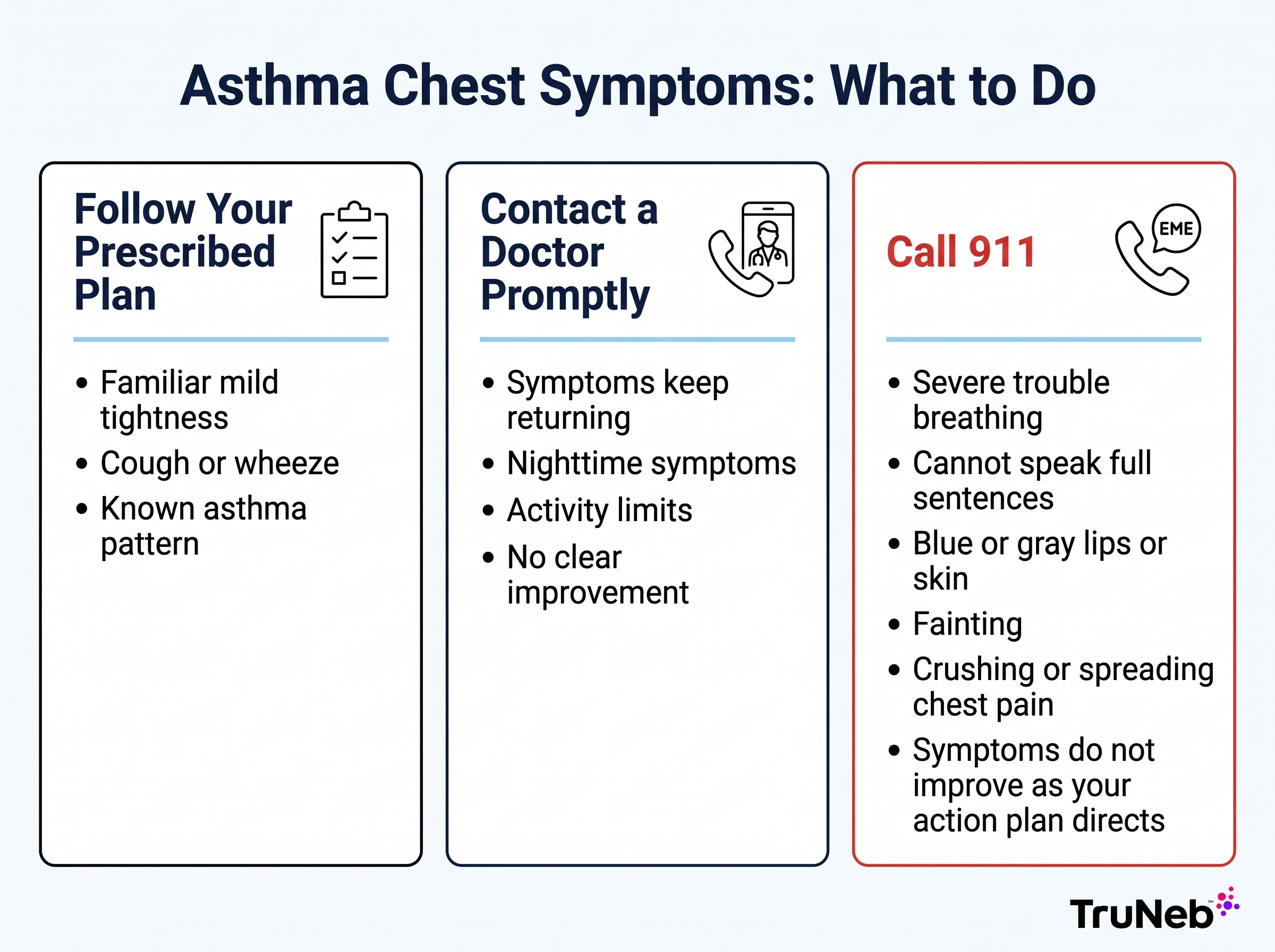
Asthma can cause chest tightness, pressure, or soreness during a flare and after hard coughing. For how to relieve chest pain from asthma safely, follow the medication and timing instructions in your personal asthma action plan for familiar symptoms.
But don't assume every chest pain is asthma. New, severe, persistent, crushing, or spreading pain needs urgent medical care. Call 911 for severe breathing trouble, blue or gray lips or skin, confusion, fainting, or symptoms that don't improve as your plan directs.
Before trying a new medicine or making a change to your care plan, talk with your doctor.
Key point: Asthma can cause chest discomfort, but new or severe chest pain needs urgent attention.
When Chest Pain Is an Emergency
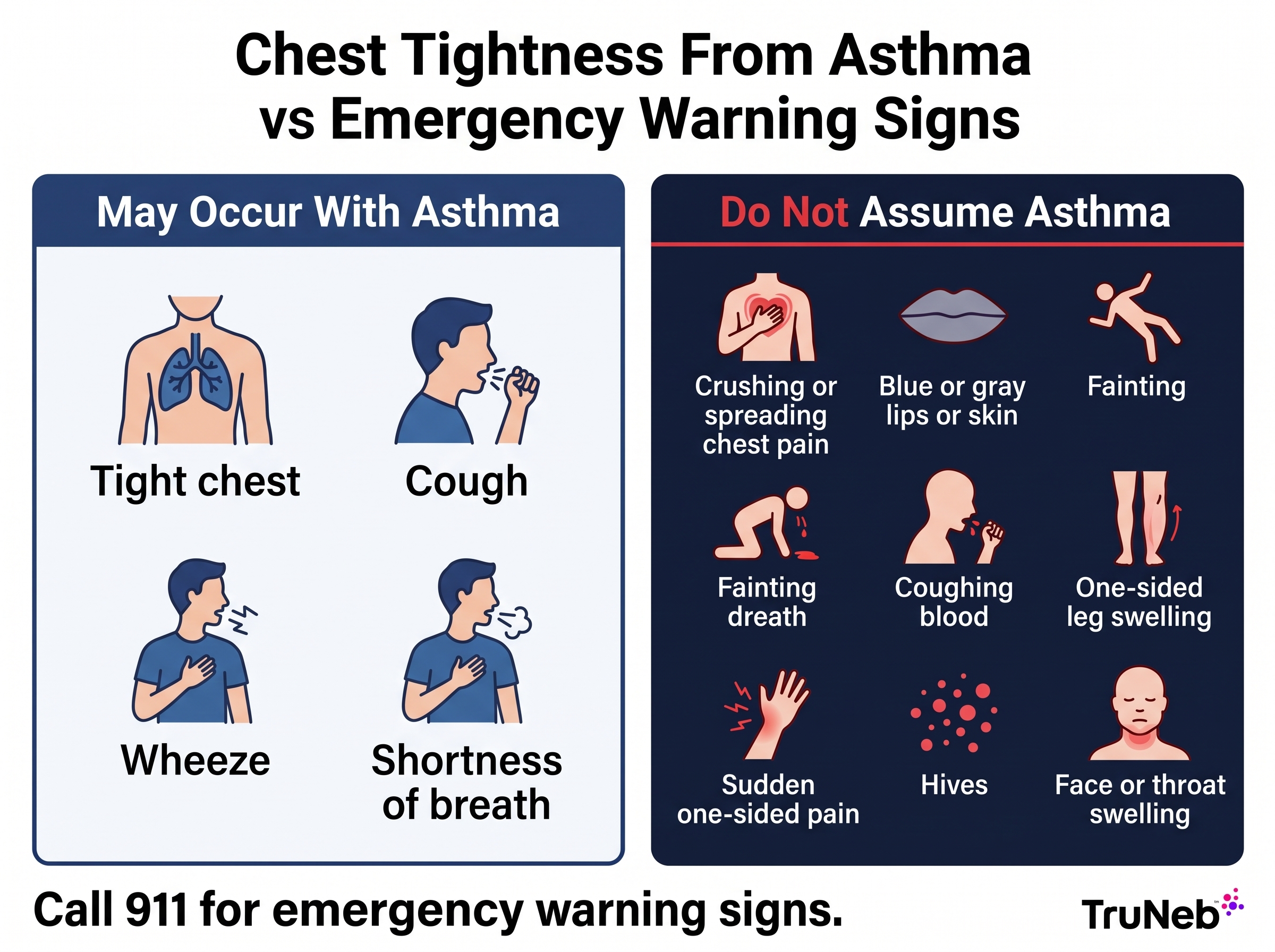
Call 911 for severe breathing trouble, severe or persistent chest pain, pain that spreads, blue or gray lips or skin, fainting, confusion, or symptoms that don't improve as your asthma plan directs.
Call 911 right away if you have severe trouble breathing, are gasping, cannot speak a full sentence, feel faint, seem confused, or have blue, gray, or very pale lips, skin, or nails. A quiet or “silent” chest, meaning little or no wheezing during severe breathing trouble because very little air is moving, can also be dangerous.
Severe, persistent, squeezing, or crushing pain in the center of your chest needs emergency care. So does pain that spreads to your arm, shoulder, back, neck, or jaw. Sweating, nausea, a rapid heartbeat, coughing up blood, or swelling in one leg are warning signs too.
Sudden wheezing or chest tightness after a food, medicine, insect sting, or other allergen exposure can be anaphylaxis, especially with hives or swelling of the lips, tongue, or throat. If you have prescribed epinephrine, use it as your emergency plan instructs, then call 911. An inhaler or nebulizer alone is not a substitute for emergency anaphylaxis care.
If you are unsure whether chest pain is asthma or another emergency, treat it as urgent.
Can Asthma Cause Chest Pain or Tightness
Asthma can cause a tight or sore chest, but unusual chest pain needs medical attention.
What Asthma-Related Discomfort Can Feel Like
Yes. Asthma-related chest tightness is commonly described as a tight band around the chest, a heavy feeling, pressure, or trouble taking a deep breath. Some people feel a dull ache or soreness. During an asthma attack, chest pain can happen along with coughing, wheezing, and breathlessness.
Not everyone wheezes. Children can describe breathing discomfort as a tummy ache instead of chest tightness.
Why Asthma Can Make Your Chest Feel Tight or Sore
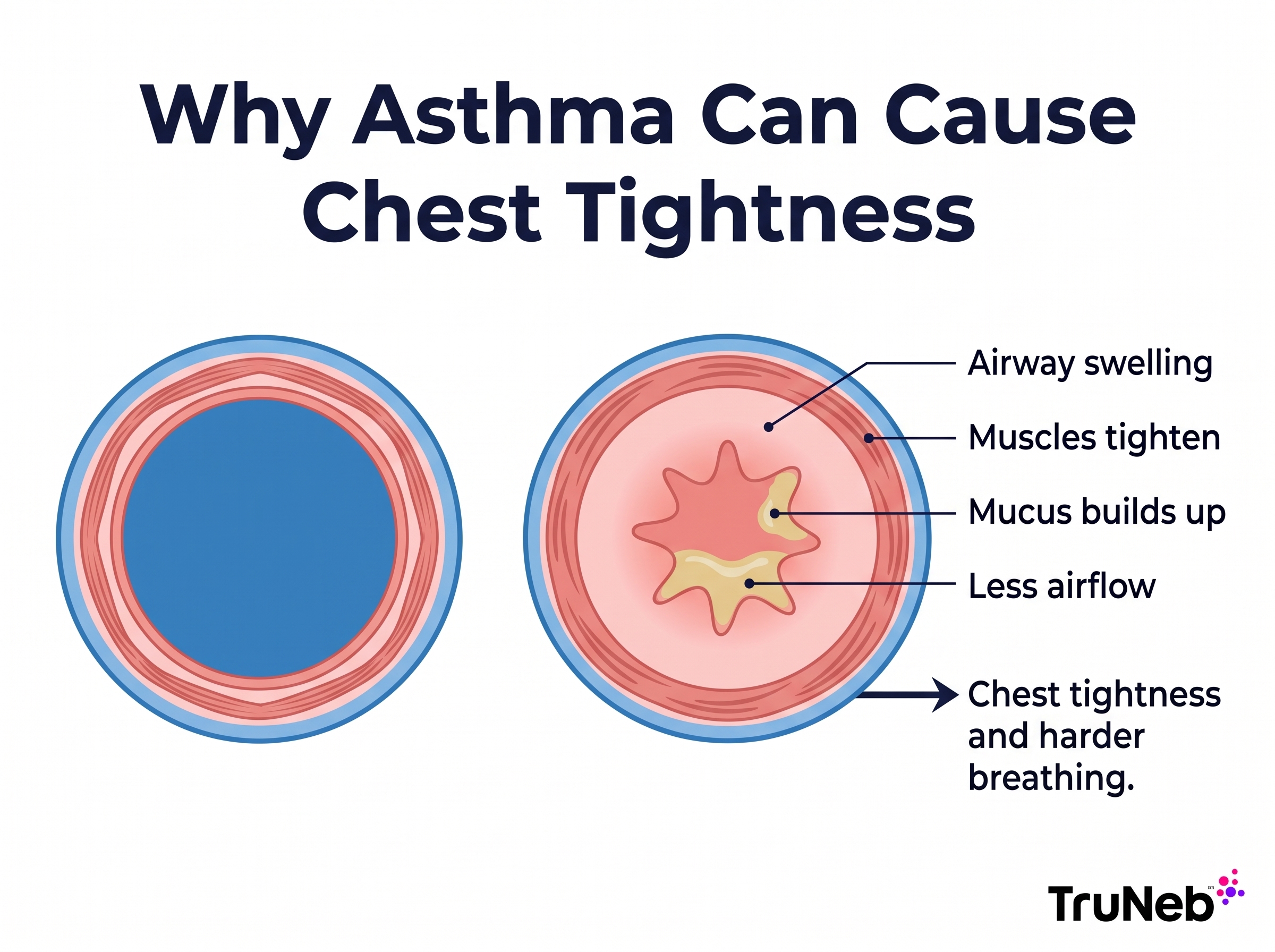
Asthma can make your chest feel this way because the small airways narrow. The muscles around them tighten, which is called bronchospasm. The airway lining can swell, and mucus can block airflow even more. You then work harder to breathe, which can leave your chest-wall muscles sore.
Chest tightness can come from narrowed airways and the extra work of breathing.
What to Do Now for Familiar Asthma Chest Tightness
For familiar asthma chest tightness, follow the medication and timing instructions in your written asthma action plan rather than using a general online treatment schedule.
Follow Your Personal Asthma Action Plan
Start with the written asthma action plan you made with your doctor. Your plan should tell you what your usual medicines are, what symptoms place you in a caution zone, which prescribed reliever medication or rescue inhaler to use, and when to get help.
Sit Upright and Reduce Exertion
Sitting upright and pausing physical activity can make breathing feel easier while you follow your prescribed plan. Try to stay as calm as possible, but don't delay emergency help to manage symptoms alone.
Use a Spacer or Peak Flow Meter Only If Your Plan Includes It
If your plan includes a spacer for your metered-dose inhaler, use it as instructed. If you use a peak flow meter, compare the reading with your own personal-best ranges. Only use the ranges in your own plan.
Don't use steam, caffeine, foods, drinks, supplements, herbs, essential oils, hypertonic saline, or unprescribed liquids for asthma chest pain. They don't replace prescribed asthma medicine and can delay needed care.
Nebulizers and Prescribed Asthma Medicine
A Nebulizer Delivers Prescribed Medication
A nebulizer is a device that turns prescribed liquid medication into a mist you breathe in. It is a delivery method, not a diagnosis or a complete rescue plan by itself.
Your doctor can help determine whether an inhaler with a spacer or a nebulizer fits your prescribed medication and asthma plan. Don't use repeated home nebulizer treatments to delay emergency care when severe symptoms continue.
Use Only Prescribed Nebulizer Medication
Use only medication prescribed or approved for you, and follow the device instructions and cleaning guidance. Hypertonic saline should not be used for asthma chest pain unless your doctor has specifically prescribed or directed it for you.
Where TruNeb Fits
When a doctor has prescribed a nebulized liquid medication, a portable mesh nebulizer such as TruNeb™ can deliver that medication as directed. It does not diagnose chest pain, replace a prescribed rescue inhaler, or substitute for urgent or emergency care.
A nebulizer delivers prescribed medication, but it does not replace your asthma plan or emergency care.
How Long Asthma Chest Tightness Can Last
A mild asthma flare can improve quickly when your prescribed plan works, while severe attacks can last hours or days and need medical care.
Chest Symptoms Can Improve Quickly or Last Longer
There is no one safe timeline for asthma chest tightness. If symptoms don't improve as your plan directs, get the help your plan calls for.
Chest Soreness Can Outlast Breathing Symptoms
Chest soreness can outlast breathing symptoms. Coughing hard and using extra muscles to breathe can strain the chest wall, making soreness more noticeable with a deep breath, movement, or pressure on the area.
Recurring Symptoms Need an Asthma Plan Review
Contact your doctor soon when tightness keeps coming back, wakes you at night, limits normal activity, or makes you need reliever medicine more than usual. An asthma attack or urgent-care visit is also a good reason to review your plan. Controller medicines are prescribed to help prevent symptoms over time, not to provide immediate relief for chest pain.
Worsening, severe, new, or unusual chest pain needs medical attention instead of waiting to see if it passes.
Asthma Chest Tightness or Another Cause of Chest Pain
Patterns That Can Occur With Asthma
A familiar pattern of tightness with cough, wheeze, or breathlessness can occur with asthma, especially after a known trigger.
Signs That Need Prompt Evaluation
Those clues cannot confirm asthma as the cause. Heart, lung, digestive, muscle, and anxiety-related problems can overlap with asthma symptoms.
Chest pain warning signs at a glance
| Possible cause | Symptoms that should not be assumed to be asthma | What to do |
|---|---|---|
| Heart emergency | Crushing or persistent central pressure, spreading pain, sweating, nausea, or faintness | Call 911 |
| Pulmonary embolism | Sudden shortness of breath, sharp pain, rapid heartbeat, coughing blood, or one-sided leg swelling | Call 911 |
| Pneumothorax | Sudden one-sided chest pain with worsening shortness of breath | Call 911 |
| Anaphylaxis | Breathing symptoms with hives or swelling after an exposure | Use prescribed epinephrine as directed and call 911 |
| Infection or pleurisy | Fever, a new cough with mucus, or sharp pain when breathing | Contact a doctor promptly |
| GERD, costochondritis, or muscle strain | Burning after meals or lying down, or pain with movement or pressing | Seek advice if new, severe, or uncertain |
GERD, costochondritis, and muscle strain can be less urgent, but symptoms alone cannot confirm them. Clinical nuance: rarely, asthma can present mainly as chest pressure without obvious wheezing, but only a doctor can assess this after considering other causes. A doctor can use spirometry or other pulmonary function testing to check airflow.
New or unexplained chest pain should not be assumed to be asthma.
Chest Soreness After an Asthma Attack
Why Chest Muscles Can Hurt After a Flare
Chest soreness after an asthma attack can happen because coughing and hard breathing overwork the muscles between your ribs, chest, shoulders, and back. It can hurt more when you cough, twist, take a deep breath, or touch a sore spot.
When Post-Flare Pain Needs Urgent Assessment
Don't ignore pain after a flare if it is sudden, worsening, or different from your usual recovery pattern. Sudden one-sided pain, worsening shortness of breath, or faintness needs urgent medical care. Rare complications such as a pneumothorax or pneumomediastinum can occur after severe coughing or breathing strain.
If breathing has improved but soreness lingers, tell your doctor, especially if it is getting worse or keeps returning.
Reduce the Chances of Repeat Chest Tightness
Review Asthma Control and Inhaler Technique
Frequent chest tightness could be a sign that asthma isn't well controlled. It is worth discussing with your doctor, who can review asthma control, inhaler technique, controller medicine, triggers, and your action plan.
Identify Personal Triggers
Common triggers include respiratory infections, smoke, strong fumes, air pollution, pollen, dust mites, mold, pet dander, cold air, exercise, and workplace irritants. Reflux can also make chest symptoms harder to sort out for some people.
Keep Your Written Plan Accessible
Keep your written asthma action plan where you and the people who help care for you can find it. That can include a partner, caregiver, school staff member, or travel companion. Update the plan after a medication change, an asthma attack, or an urgent-care visit.
Better asthma control starts with a plan you understand and can use.
Prepare for Your Next Asthma Care Visit
A short record of your symptoms, triggers, prescribed treatment response, and peak flow readings can help your doctor update your asthma plan.
Bring Details That Help Identify the Pattern
Bring a short checklist to your next appointment:
- What the chest discomfort felt like
- When it started and how long it lasted
- Possible triggers or activities before it began
- Cough, wheeze, breathlessness, or fever
- What happened after you followed your prescribed plan
- Peak flow readings, if your plan uses them
- Nighttime symptoms, activity limits, urgent-care visits, or emergency visits
Ask Whether Your Plan or Technique Needs an Update
Ask whether your action plan, inhaler technique, or medication plan needs an update. Spirometry and other tests can help a doctor check airflow and consider causes beyond asthma. Don't try to diagnose chest pain variant asthma on your own.
Clear notes can help your doctor spot patterns and adjust your care plan safely.
Frequently Asked Questions
These quick answers cover common questions about asthma chest tightness, chest pain, and when to get emergency help.
Tap or click a question below to see the answer:
Follow the medication and timing instructions in your own asthma action plan or prescription label. If symptoms don't improve as your plan directs, or severe warning signs occur, get emergency help.
Call 911 for severe breathing trouble, inability to speak full sentences, blue or gray lips or skin, confusion, fainting, severe or persistent pressure-like chest pain, spreading pain, or symptoms that don't improve according to your prescribed plan.
Asthma can cause tightness, pressure, dull aching, or sharp discomfort. But sharp, sudden, severe, or unexplained pain can have many causes. Seek medical care rather than assuming it is asthma.
Only use a nebulizer if your doctor has prescribed an appropriate nebulized medication and told you how to use it. A nebulizer does not diagnose chest pain or replace emergency care.
It varies. Breathing symptoms can improve quickly with prescribed treatment, while cough-related chest-wall soreness can last longer. Worsening, severe, recurring, or unusual pain needs medical attention.
No. For how to relieve chest pain from asthma safely, follow your prescribed asthma plan rather than using home remedies or unprescribed nebulizer liquids. Talk with your doctor before trying a new medicine.
Disclaimer: This article is for informational purposes only and is not a substitute for professional medical advice, diagnosis, or treatment. For questions about your asthma or treatment plan, talk with your doctor. If you think you are having a medical emergency, call 911.
References: National Heart, Lung, and Blood Institute, Asthma and Asthma Attacks; Centers for Disease Control and Prevention, Asthma; Global Initiative for Asthma, GINA Reports; American College of Emergency Physicians, Asthma; American Lung Association, Asthma Medications; Asthma and Allergy Foundation of America, Asthma Action Plan; MedlinePlus, Pulmonary Embolism and Pneumothorax; American Heart Association, Warning Signs of a Heart Attack.