

On this page
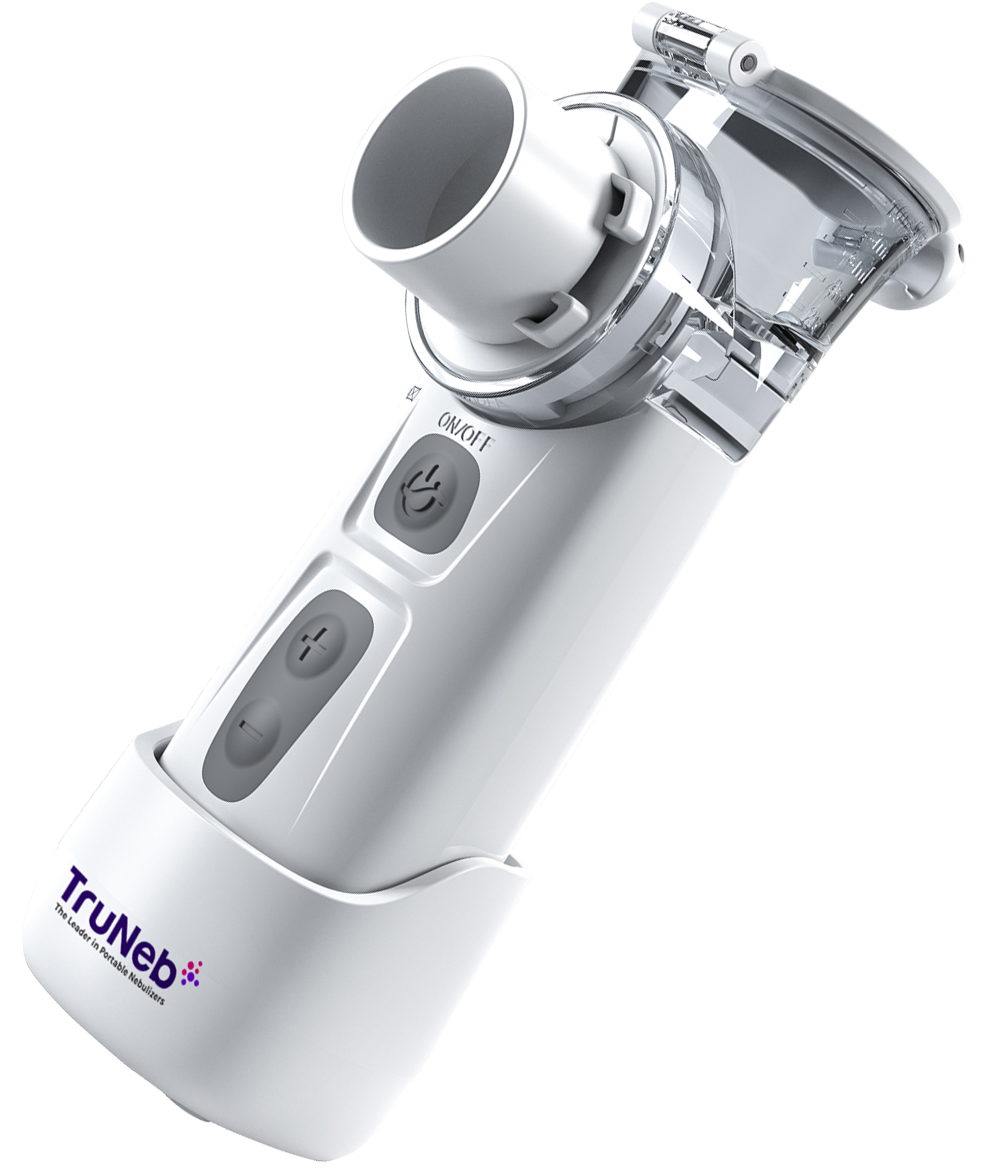
When you're trying to figure out how to make yourself stop coughing instantly, start with a simple breathing trick and a few quick soothers. We'll also flag when a cough needs a doctor's attention. If your doctor recommends nebulized saline for mucus, a portable mesh nebulizer such as TruNeb™ can deliver a gentle saline mist at home.
Immediate Steps to Stop a Coughing Fit in 30 Seconds to 5 Minutes
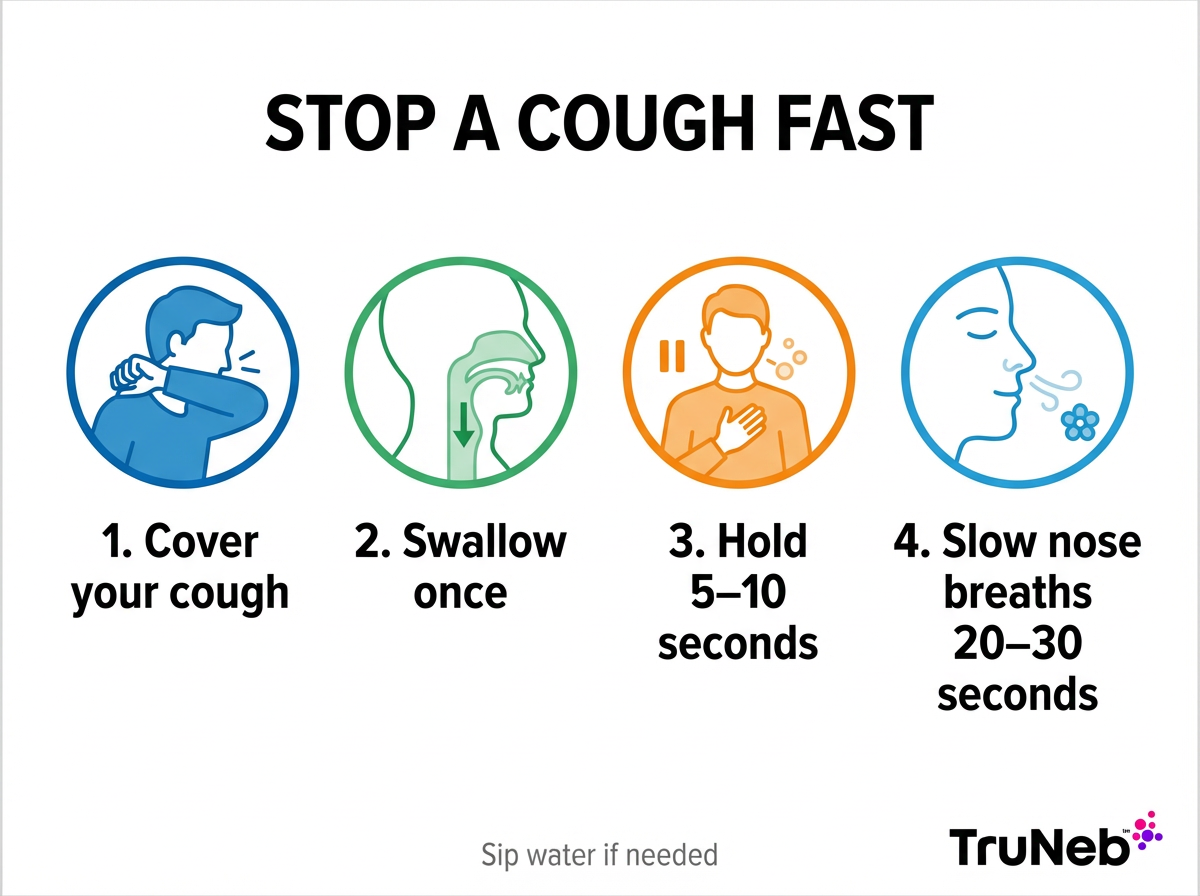
You can try a technique some hospitals teach to break a coughing fit or uncontrollable coughing: cover your mouth with your hand or a tissue to block a big gasp of air. Swallow once or twice. Hold your breath for about 5 to 10 seconds. Then breathe slowly through your nose for 20 to 30 seconds with small, gentle breaths. Sip water. If the urge comes back, repeat the sequence one more time.
This technique is for otherwise-stable adults with a non-severe, mostly dry cough. If you're bringing up a lot of mucus, skip breath-holding and use the mucus-clearing steps below instead.
Don't use breath-holding techniques if you feel very short of breath, dizzy, have chest pain, or have heart problems - seek urgent care instead.
This helps because hard coughing and big breaths can irritate your airway, while short, calm nose breaths help reset the cough reflex.
Key point: Break the cough-reflex loop with a brief breath hold, slow nose breaths, and a sip of water.
Hold, breathe gently, sip water; the reflex can ease within a minute.
Quick Home Remedies to Soothe a Cough in 5 Minutes
After the breathing steps, add a fast soother. Take a teaspoon of honey for anyone over 1 year old. Stir it into warm water or decaf herbal tea to coat and calm your throat. These steps can help you get rid of a cough in about 5 minutes. Keep sipping fluids. Warm drinks help thin mucus and wash away irritants. If your throat feels scratchy, a quick gargle with warm salt water can ease the sting. Never give honey to children under 1 year old.
When the air is dry, add moisture. Sit in a steamy bathroom for a few minutes or run a clean humidifier. Be careful around hot water and steam, especially with children. A menthol lozenge can also numb the tickle while you keep your breaths small and slow.
Warm liquids plus honey can quiet a cough fast by soothing and moistening the throat.
Calming a Dry Tickly Cough Instantly
A dry, tickly cough usually comes from an irritated throat or dry air. Coat and moisten the area to calm the urge. Take a teaspoon of honey for anyone over 1 year old or use a soothing lozenge to form a thin layer over your throat. Sip warm water or tea every few minutes to keep the tickle from returning.
Cut the trigger if you can. Move away from smoke, strong scents, or cold, dry air. Run a humidifier or sit in a steamy bathroom for a short time to add moisture. Use the stop-cough steps the moment the tickle starts, and repeat once if needed. Post-nasal drip from allergies can also spark a tickly cough, so steady sips help wash it down.
For a dry, tickly cough, coating the throat and adding moisture can quickly calm the urge to cough.
How to Quiet a Phlegmy, Mucus (Productive) Cough Quickly
If you're bringing up mucus, the goal is to thin it and clear it, not trap it. This is a productive cough (wet cough). Drink water regularly and choose warm liquids to loosen mucus so it's easier to expel. Inhale warm, moist air from a steamy shower or a steamy room for a few minutes. If mucus comes up, spit it out into a tissue. Avoid burns with hot water or steam.
An expectorant can help thin thick secretions later in the day; ask a pharmacist or your doctor what fits you. For heavy mucus, some people use a portable nebulizer with saline to add moisture deep into the airways. For example, a portable mesh nebulizer such as TruNeb™ turns saline into a gentle mist you can breathe at home. Your doctor may recommend normal saline or, in some cases, a stronger hypertonic saline solution.
Don't put medicines into a regular humidifier or steam inhaler. Medications should only go in devices made for them, like a nebulizer, and only the way your doctor prescribes.
Key point: Don't try to shut down a wet cough; thin and clear the mucus so the cough can finish its job.
Infographic: Loosen Mucus Fast
Humidifier vs Steam Inhaler vs Nebulizer: quick comparisonKey takeaway: humidifiers and steam inhalers add moisture for comfort; only a nebulizer is designed to deliver prescribed medicines or saline, and only as your doctor directs.
| Device | What it does | Uses medication? | Best for | Cleaning |
|---|---|---|---|---|
| Cool-mist humidifier | Adds moisture to room air | No | Dry air, irritated throat or nose | Empty and dry tank daily; clean per manual |
| Steam inhaler | Delivers warm steam to the face | No | Short-term comfort for congestion | Keep unit clean; beware of burn risk |
| Nebulizer (mesh or jet) | Turns prescribed medicines or saline into an inhalable mist | Yes, only as prescribed | Asthma/COPD treatments; thinning thick mucus when a doctor recommends | Clean and disinfect parts as instructed |
*Never put medicines into a humidifier or standard steam inhaler.*
Note: Avoid hot water burns when using steam. Follow device instructions for safe use and cleaning.
How to Stop Coughing at Night for Better Sleep
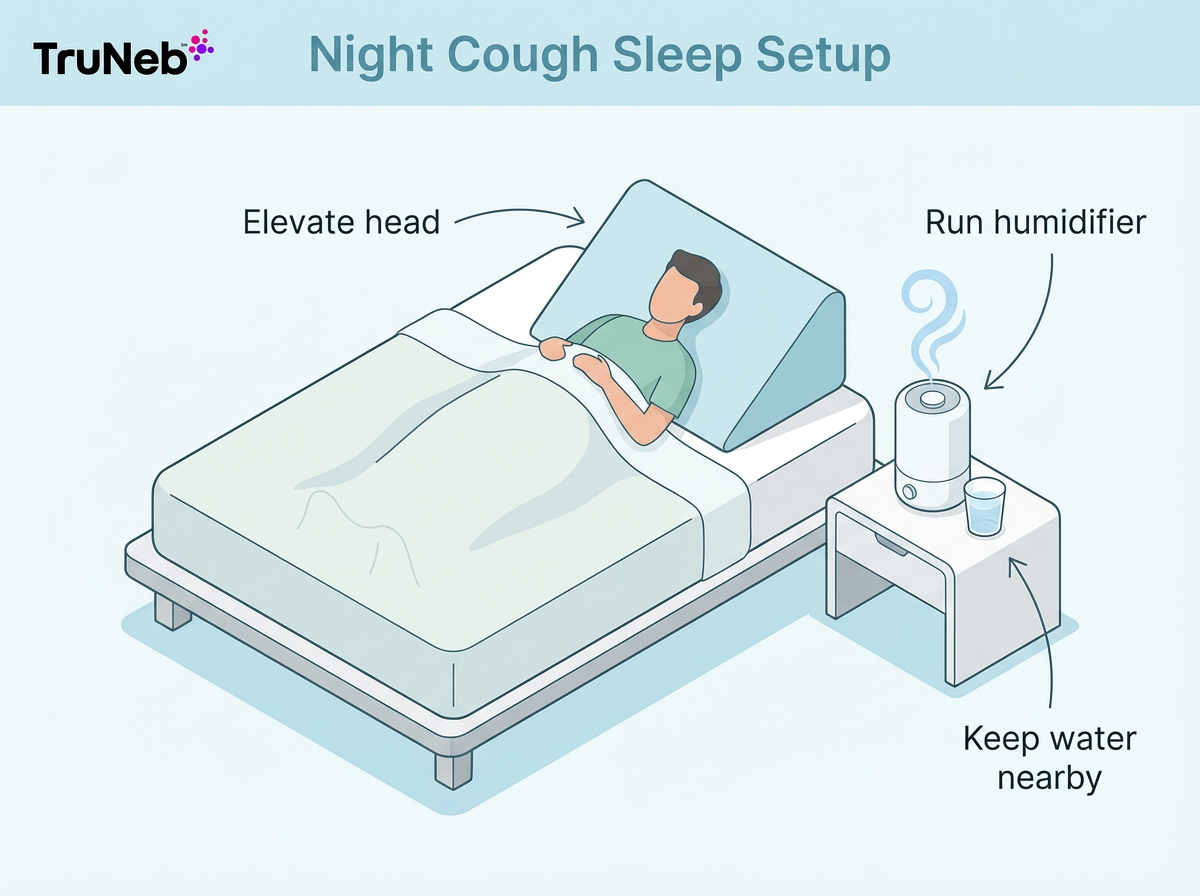
Night coughs can flare when you lie flat because mucus can pool in your throat and reflux can rise. Elevate your head and upper chest with an extra pillow or a wedge so gravity helps. Side-sleeping can also reduce drip into your throat. Night coughs can be worse with asthma or post-nasal drip. These steps can make it easier to get rid of a cough overnight.
- Run a clean cool-mist humidifier to keep bedroom air moist.
- Have a warm, decaf drink with a spoon of honey 30 minutes before bed to soothe the throat.
- Keep water on your nightstand.
- If you wake up coughing, sit up, take small nose breaths, and sip water until it settles.
- Adults may consider a nighttime cough suppressant for short-term sleep support; avoid this if you're bringing up a lot of mucus. These are for adults—don't give adult cough suppressants to young children unless a doctor tells you to. Ask your doctor or pharmacist if you're unsure.
If you wake up with severe shortness of breath, chest pain, or wheezing that doesn't settle quickly, seek emergency medical care.
Elevate, humidify, and soothe before bed to cut common night cough triggers.
Cough Relief for Asthma or COPD Related Coughs
If your cough comes with asthma or COPD, follow the rescue steps in your asthma action plan or COPD plan. Use your prescribed rescue inhaler as directed. Sit upright, relax your shoulders, and slow your breathing. Try pursed-lip breathing: breathe in gently through your nose, then out through puckered lips to release trapped air and lower the urge to cough. If you use a home nebulizer for your condition, a short treatment can help calm your airways.
If your cough doesn't ease after your rescue medicine, or you're still struggling to breathe, your lips or face look blue, or you can only speak a few words at a time, call 911/emergency services. Contact your doctor promptly for signs of an asthma attack or a COPD flare.
For asthma or COPD coughs, using your prescribed plan medicines and slow breathing techniques can help calm your airways.
Safe Cough Remedies During Pregnancy
When you're pregnant, you want quick relief that's also safe. Stick to simple steps: honey for anyone over 1 year old, warm fluids, salt-water gargles, short steamy showers, and clean humidified air. These soothe the throat and are typically safe in pregnancy. Elevate your head at night to reduce reflux and drip that can trigger cough.
Be careful with over-the-counter cough and cold medicines. Many cough and cold medicines aren't recommended in pregnancy unless your OB or doctor approves them. Some ingredients, like decongestants, aren't recommended during pregnancy. Check the label and ask your OB before using any medicine. Contact your OB or doctor if you have a fever or shortness of breath. If you're pregnant and have trouble breathing, chest pain, or a high fever, seek urgent medical care right away.
Choose non-drug soothing steps and check with your OB before any medicine.
When to See a Doctor for a Cough (Don’t Ignore These Signs)
Call 911/emergency services right away if you have severe trouble breathing, chest pain, or cough up large amounts of blood.
See a doctor soon if you notice any of the following:
- A cough lasting longer than 3 weeks (doctors call this a chronic cough)
- High fever, or fever that lasts more than a few days
- Thick green or foul-smelling mucus
- Blood in your mucus (even small amounts)
- Shortness of breath or wheezing
- Chest discomfort
- Rapidly worsening symptoms or feeling very unwell at rest
Most common coughs improve in one to two weeks; if yours doesn't, it's time to check in with a doctor.
Frequently Asked Questions
Tap or click a question below to see the answer:
You can use a quick breathing trick: cover your mouth, swallow once or twice, hold your breath for about 5–10 seconds, then take slow nose breaths for 20–30 seconds. Sip water right after. This can settle the cough reflex within about half a minute.
Yes. Small, steady sips moisten your throat and wash away irritants. For many mild coughs, that's enough to quiet the urge quickly.
Elevate your head and chest, run a clean humidifier, and take a spoon of honey before bed. Keep water by the bed. If you wake up coughing, sit up, take small nose breaths, and sip water until it settles.
It can help in some cases, especially with asthma, COPD, or very thick mucus, by delivering doctor-prescribed medicines or saline as a mist. Ask your doctor if normal saline (or another treatment) is right for you.
Some people try gentle acupressure and feel brief relief, but evidence is limited. Use it as a short distraction while you sip water and practice slow nose breaths.
Long-lasting coughs are sometimes called a chronic cough. Common causes include post-nasal drip from allergies, asthma, reflux, or certain medicines. If your cough lingers beyond 3 weeks or keeps coming back, see a doctor to find and treat the root cause.
Bottom line: Use the quick breathing technique to break the reflex, add warm liquids and honey to soothe, then follow the dry or productive cough tips—and know when to seek care. If symptoms persist or you notice warning signs, talk to your doctor. If you use nebulizer treatments as part of your care, ask your doctor whether a portable device like TruNeb™ fits your plan.
Disclaimer: This article is for informational purposes only and is not a substitute for professional medical advice, diagnosis, or treatment. Always talk to your doctor about your symptoms and before starting, stopping, or changing any medication or treatment.