

On this page
RSV vs Common Cold: Quick Overview of Key Differences
RSV and a common cold can look the same at first. The difference is where the virus hits and how hard it hits.
Both are viral respiratory infections, and most mild cases get better on their own with rest and fluids.
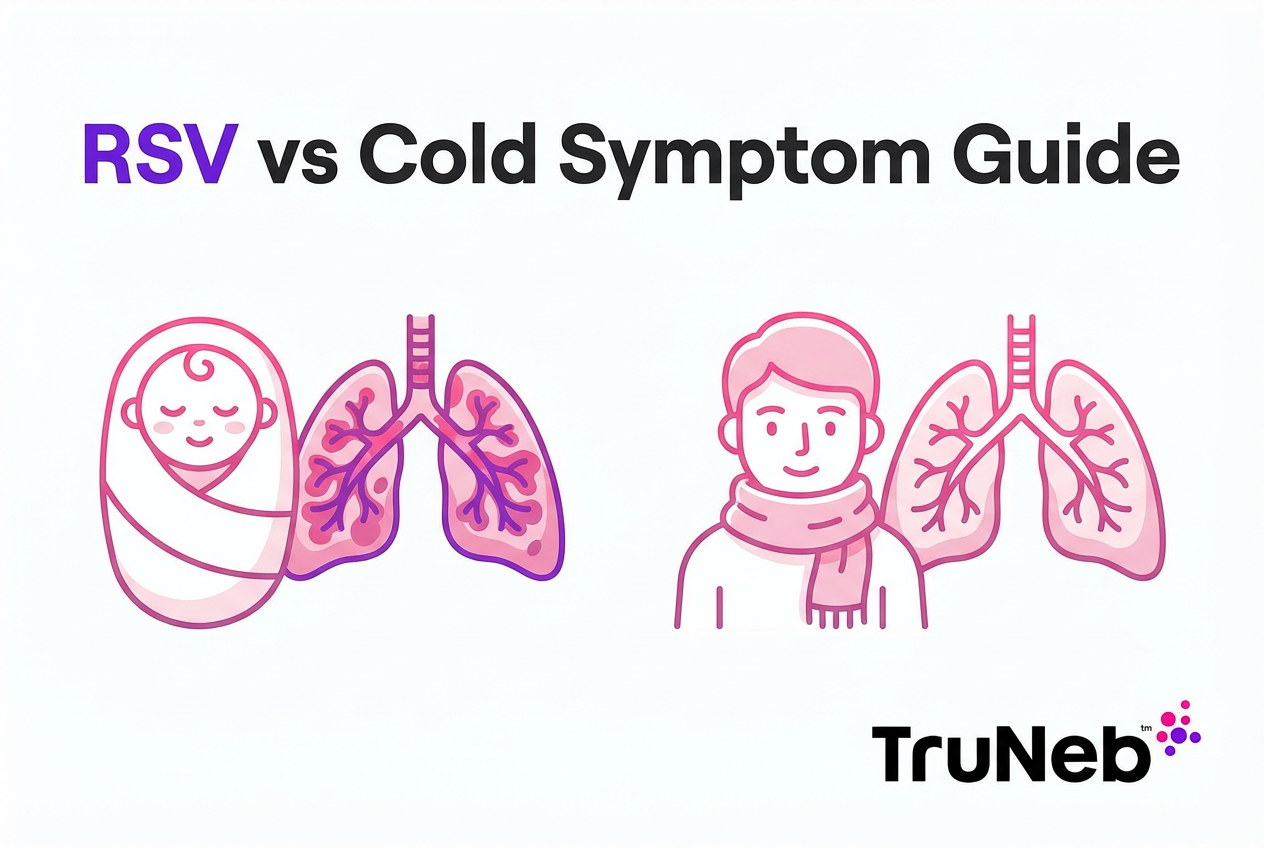
Respiratory syncytial virus (RSV) can move into the lungs and small airways. It can cause wheezing or breathing trouble, especially in babies and older adults. The common cold is usually caused by rhinoviruses and tends to stay milder in the nose and throat.
- RSV is more likely to cause wheezing, fast breathing, and feeding trouble in infants.
- A simple cold is usually mild with runny nose, sneezing, and a light cough.
- If symptoms get worse instead of better after a few days, call your doctor.
Key takeaway: RSV tends to move into the chest and cause wheezing; a common cold usually stays milder in the nose and throat.
Similarities and Differences Between RSV and a Cold
How they are alike:
- Both are viral respiratory infections.
- Both spread by coughs, sneezes, and touch.
- Both can start with runny nose, congestion, and cough.
- Both can be contagious a day or two before symptoms and while you’re sick.
How they differ:
- Breathing: RSV can cause wheezing and fast, hard breathing. Plain colds rarely do.
- Fever: RSV can bring a higher or longer fever, especially in babies. Colds usually have no fever or only a low one.
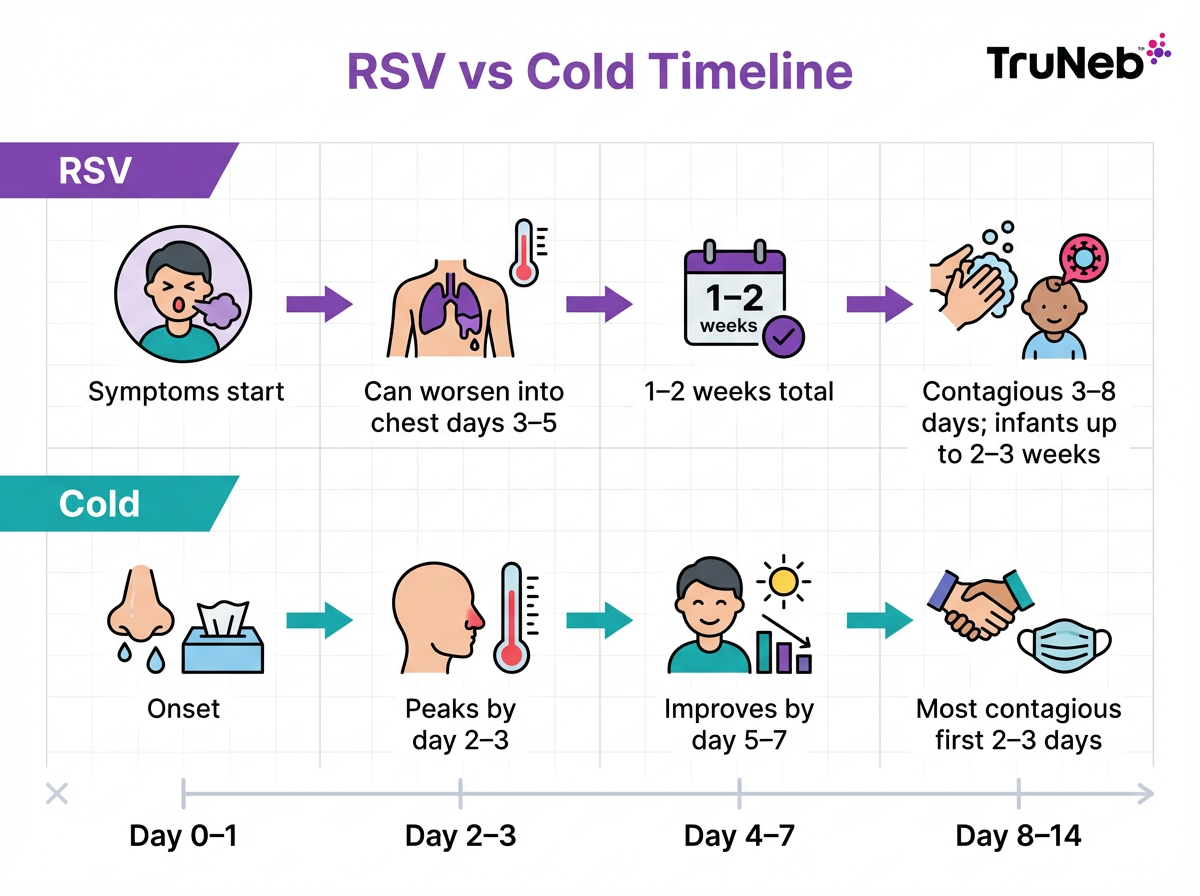
- Duration: Colds usually improve in 5–7 days. RSV usually lasts 1–2 weeks.
- Complications: RSV can lead to bronchiolitis or pneumonia in young children or older adults. Colds rarely lead to serious lung problems.
- Contagiousness: RSV can be contagious longer in infants and people with weak immune systems.
A common cold is usually an upper respiratory infection (URI) in the nose and throat, while RSV can move into the lower respiratory tract and cause bronchiolitis (swelling of the small airways).
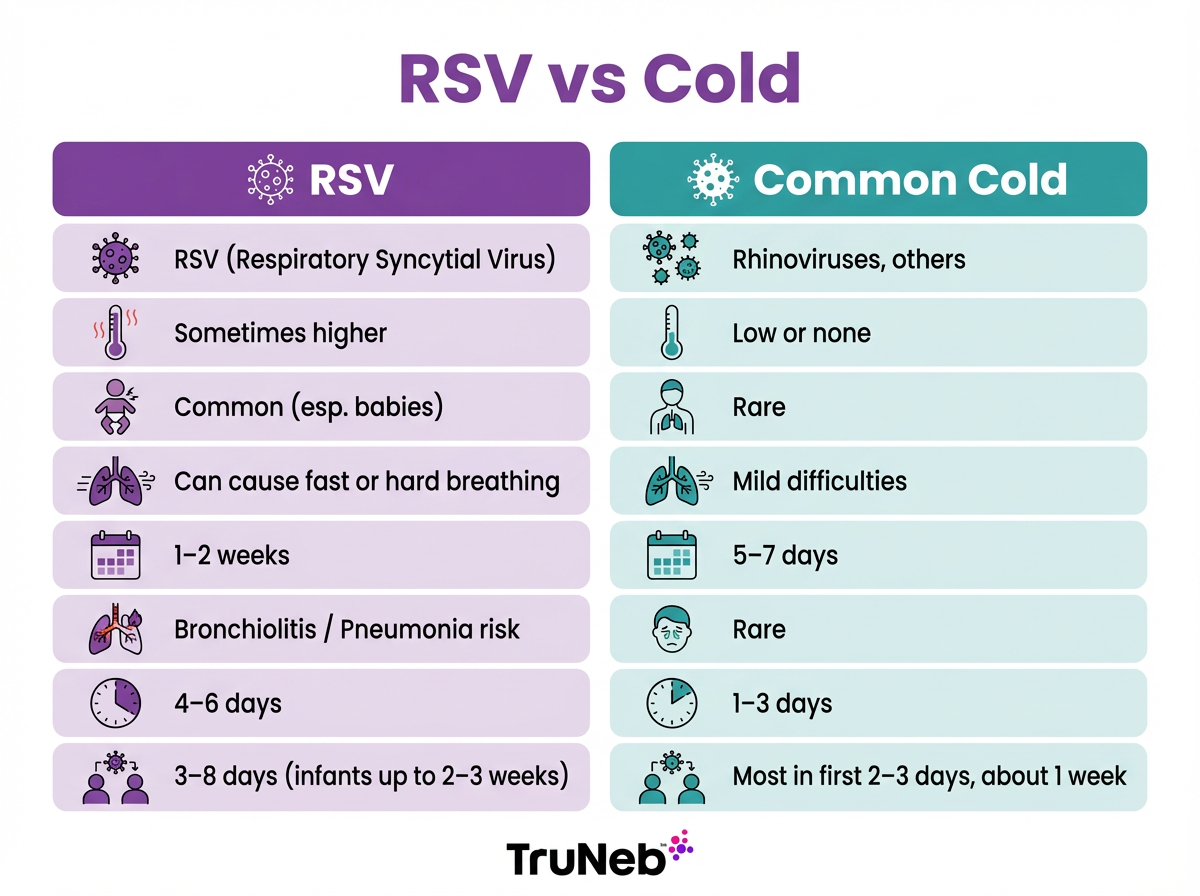
RSV vs Cold at a glance:
| Feature | RSV | Common cold |
|---|---|---|
| Typical cause | RSV | Various viruses (especially rhinovirus) |
| Fever | More common in infants; can be higher | Low or none |
| Wheezing/hard breathing | Common in babies with RSV | Rare |
| Duration | Usually 1–2 weeks | Usually 5–7 days |
| Complications | Bronchiolitis, pneumonia risk | Rare |
| Contagious period | 3–8 days; infants up to 2–3 weeks | Most contagious first 2–3 days; about a week total |
| Incubation | 4–6 days | 1–3 days |
Note: Contagious periods and illness length vary by age and health; infants and people with weak immune systems can spread RSV longer.
Key takeaway: RSV is more likely when symptoms move into the chest and keep getting worse, while a common cold usually peaks early and then improves.
RSV vs Flu vs Cold: Key Symptom Differences
Cold:
- Mild runny nose, sneezing, and cough.
- Low or no fever.
RSV:
- Starts like a cold but can bring wheezing and breathing work, especially in babies.
- Fever is possible.
Flu:
- Sudden high fever, chills, and body aches.
- You feel sick all over right away.
COVID-19 can look like flu or a cold. Symptoms alone can’t reliably tell RSV, flu, COVID-19, and colds apart—testing is usually required, especially to distinguish flu from COVID-19. If you or your child is very sick, call your doctor.
Key takeaway: Flu hits fast with high fever and aches, RSV tends to cause chest symptoms (especially in babies), and colds usually stay milder.
Symptoms of RSV vs Cold in Babies, Kids, and Adults
In Infants and Young Children
- Runny nose and cough that can turn into wheezing.
- Fast or hard breathing, chest retractions, or flaring nostrils.
- Trouble feeding or fewer wet diapers.
- Fever is common with RSV.
- These signs suggest RSV can be hitting the lower airways—bronchiolitis, which is swelling of the small airways in the lungs.
- Very young infants can show subtler signs like pauses in breathing, poor feeding, or unusual sleepiness, even without a heavy cough—seek urgent care for these.
In Adults and Older Adults
- Healthy adults usually feel like they have a simple cold: stuffy nose, sore throat, mild cough, mild fever.
- Older adults or those with asthma or COPD can develop worse chest symptoms, sometimes pneumonia, and can feel weak or confused. RSV can also worsen heart failure, with increased shortness of breath or swelling.
People at highest risk for serious RSV illness include premature infants, babies under 6 months, children with heart or lung disease, older adults (60+), people with asthma or COPD, and people with weak immune systems. RSV is a leading cause of bronchiolitis and pneumonia in infants and can lead to hospitalization in infants and older adults. Typical colds rarely cause serious lung complications, though ear or sinus infections can occur.
Call your doctor if you see breathing trouble, poor feeding, or symptoms that keep getting worse.
Key takeaway: RSV in babies brings breathing and feeding problems and can hit older adults harder, while a common cold usually stays milder in the nose and throat.
How Long They Last: Duration, Incubation, and Contagious Period
Duration:
- Cold: most symptoms improve in 5–7 days.
- RSV: usually lasts 1–2 weeks. The cough can linger.
Incubation (time from exposure to symptoms):
- Cold: usually 1–3 days.
- RSV: usually 4–6 days.
Contagious period:
- RSV: about 3–8 days after symptoms start, but infants and people with weak immune systems can spread RSV for 2–3 weeks, even when symptoms seem to be improving.
- Cold: most contagious in the first 2–3 days; generally about a week total.
When symptoms get worse after days 3–5, that’s more concerning for RSV or complications than for a simple cold—see the red flags section below.
Returning to daycare or work:
- Most doctors recommend children return only after fever is gone and breathing is comfortable. Follow your child’s doctor and school or daycare policy.
Key takeaway: RSV tends to last a bit longer and stays contagious longer in infants than a typical cold.
Diagnosing RSV vs a Cold: Testing and Confirmation
Doctors usually diagnose both illnesses by symptoms and exam. There is no routine lab test for a simple cold.
RSV can be confirmed with a nasal swab test (rapid antigen or PCR test—a sensitive lab test that looks for the virus’s genetic material). Testing is more common for very young babies, people who are very sick, or in the hospital. In mild cases, testing usually doesn’t change care. Decisions about RSV testing are made by your doctor based on age, severity, and setting.
Some at‑home tests now check for RSV, flu, and COVID‑19; ask your doctor if one is appropriate.
Key takeaway: There is no standard test for a basic cold, but RSV can be confirmed by a nasal swab if your doctor orders it.
Treating and Managing a Cold vs RSV at Home
Most care focuses on keeping you comfortable while your body fights the virus.
What helps for both:
- Hydration: Offer fluids regularly. For babies, keep up breast milk or formula.
- Rest: Let the body heal.
- Humidity: Use a cool‑mist humidifier or steamy bathroom to loosen mucus.
- Nose care for babies: Saline drops and gentle suction before feeds and sleep.
- Fever and pain: Use acetaminophen or ibuprofen as directed by your doctor.
- No antibiotics: These illnesses are viral; antibiotics don’t help.
Extra focus for RSV:
- It helps to watch breathing closely and notice any belly or rib pulling.
- Smaller, more frequent feeds if a baby tires easily.
- Keep the head slightly elevated while awake and supervised.
Breathing support for high‑risk patients:
- If you or your child has asthma, COPD, or reactive airways, your doctor sometimes recommends rescue inhalers or a nebulizer during viral flare‑ups.
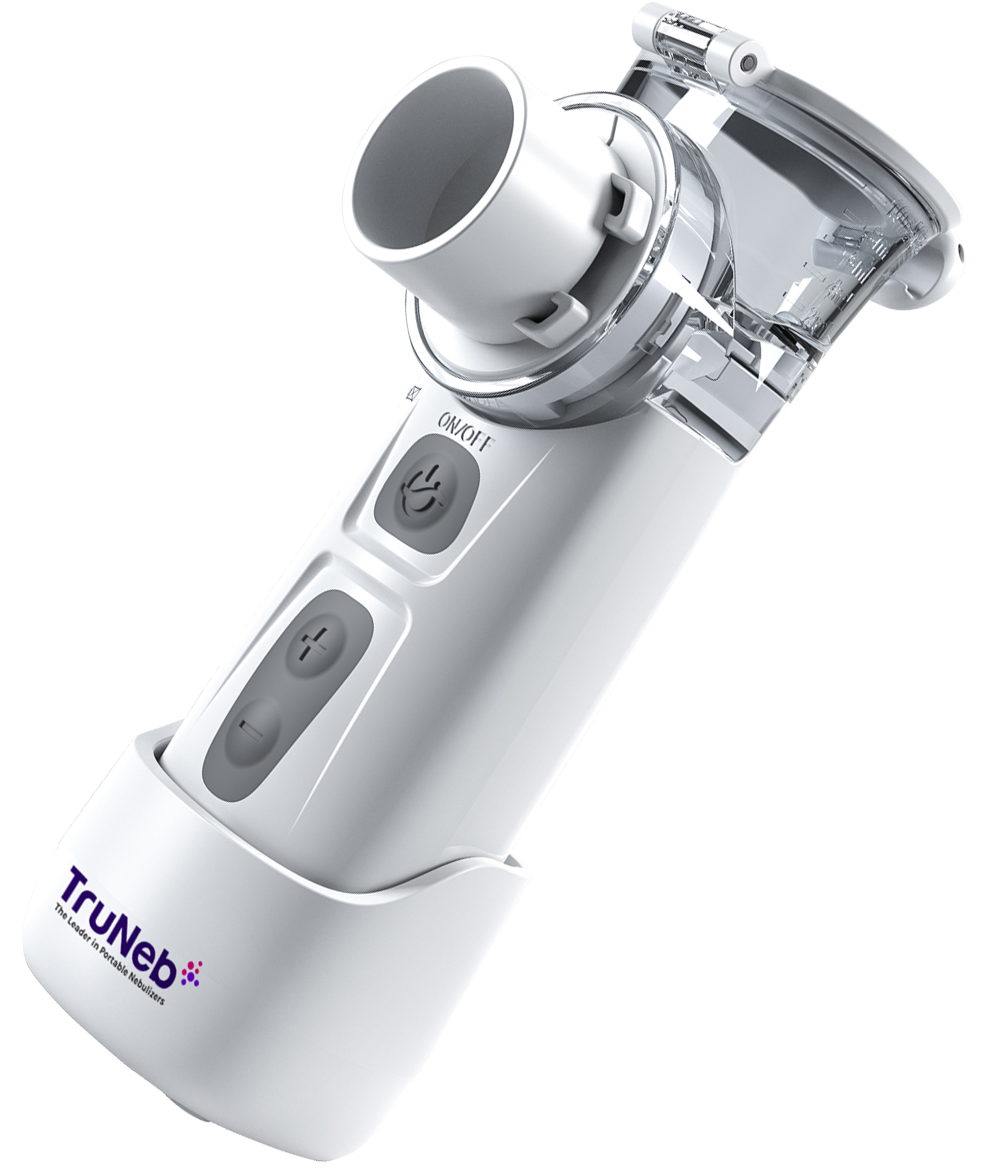
- A portable mesh nebulizer like the TruNeb™ portable mesh nebulizer can make doctor‑prescribed treatments or sterile saline easier to take at home because it’s portable and quiet.
- Nebulizers and bronchodilators aren’t routinely needed for every RSV case and aren’t helpful for most children with RSV unless they also have asthma or another reactive airway condition. Use only as part of a doctor’s plan.
- A nebulizer doesn’t cure RSV; it delivers medicine or sterile saline that your doctor has recommended.
Consumer warning:
- Steam inhalers are not the same as nebulizers and shouldn’t be used to deliver breathing medications.
- Over‑the‑counter cough and cold medicines aren’t recommended for young children unless a doctor says so.
Safety note: Talk to your doctor before trying a new medication or before using a nebulizer for the first time.
Key takeaway: Supportive care helps most cases; use a nebulizer only if your doctor advises it as part of your plan.
Warning Signs and When to Seek Medical Care
Call your doctor or seek urgent care if you notice:
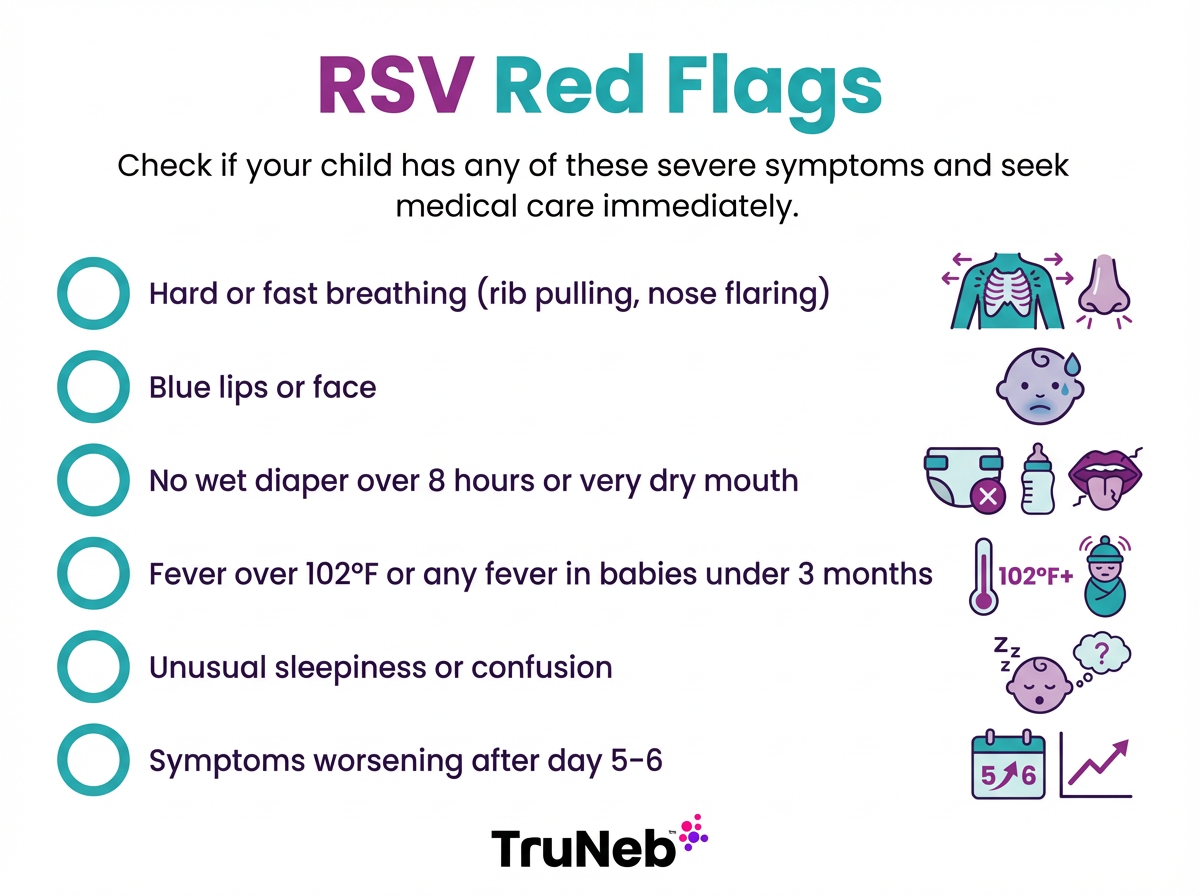
- Difficulty breathing: very fast breathing, chest retractions, or flaring nostrils.
- Bluish lips or face.
- Dehydration: very dry mouth, no tears, or no wet diaper for 8 or more hours.
- High or persistent fever: over 102°F (39°C) that won’t come down, or any fever over 100.4°F (38°C) in babies under 3 months.
- New or worsening chest pain, or shortness of breath at rest (especially in older adults or those with heart or lung disease).
- Unusual sleepiness, confusion, or the child is hard to wake.
- Symptoms that keep getting worse after day 5–6 or don’t improve at all.
- If you or your child has an underlying condition like asthma, COPD, heart disease, or a weak immune system, call sooner if symptoms persist.
⚠️ If you see severe breathing trouble or blue lips/face, call 911 or go to the emergency room right away.
Key takeaway: Breathing trouble, blue lips, dehydration, or high fever are red flags that need prompt medical care.
Frequently Asked Questions
Tap or click a question below to see the answer:
RSV is more likely if your baby has wheezing, fast or hard breathing, trouble feeding, or a fever that isn’t easing. A simple cold stays mostly in the nose with mild cough and normal feeding. Call your pediatrician if you’re worried or any of these signs appear.
RSV is usually more serious in babies, older adults, and people with lung or immune problems. It’s a leading cause of bronchiolitis and pneumonia in infants and can lead to hospitalization in high‑risk groups. Most healthy older kids and adults have an illness that feels like a cold.
Flu usually starts suddenly with high fever, chills, and body aches, while RSV tends to cause chest symptoms, especially in babies. Symptoms overlap with COVID‑19 and colds, so testing is usually needed to be sure.
Yes—adults can get RSV and usually feel like they have a regular cold. The bigger risk is passing it to a newborn, an older adult, or someone with heart or lung disease.
No. RSV and colds are viral, so antibiotics don’t help; your doctor uses antibiotics only if a bacterial infection develops.
Yes for certain groups: vaccines are available for older adults and for pregnant people to help protect newborns, and a preventive antibody shot is available for some infants during RSV season. Talk with your doctor about whether vaccination or preventive antibodies are right for you or your baby.
Key takeaway: RSV and colds overlap early, but RSV brings more chest symptoms and risk in babies and older adults; when in doubt, call your doctor.
Disclaimer: This article is for informational purposes only and is not a substitute for professional medical advice, diagnosis, or treatment. Always talk with your doctor about your symptoms, questions, and treatment options.