

On this page

What Is Postural Drainage and How It Works
Postural drainage is a set of positions that use gravity to move mucus toward your throat so you can cough it out. Think of tipping a bottle to pour out water; you gently tilt your lungs by how you place your body. This is also called gravity-assisted drainage.
It’s part of chest physiotherapy and airway clearance. A session usually pairs positions with deep breathing, huff coughing, and sometimes gentle chest clapping. Different positions reach different lung areas: the upper lobes, the right middle lobe or left lingula, and the lower lobes.
These positions and breathing techniques are sometimes called postural drainage exercises.
Below are the core postural drainage positions and when to use them.
Who Benefits and When It Is Recommended
Postural drainage helps when thick phlegm pools and sticks in the lungs. It’s commonly used for cystic fibrosis, bronchiectasis, and chronic bronchitis (COPD). It can also help while you recover from pneumonia or a chest cold.
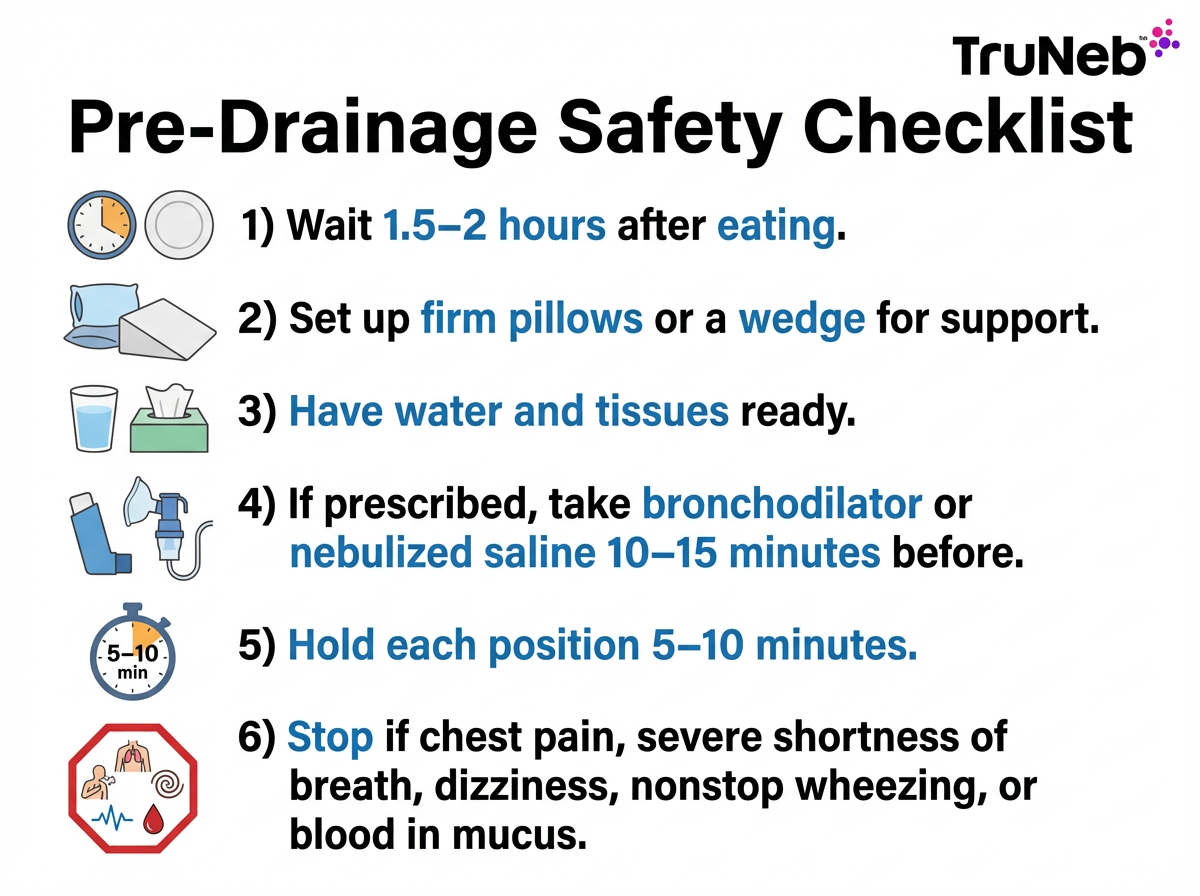
People commonly do it once or twice a day. You and your doctor can decide how often fits your routine. Morning positions help clear overnight mucus. It’s usually done before meals or 1.5 to 2 hours after eating, so your stomach isn’t full. A respiratory therapist can show you which positions matter most for your lungs.
In short, postural drainage helps people with mucus-heavy lung conditions like cystic fibrosis, bronchiectasis, COPD, or pneumonia clear stuck phlegm more easily.
Preparation and Safety Tips Before You Begin
Postural drainage is usually done when your stomach is empty. Wear loose clothing, set up firm pillows or a wedge to support your chest, hips, and head, and keep water and tissues nearby. If your doctor prescribed an inhaled bronchodilator or nebulized saline, use it about 10–15 minutes before starting.
Use extra care if you have severe acid reflux, are pregnant, recently had chest surgery, or have heart or head pressure issues. Modify angles or skip head-down positions as advised by your doctor.
Stop and rest if you notice any of the following:
- Severe shortness of breath, chest pain, or dizziness
- Wheezing that doesn’t settle, nonstop coughing fits, or blood in mucus
⚠️ If chest pain, severe shortness of breath, or blood in your mucus is sudden, severe, or doesn’t improve quickly, stop the session and seek emergency medical care or call 911.
Safety note: Talk to your doctor before trying a new medication or changing any treatment.
Before you start, set up a comfortable space, have water and tissues ready, and know when to stop and call a doctor if symptoms get worse.
Step-by-Step Postural Drainage Positions by Lung Area
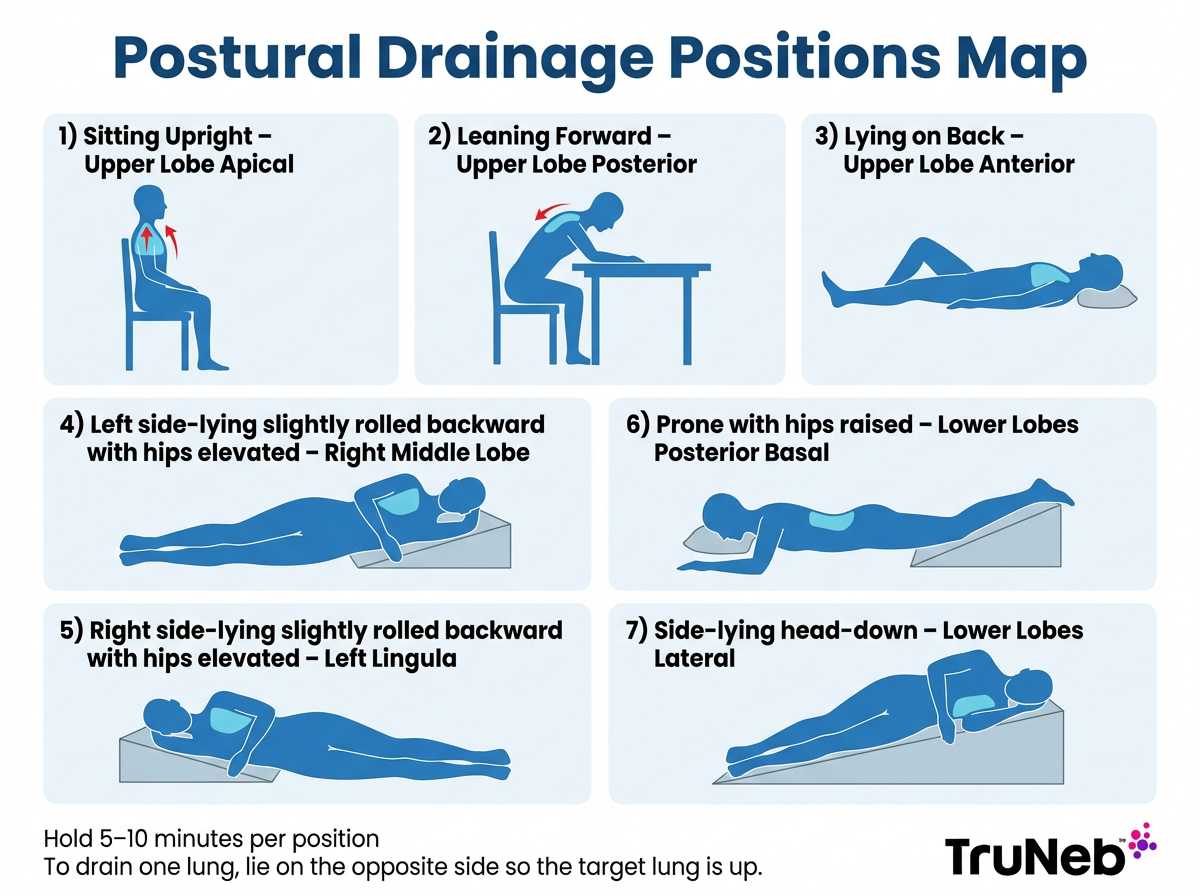
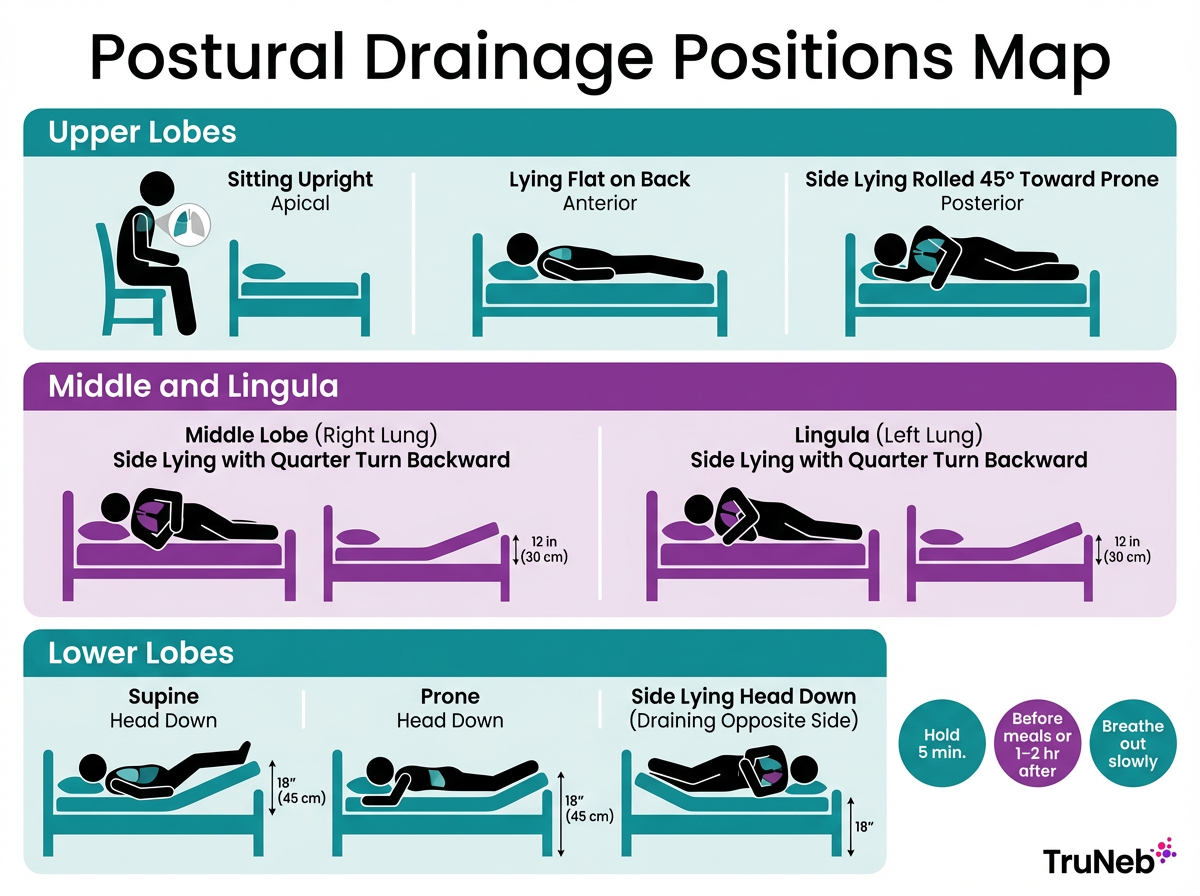
Use firm pillows to hold each posture without strain. Breathe slowly in through your nose and out through your mouth. Hold each for about 5–10 minutes, then sit up and huff cough before moving on. These positions use gravity to help drain mucus from specific parts of your lungs so you can cough it out more easily.
Sitting Upright for Apical Upper Lobes
Sit tall on a bed or sturdy chair with a slight lean back against pillows. Your chest is just a bit behind your hips. This drains the tops of the lungs.
Leaning Forward for Posterior Upper Lobes
Sit and lean your chest forward about a third of the way, resting your forearms on a table or your knees. Relax your neck and shoulders. This drains the back of the upper lungs.
Lying on Back for Anterior Upper Lobes
Lie flat on your back on a bed. Keep your head flat or on a thin pillow and place a small pillow under your knees for comfort. This drains the front of the upper lungs.
Left Side-Lying to Drain the Right Middle Lobe
Lie on your left side. Raise your hips about a foot with a pillow and roll slightly backward a quarter turn so the right chest is angled up. Breathe slowly. This targets the right middle lobe.
Right Side-Lying to Drain the Left Lingula
Lie on your right side. Raise your hips about a foot with a pillow and roll slightly backward a quarter turn so the left chest is angled up. This targets the left lingula.
Prone with Hips Raised for Posterior Lower Lobes
Lie on your stomach. Place a pillow under your abdomen or hips so they are a bit higher than your chest. Turn your head to the side. This helps drain the back bases of both lungs.
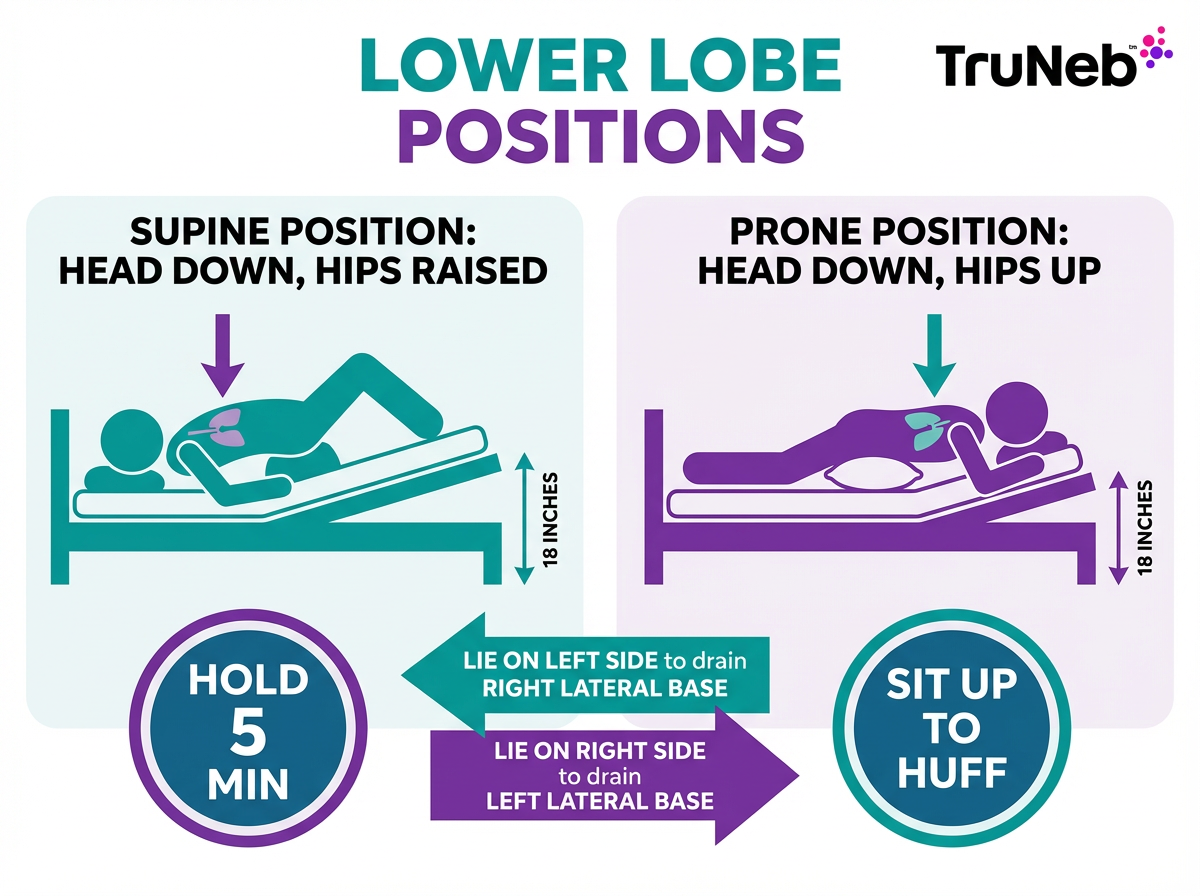
Side-Lying Head-Down for Lateral Lower Lobes
Lie on your side with your hips elevated and your head lower than your chest. To drain the right lower lobe side, lie on your left. To drain the left lower lobe side, lie on your right. Use pillows so you don’t roll. If you have reflux, heart problems, or head pressure issues, only use head-down positions if your doctor has said they’re safe.
Finish Sitting and Coughing
Sit up slowly. Do several huff coughs, then regular coughs to bring up loosened mucus.
Key point: Use each position, then huff cough when you feel mucus start to move.
Quick guide: match each position to its target lung area and whether a head-down angle is needed.
| Position | Target lung area | Head-down? | Typical support/angle | Notes |
|---|---|---|---|---|
| Sitting upright | Upper lobes, apical | No | Slight recline against pillows | Comfortable starting posture |
| Leaning forward | Upper lobes, posterior | No | Lean 30–45° forward, arms on table/knees | Relax neck and shoulders |
| Lying on back | Upper lobes, anterior | No | Flat or thin pillow; pillow under knees | Keep head neutral |
| Left side-lying, quarter turn, hips raised | Right middle lobe | Yes† | Hips raised ~12 in (30 cm) | Roll slightly backward a quarter turn |
| Right side-lying, quarter turn, hips raised | Left lingula | Yes† | Hips raised ~12 in (30 cm) | Roll slightly backward a quarter turn |
| Prone with hips raised | Lower lobes, posterior basal | Optional | Pillow under hips/abdomen | Turn head to the side |
| Side-lying head-down | Lower lobes, lateral | Yes† | Hips elevated; head lower than chest | Use pillows to prevent rolling |
† Head-down positions aren’t right for everyone. Check with your doctor if you have reflux, heart problems, or head pressure issues.
Enhancing Mucus Clearance With Breathing, Huff Cough, and Percussion
Deep Breathing
While holding each position, take slow deep breaths in through your nose, hold for a second or two, then breathe out fully. This helps air get behind mucus so it can move.
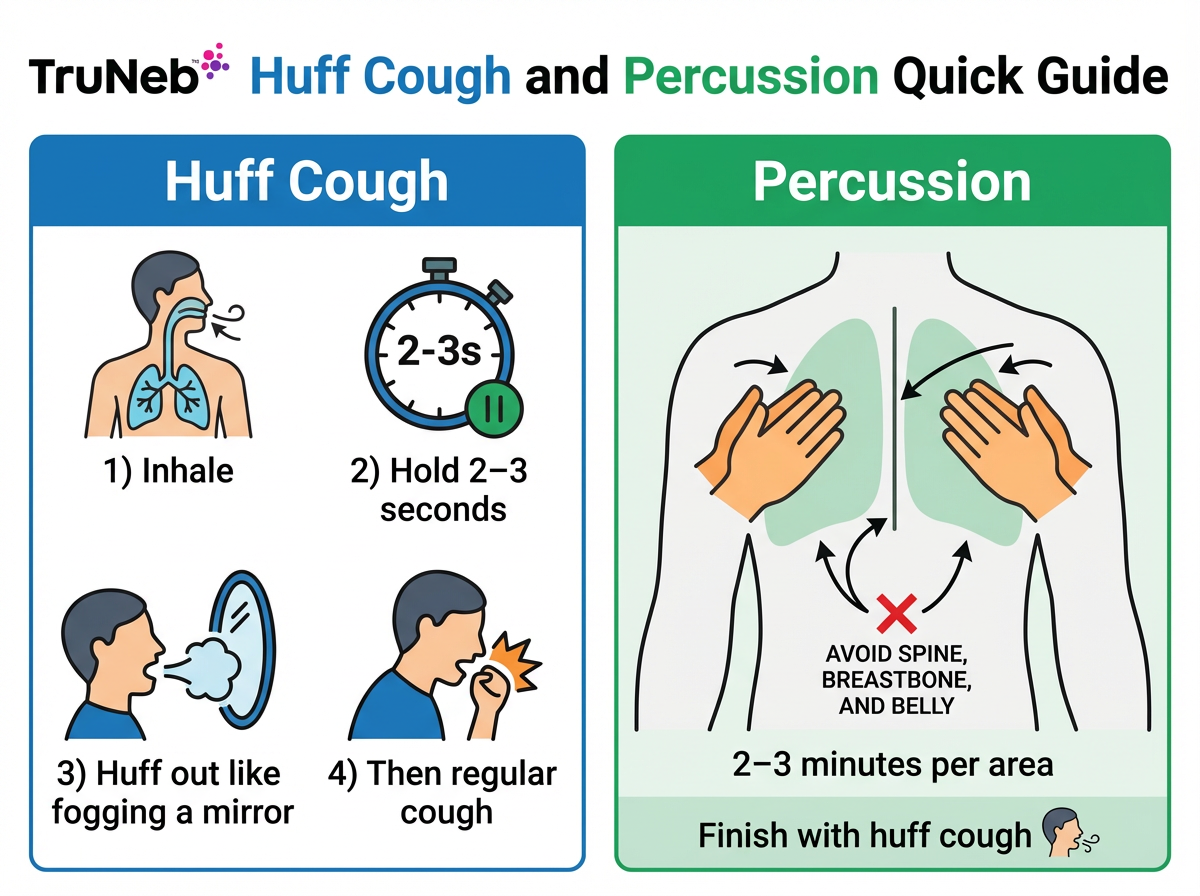
Huff Cough Steps
- Inhale a medium to deep breath.
- Hold 2–3 seconds.
- Exhale forcefully saying "huff" like fogging a mirror.
- Repeat 2–3 times, then do a regular cough to bring mucus out.
Percussion (Chest Clapping)
A helper can gently clap over the area you’re draining using a cupped hand so it sounds hollow, not slappy. Clap for a few minutes per area, then pause to huff cough. Don’t clap over the spine, breastbone, or belly. If no helper is available, try light self-percussion on reachable areas or ask your care team about options like an oscillatory PEP device or a therapy vest.
A simple flow you can follow is: get in position, breathe deeply, add percussion for 2–3 minutes, huff cough, then switch.
Deep breathing, huff coughing, and gentle chest clapping work together with postural drainage to move mucus into larger airways where you can clear it.
Using a Nebulizer or Inhalation Therapy to Enhance Drainage
If your doctor has prescribed an inhaled treatment, taking it about 10–15 minutes before your positions can help. A bronchodilator can open your airways. Hypertonic saline (3% or 7%) can draw water into thick mucus so it’s thinner and easier to move. People usually do their inhaled treatment about 10–15 minutes before starting.
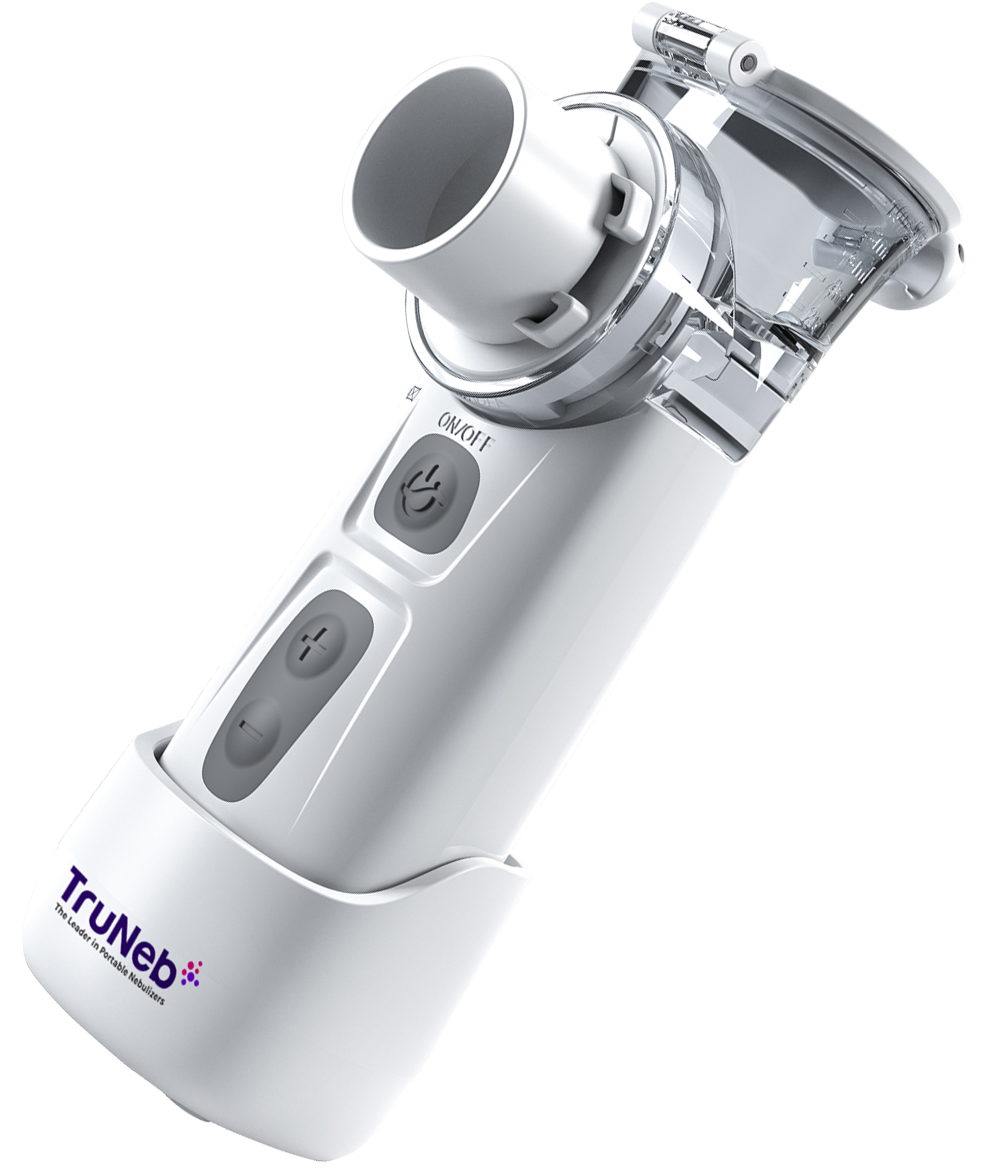
A TruNeb™ portable mesh nebulizer can be a convenient way to take saline or a prescribed bronchodilator at home or on the go. If you cough during nebulizing, pause to huff cough, then resume.
⚠️ You might see products labeled as steam inhalers; these aren’t designed to deliver prescription breathing medications and don’t replace a nebulizer.
Using a nebulizer treatment before postural drainage can thin mucus and open your airways so the positions work better.
Key point: Ask your doctor before starting hypertonic saline or changing any medication, and follow your prescribed plan.
Adapting Postural Drainage for Children, Seniors, and Special Cases
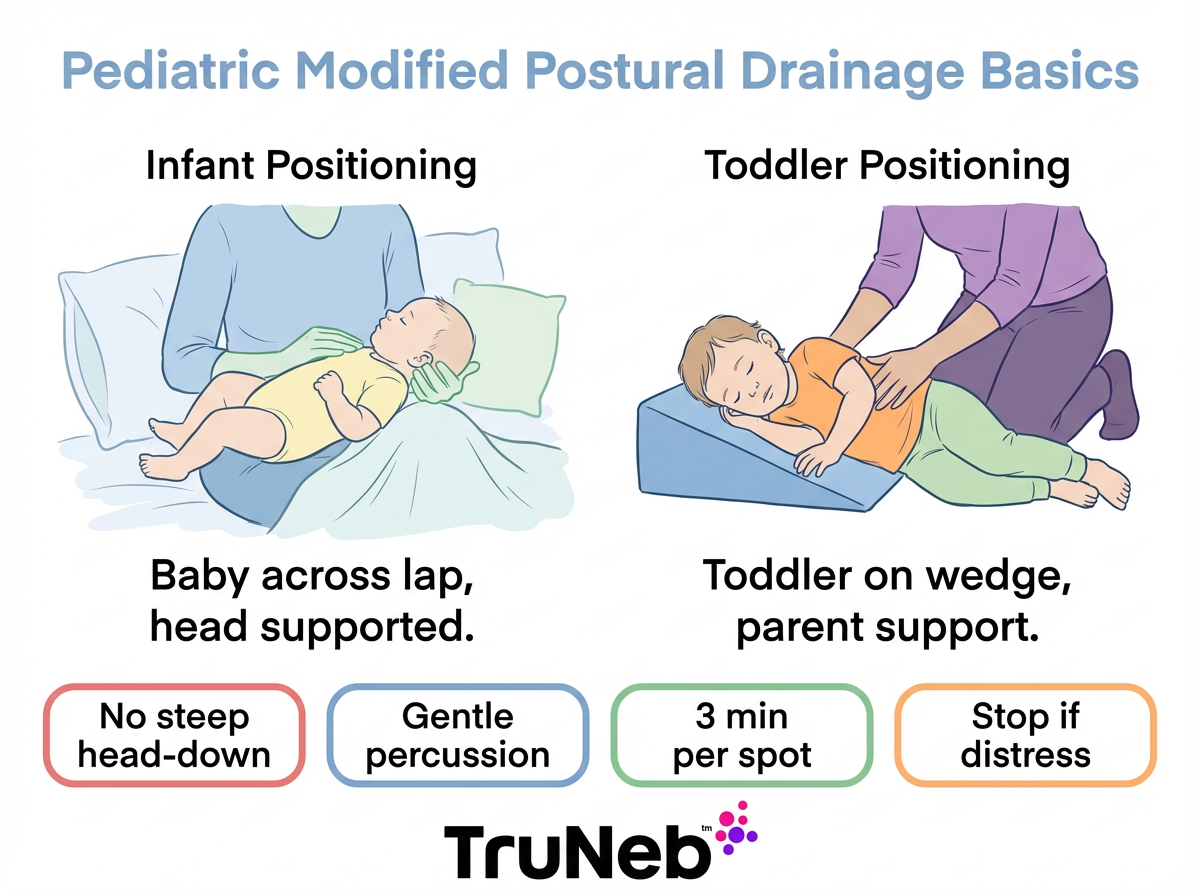
Infants and Young Children: Use gentle angles and short holds. A caregiver can place the baby across their lap with the head slightly lower than the hips and do soft percussion with fingers. Make it playful with a short song for each position. Avoid head-down soon after a feeding. Always follow your child’s doctor or respiratory therapist’s instructions when doing postural drainage.
Older Adults or Limited Mobility: Use an adjustable bed or firm pillows to create smaller angles. Do easier positions longer if needed, and have someone nearby for safety. Reclined sitting and side-lying without steep tilt can still help.
Acid Reflux: Head-down positions can trigger reflux. Schedule sessions 2–3 hours after eating, use shallower angles, and focus more on upright and side-lying postures.
Pregnancy: In later pregnancy, avoid lying flat on your back and skip steep head-down positions. Favor upright sitting and side-lying. Use gentle breathing and huff cough as your main tools. Check with your doctor before starting or changing postural drainage during pregnancy.
The main goal is to adjust angles and positions so postural drainage stays safe and comfortable for your age, mobility, reflux, or pregnancy.
Postural Drainage Routine for Chronic Lung Conditions
Bronchiectasis: It’s usually part of a daily routine. Morning positions help clear overnight mucus, and another round in the evening can help if you still produce sputum. Track changes in sputum and how you feel and share that with your doctor. Your bronchiectasis team will tell you how often to do postural drainage and which positions to focus on.
Cystic Fibrosis: Postural drainage with percussion has long been part of daily care. Some people use vests or other devices. Plenty of people still use positions, huff coughing, and clapping, sometimes more than once a day. Nebulized therapies like hypertonic saline are commonly paired. Your CF team will tell you how often to do postural drainage and which positions to focus on.
Chronic Bronchitis COPD: If mucus is a daily issue, a doctor might recommend a brief morning session with easier positions and focused huff coughing. Go slow, rest as needed, and check this plan with your doctor or care team if you have heart strain or severe emphysema.
After Pneumonia or Bed Rest: Short-term use of positions can help clear an affected lobe. Get guidance from your doctor on which side to use and how often while you recover.
For chronic lung conditions, postural drainage usually becomes a regular routine that your doctor tailors to how much mucus you produce and how you feel.
Frequently Asked Questions
Tap or click a question below to see the answer:
About 5 to 10 minutes per position. A good minimum is 3–5 minutes so gravity has time to help. Follow your doctor’s timing if you were given one.
People with chronic mucus typically do it once or twice daily. During an illness or flare, your team might suggest more frequent, shorter sessions.
Lie on the opposite side so the target lung is up. For right lung drainage, lie on your left. For left lung drainage, lie on your right.
There isn’t a single best position for everyone. The best posture depends on which lung area you need to drain. Head-down angles help the lower lobes. Sitting upright helps the upper lobes. Most people use several positions in one session.
Stop right away and get urgent medical care or call 911 if you have severe chest pain, trouble breathing, confusion, bluish lips or face, or if you cough up a lot more blood than usual. Call your doctor promptly if your usual postural drainage routine suddenly makes you feel much worse or doesn’t help like it used to.
It can help move thick or infected secretions while you recover. Use it as an add-on to your prescribed care and stop if you feel worse.
You can do positions and huff cough on your own. A helper is useful for clapping your back, but if you don’t have one, focus on good positions and huff cough. Ask about device options if needed.
If you have severe reflux, are pregnant, or have certain heart or head conditions, use gentler angles or avoid head-down positions and ask your doctor for guidance.
⚠️ Disclaimer: This article is for informational purposes only and isn’t a substitute for professional medical advice, diagnosis, or treatment. Always talk to your doctor about your symptoms and before starting, stopping, or changing any treatment, including postural drainage and nebulizer use.