

On this page
How to Clear Mucus from Lungs with COPD: Why It Builds Up
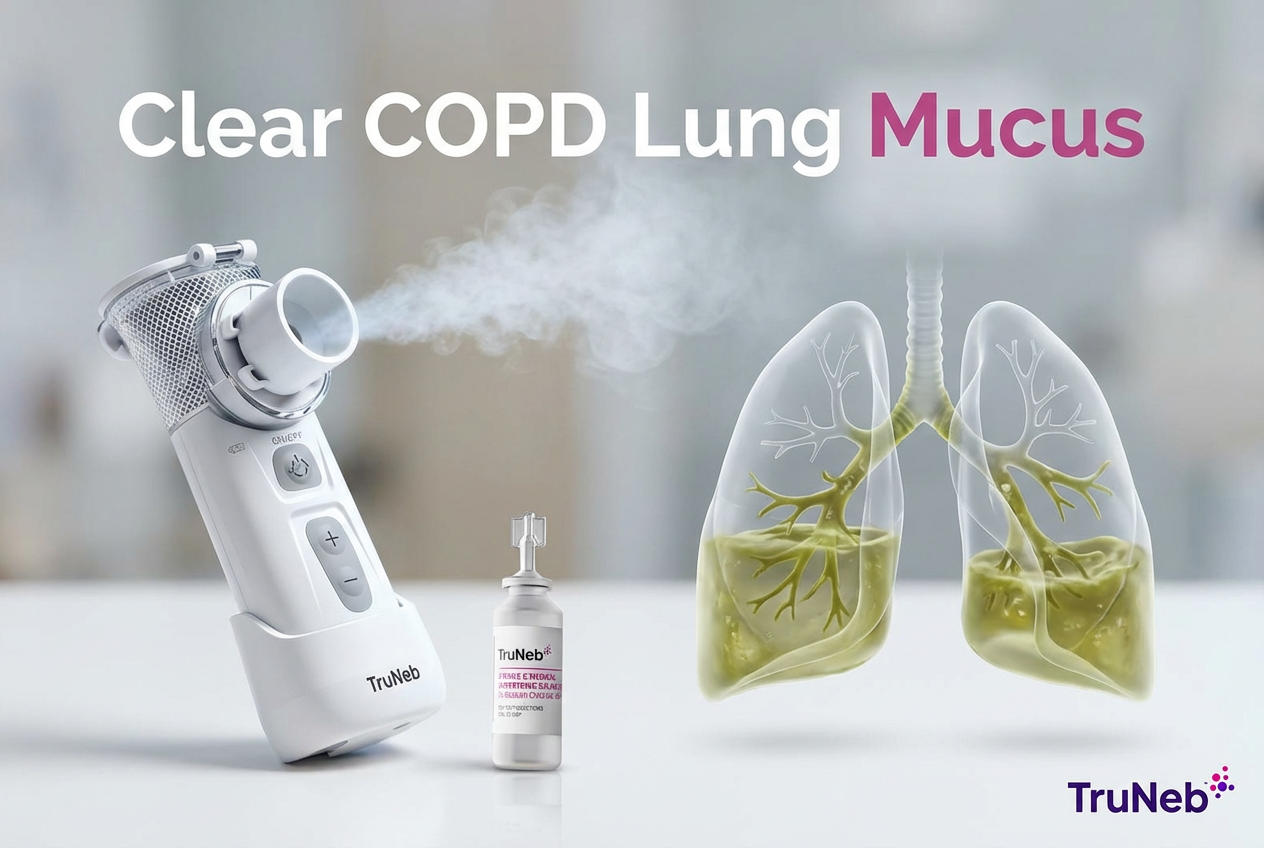
Here’s the short version: COPD can make your airways swollen and irritated. That swelling tells your mucus‑making cells to produce more phlegm. At the same time, tiny hair‑like sweepers (cilia) that normally move mucus up and out can be damaged or slowed.
If you live with COPD, you might feel like there’s always extra mucus rattling in your chest. When mucus sits in your airways, your breathing can feel tight and heavy. It can also trap germs, which raises the risk of infections. Clearing mucus regularly helps you breathe easier and may cut down on coughing fits throughout the day. This daily mucus problem is especially common in chronic bronchitis–type COPD, and stagnant mucus can contribute to COPD flare‑ups (exacerbations).
Key tip: In COPD, inflamed airways make extra mucus while damaged cilia move it out more slowly.
Postural Drainage and Chest Percussion: Use Gravity to Drain Mucus
Postural drainage means you lie in certain positions so gravity helps pull mucus from smaller airways up to larger ones, where you can cough it out. Many people do this in the morning (after mucus has pooled overnight) and again before bed. If your doctor or respiratory therapist has shown you postural drainage, you can use these steps as a reminder at home.
How to do it (3 positions)
- Back (to drain the front of lungs): Lie on your back. Put 2 to 3 pillows under your hips so your chest is lower than your hips. Place a small pillow under your head. Breathe slowly into your belly for 3 to 5 minutes.
- Side (to drain the sides): Lie on your side with your chest lower than your hips (pillows under hips). Belly‑breathe for 3 to 5 minutes, then switch sides.
- Stomach (to drain the back): Lie on your stomach with pillows under your hips. Rest your head on a small pillow or your hands. Belly‑breathe for 3 to 5 minutes.
Chest percussion (optional)
- Cup your hand so your palm is curved. Gently clap over the chest and back where the lungs are. Avoid the spine and breastbone. Clap a few minutes per area, then pause to cough.
- A caregiver can help reach your back and add gentle vibrations.
Safety
- Do this on an empty stomach.
- Stop if you feel very short of breath, chest pain, light‑headed, or dizzy.
- Adjust pillow height so you can breathe comfortably.
- Check with your doctor before doing positions with your head below your chest if you have heart, blood pressure, or severe reflux problems.
Key tip: Keep your chest lower than your hips for a few minutes per side to let gravity move mucus up.
Quick compare: pick the technique that matches your goal—drain mucus with gravity, then move it out with a gentle huff cough.
| Technique | What it does | When to use | Time per round | Key safety |
|---|---|---|---|---|
| Postural drainage | Uses gravity to move mucus from smaller airways to larger ones | After waking or before bed; before coughing | 3 to 5 minutes per position | Empty stomach; stop if dizzy or very short of breath; ask your doctor about head‑down positions if you have heart, blood pressure, or severe reflux issues |
| Huff cough | Clears loosened mucus with less strain than a hard cough | After drainage or any time you feel mucus moving | 2 to 3 huffs, then one strong cough | Rest if you wheeze more or feel dizzy; use pursed‑lip breathing between rounds |
| Controlled cough | Two short coughs help bring up deeper secretions | When phlegm feels stuck and a gentle huff isn’t enough | Two short, sharp coughs on one breath | Avoid repeated hard coughing that tires you; stop for breath as needed |
Note: Techniques are best learned from a doctor or respiratory therapist; use them as directed for your COPD plan.
Huff and Controlled Cough: The Best Ways to Cough Up Phlegm
Hard, deep coughing can snap airways shut and wear you out. These are the cough techniques many respiratory therapists teach to help you clear mucus with less strain.
Huff cough (gentle and effective)
- Sit upright and relax your shoulders.
- Breathe in through your nose until your lungs are about 3/4 full.
- Exhale with your mouth open in quick bursts saying "ha, ha, ha," like you’re fogging up a mirror.
- Do 2 to 3 huffs, rest, then finish with one stronger cough into a tissue.
Controlled cough (double‑cough method)
- Sit with feet on the floor; fold your arms across your belly.
- Breathe in slowly through your nose. Hold 2 to 3 seconds.
- Lean forward a little and give two short, sharp coughs on one breath while you gently press your belly.
- Breathe in gently through your nose, relax, and repeat if you still feel mucus moving.
Pro tips
- Use pursed‑lip breathing between rounds (inhale nose, exhale slowly through puckered lips) to avoid getting winded.
- Do short sessions a few times a day instead of one long session.
- Stop and rest if you feel dizzy, very short of breath, or start to wheeze more.
These cough techniques are commonly taught in pulmonary rehabilitation programs.
Key tip: Huff cough (quick "ha" breaths) clears phlegm with less strain than a hard, deep cough.
Hydration and Home Remedies to Thin Mucus
Thin mucus is easier to move and can ease chest congestion. A few simple home habits help:
- Drink water regularly through the day. Many people aim for 6 to 8 glasses, but follow the amount your doctor recommends. If you have heart or kidney problems, follow the fluid limit your doctor gives you.
- Sip warm fluids (decaf tea, clear broths) to soothe airways and keep secretions flowing.
- Add moisture to the air: run a clean humidifier or take a warm, steamy shower. Keep humidifiers clean to avoid mold. ⚠️ Steam feels soothing, but don’t use very hot steam or put your face too close to boiling water, and remember steam inhalers aren’t the same as nebulizers for COPD medicines.
- Notice food triggers: some people feel dairy makes mucus seem thicker. If you notice this, cut back and see if it helps.
- Avoid smoke and strong fumes; they can thicken mucus and trigger coughing.
Key tip: Drinking more water through the day keeps COPD mucus thinner and easier to clear.
Nebulizer Treatments and Mucus-Thinning Medicines
When mucus is very thick or sticky, inhaled treatments may help.
Nebulized saline (doctor‑directed)
- Hypertonic saline (3% or 7%) is a salty mist you breathe with a nebulizer. It pulls water into the airway surface, thinning mucus so you can cough it out more easily. This is prescribed by your doctor for people with very thick, hard‑to‑clear mucus.
- Many doctors suggest taking a bronchodilator first (or mixed in) so airways are open and less reactive.
Mucus‑thinning options
- Some people use expectorants (like guaifenesin) or N‑acetylcysteine (NAC). Results vary, and these medicines don’t work for everyone. Your doctor can guide you.
A portable example
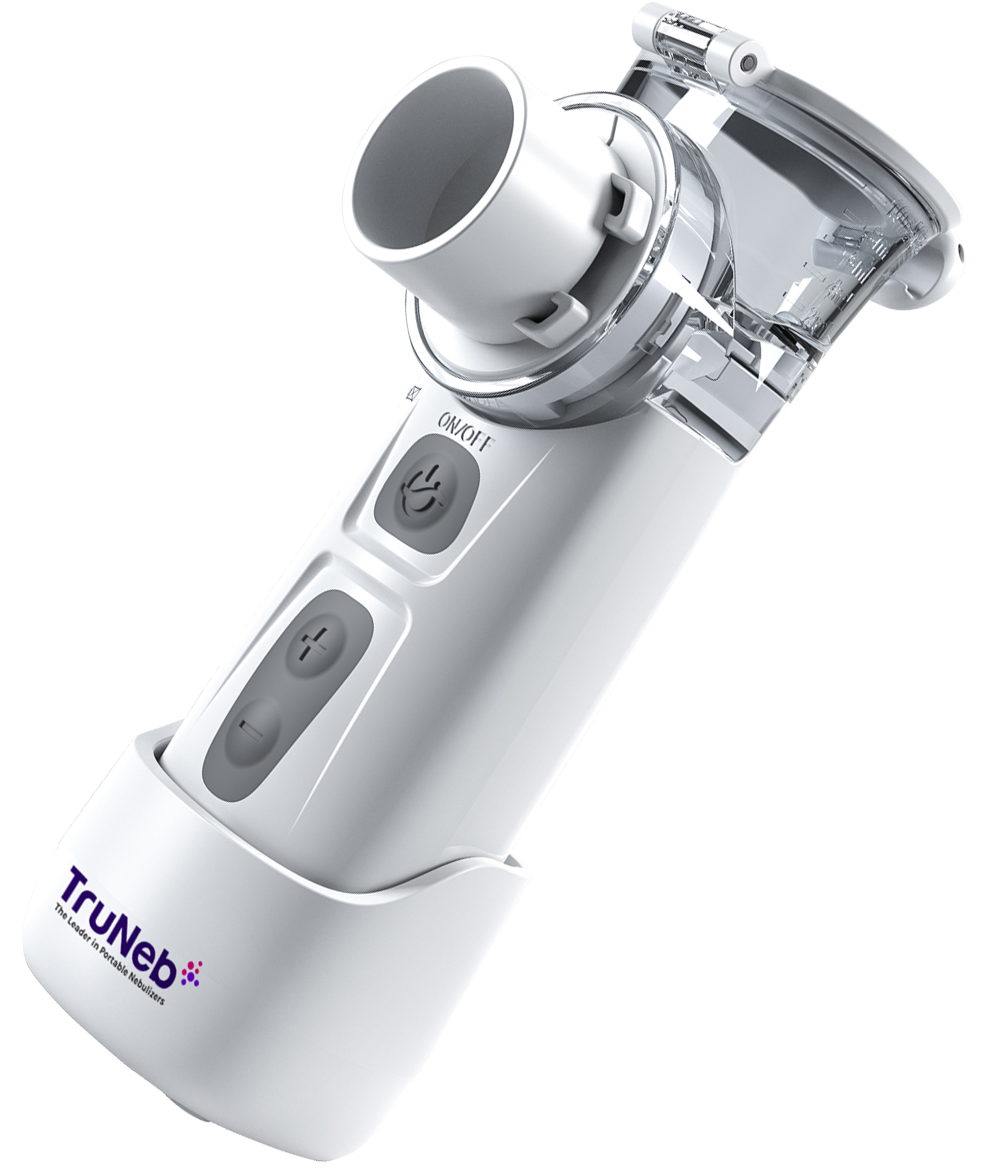
- A handheld mesh device like the TruNeb™ portable mesh nebulizer can deliver saline or prescribed meds quietly and on the go, so you can fit treatments into your daily mucus‑clearing routine.
Safety note
Talk to your doctor before trying a new medication or saline strength.
Key tip: Nebulized hypertonic saline (3% or 7%) can draw water into airways and thin stubborn mucus.
Preventive Habits and When to Get Help
Daily habits matter for mucus control and breathing.
Do more of this
- Quit smoking and avoid secondhand smoke. Smoke paralyzes cilia and boosts mucus.
- Stay active. Gentle movement (like a short walk) can help loosen secretions and build cough strength.
- Ask about pulmonary rehabilitation. A team can teach you these techniques and build a safe exercise plan.
- Stay up to date on vaccines (flu, pneumonia) recommended for people with COPD to reduce infection risk.
Know when to call
- Mucus turns yellow/green, increases a lot, or contains blood.
- You have a fever or your shortness of breath gets worse.
- You can’t clear mucus despite your usual routine (you may be dealing with a mucus plug).
⚠️ If you have severe trouble breathing, chest pain, blue lips or face, or feel confused or faint, call 911 or your local emergency number right away.
Key tip: Quit smoking, stay active, and get help fast if mucus color or breathing suddenly worsens.
FAQs: Clearing COPD Mucus
Tap or click a question below to see the answer:
Yes—breathing medication or saline as a mist can thin secretions and make them easier to cough out under a doctor’s guidance. Hypertonic saline (3% or 7%) is commonly used, sometimes after a bronchodilator to open the airways.
For most people with COPD, the huff cough technique works best. Breathe in about 3/4 full, then exhale with your mouth open saying “ha, ha, ha,” and finish with one strong cough. Pulmonary rehab teams often teach this method.
Mucus can pool while you sleep, so it’s common to feel more congested in the morning. A quick drainage session and huff cough after you wake up can help clear it.
Most people do brief sessions several times a day, not one long session. Stop if you get dizzy and rest with pursed‑lip breathing.
Dairy doesn’t create lung mucus, but some people feel it makes mucus thicker. If you notice that, try cutting back and watch for a change.
Medical reminder: Talk to your doctor before trying a new medication or saline strength.
Key tip: For a fast morning clear‑out, pair a drainage position with huff coughing.
You won’t clear every bit of mucus every time, and that’s okay. With practice and the right support from your doctor, these routines can make breathing feel easier day to day.
Disclaimer: This article is for informational purposes only and is not a substitute for professional medical advice, diagnosis, or treatment. Always talk with your doctor about your symptoms and before changing your COPD treatments or airway clearance routine.