

On this page
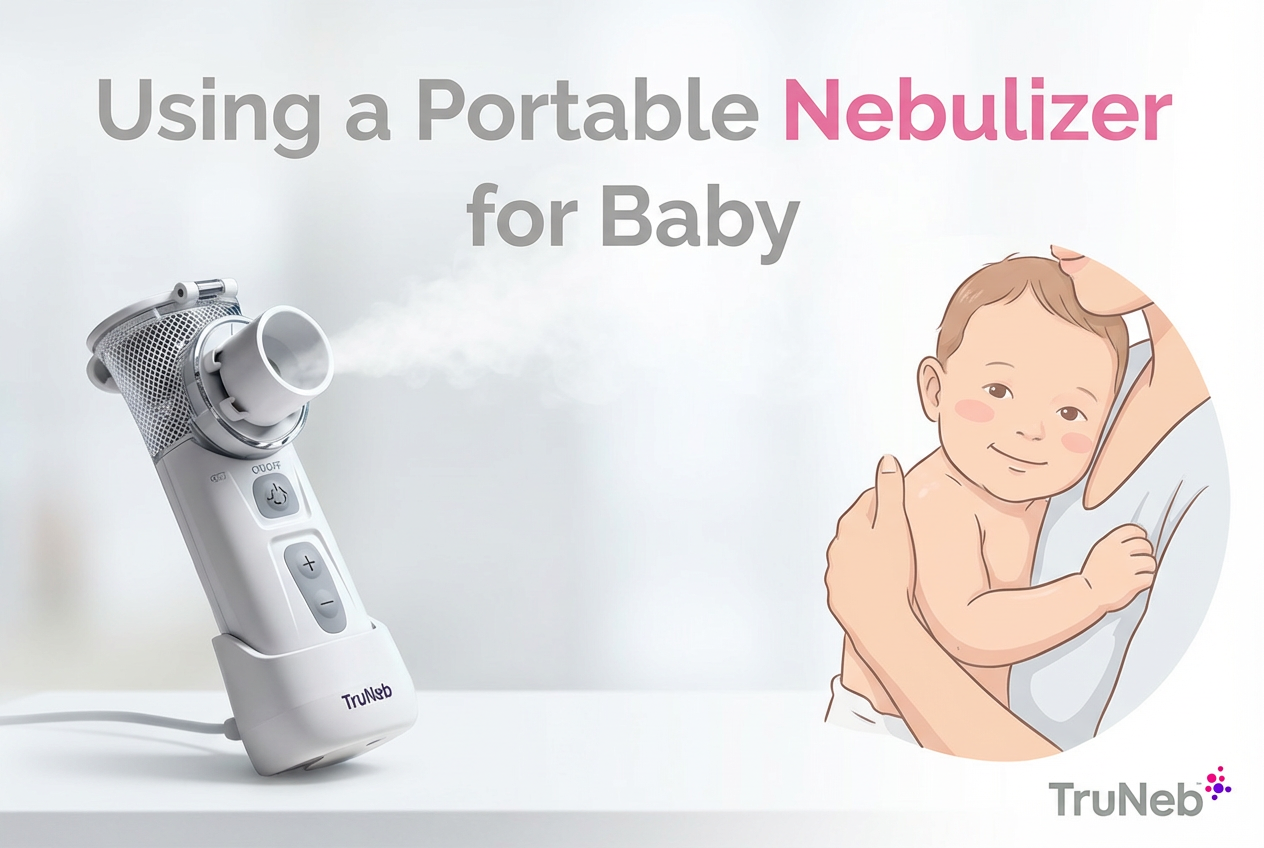
This short guide shows you how to safely use a portable mesh nebulizer for your baby at home. It shares general steps; always follow your pediatrician’s instructions and your device manual first. A portable mesh nebulizer like TruNeb™ is one example of a quiet, handheld unit you might use.
Disclaimer: This article is for informational purposes only and isn’t a substitute for professional medical advice, diagnosis, or treatment.
Why Use a Portable Mesh Nebulizer for a Baby
A nebulizer turns liquid medicine or sterile saline into a fine mist your baby can breathe. That mist goes straight into the lungs, which can help with wheeze, coughing, or tight breathing.
Doctors recommend nebulizers for infant breathing issues like asthma flare-ups, bronchiolitis, RSV-related wheeze, or a stubborn cough. For babies, a mask is easier than a mouthpiece.
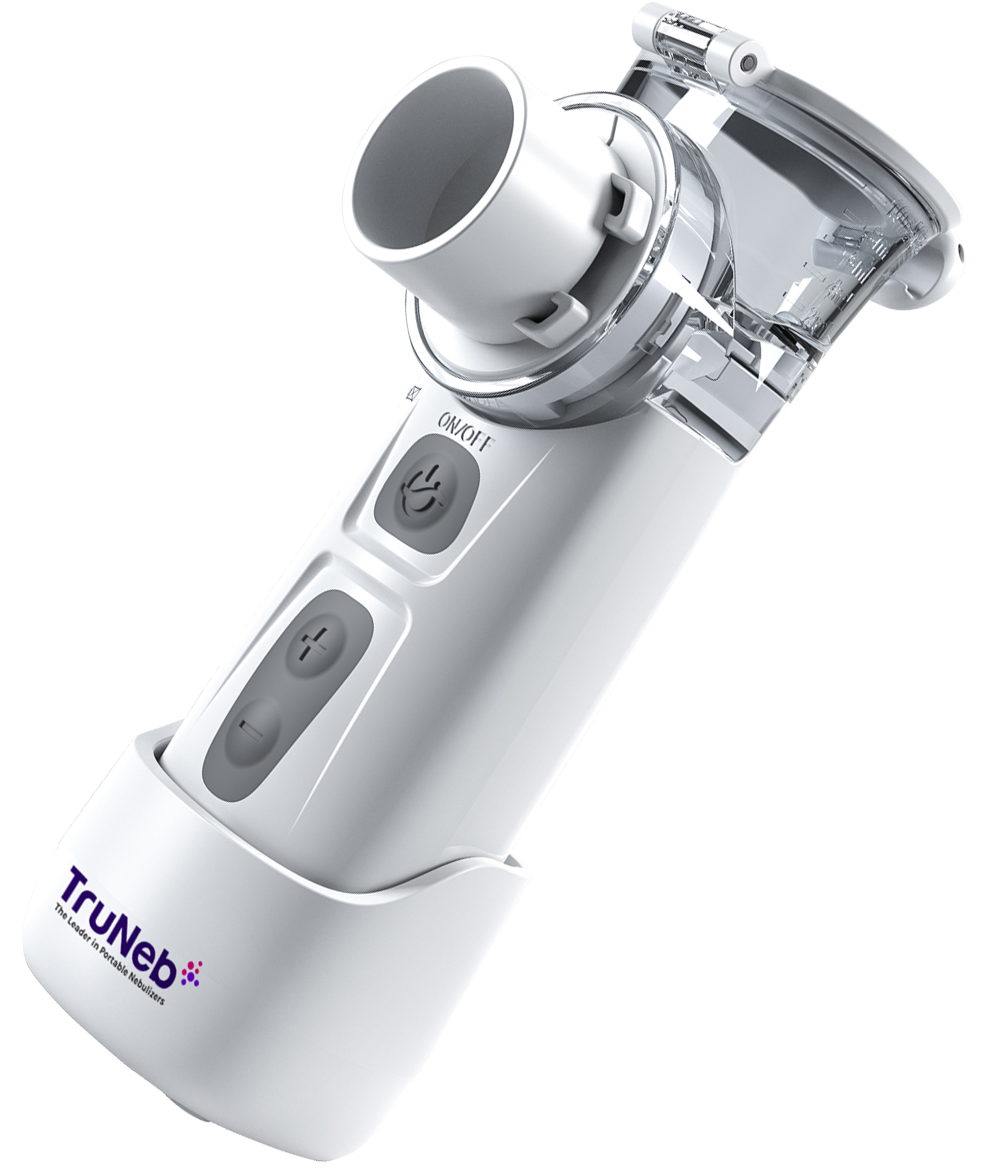
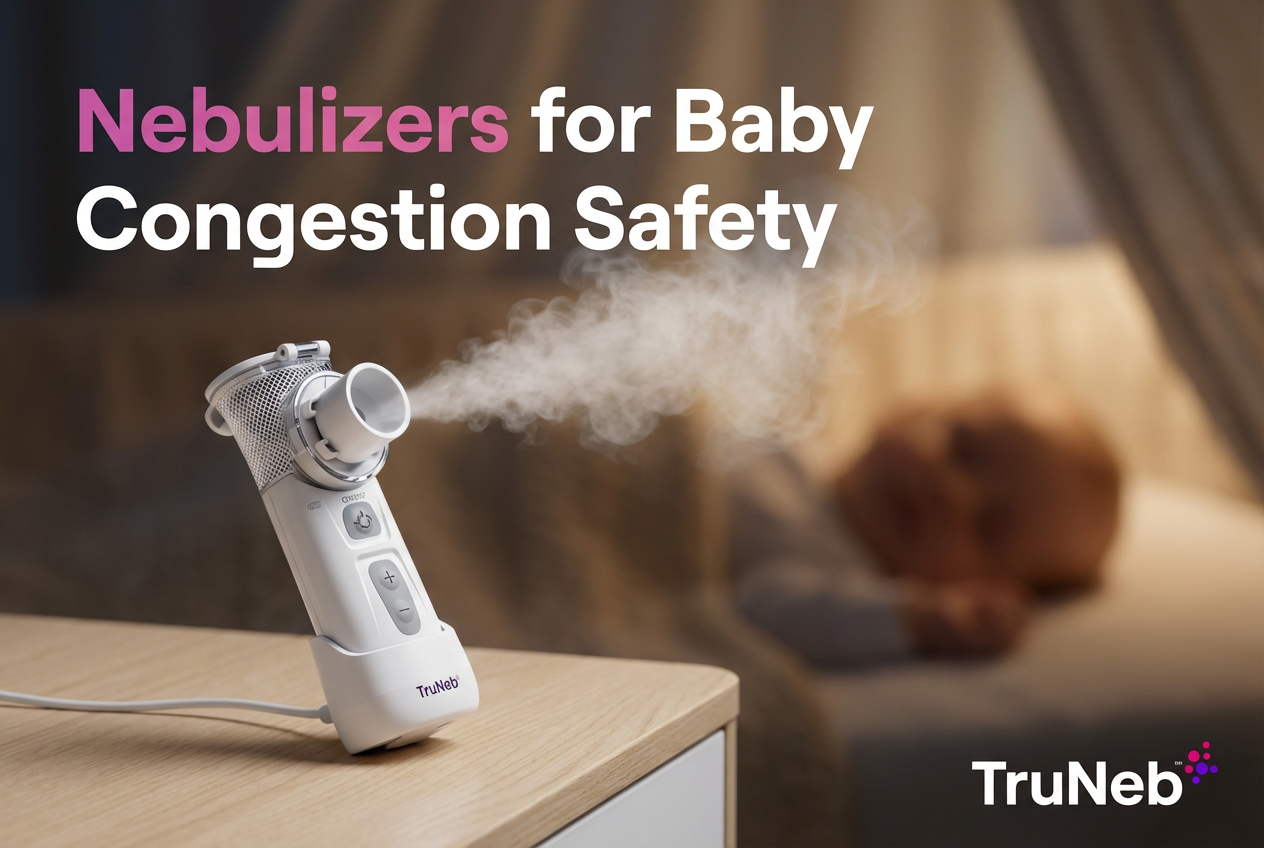
Portable mesh nebulizers are quiet, small, and easy to hold. There’s no loud compressor, which helps keep your baby calm, and you can give a treatment in a chair by the crib or on the couch. A mesh unit uses a tiny vibrating plate or mesh to turn liquid into a fine mist, which is why it stays small and quiet. They’re easy to use at night by the crib or when you’re away from home.
Key takeaway: A mesh nebulizer makes baby breathing treatments quiet, gentle, and easy to inhale.
Step-by-Step Guide to Using a Portable Mesh Nebulizer for Your Baby
These are general home steps for using the device. Follow your pediatrician’s treatment plan and your nebulizer’s manual first.
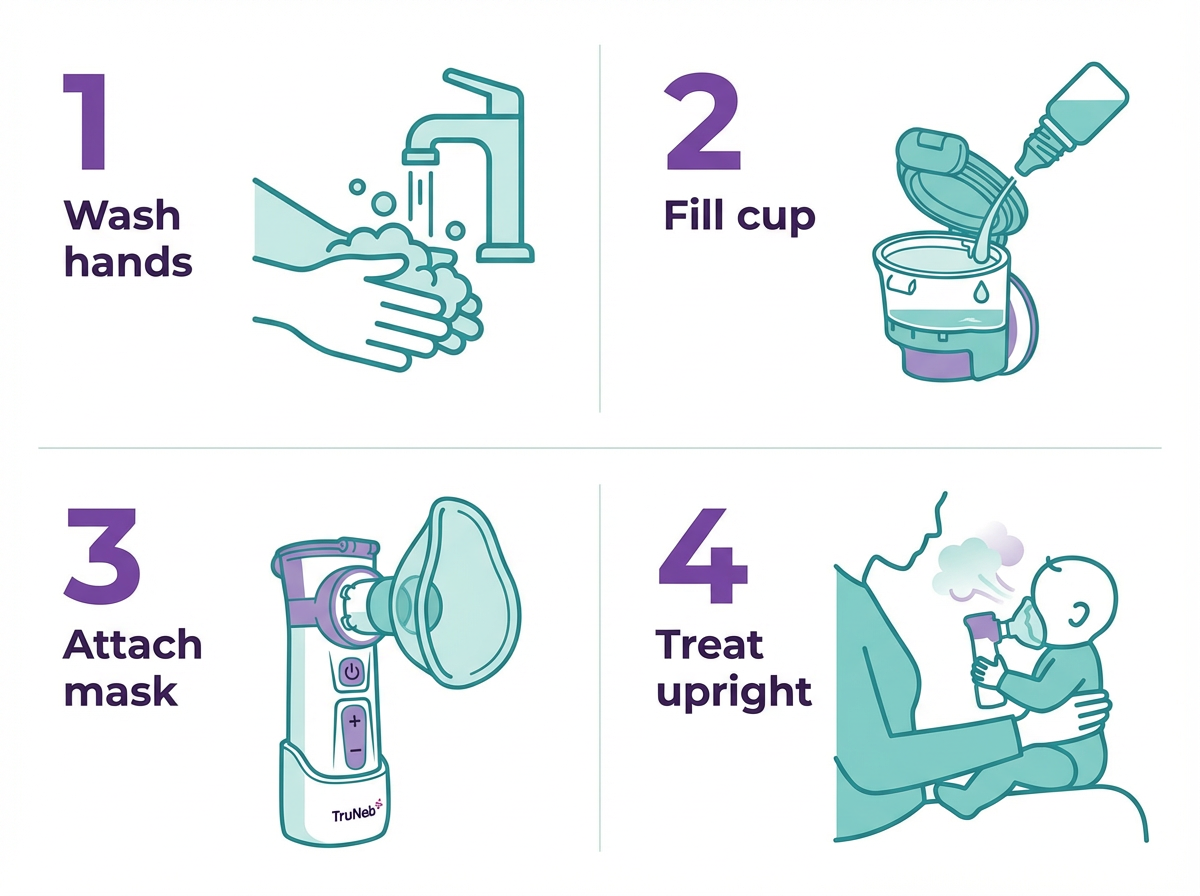
- Wash your hands.Clean hands keep germs out of the medicine cup and away from your baby.
- Measure the prescribed dose.Use exactly what your pediatrician prescribed. If saline is part of the plan, use sterile, pharmacy-grade ampules—never homemade mixtures. If your doctor prescribes hypertonic saline (3% or 7%) for mucus, use pharmacy-grade, single-use vials exactly as directed by your pediatrician or pharmacist.
- Fill and assemble the device. Open the medicine cup and pour in the dose. Snap the cup in place. With a handheld mesh unit, there’s no tubing or bulky compressor. Make sure the mesh cap is seated and the device is charged.
- Attach the infant mask. Connect the mask and check the fit. It should be snug over the nose and mouth so the mist doesn’t leak.
- Hold your baby upright. Place your baby on your lap in a semi-upright or upright position. Don’t lay them flat. Hold the nebulizer upright too so the medicine distributes correctly.
- Start the treatment and keep things calm. Place the mask gently on your baby’s face and turn the nebulizer on. You should see a fine mist. Your baby can breathe normally. Use soft singing, a toy, or a short story to help them relax.
- Run it until the mist stops. Most mesh treatments take about 5–10 minutes, depending on the amount. (Older compressor machines can take longer.) It’s okay to pause briefly if your baby is fussy, then resume.
- Finish and remove the mask. Turn the device off and lift the mask away slowly.
- Clean the parts right away. Wash the mask and medicine cup after each use to help prevent germs from building up. Let all parts air-dry completely before storing.
Key takeaway: Wash hands, measure the dose, use a snug mask, keep baby upright, and run the neb until the mist stops.
Pro Tips to Make Nebulizer Time Easier
- Use a routine. Give treatments around the same times each day so it feels familiar.
- Set a calm scene. Hold your baby on your lap. Dim lights or play soft music. A calm baby inhales more of the mist.
- Distract with something small. Try a favorite toy, song, or a short video.
- Show and tell. Let your baby touch the mask when the device is off. Put it on a teddy bear or yourself first. Call it a superhero mask for older toddlers.
- Choose gentle gear. Use a soft infant mask that seals without pressing hard.
- Stay relaxed. Babies feel your mood. Speak softly and breathe slowly while you hold them.
Key takeaway: Routine, calm, and simple distractions help babies accept the mask and breathe the mist.
Cleaning and Maintenance of the Nebulizer
Clean right after every use so the next treatment is safe and effective.
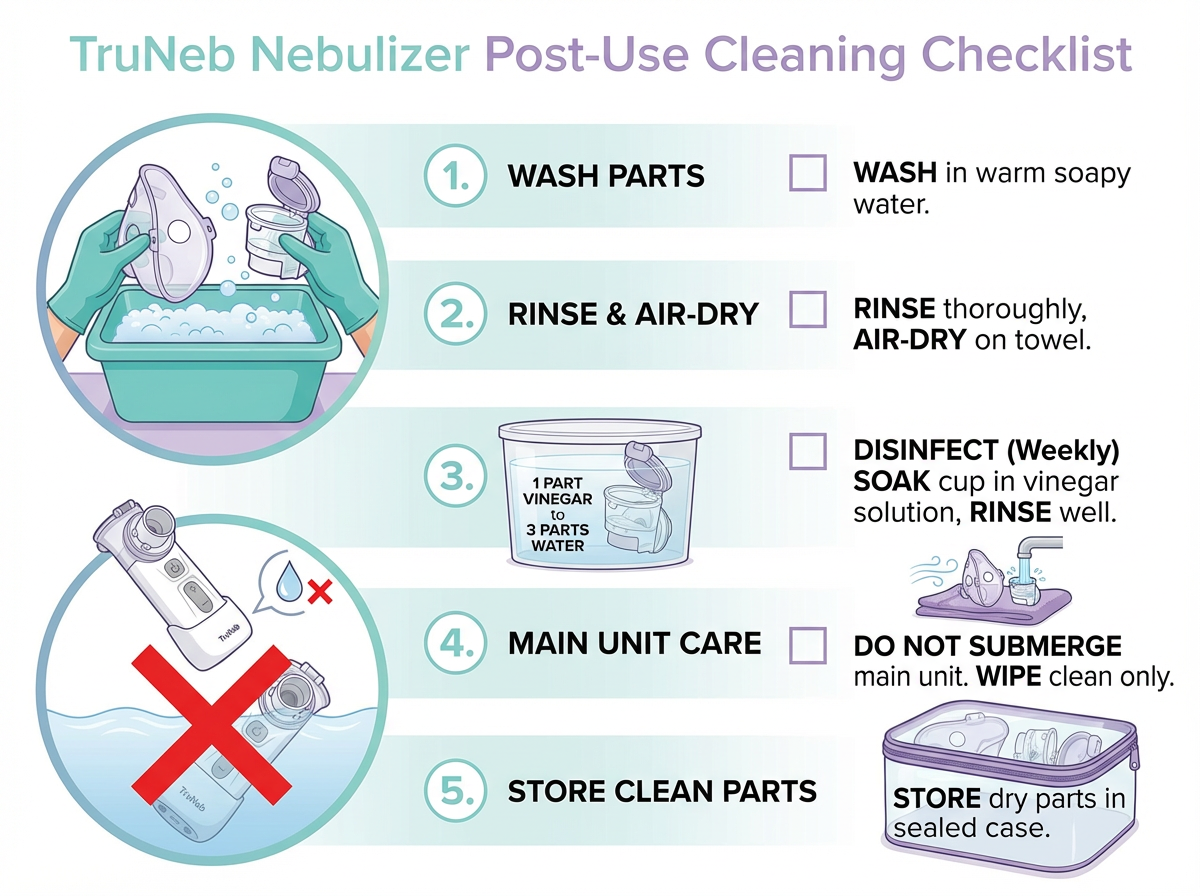
- Rinse and wash parts that touch the mist. Wash the mask and medicine cup in warm, soapy water. Use a clean bowl or basin, not the sink, to avoid contamination. Rinse well.
- Air-dry completely. Set parts on a clean towel to air-dry. Don’t reassemble until fully dry.
- Disinfect weekly. If your manual allows, disinfect only the parts approved for it. Use boiling (boil-safe parts) or soak in a white-vinegar solution (1 part vinegar to 3 parts water), then rinse and air-dry.
- Protect the main unit. Never submerge the electronic body. Wipe the exterior with a dry or slightly damp cloth only.
- Watch the mesh. If output slows, the mesh plate may be clogging. Follow your manual’s care steps or replace the mesh cap to keep the mist fine and steady.
- Store clean parts. Once dry, keep parts in a clean, dry container or case until the next session. Make sure everything is completely dry before sealing.
Key takeaway: Clean after every use and disinfect weekly to keep germs away and mist output strong.
Safety Precautions and Pediatric Advice
- Use only what your pediatrician prescribes. Don’t add anything else to the cup. Avoid essential oils or homemade saline.
- Use the right equipment. Steam inhalers, facial steamers, and humidifiers aren’t nebulizers and should not be used to deliver prescription nebulizer medicines.
- Supervise every session. Never leave your baby alone with a mask on.
- Watch for red flags.⚠️ Call your local emergency number if breathing worsens, you see ribs pulling in, lips look blue, or your baby seems in serious distress. Call your child’s doctor if symptoms don’t improve after a treatment or if you notice a rash, hives, or swelling after a new medicine.
- Keep it clean. A clean device helps prevent infections.
Disclaimer: This article is for informational purposes only and isn’t a substitute for professional medical advice, diagnosis, or treatment. Always talk to your child’s doctor about their symptoms, medications, and nebulizer plan.
Key takeaway: Use only prescribed solutions, supervise, keep it clean, and seek help fast if breathing worsens.
Frequently Asked Questions
Tap or click a question below to see the answer:
Yes—when you follow your pediatrician’s directions and keep the device clean. Nebulizers are used for babies in clinics and at home to deliver a gentle mist right to the lungs. Your pediatrician decides if a nebulizer is right for your baby and how to use it.
If your baby is drowsy or in light sleep, a quiet mesh nebulizer can be used while you hold the mask in place. Stay with your baby and watch their breathing the entire time. Check with your baby’s doctor before trying treatments during sleep, and only do this if they say it’s safe for your child.
Most mesh treatments take about 5–10 minutes, depending on the dose. Older machines can take longer, sometimes up to 25 minutes.
Only what your doctor prescribes—typically medicines like albuterol or levalbuterol, inhaled steroids, or sterile saline. Do not use homemade saline or essential oils. If your doctor prescribes hypertonic saline, use pharmacy-grade vials exactly as directed on the prescription or package. Don’t use steam inhalers, facial steamers, or humidifiers to deliver prescription nebulizer medicines. TruNeb also offers sterile saline options for prescribed use.
You can usually purchase the device itself directly, like a portable mesh nebulizer from TruNeb and other comparable portable mesh nebulizers. The medications and the exact saline type or strength should come from your pediatrician’s prescription and guidance.
Key takeaway: Nebulizer treatments can be safe and helpful for babies when you use doctor-prescribed solutions, follow the device instructions, and supervise every session.