

On this page
Why Peer Support Matters for Asthma Patients
Peer support can ease stress and help you manage asthma better.
Peer support makes a real difference. Support groups for asthma connect you with people who live with the condition, so you feel understood and less alone. They also give you practical ideas you can use the same day.
What the research shows:
- Group programs have been linked to better asthma control and fewer ER visits.
- Peer-led education has improved quality of life for teens with asthma.
What it feels like day to day:
- You hear "me too," and your worries feel lighter.
- You pick up simple tricks that fit real life, like how someone remembers their controller inhaler or prepares for high-pollen days.
Think of a support group like another tool in your asthma action plan. Support groups add emotional and practical help but don’t replace regular asthma checkups or your doctor’s advice.
⚠️ If you have severe trouble breathing, can’t speak in full sentences, notice blue lips or fingernails, or your rescue inhaler isn’t helping, seek emergency medical care right away.
The Asthma Support Landscape at a Glance
You can find support through national groups, local meetings, and online communities.
Here are the main support options:
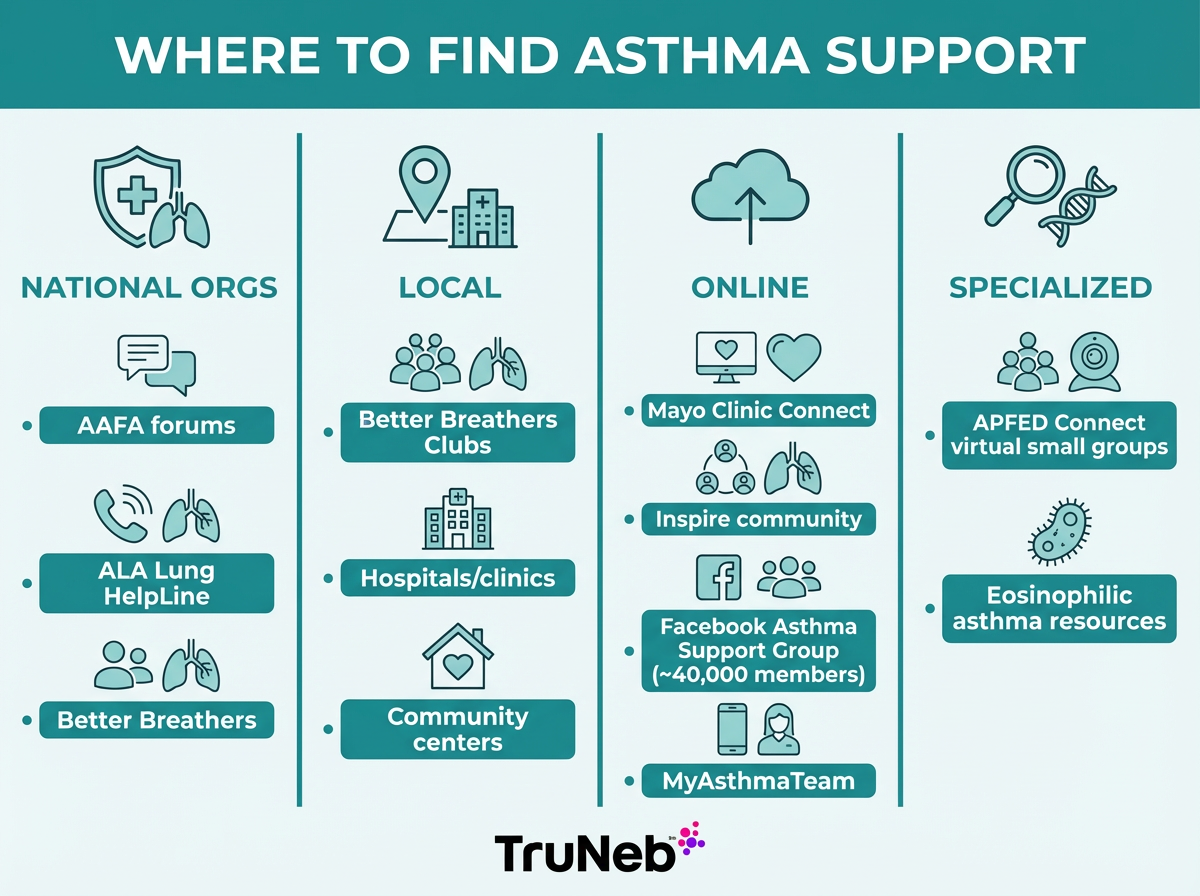
- National organizations: Programs, helplines, and active communities from AAFA and the American Lung Association.
- Local in-person groups: Hospital or clinic groups, community meetups, and Better Breathers Clubs.
- Online communities: Forums, social networks, and virtual meetups that are open 24/7.
- Specialized groups: Spaces for parents, caregivers, or people with severe or eosinophilic asthma.
Next, you’ll see how each path works, who it’s best for, and how to join.
Quick comparison: Pick the support option that fits your life; you can mix in-person and online for steady support.
| Option | Where | How to join | Typical benefits | Best for |
|---|---|---|---|---|
| National organizations | AAFA, American Lung Association | Program pages, helplines, directories | Trusted education, helpline support, community connections | Anyone starting out or wanting vetted resources |
| Local in-person groups | Hospitals, clinics, community centers | Club finders, clinic referrals, local listings | Face-to-face connection, skills practice, local tips | People who prefer in-person support |
| Online communities | Forums, apps, social groups, virtual meetups | Join online and participate anytime | 24/7 peer feedback, flexibility, wide reach | Busy schedules, limited local options |
| Specialized groups | Parent/caregiver spaces, severe/eosinophilic asthma groups | National programs, condition-specific communities | Targeted advice and shared experience | Parents, caregivers, or people with complex asthma |
Note: Availability varies by location and program; check current details with the organization or your doctor.
National Asthma and Allergy Organizations That Offer Support
Start with AAFA and the American Lung Association for trusted programs and communities.
These asthma and allergy support organizations include:
- Asthma and Allergy Foundation of America (AAFA): Online forums and regional chapters to ask questions any time and connect with people like you.
- American Lung Association (ALA): The Lung HelpLine, patient programs, Better Breathers Clubs, and the Patient & Caregiver Network for ongoing education and support.
- Allergy & Asthma Network: Education, webinars, and community resources with roots in parent support.
- Professional directories (AAAAI and ACAAI): Trusted lists of asthma and allergy support organizations that point you to credible resources.
Tip: Use these sites to get your bearings. Then decide if you want a local group, an online community, or both.
Local In-Person Support Groups Near You
Use ALA’s Club Finder and your clinic’s referrals to locate a group close to home.
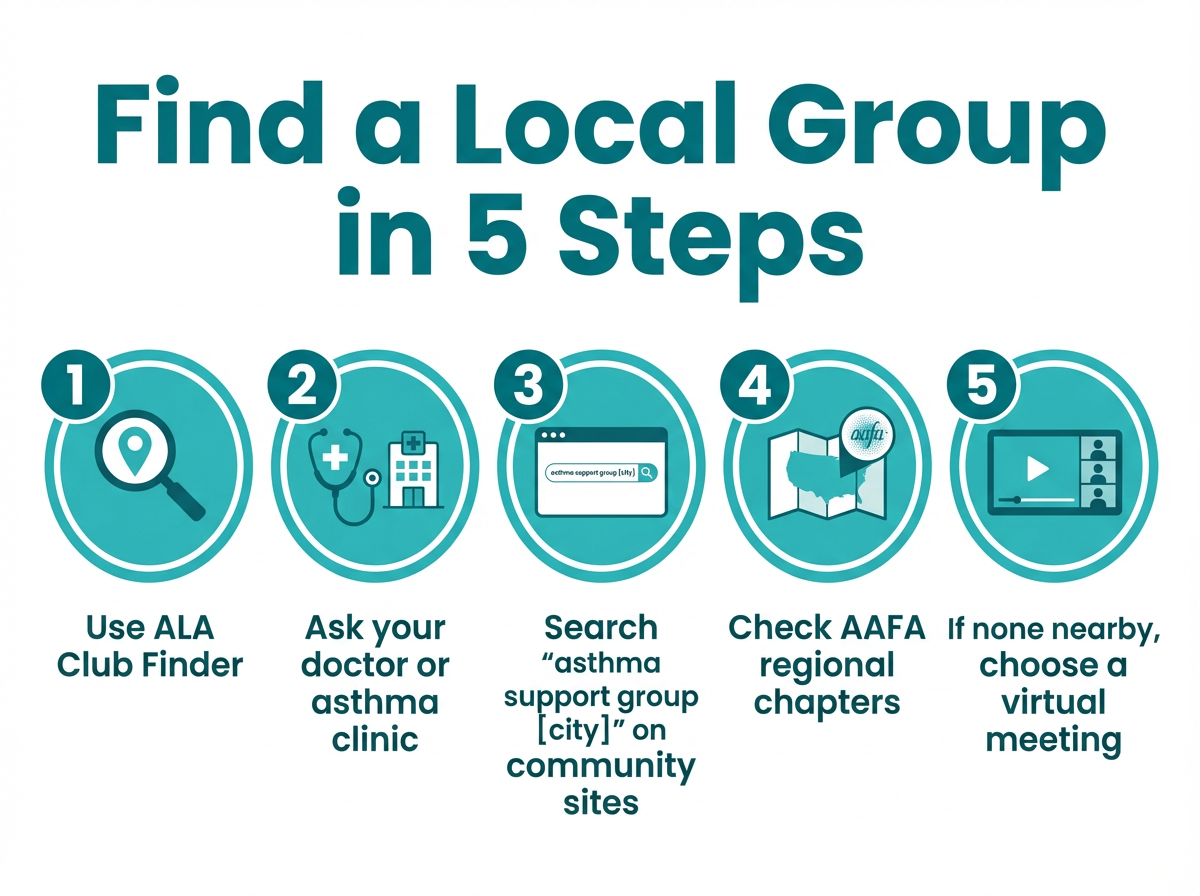
- Better Breathers Clubs (ALA): A nationwide program running for more than 50 years. Meetings typically include guest speakers, coping tips, and time to share. Use the ALA Club Finder to search by state or ZIP.
- Hospitals and clinics: Ask your pulmonologist, allergist, or asthma educator about classes or support sessions. Pediatric hospitals often host parent meetups.
- Community spaces: Libraries, community centers, and local nonprofits sometimes host lung health meetups that include people with asthma. You can also search your city name plus "asthma support group" on community or event sites to spot local meetups.
No group nearby? Join a virtual Better Breathers session or an online forum. A lot of people blend one in-person option with one online community for steady support.
Online Asthma Support Communities
Online groups bring round-the-clock support from people who get it.
These asthma support groups online give you flexibility to connect from home or on the go.
Good places to connect:
- Mayo Clinic Connect: A moderated forum where patients and moderators share practical help in a safe space.
- Inspire communities mentioned by ALA: Active threads about daily life, treatments, and coping.
- Facebook Asthma Support Groups: Big communities (one has about 40,000 members) with fast replies and peer tips.
- MyAsthmaTeam: A social network built for people with asthma, designed for day-to-day encouragement.
- Virtual meetups: Programs offer webinars or small-group video sessions so you can talk face to face from home.
These communities are meant to supplement your medical care, not replace your doctor’s advice.
Specialized Support for Parents, Caregivers, and Severe Asthma
Choose a group tailored to your role or condition to get advice that fits.
Support for Parents and Caregivers
- Allergy & Asthma Network offers parent-focused education and community resources. Pediatric clinics also run classes where parents meet and share.
- Some regions have parent networks. Asthma + Lung UK shows how parent-and-carer meetups work, and you can model something similar with other families at your school.
Support for Severe and Eosinophilic Asthma
- APFED Connect hosts small, free virtual support meetings for eosinophil-associated conditions.
- Eosinophilic asthma resources can point you to volunteer-led groups and real-life stories.
- The ALA’s Patient & Caregiver Network and related programs can help you meet peers and stay updated on new treatments.
- There are also dedicated severe asthma support groups online and through specialty programs, which can be especially helpful if you’re on advanced treatments such as biologics.
Pick the space that matches your challenges. It saves time and brings targeted, real-world advice.
How To Choose the Right Asthma Support Group for You
Sample a few options, then stay with the group that feels safe and useful.
Use these checkpoints:
- People in the room: Do members feel like your crowd (age, stage, parent vs patient, asthma type)?
- Leader style: Peer-led groups feel relatable; professionally led groups add structure and education.
- Format and time: Weekly or monthly? Open sharing, guest speakers, or both?
- Group size: Small circles vs large online groups — pick what energizes you.
- Ground rules: Look for a respectful, confidential space with clear guidelines.
Questions to ask an organizer:
- How long has the group been running?
- Is a healthcare professional involved?
- What does a typical meeting look like?
- Is there any cost? Can I bring a family member?
It’s normal to try more than one group. The right fit makes it easier to show up and build skills. If a group doesn’t feel safe or respectful, it’s okay to leave and try another.
Tips and Tools Shared in Asthma Support Communities
Peer tips turn everyday asthma care into simple, doable routines.
What you might learn from others:
- Routines that stick: Phone alarms, pill boxes, and family check-ins to keep controller meds on track.
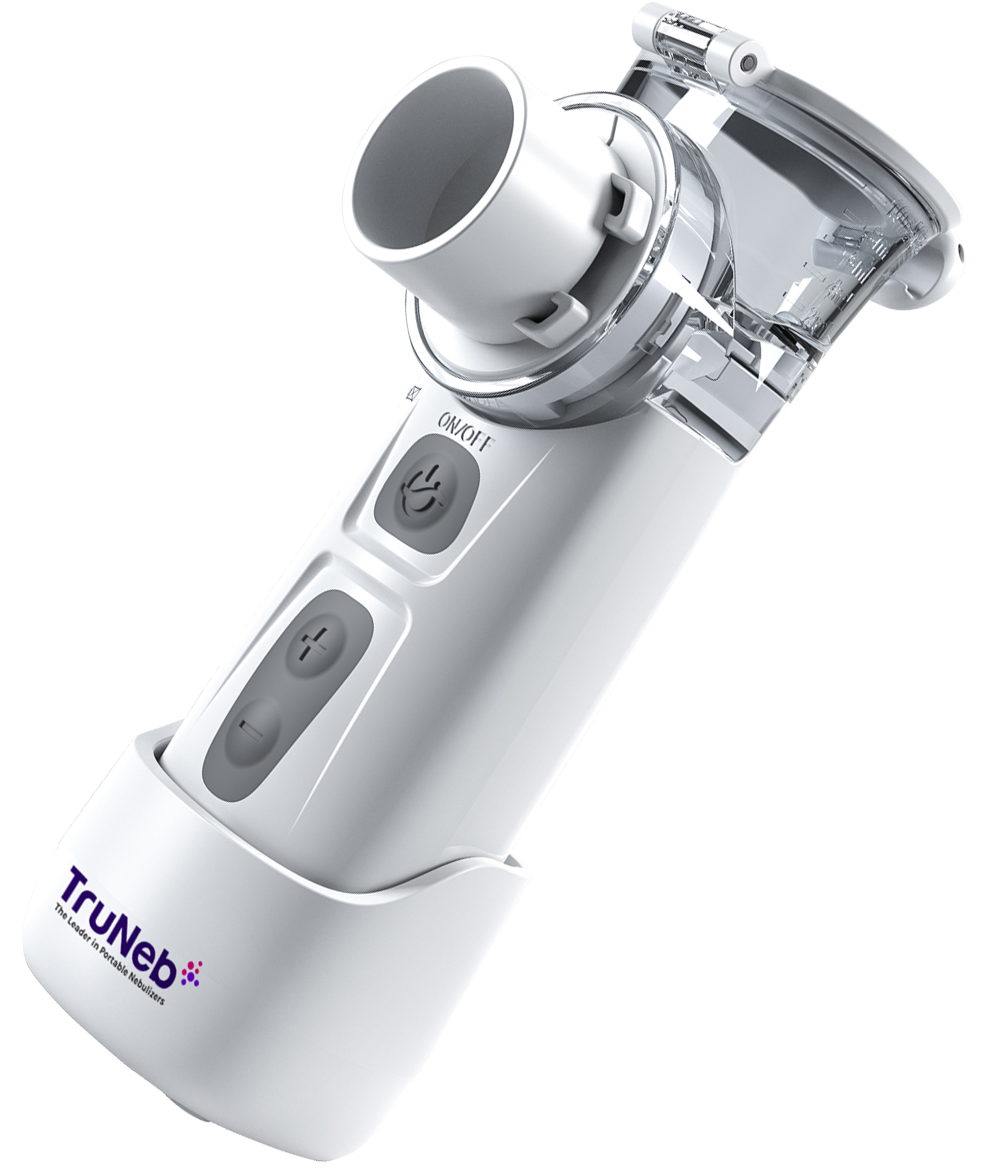
- Helpful gear: Plenty of people in support groups like a compact portable mesh nebulizer for on-the-go treatments. A device like the TruNeb™ portable mesh nebulizer is designed to be easy to carry and straightforward to use on busy days.
- Air awareness: Favorite air-quality apps and simple home steps (like HEPA filters) to cut night symptoms.
- Technique refreshers: Spacer how-tos, breathing exercises, and peak flow tracking that boosts control.
- Airway clearance ideas: Some discuss hypertonic saline nebulizer treatments for mucus on tough days if their doctor recommends it, since it isn’t right for everyone and can have side effects.
⚠️ Don’t confuse nebulizers with steam inhalers—steam devices aren’t made for breathing asthma medications.
Safety note: Talk to your doctor before trying a new medication, changing a routine, or using hypertonic saline.
The bigger win is motivation. When your group checks in, it nudges you to follow your plan and celebrate progress.
You don’t have to manage asthma alone. Try one support option and see how it feels, and keep working with your doctor on your asthma action plan.
Frequently Asked Questions
Asthma support groups connect you with people who understand your condition and share practical tips you can use right away.
Tap or click a question below to see the answer:
It’s a community of people affected by asthma who share experiences and tips, either in person or online. Patients, parents, and caregivers are welcome.
Start with the American Lung Association’s Better Breathers Club Finder, ask your doctor or asthma clinic, check AAFA chapters, and search your city plus "asthma support group".
Yes. Parent-focused programs, hospital classes, and online parent communities are common. Ask your pediatric clinic or look for family asthma education.
Most meetings include time to share, practice skills, and sometimes hear a guest speaker like a respiratory therapist.
A lot of people feel less stressed and more consistent with treatment. Group programs have been linked to better control for some.
Most are free. If a group has a small fee for special sessions, organizers will tell you up front.
Join a virtual meeting or an online forum. You can also ask your clinic about starting a small group.
Reminder: Support groups add to your care. They do not replace your doctor’s advice.
Disclaimer: This article is for informational purposes only and is not a substitute for professional medical advice, diagnosis, or treatment. Always talk with your doctor about your asthma symptoms, medications, and treatment options.