

On this page

Ipratropium Bromide and Albuterol Sulfate: What This Combo Does
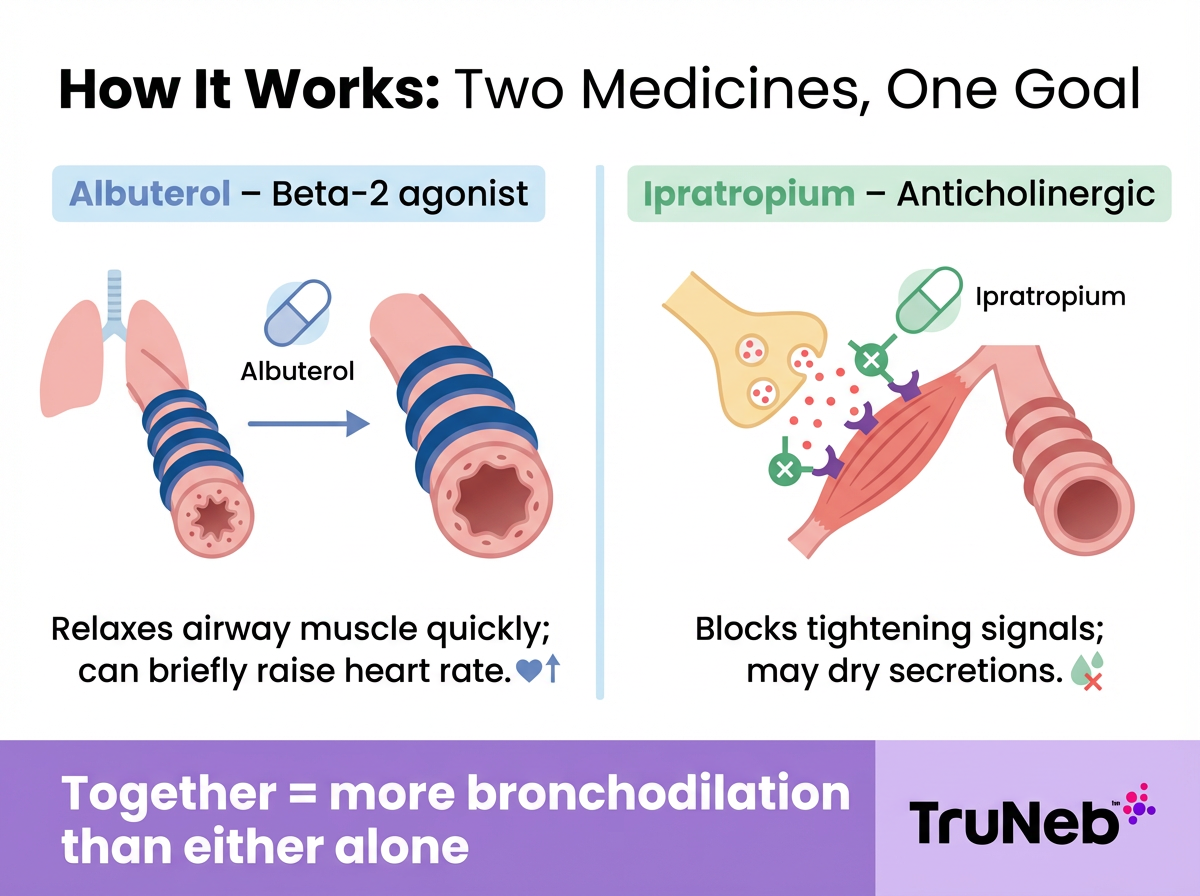
Ipratropium bromide and albuterol sulfate is a two-medicine bronchodilator used to open tight, swollen airways. A lot of people know the nebulizer form as DuoNeb. The DuoNeb brand was discontinued, but the same mix is widely available as a generic. Albuterol is a beta-2 agonist that relaxes airway muscle quickly. Ipratropium is an anticholinergic that blocks tightening signals in the airways. For context, ipratropium (also sold alone as Atrovent) and albuterol (sold alone as inhalers like Ventolin) are combined in the same nebulizer solution.
What it's used for:
- Quick relief of bronchospasm in COPD (chronic bronchitis and emphysema).
- In urgent care or the ER, it is sometimes used for severe asthma flare-ups, but it's not usually prescribed as an everyday asthma controller at home.
Forms:
- 3 mL unit-dose vials for a nebulizer at home.
- An inhaler version (Combivent Respimat) with the same medicines.
Key takeaway: Ipratropium bromide and albuterol sulfate combine two proven bronchodilators in one treatment for fast airway opening during COPD and asthma flares.
Side Effects of Ipratropium Bromide and Albuterol Sulfate: What's Common
Most people handle this medication well. Common side effects are usually mild and short-lived.
Common effects you might notice:
- Shakiness or tremor: starts within minutes and fades as your body settles. Calm breathing and avoiding caffeine around treatment time can help.
- Fast heartbeat (palpitations): a brief, racing feeling that usually passes. Sit and rest. If it's very rapid or irregular, contact your doctor.
- Cough or throat irritation: the mist can tickle the airways. Sip water after your treatment.
- Dry mouth or hoarseness: related to ipratropium. Hydrate or try sugar-free gum.
- Headache or dizziness: sit during treatment and stand up slowly.
- Nervousness or jittery feeling: this typically settles within an hour.
Timing: these effects usually start within minutes of inhalation and fade within 10-60 minutes. Most lessen over time as your body adjusts.
Key takeaway: Most side effects are mild (shaky hands, dry mouth, cough) and usually fade within an hour.
Less Common Side Effects to Keep in Mind
A few other effects can happen but are less common:
- Muscle cramps or aches.
- Upset stomach or diarrhea.
- Minor chest discomfort.
- Difficulty urinating (urinary retention), especially in men with enlarged prostate.
- Blurred vision or eye discomfort (if mist gets in the eyes).
- Stuffy nose or sinus symptoms.
- Temporary rise in blood pressure.
- Trouble sleeping or feeling restless.
What to do: if any of these persist or bother you, let your doctor know. Some overlap with COPD symptoms, so keeping notes helps your doctor figure out what’s from the medicine and what’s from your COPD.
Key takeaway: Less common effects are uncommon but worth tracking and reporting if they stick around.
Serious Side Effects: When to Seek Medical Help
Serious reactions are rare, but you should know them:
- Chest pain or pressure.
- Rapid, irregular heartbeat with dizziness or fainting.
- Severe wheezing or breathing that gets worse right after a dose (paradoxical bronchospasm).
- Swelling of the face, lips, tongue, or throat; hives or widespread rash (allergic reaction).
- Eye pain, blurred vision, or seeing halos around lights (possible acute glaucoma if medicine reaches eyes).
- Inability to urinate.
If any of these happen, stop the treatment and call 911 (or your local emergency number) or go to the nearest emergency room right away. Use your rescue plan if you have one. Afterward, inform your doctor so they can adjust your care.
Medical disclaimer: This guide is educational and not a substitute for care. Talk to your doctor before trying a new medication.
Key takeaway: Chest pain, worsening breathing right after a dose, swelling, or eye pain are emergencies - get help now.
Who Should Avoid or Use Extra Caution
Tell your doctor before using this medicine if you have:
- Allergies to albuterol, ipratropium, or atropine-like medicines (older Combivent inhalers contained soy lecithin—check your exact product; current nebulizer solutions typically don’t, but confirm with the package insert or your pharmacist).
- Heart disease, prior heart attack, heart failure, or abnormal rhythms.
- High blood pressure.
- Overactive thyroid (hyperthyroidism).
- Diabetes.
- Seizure disorder.
- Glaucoma (especially narrow-angle) or risk of eye exposure to the mist.
- Enlarged prostate or urinary retention problems.
- Pregnancy or breastfeeding (see next section).
These don’t always rule the medicine out, but they mean you and your doctor should weigh risks, benefits, and monitoring.
Key takeaway: Heart disease, glaucoma, prostate issues, or an atropine-related allergy call for extra caution and a doctor’s guidance.
Use in Pregnancy, Breastfeeding, and Children
Pregnancy: use only if clearly needed. There’s limited human data. Inhaled ipratropium has minimal body absorption; albuterol has more data. Your doctor will weigh benefits vs risk. Do not stop breathing treatments during pregnancy without medical advice.
Breastfeeding: it’s not well known how much passes into milk. If the benefit to you outweighs any potential risk to the infant, your doctor might still recommend it. Watch for unusual infant symptoms and report concerns.
Children: this combo is sometimes used for pediatric flare-ups under close medical guidance. Use only the dose your child’s doctor prescribed and observe the child during and after treatments. Seek help right away for any serious symptoms.
Key takeaway: Use during pregnancy or breastfeeding only if the benefits clearly outweigh the risks—decide with your doctor.
Safe Usage and Dosing: Get Relief With Less Risk
Your prescription label lists how much ipratropium/albuterol to use and how frequently to take it. Never change your dose or frequency without checking with your doctor.
Use tips:
- Don't mix other drugs in the nebulizer cup unless your doctor tells you to. Ask which inhaled medicine to take first if you use more than one.
- Sit upright and breathe slowly and deeply during treatment.
- Use each vial once; the liquid should be clear.
- Rinse your mouth after and wash your face if you used a mask to avoid eye exposure.
- Clean and disinfect nebulizer parts as directed to avoid germs and get consistent dosing.
- Store vials as directed (usually at room temperature, protected from light). Don't freeze.
- ⚠️ Don't use a "steam inhaler" device for this medication - those are for warm mist only and aren't designed to deliver prescription nebulizer medicines.
Missed dose: don't double up. Take the next dose at the usual time.
Safety note: Talk to your doctor before trying a new medication or changing your dose.
Key takeaway: Using ipratropium/albuterol exactly as prescribed, with good nebulizer technique, cleaning, and storage, helps you get relief with less risk.
Drug Interactions to Know Before You Start
Share all your medicines and supplements with your doctor or pharmacist. Key interactions:
- Beta blockers (e.g., propranolol, metoprolol): can blunt albuterol’s effect and can worsen bronchospasm.
- MAOIs or tricyclic antidepressants (recent use within 2 weeks): can intensify side effects like blood pressure spikes.
- Other stimulants or duplicate bronchodilators (extra albuterol, epinephrine, strong decongestants): raise the risk of tremor and heart strain.
- Some diuretics (water pills): together with high albuterol doses can lower potassium.
- Certain heart medicines like digoxin: high doses of albuterol can affect digoxin levels, so your doctor might monitor your blood levels more closely.
When in doubt, check first. A quick pharmacist review can prevent problems.
Key takeaway: Beta blockers, MAOIs, strong decongestants, some diuretics, and digoxin can raise risks—clear all meds with your doctor or pharmacist.
Efficient Nebulizer Delivery: Why a Portable Mesh Nebulizer Helps
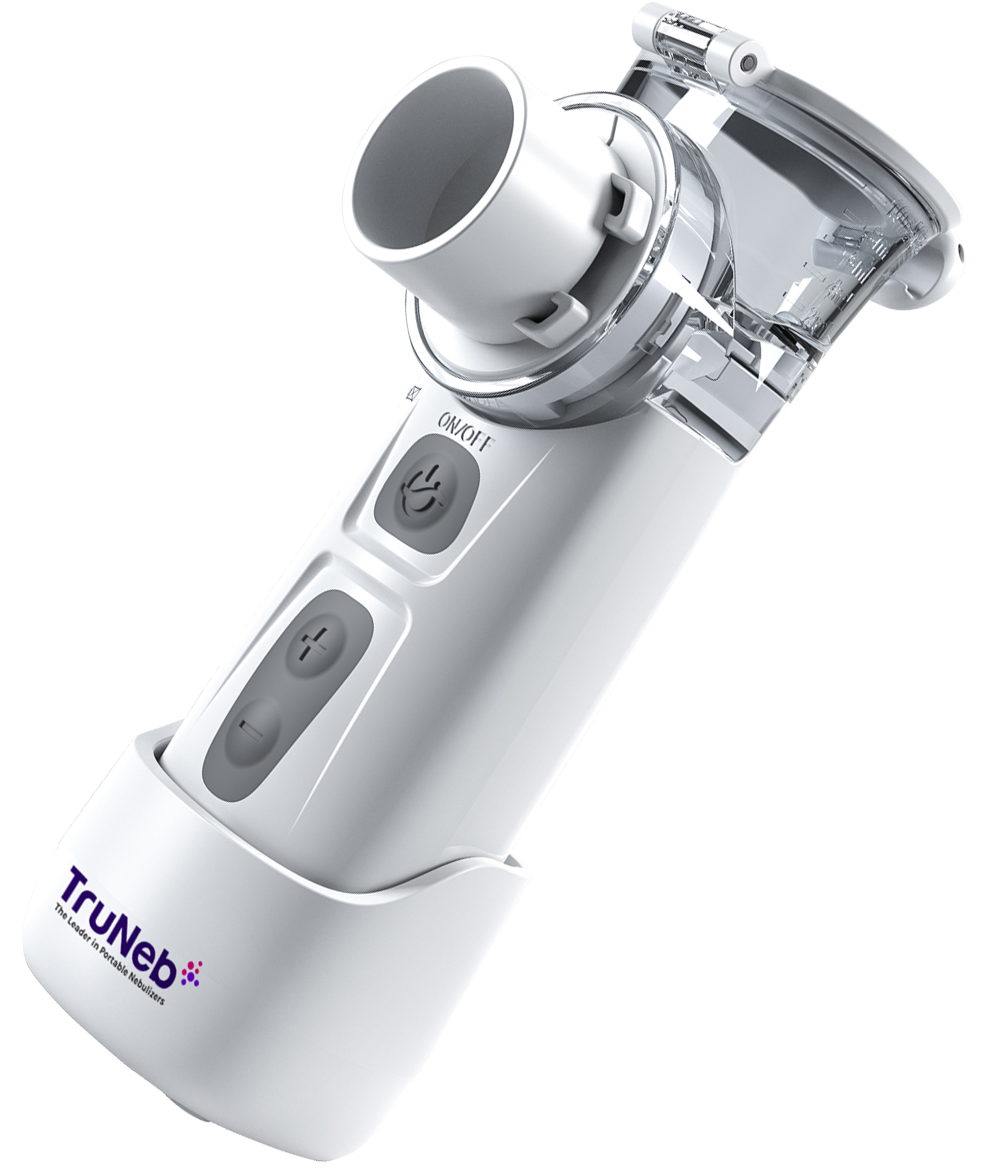
The goal is simple: get medicine deep into your lungs, comfortably and consistently. Modern portable mesh nebulizers make that easier.
A portable mesh nebulizer fits in your pocket. It doesn't change the medication's effects - it just makes dosing more convenient, which can help you stick to your plan. Always use and clean your device exactly as directed.
Key comparison: Portable mesh nebulizers are quieter and more portable than jet models and can reduce treatment time and residual volume. The device doesn't change how the medication works.
| Device | Noise | Portability | Typical time | Residual volume | Medication compatibility | Cleaning |
|---|---|---|---|---|---|---|
| Jet nebulizer (compressor) | Moderate to loud | Plug-in, bulkier | 10-15 minutes | Higher | Most nebulized medicines | Disassemble; wash daily, disinfect per manual |
| Portable mesh nebulizer | Very quiet | Handheld, battery powered | 5-10 minutes | Low | Most nebulized medicines; avoid suspensions not approved for mesh | Rinse after each use; disinfect as directed |
| MDI (Combivent Respimat) | Quiet | Pocket-size | Seconds per dose | N/A | Only the labeled inhaler solution | Wipe mouthpiece weekly |
Note: Times and performance vary by model. Follow your device manual.
Key takeaway: A portable mesh nebulizer improves convenience and consistency without changing how the medicine works.
Mucus Clearance: Where Hypertonic Saline Fits
If mucus buildup is a big part of your symptoms, your care team might recommend nebulized hypertonic saline (3% or 7%) as part of your plan. The salt draws water into the airways, thins mucus, and can make coughing it out easier. It's common in cystic fibrosis and has been studied in COPD.
Important:
- Hypertonic saline can cause coughing or irritation in some people. Only use it if your doctor adds it to your plan.
- Do not mix it with other drugs in the cup unless told to do so.
- TruNeb also sells medical-grade 3% and 7% saline ampules for inhalation that you can use with a portable nebulizer if your doctor includes them in your plan.
Safety note: Talk to your doctor before trying hypertonic saline or changing your regimen.
Key takeaway: Hypertonic saline can thin mucus and aid clearance, but use it only with your doctor's guidance.
FAQs: Quick Answers About Ipratropium/Albuterol
Tap or click a question below to see the answer:
Yes. The albuterol part can raise your heart rate briefly. It usually settles quickly. If it feels very fast or irregular and doesn’t slow down, contact your doctor.
Albuterol can stimulate skeletal muscle, which causes tremor or jitters. This typically fades in 10–20 minutes. Avoid caffeine around treatments and stick to your prescribed dose.
They usually start within minutes and fade within 10–60 minutes as your body adjusts.
Only if your doctor recommends it. Pregnant patients commonly use inhaled bronchodilators when benefits outweigh risks. Don’t stop treatment without medical advice.
For mild ones (dry mouth, slight tremor), hydrate, rest, and note what you felt. For serious symptoms—chest pain, severe shortness of breath after dosing, swelling, eye pain—seek medical help right away.
They contain the same medicines but in different devices. DuoNeb is the nebulizer solution; Combivent Respimat is an inhaler.
Key takeaway: These FAQs give quick answers about heart rate, shakiness, pregnancy, duration, and what to do if you notice side effects from ipratropium/albuterol.
Conclusion: Stay Informed and Breathe Easier
Most side effects of ipratropium bromide and albuterol sulfate are mild and short-lived, but it’s important to recognize the red flags that need urgent care. Know the red flags, use your device correctly, and follow your care plan. If something feels wrong, get help fast. With the right guidance and the right equipment, you can breathe easier.
Key takeaway: Understanding ipratropium/albuterol’s side effects and acting quickly if serious symptoms appear helps you use this treatment as safely as possible.
Disclaimer: This article is for informational purposes only and is not a substitute for professional medical advice, diagnosis, or treatment. Always talk with your doctor about your health, medications, and treatment options.