

On this page
What Is Pursed Lip Breathing and Why Is It Important?
Pursed lip breathing is a simple exercise. You breathe in through your nose, then breathe out slowly through lips that are gently puckered, like you’re whistling. This pursed lip breathing technique slows your breathing, helps keep small airways open longer, and makes it easier to move out stale air so fresh air can get in. It’s commonly taught in pulmonary rehab and used by people with COPD, asthma, and other chronic lung diseases like pulmonary fibrosis or emphysema to ease shortness of breath.
One-liner: Inhale through your nose and exhale slowly through pursed lips to quickly ease shortness of breath.
Benefits of Pursed Lip Breathing for Your Lungs
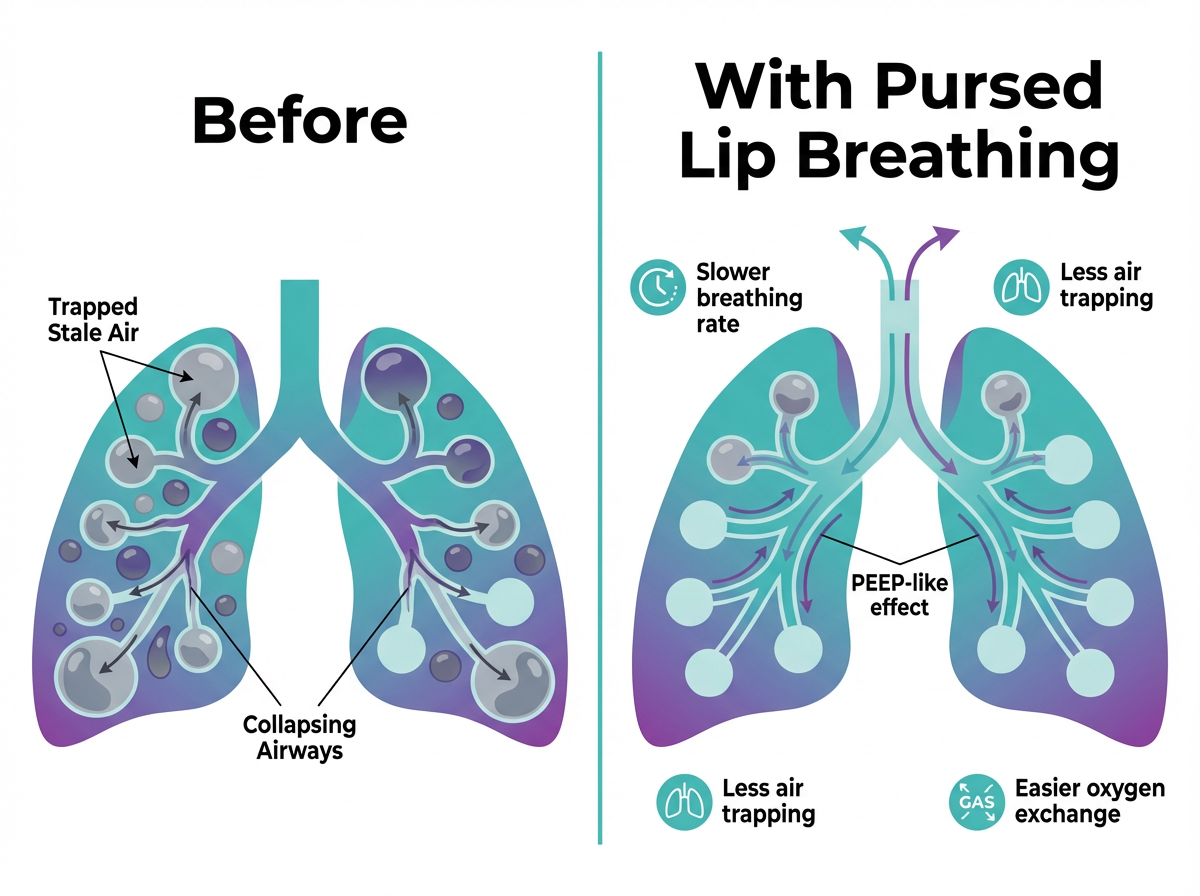
- Keeps airways open longer: The gentle back-pressure during a slow exhale acts like mild positive end-expiratory pressure (PEEP), a gentle "air brake" that helps keep small airways from collapsing.
- Reduces air trapping and hyperinflation: Getting more stale air out leaves more room for fresh air on the next breath.
- Can improve oxygen exchange and reduce carbon dioxide buildup: With less stale air in the way, oxygen can reach more alveoli (the tiny air sacs in your lungs) while carbon dioxide clears.
- Lowers the work of breathing: Fewer, slower breaths conserve energy, so activity can feel easier.
- Calms your body: A longer exhale can help break the anxiety–breathlessness cycle.
One-liner: A longer, gentle exhale helps keep airways open and clears stale air so the next breath works better.
Step-by-Step: How to Do Pursed Lip Breathing Properly
Here’s one common way this technique is taught:
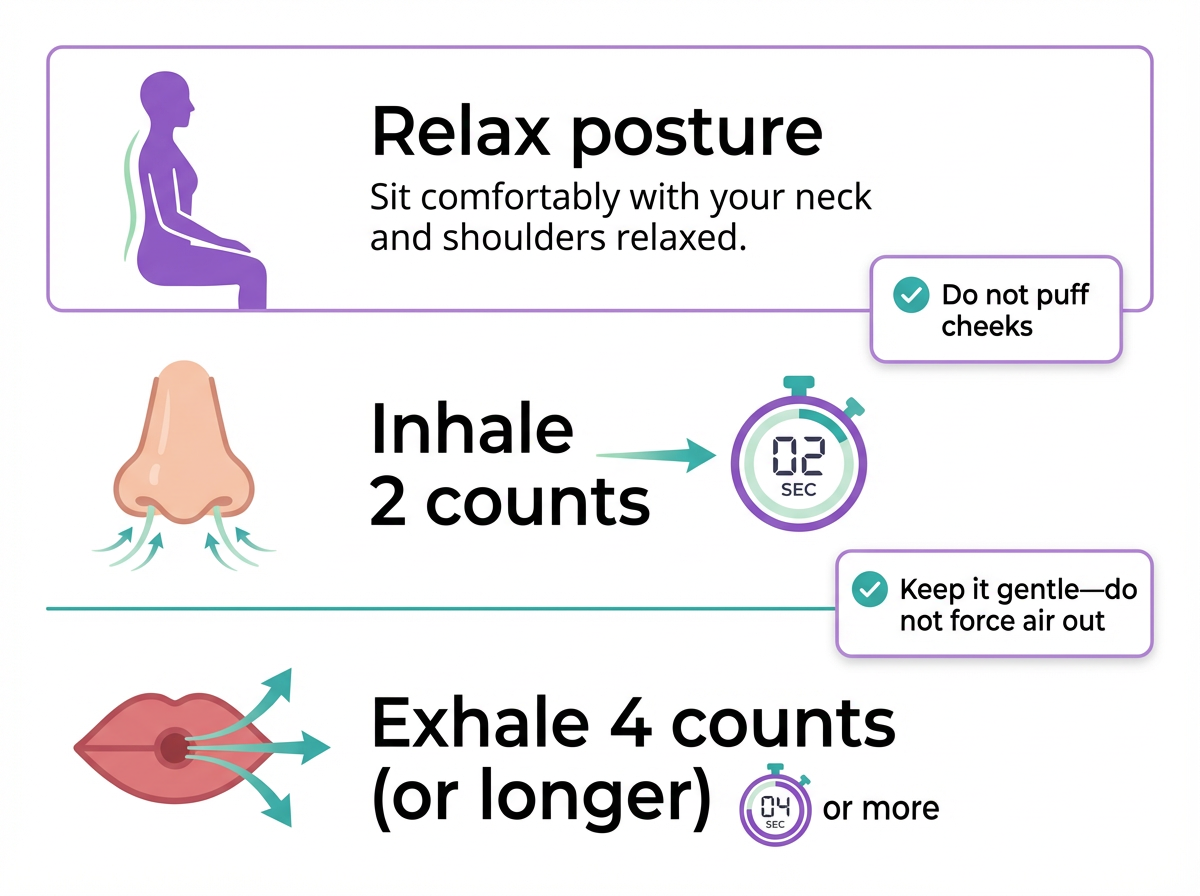
- Get comfortable. Sit up or lie down and relax your neck and shoulder muscles.
- Inhale through your nose for about 2 seconds. Think "smell the roses" to keep it gentle.
- Purse your lips as if you are going to whistle. Exhale slowly and steadily through your lips for about 4 seconds or longer—about twice as long as you inhaled. Think "blow out the candles."
- Repeat until your breathing slows and feels easier.
Tips:
- Don’t force the air out or puff your cheeks. Keep your face and throat relaxed.
- If a 4-second exhale is hard at first, just make your exhale longer than your inhale and build up with practice.
One-liner: In for 2 through your nose, out for 4 through gently pursed lips—repeat until your breathing calms.
Tips for Success With the Technique
- Relax first. Drop your shoulders and unclench your jaw.
- You can practice for 5–10 minutes a day so it feels natural when you need it.
- You can use it before and during activities that wind you, like climbing stairs or lifting. Try exhaling through pursed lips during the effort.
- Keep it gentle. Don’t gulp air or blow hard.
- If you feel lightheaded, pause and return to normal breathing, then start again more slowly.
One-liner: Practice a little every day so pursed lip breathing becomes automatic when you need it.
When and Why to Use Pursed Lip Breathing in Daily Life
- During activity: You can use it while walking, hiking, or climbing stairs. Exhale through pursed lips on the effort to help prevent sudden breathlessness.
- To recover faster: If you get winded, pause and do a few slow cycles until your breathing eases.
- When you’re stressed, anxious, or panicked: A longer exhale can slow fast breathing and help you feel calmer.
- For relaxation: Try a few rounds before bed or while resting.
One-liner: Exhale on exertion and use pursed lip breathing as soon as you start to feel winded to regain control quickly.
Pursed Lip Breathing vs Diaphragmatic Breathing
These two techniques can work well together: inhale using your diaphragm, then exhale through pursed lips. Diaphragmatic breathing, sometimes called belly breathing, focuses on a deep, relaxed inhale.
Quick comparison: pursed lip breathing vs diaphragmatic (belly) breathing
| Aspect | Pursed lip breathing | Diaphragmatic (belly) breathing |
|---|---|---|
| Focus | Prolonging the exhale | Deepening the inhale using the diaphragm |
| Main benefit | Keeps airways open, releases trapped air | Strengthens the diaphragm, brings air deep into lungs |
| Use when | Feeling short of breath or during exertion | At rest for practice, to retrain breathing pattern |
In short, let your belly rise on the inhale, then breathe out slowly through pursed lips. The combo can reduce air trapping and make each breath feel easier. Practice them separately at first if it helps, then put them together.
One-liner: Use belly breathing for a deep inhale and pursed lip breathing for a long, slow exhale—they complement each other.
Involuntary Pursed Lip Breathing: What It Can Mean
Some people with chronic lung disease, such as COPD or pulmonary fibrosis, start to purse their lips automatically when they breathe. It’s the body’s way to keep airways open and move air out. The technique isn’t harmful, but if you notice this happening frequently, even at rest, it can mean your lungs are under extra strain.
Tell your doctor. You might need adjustments to your treatment or help from a respiratory therapist.
One-liner: If pursed lip breathing happens on its own, it’s a sign to check in with your doctor about your breathing.
When to Seek Medical Advice
Call your doctor if pursed lip breathing doesn’t help your shortness of breath or your symptoms keep getting worse. ⚠️ Seek emergency care right away—call 911 or your local emergency number—if you have severe trouble breathing at rest, chest pain, bluish lips or fingertips, confusion, or fainting.
If you need to use this technique very frequently just to get through everyday tasks, ask your doctor about updating your care plan, inhalers, or pulmonary rehab. Breathing exercises support your care; they don’t replace it.
One-liner: Use pursed lip breathing as a helper, but get medical care if symptoms are severe, worsening, or not improving.
Managing Breathlessness at Home Beyond Exercises
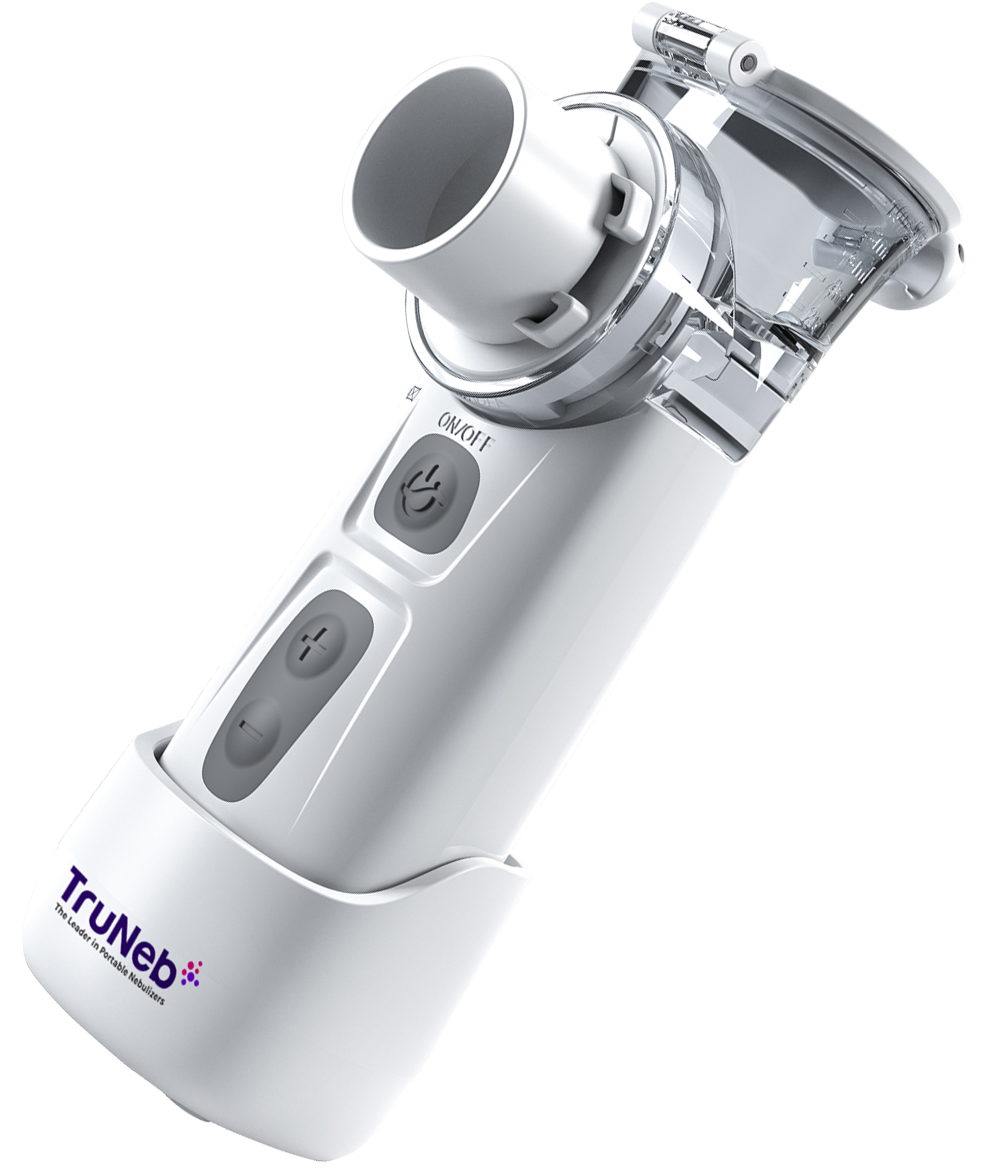
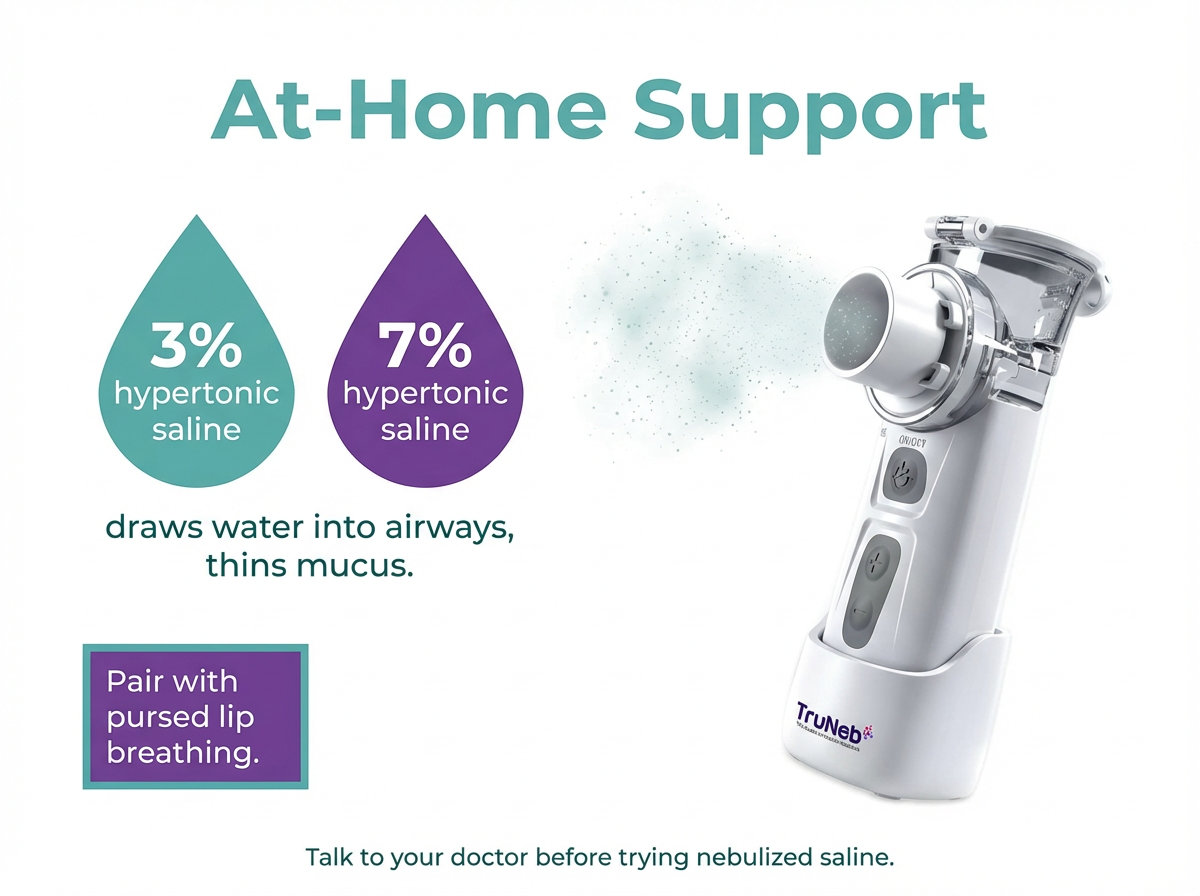
Breathing exercises are a helpful start. A portable mesh nebulizer like TruNeb™ can deliver hypertonic saline (3% or 7%) as a fine mist to help thin and loosen thick mucus. That can make coughing it out easier and can pair well with pursed lip breathing. Hypertonic saline is usually prescribed for certain lung conditions; your doctor can tell you if it’s right for you.
Other simple aids include staying well hydrated and using a small fan for relief when you feel winded. These steps support, not replace, your prescribed treatments.
⚠️ Safety note: Talk to your doctor before trying a new medication or nebulized saline. ⚠️ If you see devices labeled "steam inhaler," don’t use them for breathing medications—steam inhalers are not the same as nebulizers.
One-liner: A portable nebulizer and hypertonic saline can complement pursed lip breathing for mucus-heavy days—ask your doctor first.
Frequently Asked Questions
Tap or click a question below to see the answer:
You can practice daily. A lot of people do 5–10 minutes once or twice a day so it becomes a habit. You can use it any time you feel winded.
In general, you can use this technique with your nasal cannula in place. It helps you breathe more efficiently. Keep your oxygen settings as prescribed.
Yes. A lot of people do their inhaler or nebulizer treatment and then use pursed lip breathing to help keep airways open and clear mucus. Ask your doctor for a plan that fits you.
It can help you stay calm and move air out while you use your rescue inhaler, but it doesn’t replace fast-acting medicine. Follow your asthma action plan and seek care if symptoms are severe.
Aim for an exhale that is about twice as long as your inhale. For example, in for 2 counts, out for 4 counts.
One-liner: These FAQs give quick answers to common questions about when and how to use pursed lip breathing safely.
Disclaimer: This article is for informational purposes only and is not a substitute for professional medical advice, diagnosis, or treatment. Always talk with your doctor about your symptoms, questions, and treatment options.