

On this page
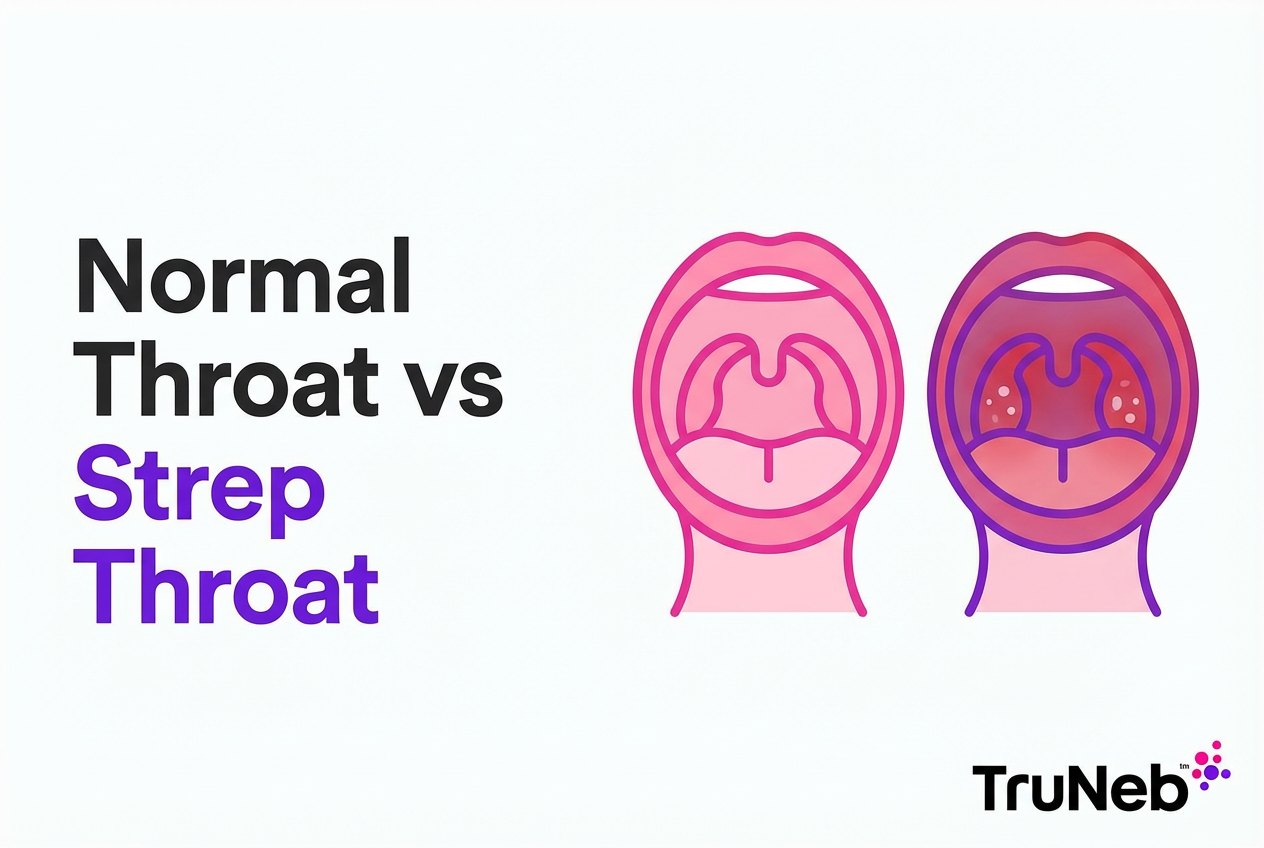
You’re looking at your throat and trying to decide what it means. This guide compares a normal throat, a viral sore throat, and strep throat so you can spot common patterns. Symptoms and appearance can guide you, but only a strep test can confirm Group A strep—use these normal throat vs strep throat tips to know when to get checked.
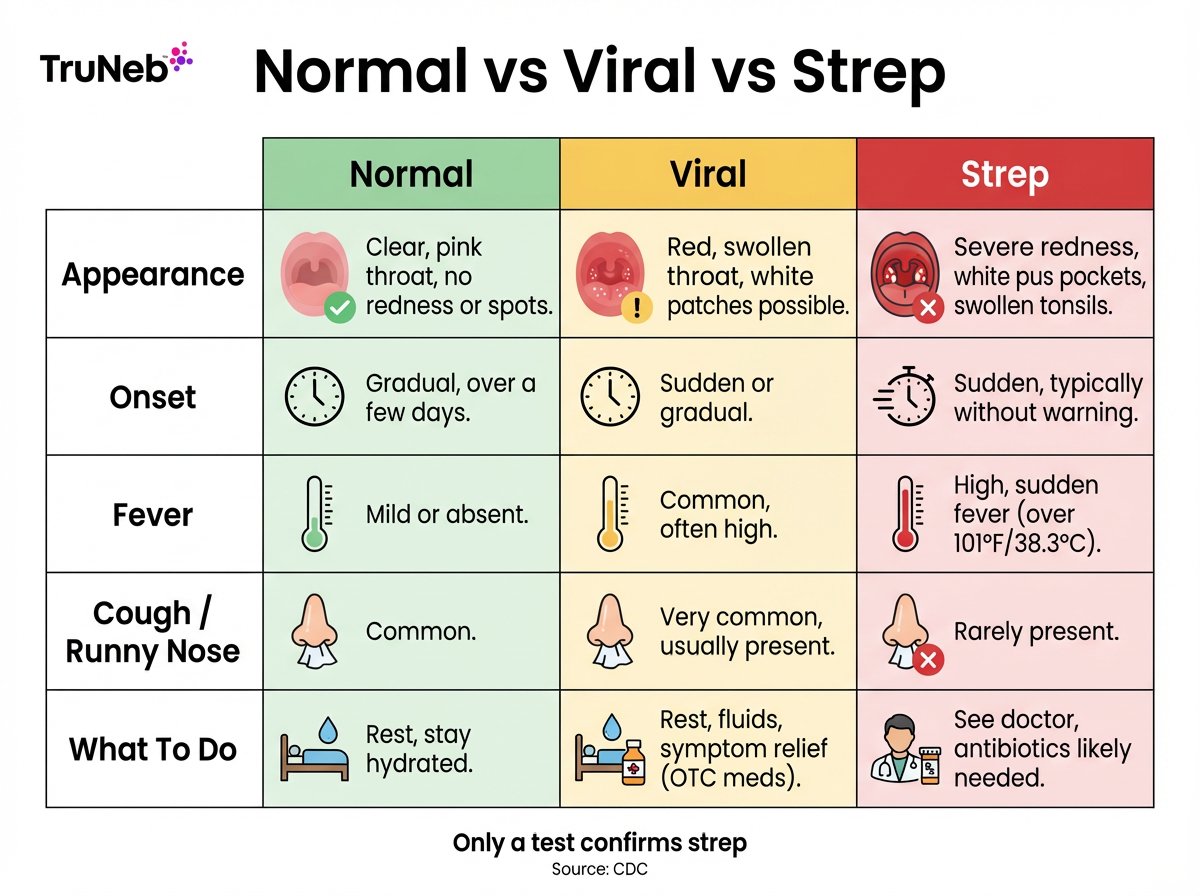
At a Glance: Normal Throat vs Sore Throat vs Strep Throat
| Feature | Normal Throat | Viral Sore Throat | Strep Throat |
|---|---|---|---|
| Appearance | Pink, smooth, moist | Red, mildly puffy | Bright red, swollen; white pus patches common |
| Onset | You feel fine | Builds over 1–2 days | Sudden, within hours |
| Fever | None | Low or none | Usually around 101°F or higher |
| Cough/Runny Nose | None | Commonly present | Usually absent |
| Neck Lymph Nodes | Normal | Can be slightly tender | Frequently swollen and tender |
| How Contagious | Not sick | Contagious while symptomatic | Very contagious until you’ve been on antibiotics for about 24 hours |
| What To Do | No action | Home care | See a doctor for a strep test |
Patterns help, but only a throat swab test can confirm strep throat.
One-line takeaway: Cough and congestion usually point to a virus, while sudden high fever without cough points more toward strep.
Normal Throat vs Inflamed Throat
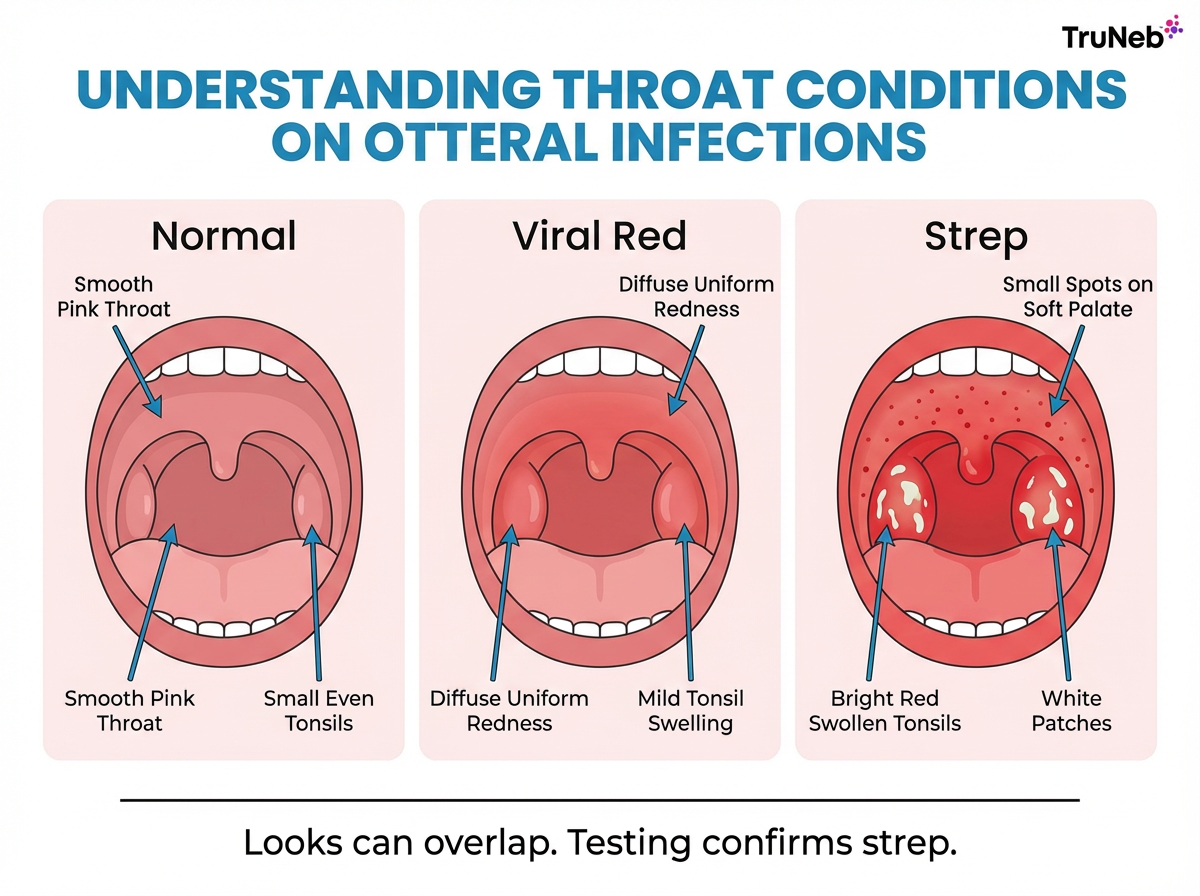
A healthy throat looks pink or peach and moist. The surface looks smooth. If you have tonsils, they are small and even. You should not see white patches.
An inflamed throat looks redder and sore. Your tonsils can look puffy. You may notice thin mucus (postnasal drip) on the back wall. That’s common with the common cold (a viral infection).
White patches or thick whitish dots are not normal. They can appear with strep throat. Some viruses, like mononucleosis (mono), can also cause a similar look. Both viruses and strep can cause tonsillitis (inflamed tonsils) or pharyngitis (throat inflammation); the key difference is whether Group A strep bacteria are present. That’s why testing matters.
If you do not have tonsils, a normal throat shows a smooth back wall. With infection, that wall can turn bright red and tender.
One-line takeaway: Pink and clear is normal; bright red with white patches suggests infection and needs a test.
Strep Throat vs Viral Sore Throat (Cold and Flu) Symptoms
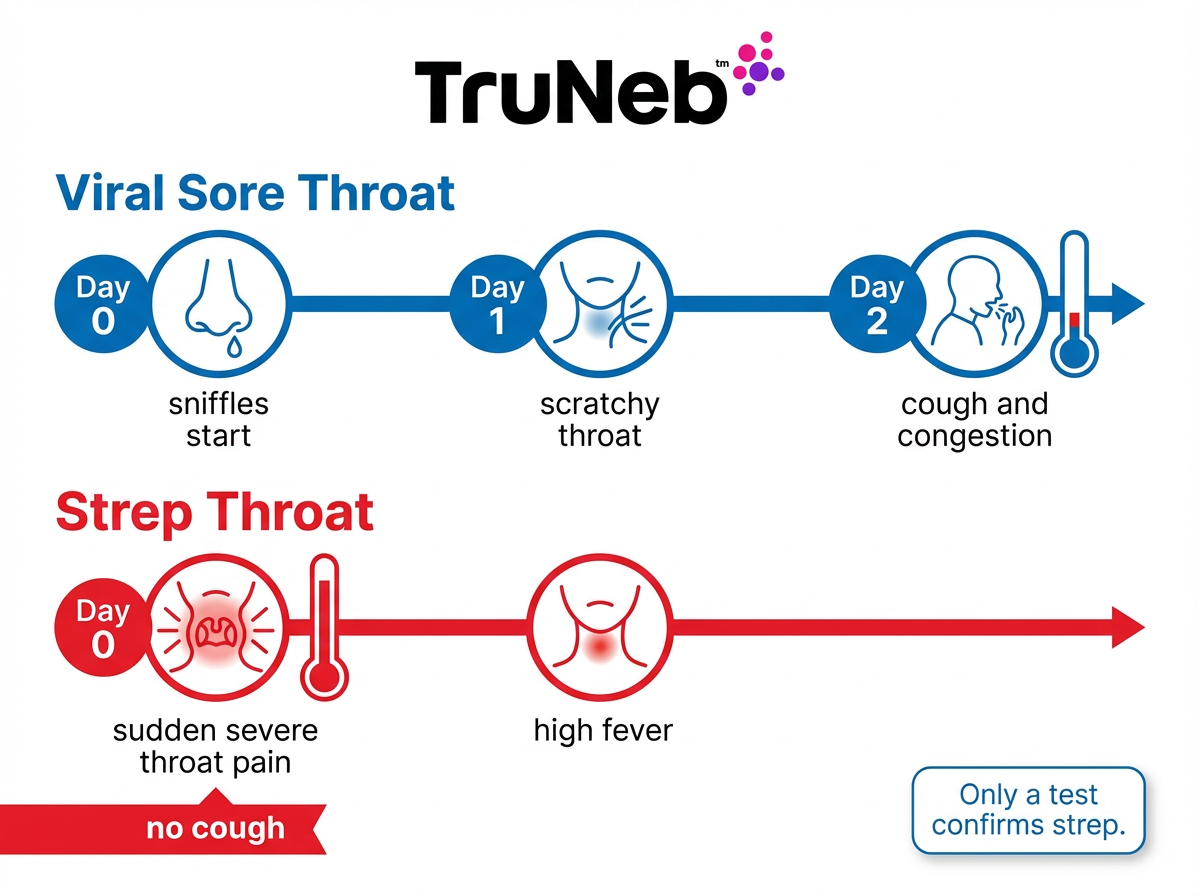
Strep throat and viral sore throats share pain, but the pattern is different. Strep tends to hit fast with severe throat pain and a higher fever. The common cold (a viral infection) builds slowly and brings cough, sneezing, and a stuffy nose. The flu (influenza) usually adds deep body aches and strong fatigue.
When you notice no cough, no runny nose, sudden strong throat pain, fever, and tender neck glands, strep is more likely. When cough and congestion lead the way, a virus is more likely. So when you’re comparing strep throat vs sore throat from a cold, focus on how fast symptoms hit, how high the fever is, and whether you’re coughing.
Only a small share of sore throats are strep. In adults it’s about 5–15%, and in children it’s about 20–30%.
Children vs Adults
Strep hits school‑age kids the most and is rare under age 3. Children may also have headache, stomachache, or vomiting with strep. Adults get strep less frequently; many adult sore throats are viral.
One-line takeaway: No cough plus sudden high fever and severe throat pain points to strep; cough and congestion point to a virus.
Why a Strep Test Is Needed (Diagnosing Strep vs Sore Throat)
Strep throat is a throat infection caused by Group A Streptococcus (Group A strep) bacteria. Most other sore throats are viral infections.
Symptoms and photos guide you, but they are not proof. A throat swab confirms strep. Not every sore throat needs a test; doctors usually test when certain features are present (fever, lack of cough, swollen neck nodes, or pus on the tonsils).
Rapid antigen tests give results in minutes. If a rapid test is negative but strep still seems likely, a throat culture or PCR (a very sensitive lab test) can double-check. Doctors sometimes use a simple score (called the Centor criteria) that gives points for fever, lack of cough, swollen neck nodes, and pus on the tonsils to decide who should get a strep test.
Some children carry Group A strep in their throat without symptoms, so doctors usually only test when there are clear signs of illness.
Key point: The only way to know it’s strep is to do a strep test.
One-line takeaway: You can’t diagnose strep by looks alone; a throat swab confirms it.
When to See a Doctor
Most mild sore throats fade within a few days. Seek care promptly if you notice any of these warning signs:
- Trouble breathing, noisy breathing, or drooling.
- You can’t swallow liquids or open your mouth very well.
- Fever above 101°F that lasts more than two days or keeps returning.
- A red, sandpaper-like rash with the sore throat. This can be a sign of scarlet fever, which comes from the same strep bacteria.
- Severe neck swelling or very tender lymph nodes.
- Signs of dehydration (very little urine, very dry mouth).
- No improvement after five to seven days, or symptoms that get worse.
⚠️ Call 911 or go to the nearest emergency room right away if you or your child has trouble breathing, is drooling, or can’t swallow liquids.
For high fever, severe pain, or no improvement, urgent care or your doctor can test and treat you.
Key point: Breathing trouble or drooling is an emergency.
One-line takeaway: Red flags like trouble breathing, drooling, or lasting high fever mean you need care now.
Treatment and Home Remedies for Sore Throats
If a test shows strep throat, your doctor can prescribe antibiotics such as penicillin or amoxicillin, usually for about 10 days. Most people feel better in one to two days after starting treatment. Your doctor will tell you how long to take the antibiotic; it’s important to finish the full course.
For comfort with viral or mild sore throats, people often:
- Drink plenty of fluids
- Gargle warm salt water (1/2 to 1 teaspoon of salt in 8 ounces of warm water) if you can gargle safely
- Sip warm drinks like tea with honey (no honey for children under 1)
- Try cold treats like ice chips or ice pops
- Use over-the-counter pain relievers such as acetaminophen or ibuprofen to ease pain and fever, following the label directions or a doctor’s advice
- Add moisture with a cool‑mist humidifier or warm shower steam
- Rest and avoid smoke
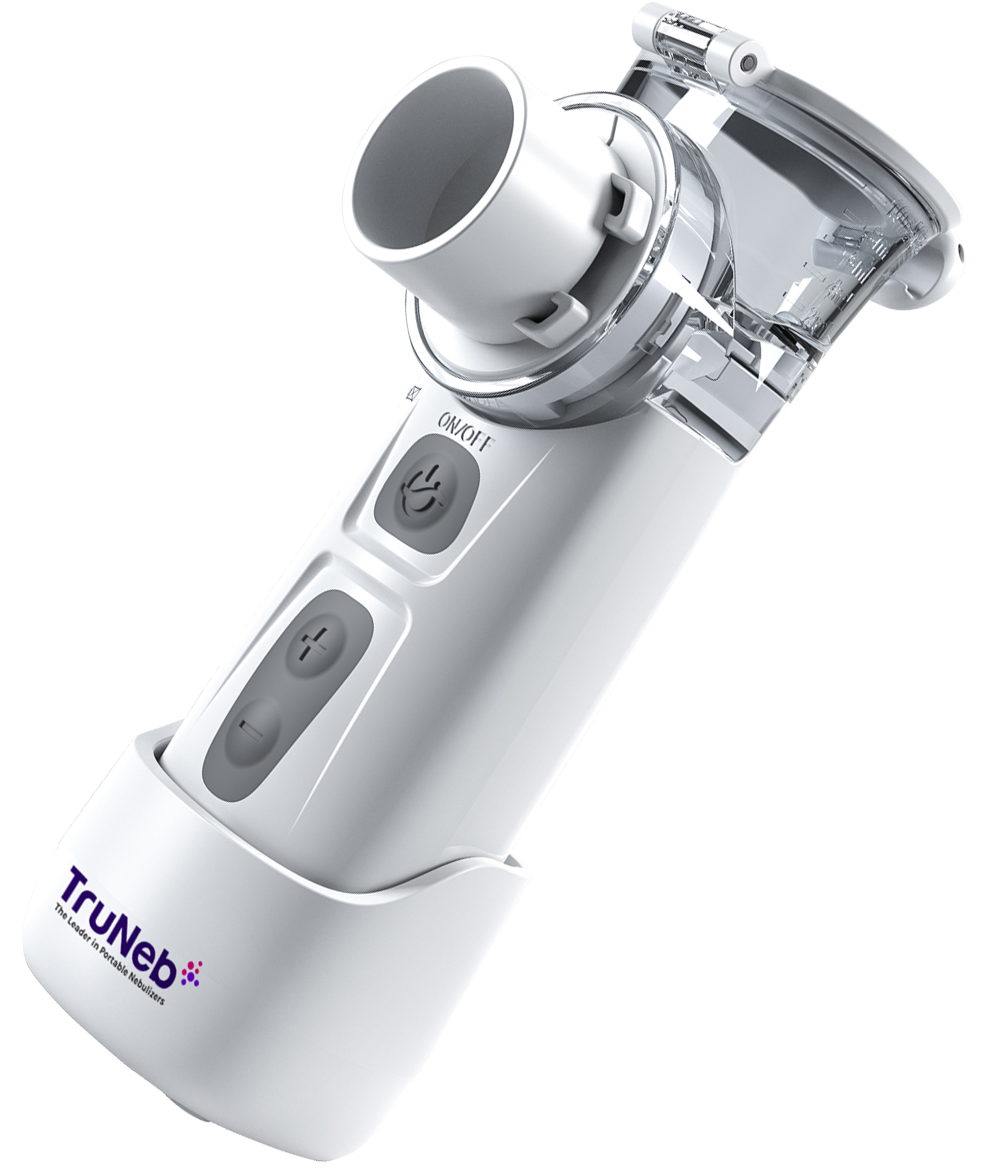
If you also have asthma or heavy chest congestion, your doctor might recommend using a quiet TruNeb™ portable mesh nebulizer with sterile normal saline or, in some cases, doctor-directed hypertonic saline (3% or 7%) to help keep your lower airways moist and mucus thin. It does not treat strep itself.
Safety note: Talk to your doctor before trying any new medication or hypertonic saline in a nebulizer, and use only the solutions they prescribe.
One-line takeaway: Antibiotics treat strep; fluids, saltwater gargles, pain relievers, and humidified air can ease sore throat symptoms.
Prevention and How Contagious Strep Throat Is
Strep throat spreads through droplets with close contact. Wash your hands regularly with soap and water. Use alcohol-based hand sanitizer when soap and water aren’t available. Don’t share cups, straws, or utensils. Cover coughs and sneezes with a tissue or your elbow. If you’re sick, try to keep your distance from others.
With strep, most people are no longer contagious after about 24 hours on antibiotics and once their fever is gone, based on current medical guidance. Stay home until then. With viral sore throats, you are generally contagious while you have active symptoms.
After a strep infection, replace your toothbrush after two or three days of antibiotics to lower the chance of re‑infection.
One-line takeaway: Clean hands, no sharing, and a 24‑hour antibiotic window help stop strep from spreading.
Frequently Asked Questions About Sore Throats and Strep
Tap or click a question below to see the answer:
No. A red throat and white patches can be scary, but they don’t prove it’s strep. Even experienced doctors can’t diagnose strep by sight alone, which is why they rely on throat swab tests.
A viral sore throat from the common cold typically improves within 3–4 days. With strep throat, symptoms usually start to improve within 1–2 days after starting antibiotics; without treatment, symptoms can last longer.
Yes. Strep can infect your throat tissue (pharynx) even if your tonsils were removed. The symptoms and need for testing are the same.
No. High fever and white patches are common, but not always present. Some viral illnesses can also cause white exudate, so testing is the only way to know for sure.
Most people are no longer contagious after about 24 hours on antibiotics and once their fever is gone. Wait at least a full day of treatment and be fever‑free before returning.
Sometimes it can, but it’s risky and you stay contagious longer. Antibiotics help you feel better faster and lower the chance of serious problems like rheumatic fever. See a doctor if you suspect strep.
If you’re unsure, remember: you can’t confirm strep by looks alone—when in doubt, a simple throat swab at your doctor’s office gives a clear answer.
Most sore throats are viral and improve on their own. Strep is more likely when symptoms start suddenly with high fever and no cough. Testing is required to confirm strep.
Disclaimer: This article is for informational purposes only and is not a substitute for professional medical advice, diagnosis, or treatment. Always talk with your doctor about your symptoms and before starting or changing any treatment.