

On this page
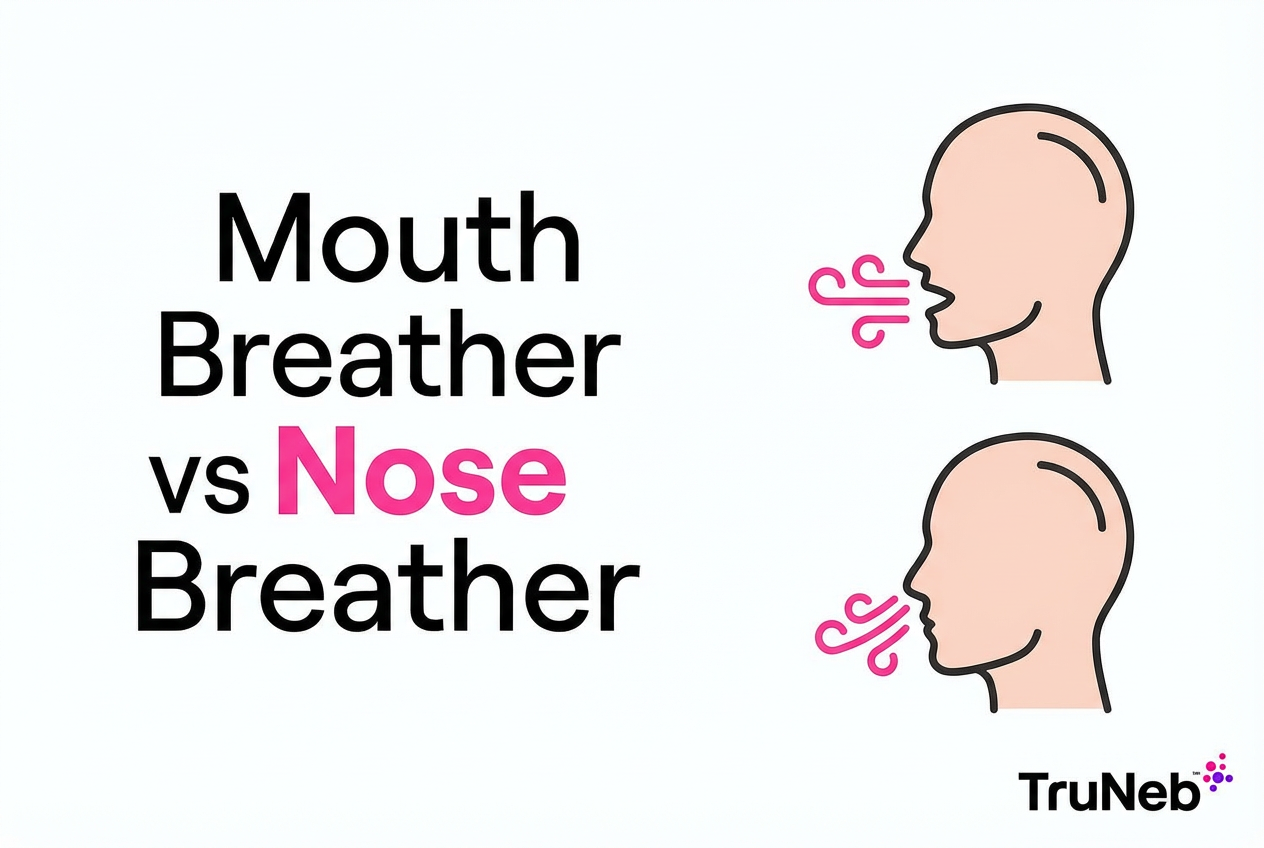
Mouth Breather vs Nose Breather: The Difference
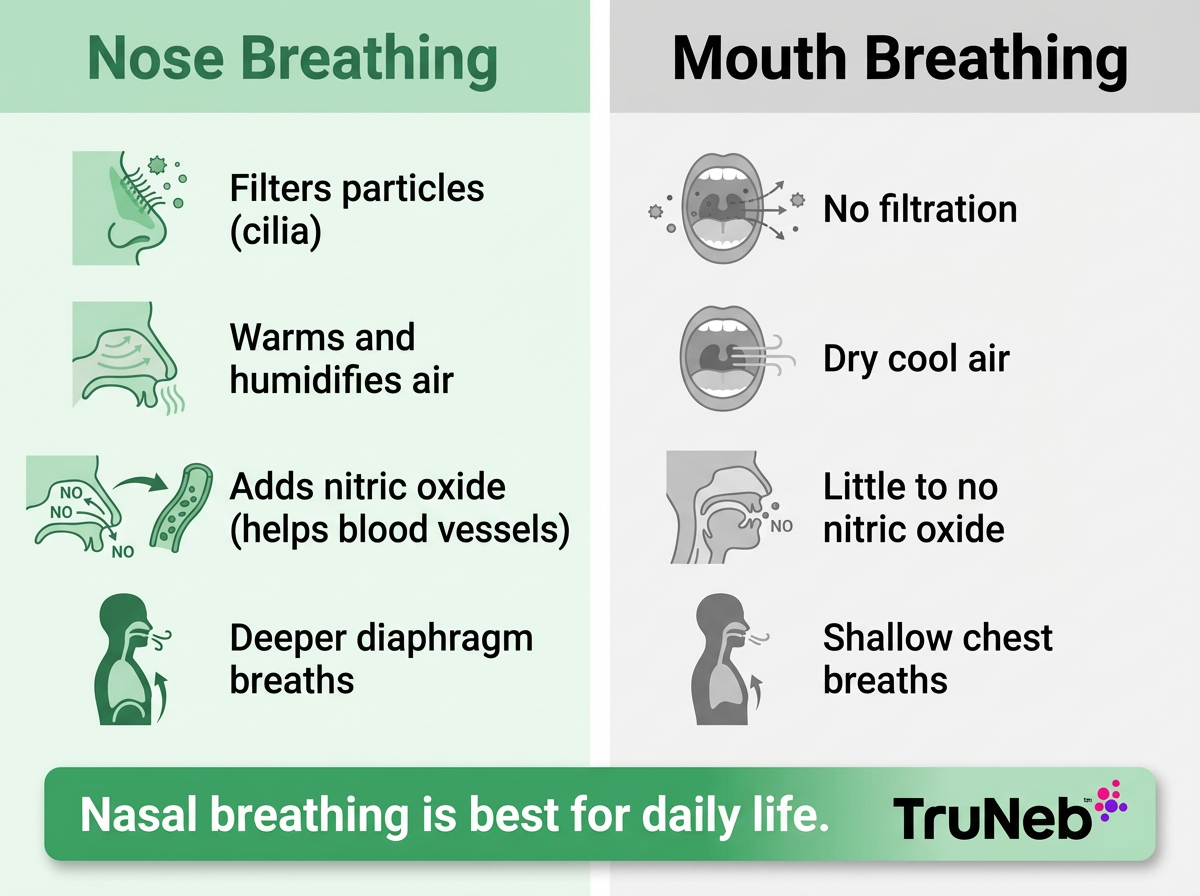
Breathing through your nose is better for your body. Nasal breathing is generally healthier than mouth breathing. Your nose filters germs and dust, warms and moistens the air, and adds a tiny gas called nitric oxide that helps blood carry oxygen. Mouth breathing skips all of that and brings in dry, unfiltered air.
Nasal breathing means air moves through your nostrils, past hairs and cilia that trap particles, and over moist lining that conditions the air before it reaches your lungs. Mouth breathing is when your mouth becomes your default airway instead of your nose.
Humans are built to breathe through the nose from birth. Your mouth is a backup for hard effort or when your nose is blocked.
Key takeaway: Default to your nose; use your mouth as backup when you must.
Why Nasal Breathing Is Better
Key benefits of nose breathing include:
- Filters germs, dust, and allergens with tiny hairs and sticky mucus, lowering what reaches your lungs.
- Warms and humidifies air to protect your airways so breathing feels smoother.
- Releases nitric oxide that opens blood vessels and helps oxygen move through your body.
- Supports more efficient oxygen use and better CO2 balance, which can improve endurance and reduce hyperventilation during exercise.
- Encourages calmer, deeper diaphragm breaths that can ease stress by engaging your body's calming (parasympathetic) system.
- Powers your sense of smell (and boosts flavor), which also alerts you to smoke or gas.
Key takeaway: Your nose acts like a built-in filter and humidifier, preparing air and boosting nitric oxide so your lungs and blood vessels work more efficiently.
Health and Sleep Risks of Mouth Breathing
Mouth breathing isn't harmless when it becomes a habit. Common side effects and problems include:
- Dry mouth and dental issues: Without saliva to wash acids away, you're more likely to get cavities, gum disease, and bad breath.
- Throat irritation and more germs reaching your lungs: Dry, unfiltered air can irritate your throat and carry more particles inside.
- Snoring and sleep apnea: Sleeping with your mouth open can trigger snoring and can worsen or signal obstructive sleep apnea (it doesn't cause sleep apnea in everyone).
- Off-balance breathing: Fast, shallow mouth breaths can lower carbon dioxide too much, which can leave you feeling jittery or tired.
- Chapped lips, hoarse voice, and reduced smell and taste over time.
Chronic mouth breathing can sap energy and make it harder to focus during the day.
⚠️ If you or your child has trouble breathing, pauses in breathing during sleep, bluish lips or face, chest pain, or severe shortness of breath, seek emergency medical care right away.
Key takeaway: Mouth breathing is okay in a pinch, but harmful as a habit.
Common Causes of Mouth Breathing
If you breathe through your mouth a lot, there's usually a reason:
- Nasal congestion from allergies, a cold, or chronic sinusitis.
- Deviated septum that blocks airflow on one or both sides.
- Enlarged adenoids or tonsils, especially in children.
- Nasal polyps or narrow nasal passages.
- Chronic rhinitis or swollen turbinates.
- Asthma flare or panic/anxiety, which can make you gulp air through your mouth.
- Habit that lingers after long periods of stuffiness.
Nasal congestion and mouth breathing often go together.
Once you know what's blocking your nose, treating that root cause usually makes nose breathing much easier, and your mouth can start to stay closed on its own.
Key takeaway: Mouth breathing is usually a symptom of a blocked or inflamed nose.
How Mouth Breathing Affects Children
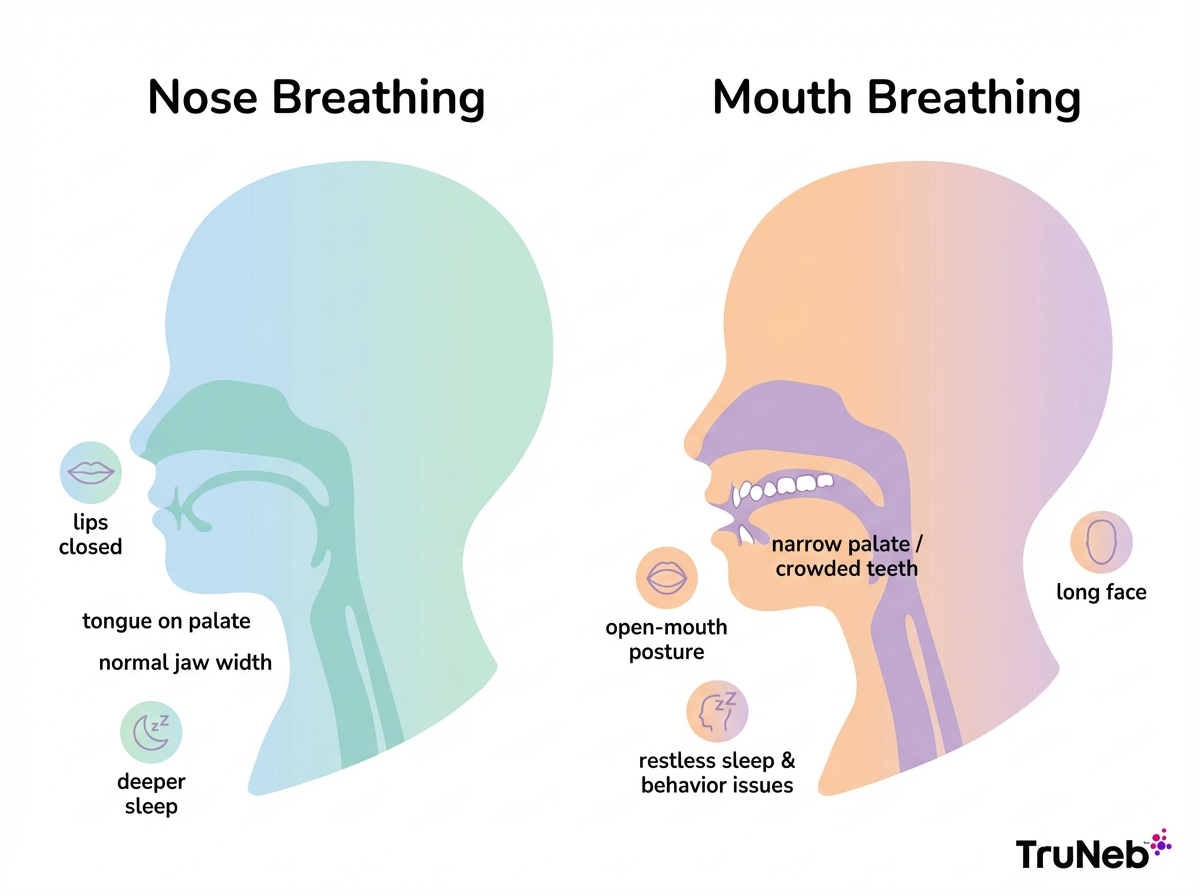
In kids, chronic mouth breathing can shape how they grow. A low tongue posture and open mouth can lead to a narrow palate, crowded teeth, and a longer face as the jaw develops. Orthodontists and pediatric ENTs see this pattern in many kids. These changes are sometimes called a "mouth breather face" online, but the goal is to describe patterns, not to label children.
Sleep can suffer, too. Kids who mouth-breathe may snore or have sleep‑disordered breathing. Poor sleep can show up as daytime irritability or attention problems that look like ADHD.
Growth can lag when sleep is disrupted. Some research links mouth breathing and nasal blockage with changes in growth hormone release during sleep.
Untreated mouth breathing can contribute to orthodontic issues that might need braces or expanders later.
If you notice open‑mouth posture, frequent snoring, or dental crowding, ask a pediatrician, pediatric ENT, or pediatric dentist to check your child's airway early. Talk to your child's doctor if mouth breathing, snoring, or behavior changes don't improve, or if you're worried about growth or school performance.
Key takeaway: In growing kids, long‑term mouth breathing can alter facial growth and disrupt sleep and behavior.
How to Stop Mouth Breathing and Improve Nasal Breathing
You can retrain your body to use your nose again. These steps can help you breathe through your nose during the day and stop mouth breathing at night. Work them into your day and bedtime routine.
- People often use daily saline sprays or rinses to help calm swelling and thin mucus. Ask your doctor what's right for you.
- If allergies bother you, ask your doctor about options like antihistamines or nasal steroid sprays.
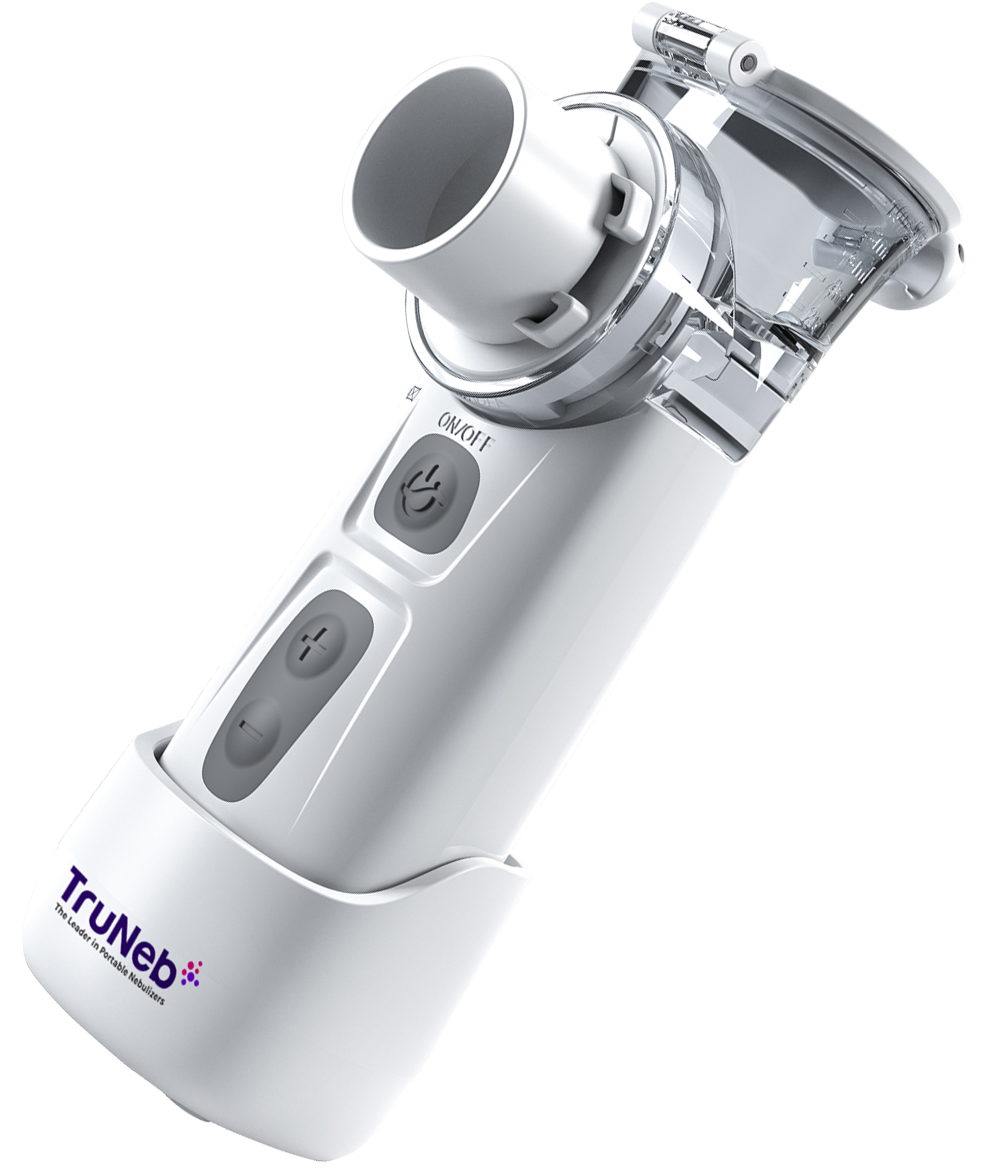
- For stubborn congestion, some doctors suggest saline nebulization to deliver hypertonic saline to loosen thick mucus and moisten airways. Your doctor can tell you which saline strength, if any, is appropriate for you. Use only with medical guidance as part of your care plan.
- ⚠️ Don't confuse steam inhalers with nebulizers. Steam inhalers only heat and moisten air and aren't meant to deliver medications or prescription solutions.
- If you suspect a deviated septum, polyps, or enlarged adenoids/tonsils, see an ENT. Structural problems usually need treatment from an ENT, and sometimes surgery.
- Train tongue and lip posture
- Try to keep your lips gently closed when you're not talking.
- Practice resting your tongue on the roof of your mouth, with the tip just behind your front teeth. A myofunctional therapist can teach simple exercises if this feels hard.
- Practice nasal breathing exercises
- Try diaphragmatic (belly) breathing and box or 4-7-8 breathing to slow and steady your breath. For example, with 4-7-8 breathing, inhale through your nose for 4, hold for 7, and exhale for 8.
- You can practice alternate nostril breathing for a few minutes a day if it feels comfortable.
- Start slow. It gets easier as your nose stays clearer.
- Optimize your sleep setup
- Sleeping on your side, elevating your head, or using a humidifier can help reduce mouth breathing for some people.
- Use adhesive nasal strips or an internal nasal dilator to open your nose at night.
- Mouth taping is trending, but it isn't safe for everyone. It can be dangerous if you have nasal blockage or sleep apnea. Talk to your doctor before trying it. Mouth taping isn't recommended for children unless a doctor specifically advises it.
- These strategies can help you stop mouth breathing at night and sleep more comfortably. Persistent loud snoring or pauses in breathing during sleep should prompt a medical evaluation for sleep apnea.
- Get professional help when needed
- See an ENT for airway blockages, an allergist for allergies, a dentist/orthodontist for jaw and palate concerns (especially for kids), or a sleep specialist for loud snoring or suspected sleep apnea.
Clear nasal blockages
Safety note: Talk to your doctor before trying a new medication or changing saline strength.
Key takeaway: Clearing your nose, training tongue posture, practicing nasal breathing, optimizing sleep, and seeing a doctor when needed can help you shift from mouth breathing to healthy nasal breathing.
Checklist: Steps to Become a Nose Breather
One-line summary: Small daily steps—clear nose, correct tongue posture, gentle exercises, and a better sleep setup—can help you become a nose breather.
Image prompt: Design a simple five‑step checklist graphic with icons:
- Clear nose (saline rinse, doctor‑guided saline nebulizer).
- Tongue on palate, lips closed.
- Daily nasal exercises (alternate nostril, diaphragmatic).
- Night setup (side sleep, humidifier, nasal strips; clear caution on mouth taping).
- See a pro (ENT, allergist, dentist, sleep doctor).
Style: Clean, high contrast, easy to scan on mobile.
Additional Insights: Nasal Breathing and Overall Health
Recent research gives a few more reasons to stick with nose breathing:
- Exercise: Nasal breathing can reduce hyperventilation and can support better endurance during hard efforts.
- Brain: Studies suggest nose breathing can enhance brain activity and attention compared with mouth breathing.
- Heart: Nitric oxide from nasal breathing helps widen blood vessels, which can help support lower blood pressure.
These findings come from smaller or early studies. More research is underway.
Key takeaway: Nasal breathing is linked to steadier exercise, sharper focus, and healthier blood pressure.
FAQs
Frequently Asked Questions
Tap or click a question below to see the answer:
Chronic mouth breathing can cause problems. It bypasses your nose’s filters, which can lead to dry mouth, higher cavity risk, throat irritation, snoring, and poorer sleep. It’s fine to use your mouth during hard exercise or when your nose is blocked, but it shouldn’t be your default.
Yes, for many people. Keep your lips gently closed, rest your tongue on your palate, practice simple nasal breathing exercises, and clear your nose before bed. Over time, your body can adapt and nose breathing can feel natural. If an approach doesn’t feel good, stop and talk with your doctor.
Use caution. Mouth taping isn’t safe for everyone and can be dangerous if you have nasal blockage or sleep apnea. Talk to your doctor before trying it and work on fixing the cause of the mouth breathing first. Mouth taping isn’t recommended for children unless a doctor specifically advises it.
In children, long‑term mouth breathing can affect facial growth, leading to a narrower jaw and crowded teeth. In adults, structure is mostly set, but long‑standing mouth breathing from childhood can carry those changes forward.
See a doctor if you (or your child) mouth‑breathe most of the time, snore loudly, wake unrefreshed, or have dental crowding or behavior concerns. Consider an ENT for airway blockages, an allergist for allergies, a dentist/orthodontist for jaw and palate concerns, or a sleep specialist for suspected sleep apnea.
Get emergency care right away for trouble breathing, pauses in breathing during sleep, bluish lips or face, chest pain, or severe shortness of breath.
Disclaimer: This article is for informational purposes only and is not a substitute for professional medical advice, diagnosis, or treatment. Always talk with your doctor about your symptoms, questions, or before changing your treatments.