

On this page
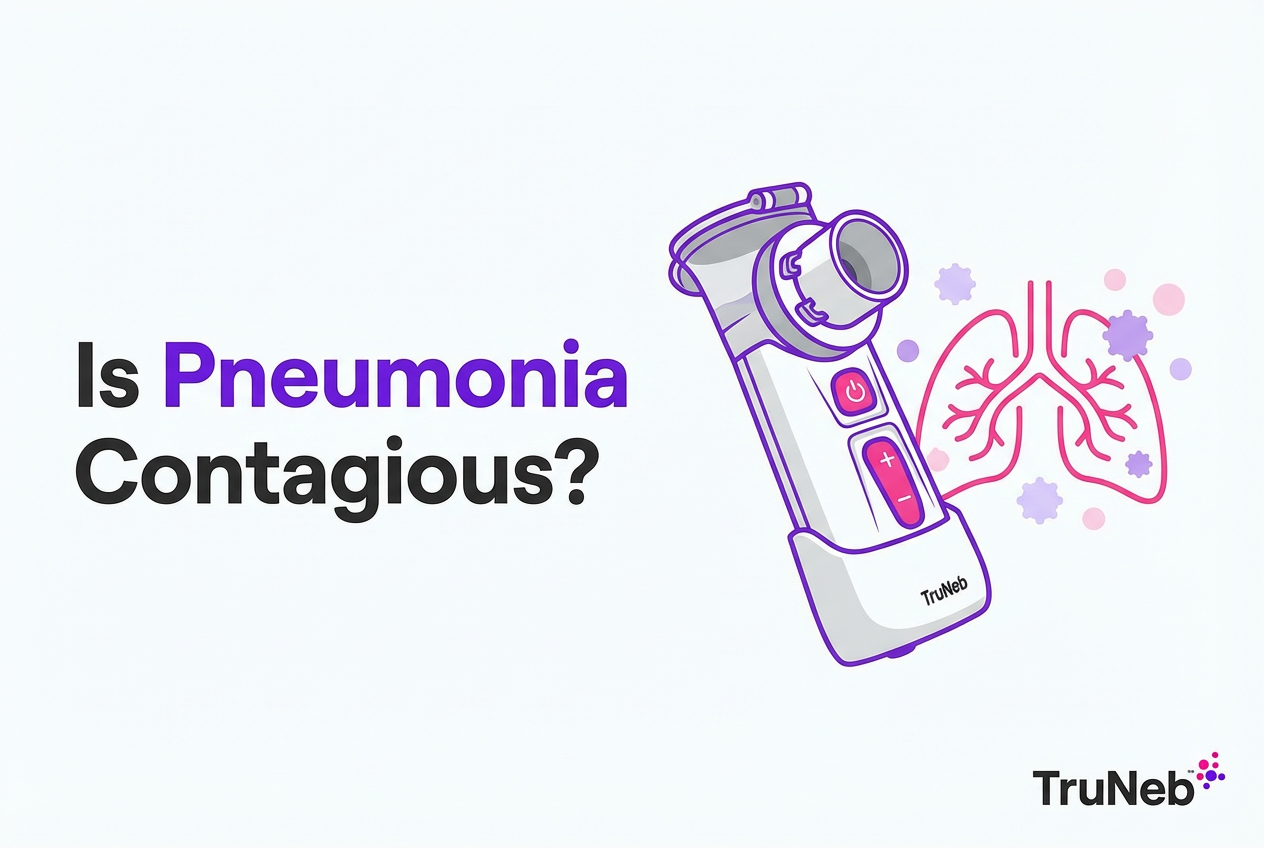
Is Pneumonia Contagious? Yes.
Pneumonia is a lung infection. Yes, pneumonia can be contagious. It depends on the cause.
You don’t catch pneumonia as one single germ. You catch the virus or bacteria that can lead to pneumonia. Those germs spread in tiny droplets when someone coughs, sneezes, or talks.
Viral and bacterial pneumonia can spread between people, while aspiration and most fungal pneumonias do not. The next sections cover how it spreads, how long you’re contagious, and how to protect your family.
⚠️ Seek emergency medical care right away if you or your child has trouble breathing, chest pain, blue lips or face, confusion, or a high fever that doesn’t improve with medicine.
How Pneumonia Spreads from Person to Person
Contagious pneumonia spreads mainly by respiratory droplets. When someone with a viral or bacterial infection coughs, sneezes, or talks, they release tiny wet particles with germs. You can breathe them in at close range at home, school, or work.
Sometimes, droplets land on a surface. If you touch that surface and then your eyes, nose, or mouth, you can get infected. Keeping some distance, masking during illness, and washing hands regularly lowers the risk.
Pneumonia germs don’t usually linger in the air over long distances like measles or tuberculosis; spread tends to happen at close range.
Which Types of Pneumonia Are Contagious
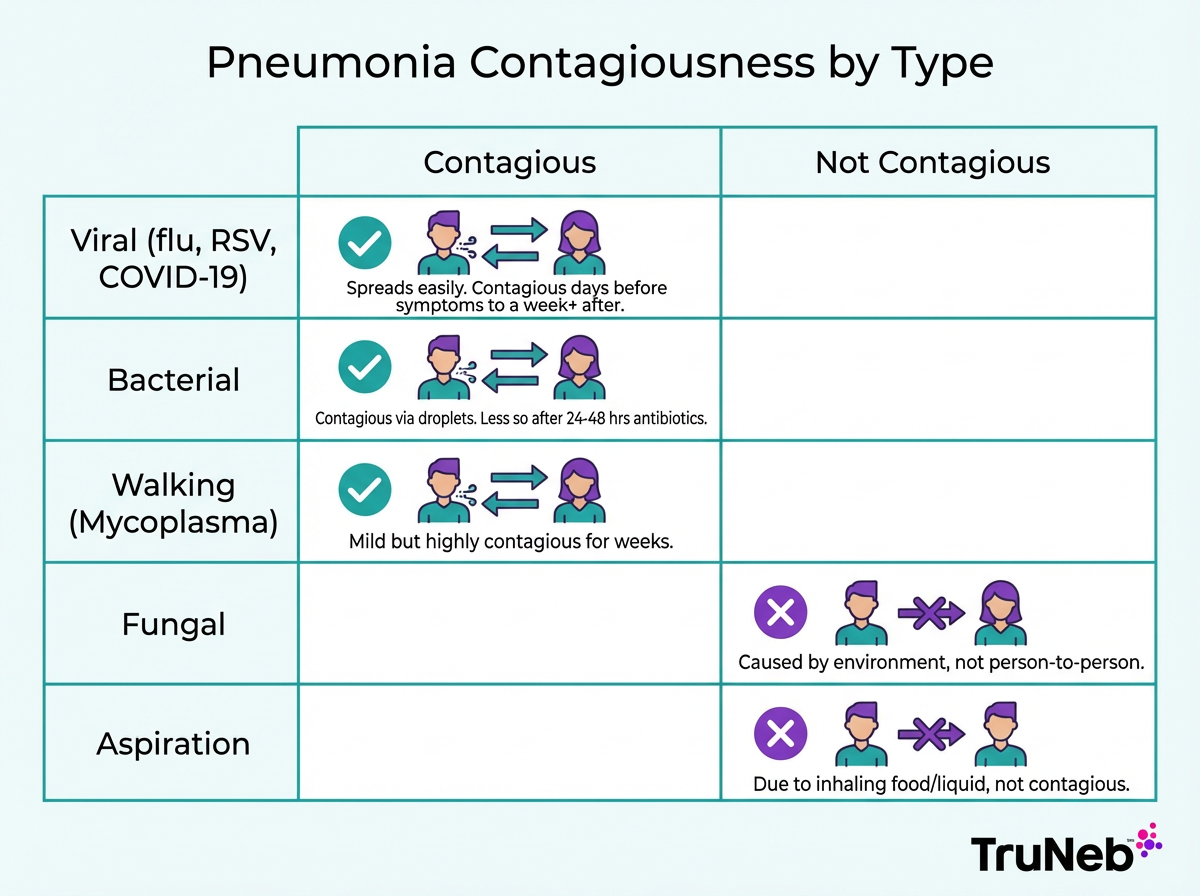
Whether pneumonia is contagious depends on the cause. Viral, bacterial, and 'walking' pneumonia are contagious, while fungal and aspiration pneumonia are not spread person to person. Use this chart to see what spreads and for how long.
Key takeaway: Viral, bacterial, and walking pneumonia spread between people; fungal and aspiration pneumonias do not. Time frames are general and can vary.
| Type | Contagious? | Typical contagious period |
|---|---|---|
| Viral (flu, RSV, COVID-19) | Yes | Until fever resolves and symptoms improve (several days to a week) |
| Bacterial (e.g., Streptococcus pneumoniae) | Yes | Usually not contagious 24–48 hours after effective antibiotics |
| Walking (Mycoplasma pneumoniae) | Yes | Can be contagious for 2–3+ weeks |
| Fungal (e.g., Histoplasma, Valley fever) | No | Not person-to-person |
| Aspiration (food/liquid into airway) | No | Not an infection you catch |
These are general ranges and may differ in complex cases; talk to your doctor for advice on your specific infection.
How Long Is Pneumonia Contagious
Timing depends on the cause and treatment. In general, viral pneumonia is contagious for several days, bacterial pneumonia until about 1–2 days after effective antibiotics, and walking pneumonia for two to three weeks or more.
Viral pneumonia: People can shed virus a day before symptoms and for several days after cough and fever begin. Once fever is gone and you feel better, shedding drops.
How long after starting antibiotics are you still contagious?
Bacterial pneumonia: You stay contagious until the right antibiotic knocks it down. Most people are no longer contagious about 24–48 hours after starting effective antibiotics.
Walking pneumonia: It can spread for two to three weeks or more, even with mild symptoms. This longer window is why it can quietly spread in schools and families. Keep precautions until your doctor says you’re past the window.
These time frames are general; your doctor can tell you what to expect for your specific infection. Contact your doctor if your symptoms don’t start to improve after a few days, get worse suddenly, or if you’re in a high-risk group like older age, pregnancy, or chronic lung or heart disease.
Key point: Most bacterial pneumonias stop being contagious about 24–48 hours after the right antibiotics.
Is Pneumonia Contagious Without a Fever?
Yes. You can still spread germs without a fever. Fever is one sign your body is fighting infection, but not everyone gets one. Older adults and people taking fever reducers can have no fever at all.
If you are coughing or sneezing, droplets can still carry virus or bacteria to others. Relying on fever alone to decide when you’re "safe" is risky; you should still follow the same precautions and timing guidance even if you never spike a fever.
Key point: No fever does not equal no risk of spreading pneumonia germs.
When Is It Safe to Return to Work or School?
It’s usually safe to return to work or school when you’ve been fever-free for at least 24 hours, your symptoms are clearly improving, and your doctor says you’re past the contagious stage.
Most doctors recommend going back once you are no longer contagious and feel strong enough to get through the day. Be fever-free for at least 24 hours without fever reducers. For bacterial pneumonia, be on the right antibiotic for 1–2 days first.
Make sure your cough is improving and your energy is back. Around high-risk people, it helps to wear a mask for a few more days. People who work with high-risk groups (such as in hospitals, nursing homes, or newborn care) may need stricter or longer clearance based on doctor advice or employer policy. Ask your doctor if you are unsure.
Is Pneumonia Contagious to Children?
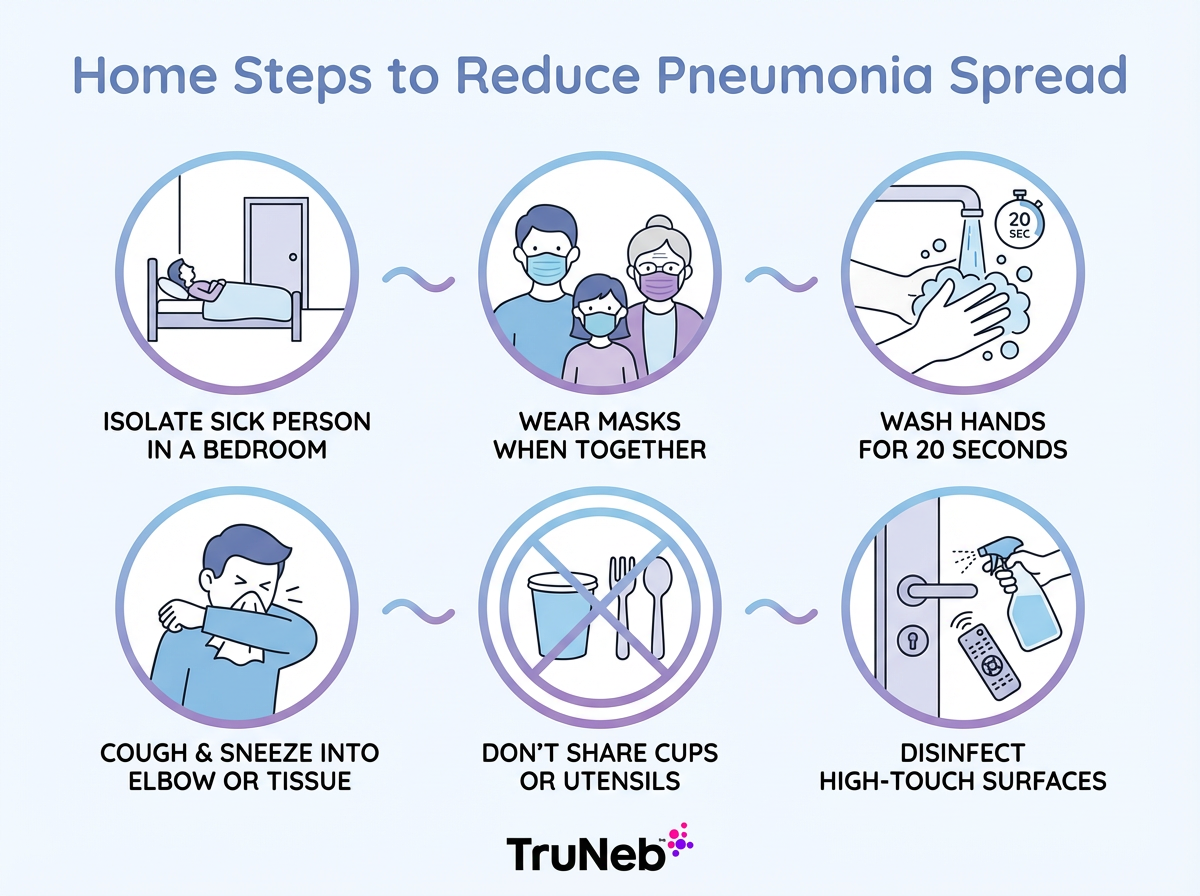
Children can catch the same germs that cause pneumonia in adults, so it’s important to use extra precautions at home. Kids and babies are usually more vulnerable to flu and RSV. Protect your family with simple steps:
- Isolate the sick person in a separate room when possible, especially away from infants, older adults, anyone with asthma or COPD, or relatives with weak immune systems.
- To lower the risk when you’re in the same room, it helps if the sick person wears a surgical mask and caregivers use a medical mask or N95.
- Wash hands with soap or use sanitizer after coughing or touching shared items.
- Cover coughs and sneezes with a tissue or your elbow; throw tissues away right after use.
- Avoid sharing cups, utensils, towels, or pillows until you’re past the contagious stage.
- Disinfect high-touch surfaces like doorknobs, phones, and remotes daily; watch kids for early symptoms.
If a child exposed to pneumonia develops trouble breathing, a high fever, or is unusually sleepy, call a doctor right away. Flu and pneumococcal vaccines can lower your chances of getting some of the germs that lead to pneumonia. Ask your doctor which shots are recommended for you or your child.
Supporting Recovery and Breathing at Home
Your main treatment comes from your doctor. Rest, fluids, and prescribed medicines do the heavy lifting. Some people also use breathing support at home.
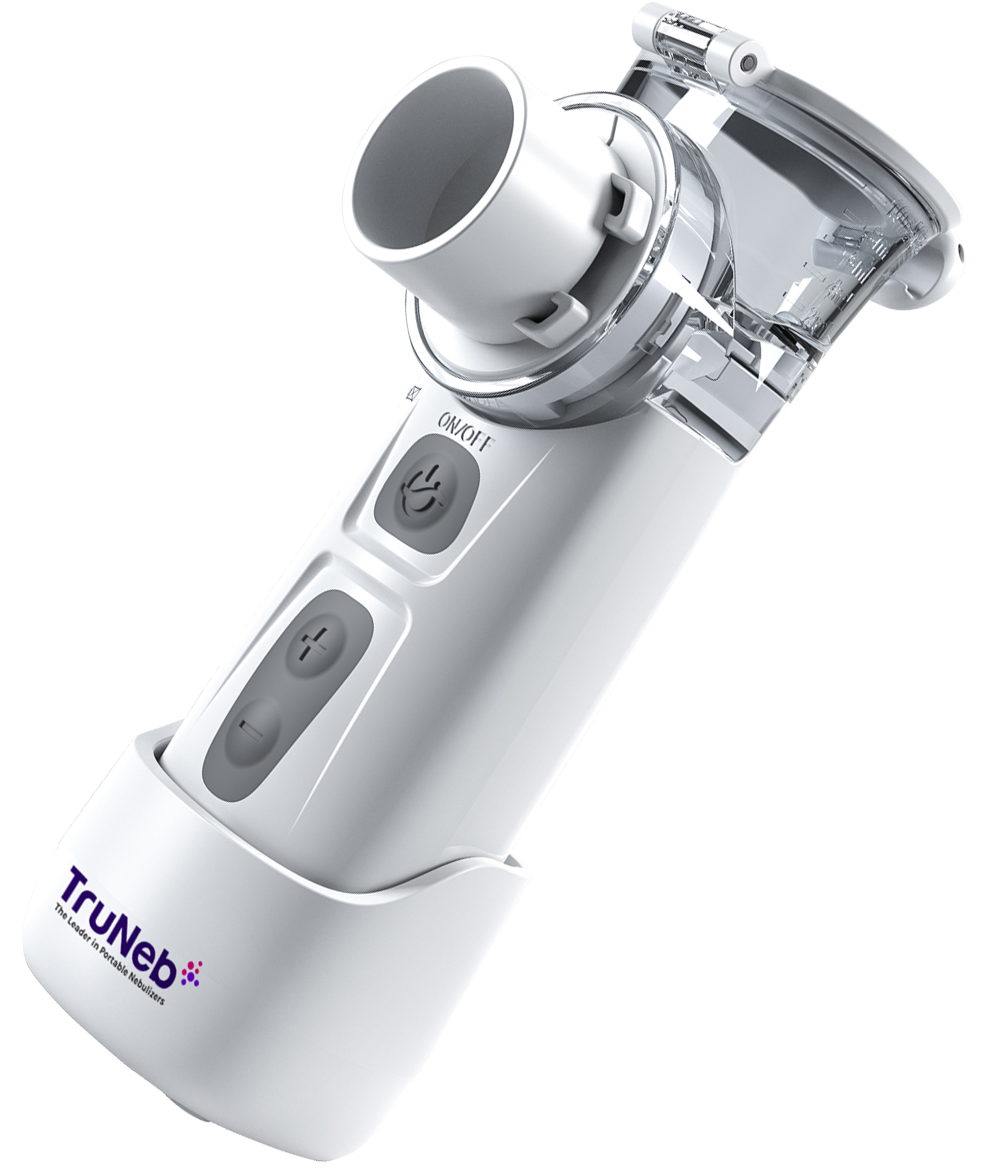
A nebulizer is a small device that turns liquid medicine or saline into a mist you breathe in. If your doctor recommends nebulizer treatments, a portable mesh nebulizer such as TruNeb™ can make it easier to do them at home or on the go. TruNeb 3% or 7% hypertonic saline is used to draw moisture into your airways and thin mucus when your doctor recommends it. These treatments don’t cure pneumonia but can make it easier to breathe and cough up mucus while you recover. These treatments don’t replace antibiotics or other prescriptions your doctor gives you for pneumonia.
⚠️ Steam inhalers are not the same as nebulizers and should not be used to deliver prescription medications.
Keep the device clean, sip fluids, and try gentle deep-breathing exercises to help your lungs open up. Talk to your doctor before trying a new medication. If your breathing gets worse instead of better, or you feel more short of breath, contact your doctor right away.
Frequently Asked Questions
Tap or click a question below to see the answer:
You can’t directly catch the condition itself. You can catch the germs (like a flu virus or certain bacteria) from a sick person, and those germs can lead to pneumonia.
If it’s viral or bacterial, limit close contact until 1–2 days after fever resolves and, for bacterial cases, after 24–48 hours of effective antibiotics. Use masks and hand hygiene during this time. Be extra careful around babies, older adults, and people with weak immune systems.
It spreads mainly by droplets in the air at close range when a sick person coughs, sneezes, or talks. Pneumonia germs don’t usually hang in the air for long distances like measles; surface spread can happen if you touch a contaminated object and then your face.
Yes, if it’s an infectious cause. A surgical mask on the sick person and a medical or N95 mask on caregivers can block most droplets, especially at close range.
Sometimes. Walking pneumonia can spread days to weeks before symptoms. With flu, you can shed virus about a day before you feel sick.
Disclaimer: This article is for informational purposes only and is not a substitute for professional medical advice, diagnosis, or treatment. Always talk with your doctor about your symptoms, tests, and treatment options.