

On this page

Hospital Grade Nebulizer: What It Really Means
A hospital‑grade nebulizer delivers medicine as a steady, fine mist with the kind of performance and safety you expect in a clinic. It isn't an official FDA label; it's a simple way to say the device meets high standards for mist quality, reliability, build, and cleaning. The devices themselves are FDA‑cleared medical devices.
In plain terms, it works like the machines you see in hospitals, but it's made for your home. People use hospital‑grade nebulizers for conditions such as asthma, COPD, or cystic fibrosis, under a doctor's guidance. You want fine particles sized for the lungs, predictable treatment times, and parts that are easy to clean and maintain. There are jet (compressor), mesh, and ultrasonic nebulizers; for home use, mesh and jet units are the most common.
Key takeaway: Hospital grade means consistent, clinic‑level mist and durable design you can trust at home.
Key Factors That Define a Hospital-Grade Nebulizer
Here's what to look for:
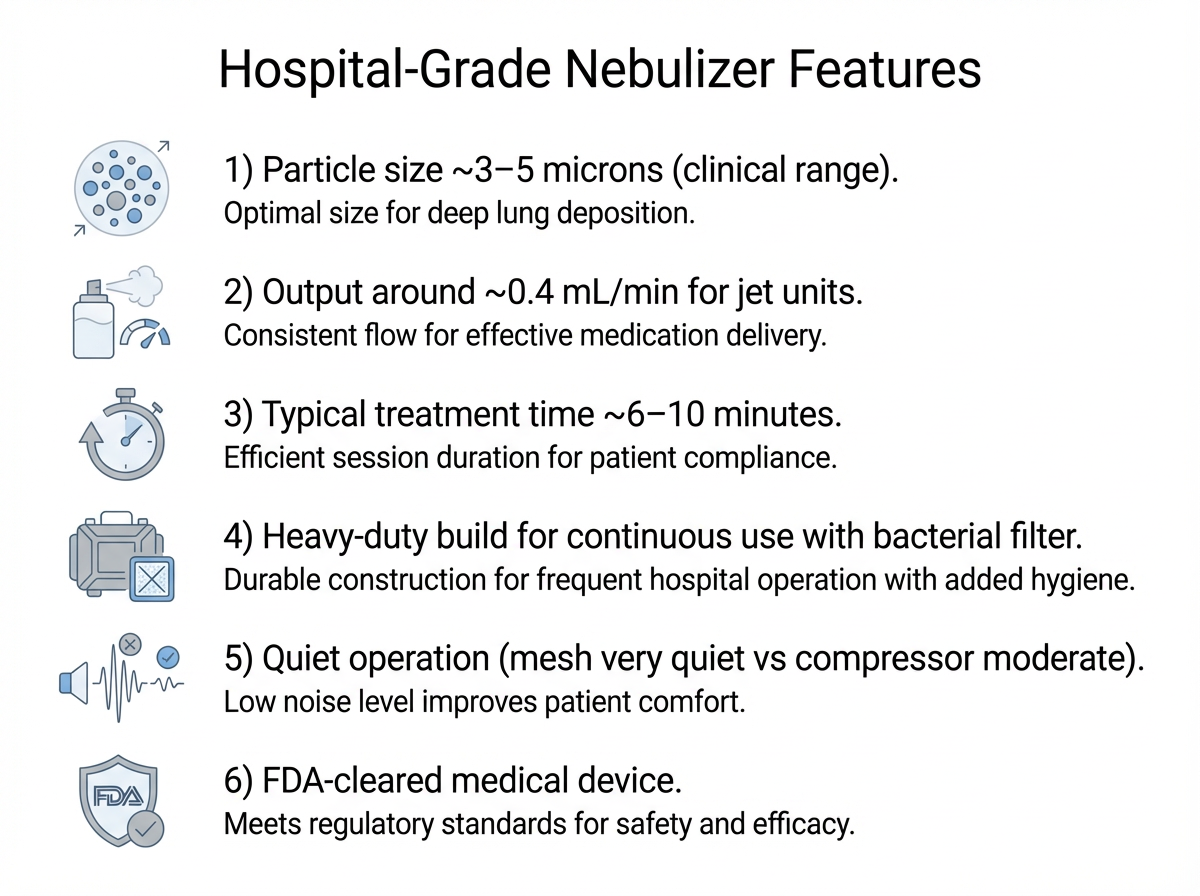
- Fine, consistent particles: Around 3–5 microns so medication reaches deep into your lungs.
- Power and delivery speed: Steady output (around 0.4 mL/min for many jet units) so a standard dose finishes in about 6–10 minutes.
- Durable build: Handles frequent or back‑to‑back treatments without overheating.
- Safety and materials: FDA‑cleared medical devices with clear instructions and quality parts. Hospital‑grade compressors typically include bacterial filters and parts you can sterilize or replace.
- Lower noise: Quieter operation makes treatments easier at home, day or night.
- Cleanability: Easy‑to‑rinse cups, clear cleaning steps, and replaceable or sterilizable parts keep performance consistent.
⚠️ You might see steam inhalers next to nebulizers on store shelves, but they aren't the same thing. Steam inhalers are not meant for breathing prescription medications.
In simple terms, a hospital‑grade nebulizer makes a fine, reliable mist quickly, uses medical‑grade parts, and stands up to frequent use without losing performance.
How Modern Portable Nebulizers Achieve Hospital-Grade Performance
Not long ago, "hospital‑grade" meant a big, plug‑in compressor. Today, portable devices can match that performance.
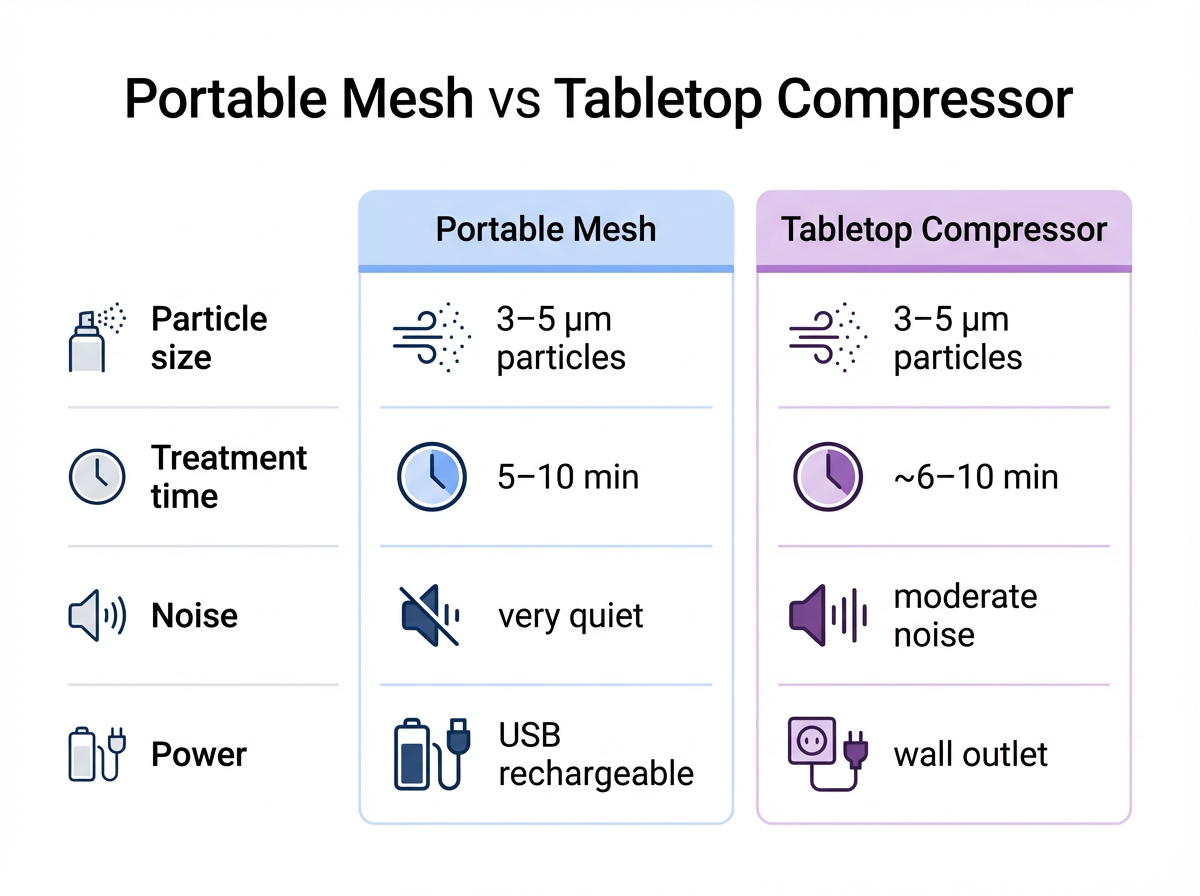
Vibrating mesh technology pushes liquid medicine through a tiny metal mesh to make a very fine mist. A portable mesh nebulizer similar to hospital treatments gives you fine, consistent mist without the bulk of a wall‑powered machine. High‑quality mesh nebulizers can match the particle size and dose delivery of hospital compressors when you use them correctly. Because there's no loud air pump, mesh units are whisper‑quiet.
Modern batteries and USB charging help too. A pocket‑size device can deliver a full treatment in a similar time window to many tabletop models.
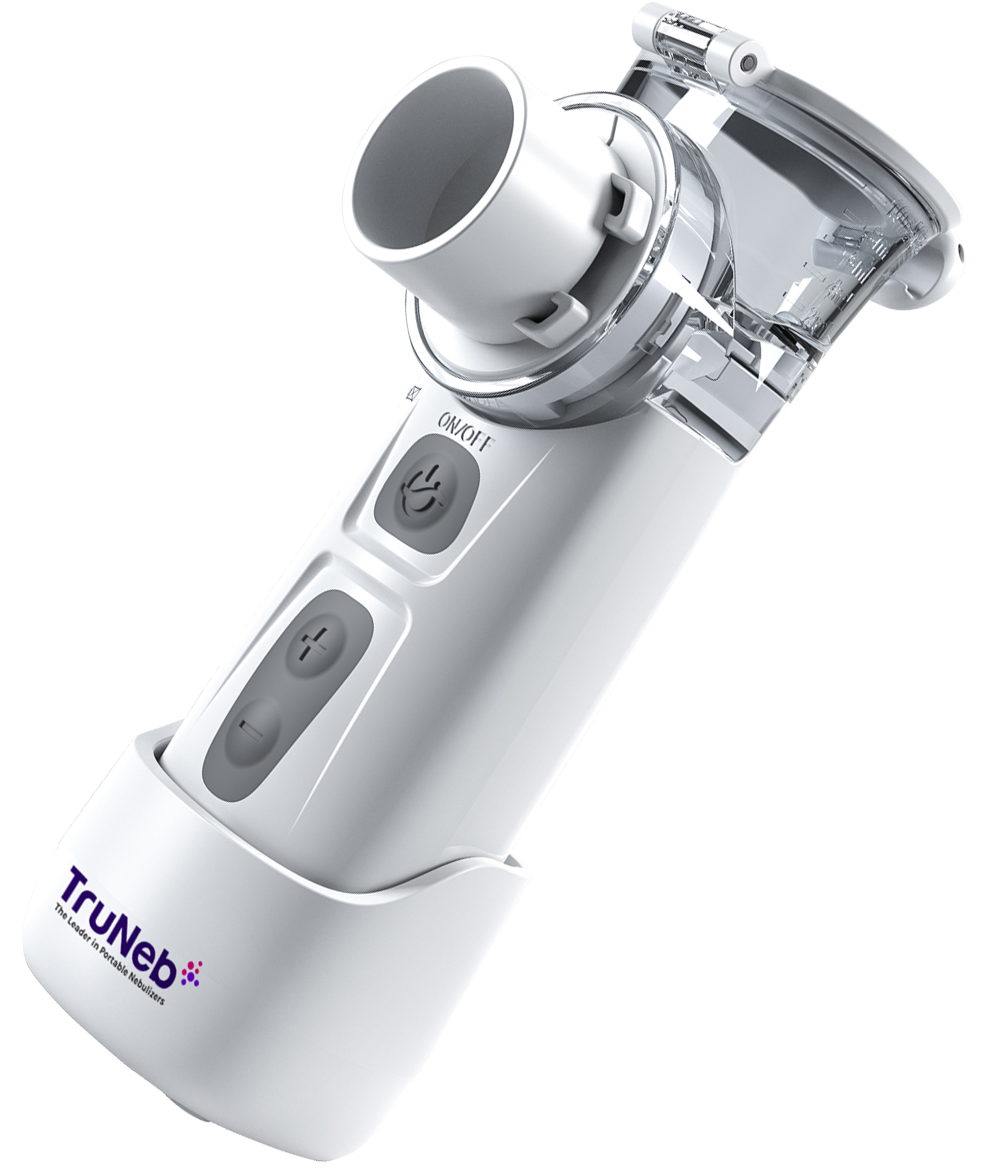
In a TruNeb vs traditional hospital nebulizer comparison, the main differences are size, power source, and noise—not mist quality. The TruNeb™ Portable Mesh Nebulizer shows this shift clearly: handheld, ultra‑quiet, and built to deliver a consistent, hospital‑level mist wherever you are. Not every cheap portable meets these standards, so check specs before you buy.
Key takeaway: Modern mesh nebulizers give you clinic‑quality mist without the bulk or noise of a hospital compressor.
Comparing Top Hospital-Grade Nebulizers for Home Use (TruNeb vs Omron vs Philips)
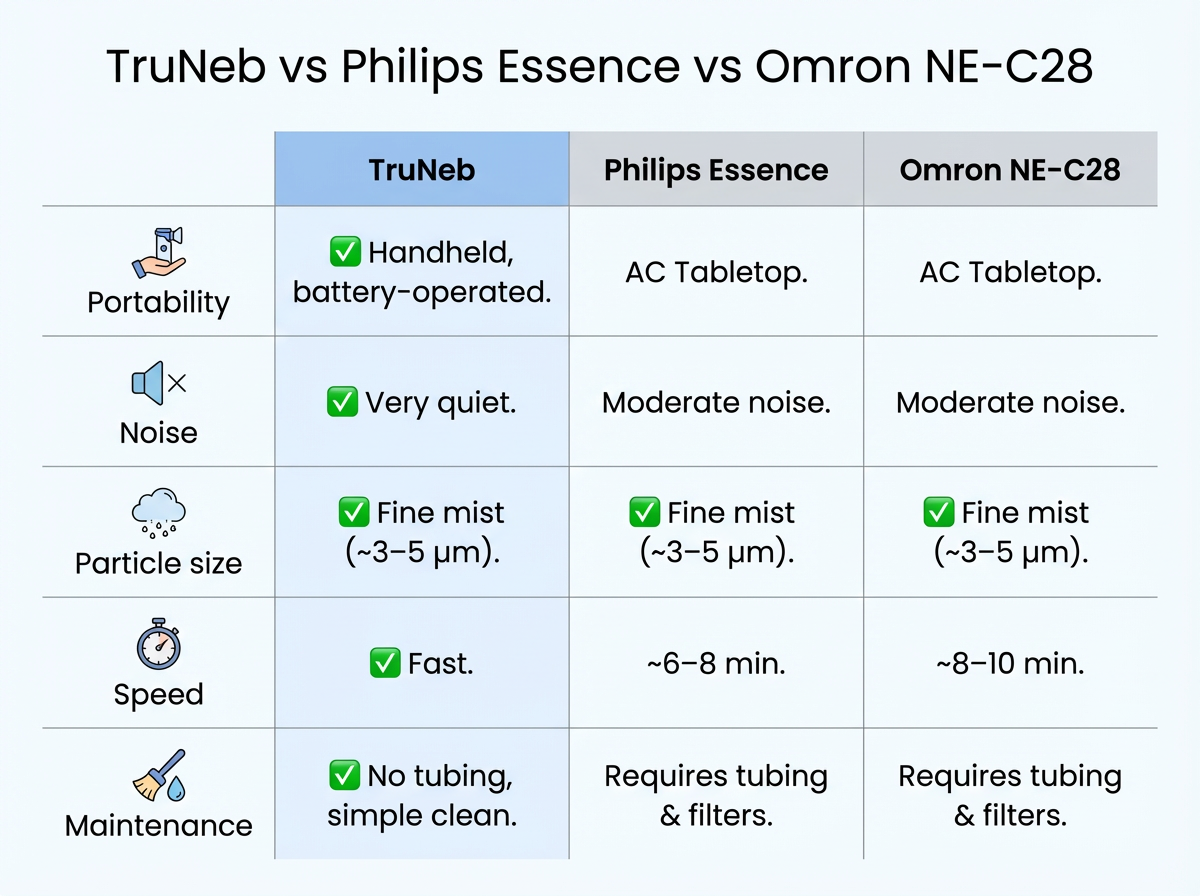
When you're choosing the best hospital‑grade nebulizer for home use, three options stand out. These devices can deliver prescription bronchodilators or inhaled steroids, along with sterile saline solutions, when prescribed by your doctor.
| Device (type) | Portability | Noise | Particle size | Treatment time | Maintenance |
|---|---|---|---|---|---|
| TruNeb (handheld mesh) | Pocket‑size, rechargeable | Very quiet | Fine mist ~3–5 μm | About 5–10 min | No tubing; clean cup/mesh head |
| Philips InnoSpire Essence (AC compressor) | Tabletop, plug‑in | Moderate | Fine mist ~3–5 μm | ~6–8 min | Tubing + filters to replace |
| Omron NE‑C28 (AC compressor) | Tabletop, plug‑in | Moderate | Fine mist ~3–5 μm | ~8–10 min | Tubing + filters to replace |
Note: Treatment time varies by medication, dose, and nebulizer cup.
TruNeb Portable Mesh Nebulizer — hospital‑grade performance in your palm
- What stands out: Fine, consistent mist from vibrating mesh, ultra‑quiet operation, pocket size, and USB charging. No tubing or wall outlet required. TruNeb delivers hospital‑grade performance in a portable nebulizer you can use at home or on the go.
- Best for: Daily use anywhere—at home, during travel, or on busy days when you need a fast, quiet treatment. Works with most common nebulizer medicines and sterile saline.
- Keep in mind: Like any handheld, keep it charged and handle the mesh head with care.
Philips InnoSpire Essence — trusted, clinic‑style compressor for home
- What stands out: Reliable tabletop compressor paired with Philips SideStream nebulizer technology known for consistent particle size and fast delivery. It's a hospital‑grade nebulizer for home use.
- Best for: At‑home users who prefer a plug‑in unit and don't need to travel with their device.
- Keep in mind: Bulkier than a handheld and uses tubing; noise is moderate compared to mesh. Typical sessions are around 6–8 minutes.
Omron NE‑C28 (or similar Omron compressors) — medical‑grade compressor nebulizer
- What stands out: Workhorse compressor with steady output in line with clinical expectations.
- Best for: Frequent treatments and users who want an AC‑powered, durable machine for home use.
- Keep in mind: Not portable and louder than mesh units. Filters and accessories need periodic replacement. Typical sessions are around 8–10 minutes.
Bottom line: If you want hospital‑grade performance plus mobility and quiet, a mesh device like TruNeb is a strong fit. If you want a traditional plug‑in machine from a major brand, Philips InnoSpire Essence or an Omron compressor are solid choices.
In short, TruNeb offers hospital‑grade performance in a handheld mesh device, while Philips InnoSpire Essence and Omron compressors provide more traditional tabletop options for home use.
Using a Hospital-Grade Nebulizer at Home: Safety and Efficacy Tips
Get the most from your device with a few simple habits:
- Follow your care plan: Use only the medications your doctor prescribes. You can usually buy a nebulizer without a prescription, but the medications you use in it usually require one.
- Know your solutions: Hypertonic saline (3% or 7%) can help thin mucus, but only use it if your doctor recommends it. Doctors typically suggest it for conditions with thick mucus, such as cystic fibrosis or bronchiectasis.
- Clean after each use: Rinse the cup and mouthpiece or mask with warm water and let them air‑dry. Disinfect regularly as directed (heat or a recommended solution).
- Replace parts on schedule: Compressor units use filters and tubing; mesh heads also need periodic replacement. Fresh parts keep treatments consistent.
- Sit upright in a clean, well‑ventilated space: Good posture and a calm setting help you inhale the full dose.
⚠️ If you have severe trouble breathing, chest pain, blue lips or face, or feel confused, call emergency services right away.
⚠️ If your symptoms don't improve with your prescribed treatments or you're thinking about changing your medication, talk to your doctor first.
Safety note: Talk to your doctor before trying a new medication.
The safest way to use a hospital‑grade nebulizer at home is to follow your doctor's plan, use only prescribed solutions, and keep the device clean and well‑maintained.
Frequently Asked Questions
Tap or click a question below to see the answer:
A hospital‑grade nebulizer makes a fine, consistent mist (around 3–5 microns), maintains steady output for predictable treatment times, and uses durable, cleanable, medical‑grade parts.
Yes. High‑quality mesh nebulizers can produce the same fine particles and deliver full doses as hospital machines when you use them as directed.
In a TruNeb vs traditional hospital nebulizer comparison, the main differences are size, power source, and noise—not mist quality. A handheld mesh like TruNeb can deliver a similar fine mist for home use.
You can usually buy a nebulizer without a prescription, but the medications you use in it almost always require one. Ask your doctor about the setup that fits your condition.
Yes—if your doctor recommends it. Hypertonic saline (3% or 7%) can help thin mucus so it’s easier to clear.
Hospitals commonly use jet compressor systems or advanced ultrasonic units built for continuous use, with bacterial filters or sterilizable parts. Brands such as Philips, Omron, and Pari make clinical models.
Disclaimer: This article is for informational purposes only and isn’t a substitute for professional medical advice, diagnosis, or treatment. Always talk with your doctor about your symptoms, medications, and treatment options.