

On this page
Finger Clubbing in COPD: Why Clubbed Fingers Aren't Caused by COPD
Finger clubbing is the enlargement of your fingertips with nails that curve downward. Here’s the key point: finger clubbing in COPD is uncommon. COPD by itself doesn't cause clubbing.
If clubbed fingers show up in someone with COPD, doctors look for another problem, usually in the lungs. Common culprits include lung cancer, bronchiectasis, and interstitial lung disease. Heart and digestive conditions can also be behind it.
COPD can change nail color, not shape. Low oxygen can turn nail beds bluish (cyanosis), but the fingertips do not swell or become club-shaped.
If you notice clubbing, don’t chalk it up to "just COPD." It doesn’t always mean something serious, but it’s a sign to get checked.
Key takeaway: COPD does not cause finger clubbing; its presence points to another condition.
What Is Finger Clubbing?
Finger clubbing (also called digital clubbing) is a gradual change in your fingers and nails.
What it looks like:
- Bulb-like enlargement of the fingertips
- Nails that curve more than usual (from the side, they look like a watch glass)
- Nail beds feel soft or spongy
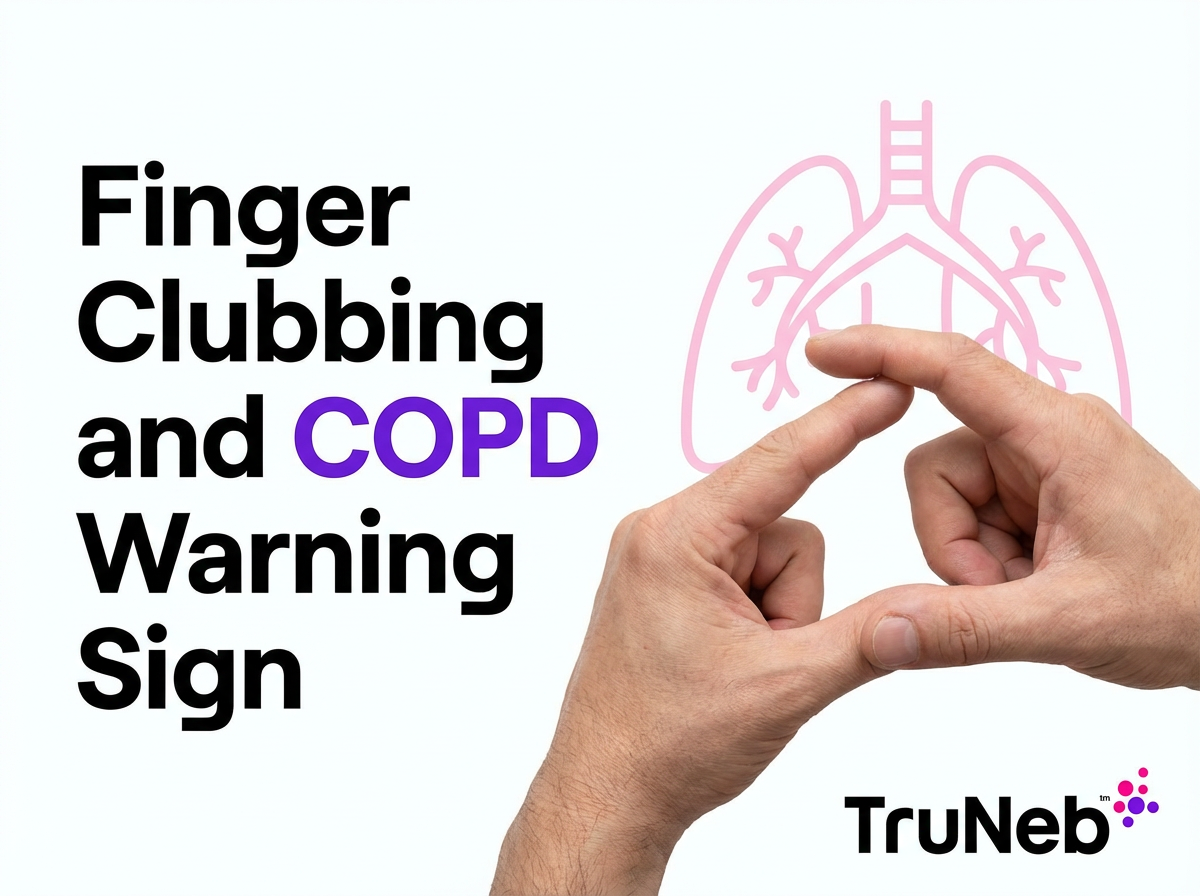
- Loss of the small diamond-shaped gap when you press two index fingernails together (Schamroth’s window test)
How to do the Schamroth test:
- Touch the tops of your index fingernails together
- Normally you’ll see a tiny diamond-shaped window between the nails
- In clubbing, that window disappears
Clubbing is usually painless, affects both hands, and develops over weeks to months. Clubbing can also affect toes, but this article focuses on fingers.
Key takeaway: Clubbing means enlarged fingertips and curved nails, often with a “no window” Schamroth test.
Why COPD Usually Doesn’t Cause Clubbing
Even though COPD can lower blood oxygen, it almost never triggers the fingertip tissue changes that cause clubbing.
One leading idea: in certain diseases (like some lung cancers or heart defects), large bone marrow cells (megakaryocytes) and growth signals (like PDGF) can bypass the lungs’ normal filter and reach the fingertips. Those signals can drive new vessel and tissue growth there. In routine COPD, that bypass and signal surge don’t occur, so fingertips don’t club.
In simple terms, COPD changes how you breathe, but it doesn’t send those growth signals to your fingertips, so clubbing doesn’t appear.
COPD can cause cyanosis (blue nail beds) or higher red blood cell counts over time, but not the specific tissue overgrowth seen in clubbing.
Key takeaway: Low oxygen alone isn’t enough; COPD lacks the fingertip growth signals thought to cause clubbing.
Causes of Finger Clubbing
Digital clubbing in lung disease is most commonly linked to lung problems; lung cancer is the single biggest cause.
Lung diseases:
- Lung cancer: the most common cause of new clubbing; about 5–15% of people with lung cancer show clubbing, and lung tumors account for a large share of cases
- Bronchiectasis, lung abscess, empyema, and long-standing infections
- Interstitial lung diseases (like idiopathic pulmonary fibrosis); studies report clubbing in roughly 7–52% of IPF patients
- Cystic fibrosis (typically in long-term disease)
Heart and circulation:
- Cyanotic congenital heart disease (chronic low oxygen from birth)
- Infective endocarditis (chronic heart valve infection)
Digestive and other conditions:
- Inflammatory bowel disease (Crohn’s disease, ulcerative colitis)
- Liver disease (including cirrhosis)
- Thyroid acropachy (rare, with Graves’ disease)
Rarely, clubbing can be familial or idiopathic (no underlying cause found), but doctors rule out serious conditions first.
COPD itself isn’t on that cause list. If a person with COPD has clubbing, doctors investigate for another condition.
Key takeaway: Lung cancer is the leading cause of clubbing; COPD is not.

Signs of Advanced COPD vs Clubbing: What To Watch For
Clubbing isn’t a typical sign of advanced COPD. These changes point to COPD getting worse:
- Harder breathing, even with light activity or at rest
- Needing long-term oxygen therapy
- Cyanosis (bluish lips or nail beds) from low oxygen
- Unintended weight loss and muscle weakness
- Swollen ankles (signs of strain on the right side of the heart)
- More frequent flare-ups or hospital visits
Advanced COPD can turn nail beds blue, but it doesn’t make fingertips club. Doctors don’t use clubbing to stage COPD because it usually comes from another condition altogether.
Key takeaway: Advanced COPD brings breathlessness and cyanosis—not clubbed fingers.
When To See a Doctor About Clubbing (Especially If You Have COPD)
Any new finger clubbing deserves a prompt medical visit.
Here’s what usually happens when you see a doctor about clubbing, so you know what to expect.
What your doctor might do at your visit:
- Exam and questions about symptoms like cough changes, fevers, weight loss, chest pain
- Chest imaging (X-ray, sometimes CT) to look for tumors, infections, or scarring
- Lung function tests (spirometry) to assess COPD and look for other patterns
- Oxygen checks and blood tests (inflammation, thyroid, liver)
- Heart ultrasound if heart disease is suspected
- Referral to a pulmonologist for further evaluation
If you have COPD and develop clubbing, your care team will look for another cause, such as lung cancer or bronchiectasis. Don’t ignore it.
Talk to your doctor before trying a new medication or changing your treatment plan.
⚠️ If you have severe trouble breathing, chest pain, confusion, or your lips or face turn suddenly blue, seek emergency medical care right away (call 911 in the U.S.).
Key takeaway: New clubbing is a red flag; get evaluated soon to find the cause.
Treatment and Prevention
There’s no direct treatment for clubbing itself. The goal is to find and treat the condition causing it.
Treatment
- Lung cancer: surgery, chemotherapy, or radiation can sometimes lead to partial or full improvement if the cancer is cured
- Chronic infections (like lung abscess): long-term antibiotics and drainage when needed
- Interstitial lung disease: disease-specific therapy can help slow progression; clubbing can persist
- Heart defects: surgical repair can help clubbing fade over time
Prevention
Lower the risk of diseases that cause clubbing:
- Quitting smoking can cut lung cancer risk and slow COPD progression. Ask your doctor for support if you smoke
- Follow your doctor’s lung cancer screening advice if you’re high risk (for example, annual low-dose CT for eligible adults)
- See your doctor promptly if you have signs of a lung infection (such as fever, new or worsening cough, or thick mucus) so it can be treated early and help avoid chronic damage like bronchiectasis
- Keep chronic conditions under control (IBD, thyroid disease, liver disease)
- Staying up to date on vaccines and routine check-ups helps your doctor spot problems early
Safety note: Talk to your doctor before starting, stopping, or changing any medication. Talk with your doctor if your breathing symptoms don’t improve, get worse suddenly, or if you’re thinking about changing your COPD treatment plan.
Key takeaway: Treat the cause and focus on prevention; clubbing can improve but isn’t guaranteed to reverse.
Airway Hygiene and COPD Management (Including Nebulizers like TruNeb)
Keeping airways clear matters, especially if you bring up a lot of mucus or have overlapping bronchiectasis.
How nebulizers help:
- Turn liquid medication or saline into a fine mist you breathe in
- Can deliver bronchodilators or saline your doctor prescribes
- Can make airway clearance easier during flare-ups
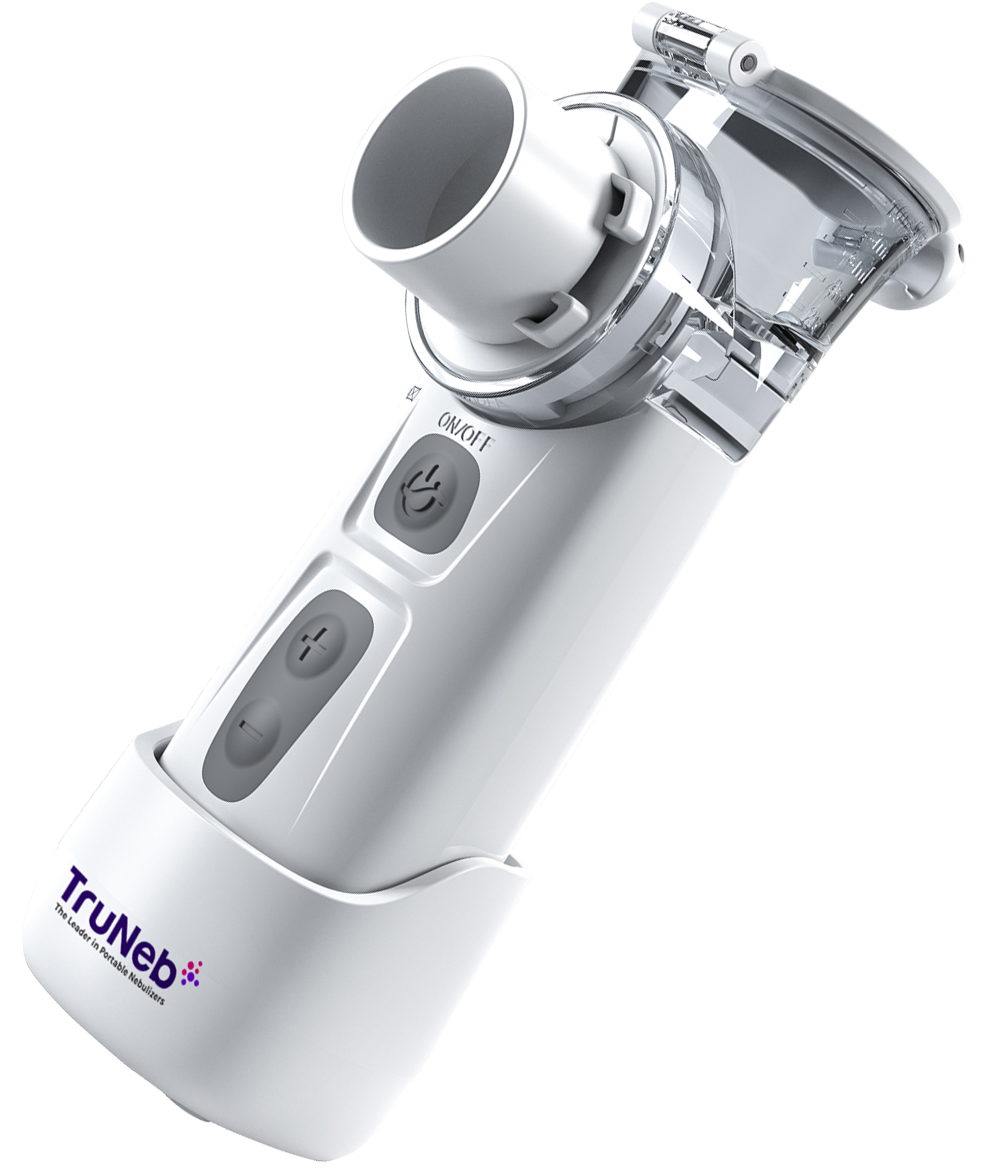
A portable mesh nebulizer, such as the TruNeb™ Portable Mesh Nebulizer, can make treatments easier to fit into daily life—whether you’re at home or on the go. In some cases—especially in bronchiectasis or certain COPD patients with thick mucus—clinicians recommend nebulized hypertonic saline (3% or 7%) to help loosen thick mucus in select patients.
Not every therapy fits every person. Talk to your doctor before trying a new medication or nebulized saline, and use devices only as directed within your care plan.
Nebulizer types at a glance: mesh units are quiet and portable, jet models are bulkier but affordable, and ultrasonic units are quiet but not for all medications.
| Nebulizer type | Portability | Noise | Medication compatibility | Cleaning needs |
|---|---|---|---|---|
| Jet (compressor) | Home use, some travel kits | Louder (compressor noise) | Works with most meds and saline | Multiple parts to wash and dry |
| Ultrasonic | Portable | Quiet | Not ideal for some suspensions; check med guidance | Regular cleaning of cup and transducer |
| Vibrating mesh | Highly portable (handheld) | Very quiet | Compatible with many solutions, including bronchodilators and saline | Rinse after use; avoid damaging the mesh |
Notes: Always follow your doctor’s advice on medication choice and device use.
Key takeaway: A portable mesh nebulizer like TruNeb can help deliver prescribed meds or saline to support mucus clearance.
Frequently Asked Questions
Tap or click a question below to see the answer:
No. COPD by itself doesn’t cause finger clubbing. If you notice clubbing, your doctor will look for another cause.
An underlying long-term condition, usually in the lungs (such as lung cancer, bronchiectasis, or pulmonary fibrosis), and sometimes the heart or digestive system.
Look for enlarged fingertips and curved nails. Try the Schamroth window test: if the small diamond-shaped gap disappears when you touch fingernails together, that suggests clubbing.
Sometimes, if the cause is found early and treated well, clubbing can improve. But it doesn’t always go back to normal.
No. Emphysema (a form of COPD) can cause breathlessness and blue nail beds in advanced disease, but not clubbing.
Key takeaway: Use clubbing as a red flag—see your doctor to check for other conditions.
Disclaimer: This article is for informational purposes only and is not a substitute for professional medical advice. Always talk with your doctor about your symptoms, diagnosis, and treatments.