

On this page

How Hot Weather Can Trigger Asthma
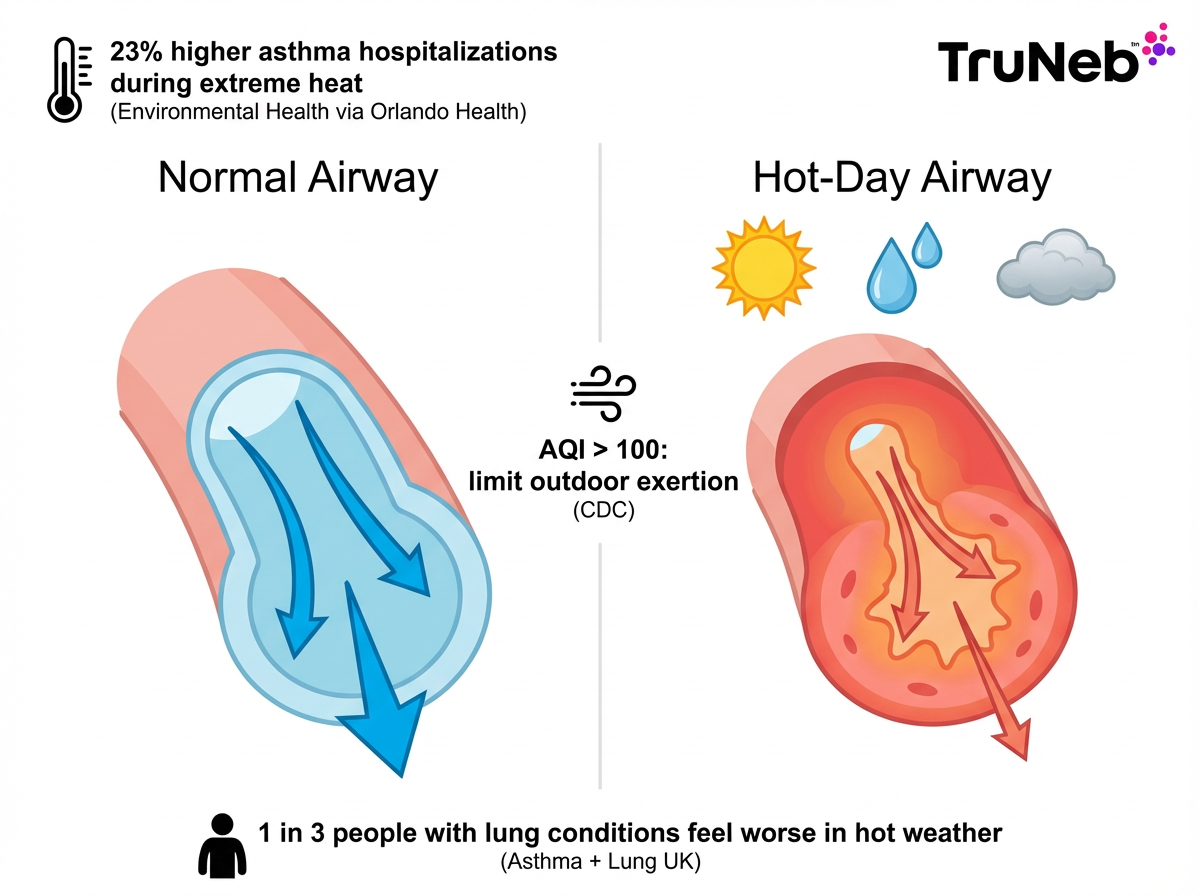
Yes, heat can trigger asthma. Breathing hot air can make the muscles around your airways tighten. On hot, humid days, the air also holds more irritants. Ground-level ozone and other pollution rise in sunny heat. Pollen and mold can be high in summer too. Put together, these conditions can spark wheezing, cough, chest tightness, or shortness of breath.
People react differently. Some feel worse in sticky, humid heat. Others feel worse in dry, scorching heat. Any extreme can be a trigger. Once you understand what hot days do to your lungs, you can plan your routine, your environment, and your medications to stay in control.
Key takeaway: Hot weather can trigger asthma by tightening airways and increasing pollution and allergens.
Why Heat and Humidity Worsen Your Breathing
Hot air can irritate the lining of your bronchial tubes. Your body may react by tightening those muscles (bronchoconstriction). That makes the airway narrower, so less air gets through.
Humidity adds another layer. Heavy, moist air can feel like you are breathing through soup. High humidity also helps mold and dust mites grow, and it can hold more pollution close to the ground.
Pollution and ozone matter too. Ground-level ozone forms faster on hot, sunny days, and stagnant hot air traps smoke and exhaust. A long‑term study found more asthma hospitalizations on extreme‑heat days.
Heat also dries you out. When you get dehydrated, airway mucus can thicken. Thick mucus is harder to clear, which can make breathing feel tighter and trigger asthma symptoms.
Key takeaway: For people with asthma, heat, humidity, and ozone form a triple trigger—narrower airways, more irritants, and thicker mucus.
Signs to Watch For During Hot Weather
Hot days can bring your usual asthma symptoms:
- Wheezing or a whistling sound
- Cough or chest tightness
- Shortness of breath
- Faster breathing or heart rate
Heat can also cause fatigue, dizziness, or headache. Those can overlap with heat exhaustion. If you start to wheeze or feel tight in the chest, treat it as an asthma warning, not just the heat. Older adults and people with other lung or heart conditions can be more sensitive to heat, so be extra cautious with outdoor time.
Red flags that need urgent care:
- Trouble speaking in full sentences
- Lips or fingertips turning blue or gray
- Your rescue inhaler is not helping
⚠️ If you notice any of these red flags, call 911 or go to the nearest emergency room right away.
Move to a cool place and follow your action plan. If symptoms are severe or not improving, call your doctor or 911.
Key takeaway: Treat wheeze or chest tightness on a hot day as an asthma warning, not just the heat.
Plan Ahead: Check Weather and Air Quality Daily
Make it a habit each summer morning:
- Temperature and heat index: Very hot days raise risk. Plan easier activities when it feels hottest.
- Humidity: High humidity (often above 60–70%) makes breathing feel heavier. Pick cooler, less humid times when you can.
- Air Quality Index (AQI): If AQI is over 100 (Unhealthy for Sensitive Groups like people with asthma), reduce outdoor exertion. Over 150, stay in clean, air‑conditioned spaces if possible.
- Pollen and mold: If you have allergic asthma, check daily pollen counts and plan around them. Checking both pollen and pollution together helps you avoid stacking triggers on the same day.
Tip: Ozone and heat often peak in the afternoon. Early morning or evening is usually easier on your lungs.
Key takeaway: If you have asthma, set a daily routine—check temperature, humidity, AQI, and pollen before you head out.
Time Your Outdoor Activities Wisely
Avoid the hottest window, usually 11 am to 3 pm. Plan walks, workouts, lawn care, and kids’ playtime for early morning or later evening.
Choose shade when you can. On very hot or high‑AQI days, move activity indoors.
For children: make sure they get frequent water breaks, rest in shade, and have their inhaler handy. Coaches and counselors should have a copy of the child’s asthma action plan.
Key takeaway: With asthma, it’s easier on your lungs to be active early or late in the day and skip the midday heat.
Stay Cool and Hydrated to Protect Your Lungs
Drink water regularly throughout the day. Staying hydrated helps thin airway mucus so it’s easier to clear. A simple check: your urine should be pale yellow or clear.
Keep your body cool. Use air conditioning or fans. Wear light, breathable clothing. Take a cool shower or place a cold, damp cloth on your neck if you start to overheat.
Avoid hot, stuffy spaces. Never stay in a parked car. Don’t leave inhalers or medicines in a hot car or in direct sun. High heat can damage medicine, and pressurized inhalers can burst in extreme heat.
Key takeaway: Hydration thins mucus and cooling your body lowers stress on your lungs.
Cool Indoor Air and Control Humidity
Keep indoor air cool and clean. Use air conditioning if you have it and close windows on high‑ozone or high‑pollen days. Change HVAC or AC filters on schedule. A HEPA air purifier can help when outdoor smoke or smog drifts in.
Manage indoor humidity. In very humid climates, a dehumidifier can keep humidity near 50% to reduce mold and dust mites. In very dry heat, avoid over‑drying the air so your airways don’t get irritated.
If you live in an area that gets summer wildfires, set up a clean‑air room with a good filter and keep doors and windows closed.
Key takeaway: Cool, cleaner, drier indoor air gives your airways a break.
Always Have Your Asthma Medications Ready
Carry your rescue inhaler everywhere in summer. Heat, humidity, or a sudden pollution spike can set off symptoms fast.
Your doctor will usually want you to keep taking your daily controller medicine, even in summer. Don’t stop or change your preventer without checking with your doctor, because stopping controller meds can lead to loss of control.
As above, store your inhalers and nebulizer vials away from heat and direct sun.
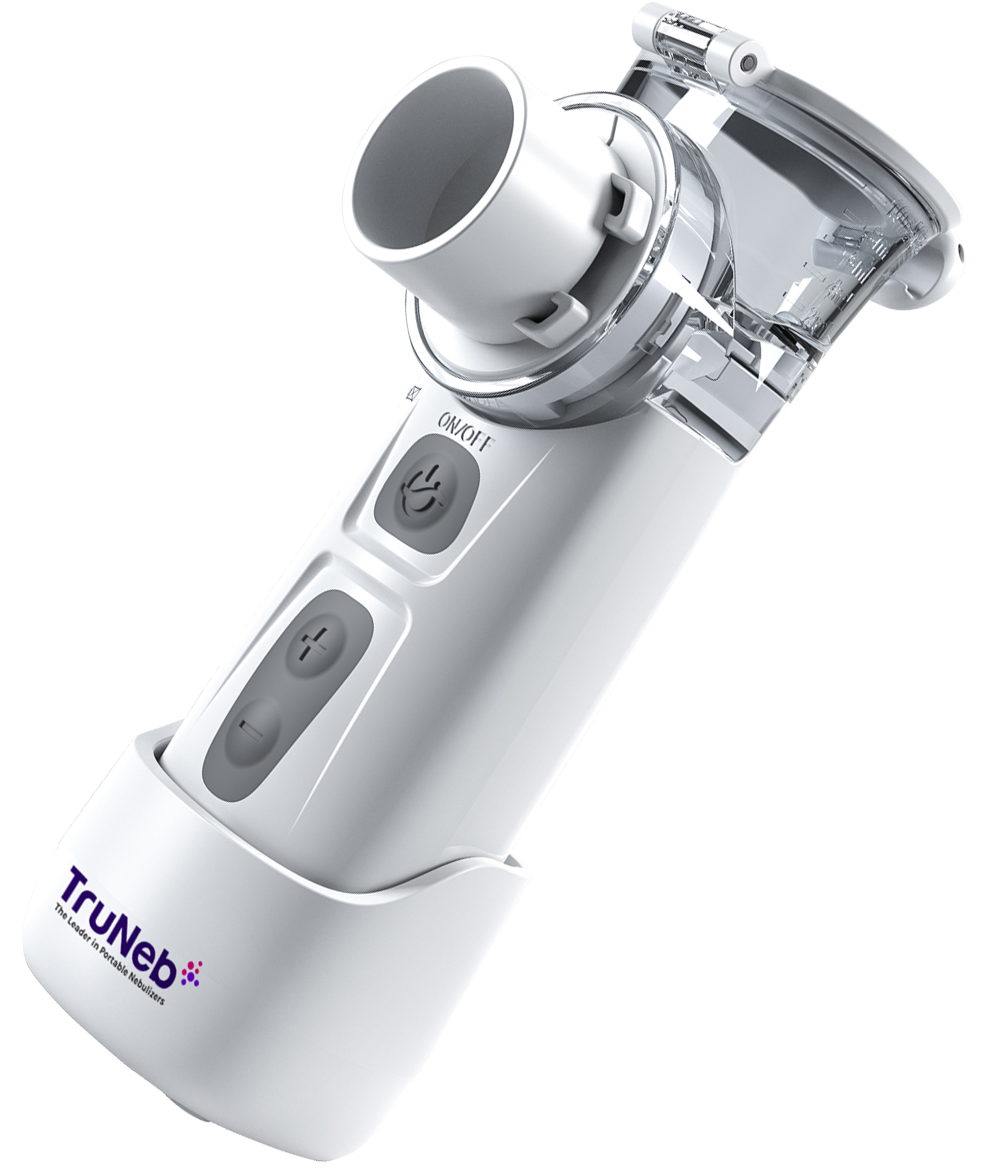
Some people use nebulizers for their asthma treatment, under a doctor’s guidance. If a nebulizer is part of your treatment, follow the schedule and instructions your doctor has given you. A mesh nebulizer can be helpful in summer because it’s small, quiet, and easy to carry, letting you take prescribed nebulizer treatments on the go without a bulky machine or power outlet. Some people use nebulized saline, such as 3% or 7% hypertonic saline, to help loosen thick mucus—only use it if your doctor has recommended it. TruNeb offers prefilled saline ampules designed for nebulizer use.
Use your action plan: at the first sign of symptoms in heat, follow your rescue steps early.
Safety note: Talk to your doctor before trying a new medication or changing any asthma treatment.
Key takeaway: Carry your reliever, keep taking your preventer as prescribed by your doctor, and store all meds out of the heat.
Key takeaway: For summer mobility, portable mesh nebulizers are easy to carry; MDIs with a spacer are very portable but require good technique; home compressors work well but are bulky and need power.
| Device | Portability | Power | Noise | Medication delivery | Cleaning |
|---|---|---|---|---|---|
| Portable mesh nebulizer (e.g., TruNeb) | Pocket-size | Rechargeable battery | Very quiet | Nebulizer solutions as prescribed | Rinse after use, follow device manual |
| Home compressor nebulizer | Bulky, home use | Wall outlet | Louder | Broad range of nebulizer meds | Rinse daily, periodic disinfection |
| MDI + spacer | Very portable | None | Silent | Specific inhalers only (not neb vials) | Rinse spacer weekly, wipe mouthpiece |
Notes: Use devices and medications only as directed by your doctor. Compatibility and cleaning steps vary by brand.
Update Your Asthma Action Plan for Summer
An asthma action plan is a written guide from your doctor that shows what to do when your symptoms or peak flows change.
- Add summer triggers and conditions: heat, humidity, high AQI, and high pollen or mold. Write down thresholds that matter to you (for example, AQI > 100 for sensitive groups).
- Ask your doctor if your plan should say to use your rescue medicine sooner on very hot or high‑AQI days, and when to step up per the yellow zone.
- List who to call and where to go in an emergency.
- For kids: give copies to schools, camps, and coaches, and make sure a rescue inhaler and spacer are easy to access and not left in a hot bag or car.
- Don’t change medications on your own—update the plan with your doctor.
Key takeaway: Build heat, humidity, and bad‑air days into your asthma action plan so you know exactly what to do when conditions change.
Enjoying Summer Safely: Key Takeaways
Heat is a real trigger, but you can stay in control by watching conditions, timing activities, cooling your environment, and keeping medicines ready. Be extra vigilant during heatwaves and on poor‑air days.
Key takeaway: With some planning and the right tools, people with asthma can still enjoy hot summer days safely.
FAQs: Hot Weather and Asthma
Tap or click a question below to see the answer:
Both extremes can trigger asthma, but the reason differs. Cold air is dry and can irritate airways, while hot, humid days can tighten airways and trap pollution and ozone. Track which conditions set you off and plan your activities and medicines around them.
On very hot or high‑AQI days, it’s safer to move workouts indoors. If you do go out, choose early morning or evening, slow your pace, and stick to shade. Only pre‑treat with your inhaler if your doctor has told you to do so in your action plan.
Yes. AC cools the air, lowers humidity, and can filter some particles. Keep windows closed on high‑ozone or high‑pollen days and change filters on schedule so the unit works well.
There isn’t a single number, because humidity and air quality matter. Be more cautious during heatwaves and when the AQI is over 100 for sensitive groups, and plan indoor options when it’s both hot and smoggy.
Yes—if your doctor has prescribed nebulizer treatments for you. Follow your action plan and store medicines and devices out of the heat. A portable mesh nebulizer can make taking prescribed treatments easier away from home.
AQI quick guide for people with asthma
- Over 100 (Unhealthy for Sensitive Groups): Reduce outdoor intensity and time.
- Over 150 (Unhealthy): Stay indoors with clean, cool air if you can.
- Check AQI daily on AirNow and time outdoor activities for when conditions improve.
Quick steps for a heat‑triggered flare
- Stop activity and move to a cool, shaded or air‑conditioned place.
- Follow your asthma action plan and use your rescue inhaler or nebulizer as directed.
- If symptoms are severe, worsening, or not improving, call your doctor or 911.
Summer travel checklist for asthma
- Rescue inhaler (plus spacer) and a backup.
- Controller medicines and refills as prescribed.
- Nebulizer supplies and charger/batteries; a portable mesh nebulizer if it’s in your plan.
- Copies of your asthma action plan for caregivers.
- An insulated pouch to keep medicines out of direct heat (don’t place devices directly on ice).
Heatwave watch‑outs
- Heatwaves and record‑hot days raise the chance of flares and hospital visits.
- Line up indoor, air‑conditioned options for the afternoon when heat and ozone peak.
- Set phone alerts for heat advisories and air‑quality changes.
Medical Disclaimer
Disclaimer: This article is for informational purposes only and is not a substitute for professional medical advice, diagnosis, or treatment. Always talk with your doctor about your symptoms and any questions you have about your medications or asthma action plan. If you think you are having a medical emergency, call 911 right away.