

On this page
Can You Use Distilled Water in a Nebulizer? What To Use Instead
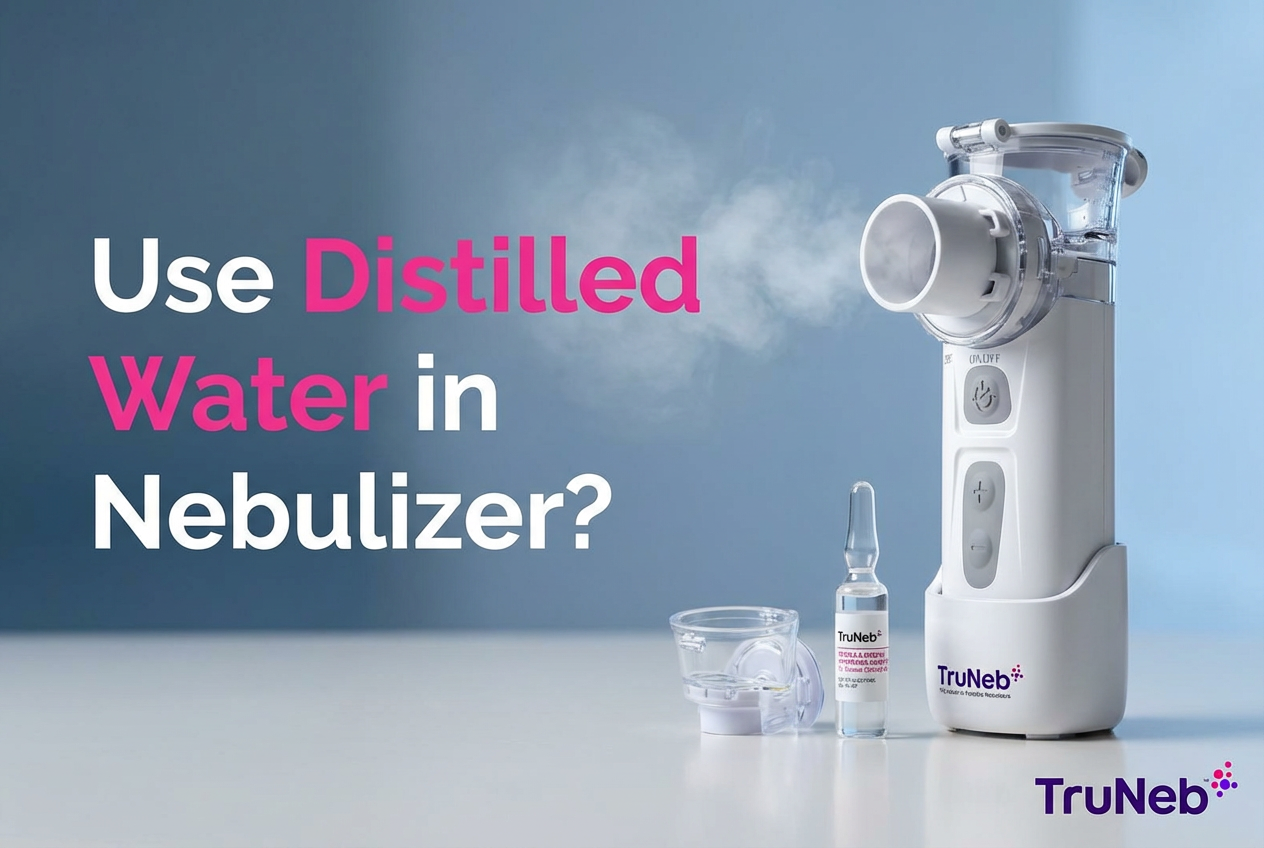
No, don't use distilled water as a nebulizer treatment. It isn't guaranteed sterile, especially once opened, and its low salt content can irritate your airways. Distilled water is different from sterile saline; saline is specially prepared and sealed so it’s safe to inhale. Distilled water is not safe to inhale in a nebulizer because it isn’t guaranteed sterile and its lack of salt can irritate your lungs.
Nebulizers are meant for sterile saline or medicines your doctor prescribes.
Why Distilled Water Is a Problem
Distilled water isn’t a safe nebulizer liquid because it isn’t guaranteed sterile and its lack of salt can make your airways react.
- Not guaranteed sterile after opening. Breathing non-sterile fluid can introduce germs into your lungs. Tap water, for example, can carry bacteria like Legionella that CDC Emerging Infectious Diseases links to serious lung infections.
- Very low in salts (hypotonic), which can trigger cough or bronchospasm (a sudden tightening of your airways) in some people.
- Nebulizers are designed for sterile saline or prescribed respiratory solutions, not plain water (even boiled or filtered), oils, or DIY mixes.
What To Use Instead
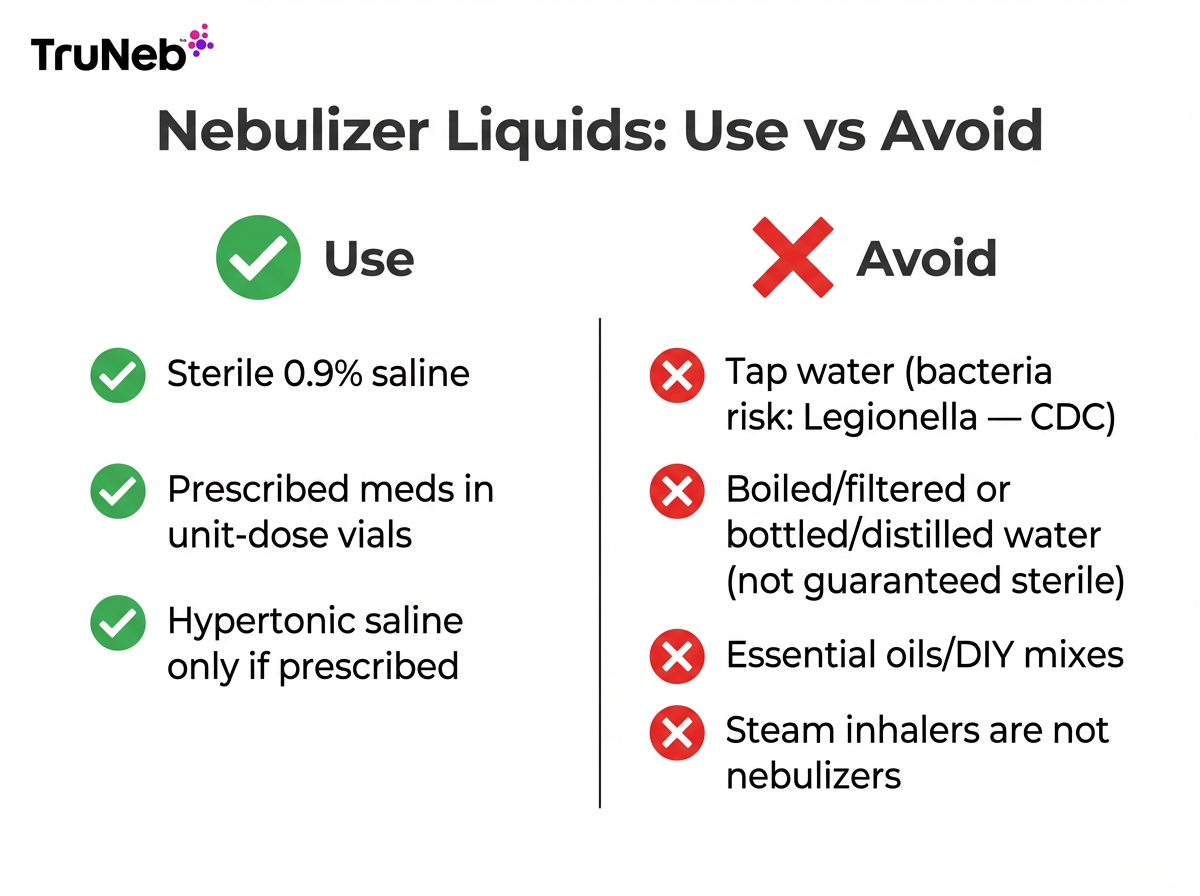
- Prescribed inhaled medications in unit-dose vials.
- Sterile 0.9% saline (isotonic) if your doctor recommends it for airway clearance.
- Hypertonic saline (3% to 7%) only if prescribed; it can help move mucus but might cause brief throat or chest irritation, so your doctor should guide you.
In short, the only safe liquids to put in a nebulizer are doctor-prescribed medications or sterile saline solutions.
Quick Do/Don’t
Here’s a quick snapshot of what belongs in your nebulizer and what doesn’t.
- Do use: sterile 0.9% saline; prescribed solutions in unit-dose vials.
- Don’t use: tap water, boiled or filtered water, bottled water, distilled water, essential oils, or homemade mixtures.
- If you see boxes labeled "steam inhaler" in the store, remember these are not nebulizers and are not meant for breathing medications.
Use saline or prescribed meds in your nebulizer, and avoid all types of plain water or oils.
Cleaning Tip
If it matches your device instructions, you can rinse parts with sterile or distilled water after washing to minimize mineral spots, then air-dry completely. Distilled water is fine for rinsing parts after washing but should never be used as the actual treatment liquid. Don’t fill the cup with distilled water for a treatment.
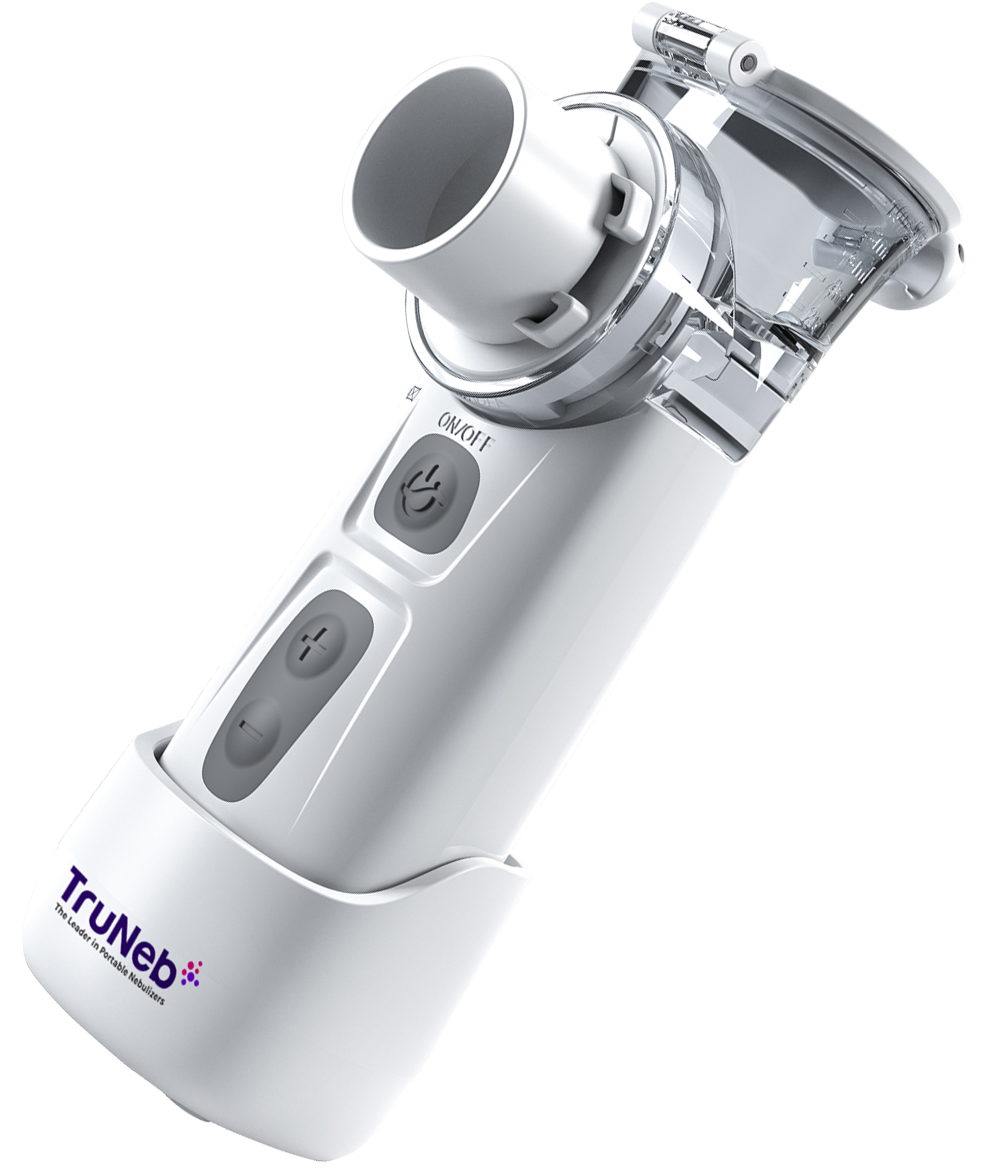
A portable mesh nebulizer like TruNeb™ can make taking saline or prescribed meds simpler at home or on the go. It’s quiet, compact, and designed to be easy to clean between uses.
Safety Notes for Nebulizer Liquids
Always check with your doctor before changing what you put in your nebulizer, and get urgent help if breathing treatments make your symptoms worse.
- Talk to your doctor before trying a new medication or changing saline strength.
- If a treatment causes severe cough or wheeze, pause and contact your doctor for guidance.
- Never nebulize tap water, distilled water, or essential oils.
- ⚠️ If you or your child has trouble breathing, chest pain, bluish lips or face, or feels like you can’t catch your breath, seek emergency medical care right away (call 911 in the U.S.).
You’ll get better results by using the right solution, cleaning your device regularly, and following your care plan. Talk with your doctor if your symptoms don’t improve or you’re unsure which solution to use.
Bottom Line
Bottom line: do not nebulize distilled or tap water. Stick with sterile saline or the medications your doctor prescribes.
Medical Disclaimer
Disclaimer: This article is for informational purposes only and is not a substitute for professional medical advice, diagnosis, or treatment. Always talk with your doctor about your symptoms, treatment options, and what to put in your nebulizer.