

On this page
Childhood Asthma vs Adult Asthma: Key Differences at a Glance
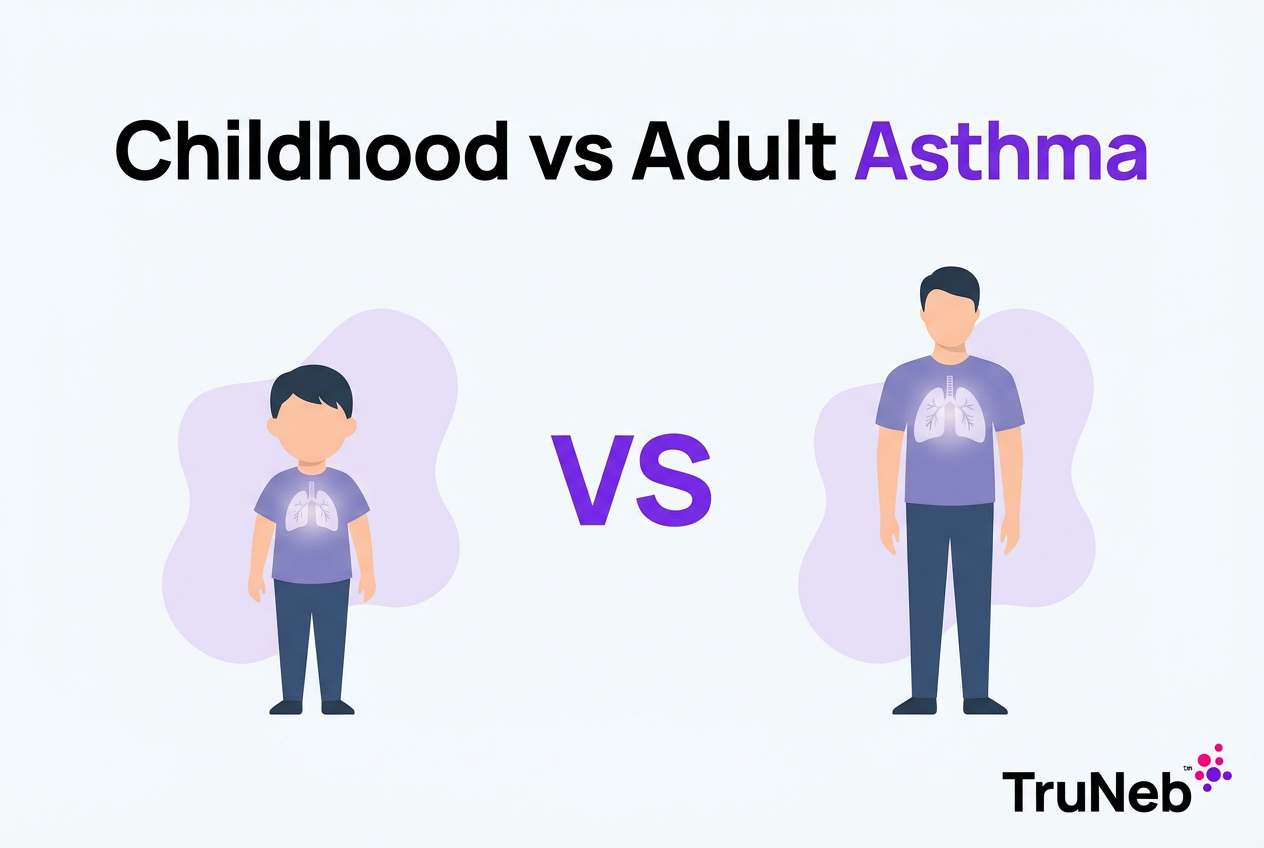
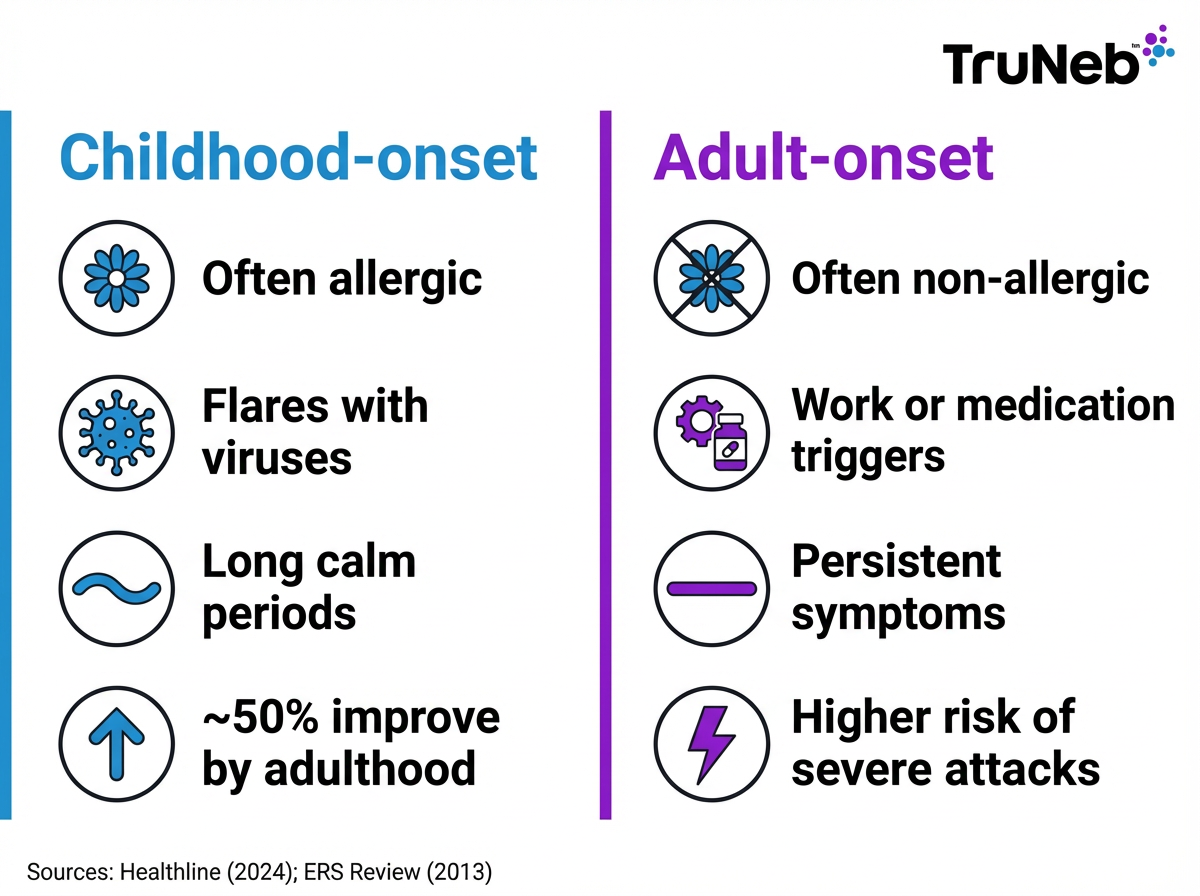
Childhood-onset and adult-onset asthma share the same core symptoms. The differences show up in who gets it, how it behaves, and what happens over time.
- Onset and pattern: Most people with asthma are diagnosed before adulthood. Adult-onset usually starts after age 20 and tends to stick around.
- Symptom rhythm: Kids typically have flare-ups with long calm periods. Adults are more likely to have steady, persistent symptoms.
- Remission odds: Symptoms in kids sometimes fade during the teen years.
- Severity and risk: Adult-onset tends to be more severe, with a higher risk of serious complications.
- Gender shift: In childhood, boys are affected more. After puberty, asthma is more common in women.
- Serious outcomes: Adults are about six times more likely to die from asthma than children, according to Healthline.
Childhood vs adult asthma at a glance: kids' asthma is more allergy- and virus-driven, while adult-onset is more persistent and linked to exposures and life changes.
| Aspect | Childhood-onset | Adult-onset |
|---|---|---|
| Typical onset age | Preschool to early teens | After age 20 |
| Symptom pattern | Episodic flares with long calm periods | Persistent day-to-day symptoms |
| Common triggers | Viruses, household allergens, exercise | Workplace irritants, certain medicines (aspirin in sensitive adults), stress, hormones |
| Allergy link | Usually allergic, part of the atopic march | More likely non-allergic |
| Remission/prognosis | Remission is more common; symptoms can ease in the teen years | Remission is uncommon; long-term control is typically needed |
| Diagnosis highlights | Harder under 5; API used in toddlers; spirometry once able | Spirometry/FeNO help confirm; rule out COPD/bronchitis |
| Risk of severe outcomes | Lower with good care | Higher in adults |
API = Asthma Predictive Index; FeNO = a breath test that measures airway inflammation.
Key point: Childhood-onset asthma tends to loosen its grip with age; adult-onset usually needs long-term, steady care.
Boys have higher asthma rates in childhood; after puberty, women are more affected (Frontiers in Pediatrics).About one-third to one-half of children see remission by adulthood; adult-onset asthma rarely remits. Childhood asthma is usually allergic; adult-onset is more often non-allergic (European Respiratory Review).
Causes and Risk Factors: Why Asthma Starts at Different Ages
In kids, asthma usually comes from a mix of genetics and early-life exposures. In adults, it typically shows up after years of triggers or health changes.
In general, pediatric asthma is usually allergic, whereas adult-onset asthma is more likely to be non-allergic.
Childhood-onset drivers:
- Family history and allergies: Pediatric asthma commonly follows the atopic march (eczema and allergic rhinitis leading to asthma).
- Early exposures: Secondhand smoke, viral infections, and perinatal factors like prematurity can raise risk.
Adult-onset drivers:
- Work and environment: Ongoing exposure to dust, fumes, or chemicals can spark asthma later in life.
- Health changes: Hormonal shifts and weight gain can worsen airway inflammation.
- Smoking history: Active or past smoking can worsen outcomes in adult asthma.
Gender shifts over time play a role too: boys are affected more in childhood, while women are more affected after puberty.
Key point: Kids’ asthma is usually tied to allergies and early-life factors; adult asthma tends to follow years of exposures or health changes.
Symptom Patterns and Diagnosis in Kids vs Adults
Asthma symptoms are similar at any age: cough, wheeze, chest tightness, and shortness of breath. The pattern and the path to diagnosis can differ.
Kids:
- Kids typically cough at night or with colds and play; wheezing flares with viruses are common.
- Long quiet stretches between flare-ups are typical.
- Diagnosis is harder under age 5. Doctors sometimes use history, response to medicine, and tools like the Asthma Predictive Index (a tool doctors use in toddlers to estimate asthma risk) until kids are old enough for lung tests (usually under about age 3–5).
- Most children can do spirometry (breathing tests) reliably by the early school years.
Adults:
- More steady symptoms (climbing stairs, daily cough, nighttime tightness).
- Diagnosis usually includes spirometry showing reversible airflow limits; doctors may add FeNO (a breath test that measures airway inflammation) or allergy testing to guide care.
- Asthma that starts in adulthood can be mistaken for chronic bronchitis or COPD at first; spirometry helps tell them apart.
Key point: Kids’ asthma is typically episodic and tricky to test; adults get clearer tests and more persistent symptoms.
Triggers and Exacerbations: Childhood vs Adult
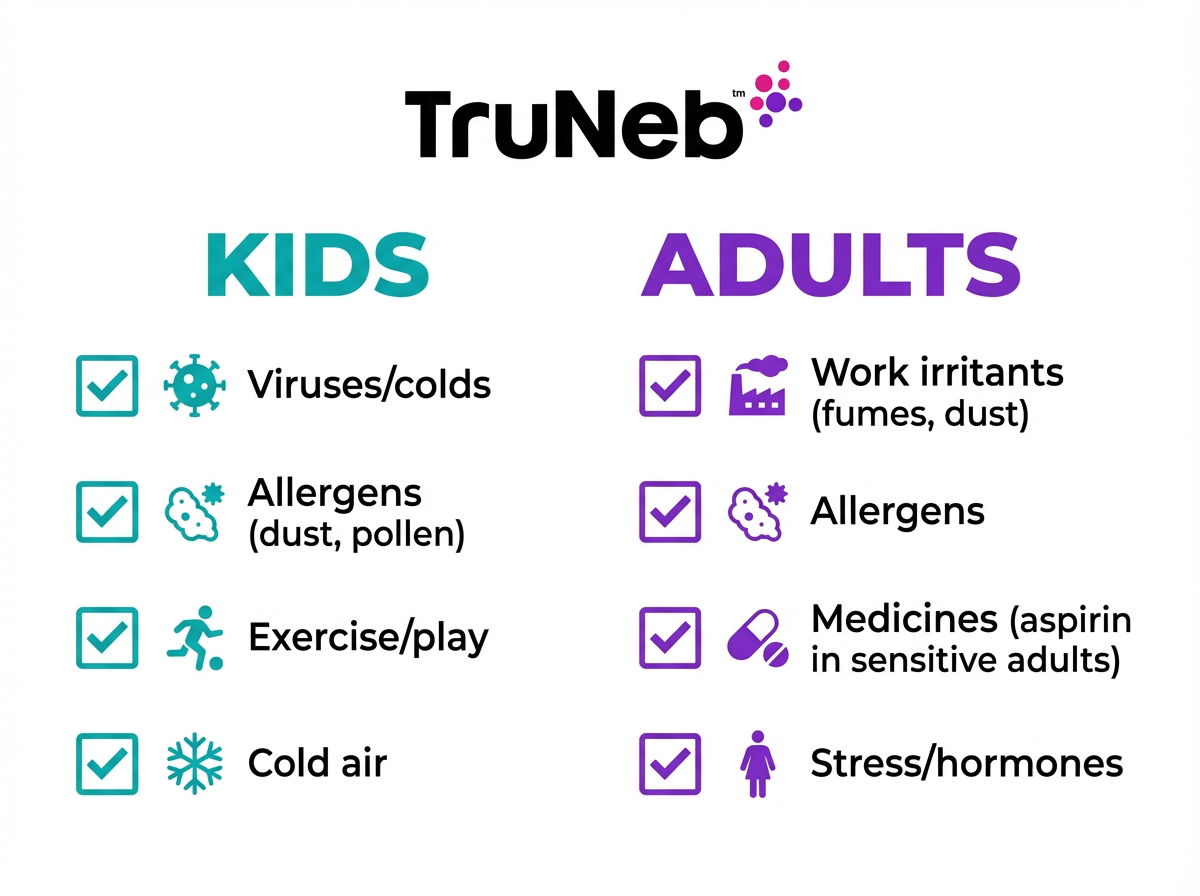
Some triggers hit at any age: dust mites, pollen, cold air, exercise, and tobacco smoke. Others show up more in one group.
More common in kids:
- Viruses and colds are the big ones. Young children frequently wheeze with infections.
- Play and sports can reveal exercise-related symptoms.
More common in adults:
- Work exposures (cleaning chemicals, flour dust, fumes) and long-term pollution.
- Certain medicines (like aspirin in sensitive adults) and hormonal shifts.
- Stress can make control tougher.
Managing triggers looks different too. Kids depend on caregivers to manage exposures, while adults make most adjustments themselves. Parents can allergy-proof a child’s bedroom and share an action plan with school. Adults can adjust workplace protection, chores, and daily habits to lower exposure.
Key point: Viruses drive a large share of kid flares; jobs, medicines, and stress trigger more adult flares.
Severity and Outcomes: Remission, Progression, and Prognosis
Childhood asthma ranges from mild to severe. The encouraging news: about half of kids improve with time. Some enter remission by their late teens or early 20s.
Adult-onset asthma tends to be more chronic. It rarely goes into remission and can be tougher to control. Over years, adults with severe disease may see faster declines in lung function if inflammation isn’t well controlled. That decline means the amount of air you can blow out in one second (FEV1) drops faster than expected.
Serious attacks are less common in children with good care, but they can still happen. In adults, the risk of dangerous flare-ups is higher, especially with other health issues.
When to Seek Urgent or Emergency Care
⚠️ If you or your child has severe trouble breathing, blue lips or face, can’t speak in full sentences, or your rescue inhaler isn’t helping, seek emergency medical care right away (call 911 or your local emergency number).
Talk to your doctor if symptoms are getting worse, you’re using your rescue inhaler more than usual, or nighttime symptoms are waking you up.
Key point: About half of kids improve by adulthood, while adult-onset asthma rarely remits and can decline faster without steady control.
Managing Asthma: Treatment Differences for Children and Adults
The toolkit is similar for everyone: quick-relief inhalers and, when needed, daily controller medicine. What changes is how you take it and how much support you need.
Children:
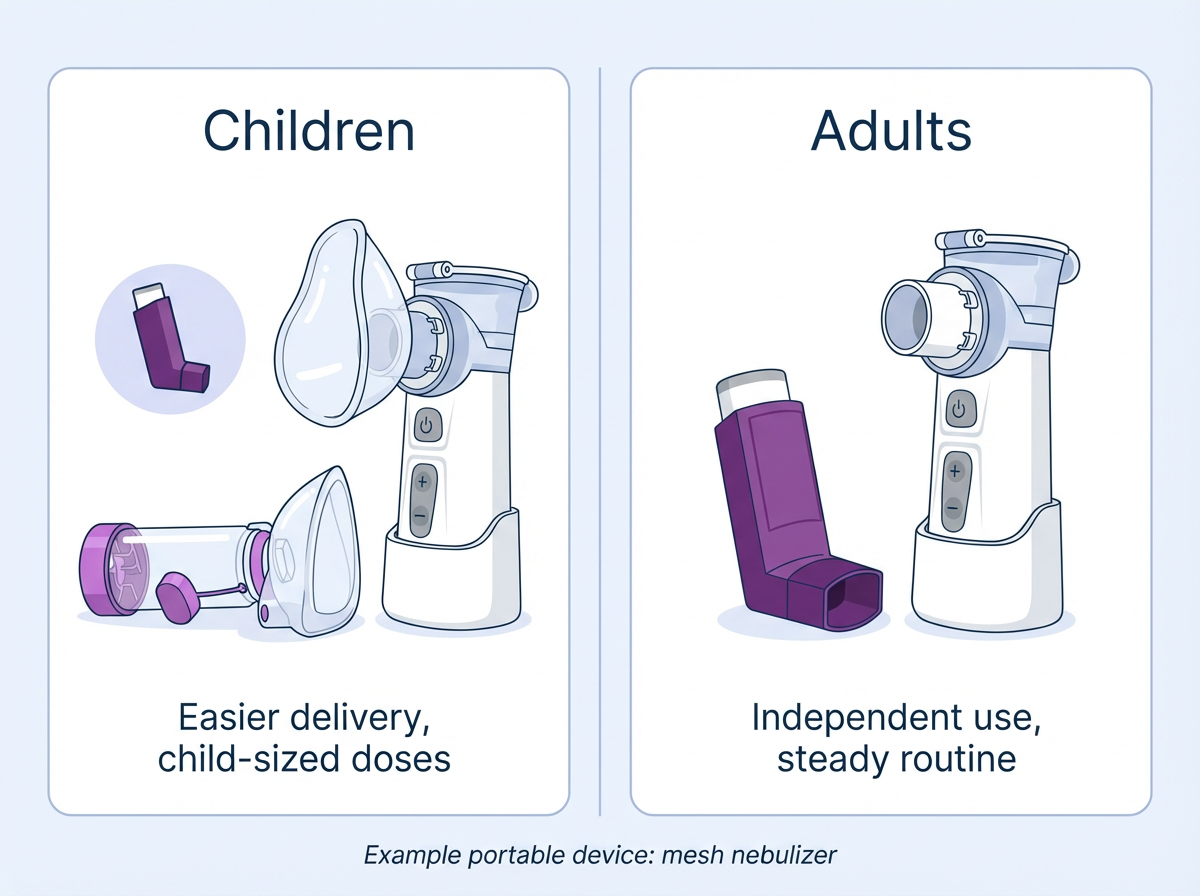
- Delivery matters. Young kids typically use a spacer or a nebulizer so medicine reaches the lungs well.
- Doses are child-sized, and parents help keep routines on track at home and at school.
Adults:
- Most use inhalers directly. Daily controllers are common, and some qualify for newer add-on treatments if asthma is severe.
- Technique, routine, and trigger control at work and home make a big difference.
Helpful gear:
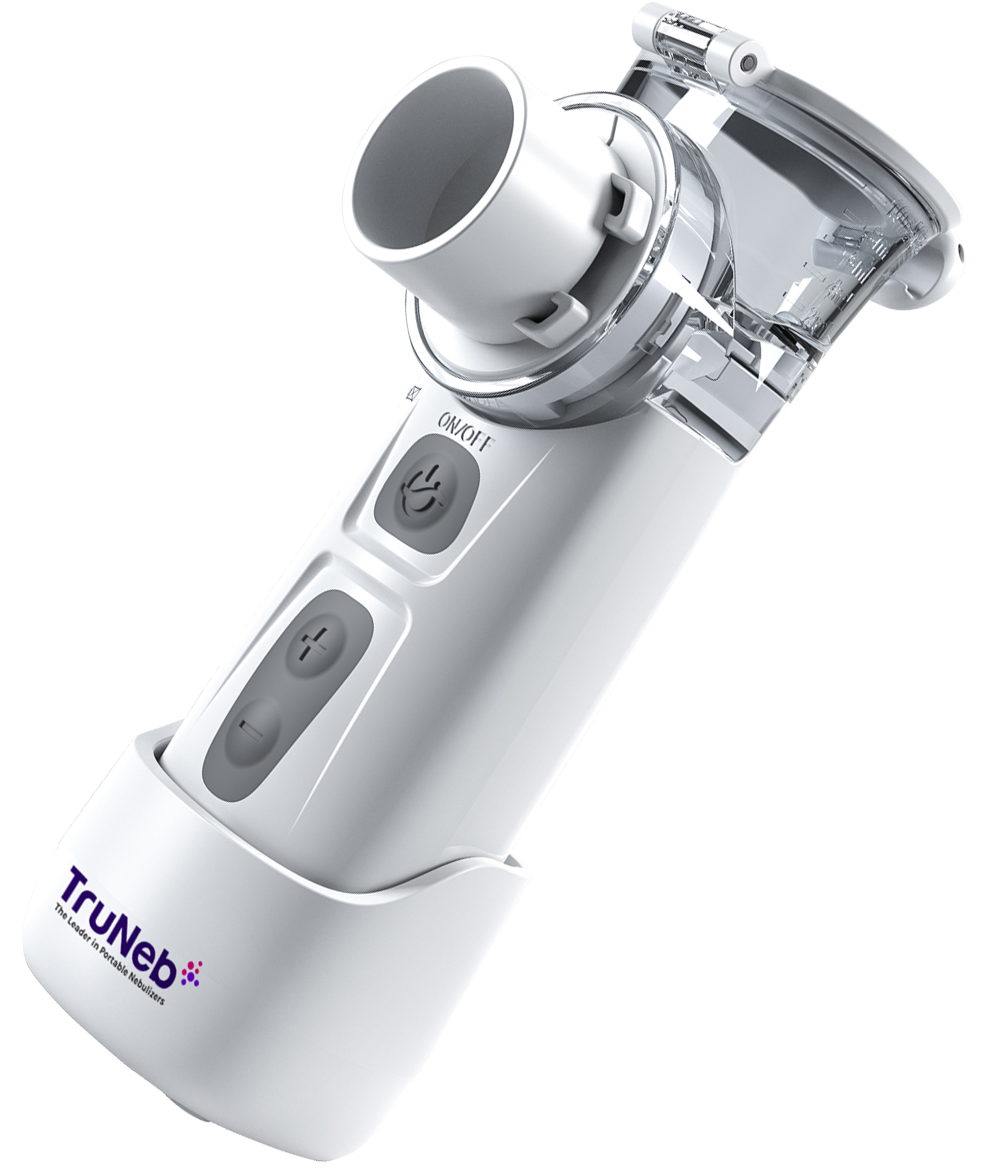
- Portable mesh nebulizer is small and quiet, so it can be easier for kids and adults to take treatments at home or on the go.
- 💡 Steam inhalers vs nebulizers: products labeled “steam inhaler” are not nebulizers and shouldn’t be used to deliver asthma medications.
- Note on saline: Hypertonic saline can help with thick mucus in select situations, but it isn’t a routine asthma treatment. It’s used mainly for certain mucus-heavy lung problems, not typical asthma alone, and only if your doctor recommends it.
Safety note: Talk to your doctor before trying a new medication.
Key point: Same medicines, different delivery and routines; kids need devices and support, adults need steady habits and trigger control.
Special Considerations: Co-Existing Conditions and Life Changes
Kids with asthma commonly have eczema or hay fever. Treating those allergies can improve breathing control.
Adults can face different add-ons: chronic sinus issues, reflux that triggers cough and wheeze, or sensitivity to certain pain relievers. Some notice changes around pregnancy or menopause. Work demands and stress can also affect control.
Treating these extra issues and adjusting to life changes can steady day-to-day breathing and cut down on flares.
Key point: Treat the whole picture, allergies in kids and sinus or reflux issues in adults, to improve asthma control.
Living with Asthma: Tips for Families and Adults
If you’re a parent:
- It’s common to share an asthma action plan with your child’s school and caregivers, following the doctor’s plan.
- Caregivers use spacers or nebulizers as directed by the doctor, and they can set simple reminders for daily medicines.
- Families often keep rescue medicine available at home and at school when prescribed.
As an adult with asthma:
- You can work on triggers where you live and work by improving ventilation, using protective gear when needed, or adding an air purifier.
- Doctors usually prescribe controller medicines to be taken every day, even on good days; follow your doctor’s instructions.
- Lifestyle changes like quitting smoking, being active, and getting steady sleep can support better breathing; talk with your doctor about what’s right for you.
With the right plan and tools, most kids and adults with asthma can stay active and do the things they enjoy. Small steps add up. Sticking with your routine can help keep symptoms quieter and life more active.
Key point: Simple routines with a plan, the right gear, and steady habits help keep asthma quieter and life active.
Frequently Asked Questions
Tap or click a question below to see the answer:
This FAQ answers common questions about how asthma that starts in childhood compares with asthma that begins in adulthood.
Yes. About half of kids see symptoms fade or go into remission by adulthood. It can still return later, so keep a rescue inhaler handy if your doctor has prescribed one, and check in with your doctor if breathing changes.
Asthma that begins in adulthood tends to be more persistent and can be more severe on average. Adults also face higher risks from severe attacks. With steady treatment and trigger control, most people still manage symptoms well.
Some children improve as they grow. Others carry asthma into adulthood or see it return later. If childhood asthma was severe or very allergic, it’s more likely to persist. Good care at any age helps you stay active.
Medicines are similar, but delivery and dosing differ. Kids typically use spacers or nebulizers and need caregiver support. Adults manage their own inhalers and routines and may qualify for additional therapies if asthma is severe.
New exposures, work irritants, infections, hormonal shifts, or weight gain can tip the airways into asthma later in life. Adult-onset cases are more likely to be non-allergic.
Disclaimer: This article is for informational purposes only and is not a substitute for professional medical advice, diagnosis, or treatment. Always talk to your doctor about your symptoms and treatment options.