

On this page
Why Wildfire Smoke Is Dangerous (and Why Ordinary Masks Don’t Work)
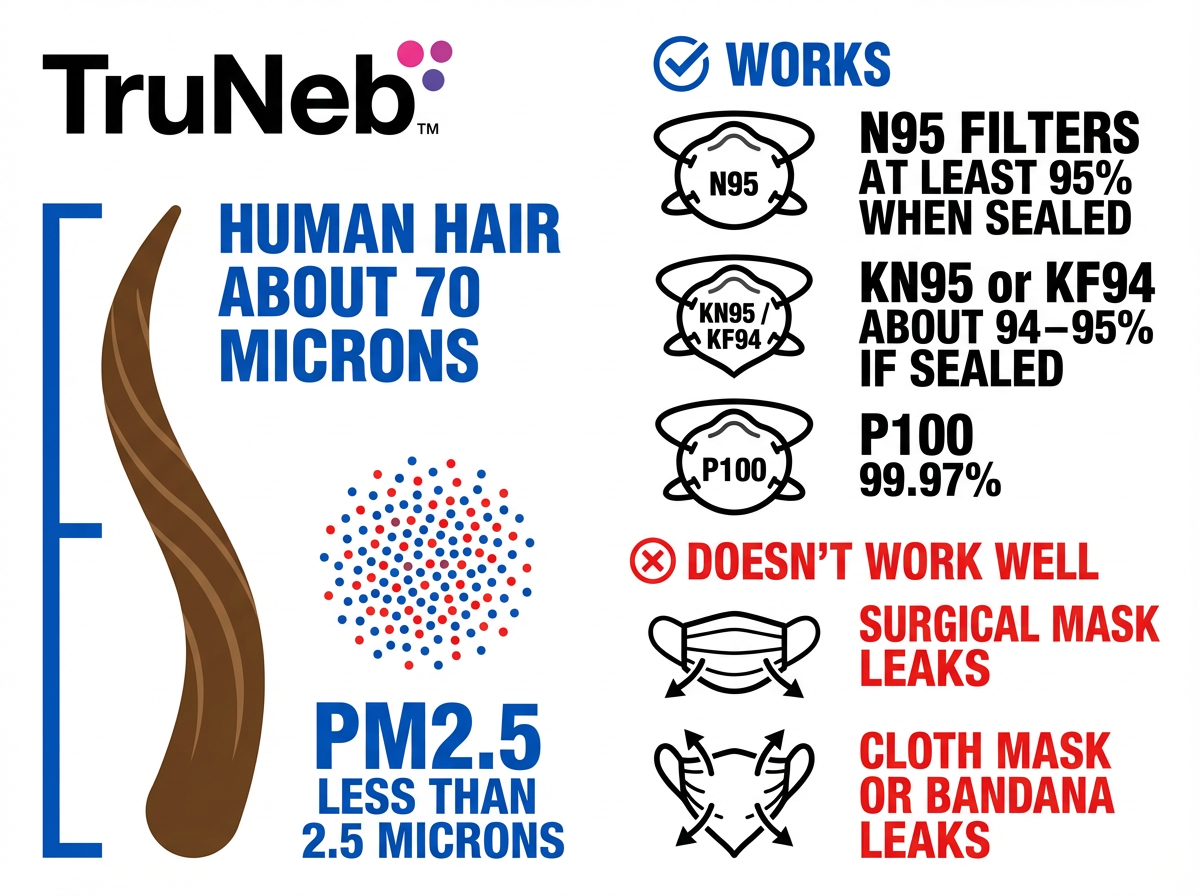
Wildfire smoke is packed with tiny particles called PM2.5. PM2.5 means particles smaller than 2.5 microns, small enough to travel deep into your lungs and make breathing hard. They can trigger coughing, wheezing, chest tightness, and flare asthma or COPD.
Loose face coverings don't stop these fine particles well. Cloth masks and simple surgical masks leak around the sides. A tight‑sealing particulate respirator filters the smoke and helps keep it out of your airways.
⚠️ Cloth masks, bandanas, and simple dust masks won’t protect you from wildfire smoke’s fine particles. You need a tight‑sealing respirator like an N95.
Wildfire smoke protection starts with a mask that both filters tiny particles and seals to your face.
One‑liner: Wildfire smoke is mostly PM2.5, so you need a tight‑sealing particulate respirator to block these particles.
The Best Mask for Wildfire Smoke: N95 Respirators
For most adults, the best mask for wildfire smoke is a NIOSH‑approved N95 respirator. An N95 filters at least 95 percent of very small particles under test conditions, and real‑world protection depends on fit. It also seals tightly to your face, and that tight seal is what stops smoky air from leaking in.
Doctors and hospitals recommend N95s for smoke because they block the tiny soot that irritates your lungs. Well‑known models include 3M 8210 and 3M 8511. If breathing out feels warm or humid, a model with an exhalation valve can make it easier. For smoke days, a valve is fine.
Make sure your mask is genuine. Look for NIOSH markings and a comfortable fit on your face. Try a couple of models if you need to. Comfort plus a good seal beats any fancy feature. You can find N95s at hardware stores, pharmacies, or reputable online sellers.
Key point: a genuine, well‑fitted N95 is the gold standard for wildfire smoke.
One‑liner: A NIOSH‑approved, snug N95 is the top pick for filtering wildfire smoke.
N95 vs KN95 vs Other Masks for Wildfire Smoke
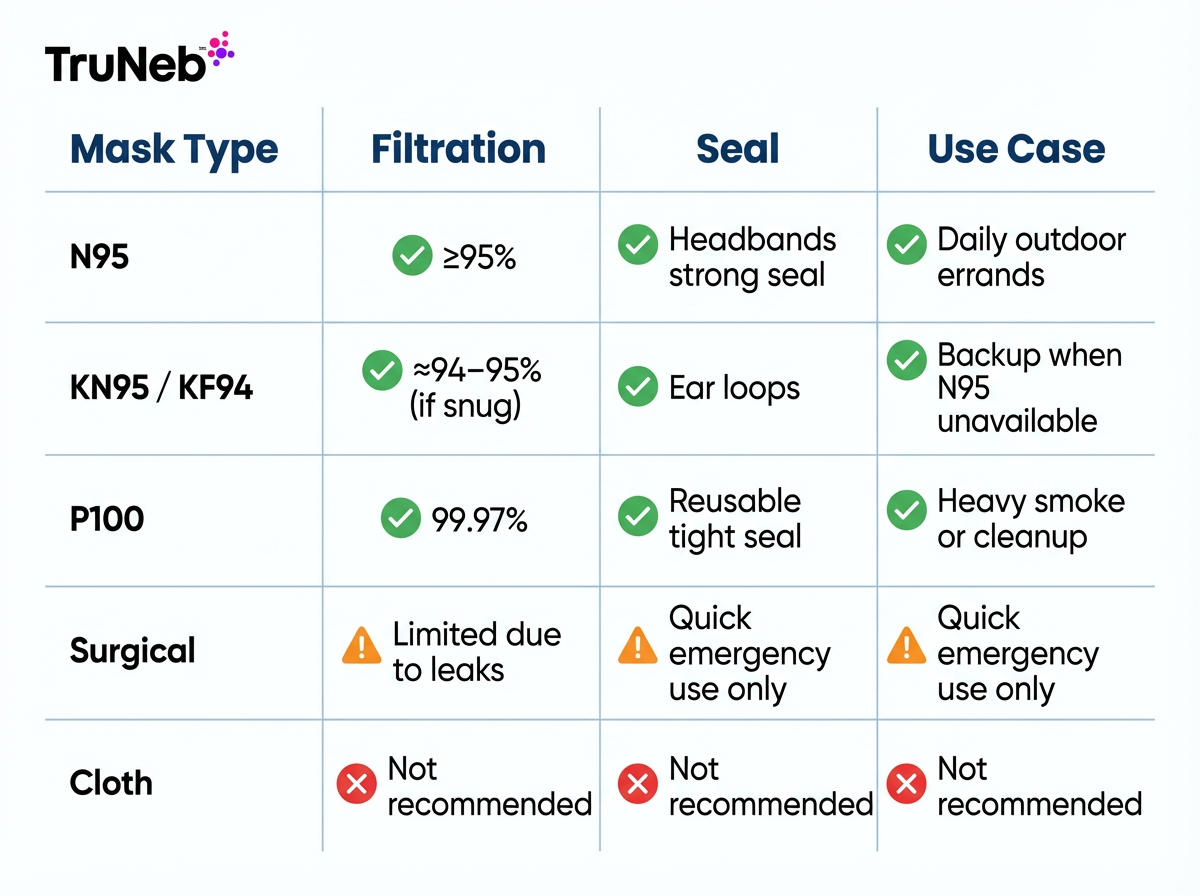
N95: This is the U.S. standard with NIOSH approval. It filters at least 95 percent of tiny particles when sealed correctly. Headbands help make a stronger seal.
KN95 and KF94: These follow other countries’ standards and can filter about 94 to 95 percent on paper. A lot of models use ear loops, which can make the seal looser. Because counterfeit KN95s and KF94s are common online, buy from trusted sellers and look for testing information or certifications.
FFP2: This is the EU standard and is comparable to N95/KN95 when it fits well.
Surgical masks: The material may filter well in a lab, but real‑world protection drops because air leaks around the edges. Better than nothing for a short walk, but not reliable for heavy smoke.
Cloth masks and bandanas: Not recommended for wildfire smoke. They don’t seal and don’t filter fine soot well.
Key point: Filtration plus a tight seal beats everything—no seal means leaks, and leaks let smoke in.
| Mask type | Filtration (standard) | Typical seal | Best use | Notes |
|---|---|---|---|---|
| N95 | At least 95% (NIOSH) | Headbands; strong seal | Errands, commuting, short outdoor work | Widely available |
| KN95 | About 95%* | Ear loops; varies | Backup when N95 unavailable | Watch for counterfeits |
| KF94 | About 94%* | Ear loops; varies | Backup when N95 unavailable | Child sizes exist (ages 2+) |
| FFP2 | About 94% (EU) | Usually good with right model | Equivalent option | EU standard |
| P100 | 99.97% (NIOSH) | Elastomeric; tight seal | Heavy smoke, ash cleanup | Reusable; can add gas cartridges |
| Surgical | Material filters; edge leaks | Loose | Quick emergency use only | Not reliable for smoke |
| Cloth | Not rated | Loose | Not recommended | Minimal protection |
* Performance depends on fit/seal and genuine, certified products.
If smoke is even heavier or you’re doing cleanup work, you might need to step up beyond disposable masks.
One‑liner: Choose an N95 or a snug KN95 or KF94; skip cloth and loose surgical masks for wildfire smoke.
When You Need More Protection: P100 Respirators for Heavy Smoke
In very heavy smoke or during ash cleanup, step up to a P100 respirator. P100 filters 99.97 percent of particles and is usually part of a reusable elastomeric mask. Full‑face versions also shield your eyes.
P100 respirators are commonly used in burn‑scar areas, for cleaning soot and debris, or when you must work outside for long periods during hazardous air. When fumes or chemical odors are present, pair your mask with the right multi‑gas cartridges.
For most urban wildfire smoke, a well‑fitted N95 is enough; P100 is mainly for extreme or occupational exposure. Workers should follow employer and local health/OSHA guidance on respirator selection.
One‑liner: Choose a P100 respirator for ash cleanup, burn‑scar work, or extreme smoke when possible.
Tips For People With Asthma or COPD
Smoke is rough on sensitive lungs. You still need filtration, but comfort matters. Most people with asthma or COPD do best with a well‑sealing N95, and a model with an exhalation valve can reduce heat and moisture. Try to move into clean air if you start to feel short of breath. Keep your prescribed rescue medications with you.
A portable mesh nebulizer like TruNeb™ can help you take prescribed inhaled medications when smoke flares symptoms. Some clinicians also use hypertonic saline at 3 percent or 7 percent to loosen mucus. That choice belongs to your doctor or lung specialist. If you see "steam inhalers" sold next to nebulizers, know they aren’t the same—steam devices aren’t for delivering prescription breathing medications.
Safety note: Talk to your doctor before trying a new medication or saline treatment. Masks reduce exposure; medicines and a nebulizer help manage symptoms. Together, they can make smoky days more manageable.
⚠️ If your inhaler or nebulizer doesn’t relieve symptoms, or breathing feels suddenly worse, contact your doctor or seek urgent care.
One‑liner: Pair a snug respirator with your treatment plan; a portable nebulizer helps you deliver prescribed medications during smoke.
How To Wear and Fit Check Your Mask
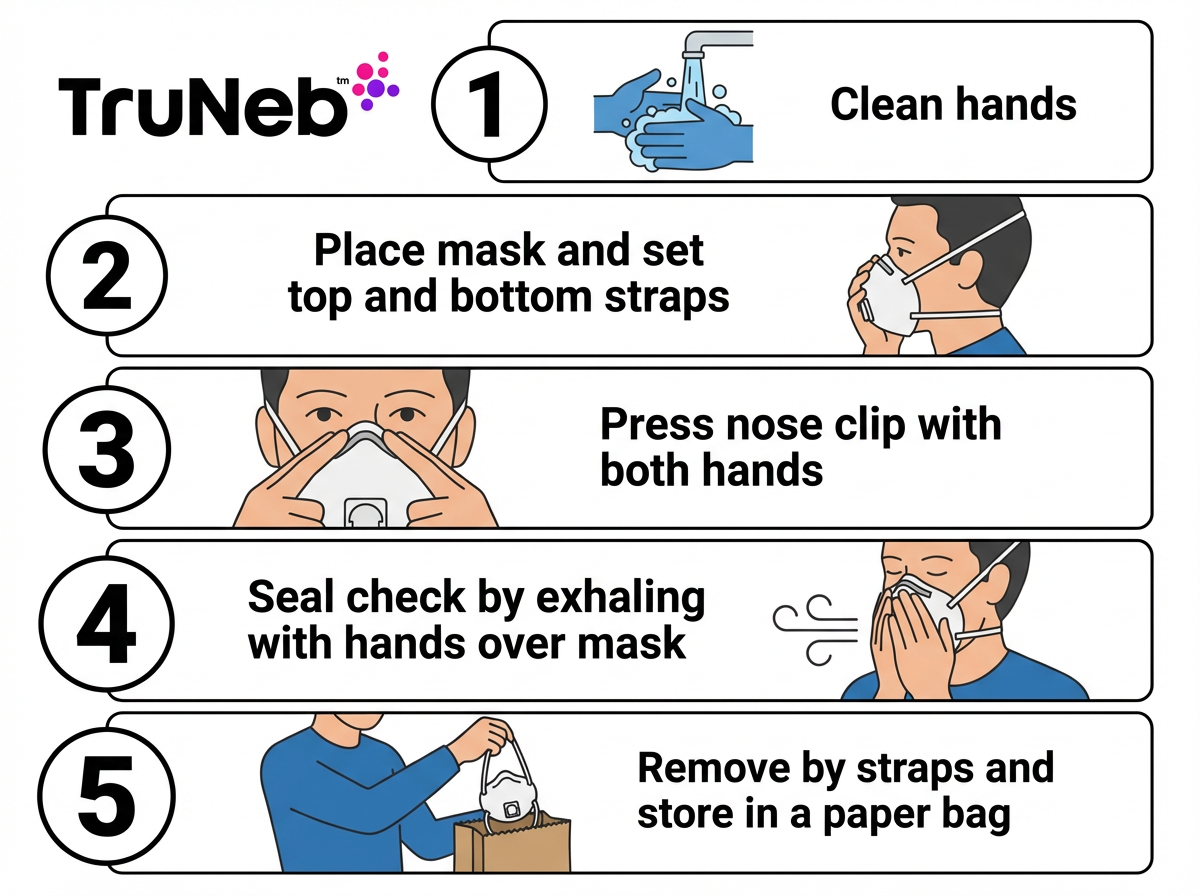
How you wear your respirator makes a huge difference.
- Clean hands. Wash or sanitize before handling your mask.
- Position and strap up. Place the mask over nose and chin. For N95s, pull the top strap high on your head and the bottom strap low on your neck. Keep straps flat.
- Shape the nosepiece. Press the metal strip firmly with both hands to mold around your nose.
- Do a seal check. Cover the mask with your hands and exhale. If you feel air leaking at the edges or your glasses fog, adjust and try again.
- Remove by the straps. Don’t touch the front. If reusing, store in a clean, dry paper bag. Never wash an N95 mask. Replace the mask if it gets wet, visibly dirty, damaged, or stops sealing well.
One‑liner: Every time you put your respirator on, do a quick seal check—no leaks means real protection.
Understanding AQI and When To Mask Up
AQI is the Air Quality Index. During wildfires, it mostly reflects PM2.5 levels. Higher numbers mean dirtier air.
A simple rule of thumb is: when AQI rises above 100 and you’ll be outside, people with asthma, COPD, or heart disease should wear a respirator. Above 150, most people should wear a respirator for outdoor time.
At very unhealthy and hazardous levels, keep trips outside short and focus on clean indoor air. Check local alerts daily. Use AirNow.gov or a local AQI app each morning and plan school pickup, errands, and outdoor work around it.
What PM2.5 Filters Really Mean
Some cloth masks use PM2.5 filter inserts. The term sounds official, but these inserts are not certified like N95s. In a tight cloth mask, they may help a little, but they do not match a certified respirator. Upgrade to an N95, KN95, or KF94 as soon as you can.
One‑liner: As AQI climbs, increase your protection—check daily and wear a respirator for outdoor time at an AQI of 100–150.
Masks for Kids During Wildfire Smoke
Children’s lungs are still developing, and smoke can affect them quickly. There are no NIOSH‑certified N95s for small children, so fit is the main challenge.
Under age 2, do not put a mask on a child. Keep them indoors with clean air and limit trips outside.
For ages 2 and up, doctors often recommend a child‑sized KN95 or KF94 when a snug seal is possible. Practice at home so your child gets used to it. An adult should help put the mask on and watch for discomfort.
Remember that dust masks, bandanas, and loose face coverings will not protect kids from fine smoke.
One‑liner: No masks for under‑2s; for older kids, pick a snug KN95 or KF94 and limit time outside.
More Ways To Protect Your Lungs
Masks help when you’re outside. Indoors, keep windows closed and run a HEPA air purifier to reduce smoke. Create one clean‑air room where you spend most of your time. Staying indoors with filtered air is generally more protective than relying only on masks. In the car, use recirculate.
Drink water to soothe your throat and help your body clear mucus. Plan errands and workouts for cleaner hours.
⚠️ If you have trouble breathing, chest pain, confusion, or bluish lips or face, seek emergency medical care immediately.
If you use a portable nebulizer, keep it ready on smoky days so you can take prescribed treatments without delay.
One‑liner: Use a respirator outside and clean air inside—together they protect your lungs best.
Disclaimer: This article is for informational purposes only and isn’t a substitute for professional medical advice, diagnosis, or treatment. Always talk with your doctor about your health concerns and before making changes to your treatment or respiratory protection.
Frequently Asked Questions
Tap or click a question below to see the answer:
They offer little protection. Fine smoke particles pass through the fabric and leak around the edges. Bottom line: cloth masks and bandanas aren’t enough for wildfire smoke; you need a tight‑sealing respirator.
Yes, if it’s clean, dry, and still seals well. Do a seal check each time. Don’t wash an N95 mask.
Replace it if any of the following happen:
- It gets dirty, wet, or damaged
- It feels harder to breathe through
- It no longer seals well on your face
Bottom line: reuse is OK short‑term if the mask stays clean and seals well, but swap it out when performance drops.
Focus first on cleaning indoor air with a HEPA purifier and keeping windows closed. Improving indoor air is always preferred over long‑term indoor masking. If indoor air still feels smoky and you must stay there, wearing an N95 for a short time can help until you improve the air.
Bottom line: fix the air first; a mask indoors is a temporary bridge.
Yes. Valves make exhaling easier and don’t reduce your protection from environmental smoke. They’re not for infection control, but they’re fine for smoke days.
Bottom line: valve respirators are acceptable for smoke exposure.
N95s are NIOSH‑approved and use headbands for a strong seal. KN95s follow another country’s standard and usually use ear loops. If a KN95 seals snugly, it can be a solid backup when N95s are hard to find. Counterfeits exist, so buy from trusted sellers.
Bottom line: choose an N95 when possible; a snug, genuine KN95 can work in a pinch.