

On this page
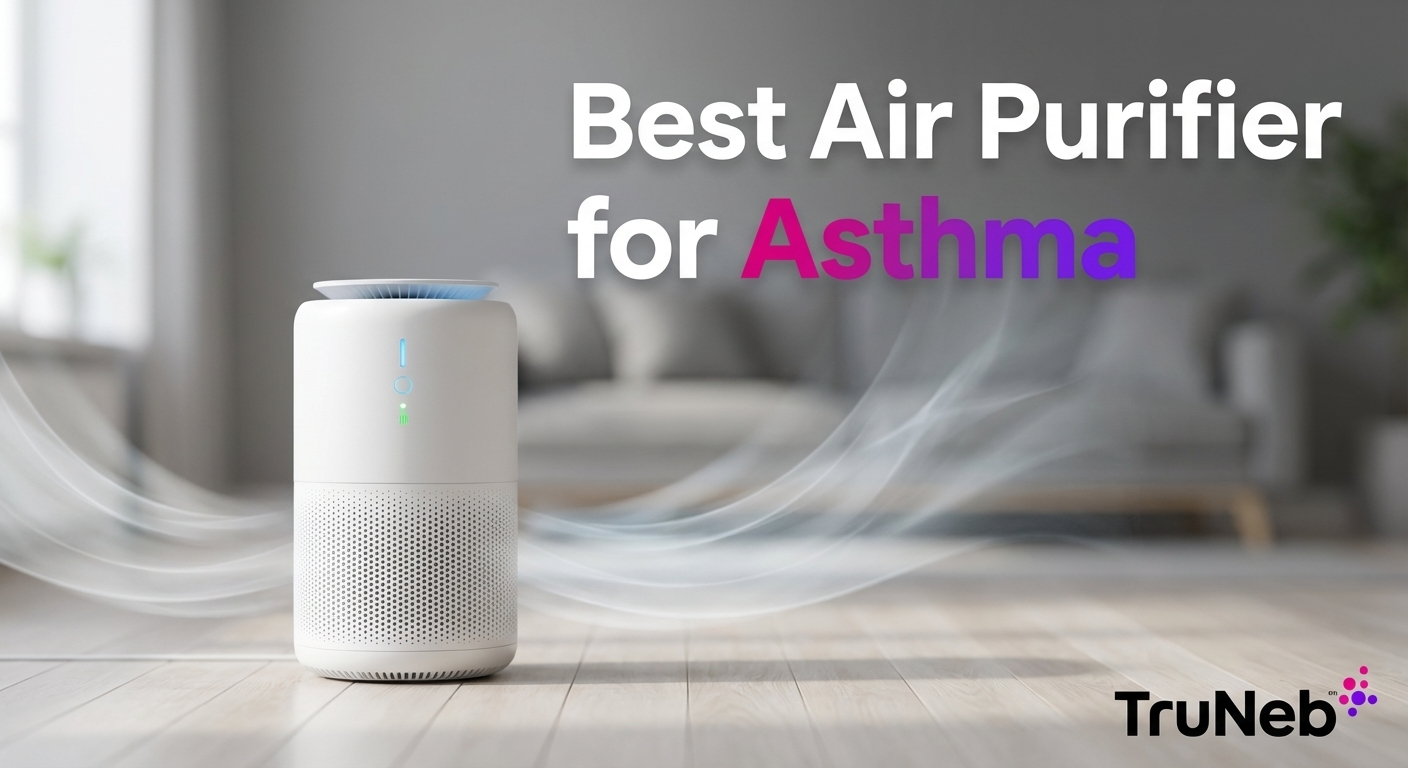
Best Air Purifier for Asthma
Indoor air can carry a lot of asthma triggers - dust mites, pet dander, pollen, mold spores, smoke, and chemical fumes from everyday products. If you or your child has asthma, breathing these in day after day can make symptoms harder to control, especially when you spend most of your time indoors.
This guide walks through how airborne triggers worsen asthma, how air purifiers help, what to look for in a unit, the best purifier picks for 2026, how purifiers compare to humidifiers, how to keep filters on a simple schedule, and how all of this fits into your larger asthma plan with inhalers and nebulizers.
⚠️ If you ever have severe trouble breathing, chest pain, bluish lips or face, or can't speak in full sentences, seek emergency medical care right away.
How Airborne Triggers Worsen Asthma
Asthma makes the airways in your lungs swollen and sensitive. When you breathe in certain particles or gases, those airways can clamp down and make extra mucus. That is what leads to coughing, wheezing, chest tightness, and feeling like you can't get a full breath.
That is why a dusty room or a mild cold can suddenly leave you wheezing or gasping for air.
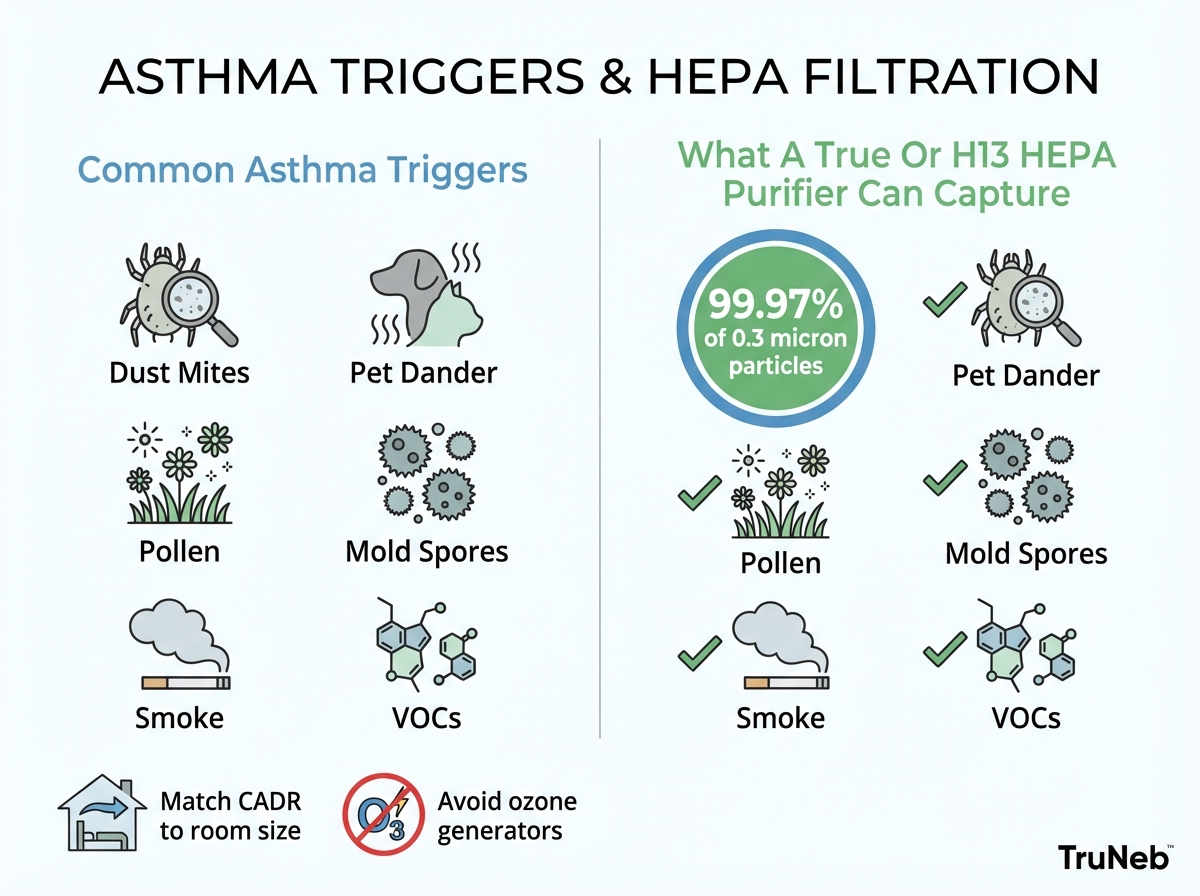
Common asthma and allergy triggers in the air include dust mite droppings, pet dander, pollen, mold spores, smoke, and VOCs (volatile organic compounds) from things like cleaners, paints, and other products. Tiny bits of cockroach debris and indoor pollution can also stir up symptoms.
When these particles stay floating in the air, they are easy to breathe in. Every breath delivers a new dose straight to your lungs. Over time, that repeated irritation can make asthma harder to control and can set off flare ups more frequently.
This is where a good air purifier can help you. A purifier with a high quality HEPA filter pulls room air through a tight filter and traps a lot of the small particles that trigger asthma. That means fewer dust mites, pet particles, and pollen floating around for you to inhale.
Key point: An air purifier does not cure asthma, but it can lower the amount of airborne triggers you breathe in every day.
It is important to keep expectations realistic. HEPA filters only catch particles while they are in the air. Dust deep in carpets, pet hair on the couch, or mold growing in a damp bathroom will not disappear just because a purifier is running. Purifiers also do not remove non air triggers like cold air, exercise, stress, or infections.
Studies on whether air cleaners improve asthma symptoms show mixed results, but many asthma specialists still recommend HEPA air purifiers as part of an overall trigger control plan at home. There is little harm in cleaning the air, as long as you choose a safe, ozone free model and keep it maintained.
Rule of thumb: the fewer asthma triggers your lungs meet in the air, the easier it usually is to keep symptoms under control.
What to Look for in an Asthma-Friendly Air Purifier
Not every air cleaner on the shelf is a good match for asthma, so you want one that's built to handle real triggers.
The safest bet is a purifier that uses true HEPA filtration with no harmful ozone. True HEPA filters are tested to capture 99.97% of particles down to 0.3 microns. Medical grade H13 HEPA filters go even finer and can grab many particles around 0.1 micron, including lots of smoke and very small allergens.
If smells or traffic fumes bother you, look for a carbon filter too. Carbon can help reduce odors and certain gases called VOCs (volatile organic compounds) that float in the air.
Be careful with labels. Terms like "HEPA type" or "HEPA like" are marketing phrases and don't follow a strict standard. Look for language such as "True HEPA" or a clear H13 or H14 class rating instead.
Room size also matters. Clean Air Delivery Rate (CADR) tells you how much clean air the purifier can deliver for smoke, dust, and pollen. A higher CADR means the machine can clean a bigger room or clean a small room more times each hour. A simple way to think about it: choose a smoke CADR that's at least two thirds of your room's square footage. For a 300 square foot bedroom, aim for a smoke CADR around 200 or more.
Ozone is a serious concern for asthma. Some ionizers, electrostatic cleaners, and ozone generators give off ozone gas on purpose, or as a byproduct. Devices sold as ozone generators or "air cleaners" that make ozone are not safe for people with asthma. Ozone can irritate lungs and trigger asthma attacks, so you want an ozone free air purifier for asthma. Children's hospitals that run asthma programs specifically warn families not to use ozone producing devices.
Noise and upkeep make a big difference in daily life. A purifier you can't sleep next to, or one with filters that are too expensive to replace, will end up turned off in a corner. Check the decibel rating on low or sleep mode, and look at how frequently filters need changing and what they cost. Plenty of users do well with purifiers that are very quiet on low and use a washable pre filter to help the main HEPA filter last longer.
Key point: The best air purifier for asthma and allergies combines true or H13 HEPA filtration, enough CADR for your room, ozone free design, quiet operation, and filters you can realistically maintain.
Some models also carry an Asthma & Allergy Friendly certification from the Asthma and Allergy Foundation of America. This seal means the purifier has passed extra lab tests for allergen removal and is designed with asthma safety in mind. It's a helpful bonus sign, though not a must have.
If you focus on these basics, you avoid most gimmicks and land on a purifier that's actually built for asthma relief instead of just looking fancy.
Best Air Purifiers for Asthma in 2026
Here's a short list of well reviewed units that line up with asthma needs: true or H13 HEPA filtration, solid CADR ratings, and ozone safe designs. All five picks use HEPA filtration, have strong CADR ratings for their size, and are designed to be ozone safe for people with asthma.
- Coway Airmega AP-1512HH Mighty – best overall value
- Levoit Core 300 – best budget pick for small rooms
- Blueair Blue Pure 411 Auto – best for small bedrooms and nurseries
- Blueair Blue Pure 211+ – best for large rooms and open spaces
- Alen BreatheSmart 75i – best for allergies and homes with pets
Coway Airmega AP-1512HH Mighty is a long time favorite in independent tests. It uses a true HEPA filter plus a carbon filter and delivers CADR numbers in the 200+ range, which works well for most medium bedrooms and living rooms. Reviewers often call it cheap, efficient, and one of the best performing purifiers in its class. For asthma, the appeal is simple: strong particle removal, no built in ozone generator, quiet low settings, and an auto mode that speeds up when the air becomes dirtier.
Levoit Core 300 is a great starting point if you need the best air purifier for asthma on a tight budget. It uses an H13 HEPA filter in a compact body and covers small rooms like a bedroom or office. CADR is lower than bigger machines but still enough for spaces around 200 square feet. Levoit doesn't use ionizers in this model, so it's ozone free. It also offers special replacement filters for pet allergies or higher smoke and VOC levels, which is helpful if you react strongly to pets or traffic pollution.
Blueair Blue Pure 411 Auto shines in nurseries, kids' rooms, and other small spaces where quiet matters most. It's a small tower with clean styling and an Auto mode that adjusts fan speed based on a built in particle sensor. Blueair's HEPASilent technology mixes mechanical filtration with an internal ionizer to reach high efficiency at lower fan speeds. The brand is CARB certified for low ozone and has been named a top air purifier brand by Consumer Reports, but very sensitive users might want to be aware there's an ionizer built in.
For open living rooms or wide spaces, Blueair Blue Pure 211+ is a smart pick. Its CADR is around 350 cubic feet per minute for smoke, dust, and pollen, which lets it turn over the air in large rooms several times per hour. That high flow helps quickly dilute smoke, cooking fumes, or pet related dust that can spike asthma symptoms. Like the 411, it's simple to use, draws air from all sides, is CARB certified for low ozone, and relies on Blueair's HEPASilent system with controlled ionization.
Alen BreatheSmart 75i is a high capacity purifier that's well suited for allergies and homes with pets, especially if you have a lot of square footage to cover. It uses H13 true HEPA filtration and carries the Asthma & Allergy Friendly certification from AAFA, which means it passed strict lab tests for allergen removal and emissions. The 75i can cover big spaces and has a dedicated Pet/Odor filter option with extra carbon. It also runs quietly for its size, which makes 24/7 use realistic in family spaces.
Takeaway: These five air purifiers stand out for asthma because they use HEPA filters, have strong CADR ratings, avoid ozone, and cover a range of room sizes and budgets.
Rule of thumb: match each room and trigger to a specific purifier pick so you're paying for asthma relief you can actually feel, not just extra features.
Air Purifier vs Humidifier for Asthma
Air purifiers and humidifiers usually sit on the same store shelf, but they do very different jobs for your lungs.
An air purifier cleans the air. It pulls room air through filters to remove particles like dust, pet dander, pollen, mold spores, and smoke. Some purifiers also use carbon filters to reduce certain smells and gases. For asthma that's triggered by allergens or indoor pollution, a HEPA purifier goes straight at the cause by lowering those airborne triggers.
A humidifier adds moisture to the air. It turns water into a cool or warm mist and raises the humidity level in the room. That extra moisture can make dry air feel softer on your throat and chest. In winter or in very dry climates, this can ease coughing and irritation if dryness is a main problem for you.
Humidifiers don't remove allergens or pollution from the air. Dust mites, pet dander, and pollen will still be present even if the room feels less dry. If humidity climbs too high, dust mites and mold can grow more easily. Both are big asthma triggers.
The sweet spot for people with asthma is a relative humidity around 40 to 50 percent. Below that, air can feel harsh and dry. Far above that, the risk of mold and mites grows.
| Device | Primary job | Helps with asthma by | Removes allergens? | Key maintenance risk |
|---|---|---|---|---|
| Air purifier with HEPA filter | Cleans air by trapping particles | Lowering levels of dust, pet dander, pollen, mold spores, and smoke | Yes, when sized correctly and filters are clean | Dirty or damp filters can grow mold or leak particles back into the room |
| Humidifier | Adds moisture to the air | Making dry air feel more comfortable on your airways | No, particles stay in the air | Standing water can grow mold and bacteria if not cleaned regularly |
Tip: Aim for indoor humidity around 40–50% and clean both devices regularly so they help your breathing instead of harming it.
Both devices need good maintenance. Standing water in a humidifier can breed mold and bacteria if you don't clean it regularly. A dirty or damp filter in an air purifier can also become a problem. Health experts note that poorly maintained purifiers or humidifiers can actually make asthma worse instead of better.
One line to remember: air purifiers remove asthma triggers from the air, while humidifiers only change how wet or dry that air feels.
If allergens are your main trigger, start with an air purifier; if dry air is the problem, talk with your doctor about whether a humidifier makes sense for you.
Some families use both in the same room during dry seasons: a HEPA purifier runs all the time to clean the air, and a cool mist humidifier runs as needed to hold humidity in a healthy range. If you do this, check humidity with a small meter and follow the cleaning instructions that come with each device.
Always talk with your doctor or asthma specialist before adding new devices around a child with asthma, especially if you plan to change room humidity by a lot or if you have a history of mold problems in the home.
Creating a Simple Filter Maintenance Schedule
A purifier can only help your asthma if its filters are clean and doing their job. Once filters clog up with dust and hair, airflow drops and more particles slip through.
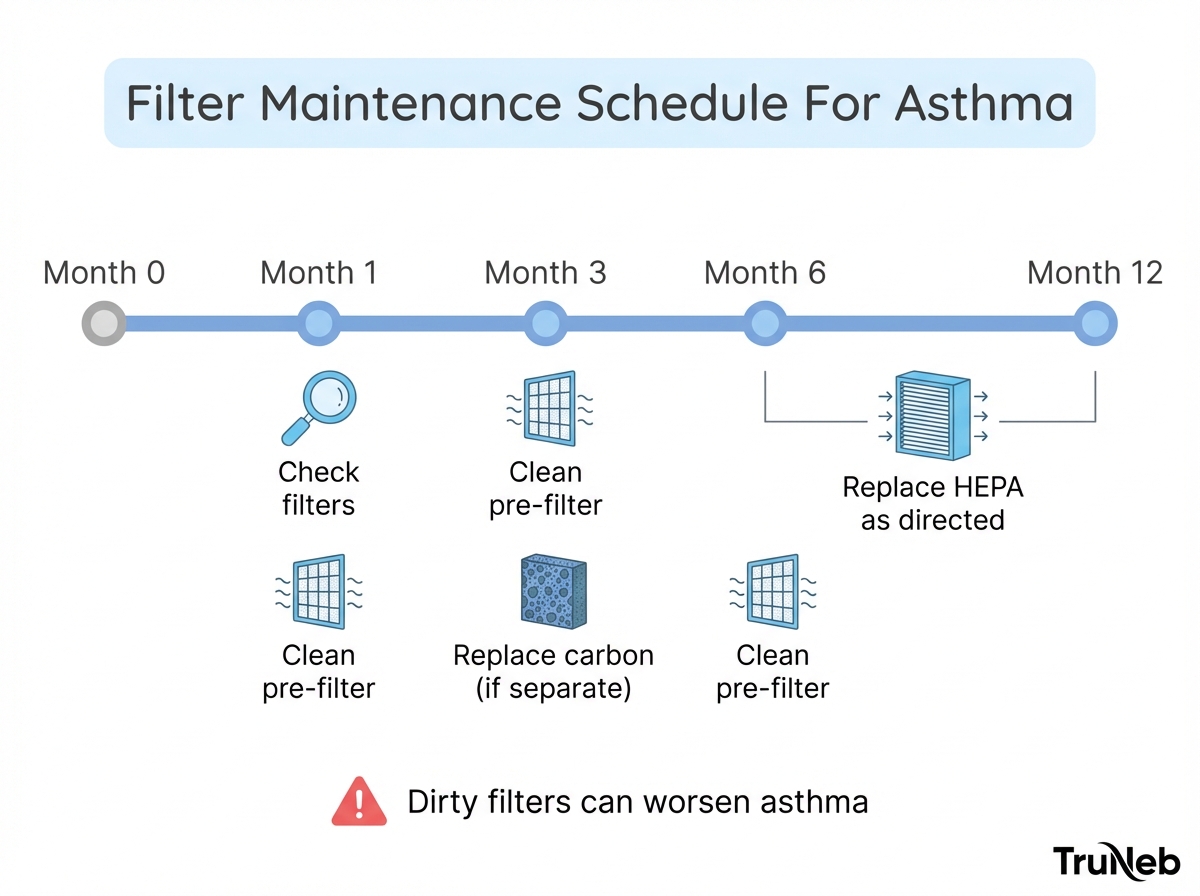
Start by reading the manual for your purifier. Most brands give a range for how long HEPA and carbon filters last under normal use. HEPA filters typically last 6 to 12 months. Carbon filters may last 3 to 6 months. Some models have a washable pre filter that you can rinse or vacuum every few weeks to catch the big debris.
Make a habit of checking your purifier once a month. Turn it off, open the panel, and look at the filters in bright light. If the pre filter is covered in fuzz, clean it according to the instructions. If the HEPA filter is very gray and the recommended time is close, order a replacement so it's ready when you need it.
Most units have a small light or alert when it's time to change filters. Treat that as a reminder, not the only rule. If you live with pets, near a busy road, or in a dusty climate, you may need to replace filters more frequently than the default setting.
It helps to mark your calendar the day you install a new filter. Write the date on a piece of tape on the side of the purifier or in a notes app, along with the next planned change. For example, if your HEPA filter is rated for 12 months, you might jot down "Replace HEPA in January next year" as soon as you install it.
Use genuine or well reviewed replacement filters that match your model. Off brand filters that are too loose or use poor quality material can leak particles around the edges. That leaves more allergens in the air even when you think you're protected.
Do a quick wipe down of the unit itself when you check the filters. Dust the air intake and outlet and vacuum the area around the purifier. Give the machine a few inches of space on all sides so air can move freely.
Health sources warn that dirty purifiers and humidifiers can both worsen asthma if mold or dust builds up inside them. A small amount of regular care is the tradeoff for cleaner, safer air.
Set simple calendar reminders so your asthma air purifier is always running with a healthy, unclogged filter.
Beyond Purifiers: Your Asthma Management Toolkit
Cleaner indoor air is a big step, but it's only one piece of asthma control. Most people need both good environmental control and the right medication plan to keep symptoms steady.
Asthma guidelines usually include daily or as needed inhaled medicines such as inhaled steroids and bronchodilators. These calm swelling in the airways and relax tight airway muscles, which no air purifier can do on its own. Your doctor may also talk with you about allergy treatment, reflux care, or other medical issues that make asthma worse.
For some people, nebulizer treatments are an important part of this toolkit. A nebulizer turns liquid medicine into a fine mist that you breathe in through a mask or mouthpiece. This can be helpful if you struggle to use inhalers correctly, need higher doses during flare ups, or your doctor has prescribed saline treatments to help clear mucus.
Research has shown that inhaling hypertonic saline (saltwater that's stronger than normal body fluids) via nebulizer can improve mucus clearance in adults with asthma. By helping move thick mucus up and out, it can make breathing feel easier for some people. It's not appropriate for every person with asthma and should only be used under medical supervision by a clinician who knows your history.
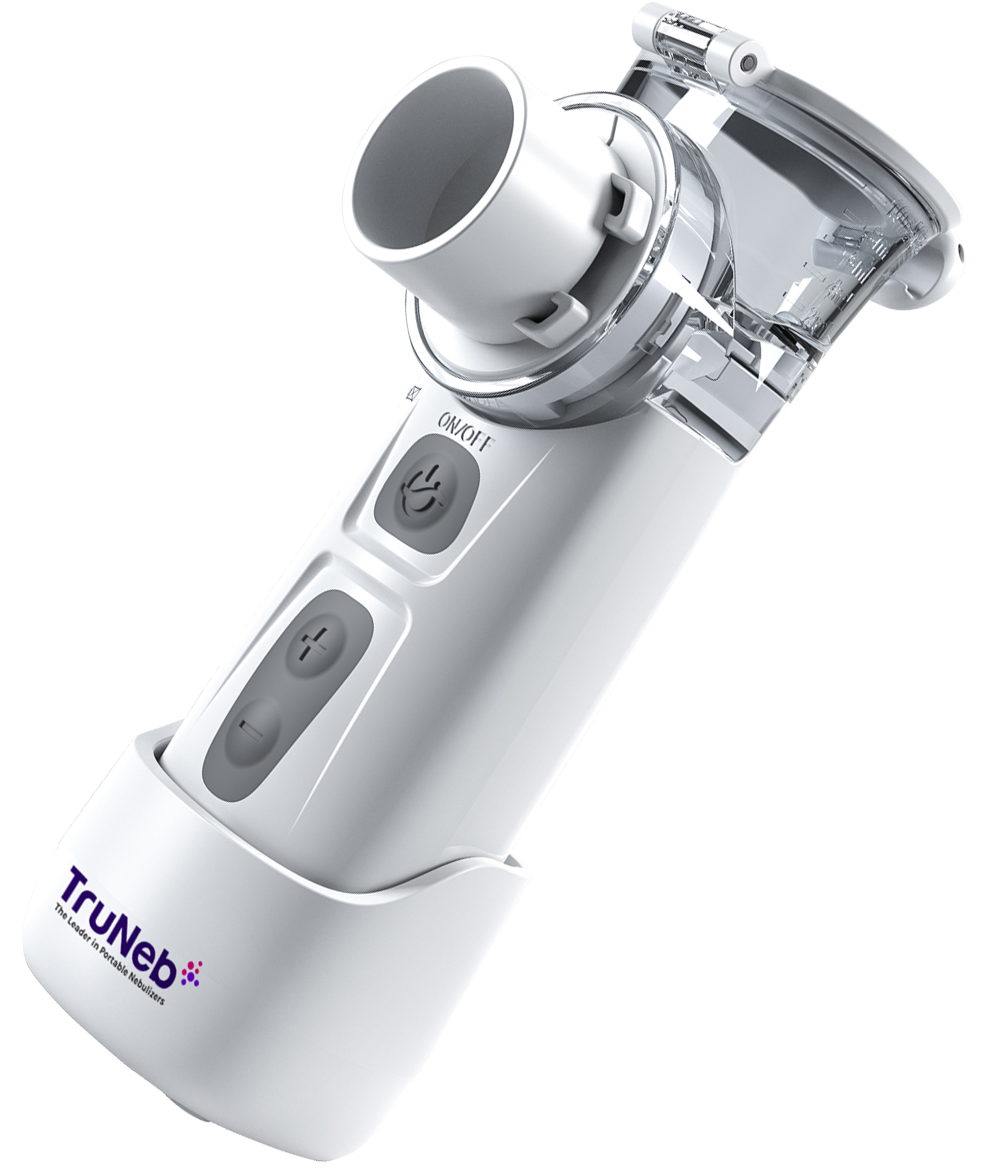
Portable mesh nebulizers make this type of therapy easier to fit into daily life. For example, the TruNeb™ portable mesh nebulizer is a small handheld device that turns prescribed nebulizer medicines or saline into a fine mist you can breathe at home or on the go. If your doctor has you using nebulized medicines, a portable mesh nebulizer can make treatments easier to fit into your routine. For people who already use nebulized medicines, pairing consistent treatments with an asthma friendly air purifier can help reduce bad days and nighttime coughing for some people.
Talk to your doctor before trying a new medication, changing inhaler doses, or starting treatments like hypertonic saline in a nebulizer. They can help you fit tools like a nebulizer, spacer, or peak flow meter into your written Asthma Action Plan so you know exactly what to do when symptoms change. Talk with your doctor if your symptoms aren't improving, are waking you up at night, or you're using your quick-relief inhaler more than usual.
Don't forget the simple home steps that work alongside purifiers: washing bedding in hot water, using dust mite covers on pillows and mattresses, keeping pets out of the bedroom if you're allergic, fixing leaks and damp spots quickly, and using exhaust fans when you cook or shower. These habits lower triggers on surfaces while the purifier lowers triggers in the air.
An air purifier works best for asthma when it sits beside your meds, nebulizer, and action plan, not instead of them.
Frequently Asked Questions
These quick answers cover how air purifiers fit into asthma care, where to place them, and how to run and maintain them safely. Tap or click a question below to see the answer:
Air purifiers can help people with asthma by lowering the amount of dust, pet dander, pollen, mold spores, and smoke particles in the air. Less exposure to these triggers can mean fewer or milder flare ups. They're not a cure and don't replace your prescribed asthma medicines, but they can be a useful support when they're chosen and maintained well.
Most experts suggest starting with the bedroom, because that's where you spend long stretches of time while sleeping. Place the purifier in the same room you're in most, a few feet from the bed or seating area, with its air intake and outlet unblocked. Avoid tucking it behind furniture or in a corner where air can't move freely.
For cleaner air, it's usually helpful to run your purifier continuously on a lower setting. That keeps particle levels down instead of letting them build up between short runs. Some people use a higher speed when they're not in the room, then a quiet sleep mode at night.
H13 HEPA is a filter standard, not a chemical. In an ozone free purifier used as directed, it's generally considered safe for children with asthma. It simply makes the filter tighter so it can trap smaller particles like fine dust and pollen.
No. Even the best purifier can't replace controller medicines or quick relief inhalers. Purifiers work on the air around you, while medicines work on the inflammation and tightness inside your lungs. Never change or stop asthma medication on your own. Always talk with your doctor before making any change to your treatment plan.
Follow the schedule in your purifier's manual, but be ready to change filters on the earlier side of the suggested range if you have severe symptoms, pets, or a very dusty home. Checking filters monthly and replacing HEPA and carbon elements as directed helps keep the purifier working at its best for your lungs.
Talk to your doctor before trying a new medication or treatment, even if you're also improving your home air with a purifier.
Disclaimer: This article is for informational purposes only and isn't a substitute for professional medical advice, diagnosis, or treatment. Always talk with your doctor about your symptoms, medications, and any devices you're thinking about using for asthma.