

On this page
What to Pack When Flying with a Nebulizer: Essential Checklist
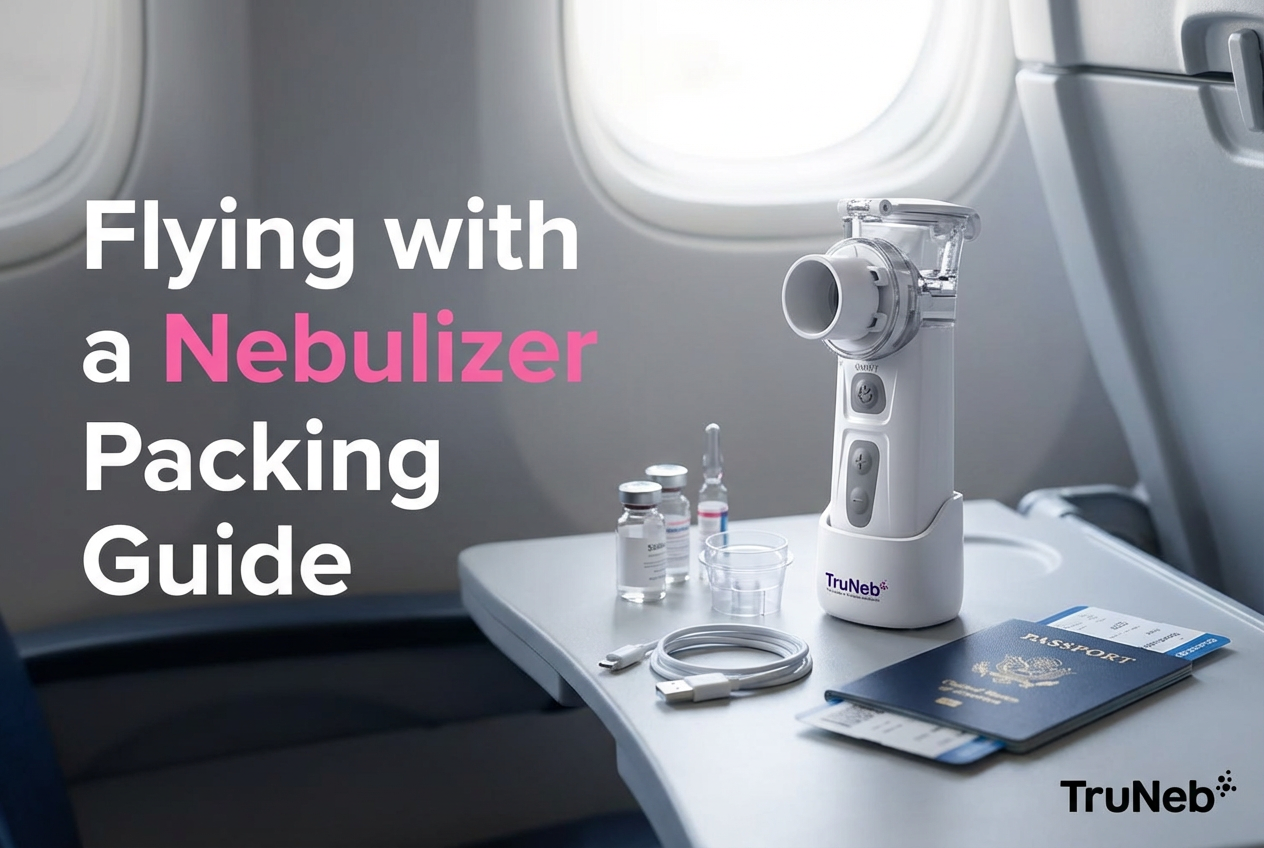
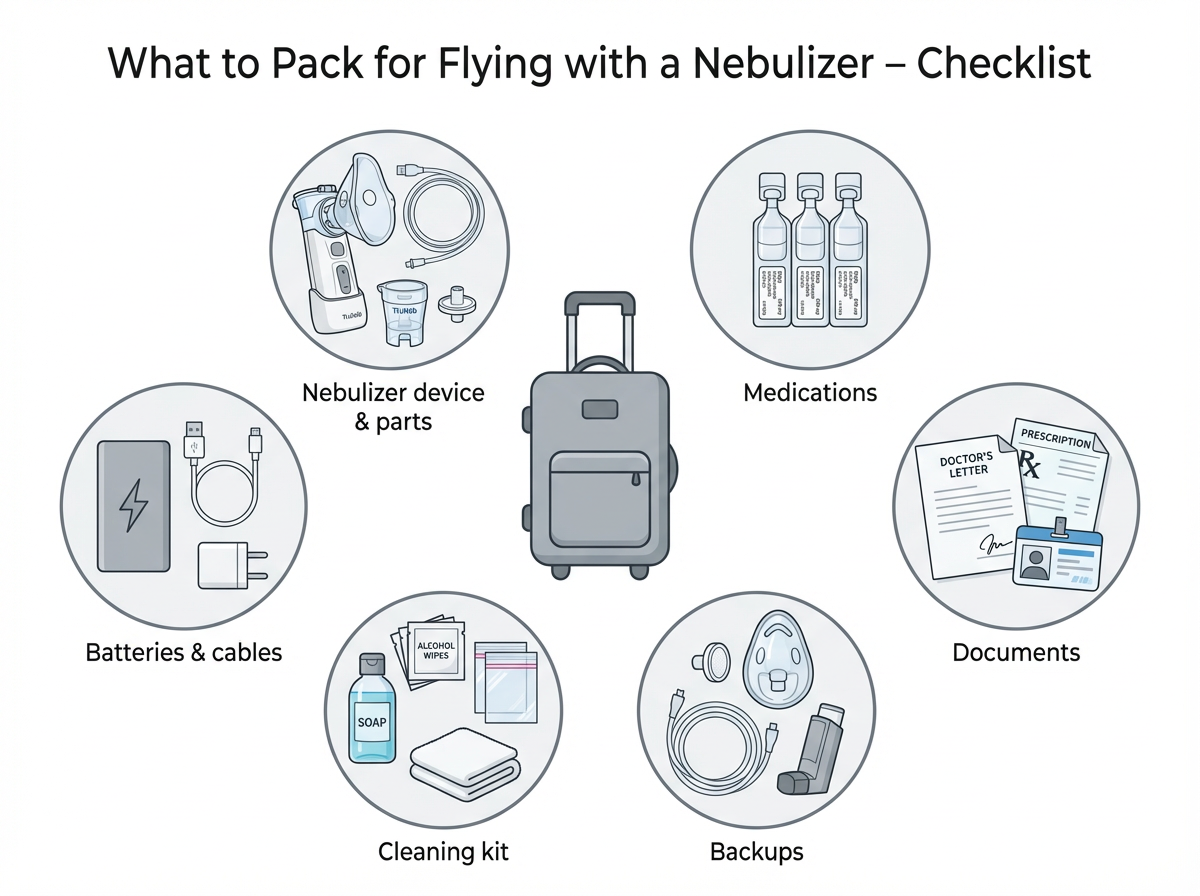
If you use a nebulizer for asthma, COPD, or cystic fibrosis, here’s your carry-on packing list. Keep these in one easy-to-reach pouch. Everything listed goes in your carry-on, not in checked bags.
- Portable nebulizer device and parts: a compact mesh unit, mask or mouthpiece, tubing, medication cup, filters.
- Medications and solutions: unit-dose vials (albuterol, 3% or 7% hypertonic saline if prescribed), prescription labels, extra doses.
- Power: fully charged batteries, USB/charging cable, wall plug, universal plug adapter for international trips, car adapter or power bank.
- Medical documents: doctor’s letter, copies of prescriptions, medication list, insurance card, photo ID.
- Cleaning kit: travel-size mild dish soap, alcohol wipes, zipper bags (clean/used), small lint-free towel.
- Backups: spare mask and tubing, extra nebulizer cup or filter, rescue inhaler if prescribed.
Rule of thumb: pack enough supplies for your whole trip plus a buffer.
Keep your nebulizer, medications, power, documents, cleaning kit, and backups together in your carry-on so you’re never without treatment supplies during travel.
Carry-On Nebulizer Device and Accessories
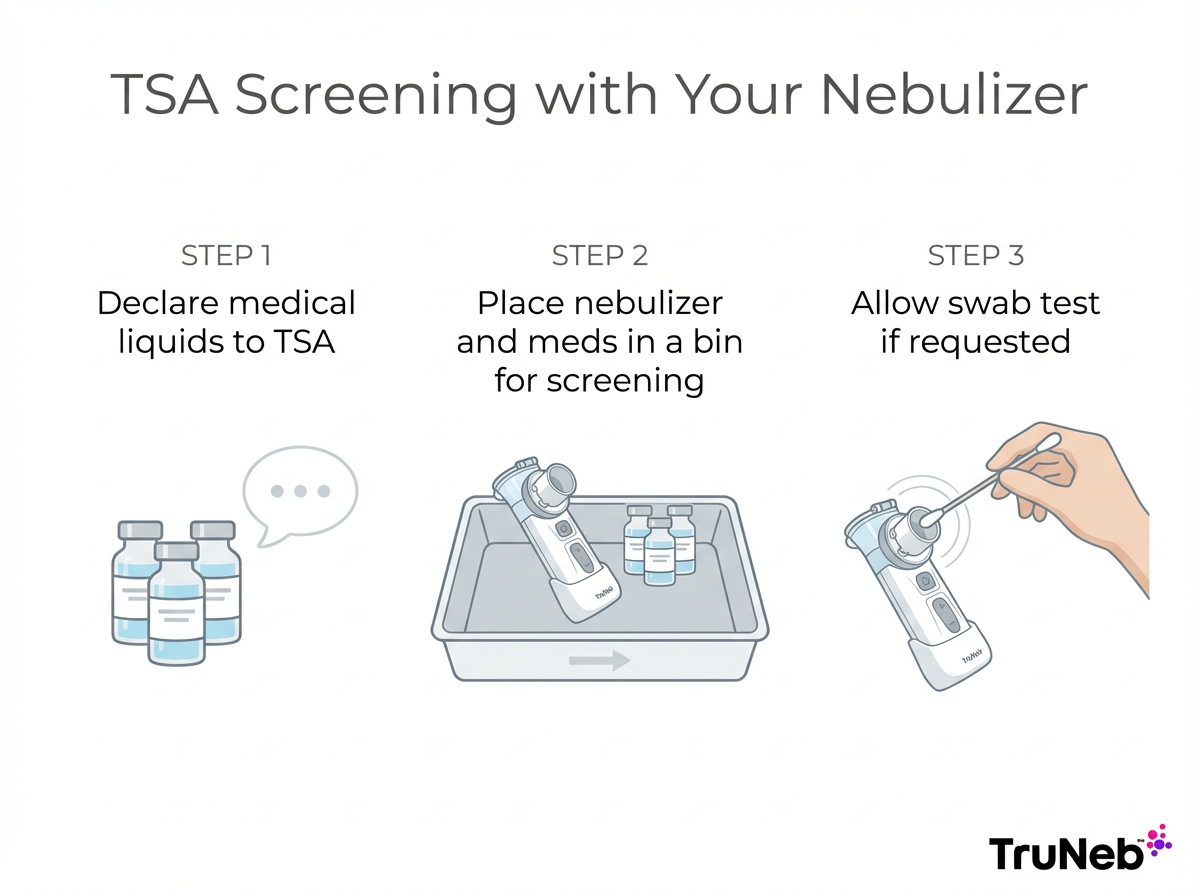
Always keep your nebulizer in your carry-on, not in checked luggage. You might need it during delays, and checked bags can be lost or exposed to extreme temperatures. TSA permits nebulizers; an officer might ask to screen or swab the device. That’s routine.
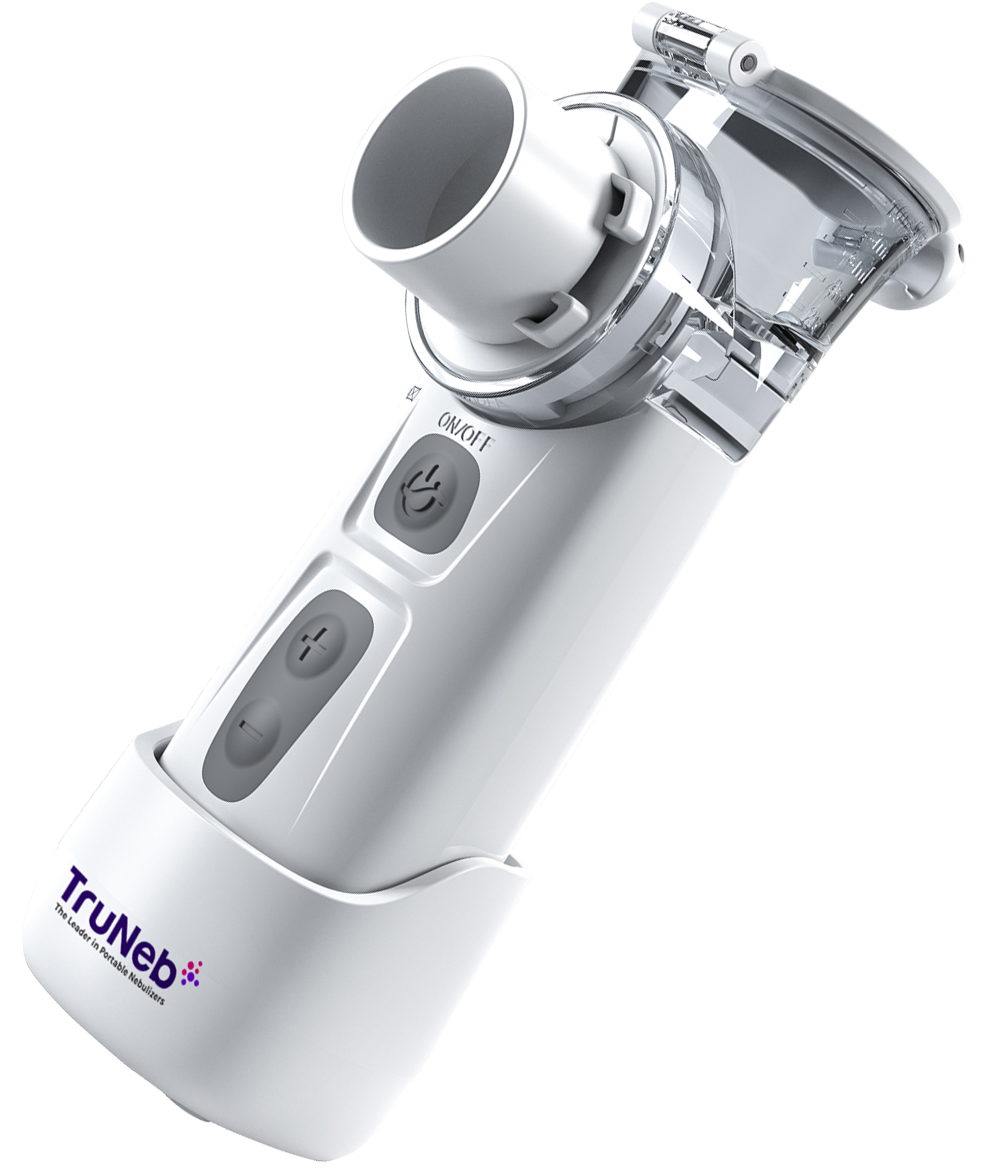
Travel is easier with a compact, travel-friendly unit. A handheld mesh device like the TruNeb portable mesh nebulizer is small, quiet, and battery-powered, so it fits in a purse or backpack and doesn’t depend on an outlet. Larger tabletop compressor nebulizers are allowed to fly, but they’re bulky and harder to pack.
Pack these parts together: mask or mouthpiece, tubing, medication cup, and any filters your model uses. Keep them in a protective case or zippered pouch to stay clean and organized. You can label the pouch "Medical Device" so it’s easy to identify at security or on the plane.
For air travel, a small handheld mesh nebulizer is easiest to pack and power on the go; tabletop units work but are bulky.
| Type | Portability | Power | In-flight fit | Medication compatibility | Cleaning needs |
|---|---|---|---|---|---|
| Portable mesh (handheld) | Very compact, light | Rechargeable battery or AA/AAA | Easy to use discreetly in a seat | Works with most nebulizer meds | Rinse after use, occasional deep clean |
| Jet/compressor (home tabletop) | Bulky, heavier | Wall power; no battery | Allowed, but awkward to set up | Compatible with standard meds | Standard cleaning; more parts to pack |
| Ultrasonic (some units) | Varies by model | Battery or wall power | Usually fine if battery-powered | Check medication instructions | Follow manufacturer’s directions |
Some medications aren’t recommended with ultrasonic units. Follow your doctor’s instructions and the medication label.
If your device uses a lithium battery, keep it in your carry-on as well. That’s where spare batteries must go.
Warning: If you see products labeled "steam inhaler" or facial steamers, these are not nebulizers and are not meant for breathing prescription medications.
Key tip: place the nebulizer and meds in an easy-access pocket so you can remove them quickly at screening.
Medications and Nebulizer Solutions
Pack all nebulizer medications in your carry-on. TSA exempts medical liquids from the 3-1-1 rule (the usual 3.4-ounce liquids limit) in reasonable quantities. Declare them at screening and be ready for a quick swab. Keep vials in a clear bag for easy inspection.
Use original packaging with your name on the pharmacy label. Bring copies of prescriptions in case a refill is needed on the road. Aim for at least a few extra days of medication beyond your itinerary in case of delays or spills.
Pre-measured vials travel well. If your doctor prescribes saline for airway clearance, unit-dose 3% or 7% hypertonic saline vials are tidy and clearly labeled, which helps at security. Store medication in a cool part of your bag; consider a small insulated pouch if you expect heat.
Safety note: Talk to your doctor before trying a new medication or changing your dose.
Nebulizer medications go in your carry-on and are exempt from normal liquid limits as long as you declare them.
Power Supplies and Adapters
A fully charged nebulizer means one less thing to worry about on travel days. Charge your nebulizer fully before you leave and pack the charger. If your unit uses a removable battery, bring a spare. Spare lithium batteries must stay in carry-on.
If your device charges via USB, pack the cable and consider a power bank for long travel days. For plug-in models, bring the AC cord and a universal plug adapter when traveling abroad. Check your device label for voltage (many travel devices are dual-voltage); use a converter only if needed.
Group cords, batteries, and adapters in a small pouch so nothing gets lost. If you expect to nebulize during a flight, plan to use battery power rather than relying on in-seat outlets, which aren't always available.
Bring charged batteries, chargers, and the right adapters in your carry-on so your nebulizer works through flights, delays, and international trips.
Medical Documents and Airline Communication
Bring simple paperwork to make the day smoother. Pack a short doctor’s letter on letterhead that states your condition and that you need a nebulizer and liquid medications. If you might need to use it in flight, the letter can note that as well. Carry copies of prescriptions, a current medication list with your doctor’s contact information, emergency contacts, and a copy of your asthma or COPD action plan if you have one.
At security, tell the TSA officer you have a nebulizer and liquid meds. Present the letter or labeled prescriptions if asked. On the plane, a quick heads-up to the crew helps if you plan to nebulize during the flight. If travel makes you nervous or you need extra help at screening, TSA Cares can coordinate assistance when you call ahead.
Tip: keep documents in the same pouch as your device so they’re easy to find.
A simple doctor’s letter and labeled prescriptions make TSA screening and airline questions about your nebulizer much smoother.
Cleaning and Hygiene Supplies
Clean parts help prevent infection and keep treatments effective. Pack a tiny bottle of mild dish soap, alcohol wipes, two zipper bags (one for clean parts, one for used), and a small lint-free towel. If possible, rinse with bottled or distilled water and fully dry parts before storing.
On busy travel days, do a quick wipe or rinse and seal parts in the "used" bag until you can wash them well at your destination. Never pack parts away wet; dry them with the towel to avoid moisture and mold.
Don’t share nebulizer masks or mouthpieces with other people.
Bonus tip: a small plastic container that fits your cup and mask can double as a wash basin in a hotel room.
Backup Supplies and Emergency Plan
Pack spares so small problems don’t turn into big ones. Bring an extra mask or mouthpiece, a second tubing set, and an extra nebulizer cup or filter if your model uses them. Add more medication than you think you’ll need to cover delays or flare-ups.
If your doctor has prescribed a rescue inhaler, keep it handy even if you mainly use a nebulizer. It’s a simple backup if your device is low on power or needs cleaning.
For longer trips, know where you could get replacement parts at your destination. Keep your doctor’s contact info in your phone and on your medication list.
Packing backups means you’re far less likely to be caught without treatment if something goes wrong.
If you have severe trouble breathing, chest pain, bluish lips or face, or can’t speak in full sentences, follow your doctor’s action plan, alert the crew immediately, and seek emergency medical care.
Frequently Asked Questions
Tap or click a question below to see the answer:
Yes. Nebulizers are allowed in carry-on bags. Keep the device with you, tell TSA at screening, and be ready for a quick swab.
Generally no. Under the Air Carrier Access Act (ACAA), U.S. airlines treat medically necessary devices as assistive devices, so they typically don’t count against your carry-on limit.
No. Liquid medications and nebulizer solutions are exempt when declared. They don’t have to fit the usual small-liquids limit (3.4 ounces/100 mL) or the quart-size bag.
Most airlines allow in-flight use of a battery-powered nebulizer when needed, but check your airline’s policy ahead of time and follow your doctor’s treatment plan. Let the crew know before you start a treatment.
It’s not always required, but it helps. A short letter and labeled prescriptions can speed up questions with TSA or airline staff.
Bring enough for your trip plus several extra days to cover delays or spills, and keep all meds in your carry-on.
Alert the crew immediately and follow your doctor’s action plan. If symptoms are severe (like chest pain, bluish lips or face, or you can’t speak in full sentences), seek emergency medical care.
Disclaimer: This article is for informational purposes only and is not a substitute for professional medical advice, diagnosis, or treatment. Always talk to your doctor about your symptoms, diagnosis, and any medications or treatment changes.