

On this page
Noisy Breathing Basics: Stridor vs Wheezing
Hearing a strange sound when you or your child breathes can be scary. Knowing whether it’s stridor or wheezing helps you explain what you’re hearing when you call the doctor.
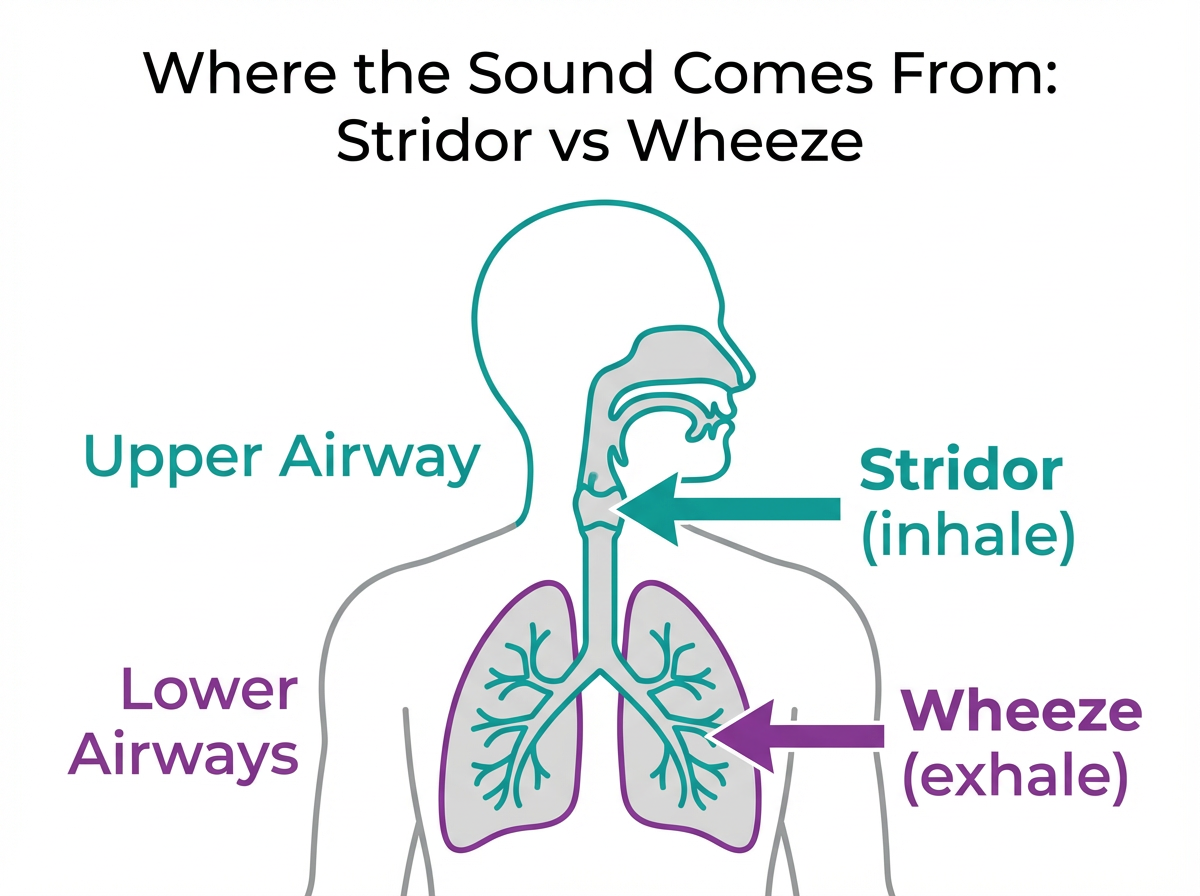
Not all noisy breathing sounds mean the same thing. Stridor comes from the upper airway near the throat and voice box and is usually heard when breathing in. Wheezing comes from the lower airways in the lungs and is usually heard when breathing out. Location and timing are the two quickest clues. There is also stertor, the snoring, stuffy‑nose sound that sits in the nose or back of the mouth.
These descriptions can help you talk with your doctor, but noisy breathing alone doesn’t diagnose the exact problem—your doctor still needs to examine you or your child.
In short: stridor is an inspiratory sound from the upper airway, and wheezing is an expiratory sound from the lower airways in the lungs.
What Is Stridor
Stridor is a loud, harsh, high‑pitched sound heard mainly when breathing in. You’ll usually hear it loudest in the neck or upper chest. It happens when the upper airway is narrowed or blocked around the larynx (voice box) or trachea (windpipe). People usually describe it as a squeaky or crowing noise that you can hear without a stethoscope. It’s more common in babies and young children because their airways are small, but it can occur at any age. In severe cases, stridor can be heard when breathing out too. A simple way to picture it: breathing in creates suction, and a tight upper airway can squeak like air through a narrow opening.
In short: stridor is a high‑pitched inspiratory sound from a narrowed upper airway.
What Is Wheezing
Wheezing is a musical, whistling sound heard mostly when breathing out. It happens when the small airways in the lungs (bronchial tubes) are narrowed or irritated. A wheeze can sound like a soft flute or a hiss from the chest. Mild wheezes usually need a stethoscope for a doctor to hear, but louder wheezing can carry across the room during an asthma flare. In more severe cases, wheeze can occur on breathing in too, but it is mainly an out‑breath sound. Wheezing is common with asthma, bronchiolitis in infants, and COPD in adults.
In short: wheezing is a whistling expiratory sound from narrowed lower airways.
Stridor vs Wheeze: Key Differences at a Glance
See the quick comparison
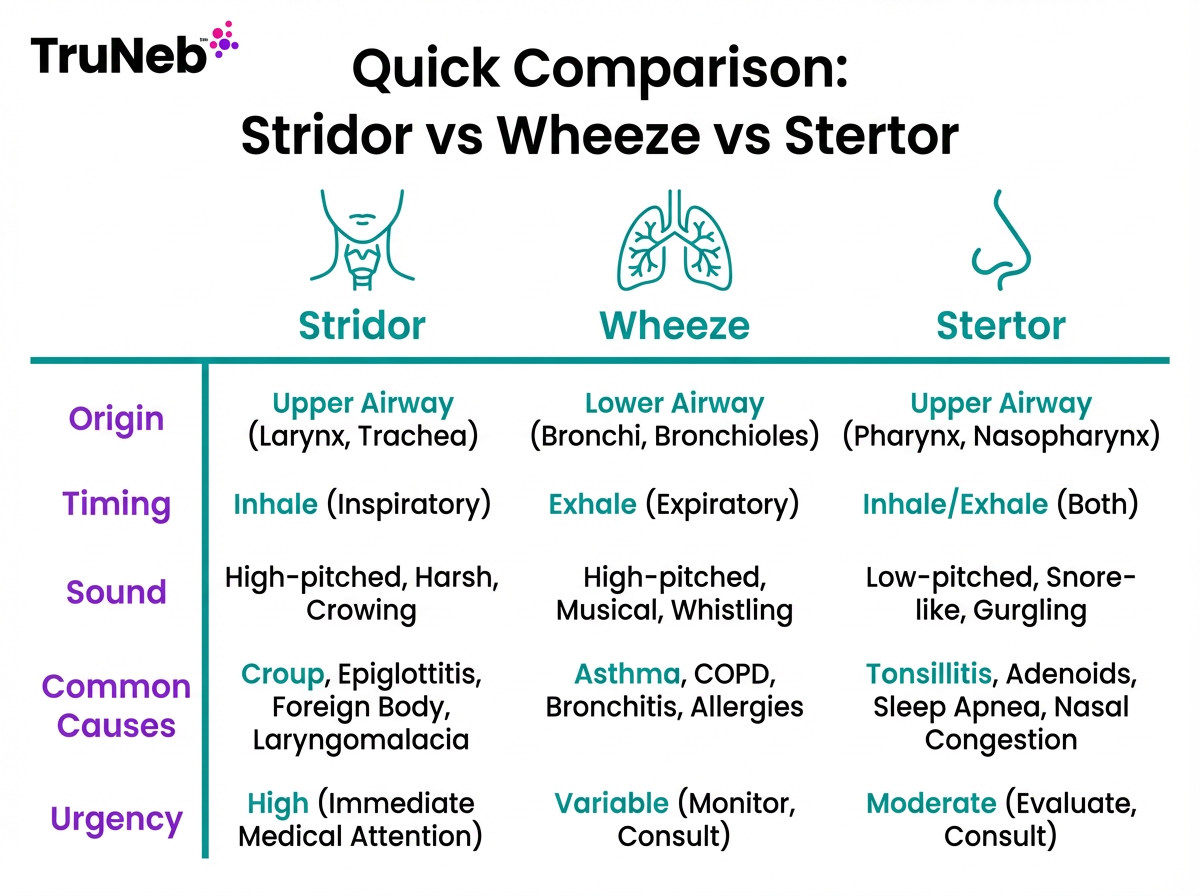
| Feature | Stridor | Wheeze | Stertor |
|---|---|---|---|
| Origin | Upper airway (throat/voice box, windpipe) | Lower airways (bronchi, lungs) | Nose or back of mouth |
| Timing | Mostly on breathing in | Mostly on breathing out | Mostly on breathing in |
| Sound | Harsh, "crowing," can be loud | Musical, whistling, can be soft or loud | Low-pitched snore/stuffy noise |
| Common causes | Croup, choking/airway object, swelling, epiglottitis | Asthma, bronchiolitis, COPD | Nasal congestion, mucus |
| Urgency | Usually urgent, especially if at rest or worsening | Ranges from mild to severe | Usually from simple congestion, but see a doctor if breathing looks hard or other red flags appear |
Key point: where the sound comes from (throat vs chest) and when it happens (breathing in vs out) are the fastest clues to tell stridor and wheezing apart.
Why Stridor Happens: Common Causes by Age
Stridor in babies and children
Croup (a viral swelling below the voice box) is the most common cause and usually comes with a barky cough at night. Laryngomalacia (a floppy voice box) can cause ongoing, mild stridor in infants that improves as they grow. A foreign object in the airway can cause sudden stridor and choking and needs help right away. Epiglottitis and bacterial tracheitis are rare but dangerous infections that can block the airway. Allergic swelling from anaphylaxis can also cause rapid throat tightness and stridor. Some children have structural narrowing, like subglottic stenosis or vocal cord paralysis, that leads to noisy breathing.
Stridor in teens and adults
Severe allergic reactions (anaphylaxis), airway injury or burns, tumors or growths in the larynx or trachea, and vocal cord paralysis can produce stridor. Adults can also develop epiglottitis. Any stridor in an adult is unusual and needs prompt medical care.
Ongoing or unexplained stridor is usually checked by a specialist such as an ENT (ear, nose, and throat) doctor.
In short: stridor means the upper airway is too tight, and the underlying cause needs medical attention quickly.
Why Wheezing Happens: Common Causes by Age
Wheezing in infants and children
Asthma or reactive airways cause recurring wheeze, commonly with colds, exercise, or allergens. Bronchiolitis (like RSV) in babies swells the small airways and adds mucus, leading to wheeze and fast breathing. Irritants such as smoke or dust can trigger wheeze. Some infections, like bronchitis or pneumonia, can add wheeze to cough and fever. A small object in one bronchus can cause one‑sided wheeze.
Wheezing in adults
Asthma can start or continue in adulthood. COPD (emphysema or chronic bronchitis) is a major cause in older adults and smokers. Heart failure can cause wheeze from fluid in the lungs, especially at night. Adults with wheezing commonly also notice chest tightness or feeling out of breath. Acute infections and severe allergies can also tighten the airways and cause wheeze.
In short: wheeze happens when small lung airways narrow from asthma, infection, or irritation.
Red Flags: When Noisy Breathing Is an Emergency
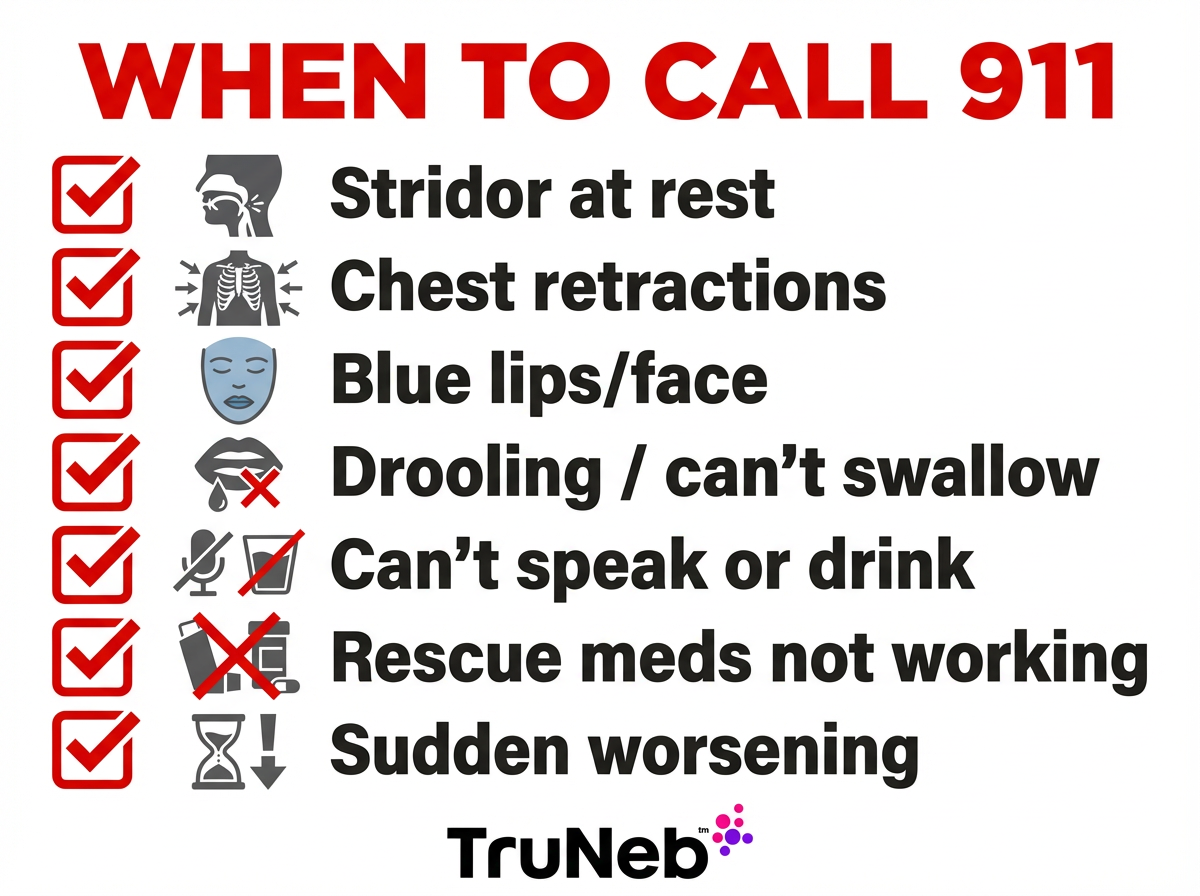
⚠️ Emergency warning: Call 911 or your local emergency number right away if any of the signs below are present.
Get urgent help if any of these are present with stridor, wheezing, or any noisy breathing:
- Stridor at rest (noise even when calm, not just when crying or active).
- Clear breathing struggle: chest retractions or nasal flaring.
- Blue or gray color around lips, face, or nails.
- Drooling with trouble swallowing, or sudden stridor after choking.
- Cannot speak in full sentences, drink, or cry strongly because of breathlessness.
- Rescue asthma medicines are not helping, or wheeze turns to a “silent chest.”
- Faintness, extreme sleepiness, or confusion.
Call 911 for severe trouble breathing, blue color, or sudden worsening. Trust your gut—if it feels like an emergency, treat it like one. Same‑day doctor care is needed for new, persistent, or worsening noisy breathing.
In short: if you see hard breathing or a blue or gray color around the lips or face, call 911 right away.
How Stridor Is Treated and Why It Is Not a Home Fix
Stridor signals a tight upper airway, so treatment targets the cause in a medical setting. For croup, doctors typically use a steroid and, if needed, a monitored nebulized epinephrine treatment to shrink swelling. A foreign object must be removed by trained medical staff. Epiglottitis or severe infection needs airway support and antibiotics. Anaphylaxis needs epinephrine right away and emergency care.
Laryngomalacia is usually watched and improves with time; rare severe cases can require a small surgery. Your baby’s doctor will decide on follow-up and whether any procedure is needed.
At home, keep the person calm; for mild croup your pediatrician might suggest cool mist for comfort while you seek guidance. If stridor doesn’t ease quickly or is present at rest, treat it as an emergency and seek care immediately rather than trying repeated home remedies. Don’t delay care if stridor is persistent or severe.
Key point: treat the cause with a doctor—don’t try to fix stridor at home beyond basic comfort while you get help.
Safety note: Talk to your doctor before trying a new medication.
How Wheezing Is Treated at Home and in Clinic
Wheezing care aims to open the airways and control triggers. Quick‑relief bronchodilators (like albuterol) by inhaler or via a nebulizer can ease tight airways. Most people with ongoing symptoms also use controller medicines (such as inhaled steroids) to prevent flares. Avoid smoke and known allergens, and keep hydrated; a humidifier can help loosen mucus during colds. For some conditions, doctors sometimes recommend nebulized hypertonic saline (3% or 7%) to thin mucus. Don’t use steam inhalers or facial steamers to deliver breathing medications—those devices are not nebulizers and can’t safely replace an inhaler or prescribed nebulizer treatment.
A portable mesh nebulizer such as TruNeb™ can make it easier to give prescribed treatments or saline at home or on the go, especially for children who cannot use inhalers well. Use devices and solutions only as directed by your doctor. If you or your child has asthma, follow the asthma action plan you’ve built with your doctor and update it if symptoms change. If wheezing is a recurring issue, make a written plan with your doctor so you know exactly what to do when symptoms flare. If symptoms are new, severe, or not improving with your plan, seek care promptly.
Safety note: Talk to your doctor before trying a new medication or saline treatment.
In short: medicines and, when prescribed, a nebulizer can help calm wheeze and improve airflow.
FAQs: Stridor, Wheezing, and Noisy Breathing
Tap or click a question below to see the answer:
Stridor sounds like a loud, harsh squeak or “crowing” mostly on breathing in, and you can usually hear it without a stethoscope.
Wheezing is a musical, whistling sound mainly on breathing out—like a faint flute or hiss from the chest.
Stridor usually points to an upper‑airway blockage and can be an emergency, especially in infants. Severe asthma wheeze can also be dangerous. Act on red flags.
Yes. Severe allergic reactions can cause throat swelling (stridor) and lung tightening (wheeze) at the same time. This is an emergency.
Stertor sounds like a low snore from the nose or throat. Wheeze is a higher whistle from the chest, most noticeable on breathing out.
Go now for stridor at rest, blue color, severe work of breathing, drooling with trouble swallowing, or if rescue meds don’t help.
No. Infections, COPD, allergies, heart failure, and irritants can also cause wheeze. A doctor should check ongoing wheezing in you or your child.
⚠️ Disclaimer: This article is for informational purposes only and is not a substitute for professional medical advice, diagnosis, or treatment. Always talk to your doctor about your symptoms and before starting, stopping, or changing any medication or treatment.