

On this page
RSV Incubation Period: How Soon After Exposure Do Symptoms Start?
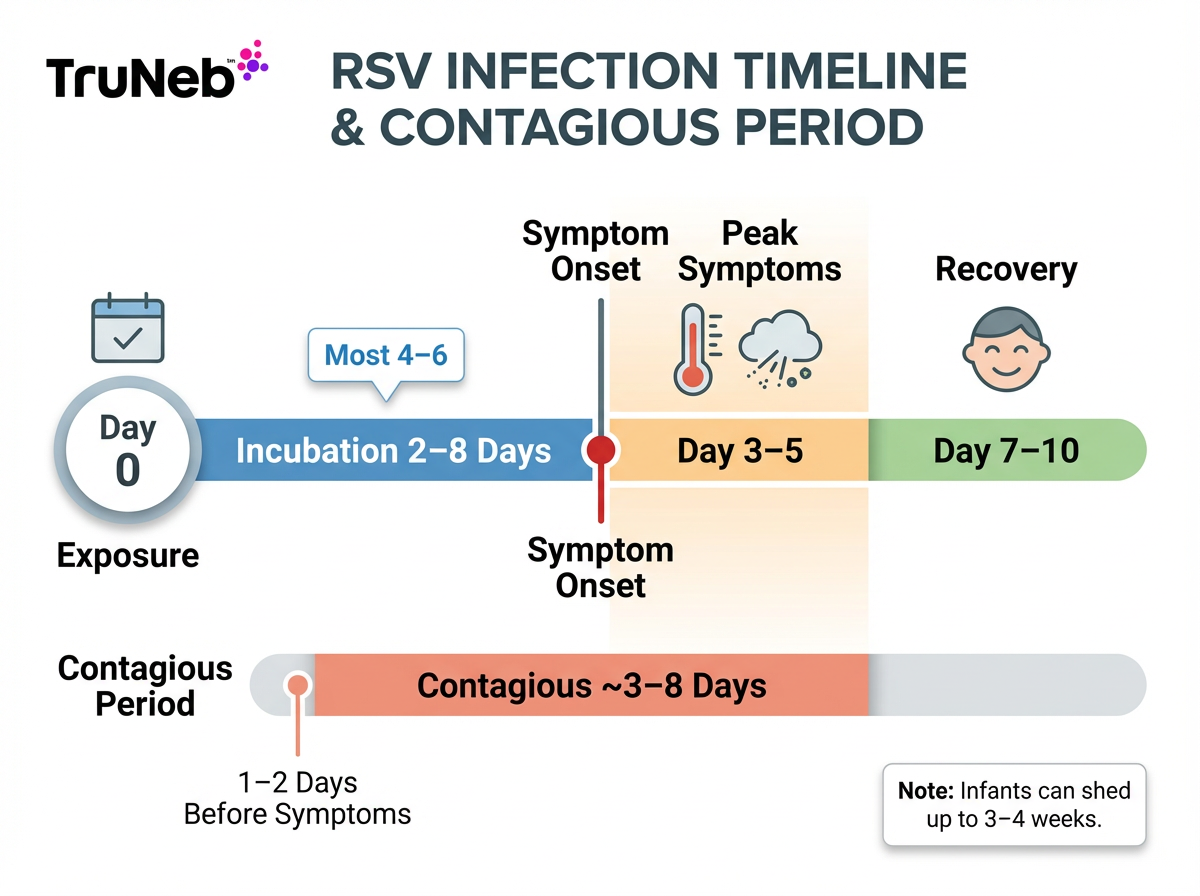
Incubation period means the time between catching a virus and the first symptoms. For respiratory syncytial virus (RSV), it ranges from 2 to 8 days. Most people start to feel sick about 4 to 6 days after exposure.
According to the CDC, people infected with RSV usually develop symptoms around day 4 to 6 after infection.
Example: If you were exposed on Monday, you might notice a runny nose or cough by Friday or the weekend.
Rule of thumb: RSV symptoms usually begin 4 to 6 days after exposure.
If 8 days pass with no symptoms from that exposure, it’s unlikely you got sick from that event (a different, later exposure is still possible).
Course of RSV Infection: How Long Do Symptoms Last Day by Day
Here’s a simple look at a typical RSV illness:
If you’re wondering how long RSV lasts, most illnesses resolve in about 1 to 2 weeks.
- Days 1 to 3: Mild cold-like signs start. You might notice a runny or stuffy nose and a small cough, and sometimes a low fever.
- Days 3 to 5: Symptoms usually peak. Cough gets heavier. Young children can wheeze or breathe faster and can feed poorly. Adults and older kids feel like they have a bad cold.
- Days 6 to 10: Most people begin to improve. Less congestion and easier breathing. A cough can linger for another week or two even as energy returns.
Most RSV illnesses last 1 to 2 weeks, and symptoms are usually worst around days 3 to 5.
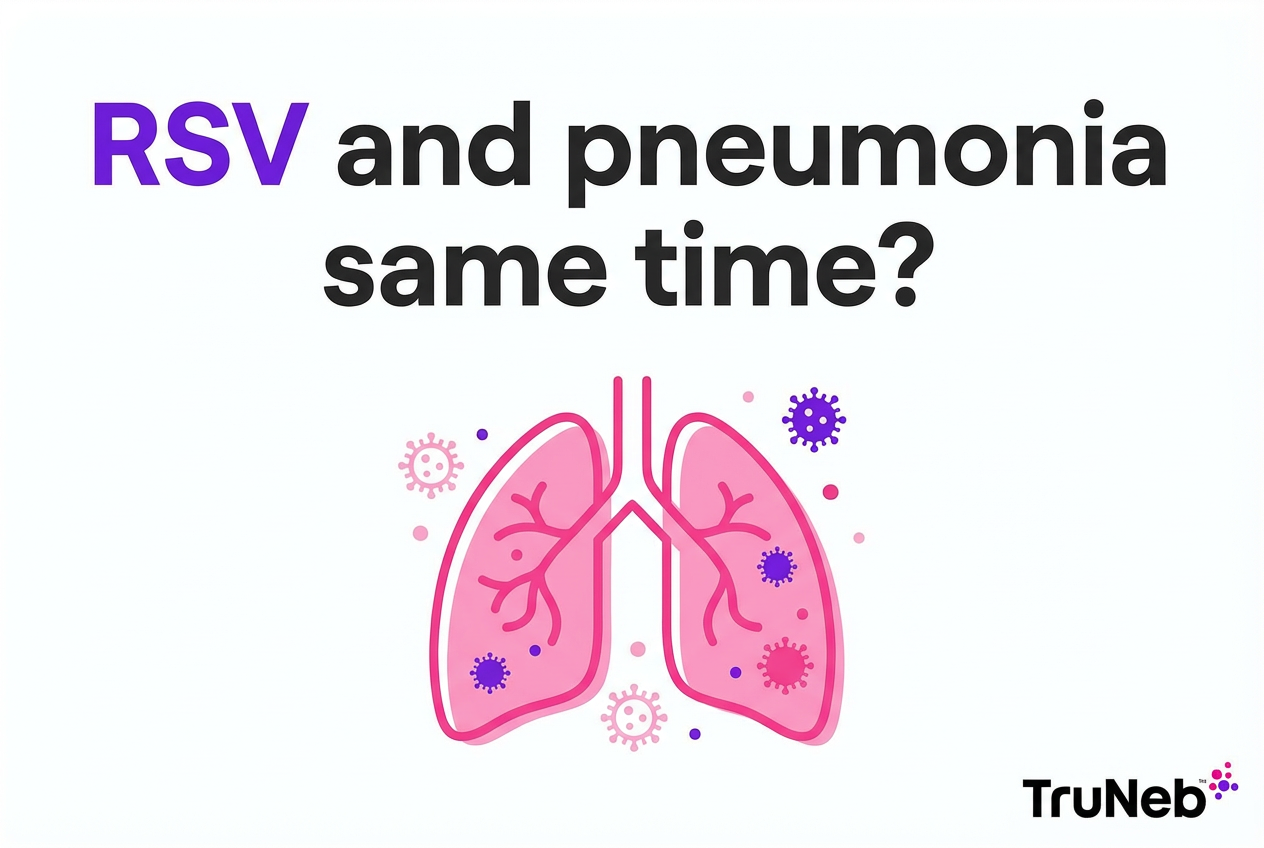
Severe cases or very young infants can take longer, especially if bronchiolitis or pneumonia develops and needs hospital care.
Contagious Period: When and How Long Is RSV Contagious?
Key facts about RSV contagiousness:
- Typical contagious period is about 3 to 8 days.
- You can spread RSV 1 to 2 days before symptoms begin.
- Babies and people with weakened immune systems can shed the virus for 3 to 4 weeks, even after they seem better.
- People usually spread the most virus in the first few days of coughing and sneezing.
- A fever is not required to spread RSV. You can still be contagious without a fever.
RSV spreads through droplets from coughs and sneezes and by touching contaminated surfaces and then your eyes, nose, or mouth.
People with RSV are usually contagious for 3 to 8 days and can spread it 1 to 2 days before symptoms.
RSV Isolation Guidelines: How Long Should You Stay Home?
Here are some simple ways to reduce the chance of spreading RSV. There’s no exact RSV isolation period, but these guardrails can help you decide:
- It’s a good idea to stay home for the first 5 to 7 days of illness, when symptoms and shedding are usually highest.
- You can usually return to school, daycare, or work when all are true: fever-free for 24 hours without medicine, symptoms are clearly improving, and you can take part in normal activities. Always follow your doctor’s and local policies.
- Be extra careful around newborns, premature infants, and older adults. When possible, wait until all symptoms are gone before visiting. At minimum, wait a full week and make sure symptoms are mild.
- If you must be around others early, wear a mask, wash hands frequently, cover coughs, and avoid close contact.
These tips line up with what pediatricians typically recommend. These are general guardrails; always follow your doctor’s advice and your school or daycare policies.
Plan on about a week at home; return when you’re fever-free for 24 hours and clearly improving.
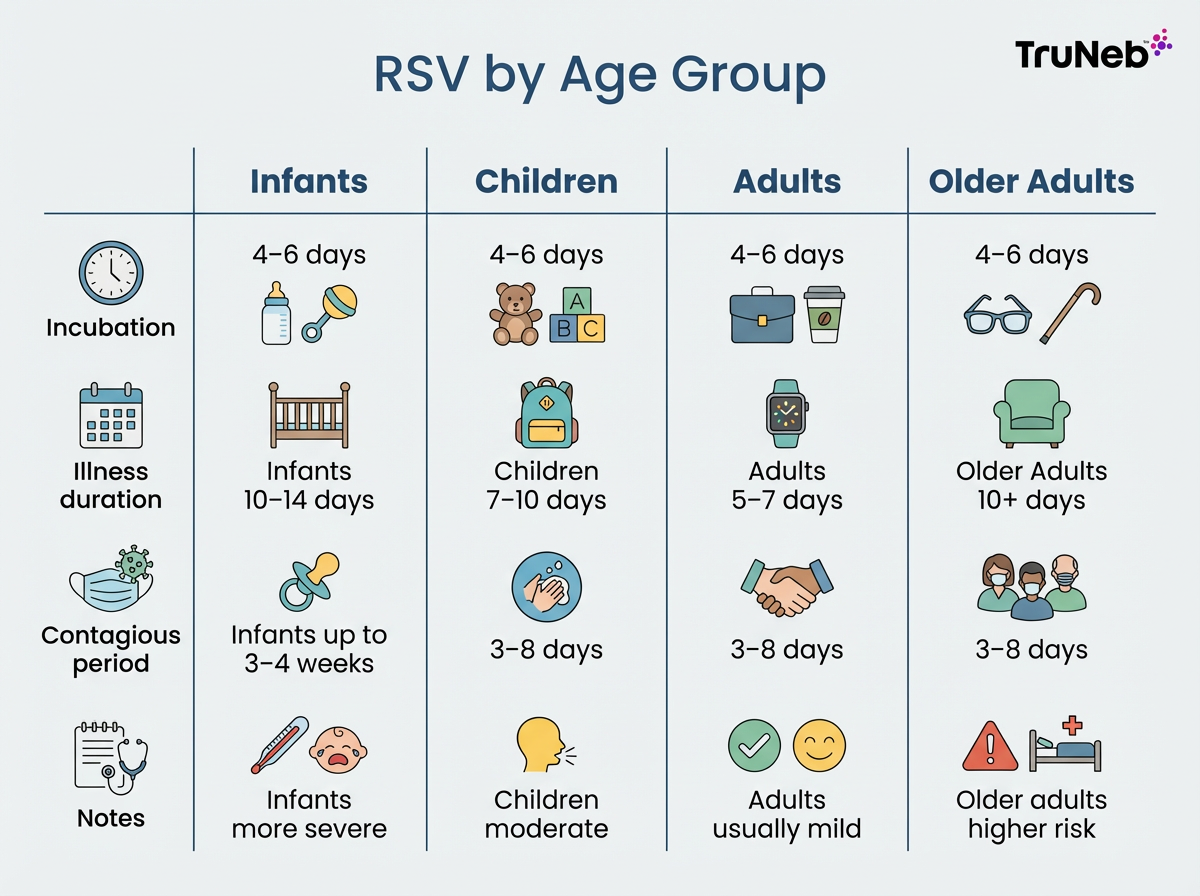
RSV by Age: How the Timeline Differs for Infants, Children, Adults, and Seniors
How RSV differs by age:
- Infants under 12 months: Incubation is about 4 to 6 days. Illness can be more severe with wheezing or feeding trouble. Recovery can take 10 to 14 days or more, especially in premature infants or babies with heart or lung problems. Some infants can shed the virus for 3 to 4 weeks.
- Toddlers and young children: Incubation 4 to 6 days. A bad cold is common. Some wheeze, especially with asthma history. Most feel better in 7 to 10 days. Contagious for about a week.
- Healthy adults and older kids: Incubation 4 to 6 days. Symptoms are usually mild. Many feel normal again in about 5 to 7 days. Still contagious for 3 to 8 days. Adults can catch and spread RSV. This is the typical RSV timeline in adults.
- Older adults or people with chronic conditions: Incubation is the same. Illness can be more serious and last longer. Watch for signs of bronchitis or pneumonia and slow recovery.
Incubation is similar across ages; infants and older adults tend to have longer illness and longer shedding.
Show age-by-age RSV timeline (quick chart)
| Age group | Incubation | Illness length | Contagious period | Notes |
|---|---|---|---|---|
| Infants (<12 months) | 4–6 days | 10–14+ days | Up to 3–4 weeks | Severe symptoms more likely; feeding/breathing support sometimes needed |
| Children (1–5 years) | 4–6 days | 7–10 days | About 3–8 days | Wheeze in some, especially with asthma |
| Healthy older kids/Adults | 4–6 days | 5–7 days | 3–8 days | Usually mild—still contagious |
| Older adults/Chronic conditions | 4–6 days | 10+ days | 3–8 days† | Higher risk for bronchitis or pneumonia |
Key takeaway: Incubation is similar across ages; infants and older adults tend to have longer illness and can shed virus longer.
† Shedding can last longer in some people.
Managing RSV Symptoms at Home: Care Strategies by Stage
Home care that helps:
- Hydrate and rest: Offer breastmilk or formula frequently for babies, and water or oral rehydration drinks for older people. Let your body rest.
- Ease stuffy noses: Saline drops and gentle suction can help clear an infant’s nose before feeds and sleep. A cool-mist humidifier can loosen mucus.
- Reduce fever and discomfort: Doctors sometimes recommend age-appropriate acetaminophen or ibuprofen to ease fever and discomfort. Always follow dosing instructions and ask your doctor if you’re unsure.
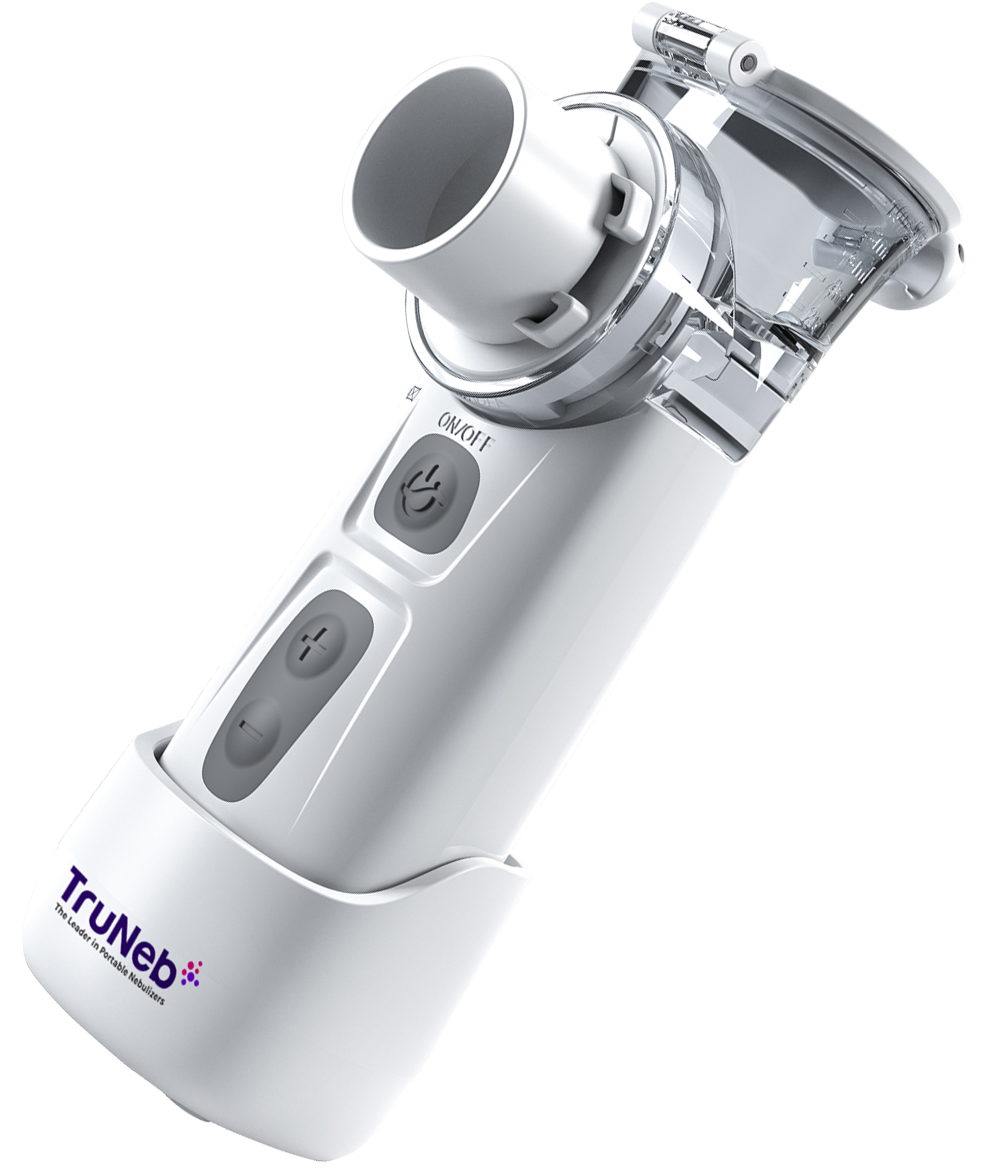
- Support easier breathing: If your doctor recommends it, nebulized saline or prescribed medicine can help with wheeze or thick mucus. A portable mesh nebulizer, such as the TruNeb™ portable mesh nebulizer, can deliver those treatments as a fine mist at home.
- Keep the air clean: Avoid smoke and strong fumes. Open windows when you can to keep the air fresh.
- Watch for red flags: Fast or hard breathing, blue color around the lips, very few wet diapers, or symptoms that worsen after day 3 to 4 should prompt a call to your doctor. If breathing looks severe, your child is very sleepy or hard to wake, or lips or face turn blue, seek emergency medical care right away.
There is no routine antiviral for RSV; supportive care at home helps most people recover.
Safety note: Talk to your doctor before trying a new medication or breathing treatment.
Frequently Asked Questions
Tap or click a question below to see the answer. This FAQ quickly answers common questions about how long RSV lasts, when you’re most contagious, and when to call a doctor.
Most people recover in about 1 to 2 weeks from the first symptoms, though a cough can linger a bit longer.
Yes. People can spread RSV about 1 to 2 days before symptoms start.
Yes. Fever isn’t required to spread RSV. You can still pass the virus to others without a fever.
If it’s been about 8 days since exposure with no symptoms at all, that exposure probably didn’t cause an RSV infection. Keep up good hygiene to prevent new exposures.
Yes. Adults can catch and spread RSV, even with mild cold-like symptoms. Take extra care around infants and older adults.
Get help from a doctor for fast or hard breathing, blue color around the lips, signs of dehydration, or if symptoms worsen after the third or fourth day. ⚠️ If breathing is very difficult, your child is unresponsive, or lips or face turn blue, call emergency services or go to the nearest emergency room immediately.
Disclaimer: This article is for informational purposes only and is not a substitute for professional medical advice, diagnosis, or treatment. Always talk with your doctor about your symptoms, concerns, and any treatments you’re considering.