

On this page
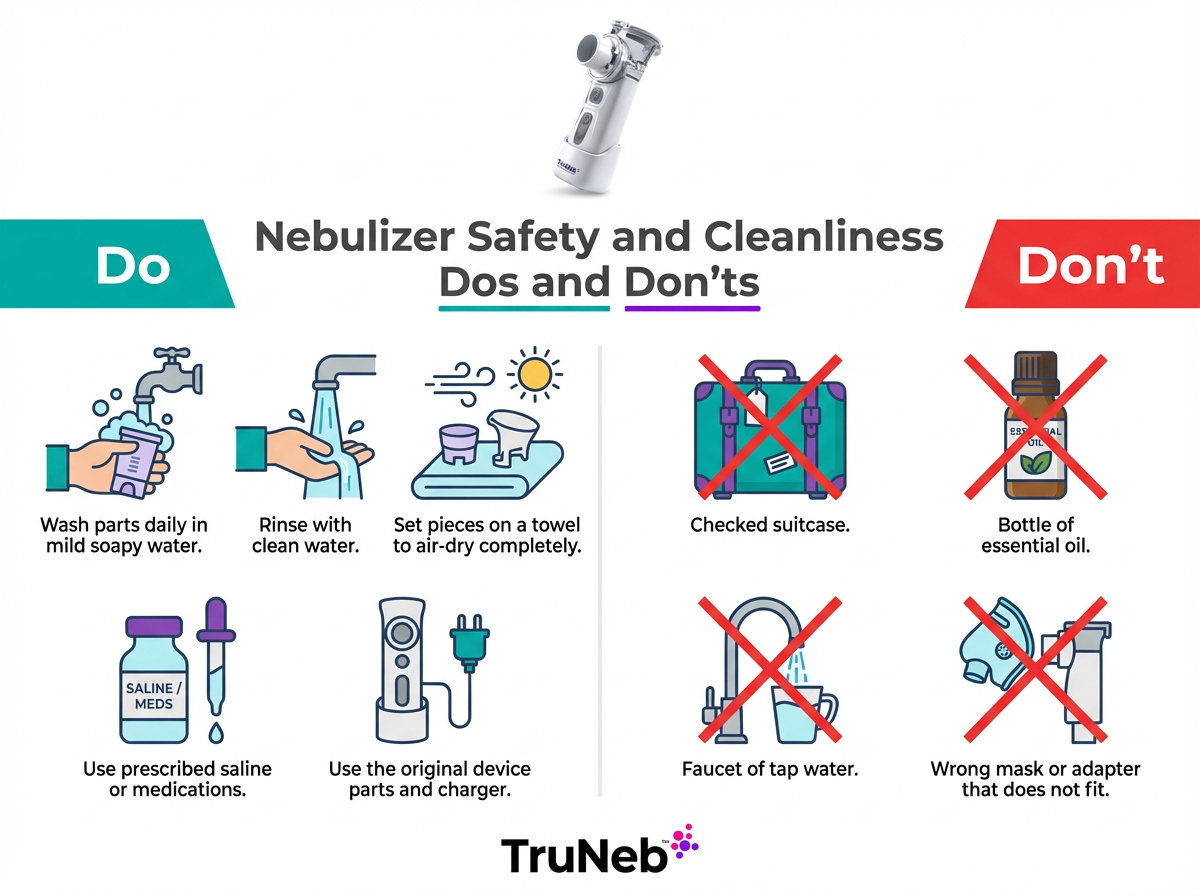
Mistake #1: Don’t Pack Your Nebulizer or Medications in Checked Luggage
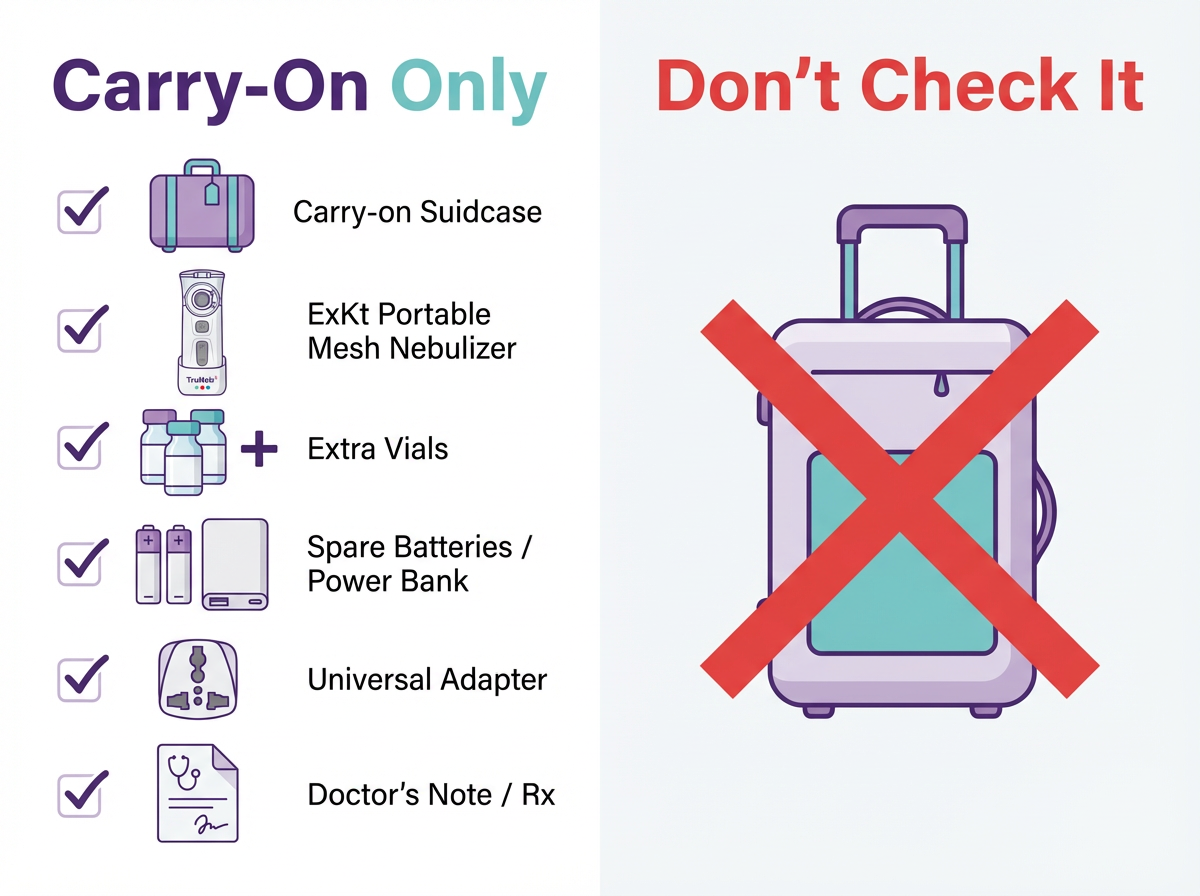
Put your nebulizer, meds, and parts in your carry-on. Never check them. If a suitcase is lost or delayed, you could miss treatments for days. About 8% of lost bags are never reunited with their owners.
Keep your gear with you for access during delays and long layovers or missed connections. Cargo holds and hot car trunks can get very hot or very cold. Many medications can break down with heat or freezing. Keep them at room temperature in your personal item under the seat. The same idea applies on bus and train trips where bags may be stowed out of reach, so keep your kit with you.
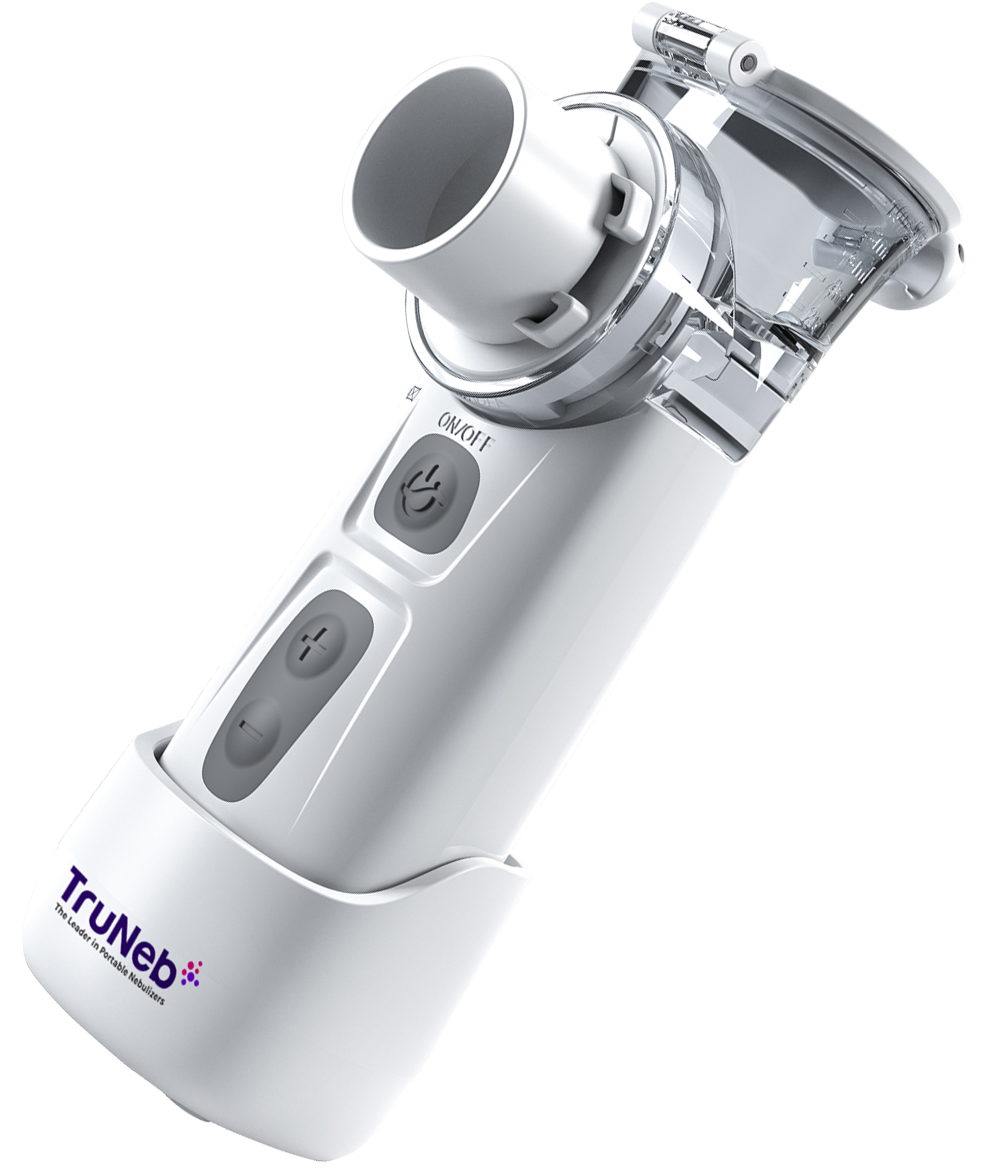
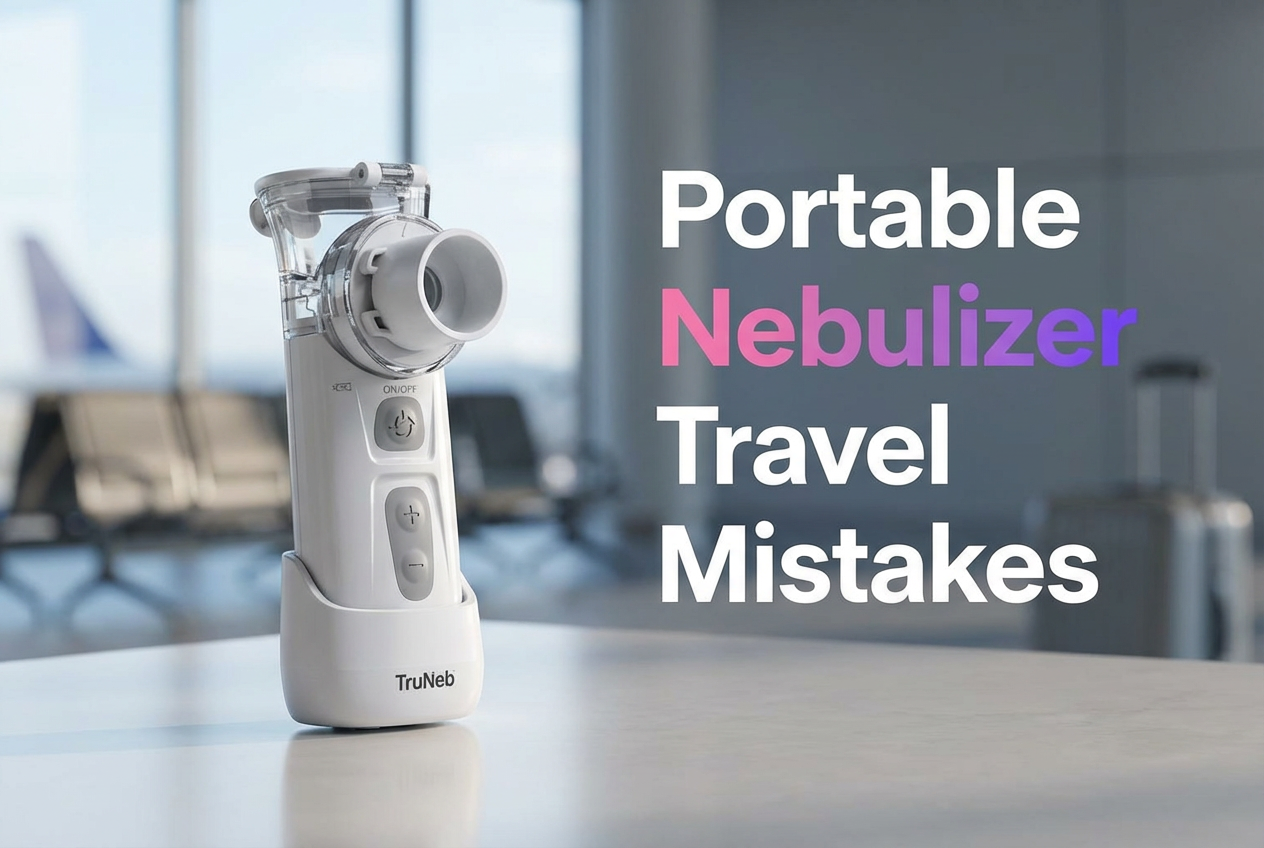
Airlines allow medical devices in the cabin. Because nebulizers are treated as medical/assistive devices, most U.S. airlines don’t count them against your carry-on limit. Still, check your airline’s current policy before you fly. Label your nebulizer case as medical equipment and tell the gate agent. A compact device like the TruNeb™ Portable Mesh Nebulizer is easy to keep close.
Practical tips:
- Use a small backpack or crossbody for your nebulizer, meds, charger, and a spare mouthpiece. Keep it with you at all times.
- Flying: place the kit under the seat so you can treat if you need to.
- Road trips: don’t leave meds or your nebulizer in a hot or cold trunk. Bring them inside at stops.
- With kids: keep the kit in the parent’s carry-on so nothing gets left behind. With older adults: keep the kit light and easy to reach to reduce strain.
One-liner: Always keep your nebulizer and meds in your carry-on; never check them.
Mistake #2: Don’t Travel Without Extra Medication and Backup Power
Pack more doses than you think you need. Flights get delayed and vials spill. Aim for at least a few extra days of medication. If a refill will come due while you’re away, ask your doctor or pharmacist about a one-time vacation override.
Split your supply. Keep most in your carry-on, but keep a day’s worth in your personal item in case your carry-on is gate-checked.
Bring power backups. If your nebulizer is rechargeable, carry the correct charger and a USB power bank allowed by your airline. Check your airline’s limits and FAA rules. Most allow lithium-ion power banks up to 100 Wh in carry-on only. If it uses removable batteries, carry spares in their original packaging. For road trips, bring a 12V car adapter. For international travel, bring the right plug adapter and, if needed, a voltage converter.
Traveling abroad? Check whether your medications are legal at your destination and carry copies of prescriptions in case customs has questions.
Have a Plan B. If your condition is severe, it’s worth discussing a second portable nebulizer—or at least a backup inhaler if prescribed—with your doctor. Ask your durable medical equipment (DME) supplier or clinic how to get help at your destination if something breaks.
Family tips:
- Kids drop or lose things. Pack extra neb cups and vials.
- Older adults may need help charging devices. Keep charging simple and in one place.
Safety note: Talk to your doctor before changing doses or adding treatments, including hypertonic saline (3% or 7%). Some people use saline during travel to help airway moisture, but only do this if your doctor agrees. Pharmaceutical-grade options like TruNeb 3% or 7% Hypertonic Saline vials should only be used if prescribed.
One-liner: Pack extra meds and reliable power backups so a delay never becomes a missed treatment.
Mistake #3: Don’t Ignore Airline and TSA Rules or Documentation
Know the rules before you fly. At security, take your nebulizer out of its case for X-ray. TSA may swab it. This is normal. Tell the officer it is medical equipment. Nebulizers are treated as assistive medical devices, so in the U.S. they’re allowed in the cabin even if you’re at your bag limit.
Liquid meds are allowed. Medically necessary liquids like albuterol or saline are exempt from the 3-1-1 limit and from the quart-size bag. Pack them together, present them, and say, “These are medically necessary liquids.” Bring only a reasonable amount for your trip. The officer may inspect them.
Batteries go in carry-on. Spare lithium batteries must be in the cabin and must meet airline and FAA limits. Don’t put loose lithium batteries in checked bags.
Tell the airline in advance if you plan to use your nebulizer in flight. Most allow battery-powered use. Don’t count on seat power.
Carry a doctor’s letter and keep meds in original labeled boxes when you can. For international trips, bring copies of prescriptions and consider a simple translation of medication names. If you feel anxious about screening, call TSA Cares ahead of time for help.
Doing these steps can prevent long delays, thrown-out meds, or confusion at the gate.
One-liner: Declare your meds, show your device, and carry a doctor’s letter to make security screening easier.
Mistake #4: Don’t Skip Cleaning and Hygiene on the Road
A dirty nebulizer can grow bacteria or mold. Breathing that in can make you sick. Keep your device clean every day, even on vacation.
Simple daily routine:
- After your last treatment of the day, wash the cup and mouthpiece or mask with warm soapy water.
- Rinse with clean water. If tap water is questionable, use bottled or boiled and cooled water for rinsing.
- Disinfect by soaking parts in 70% isopropyl alcohol for 5 minutes. Rinse and air-dry completely on a clean towel. Always check your nebulizer’s instructions to make sure the parts you’re cleaning can safely be soaked in alcohol or boiled.
- Pack an extra neb cup or mouthpiece so one can dry while you use the other.
Carry a tiny cleaning kit: travel soap, alcohol wipes, a sealable container for soaking, and a small bottle of distilled water if you can. Use distilled/boiled water only for rinsing and cleaning, not for nebulizing unless it’s labeled for inhalation. Wash your hands before handling meds or parts. Don’t share mouthpieces or masks. Store the device in a clean, dry pouch.
Skipping cleaning raises infection risk and can make your treatments less effective. A few minutes a day keeps you safer and your treatments working well.
One-liner: Clean, rinse, disinfect, and fully dry your nebulizer parts every day while you travel.
Mistake #5: Don’t Use the Wrong Liquids or Accessories in Your Nebulizer
Only use medications or saline your doctor prescribed for nebulizing. Do not put essential oils, extracts, or home mixes into a medical nebulizer. Oils can harm your lungs and can ruin the device. Do not use tap water in the cup.
You might see devices labeled “steam inhaler” on shelves—those aren’t medical nebulizers and aren’t designed for breathing prescription medications.
Use the right parts. Mixing parts from other models or using a random charger can hurt performance or damage the device. Bring the charger and parts made for your unit, plus a spare cup or mask.
Travel with a portable mesh unit, not a bulky home compressor. Pocket-size devices are easier to pack and use quietly on the go. A portable nebulizer like TruNeb is easier to pack and use on the go; check with your doctor or equipment provider if you’re not sure which type you have.
Quick comparison: nebulizer and similar device types for travel
| Device type | Use with prescription meds | Power | Portability | Noise | Cleaning notes |
|---|---|---|---|---|---|
| Portable mesh nebulizer | Yes | Rechargeable battery | Pocket-size, light | Quiet | Check manual; some parts can’t be boiled |
| Home compressor nebulizer | Yes | AC wall power | Bulky, less travel-friendly | Louder | Check manual; some parts may be boil-safe |
| Steam inhaler | No | Varies (AC or battery) | Portable | Low | Produces hot steam; not a nebulizer |
Note: Always check your device manual for cleaning and power guidance.
Thinking about saline for dry air? Some people use hypertonic saline (3% or 7%) when a doctor recommends it. Only use pharmaceutical-grade saline vials (for example, TruNeb 3% or 7% Hypertonic Saline) and never make your own saltwater. Talk to your doctor before trying a new medication or saline strength.
Using the wrong fluids or parts can lead to a trip-ending device failure or a lung injury. Keep it simple and safe.
One-liner: Only nebulize prescribed solutions and use the parts made for your device.
Frequently Asked Questions
Tap or click a question below to see the answer:
Yes. TSA allows nebulizers in carry-on and checked bags, but carry-on is strongly recommended. Remove the device for X-ray and tell the officer it is medical equipment. Because nebulizers are treated as assistive medical devices, U.S. airlines typically don’t count them against your carry-on limit. Confirm your airline’s policy before you fly.
It’s not required, but it helps. Carry a short letter on clinic letterhead that lists your need for a nebulizer and your medications. Keep meds in original labeled boxes when possible. This can make security and customs smoother.
Yes. Medically necessary liquids, like albuterol solutions and sterile saline, are exempt from the 3-1-1 limits and from the quart-size bag. Declare them at screening, bring only a reasonable amount for your trip, and expect that an officer may inspect them.
Wash the cup and mask or mouthpiece daily with warm soapy water, rinse with clean water, disinfect (for example, 70% isopropyl alcohol for 5 minutes), then air-dry completely. Pack a spare cup so one can dry while you use the other. Always check your nebulizer instructions to make sure the parts you’re cleaning can safely be soaked or boiled.
Only the solutions your doctor prescribed for nebulizing, such as albuterol or sterile saline. Do not put essential oils, extracts, or tap water in a medical nebulizer. Steam inhalers are not the same as medical nebulizers and should not be used to breathe prescription medications.
Plan treatments around long flights or drives, and stay hydrated. Carry a backup inhaler if prescribed. Avoid smoke and triggers. If you’re considering changes like using saline during flights, talk to your doctor first.
Quick takeaway: Portable nebulizers and prescribed meds are allowed in carry-ons—pack extras, keep everything clean, and check with your doctor before changing treatments.
Safety and when to get help: If you have severe trouble breathing, chest pain, blue lips or fingernails, confusion, or your usual treatments aren’t helping, seek emergency medical care right away (call 911 in the U.S.). If you need your nebulizer more often than usual while you’re traveling, or your symptoms are getting worse, call your doctor as soon as you can.
Disclaimer: This article is for informational purposes only and is not a substitute for professional medical advice, diagnosis, or treatment. Always talk to your doctor about your health, medications, and travel plans.