

On this page
Understanding Portable Mesh Nebulizers
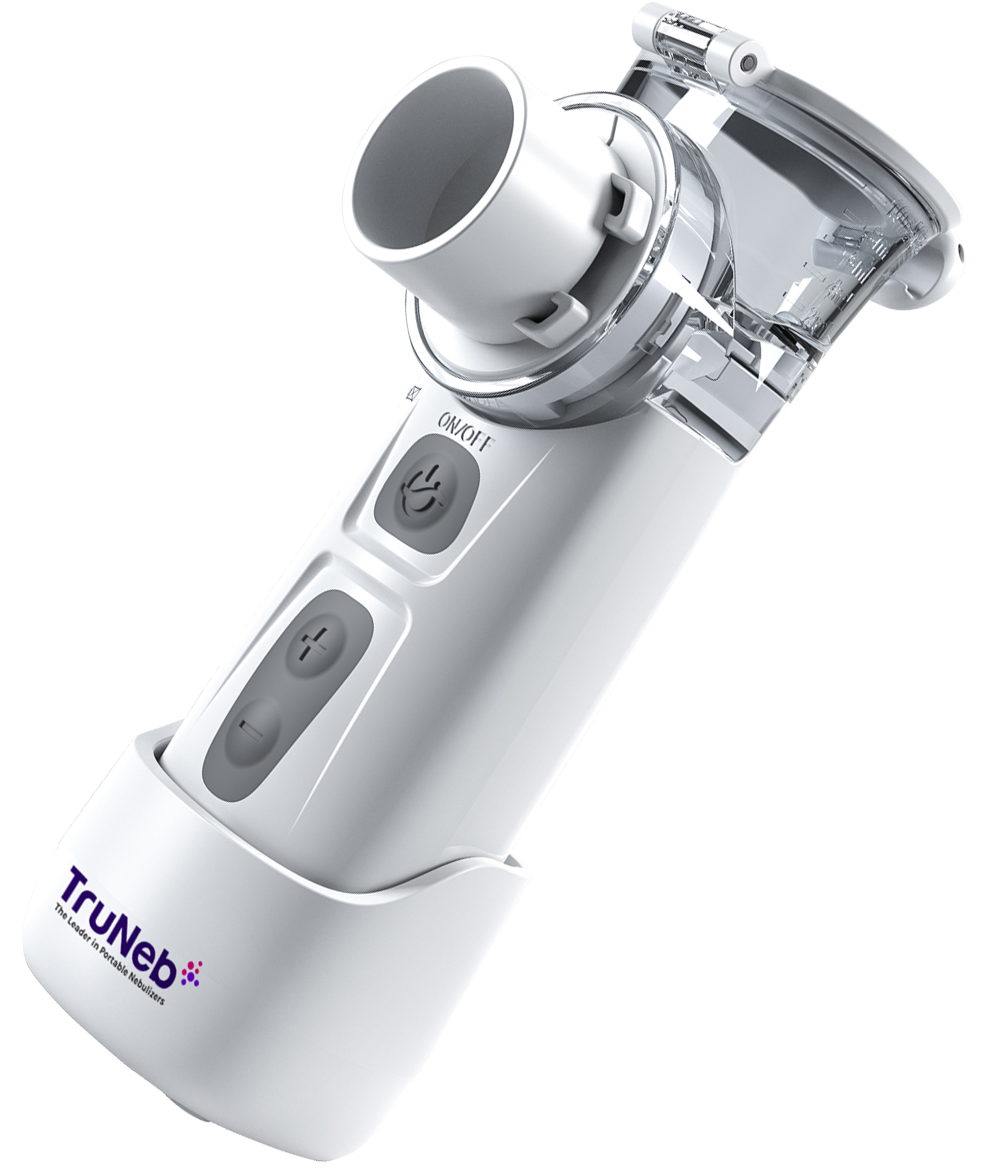
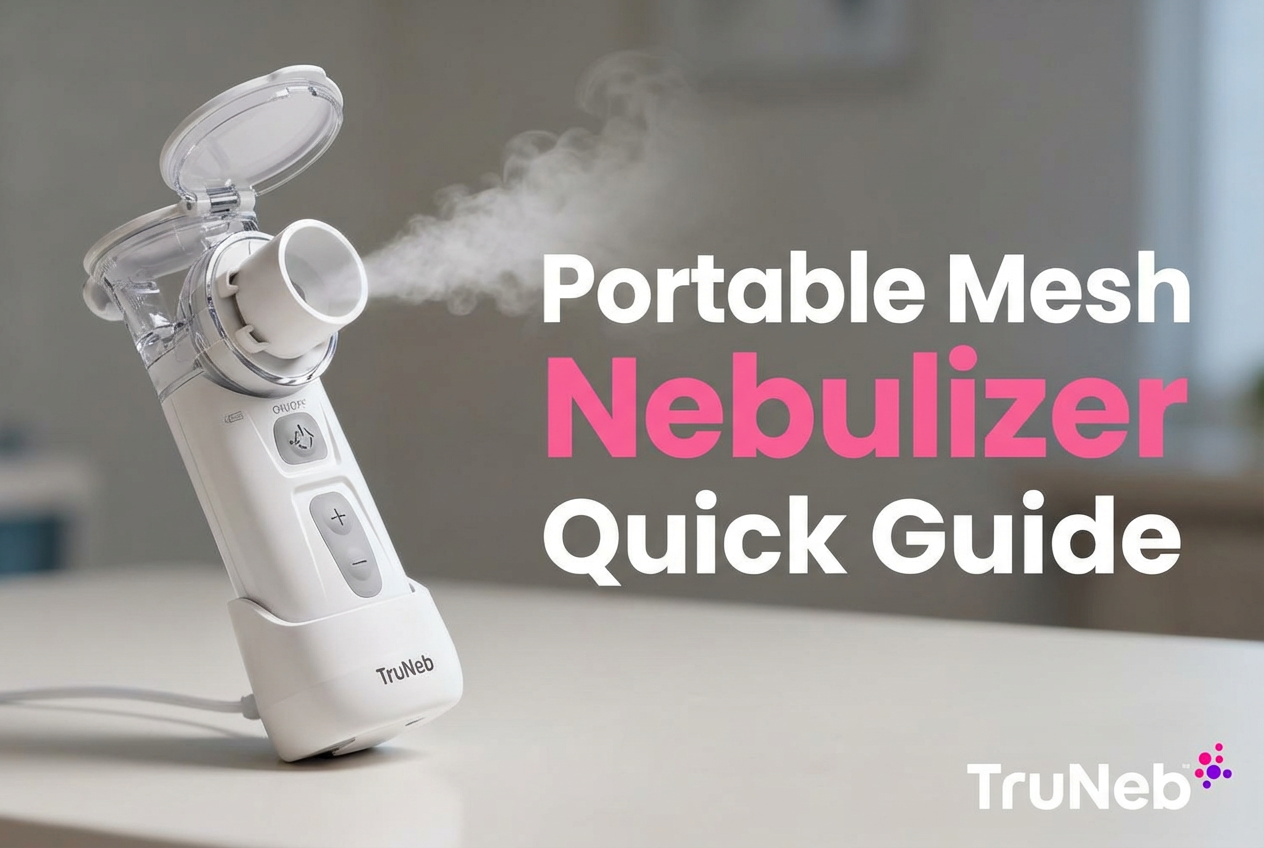
A portable mesh nebulizer is a small, handheld device that turns liquid medicine into a fine mist you breathe into your lungs. It uses a vibrating mesh with microscopic holes to make a steady, quiet aerosol. You use it with medications or sterile saline your doctor prescribes; the device simply delivers them as a breathable mist.
How it differs: A jet nebulizer is larger, louder, and plugs into a wall to push air through medicine. Ultrasonic nebulizers use sound waves and can warm the liquid. Mesh devices are battery powered, nearly silent, and keep the liquid cool and consistent.
Source: American Lung Association; Cleveland Clinic.
Key takeaway: Portable mesh nebulizers are quiet and easy to carry; always confirm medication compatibility and cleaning steps in your device manual.
| Type | Noise/Power | Portability | Medication fit | Heat risk | Cleaning notes |
|---|---|---|---|---|---|
| Mesh | Very quiet, battery powered | Handheld, travel friendly | Most inhalation meds and sterile saline; thicker suspensions can be harder to nebulize* | Keeps liquid cool | Rinse after use; don't brush the mesh; disinfect weekly |
| Jet (compressor) | Louder, plugs into wall | Home unit, less portable | Works with many nebulizer meds, including some suspensions | No heat added | Wash/disinfect parts; replace filters as directed |
| Ultrasonic | Quiet to moderate | Portable or tabletop | Not ideal for suspensions; check drug/device guidance | Some units warm liquid | Clean per manual; avoid heat-sensitive meds |
*Compatibility varies by model. Check your manual.
Why people use them: Mesh nebulizers deliver inhaled medicine or saline for asthma, COPD, cystic fibrosis, and RSV. The compact size makes treatments easier at home, at school, or on a plane. A portable nebulizer like the TruNeb™ Portable Mesh Nebulizer gives you treatment without the noise of older machines.
In short: a portable mesh nebulizer is a quiet, handheld way to inhale medicine as a fine mist.
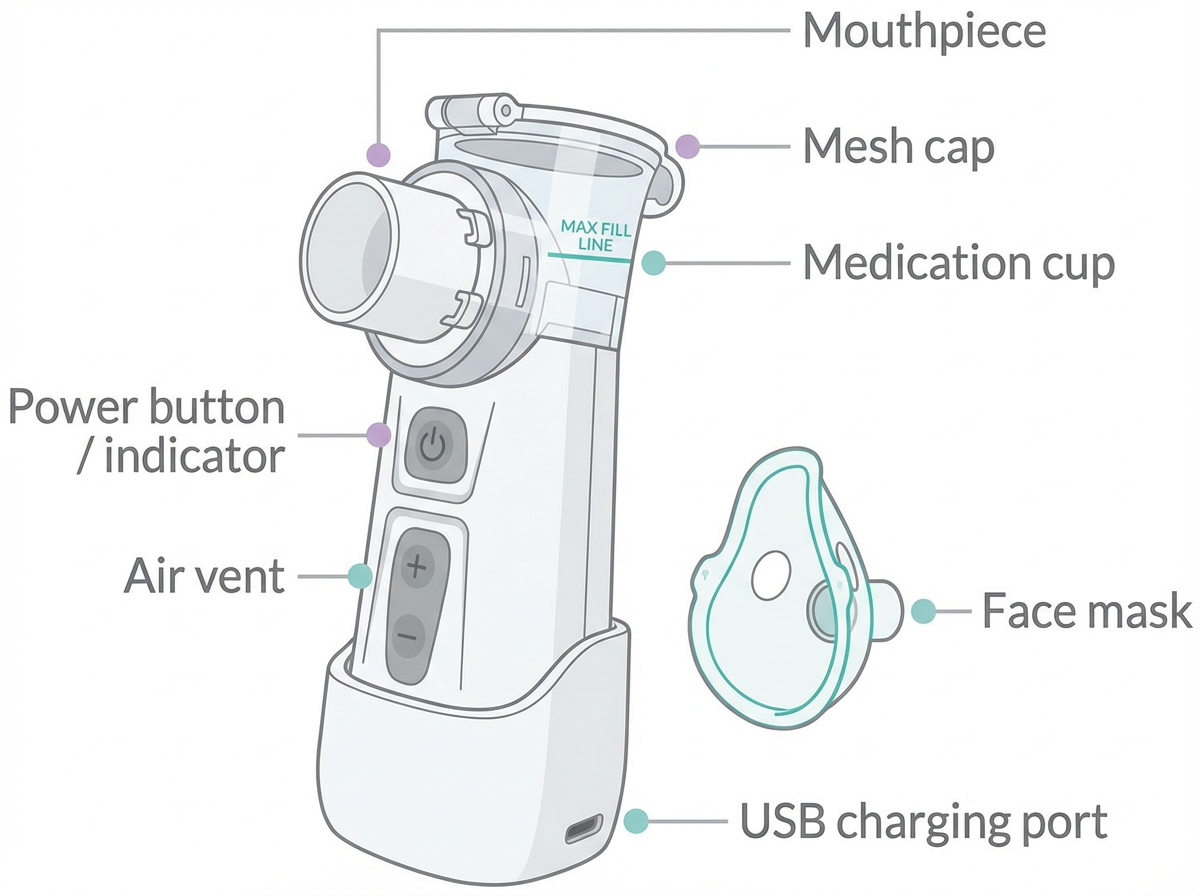
How to Use a Mesh Nebulizer Step by Step
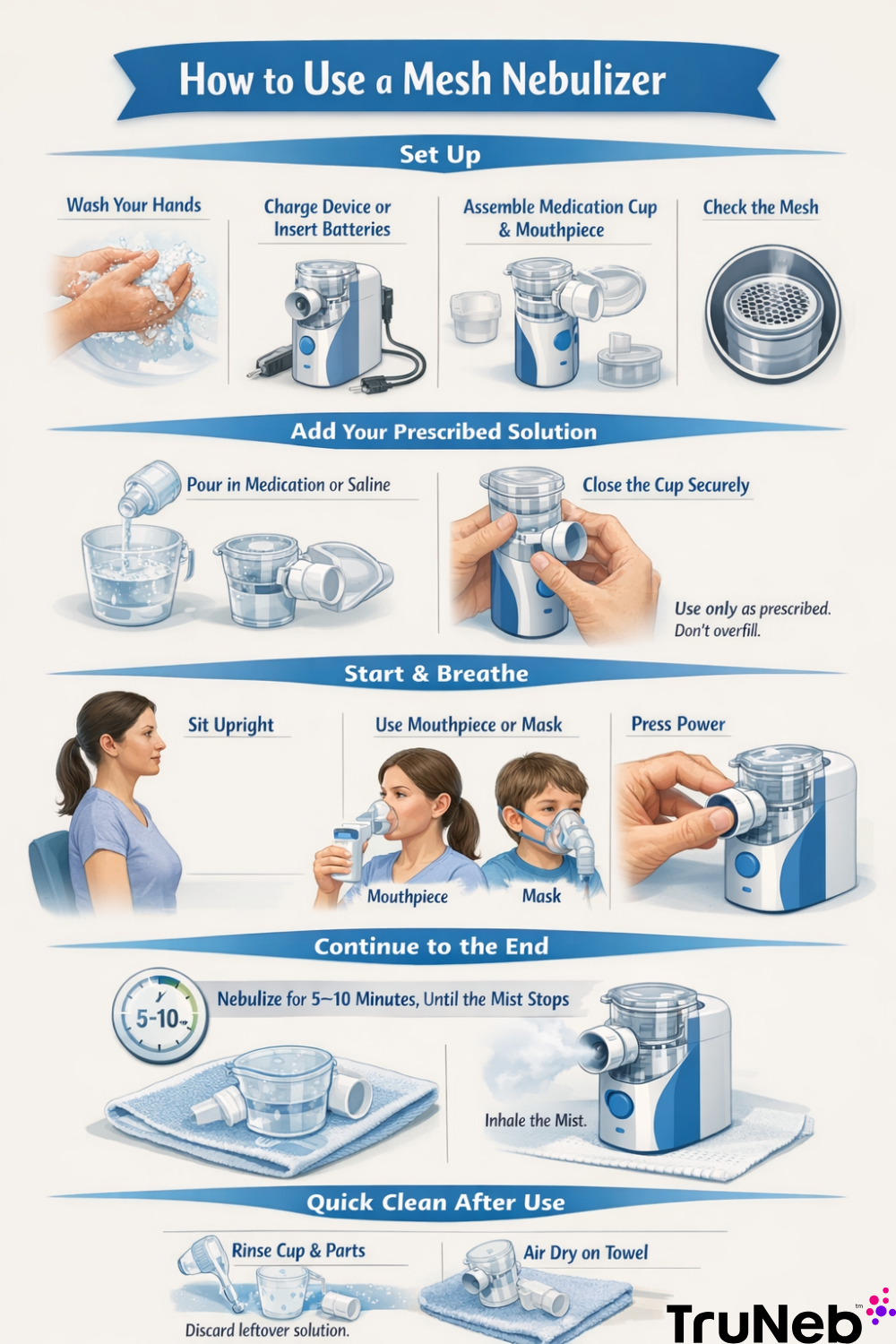
Using a mesh nebulizer is straightforward. Follow your device manual, and use these steps as a guide.
- Set up
- Wash your hands.
- Charge the device or insert fresh batteries.
- Assemble the medication cup and attach the mouthpiece or mask.
- Check that the mesh looks clean.
- Add your prescribed solution
- Only use the medication or sterile saline your doctor prescribed.
- Open the cup, pour the measured dose (don't go past the max fill line), and close it firmly.
- Start and breathe
- Sit upright.
- With a mouthpiece: place it between your teeth and seal your lips.
- With a mask: fit it snugly over nose and mouth.
- Press power. You should see a fine mist.
- Breathe calmly through your mouth. Every minute, take one slightly deeper breath and hold 1–2 seconds.
- Continue to the end
- Most mesh treatments last around 5–10 minutes; continue until the mist stops or the device auto-shuts off and no medicine is left in the cup.
- Quick clean after use
- Turn off. Discard any leftover solution.
- Rinse the cup and mouthpiece/mask with warm water. Shake off water and air-dry on a clean towel. Don't submerge the main unit.
Safety note: Talk to your doctor before trying a new medication or saline strength.
⚠️ If you have severe trouble breathing, chest pain, blue lips or face, or you can’t speak in full sentences, call 911 or seek emergency care right away.
⚠️ If you feel much worse during a treatment (for example, chest tightness or dizziness that doesn’t pass after a short pause), stop and call your doctor or urgent care.
⚠️ If you need your nebulizer more often than your doctor prescribed or your symptoms aren’t improving, call your doctor to review your treatment.
In short: To use a portable mesh nebulizer, add your prescribed solution, press start, breathe slowly until the mist stops, then rinse the parts.
What Solutions and Medications Can You Use?
Only use inhalation solutions your doctor prescribed. Make sure the label says 'for inhalation' or 'for nebulizer use.'
Common options
- Bronchodilators (for example, albuterol) for quick relief.
- Inhaled steroids (for example, budesonide) to calm inflamed airways.
- Sterile saline: 0.9% normal saline or hypertonic saline (3% or 7%) to loosen mucus. TruNeb offers 3% and 7% hypertonic saline kits when prescribed by your doctor.
Do not use
- Essential oils or oil-based liquids.
- Homemade saline or plain tap water.
- Plain distilled water as therapy.
- Mixed medicines unless your doctor told you to mix them.
Some thicker liquids (suspensions) don't nebulize well in mesh devices. Only use hypertonic saline if your doctor recommends it; it’s not right for everyone, especially young children or people with certain heart or lung conditions. Check your manual and follow your prescription exactly.
Safety note: Talk to your doctor before trying a new medication or saline strength.
In short: use only prescribed inhalation meds or sterile saline; never put essential oils or plain water in a nebulizer.
How Long Does a Nebulizer Treatment Take?
Most mesh nebulizer treatments take about 5–10 minutes.
A standard unit dose (around 2.5 mL) usually finishes in 5–7 minutes. Larger volumes can take up to about 10 minutes. If sessions regularly take much longer, charge the battery and clean the mesh.
Finish when the mist stops and the cup is empty or the device auto-shuts off. If your unit auto-shuts off while medicine remains, turn it back on to finish. Don't try to rush by breathing too fast; calm breathing works best.
In short: most mesh nebulizer treatments take about 5–10 minutes, and you should continue until the mist stops.
Do Nebulizer Treatments Help Remove Mucus?
A nebulizer does not suction mucus out. It delivers medicine or saline that can thin and loosen mucus so you can cough it up more easily. Hypertonic saline (3% or 7%) is commonly used for mucus clearance in certain conditions. Only use hypertonic saline if your doctor recommends it.
After your treatment, controlled coughing or airway clearance techniques can help move the loosened mucus. Your doctor can show you the right coughing or airway clearance techniques for you. Staying well hydrated also helps keep secretions thinner.
In short: nebulizers help thin and loosen mucus so you can cough it out; they do not vacuum it from your lungs.
Cleaning and Maintaining Your Mesh Nebulizer
Clean after each use to prevent germs and clogs, and to keep mist strong. Always follow your specific device manual if its instructions differ from these general steps. Don't share mouthpieces or masks.
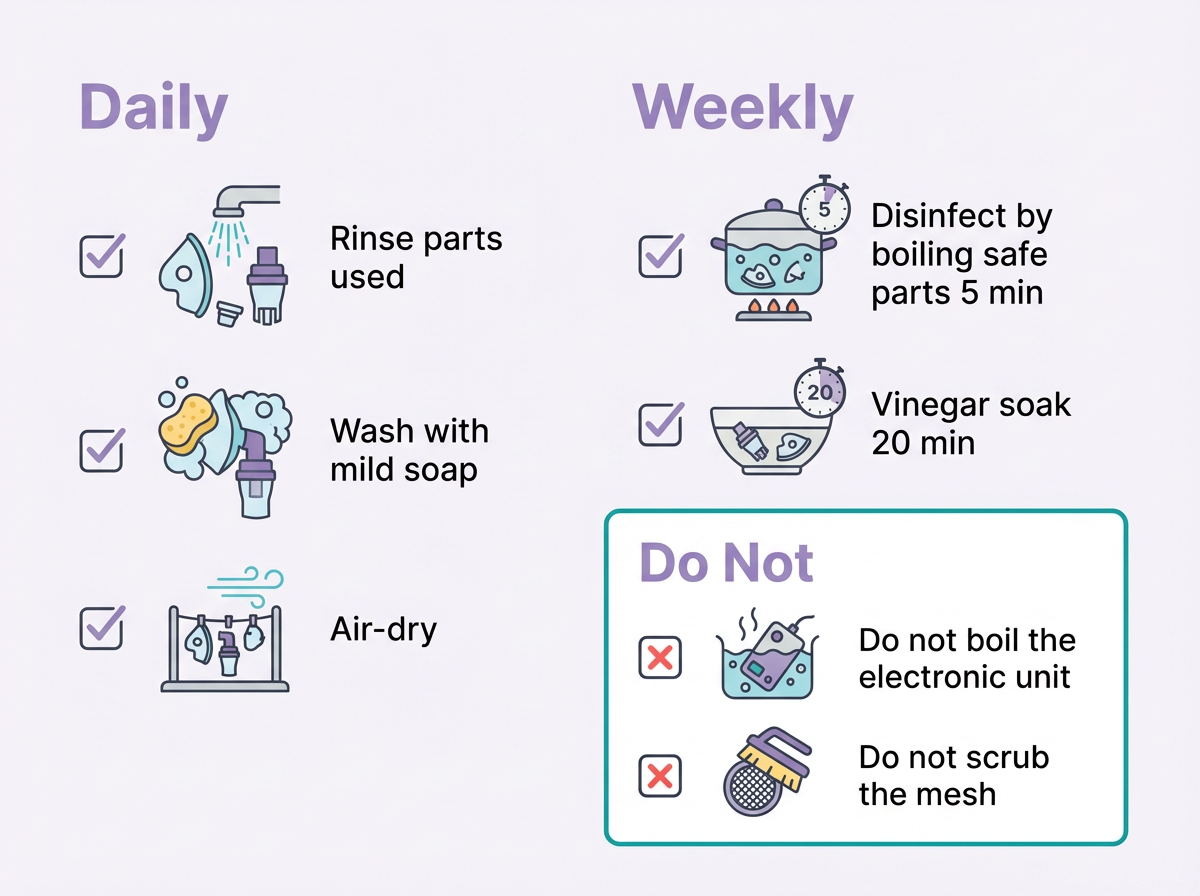
After each use (daily care)
- Disassemble the cup and mouthpiece/mask.
- Rinse with warm water. Wash with mild dish soap once a day on days you use it.
- Rinse off soap well. Air-dry on a clean towel. Don't wash the main unit.
Disinfect weekly (or more frequently during illness)
- If parts are boil-safe (mask, cup), boil for about 5 minutes. Don't boil the electronic unit or the mesh head unless your manual allows it.
- Or soak parts in 1 part white vinegar to 3 parts hot water for 20 minutes, then rinse and air-dry.
Mesh care
- Don't brush or poke the mesh. If output drops, do a deep clean per the manual or replace the mesh head as recommended.
Safety and storage
- Don't share mouthpieces or masks.
- Store dry parts in a clean container or bag. Remove batteries for long-term storage.
Source: American Lung Association.
In short: rinse after every use, wash daily, and disinfect weekly to prevent germs and clogs.
Pro Tips for Effective Nebulizer Sessions
- Hold it upright. Tilting too much can stop the mist, especially when the cup is low.
- Keep the air vent clear. Don't cover it with your hand or a pillow.
- Breathe calmly. If you feel dizzy, pause, then resume normal breathing.
- Start with a full battery or a fresh charge.
- Use a mouthpiece when you can. Use a snug mask for kids or if a mouthpiece is hard for you.
- Keep spare parts (mask, mouthpiece, mesh head) so you can swap and finish a treatment if something fails.
- You might also see boxes labeled 'steam inhaler' or facial steamers—these aren’t medical nebulizers and shouldn’t be used to inhale prescription medications.
In short: keep the device upright, vents clear, and your breaths calm; a full battery keeps the mist steady.
Troubleshooting Common Nebulizer Problems
No mist
- Charge the battery. Reassemble parts firmly. Check that liquid covers the mesh. Clean the mesh if crusted.
Shuts off mid-treatment
- Some devices auto-off after a few minutes. Turn it back on to finish if medicine remains. If the battery died, recharge and resume per your doctor’s guidance.
Leaking or sputtering
- Close the cup lid fully and check any gasket. Sputter usually means the cup is almost empty; a slight tilt can help the last drops reach the mesh.
Burning or strange smell
- Stop use. Turn off and contact the manufacturer. Mesh nebulizers should not heat the liquid. Do not use the nebulizer again until it has been inspected or replaced.
In short: Most nebulizer problems come down to power, assembly, or a clogged mesh; check those first.
Special Notes for Babies and Travel
Babies and young children
- Use a pediatric mask that fits snugly.
- Keep the child calm with a story, song, or a short video.
- If a baby cries, keep the mask gently in place and soothe them; never leave a child unattended.
- If they refuse the mask, a gentle blow-by near the nose/mouth is a last resort (less effective). Ask your pediatrician for guidance.
- Only use medications and schedules set by your child’s pediatrician; don’t change medicines or saline strength without checking first.
Travel tips
- Pack the nebulizer in your carry-on with medications in original labeled vials. Airport security may ask to see them.
- Bring a charger, extra batteries, and spare parts.
- On flights, these medical devices are allowed in carry-on; the quiet mist is discreet.
- On road trips, do treatments while parked or as a passenger.
- Keep the device and meds at room temperature before use.
In short: use a snug pediatric mask and calm routines for kids; for travel, pack meds, charger, and keep the nebulizer in your carry-on.
Frequently Asked Questions About Portable Mesh Nebulizers
Tap or click a question below to see the answer:
A mesh nebulizer uses a tiny vibrating mesh to create mist; a regular jet nebulizer uses compressed air from a larger, louder machine. Mesh units are portable, quiet, and usually faster.
No. Only use prescribed inhalation solutions. Plain water won’t treat your condition, and essential oils can harm your lungs and the device.
Rinse after every use, wash daily on days you use it, and disinfect about once a week. Let parts air-dry fully before storage.
They serve different needs. Mesh nebulizers help if you struggle with inhalers or during bad flare-ups because you just breathe normally. Lots of people use both.
The device is usually available without a prescription, but most medications require one. Insurance can cover a device if your doctor prescribes it.
Follow your device manual. Replace it if output drops despite cleaning or at the interval the manufacturer recommends.
Conclusion: Breathe Easier With a Portable Mesh Nebulizer
Portable mesh nebulizers make breathing treatments simple, quiet, and fast. With the steps, cleaning routine, and tips in this guide, you can handle treatments at home or on the go with confidence. A portable nebulizer like TruNeb fits into daily life without slowing you down.
Safety note: Talk to your doctor about which medication or saline is right for you.
⚠️ If you have severe trouble breathing, chest pain, blue lips or face, or you can’t speak in full sentences, call 911 or seek emergency care right away.
⚠️ If you need your nebulizer more often than your doctor prescribed or your symptoms aren’t improving, call your doctor to review your treatment plan.
In short: with the right steps and care, a portable mesh nebulizer makes reliable treatments part of everyday life.
Disclaimer: This article is for informational purposes only and is not a substitute for professional medical advice, diagnosis, or treatment. Always talk with your doctor about your symptoms, medications, and any questions about using a nebulizer.