

On this page
Inputs from Previous Agents
Input from Revisions Agent
Pink Frothy Sputum: What It Means and When To Get Help
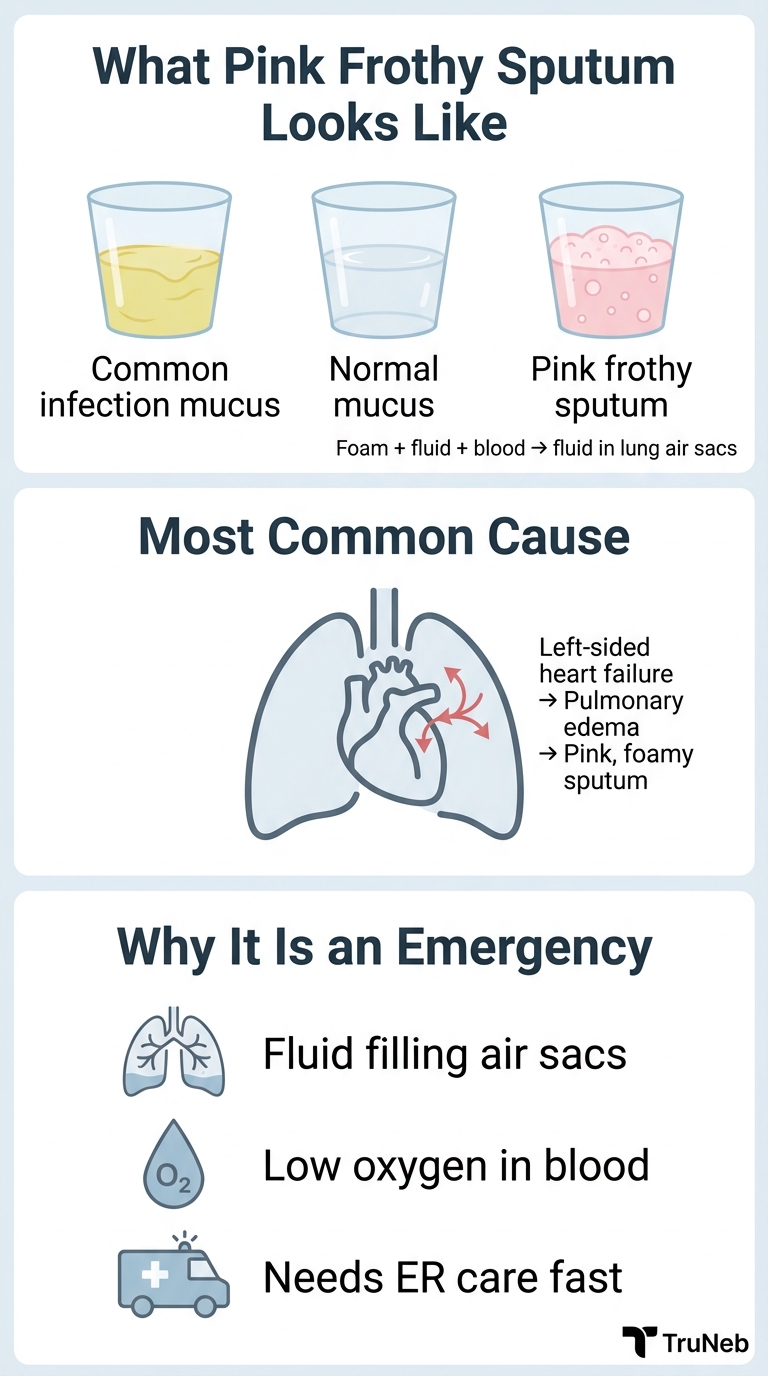
Pink frothy sputum is mucus you cough up that looks bubbly or foamy and has a light pink color. The foam comes from lots of air mixed with watery fluid, and the pink tint means there is blood in that fluid. This is very different from the thick yellow or green mucus you might see with a common chest infection.
The bubbly, frothy look happens because fluid inside the tiny air sacs in your lungs (alveoli) mixes with air when you cough.
Key point: Pink frothy sputum usually points to fluid leaking into your lungs, not just simple mucus in your airways.
Doctors commonly link pink, foamy sputum with a condition called pulmonary edema. Pulmonary edema means there is extra fluid inside the tiny air sacs in your lungs where oxygen should be.
When those air sacs fill with fluid instead of air, each breath brings in less oxygen. When you cough, that fluid mixes with air and a small amount of blood and appears as pink, bubbly mucus.
This kind of sputum is different from hemoptysis versus hematemesis, which is coughing up bright red blood, clots, or streaks of blood in otherwise clear or colored mucus. Both are serious, but pale pink foam usually means fluid is filling the air sacs, while bright red streaks or clots can point to bleeding in the airways themselves.
Symptoms from pulmonary edema can come on suddenly in minutes to hours or build over several hours or days, depending on the cause.
A simple guide: clear, white, yellow, or green mucus usually comes from infection or irritation in your airways, but pink, foamy sputum is a warning sign that fluid is in your lungs and needs urgent medical attention.
⚠️ If you cough up pink frothy sputum and feel short of breath, seek emergency medical care right away.
Cleveland Clinic describes pulmonary edema as an abnormal buildup of fluid in the lungs that usually requires immediate treatment to protect your breathing and oxygen levels.
Pink frothy sputum with breathing trouble is an emergency warning sign, not something to watch and wait at home.
How Heart Failure Leads to Pink Frothy Sputum
The most common cause of pink frothy sputum is acute pulmonary edema from left-sided heart failure.
Pink frothy sputum is most commonly caused by left-sided heart failure that leads to fluid buildup in the lungs.
In left-sided heart failure, the left side of your heart cannot pump blood forward very well. Blood backs up into the blood vessels in your lungs. Pressure in those vessels rises, and fluid is pushed out into the air sacs where air should be.
Once enough fluid leaks into those air sacs, it mixes with air and a small amount of blood. When you cough, it shows up as pink, foamy, blood-tinged sputum. Doctors commonly see this in people with congestive heart failure when their condition suddenly gets worse, during a heart attack, or when the heartbeat becomes very fast or very irregular.
Right-sided heart failure more often causes swelling in the legs, ankles, and belly. It is left-sided heart failure that is most closely tied to fluid in the lungs and pink, bubbly sputum.
Cleveland Clinic and MedlinePlus explain that heart problems are a major cause of pulmonary edema and that pink, frothy sputum is a classic warning sign.
If you already have heart failure, sudden pink frothy sputum is a major change. Treat it as an emergency, not a flare you handle at home. Call emergency services or get to the ER right away instead of waiting to see if it passes.
Pink frothy sputum in someone with heart failure is a sign that the heart and lungs are under strain and needs urgent medical evaluation.
Other Serious Causes of Pink Frothy Sputum
Not every case of pink frothy sputum comes from heart failure. Sometimes the problem starts in the lungs themselves.
Not all cases come from heart failure, but pink frothy sputum still points to a serious lung problem that needs urgent care.
Non-cardiac pulmonary edema happens when the lung tissue or blood vessels are damaged and become leaky. Fluid seeps into the air sacs even though the heart is working normally.
You can group the causes into three broad categories:
- Heart-related causes. Left-sided heart failure and sudden heart problems, such as a heart attack or serious rhythm problem, are the most common triggers of fluid in the lungs.
- Lung injury or inflammation causes. Severe pneumonia or lung infection, acute respiratory distress syndrome (ARDS), inhaling toxic fumes or heavy smoke, and near-drowning can all injure or inflame the lungs so much that the air sacs fill with fluid.
- Altitude or environmental causes. High-altitude pulmonary edema (HAPE) can happen when someone goes to a high altitude too quickly. The low oxygen at altitude can cause fluid to collect in the lungs, leading to shortness of breath and sometimes pink foamy sputum.
In all these situations, the thin walls between the blood vessels and the air sacs (alveoli) get damaged, so fluid can move into places it does not belong.
Mayo Clinic explains that many non-heart problems can trigger pulmonary edema, including pneumonia, ARDS, inhaled toxins, and high-altitude exposure.
Whenever pink, bubbly sputum appears, it signals that the lungs are under serious stress and needs fast medical care to protect oxygen levels and find the cause.
Pink Frothy Sputum and Other Pulmonary Edema Symptoms
Pink frothy sputum rarely appears by itself. It usually shows up along with other signs that your lungs are filling with fluid.
Pink frothy sputum with shortness of breath is a red-flag symptom combination that needs emergency evaluation.
Mayo Clinic and Yale Medicine list several key symptoms of pulmonary edema. These can build slowly over time or come on very suddenly, depending on the cause.
With fast-onset (acute) pulmonary edema, people commonly notice:
- Severe shortness of breath that can feel like suffocating.
- A feeling of drowning, especially when lying flat.
- Wheezing, gasping, or a bubbling sound when breathing.
- Coughing up frothy sputum that may look pink or blood-tinged.
- Anxiety, restlessness, or a sense that something very bad is happening.
Other signs can include a fast or irregular heartbeat, cool or clammy skin, sweating, and sometimes chest pain. Some people look pale or develop a bluish or gray color on their lips or fingertips, which means oxygen levels are falling.
When pulmonary edema builds more slowly, symptoms might start with mild shortness of breath during exertion, swelling in the legs or ankles, and waking up at night feeling breathless.
⚠️ Pink frothy sputum with trouble breathing is an ER symptom, not a wait-and-see problem.
If you live with heart failure or lung disease, talk with your doctor about which symptoms should send you straight to emergency care so you have a clear plan before a crisis ever happens. Some related warning signs overlap with shortness of breath when lying down and other breathing changes that should not be ignored.
Is Pink Frothy Sputum an Emergency and When To Go to the ER
Key point: pink frothy sputum is usually a medical emergency, especially when it appears with breathing trouble.
Major centers like Mayo Clinic and Cleveland Clinic warn that acute pulmonary edema, which commonly shows up with pink foamy sputum, is life-threatening and needs immediate treatment.
You should call 911 or your local emergency number right away if pink, bubbly sputum appears and you also notice:
- Severe trouble breathing or a feeling of suffocation.
- Coughing up a noticeable amount of pink or blood-tinged foam.
- Wheezing, gasping, or bubbling sounds inside your chest.
- Chest pain, tightness, or a racing, pounding heartbeat.
- Dizziness, confusion, or fainting.
- Skin that looks blue, gray, or very pale, along with cold sweat.
These are not symptoms to drive yourself with. Calling an ambulance lets paramedics start oxygen and other treatments on the way to the hospital.
If you notice a tiny streak of pink or red in mucus that is not frothy but feel well otherwise, it can have different causes, such as an irritated airway. You still should not ignore it. Call your doctor or an urgent care clinic the same day for advice so they can help decide how quickly you need to be seen.
A simple guide: if breathing feels harder and your sputum turns pink and foamy, do not wait for an office visit; treat it like an emergency.
Pink frothy sputum with breathlessness is an emergency situation that calls for ER care instead of home treatment.
How Doctors Treat Pink Frothy Sputum in the Hospital
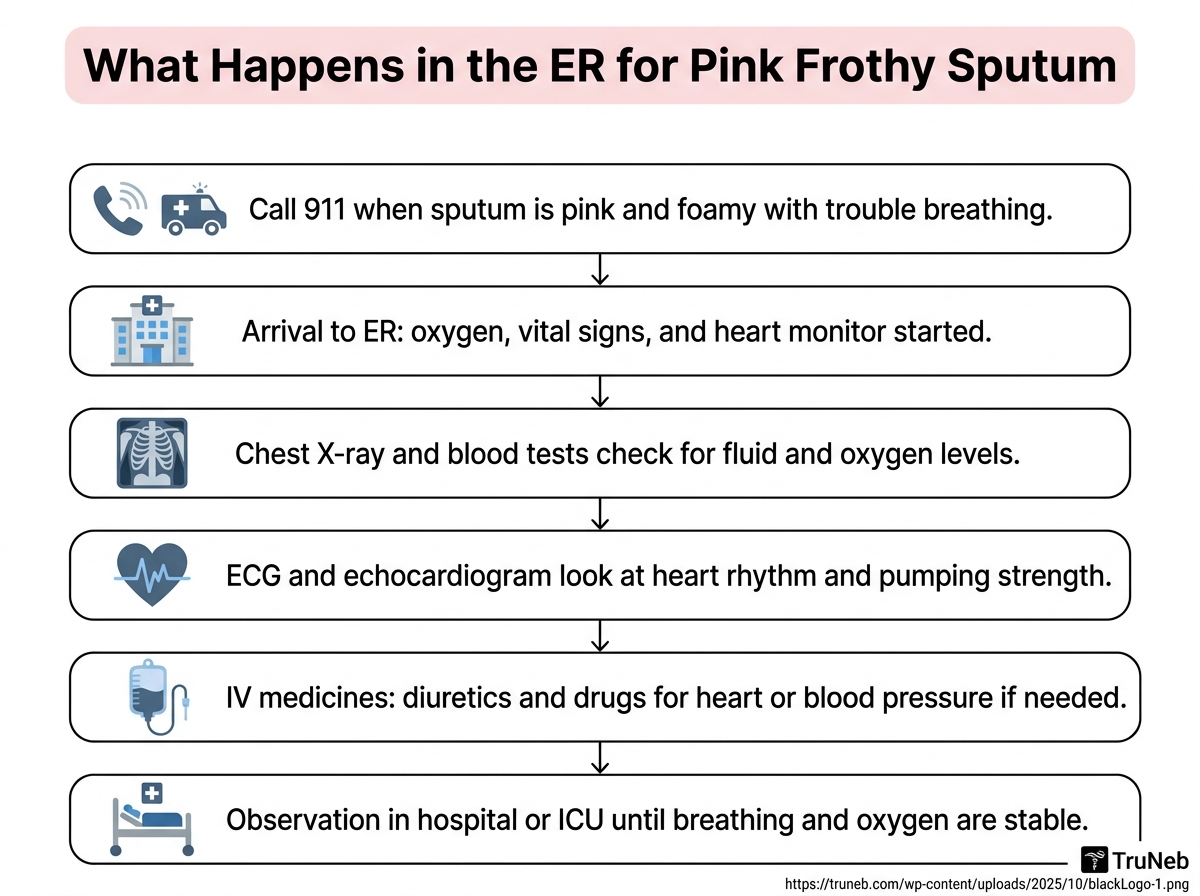
When you arrive at the ER with pink frothy sputum, the medical team moves quickly. Their main goals are to get oxygen into your body and to address the cause of the fluid.
Hospital treatment focuses on improving oxygen levels and treating the cause of fluid in the lungs.
Right away, they typically:
- Give supplemental oxygen through a mask or nasal tubes.
- Check your blood pressure, heart rate, and oxygen level.
- Listen to your lungs for crackling or bubbling sounds.
If your breathing is very weak, they can use breathing support through a mask (a type of noninvasive ventilation) or, in severe cases, a breathing machine to support you while they treat the underlying problem.
To find out what is causing the pulmonary edema, doctors commonly order tests such as:
- A chest X-ray to look for fluid in the lungs.
- Blood tests to check oxygen levels and heart strain.
- An electrocardiogram (ECG) to look at heart rhythm.
- An echocardiogram (heart ultrasound) to see how well the heart is pumping.
For pulmonary edema from heart failure, treatment often includes IV diuretics ("water pills") to help your body remove extra fluid, along with medicines that support heart function or lower blood pressure.
If a heart attack is the cause, the team works to open blocked arteries. If pneumonia or ARDS is to blame, care can include antibiotics, breathing support, and close monitoring in the hospital or ICU while the lungs heal.
Pulmonary edema is serious, but with prompt treatment many people improve as the extra fluid clears out. Doctors will adjust your long-term heart or lung care afterward to lower the risk of it happening again.
Any changes to heart failure, blood pressure, or lung medications should be made with your doctor so they are safe and tailored to you.
Pink Frothy Sputum vs Regular Mucus and Home Nebulizers
Pink frothy sputum is very different from the everyday mucus you might cough up with asthma, COPD, chronic bronchitis, bronchiectasis, or cystic fibrosis.
Pink frothy sputum is not ordinary mucus, so it should not be treated like a routine flare at home.
In those chronic lung conditions, mucus usually sits in the larger airways. It often looks thick and can be clear, white, yellow, or green. People manage that kind of sputum at home using inhalers, chest physiotherapy, breathing exercises, and airway clearance tools.
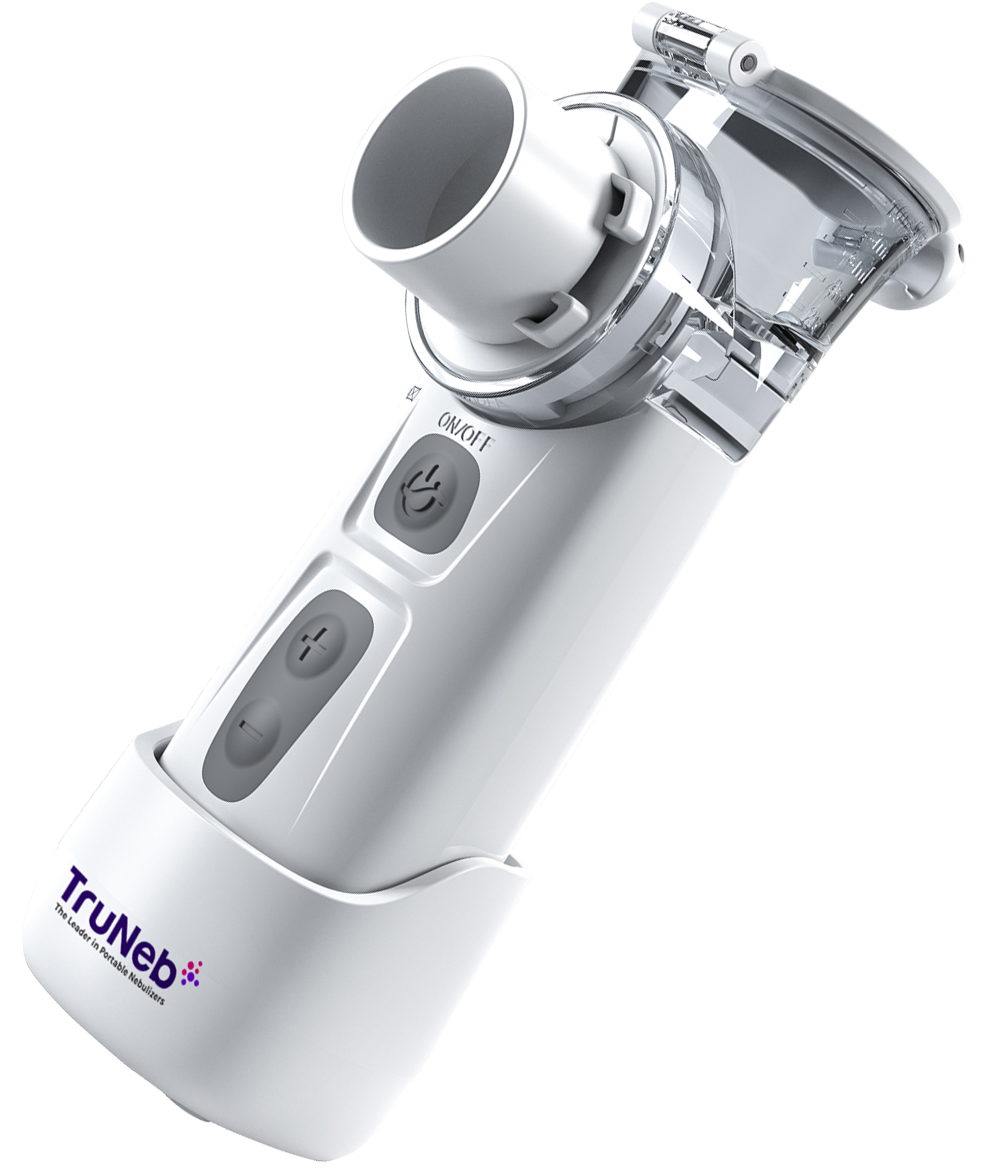
For example, a portable nebulizer like the TruNeb Portable Mesh Nebulizer can be used to deliver prescribed inhaled medication for some chronic lung conditions.
Pink frothy sputum is not like that. The foam comes from fluid flooding the tiny air sacs where gas exchange happens, not from sticky mucus in the larger breathing tubes. Because new fluid keeps leaking in from the bloodstream, you cannot fix the problem by trying to cough harder or by using a home nebulizer.
MedlinePlus notes that pink, frothy sputum can be a symptom of pulmonary edema, which is different from routine airway mucus.
A nebulizer can help with prescribed airway treatments, but it does not remove fluid from the air sacs in pulmonary edema. If you want to understand device differences for usual airway care, see nebulizer versus inhaler differences, how to use a nebulizer, and guidance on nebulizer cleaning instructions.
Pink, foamy sputum is a sign of fluid in the lungs that needs urgent medical care, not a home treatment plan. People comparing colors of airway mucus may also find white foamy mucus causes, green phlegm meaning, and pulmonary edema versus pleural effusion helpful for context.
| Feature | Pink frothy sputum | Regular mucus |
|---|---|---|
| Typical color | Pale pink, sometimes blood-tinged | Clear, white, yellow, or green |
| Texture | Light, bubbly, and foamy | Thick, sticky, or stringy |
| Main source | Fluid leaking into lung air sacs (pulmonary edema) | Mucus produced in larger airways |
| Common causes | Heart failure, acute lung injury, high-altitude pulmonary edema | Asthma, COPD, bronchitis, colds, mild infections |
| Home nebulizer role | Not a treatment for fluid in air sacs | Can be used for prescribed airway medications |
| Urgency | Usually needs emergency care | Needs medical advice if it worsens or changes |
Frequently Asked Questions About Pink Frothy Sputum
Frequently Asked Questions
Tap or click a question below to see the answer:
No, pink frothy sputum is not considered harmless. It strongly suggests that fluid and blood are leaking into the air sacs of your lungs, most often from pulmonary edema or another serious illness, and it should be checked urgently.
Call 911 or your local emergency number right away if pink, bubbly sputum appears and you feel short of breath, lightheaded, confused, or have chest pain, a racing heart, or blue or gray skin. Do not try to drive yourself if you feel faint or cannot catch your breath.
Pink frothy sputum is mainly linked with left-sided heart failure. When the left side of the heart cannot pump well, blood backs up into the lungs and fluid leaks into the air sacs, causing pulmonary edema and pink, frothy sputum, while right-sided failure tends to cause leg and belly swelling.
Pink frothy sputum looks like pale pink foam with many bubbles, which usually means fluid is filling the lung air sacs. Coughing up blood, or hemoptysis, often shows bright red streaks or clots in mucus that is otherwise clear or colored, and can point to bleeding in the airways themselves.
Yes, a very severe pneumonia can damage the lung tissue so much that fluid leaks into the air sacs and causes non-cardiac pulmonary edema, which can show up as pink, foamy sputum along with high fever, chills, and severe shortness of breath.
No, a nebulizer cannot clear fluid from the lung air sacs in pulmonary edema. It is designed to deliver medication or saline into the airways for thick mucus in conditions like asthma or COPD, not to remove the kind of fluid that causes pink frothy sputum.
Disclaimer: This article is for informational purposes only and is not a substitute for medical advice, diagnosis, or treatment. Always talk with a doctor about symptoms, medications, and treatment decisions.