

On this page
"Phlegm color is a clue, not a diagnosis, so always pair what you see with how you feel."
This guide will help you spot common phlegm colors, know when it is reasonable to watch and wait, and know when color changes plus symptoms mean it is time to get checked.
Mucus vs Phlegm: What’s Actually Coming Out
Mucus and phlegm are related, but they are not exactly the same.
Mucus is the slick fluid that lines your nose, sinuses, throat, and airways. It traps germs, dust, and pollen so they don’t reach your lungs. You make a large amount of it every day, and most of it you swallow without noticing.
Phlegm (also called sputum) is mucus that comes from your chest and lower airways. You usually notice it when you cough and spit something up. It tends to be thicker and stickier, especially when you are sick.
Nasal mucus and chest phlegm can share similar colors. The big difference is where they come from:
- Nose and sinuses: you blow it out or feel it drip down the back of your throat (postnasal drip), which can sometimes feel like “chest mucus” even when it is coming from higher up.
- Lungs and airways: you cough it up from your chest.
Color changes happen when extra cells, debris, or even blood mix into that mucus. Infection, allergies, smoke, and pollution can all shift the color. But color alone cannot tell you exactly what infection you have or if you need antibiotics.
Mucus and phlegm can look similar, but phlegm comes from the lower airways while mucus can also come from the nose and sinuses.
Key point: Use mucus color as one signal, not the whole story. How long it lasts, how you feel, and your other symptoms matter just as much.
Talk to your doctor before trying a new medication or changing any treatment on your own, especially if you have asthma, COPD, or another lung disease.
Phlegm Color Chart
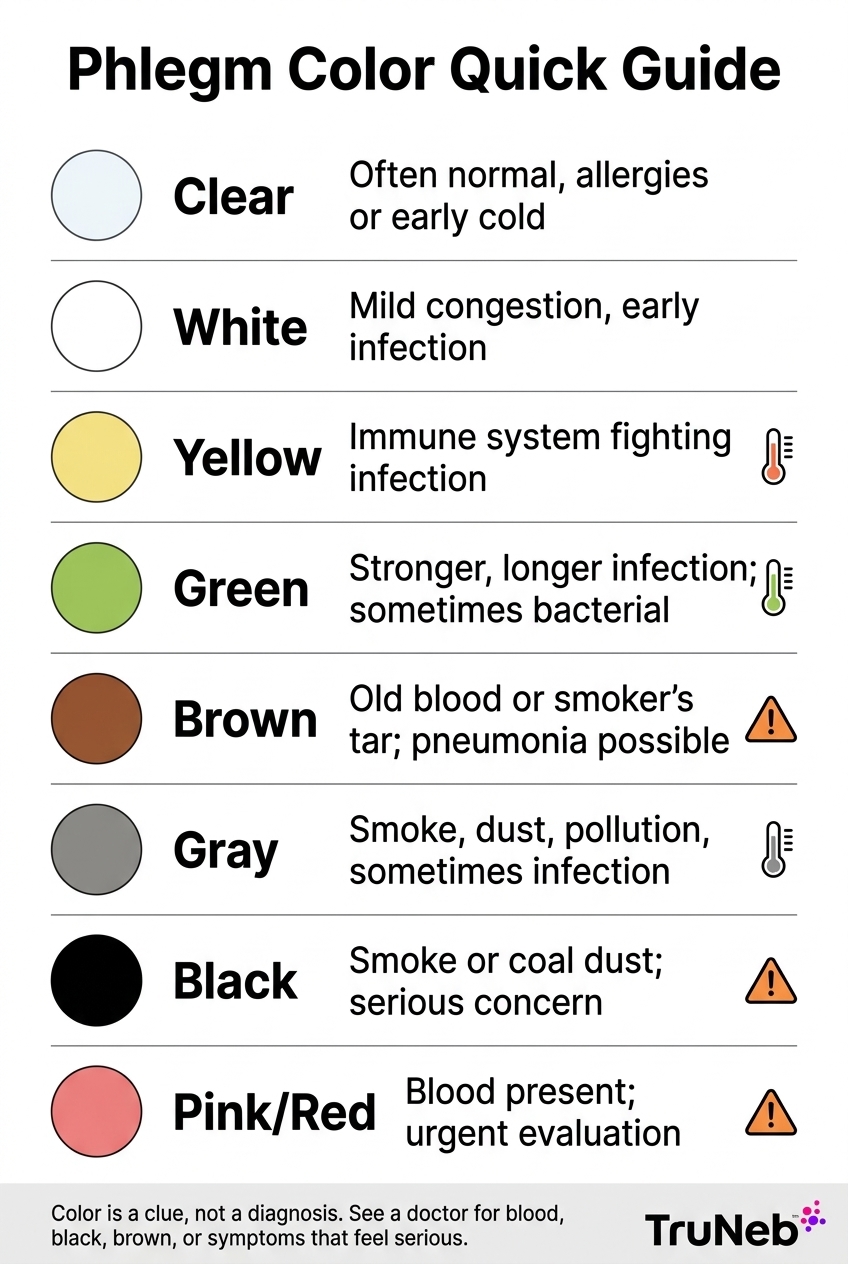
What Each Shade Can Mean
Phlegm color can offer clues, but color alone can’t tell you exactly what illness you have.
Here is a plain-language guide to the most common mucus and phlegm colors, what they can point to, and what to consider doing next. Pay attention not just to color, but also to how long it has been going on, how you feel, and whether there is a strong or foul smell, which can sometimes signal a more serious infection.
Clear mucus
Clear, thin mucus is usually normal. It lines and protects your airways. You may see more of it with allergies, early in a cold, or after breathing in dust or cold air.
What it can mean:
- Normal mucus production
- Allergic rhinitis (allergies)
- Early viral infection
What to do:
If you feel well otherwise, you usually don’t need to do anything special. Rinsing with saline and using an allergy medicine (if your doctor has okayed it) can help if sneezing and itch are bothering you.
White mucus
White or milky mucus is thicker and cloudier. This often shows that your airways are a bit swollen and mucus has lost some water.
What it can mean:
- Common cold or mild viral bronchitis
- Sinus congestion
- Allergies
- Asthma or COPD symptoms or flare‑ups, along with shortness of breath or wheezing
- Rarely, foamy white or pink‑white mucus from fluid in the lungs with heart failure
What to do:
Home measures such as fluids, humidity, and rest can help some people feel better. If it lasts longer than 1–2 weeks, or you see frothy white or pink mucus with shortness of breath, contact a doctor right away. For a related guide, see white foamy mucus causes.
Yellow mucus
Yellow mucus usually means your immune system is in active “fight mode.” White blood cells in the mucus give it that color.
You may see yellow mucus:
- A few days into a cold
- With sinus pressure and stuffiness
- With a mild chest infection and nagging cough
What to do:
Most of the time this is still viral. Focus on home care: rest, hydration, nasal saline, and over‑the‑counter symptom relief if your doctor approves. If yellow mucus and symptoms last more than about a week, or you feel worse instead of better, check in with your doctor.
Green mucus
Green mucus means a lot of white blood cells and their enzymes have built up. It can show a stronger or longer infection, but it does not prove it is bacterial.
You may see green mucus:
- After several days of being sick
- With stronger sinus pain and pressure
- With a deeper, wetter cough
What to do:
Look at the bigger picture. Mild green mucus with a basic cold can sometimes be watched at home for a few days. Green mucus plus high fever, chest pain, or trouble breathing needs a medical visit. Antibiotics may be used for certain bacterial infections, but your doctor decides this based on your symptoms and exam, not color alone. You can also compare symptoms in this guide to what green phlegm means.
Brown mucus
Brown or rust-colored mucus usually means old blood is present, or smoke and dirt have stained the mucus.
What it can mean:
- Old blood from pneumonia or bad bronchitis
- Lung infection like pneumococcal pneumonia, which can cause “rust‑colored” sputum
- Heavy smoking or recent quitting as lungs clear tar
- Dust or dirt exposure
What to do:
Brown or rust-colored mucus should be checked by a doctor, especially if it’s new for you or paired with fever, chest pain, or feeling very unwell. It can be a sign of pneumonia and may need prompt medical care. Learn more about brown phlegm causes.
Gray mucus
Gray or charcoal mucus often comes from breathing in irritants.
What it can mean:
- Cigarette smoke or secondhand smoke
- Air pollution or workplace dust or chemicals
- Viral bronchitis or other infections
- Chronic bronchitis or COPD, especially in smokers
What to do:
Get away from smoke, dust, and fumes. Stay hydrated and use steam or a humidifier. If gray mucus keeps showing up for more than a week, or you are short of breath, see your doctor to check for chronic lung disease.
Black mucus
Black or very dark mucus (sometimes called melanoptysis) is unusual and should not be ignored.
What it can mean:
- Coal dust exposure (“black lung”)
- Heavy smoking or inhaled drugs
- Severe smoke inhalation from a fire
- Rare fungal infection like mucormycosis
What to do:
Treat black mucus as a warning sign. If it follows a major smoke exposure, seek medical help right away. If it appears without a clear reason, call your doctor promptly. Lung imaging and lab tests are often needed. See more on black mucus from throat.
Pink or red mucus
Pink or red streaks mean blood has mixed into your mucus.
What it can mean:
- Broken surface blood vessels from hard coughing
- Pneumonia
- Tuberculosis
- Pulmonary embolism (blood clot in the lungs)
- Pulmonary edema with foamy pink mucus from heart failure
- Lung cancer or bronchiectasis in some people
What to do:
Even small streaks of blood deserve attention. Call your doctor the same day to discuss it. If you cough up more than just a few streaks, see foam‑like pink mucus, or have blood plus chest pain or severe shortness of breath, call emergency services. For urgent warning signs, review pink frothy sputum emergency signs.
Key point: Any red, pink, brown, or black mucus is a reason to contact a doctor quickly, especially if it is new for you, lasts more than a few days, or comes with a strong, bad smell or other worrying symptoms.
Green vs. Yellow Mucus: How Much Does Color Matter?
Many people worry the moment their mucus turns green, but yellow and green are closer than they seem.
Yellow and green mucus both reflect immune activity, and the bigger clue is how long symptoms last and how sick you feel.
Yellow mucus
Yellow shows that your immune system is busy. White blood cells have moved into the area, and as they break down, they tint the mucus yellow.
You may see yellow mucus:
- A few days into a cold
- With sinus pressure and stuffiness
- With a mild chest infection and nagging cough
Green mucus
Green means even more immune cells and enzymes have piled up. The iron-containing enzymes from those cells can shift the color toward green.
You may see green mucus:
- After several days of being sick
- With stronger sinus pain and pressure
- With a deeper, wetter cough
What color cannot tell you
Both viral and bacterial infections can cause yellow or green mucus. Studies show green mucus is only slightly more likely to have bacteria than clear mucus, and color alone is not dependable enough to decide on antibiotics.
What matters more than color
- How long you have been sick
- Whether your symptoms are getting better or worse
- If you have a high fever
- If you are short of breath or have chest pain
If you have a few days of yellow or green mucus but feel a bit better each day, home care is usually enough. If you have 7–10 days of yellow or green mucus with worsening pain, high fever, or trouble breathing, it’s time to call your doctor.
Remember, doctors base antibiotic decisions on your symptoms, exam, and sometimes tests, not mucus color alone.
Talk to your doctor before starting any antibiotic. Using antibiotics when they are not needed can cause side effects and make future infections harder to treat.
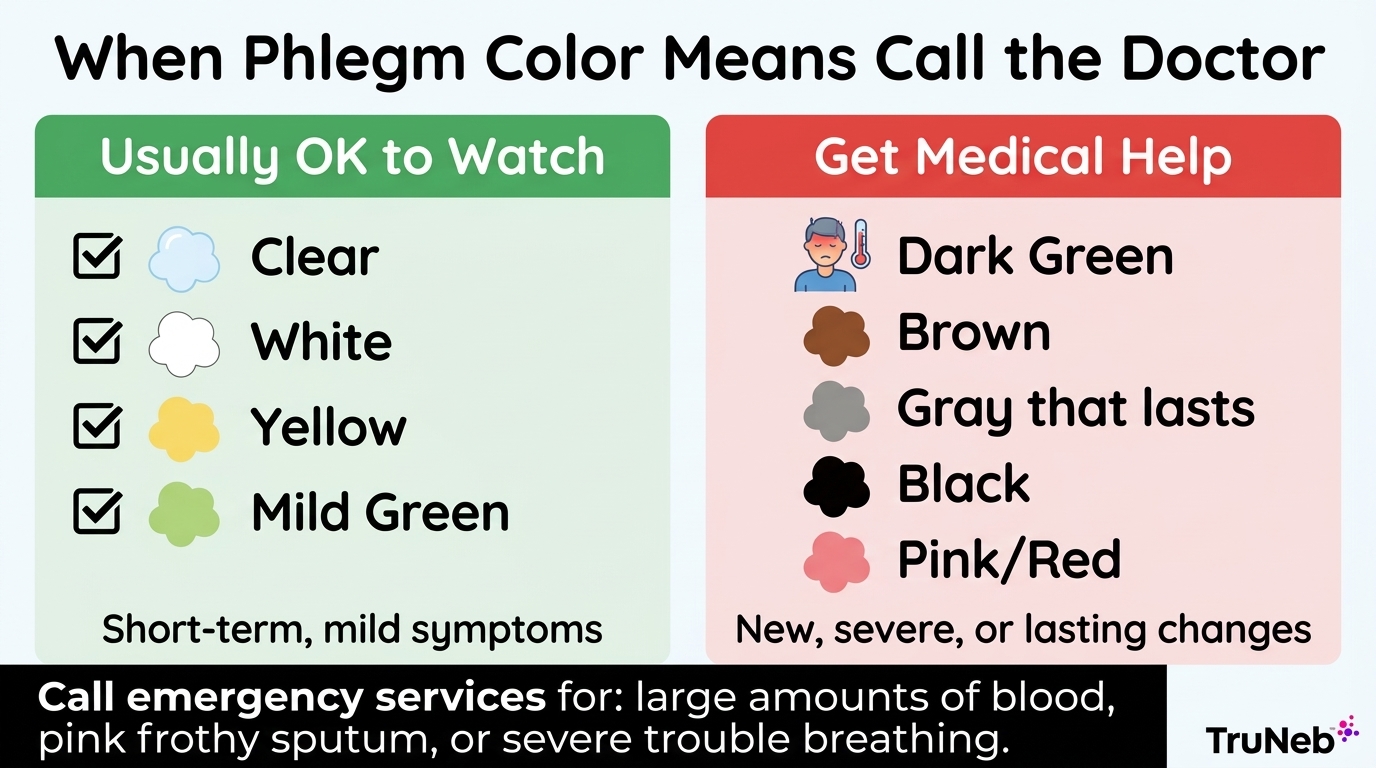
When Mucus Color Means Call a Doctor or 911
Color changes are common with colds and allergies. The key is learning when mucus plus other symptoms means you need help.
Pink, red, brown, or black mucus deserves prompt medical attention, especially with breathing trouble or chest pain.
Call your doctor soon if you notice:
- Any pink, red, brown, or black mucus
- Yellow or green mucus lasting more than 7–10 days
- Foul-smelling phlegm
- A change in your usual mucus pattern if you have COPD, asthma, bronchiectasis, or cystic fibrosis
- Fever over 102°F (39°C), or fever that returns after going away
- Wheezing or shortness of breath that is new or worse than usual
Call emergency services right away if:
- You cough up large amounts of blood or blood clots
- You have pink, frothy sputum with sudden severe shortness of breath (possible fluid in the lungs)
- You feel like you can’t breathe, talk, or walk across the room
- Your chest hurts sharply when you breathe, and you feel breathless or dizzy
- Your lips, fingers, or face look blue
- You feel confused, very drowsy, or like you might pass out
If you are ever unsure, it is safer to get checked.
Remember: phlegm color is only one part of the story. Your overall breathing, fever, energy level, and medical history guide what should happen next.
⚠️ Seek emergency care right away for large amounts of blood, pink frothy sputum, blue lips, severe chest pain, or serious trouble breathing.
Phlegm Color and Pneumonia: Signs You Shouldn’t Ignore
Pneumonia is an infection in the air sacs of the lungs. It can be mild or life threatening, depending on your age, health, and the germ causing it.
Phlegm color can show up with pneumonia, but breathing trouble, fever, and chest pain matter more than color alone.
Phlegm colors often seen in pneumonia
- Yellow or green phlegm
- Rusty or brown phlegm
- Sometimes pink or red streaks
But color alone can’t diagnose pneumonia. Many people with pneumonia have normal-looking or only slightly colored mucus.
More important warning signs
Pay close attention if colored phlegm shows up with these symptoms:
- Fever, often above 101–102°F (38.3–38.9°C)
- Chills or shaking
- Cough that brings up mucus
- Chest pain that gets worse when you breathe in or cough
- Shortness of breath, feeling like you can’t catch your breath
- Feeling very tired or weak
Older adults may have milder fever but more confusion or a sudden drop in energy. Babies and children may breathe fast, refuse to eat, or seem unusually sleepy.
When to call a doctor vs emergency care
Call your doctor promptly if:
- You have colored phlegm plus fever for more than a day or two
- Breathing feels harder than usual, even at rest
- Chest pain appears when you breathe or cough
Call emergency services if:
- You can’t speak in full sentences because of shortness of breath
- Your lips or face look blue or gray
- You cough up a lot of blood, not just streaks
- You feel faint, confused, or suddenly much worse
Doctors usually check pneumonia with an exam, an oxygen reading, and sometimes imaging or other tests.
If you already have COPD, asthma, bronchiectasis, or heart failure, don’t wait long when these signs appear. Your lungs may have less reserve, so treating pneumonia early is especially important.
Always talk to your doctor before starting, stopping, or changing any pneumonia medicine or inhaler on your own.
How to Clear Thick Phlegm and Support Your Lungs
Thick, sticky mucus can make every breath feel harder. Simple daily habits can help loosen that phlegm so it is easier to bring up.
The safest way to loosen thick phlegm is usually simple support like fluids, humidity, movement, and doctor-guided treatment when needed.
Hydration and humidity
Drinking enough water is one of the simplest ways to thin mucus. Warm drinks like tea or broth can feel especially soothing. Breathing in steam from a hot shower or a bowl of hot water can loosen chest and sinus mucus. A cool-mist humidifier in your bedroom can also help if the air is dry.
Position and movement
Sleeping with your head raised on an extra pillow can cut down on nighttime coughing from postnasal drip. Gentle walking or moving around during the day helps your lungs expand and can make coughing more productive.
Coughing the right way
If your cough is bringing up phlegm, that is your body trying to clean house. Doctors sometimes advise avoiding strong cough suppression when mucus needs to come up, but the right approach depends on the cause of the cough.
Medicines that thin mucus
Over-the-counter expectorants that contain guaifenesin can help some people by loosening thick secretions so they are easier to cough up. Check with your doctor or pharmacist before using them, especially if you take other medicines or have kidney problems.
Nebulized saline and airway clearance
For people with ongoing mucus problems, doctors sometimes prescribe inhaled saline treatments using a nebulizer. Hypertonic saline (often 3% or 7% salt) pulls water into the airways, which can thin very sticky mucus and help it move.
This approach is often used in conditions like cystic fibrosis, bronchiectasis, and some cases of chronic bronchitis. Studies show that hypertonic saline can improve mucus clearance and make breathing easier mainly in people with these chronic airway conditions, when used as part of a larger airway clearance plan.
A portable mesh nebulizer like the TruNeb portable nebulizer can make these treatments easier to fit into real life. Instead of being tied to a big, noisy machine, you can use a small handheld device at home or on the go. That can help you stay consistent with treatments your doctor recommends.
A nebulizer is different from a steam inhaler. Steam can feel soothing, but it does not deliver prescribed medicine or saline the way a nebulizer does, and it does not replace any inhaled treatment your doctor has prescribed. If you want to understand the difference, see nebulizer vs steam inhaler.
Key point: Only use hypertonic saline or any nebulized medicine with the dose and schedule your doctor prescribes. Talk to your doctor before starting nebulized saline, since it can trigger extra coughing or wheezing in some people.
Lifestyle steps that protect your lungs
- Don’t smoke, and avoid secondhand smoke.
- Limit time around dust, strong cleaning fumes, and air pollution.
- Keep up with vaccines your doctor recommends, including flu, COVID-19, and pneumonia shots.
- Manage reflux, allergies, or asthma if you have them, since each can drive extra mucus.
Always talk to your doctor before trying a new medication, inhaler, or nebulizer treatment, and never change prescription doses on your own.
Frequently Asked Questions
Tap or click a question below to see the answer:
No. Green phlegm means your immune system is very active, but both viral and bacterial infections can cause it. Doctors look at how long you have been sick, your fever, your breathing, and your exam before deciding on antibiotics, not just mucus color.
Call emergency services if you cough up a lot of blood, see pink frothy sputum, or have blood along with severe shortness of breath, chest pain, or feeling faint. Small streaks after heavy coughing should still be reported to your doctor, but they are usually less urgent if they do not come back.
Clear mucus is usually normal, but you can still feel miserable with clear mucus if allergies or a viral infection are causing it. If clear mucus is paired with wheezing, chest tightness, or shortness of breath, you should still talk with your doctor.
Not always. Thick mucus from postnasal drip can run down from your nose and sinuses into your throat and make you cough. It may look white or yellow when you spit it out, even if your lungs are clear. Your doctor can often tell the difference by listening to your lungs and asking about sinus symptoms.
Yes. Red drinks, dark foods, or even nosebleeds you swallow can briefly tint mucus. If the color change is short-lived and you feel fine, it may not be coming from your lungs. If the color, especially red, brown, or black, keeps coming back, get it checked.
A nebulizer is a tool that turns liquid medicine or saline into a mist you inhale. It does not cure the cause of mucus, but it can help thin and move mucus when used with the right solution prescribed by your doctor. For people whose doctors recommend inhaled saline or other inhaled medicines, a portable mesh nebulizer like TruNeb can make prescribed inhaled treatments easier to fit into daily life.
No. Do not change or stop any prescription on your own. A sudden color change is a reason to contact your doctor, not to adjust your medicines yourself. They can decide if you need testing, a different inhaler, or an antibiotic.
Disclaimer: This article is for informational purposes only and is not a substitute for medical advice, diagnosis, or treatment. Always talk to your doctor about symptoms, medicines, or treatment changes.