

On this page
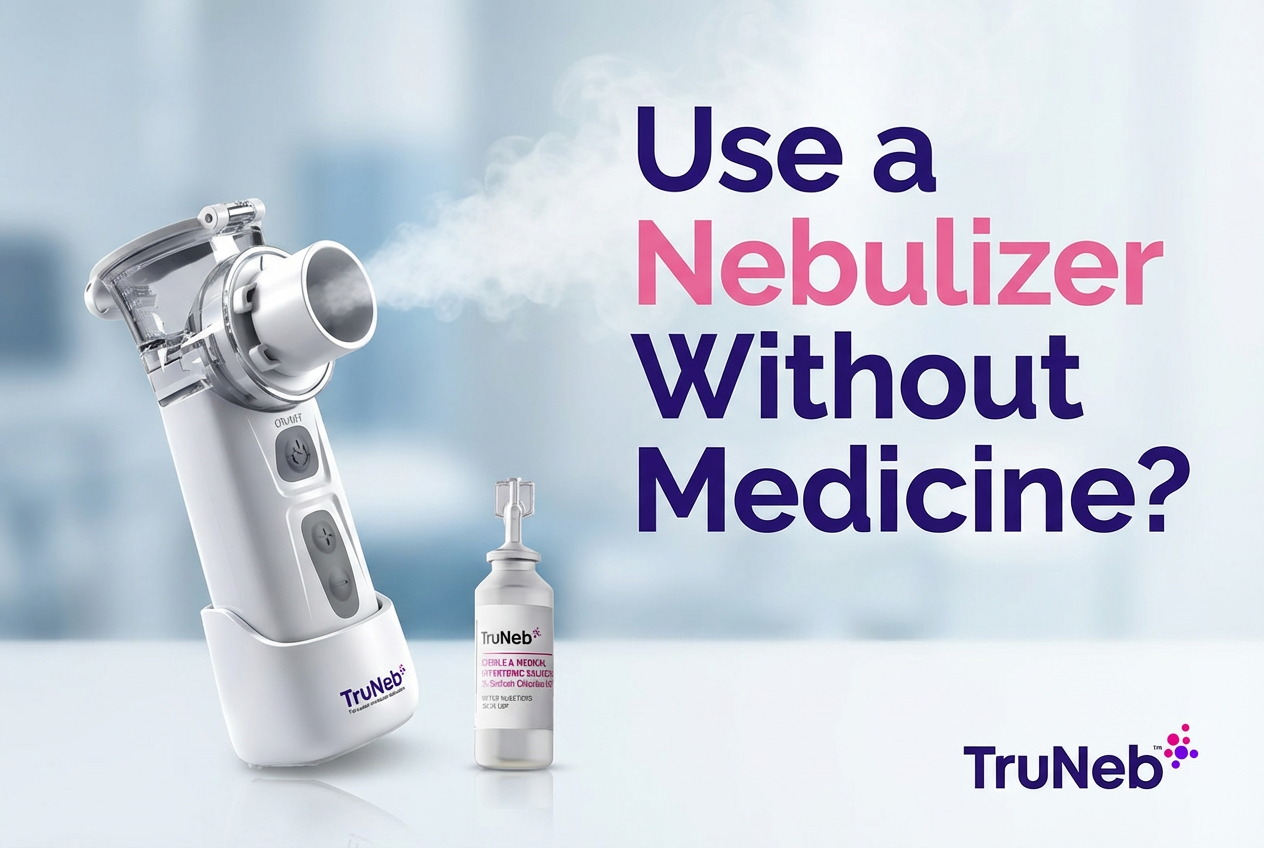
Can You Use a Nebulizer Without Medicine?
Short answer: No. Running a nebulizer without medicine isn’t recommended. The mist has no active drug, so it doesn’t treat your lungs. Plain water can even be risky, and other home mixtures, like oils or peroxide, can be even more dangerous (explained below). The one common exception is sterile normal saline, and even that should be used the way your doctor recommends. Saline can add moisture and help thin mucus, but it’s not a rescue treatment.
Key Takeaway: A nebulizer without medicine doesn’t treat your lungs; sterile saline may help with mild mucus only.
Safety note: Talk to your doctor before using saline or any new treatment in your nebulizer.
How a Nebulizer Works and Why Medication Matters
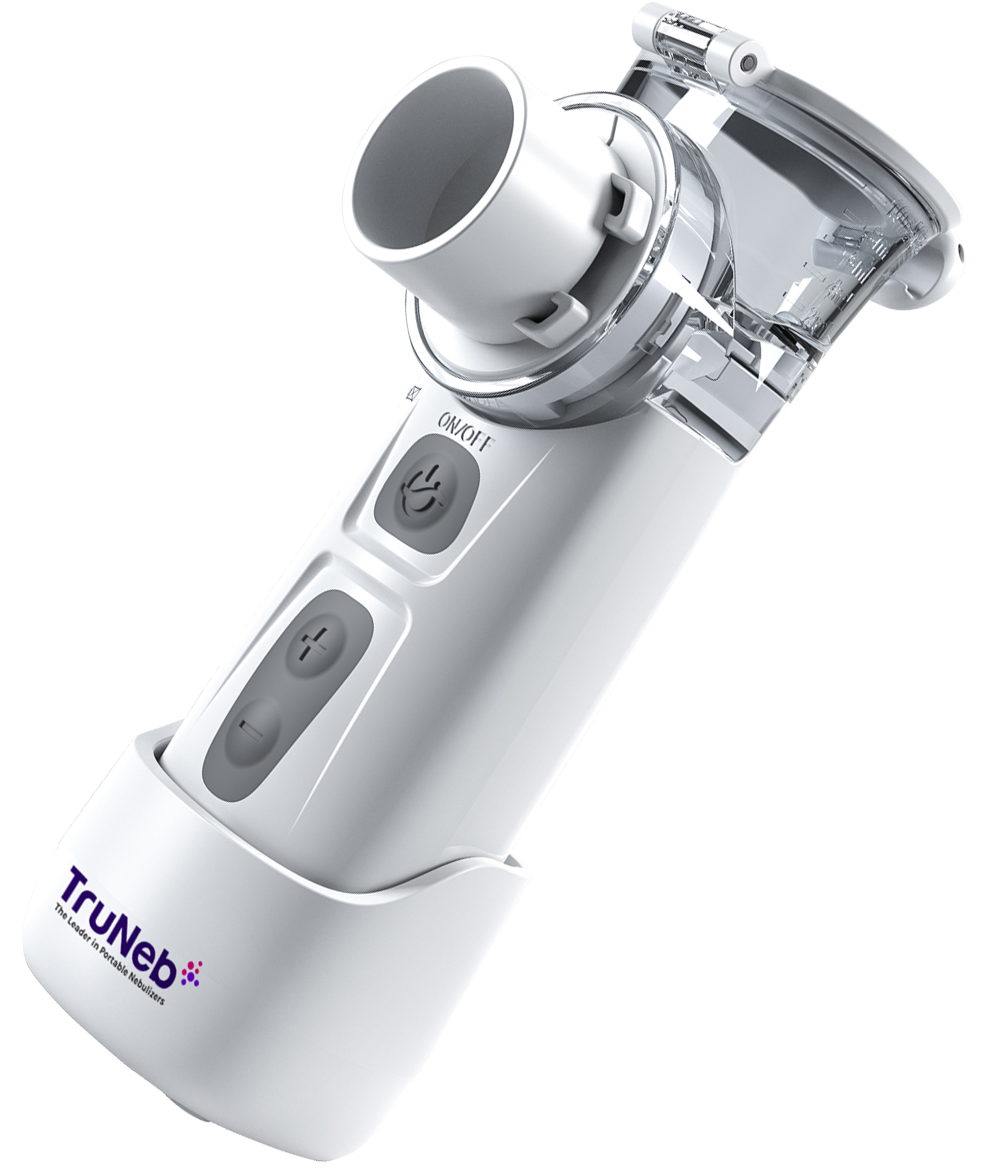
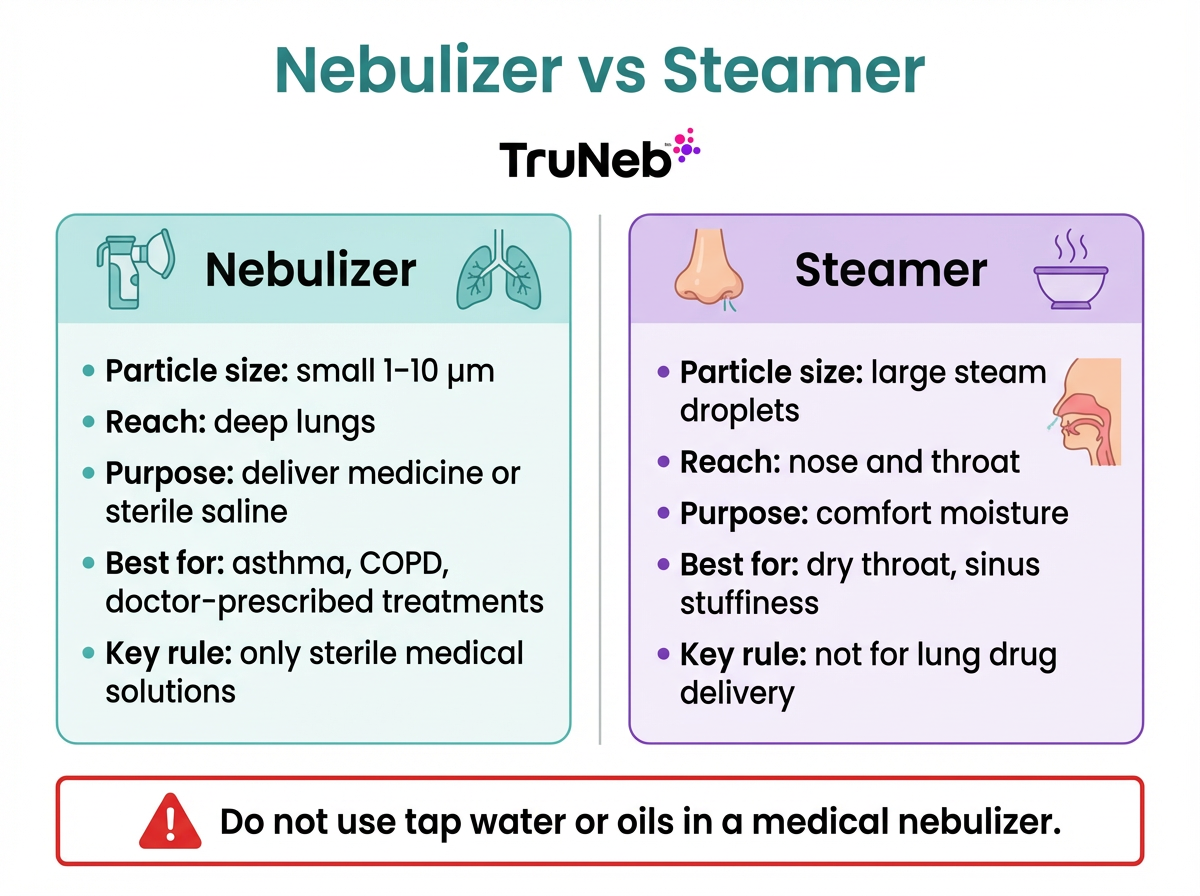
A nebulizer turns liquid into a fine mist you breathe in. Those tiny particles travel deep into your lungs. That’s different from steam devices, which mostly affect your nose and throat, not the deeper lungs. That’s why your doctor might have you use a nebulizer during asthma or COPD flare-ups. Devices can be jet, ultrasonic, or mesh. A portable mesh nebulizer like the TruNeb™ Portable Mesh Nebulizer makes very fine particles and is easy to carry.
- Nebulizers create fine aerosol particles that reach the lungs; steam mainly affects the nose and throat (MedlinePlus).
- Typical treatment time is 5-20 minutes (MedlinePlus).
- Use only prescribed medicines or sterile 0.9% saline; check your device’s compatibility list (NHLBI).
But the mist is only as helpful as what’s in the cup. Bronchodilators can open airways. Steroids can calm swelling. Saline can add moisture. Without an active drug, you’re just inhaling moist air, which doesn’t treat tight or inflamed airways.
| Device type | Portability | Noise | Compatible solutions* | Cleaning notes |
|---|---|---|---|---|
| Jet (compressor) | Home or travel size | Louder | Most prescribed meds and sterile saline | Tubing/cup must be cleaned and air-dried |
| Mesh (vibrating mesh) | Highly portable | Very quiet | Many meds and sterile saline; check device list | Gentle cleaning to avoid clogging the mesh |
| Ultrasonic | Portable | Quieter | Some solutions only; heat can affect certain meds | Follow manual; some meds aren’t recommended |
*Compatibility varies by brand and model — check the instructions for your specific device.
Key Takeaway: A nebulizer is a medicine-delivery tool for your lungs, not a humidifier.
Risks of Using a Nebulizer With No Liquid or Medicine
Don’t run a nebulizer empty. Without liquid in the cup, there’s no mist to breathe, so you don’t get any treatment or even useful humidity. Some devices can also overheat or wear out if run dry. Most instruction manuals tell you not to run the device without liquid for this reason.
If you need relief, you need the right solution in the cup. That means your prescribed medicine or sterile saline when advised.
Key Takeaway: An empty nebulizer provides no therapy and can damage the device.
Why Plain Water in a Nebulizer Is Dangerous
Never use plain water (tap, bottled, or distilled) in a nebulizer. These waters are not sterile, and when they’re turned into an aerosol and inhaled, they can carry germs straight into your lungs. That includes boiled, filtered, or “purified” water from home systems — they’re still not guaranteed sterile when nebulized. Tap and household water can contain bacteria like Legionella, Pseudomonas, and nontuberculous mycobacteria that can cause serious lung infections.
Even perfectly pure water is not ideal for your airways. It has no salt, which can irritate airway cells and trigger coughing or bronchospasm. If a medical team wants you to use water, they will specify Sterile Water for Inhalation USP and how to use it. Do not try to make your own.
Key Takeaway: Do not nebulize tap, bottled, or distilled water; it can irritate or infect your lungs.

When Saline Only Is Safe in a Nebulizer
For most people, sterile normal saline (0.9% sodium chloride) is the only non-medicine fluid that’s safe to put in a nebulizer. It matches your body’s salt level, so it’s gentle on airways. Saline can add moisture and help loosen mucus. Some doctors use it for dry cough or mild congestion.
There are limits. Even if your breathing feels tight, saline alone doesn’t act like a rescue inhaler. It won’t stop an asthma attack. Only use saline that is sterile and labeled for inhalation or nebulizer use. Single-use vials or ampoules from a pharmacy are typical. Do not use homemade salt water or contact lens solution.
Key Takeaway: Sterile 0.9% saline can moisten airways and thin mucus but does not replace prescription medicine.
Talk to your doctor before using saline in your nebulizer.
Hypertonic Saline for Special Cases
Hypertonic saline is stronger salt water, typically 3% or 7%. It draws water into the airway surface and can break up very thick mucus. It’s used for certain conditions, such as cystic fibrosis or stubborn chronic bronchitis.
Because it’s very salty, it can irritate airways and trigger coughing or bronchospasm. Some patients are advised to use a bronchodilator before hypertonic saline to reduce coughing or bronchospasm. Use hypertonic saline only if your doctor prescribes it and shows you how to use it.
Key Takeaway: Hypertonic saline can clear thick mucus but should be used only under prescription.
Don’t start hypertonic saline without your doctor’s guidance.
DIY Liquids to Avoid in a Nebulizer
Do not put home remedies or random liquids in your nebulizer. That includes things like essential oils, vinegar, alcohol-based cleaners, or any household disinfectants. Oily droplets can coat the lungs and cause inflammation or even lipoid pneumonia. Do not nebulize hydrogen peroxide. It can burn or irritate airway tissue. Avoid colloidal silver. It can harm your lungs and has no proven benefit.
If you want aroma for comfort, use a separate room diffuser. Keep your medical nebulizer for sterile saline and prescribed medicines only.
Key Takeaway: If it is not a sterile pharmacy solution, it does not belong in your nebulizer.
Safer Ways to Get Relief Without Medicine
If you don’t have your nebulizer medicine, these comfort steps can sometimes help while you arrange care:
- Steam: Inhale warm steam from a shower or bowl to soothe your nose and throat.
- Humidifier: Run a cool-mist humidifier to keep room air moist and ease coughing.
- Saline nasal spray: Clear nasal stuffiness and help drainage.
- Fluids: Drink water or warm tea to keep mucus thin.
- Honey: For those older than one year, a spoon of honey can calm a mild cough.
These steps can help you feel a bit better for a while. They don’t replace treatment for serious breathing problems. Seek medical care if symptoms are severe or getting worse.
⚠️ Steam inhalers, facial steamers, and vaporizers are not medical nebulizers and should never be used to breathe in prescription medicines.
⚠️ If you have serious trouble breathing, chest pain, bluish lips or face, or can’t speak in full sentences, seek emergency care right away.
Key Takeaway: Use steam, a humidifier, and saline nasal spray for comfort if you don’t have your nebulizer medicine, then arrange proper care.
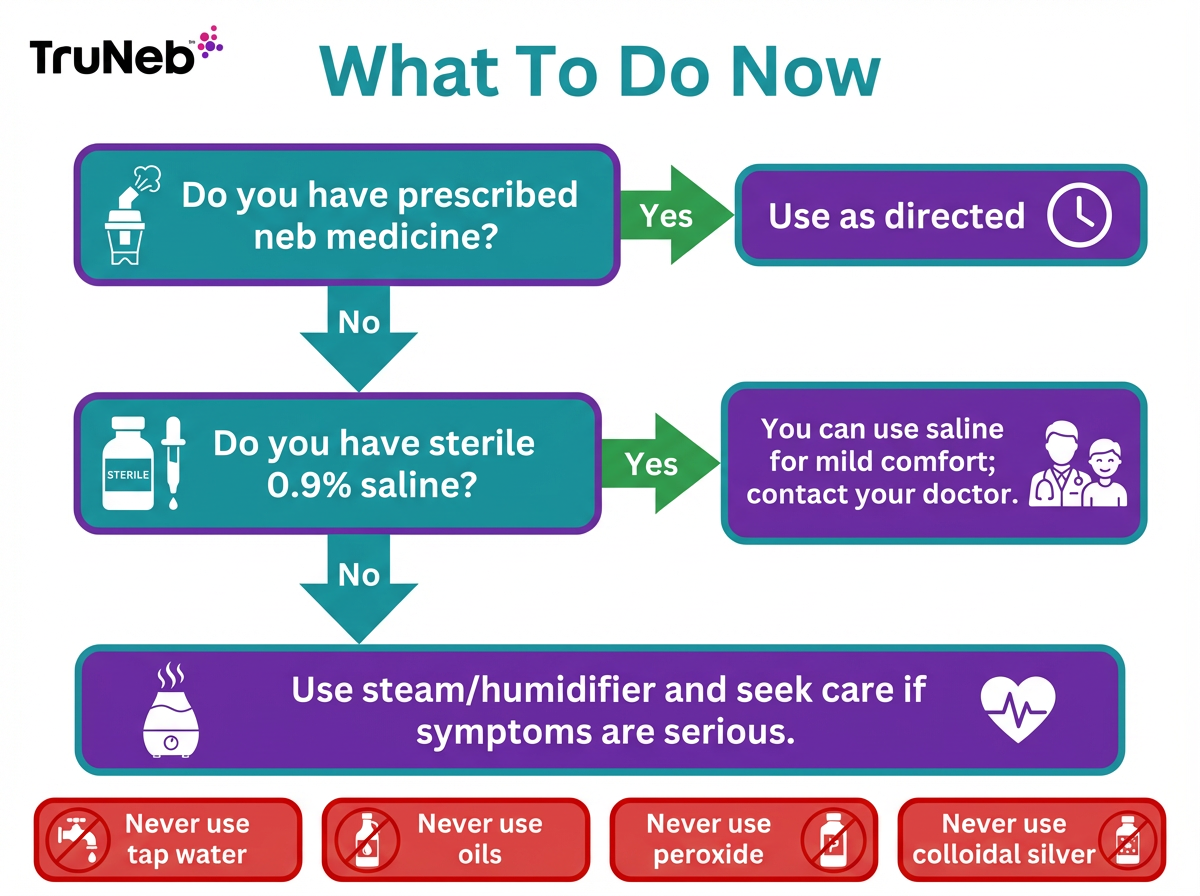
Nebulizer or Alternatives Decision Checklist
Use this quick checklist to choose your next step:
- Your nebulizer is meant to be used with prescribed medicine when your doctor has ordered it for symptoms like wheezing or a tight chest.
- Sterile normal saline 0.9% is sometimes used for mild moisture and mucus relief when a doctor has said it’s appropriate.
- Do not use tap, bottled, or distilled water. Do not use oils, peroxide, or silver.
- If you are short of breath or getting worse and have no nebulizer medicine, seek medical care now. If you have a written action plan that includes a rescue inhaler, follow it while you get help.
- Keep your device ready and clean. A portable mesh nebulizer like TruNeb can make it easier to take treatments on time, but always use proper solutions.
Key Takeaway: Use medicine when prescribed, saline only for mild comfort, and seek care for serious symptoms.
Talk to your doctor before trying a new medication or saline concentration.
Frequently Asked Questions
Tap or click a question below to see the answer:
No. Do not nebulize plain water. It can irritate your airways and, if not sterile, can carry germs into your lungs. Only use sterile medical solutions.
Yes, in some cases. Sterile 0.9% saline can add moisture and help thin mucus, but it does not replace rescue or controller medicine. Ask your doctor first.
Only sterile normal saline 0.9% for mild comfort, if available. Otherwise, use a humidifier or steam and contact your doctor about proper treatment.
With sterile saline, it can help loosen mucus a little. For nasal or throat congestion, steam or saline nasal spray usually helps just as much.
No. Oils and extracts can harm your lungs and the device. Use a separate room diffuser for aroma. Keep your nebulizer for sterile saline and prescribed medicine only.
⚠️ Follow your asthma action plan if you have one and seek emergency care right away. That plan usually includes using a rescue inhaler if it’s available.
No. Nebulizers aren’t designed to run for long periods or to humidify a whole room, and they should not be run with plain water. For room moisture, use a humidifier instead.
FAQ takeaway: Nebulizers should be used with prescribed medicines or sterile saline, never with plain water or DIY liquids.
Bottom line: Nebulizers are designed to deliver prescribed medicines or sterile saline to your lungs. Using plain water or home mixtures can be risky and won’t treat breathing problems. Stick to prescribed medicines or sterile saline, and check with your doctor if you’re ever unsure.
Medical disclaimer: This article is for informational purposes only and is not a substitute for professional medical advice, diagnosis, or treatment. Always talk with your doctor about your symptoms, treatments, and any questions you have about using a nebulizer.