

On this page

If you or your child uses inhaled medicines for asthma or COPD, you’ve probably wondered whether a nebulizer or an inhaler is better. This guide compares the two, shows when each makes sense, and answers common questions. Always follow your doctor’s treatment plan.
Disclaimer: This article is for informational purposes only and is not a substitute for professional medical advice, diagnosis, or treatment. Always talk with your doctor about your symptoms, medications, and which device is right for you.
Nebulizer vs Inhaler: Key Differences at a Glance
Here’s the short version: both send medicine straight to your lungs, but they do it differently.
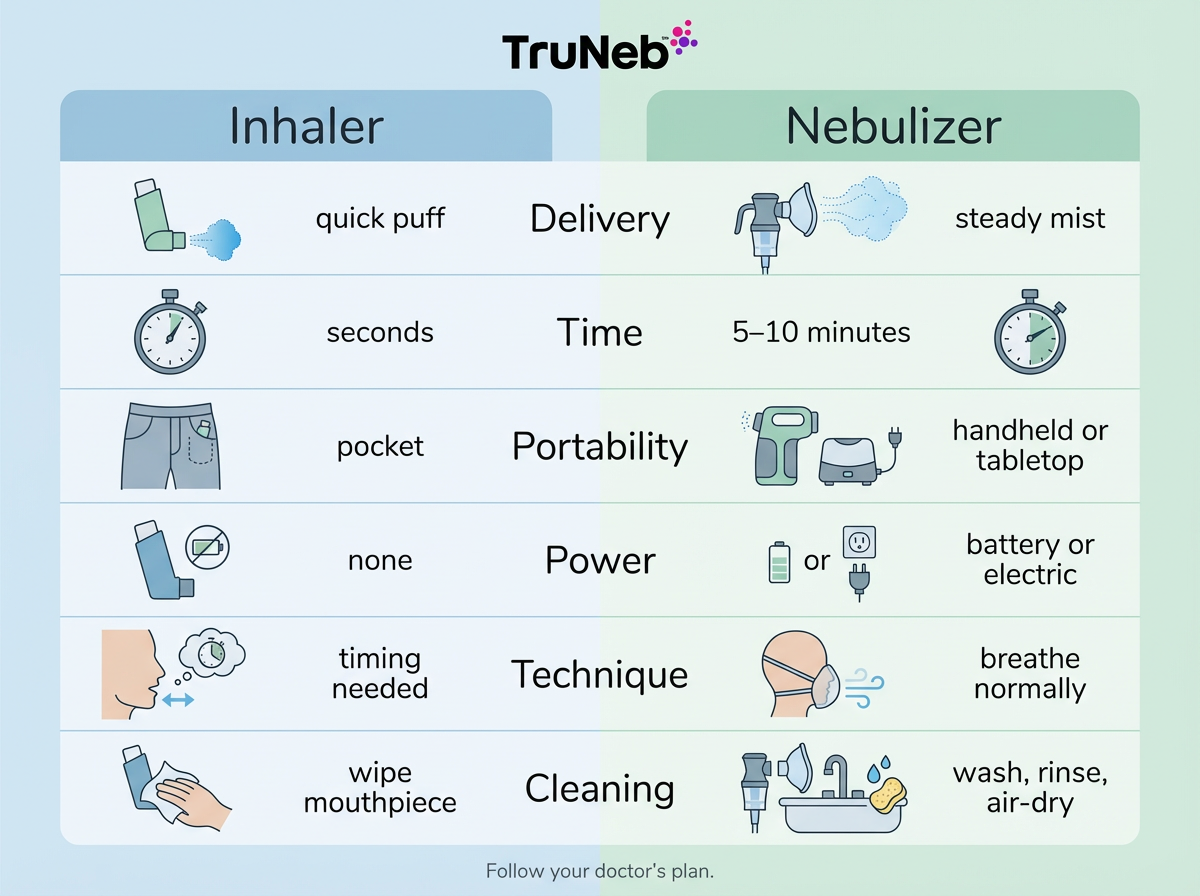
- Inhaler: a quick, measured puff in seconds.
- Nebulizer: a steady medicated mist over 5–10 minutes.
- Portability: inhalers fit in a pocket; nebulizers range from tabletop units to small handheld mesh devices.
- Power: inhalers use no power; nebulizers run on electricity or a battery.
- Technique: inhalers need timing and a slow, deep breath (a spacer helps); nebulizers let you breathe normally.
- Cleaning: inhalers need simple mouthpiece care; nebulizers must be cleaned and air-dried after each use.
- Best fit: inhalers are great for quick relief on the go; nebulizers help young children, older adults, and anyone struggling during a bad asthma or COPD flare.
These devices are commonly used for asthma and COPD treatment.
See a quick side-by-side table
| Feature | Inhaler | Nebulizer |
|---|---|---|
| Delivery | Metered puff | Continuous mist |
| Typical time | Seconds | 5–10 minutes |
| Portability | Pocket-sized | Handheld mesh or tabletop |
| Power | No external power | Battery or wall power |
| Technique | Press-and-breathe with slow inhale; a spacer can help | Breathe normally through mouthpiece or mask |
| Cleaning | Wipe mouthpiece; rinse plastic holder if needed | Rinse after each use; wash and air-dry; disinfect as directed |
| Best for | Fast relief when you can use good technique | Young children, older adults, or when you’re short of breath |
Key takeaway: Inhalers are fastest and most portable; nebulizers are easier to breathe through and deliver a steady mist. Use the one your doctor recommends for the situation.
One-line takeaway: Inhalers are fast and portable; nebulizers are easy to breathe and deliver a steady mist.
What Is a Nebulizer and How It Works
A nebulizer is a medical device that turns liquid medicine into a fine mist you inhale through a mouthpiece or mask. You simply breathe normally while the machine runs. Nebulizers are commonly used for breathing treatments in asthma, COPD, and bronchitis.
How it works:
- Jet (compressor) models push air through the medicine to make mist.
- Ultrasonic models use high-frequency sound waves to aerosolize liquid.
- Vibrating mesh models press medicine through a tiny mesh to create ultra-fine droplets.
These devices are commonly used when young children, older adults, or very short-of-breath patients need treatment.
Breathe normally through a mouthpiece or mask; helpful for young children and people in distress.Typical treatment time is about 5–10 minutes.Rinse parts and air‑dry after each use; disinfect as directed to prevent germs.Source: MedlinePlus
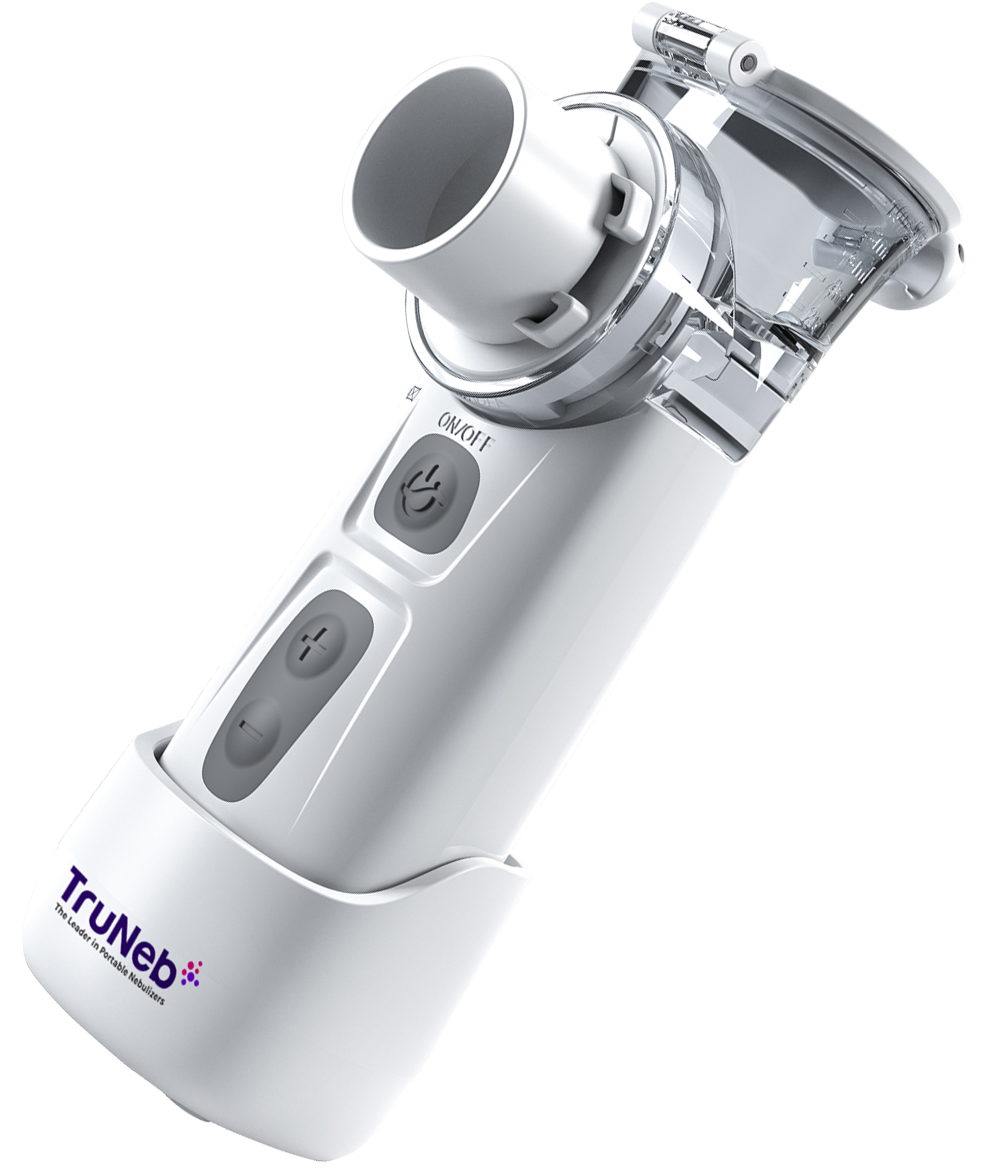
Mesh units are light, quiet, and battery powered. A portable mesh nebulizer makes it easier to take breathing treatments when you’re away from home.
Use your nebulizer exactly as instructed by your doctor and your device manual; don’t modify parts or settings.
One-line takeaway: A nebulizer turns liquid medicine into a breathable mist so you can inhale it easily.
What Is an Inhaler and How It Works
An inhaler (often called a puffer) is a small handheld device that delivers a measured dose of medicine to your lungs as you breathe in. It’s fast and easy to carry. Inhalers are widely prescribed for asthma and COPD.
Some inhalers deliver quick-relief medicine during sudden symptoms, while others are taken daily to help control asthma or COPD. Your doctor will tell you which type you have, and you might have more than one inhaler.
Types you’ll see:
- Metered-dose inhaler (MDI): press the canister and inhale the aerosol.
- Dry powder inhaler (DPI): no spray; you inhale quickly to pull powder in.
- Soft mist inhaler (SMI): releases a slow-moving mist that’s easier to time.
Good technique matters. A lot of people use a spacer with MDIs so more medicine reaches the lungs.
One-line takeaway: An inhaler gives a metered dose in a single breath; proper technique is the key.
How to Use a Nebulizer Step by Step
These are general device steps—always follow the instructions from your doctor and your nebulizer’s manual.
Nebulizers are pretty simple to use. Here’s a quick guide:
- Wash your hands.
- Measure or open the prescribed medication vial and pour it into the nebulizer cup as your doctor instructed.
- Assemble the cup, mouthpiece or mask, and tubing; connect to the machine.
- Sit upright, place the mouthpiece between your teeth and seal your lips (or fit the mask). Turn the device on.
- Breathe the mist in slowly and normally until the cup is empty (about 5–10 minutes).
- Turn off the device. Rinse the cup and mouthpiece/mask with warm water and let them air-dry. See the Device Care and Maintenance section below for full cleaning and disinfection tips.
Safety note: Talk to your doctor before trying a new medication.
One-line takeaway: For a nebulizer, load the medication cup, breathe the mist, then clean and air-dry the parts.
How to Use an Inhaler the Right Way
These are general technique tips; your doctor or pharmacist can show you exactly how to use your specific inhaler model.
Using your inhaler the right way helps more medicine reach your lungs:
- Shake the MDI for 5 seconds (DPIs usually don’t need shaking).
- Remove the cap. Prime the inhaler if it’s new or hasn’t been used lately.
- Breathe out fully, away from the device.
- Seal lips around the mouthpiece (or use a spacer). Start a slow, deep breath and press the canister once.
- Keep breathing in until your lungs are full. Hold your breath for about 10 seconds.
- Breathe out slowly. Wait 30–60 seconds before a second puff if prescribed.
- If it’s a steroid inhaler, rinse your mouth and spit to help lower the risk of thrush.
DPI/SMI note: For DPIs, load the dose and inhale quickly and deeply. For SMIs, inhale steadily with the slow mist.
One-line takeaway: With an inhaler, a slow inhale plus good timing makes each puff count.
When to Use a Nebulizer vs an Inhaler
Use this quick guide to match the device to what you need right now:
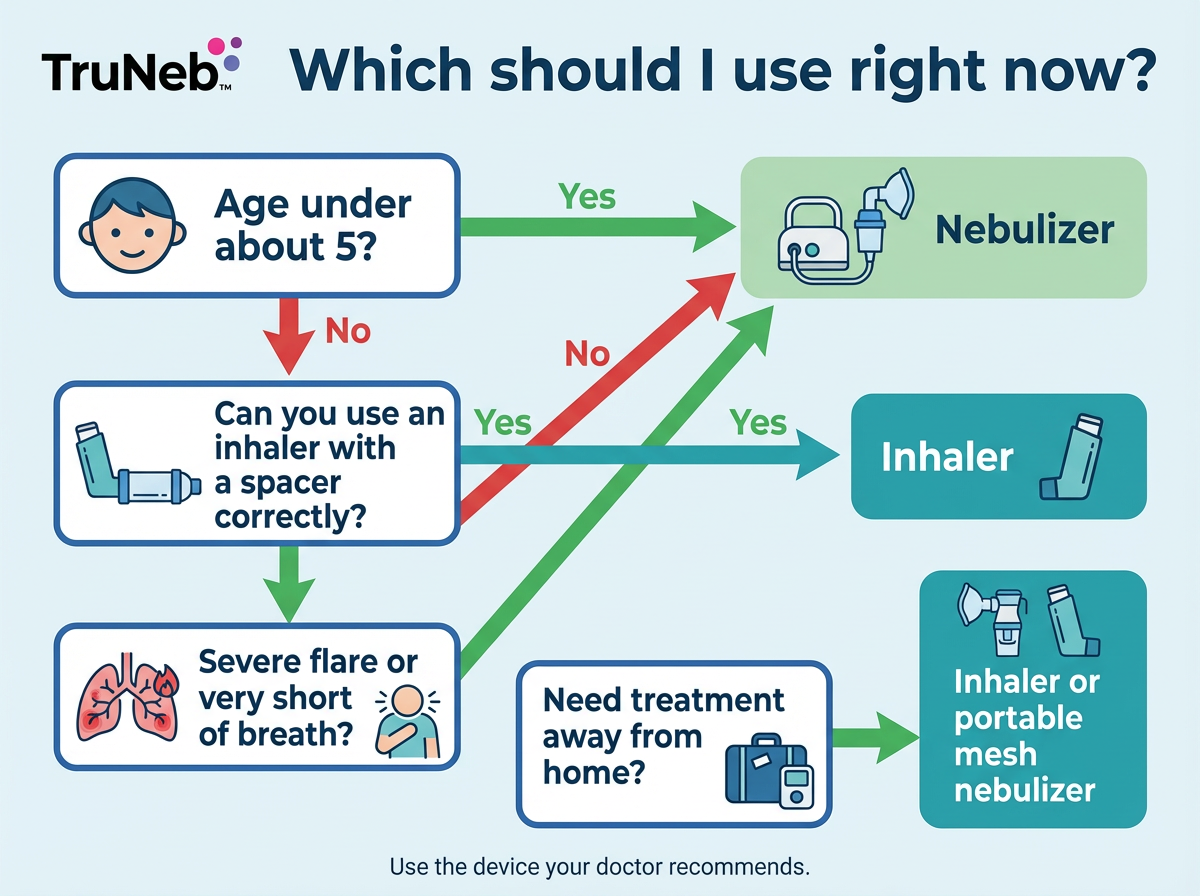
- Infants and young children: Nebulizer. A mask and normal breathing make treatments easier.
- Older kids and adults with good technique: Inhaler (with a spacer) for speed and convenience.
- Asthma flare-ups and action plans: Use the device and doses laid out in your written asthma or COPD action plan; don’t change your treatment on your own. Your plan should spell out exactly when to use each device and how many doses to take.
- Severe symptoms or bad flare-ups: A nebulizer can be easier when you’re very short of breath. For milder attacks, multiple puffs with a spacer can work as effectively as a nebulizer when used as your doctor instructed.
⚠️ If you or your child has severe trouble breathing, bluish lips or face, or can’t speak in full sentences, call 911 or seek emergency medical care right away. - Daily maintenance therapy: Inhalers are usually prescribed for long-term control; some people use nebulized meds if inhalers are hard to use.
- COPD: Some people use both—daily inhalers plus a nebulizer for tougher times.
- On the go: Inhalers are the easiest. If you need a nebulizer away from home, a portable mesh unit like TruNeb makes it easier to take treatments when you’re away from home.
It’s normal to feel unsure during a flare—having a clear plan from your doctor about which device to reach for can make those moments less scary.
Bottom line: The best device is the one you can use correctly and consistently, as your doctor recommends.
One-line takeaway: Match the device to your age, technique, and symptoms—and follow your action plan.
Benefits, Drawbacks, and Side Effects
Nebulizer pros: easy to breathe during tough episodes, helpful for young kids or older adults, continuous delivery.
Nebulizer cons: longer sessions, needs power and regular cleaning, less portable than an inhaler (except mesh), and not every medication has a nebulizer form.
Inhaler pros: pocket-sized, seconds to use, a wide range of medication options for daily control and quick relief.
Inhaler cons: technique matters, not ideal for very young children, steroid inhalers can cause thrush if you don’t rinse.
For most medications and doses, a well-used inhaler and a properly set-up nebulizer deliver similar amounts of drug to the lungs.
Side effects: They mainly come from the medicine, not the device. For example, albuterol may cause jitters by nebulizer or inhaler. Inhaled steroid medicines can cause thrush if you don’t rinse—rinsing and spitting after use helps lower the risk. Poorly cleaned nebulizers can grow germs—wash and air-dry parts after each treatment.
One-line takeaway: For both inhalers and nebulizers, side effects depend on the drug—your technique and cleaning habits make the biggest difference.
Device Care and Maintenance Tips
Follow the cleaning and disinfection instructions in your specific device manual.
Nebulizer care:
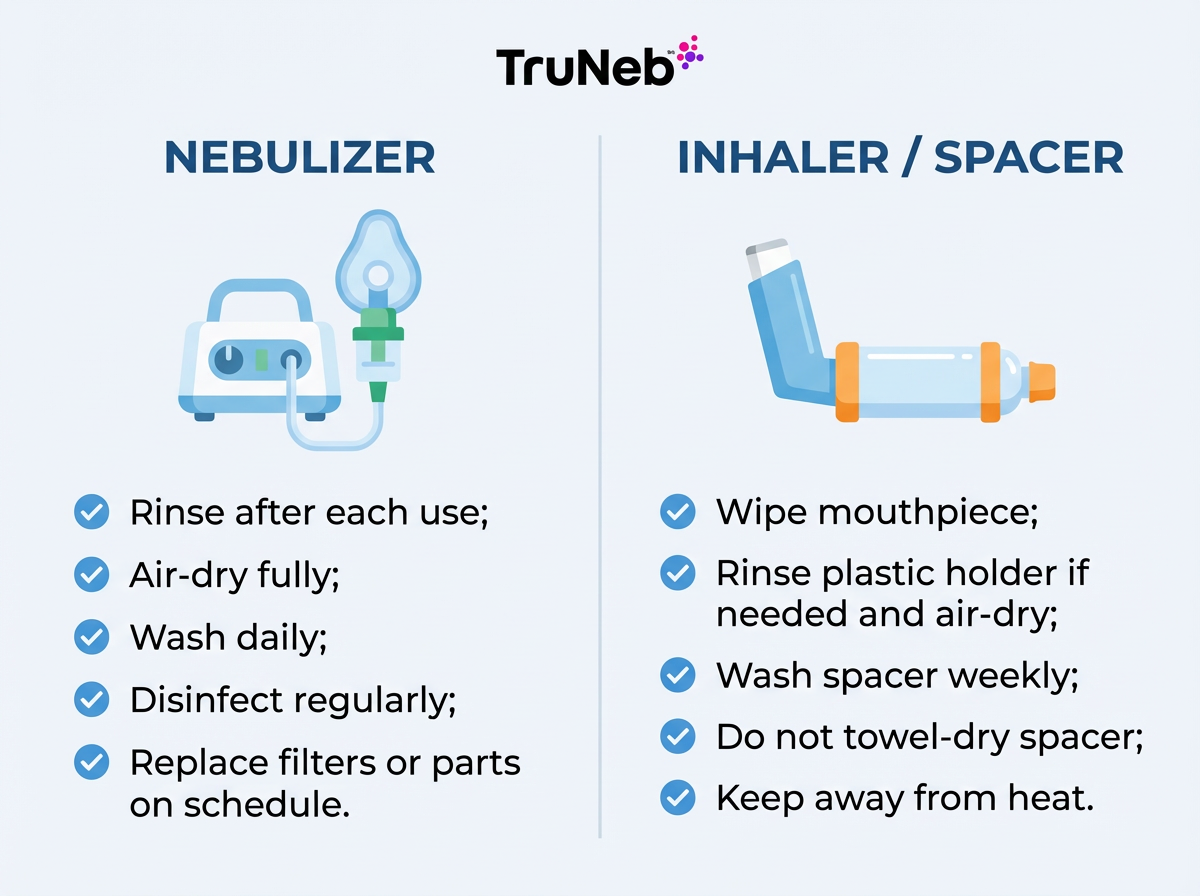
- Rinse the cup and mouthpiece/mask after every use. Air-dry fully.
- Wash with mild soap and water daily; disinfect regularly per the manual.
- Replace compressor filters and worn parts as directed.
Inhaler and spacer care:
- Wipe the mouthpiece; if needed, remove the canister and rinse the plastic holder, then air-dry.
- Wash spacers weekly with warm soapy water and let them air-dry (don’t towel-dry).
- Keep devices dry and away from heat; check dose counters.
Clean equipment ensures better delivery and helps prevent infections.
One-line takeaway: Clean, dry gear keeps treatments safe and effective.
Inhalers are fast and portable; nebulizers are easier to breathe through. Both can work well when used correctly—the best choice depends on your symptoms, age, technique, and doctor’s advice. Follow your written asthma or COPD action plan, and if you need a compact nebulizer for travel or school, a portable mesh device like TruNeb can offer treatments without a bulky machine.
Frequently Asked Questions
Tap or click a question below to see the answer:
Note: This information is educational and not a substitute for medical care. Talk to your doctor before trying a new medication.
When used correctly, both can work equally well for most medications and doses. The right choice depends on you—your technique, age, symptoms, and your doctor’s plan.
It varies by drug and device. Follow your doctor’s directions on your written action plan rather than trying to self-convert doses.
Yes. A lot of people use an inhaler for daily control and keep a nebulizer for flare-ups. Don’t change how or when you use either device—or double-dose the same medication—without checking with your doctor.
In the U.S., the medications are prescription-only. The nebulizer device can be bought without a prescription, but insurance usually needs a prescription to cover it.
No. Steam or humidifier devices add moisture but don’t deliver medicine. You might see boxes labeled ‘steam inhaler’—these are NOT for breathing prescription medications.
Side effects mainly depend on the medication, not whether you use a nebulizer or an inhaler. Good technique—using a spacer, rinsing after steroid inhalers, and keeping nebulizer parts clean—helps reduce risk.
One-line takeaway: Use the device—nebulizer or inhaler—that fits your needs and your doctor’s plan; both can be effective when used correctly.