

On this page
Nebulizer Medications: Why Most Require a Prescription
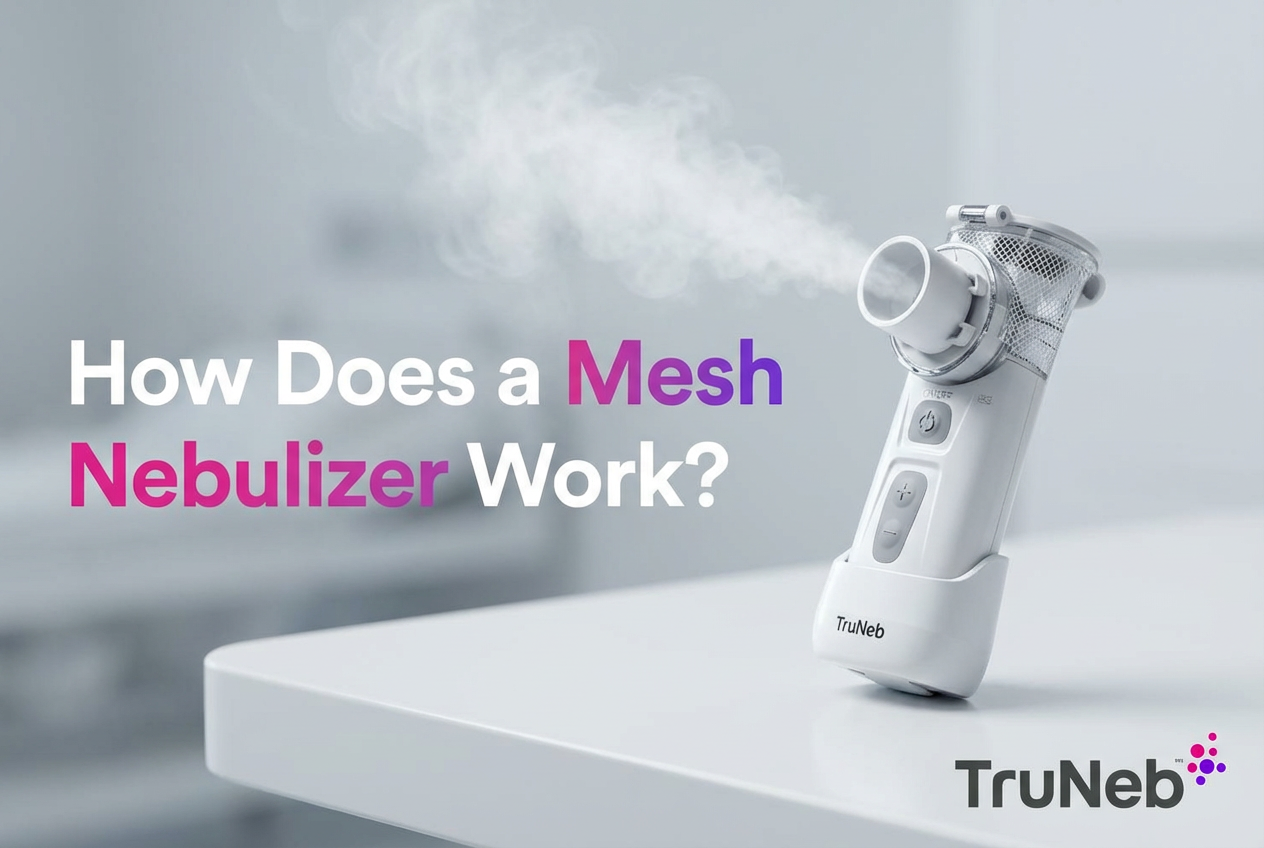
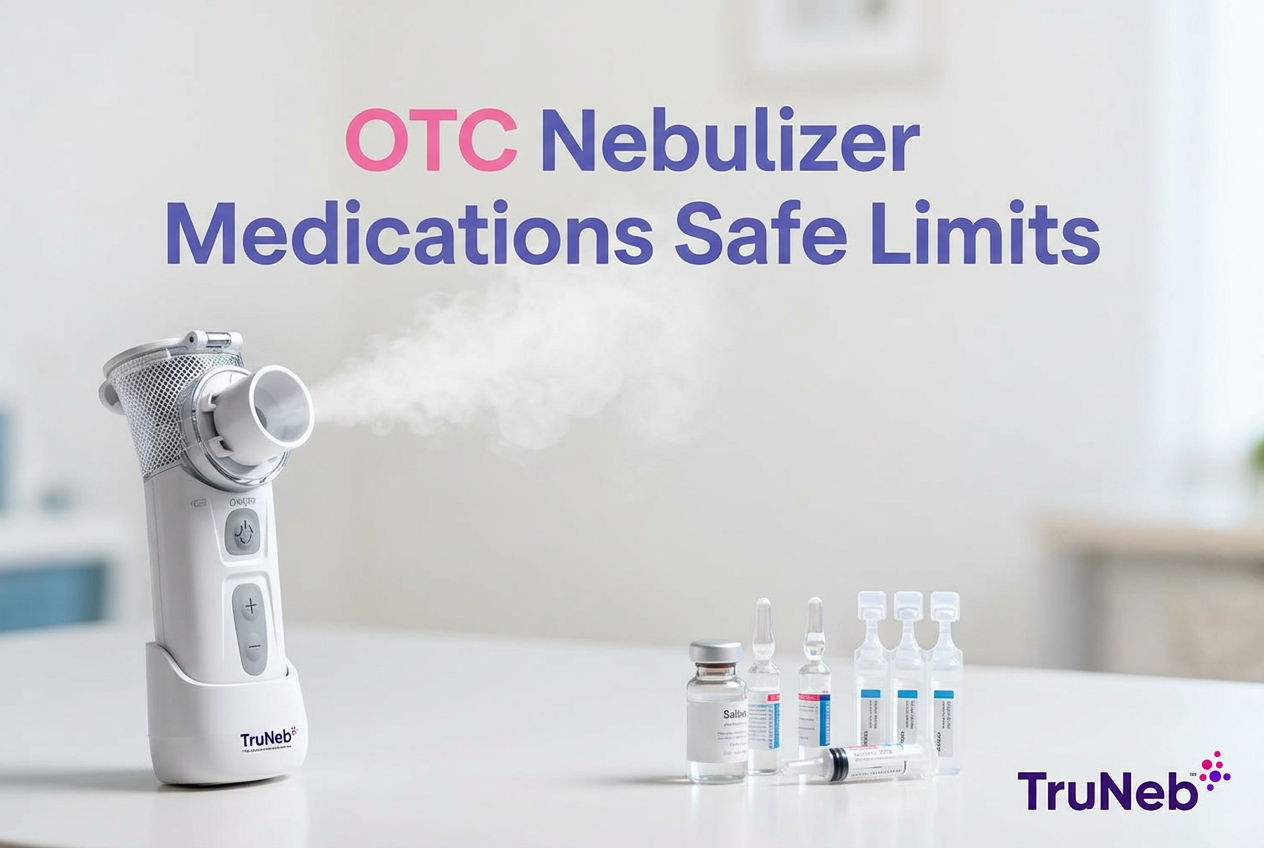
A nebulizer turns liquid medicine into a mist you breathe.
Most nebulizer medications in the U.S. are prescription only. Examples include:
- Albuterol or levalbuterol (quick relief)
- Ipratropium (airway opener)
- DuoNeb (albuterol plus ipratropium)
- Budesonide (inhaled steroid)
Doctors use these nebulizer medications to treat conditions like asthma and COPD, and sometimes other lung diseases. Because these drugs can affect your heart rate, blood pressure, and other conditions, doctors prescribe and monitor them rather than making them over the counter.
Used the wrong way, these drugs can raise your heart rate or cause other side effects. Your doctor chooses the right drug and dose and checks how you respond.
Key takeaway: The nebulizer machine is over the counter, but the medicines you put in it usually require a prescription.
Over-the-Counter Nebulizer Treatments You Can Use (No Prescription Needed)
Only a few treatments are truly safe and allowed without a prescription.
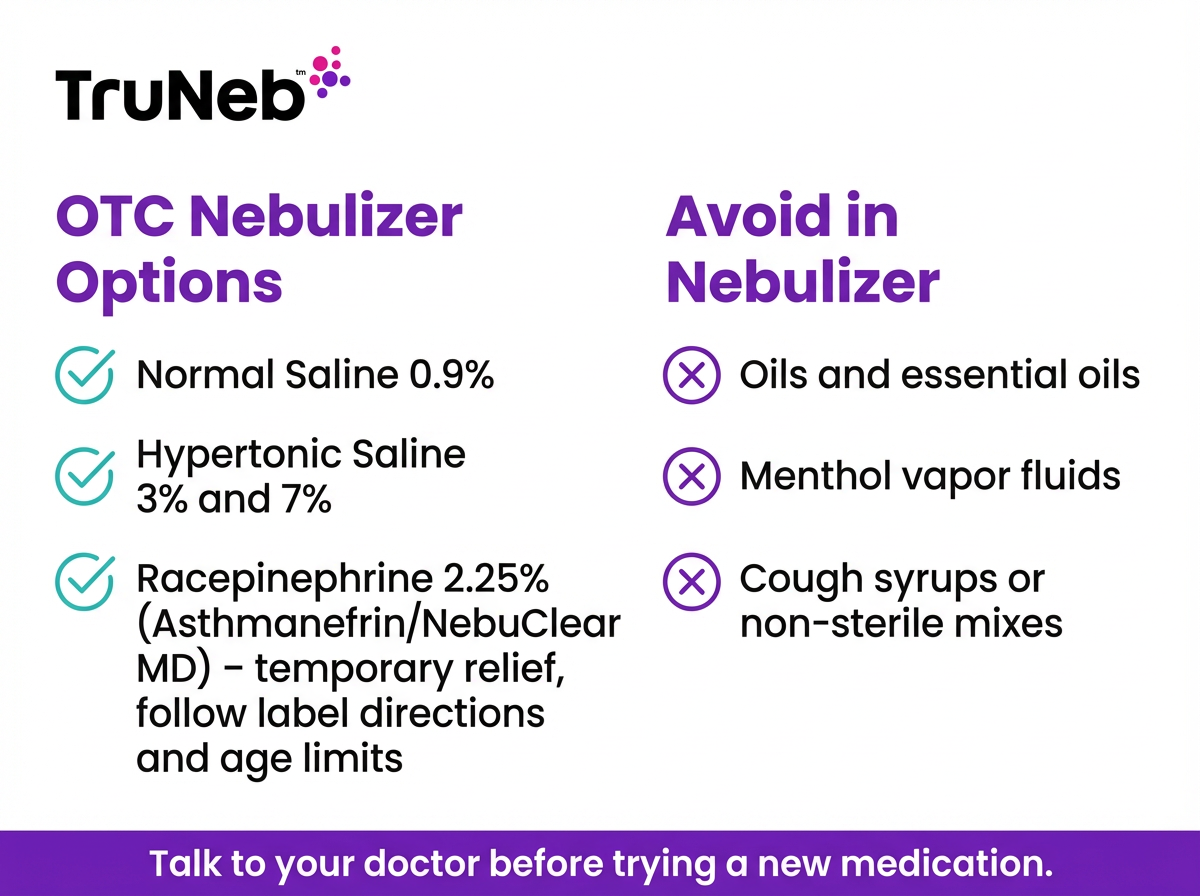
Sterile Saline Nebulizer Solution (OTC)
- Normal saline 0.9%: Sterile saltwater that adds moisture and helps loosen mucus.
- Hypertonic saline 3% or 7%: Stronger saline that pulls water into the airways to thin thick mucus. It's usually started with guidance from a doctor, especially for mucus-heavy conditions like cystic fibrosis or very sticky mucus.
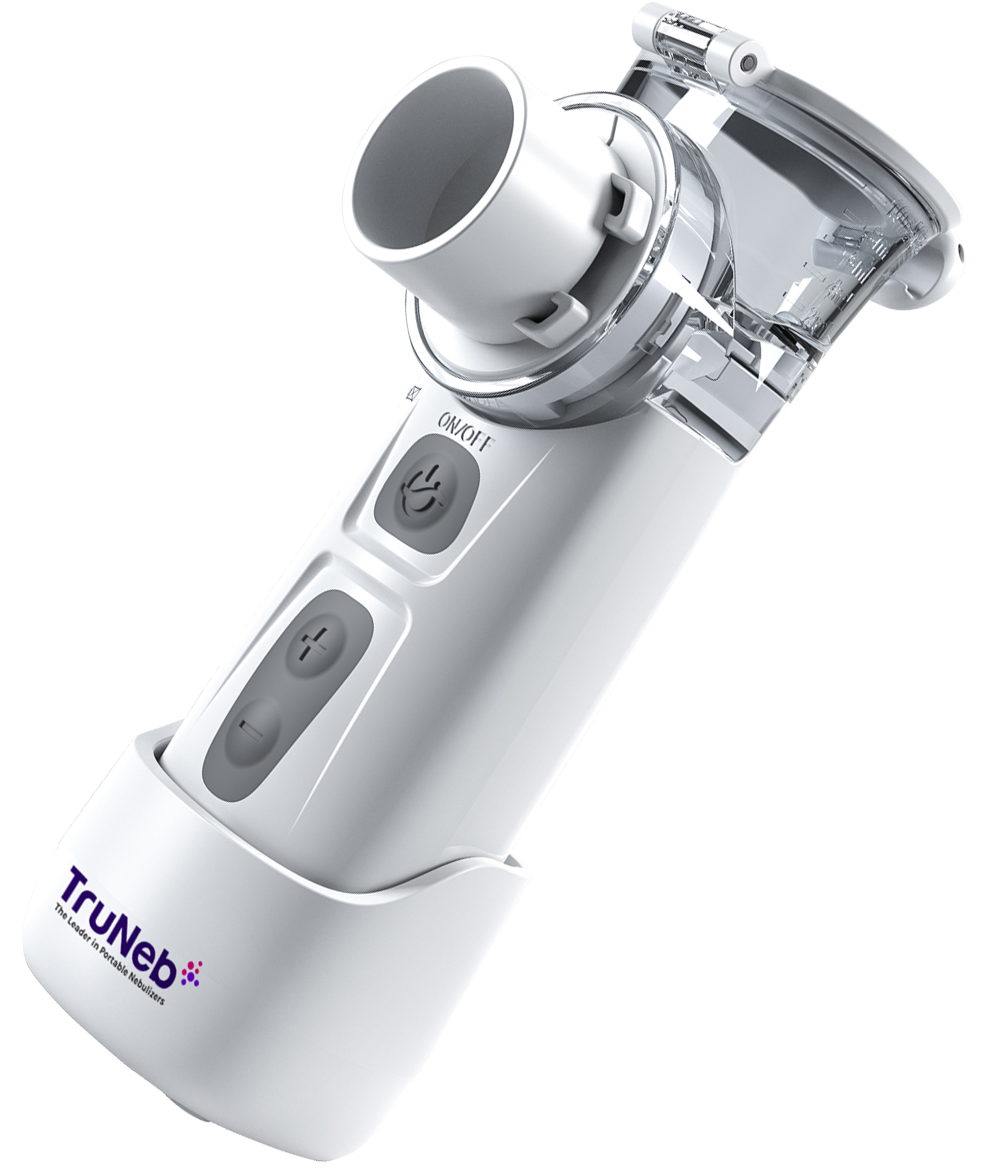
- Tip: Use sterile, single-use vials made for inhalation. A TruNeb™ portable mesh nebulizer makes saline sessions quick and quiet at home or on the go.
Racepinephrine solution (OTC bronchodilator)
- Racepinephrine 2.25% (sold as Asthmanefrin and also marketed as NebuClear MD) can give temporary relief of mild, intermittent asthma symptoms like chest tightness or wheeze.
- Check the package for who it's for and how often to use it, and follow those directions exactly. Talk with a doctor before using it for a child.
- Safety: Can cause a fast heartbeat, jitteriness, or higher blood pressure. Stop and seek care if you feel worse. It isn't a substitute for prescription rescue inhalers like albuterol or for a long-term asthma treatment plan. If you find yourself needing OTC bronchodilators regularly, that's a sign to see a doctor right away, not to keep increasing the dose.
Primatene Mist (OTC Epinephrine Inhaler, Not a Nebulizer Solution)
- Primatene Mist is an OTC epinephrine inhaler, not a nebulizer liquid. It may help some mild, brief symptoms, but experts do not recommend relying on epinephrine products for ongoing asthma care.
What Not to Nebulize (OTC Products to Avoid)
These common items aren't safe for your nebulizer.
- Don't put oils, menthol vapor fluids, cough syrups, or any liquid not labeled for nebulizer use into your device.
Key takeaway: Safe OTC nebulizer options are sterile saline and racepinephrine; almost everything else requires a prescription.
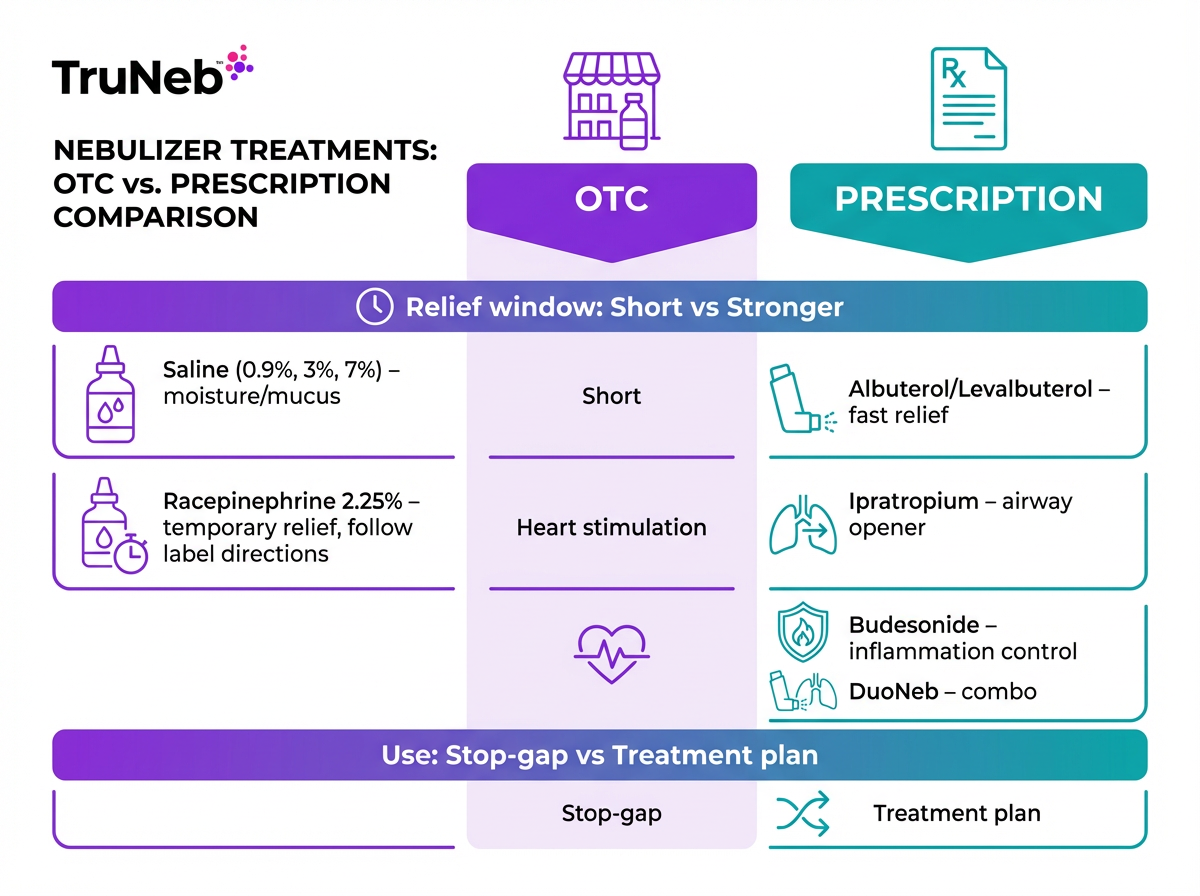
OTC vs Prescription Nebulizer Medications: Why Most Are Prescription-Only
OTC options can help for short, mild symptoms. Prescription meds are built for better control and safety.
OTC nebulizer treatments offer short-term relief, while prescription options target the lungs more precisely and are part of a doctor-directed asthma/COPD plan.
| Type | Examples | What it does | Limits & safety | Role in care |
|---|---|---|---|---|
| OTC | Saline 0.9%, 3%, 7%; Racepinephrine 2.25% | Moisturizes airways, thins mucus; temporarily opens airways | Can raise heart rate/jitters (racepinephrine); follow label directions; hypertonic saline is usually started with a doctor's guidance | Short-term relief, backup only |
| Prescription | Albuterol/Levalbuterol; Ipratropium; DuoNeb; Budesonide | Targets lung receptors; opens airways; reduces inflammation | Doctor-monitored for side effects and interactions | First-line for flares and long-term control |
Note: OTC = over the counter. Hypertonic saline is typically started under a doctor's guidance.
Asthma guidelines favor prescription medications and don't recommend OTC epinephrine or racepinephrine for routine care.
Bottom line: OTC helps in a pinch; a prescription plan treats the real problem and keeps you safer.
Key takeaway: Use OTC as a stop-gap, not a long-term asthma plan, which usually relies on prescription medications.
Using OTC Nebulizer Medications Safely
Do the basics right every time.
- Read the label and follow it exactly. Don't exceed the daily limit.
- Start slow. If you notice a fast heartbeat, dizziness, or chest pain, stop and get medical care.
⚠️ If you have severe trouble breathing, blue lips or face, or can't speak in full sentences, call 911 or your local emergency number right away.
- For kids: Even if the label lists pediatric use, talk with the pediatrician first and supervise every treatment.
- Use only sterile solutions made for inhalation. Don't nebulize home mixes or oral medicines.
- One medicine at a time. Don't mix solutions unless a doctor told you to.
- Clean your nebulizer parts after each use so germs don't grow.
Safety note: Always check with your doctor before starting any new medication.
Key takeaway: If OTC treatment does not bring quick relief, seek medical care right away.

Choose the Right Nebulizer Device for OTC Use
You don't need a prescription to buy a nebulizer machine. The machine itself is over the counter; the medications usually are not. You can get one at many pharmacies, medical supply stores, or online.
What to look for
- Portable mesh design: small, quiet, easy to travel with.
- Works with saline and labeled OTC solutions.
- Easy cleaning and replaceable parts.
A modern portable mesh nebulizer like TruNeb can make saline sessions simple at home or on the go. If you plan to use saline often, a quiet, handheld device can make treatments easier.
Key takeaway: You can buy nebulizer machines over the counter; choose a quiet, portable model that's easy to clean and works with saline and labeled solutions.
FAQs – Quick Answers on OTC Nebulizer Medications
Tap or click a question below to see the answer:
Yes, but options are limited. Sterile saline and racepinephrine solution are OTC; most others, like albuterol or budesonide, require a prescription.
The only generally safe over-the-counter options are sterile saline (0.9%) and labeled racepinephrine solution; talk with your doctor before using them, especially if you have asthma. Don't nebulize oils, menthol fluids, or cough syrups.
No. Albuterol is prescription only in the U.S. Ask your doctor about the right rescue plan for you.
Racepinephrine can help mild, temporary symptoms, and Primatene Mist is an OTC epinephrine inhaler (not for nebulizers), but experts don't recommend relying on these for ongoing asthma care—see a doctor for a proper asthma plan.
No. The device is sold over the counter at pharmacies and online; the medications are what usually require a prescription.
Yes, 3% and 7% saline are sold for nebulizers, but it's best to use them under a doctor's guidance.
Key takeaway: Only a few nebulizer treatments, mainly saline and racepinephrine, are truly over the counter—most effective medications still need a prescription.
Safety note: Talk to your doctor before trying a new medication.
Disclaimer: This article is for informational purposes only and is not a substitute for professional medical advice, diagnosis, or treatment. Always talk to your doctor about your symptoms and treatment options.