

On this page
What Causes Side Effects When Using a Nebulizer?
Most side effects come from the medicine, not the machine. A nebulizer (also called a nebuliser) turns liquid medicine into a mist you breathe deep into your lungs. Because the dose can be higher than an inhaler, you can notice effects like a fast heartbeat or shaky hands. People with asthma or COPD who use nebulizers at home usually notice that side effects come from the medicine, not the device.
Most side effects happen because the medicine reaches your whole body through your lungs, not because the nebulizer itself is harmful.
Two kinds of issues can happen:
- Medicine effects: Bronchodilators can make you feel jittery. Steroids can cause thrush if you don't rinse your mouth. Hypertonic saline can make you cough.
- Device or technique issues: A loose mask can blow medicine into your eyes. A dirty cup or tubing can grow germs and lead to infections.
Children and older adults can feel side effects more strongly.
Good setup and cleaning lower the risk. Sit upright, breathe slowly, and make sure your mask or mouthpiece fits well. Keep your parts clean and dry after every use.
Note: This guide is general education. Talk to your doctor about the right medicine and dose for you.
Key takeaway: Most nebulizer side effects are from the medication, not the device.
Common Side Effects of Nebulizer Treatment (Mild & Expected)
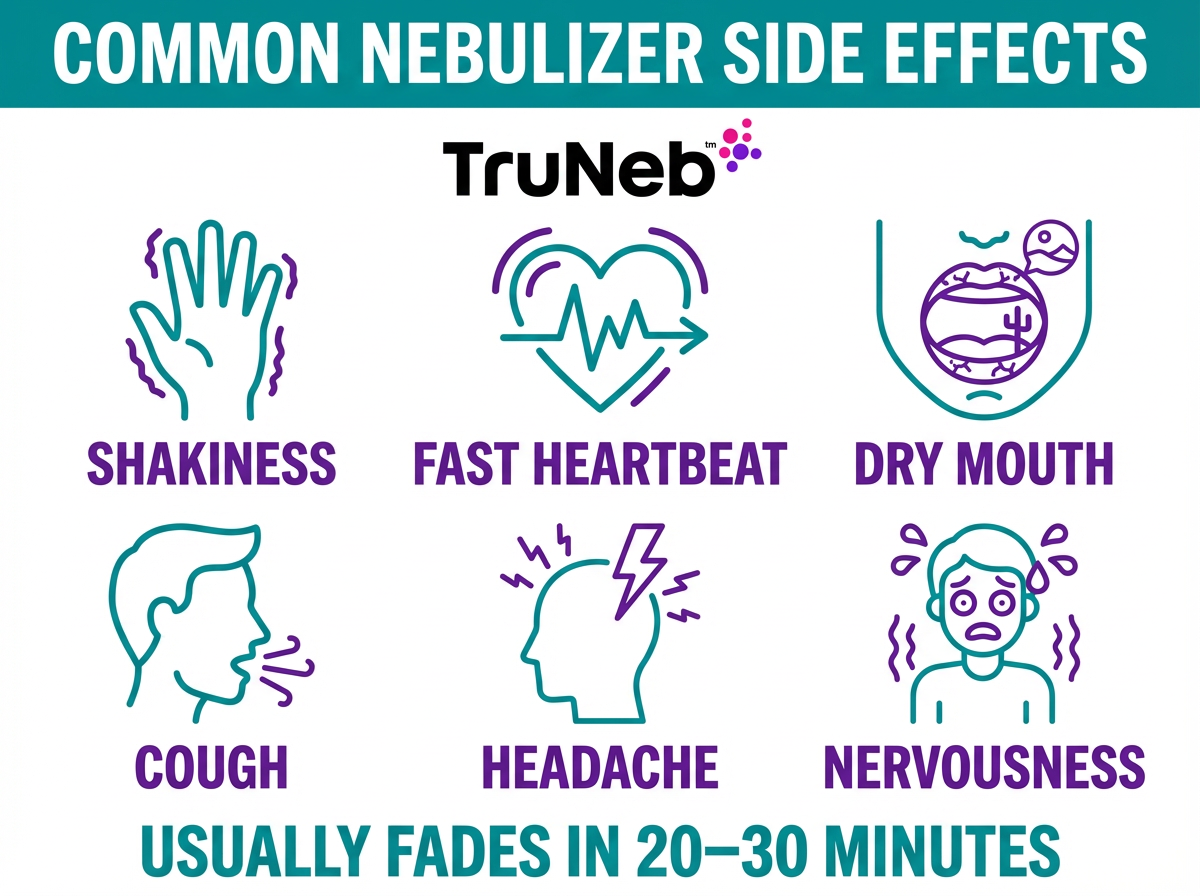
These mild effects are common and usually short-lived:
- Shakiness or tremor: Hands feel shaky. This fades in 10–30 minutes.
- Fast heartbeat or palpitations: Your heart can pound for a short time.
- Nervousness or jitteriness: An "amped up" feeling that passes.
- Dry mouth or throat: Sip water after your treatment.
- Coughing: The mist can tickle your throat, especially saline.
- Headache: Mild and brief.
- Dizziness or lightheadedness: Slow your breathing if you start to hyperventilate.
- Nausea: The taste or a little swallowed mist can cause this, but it's uncommon.
- Mild muscle cramps: Can happen with bronchodilators and usually pass quickly.
If a mild side effect doesn't improve within about 30 minutes, call your doctor for advice.
Key takeaway: Symptoms like shakiness, fast heartbeat, and dry mouth usually fade within 20–30 minutes after a nebulizer treatment.
Serious Side Effects and Risks of Nebulizer Use
Serious reactions are rare, but know the warning signs:
- Chest pain or a heartbeat that stays very fast or irregular: ⚠️ Stop the treatment and seek emergency care.
- Worse wheezing right after starting a dose (paradoxical bronchospasm): This is rare but serious. ⚠️ Seek emergency care.
- Allergic reaction: Hives, swelling of the face or throat, trouble breathing. ⚠️ Call 911.
- Fever or infection signs: Fever, chills, or a new wet cough after treatments can point to dirty equipment. Clean and disinfect your parts and call your doctor. An infection from dirty equipment is more likely to cause fever and a new cough over days, not minutes—either way, call your doctor promptly.
- Eye pain or blurred vision with halos after ipratropium: Mist in the eyes can trigger acute glaucoma. Protect your eyes and use a mouthpiece or a snug mask.
- Overuse or overdose: Back-to-back or too-frequent sessions can cause severe tremors, pounding heartbeat, vomiting, or confusion. Get medical help right away if this happens.
If something feels scary or isn't getting better, get help right away.
Key takeaway: Treat severe breathing trouble, chest pain, or swelling as an emergency.
Nebulizer Medications and Their Side Effects by Drug Type
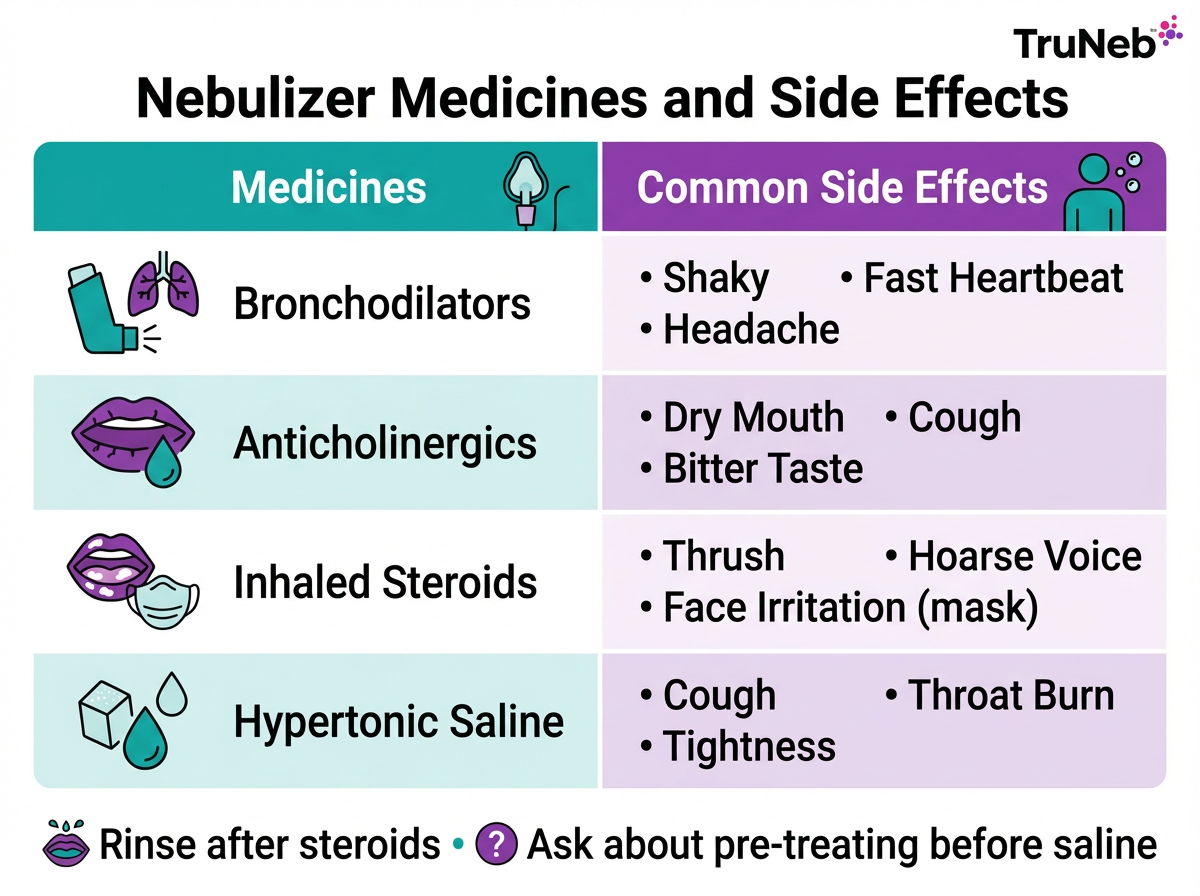
Bronchodilators (Albuterol, Levalbuterol) – Side Effects
Doctors commonly prescribe nebulized bronchodilators for asthma and COPD flare-ups.
- Expect: Tremor, jitteriness, fast heartbeat, headache, trouble sleeping if taken late.
- Duration: These side effects usually peak right after treatment and improve within about 20–30 minutes.
- Tip: If jitters are intense, ask your doctor about options. Some people do better with levalbuterol.
Anticholinergics (Ipratropium) – Side Effects
- Expect: Dry mouth, cough, bitter taste.
- Caution: Keep mist out of eyes. It can trigger eye pain or glaucoma in susceptible people.
Inhaled Steroids (Budesonide) – Side Effects
- Expect: Oral thrush and hoarse voice if you don't rinse after each dose. Wash the face if you use a mask to prevent skin irritation.
- Tip: Rinse, gargle, and spit after every steroid treatment.
- If you notice white patches or soreness that might be thrush, call your doctor. They can treat the infection and decide whether to adjust or pause your steroid.
Hypertonic Saline (3% and 7%) – Side Effects
Hypertonic saline is usually prescribed by a specialist for conditions like cystic fibrosis or bronchiolitis—don't start it on your own.
- Expect: Strong coughing, throat or chest irritation, short-term hoarseness. 7% feels harsher but can thin mucus more effectively for some people, under a doctor's guidance.
- Tip: Some doctors have patients use a bronchodilator just before saline to reduce coughing and tightness.
Other meds (CF antibiotics, dornase alfa) are used under specialist care with their own instructions. Only mix medications in the same nebulizer cup if your doctor has told you to—mixing drugs on your own can change side effects and how well they work.
Medical disclaimer: Talk to your doctor before you try a new medication or change your dose.
Key takeaway: Each medicine class has its own side effect pattern—learn yours and how to prevent problems.
How Long Do Nebulizer Side Effects Last?
Most bronchodilator side effects come on fast and fade fast. Shakiness, a rapid pulse, and nervous feelings usually improve within 20–30 minutes after your session. A mild headache can linger up to an hour.
The shakiness, fast heartbeat, and nervous feeling listed earlier are the ones that tend to fade within 20–30 minutes.
Dry mouth improves once you hydrate. If albuterol keeps you awake, plan your last dose a few hours before bedtime.
Steroid issues are different. Thrush and voice changes build up over days if you don't rinse and need a few days of treatment to clear.
If a typical side effect has not improved an hour after your dose, or keeps getting worse, call your doctor.
Key takeaway: Bronchodilator side effects fade within about 20–30 minutes, while steroid issues like thrush build up over days if you don't rinse.
How to Reduce Side Effects – Nebulizer Best Practices (Do’s and Don’ts)
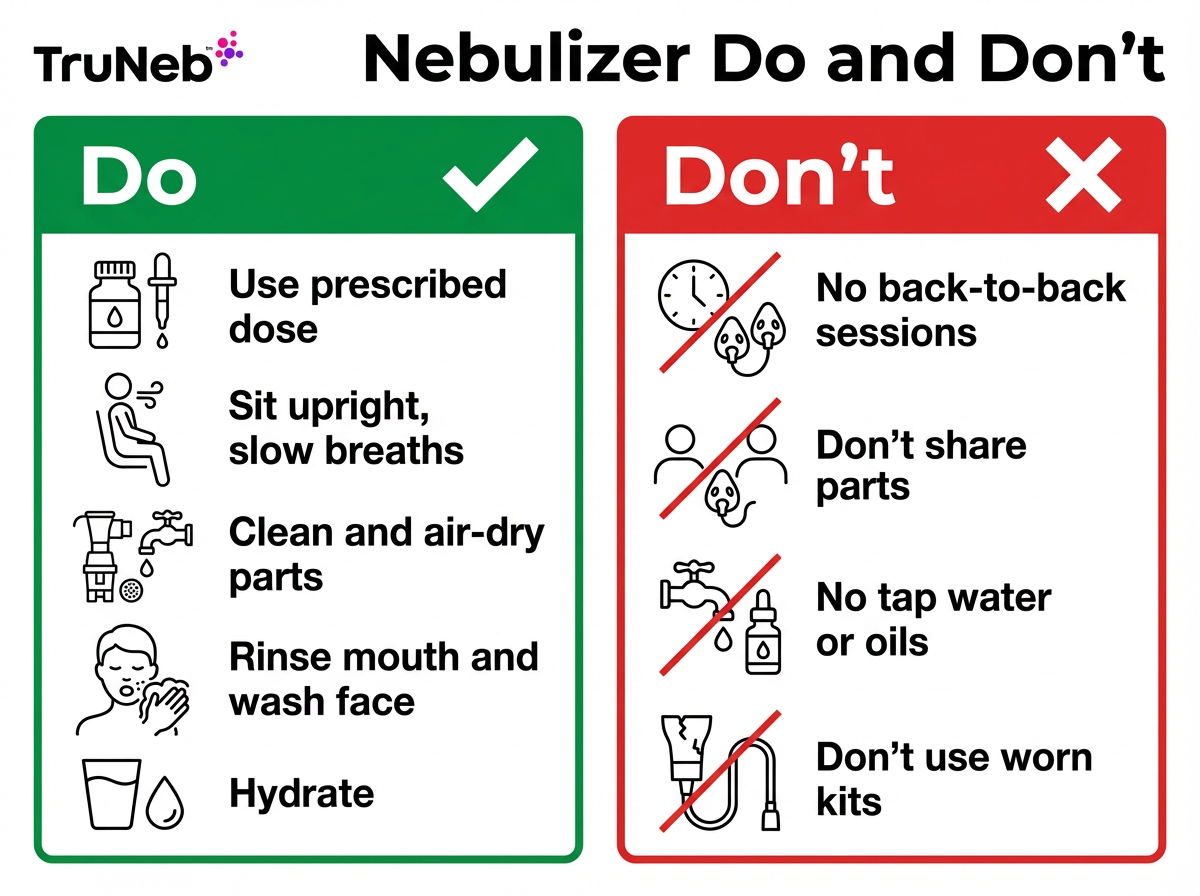
Do this:
- Use the prescribed dose and schedule. If you feel you need extra doses, call your doctor.
- Do talk with your doctor if you feel you need to increase your dose or add extra treatments—don't adjust prescriptions on your own.
- Sit upright and breathe slowly during treatments. Keep a snug mask or use a mouthpiece.
- Clean after every use. Wash the cup and mask or mouthpiece with warm soapy water, rinse well, and air dry. Disinfect as directed.
- Rinse your mouth and wash your face after treatments, especially with steroids.
- Drink water after your session to ease dry mouth.
Avoid this:
- Do not run back-to-back sessions unless your doctor tells you to.
- Do not share your nebulizer parts with anyone.
- ⚠️ Do not use steam inhalers or facial steamers for prescription medications. These are not nebulizers and are not safe for breathing in nebulized drugs.
- Do not use tap water or unapproved liquids. Only use medicines or sterile saline prescribed for nebulizing.
- Do not ignore worn parts. Replace kits regularly per guidance.
- Do not schedule regular nebulizer sessions for children on your own without a prescription—extra treatments can lead to side effects and can hide serious illness.
Safety note: Talk to your doctor before you try a new medication or change your nebulizer routine.
Key takeaway: Good technique, rinsing, and clean equipment prevent most problems.
When to Contact a Doctor or Emergency Services
Call your doctor if:
- Side effects last longer than about 30–60 minutes or keep getting worse.
- You need treatments more often than prescribed.
- You develop thrush, a persistent hoarse voice, or skin irritation from the mask.
- You're unsure whether a reaction is normal.
⚠️ Call 911 if:
- You have severe breathing trouble or cannot speak in full sentences after a treatment.
- You have signs of a severe allergic reaction: swelling of the face or throat, hives, trouble breathing.
- You feel chest pain that could be a heart problem, or you faint.
Keep your action plan handy and trust your instincts.
Key takeaway: If symptoms feel severe or do not improve, get medical help right away.
Advances in Nebulizer Technology and Side Effect Reduction
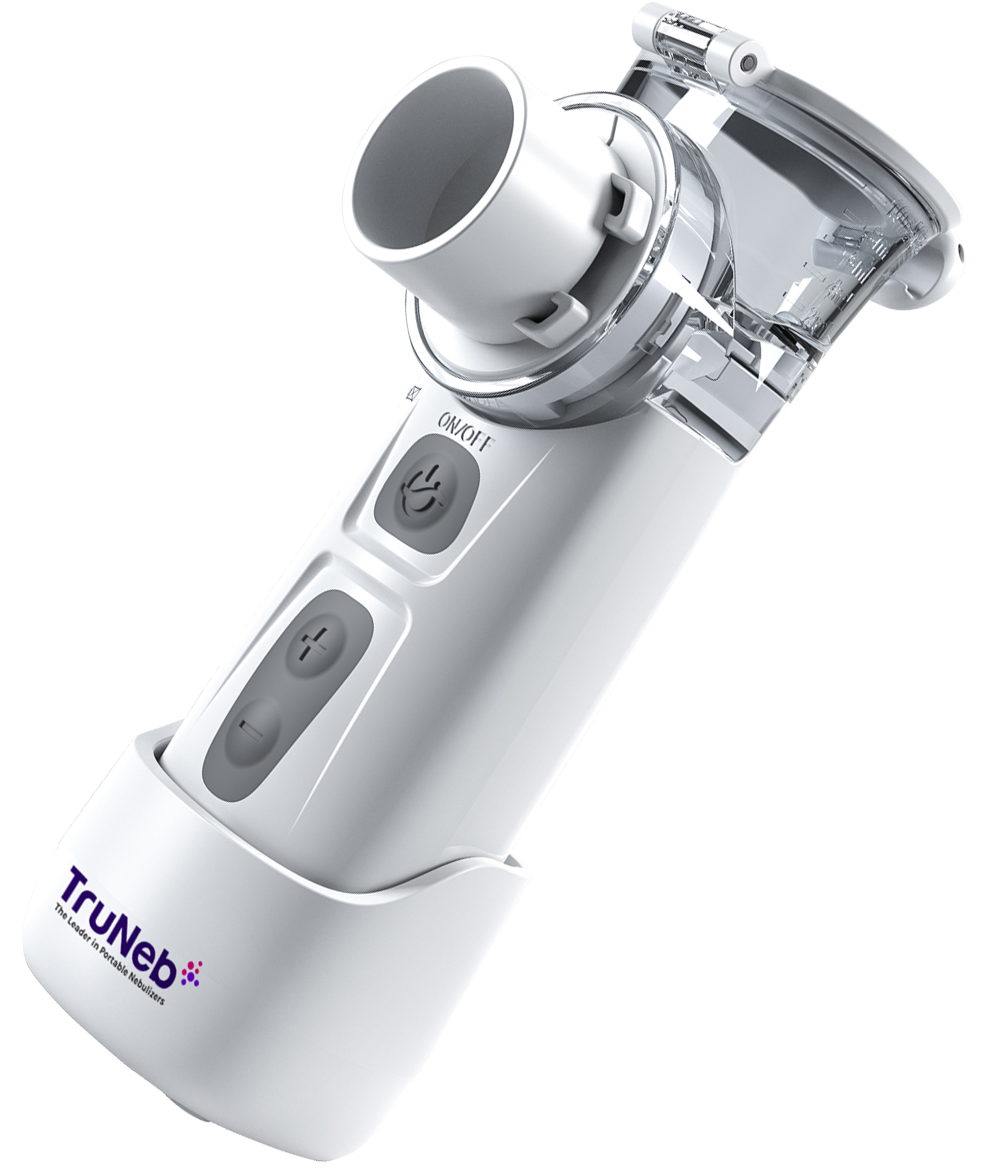
Older jet nebulizers are bulky and loud. Modern mesh nebulizers are quiet, portable, and simple to clean. Less noise and an easier setup can make treatments calmer, which helps you breathe slowly and use good technique.
When treatments are quiet and quick, people are less likely to skip doses or double up later, which can reduce avoidable side effects.
Key takeaway: Modern mesh nebulizers like TruNeb™ make treatments quieter and easier, which helps you stick to your plan and avoid preventable side effects.
Frequently Asked Questions
Tap or click a question below to see the answer:
Yes. Using a nebulizer much more often than prescribed can be harmful. It can trigger severe tremors, a pounding heartbeat, nausea or vomiting, and confusion. Overuse can also make common side effects—like shaking and a racing heart—stronger and longer-lasting. It can mean your condition isn’t well-controlled. Talk to your doctor about your plan if you need extra treatments often.
No, a nebulizer itself isn’t bad for your lungs or heart when it’s used correctly. The device just turns medicine into a breathable mist. Some medicines, like albuterol, can briefly make your heart race; that usually passes. Share any heart history with your doctor so they can choose the safest option for you.
Typically no. Breathing usually improves for most people. Rarely, if your airways tighten from a dose (paradoxical bronchospasm), oxygen can drop—this is an emergency.
Kids can show tremor and fast heartbeat like adults, but can seem restless or upset. Use a quiet device, a snug mask, and rinse the mouth or give water after steroids. Call your pediatrician if you’re unsure about a reaction.
Don’t stop a prescribed medicine on your own. Mild effects are common and manageable. Call your doctor if side effects are more than mild, last longer than expected, or worry you.
⚠️ Medical disclaimer: This article is for informational purposes only and is not a substitute for professional medical advice, diagnosis, or treatment. Always talk to your doctor about your symptoms, medications, and any changes to your treatment plan.