

On this page
LABA and LAMA in COPD: What These Inhalers Actually Do
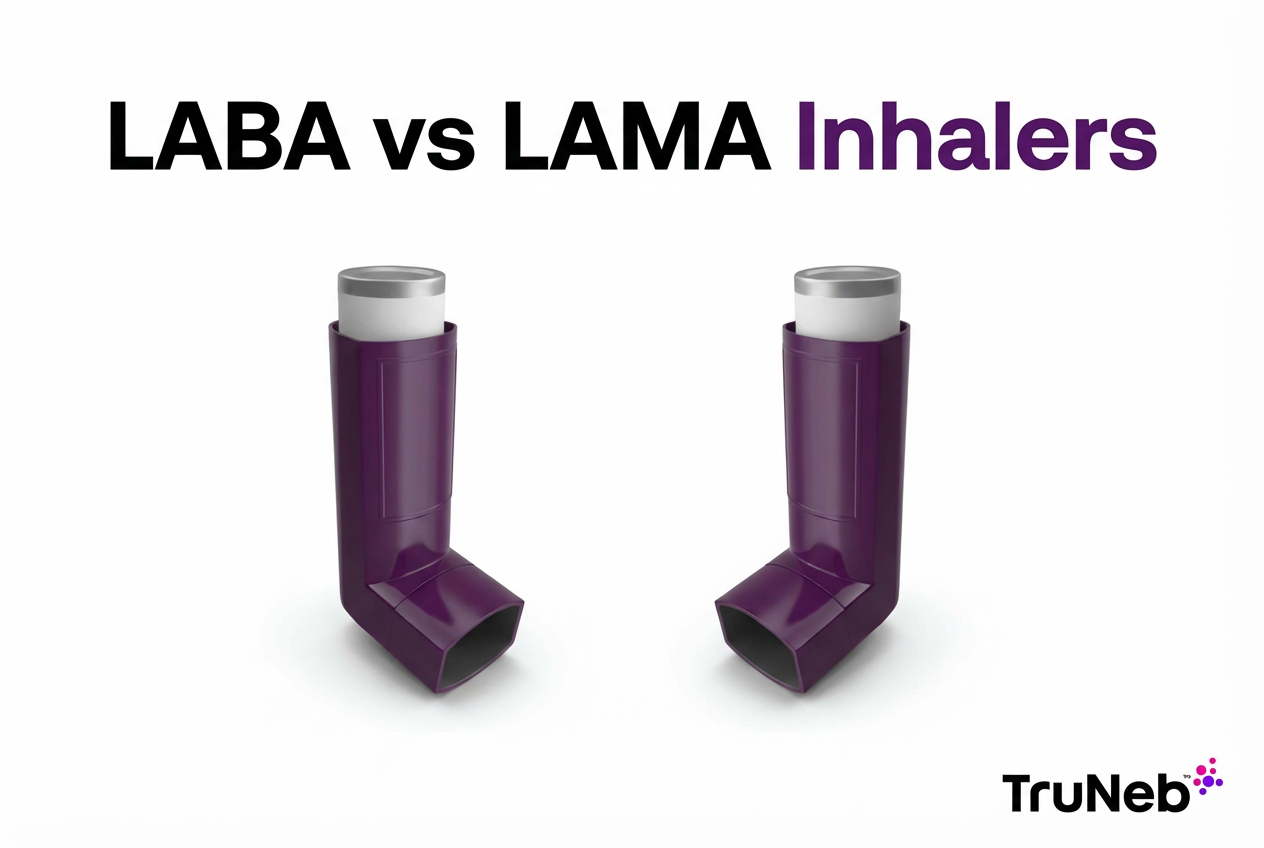
LABA and LAMA inhalers are long-acting bronchodilators you use every day to manage COPD (chronic obstructive pulmonary disease). COPD includes emphysema and chronic bronchitis.
They help keep your airways open for hours so you can breathe, move, and do more.
- LABA (long-acting beta agonist) relaxes the tiny muscles around your airways.
- LAMA (long-acting muscarinic antagonist) blocks the nerve signal that tells those muscles to tighten.
Think of them as two maintenance workers for your lungs. One loosens tight airways. The other stops the tightening signal from showing up. Same goal, different paths.
These are controller inhalers, not rescue inhalers. For sudden symptoms, your doctor will usually prescribe a quick-relief inhaler like albuterol to keep on hand.
Common examples:
- LABA: salmeterol (Serevent)
- LAMA: tiotropium (Spiriva)
Other LABA inhalers include formoterol and indacaterol, and other LAMAs include umeclidinium and aclidinium.
Key point: LABAs and LAMAs keep airways open long-term; they are not for immediate relief.
LABA vs LAMA in COPD: Key Differences You’ll Actually Feel
The main difference between LABA and LAMA inhalers in COPD is how they act on your airway muscles and nerves. Put simply, the difference between LABA and LAMA in COPD comes down to the pathway they target.
How they work:
- LABA: Turns on beta-2 receptors so airway muscles relax and open.
- LAMA: Blocks muscarinic (M3) receptors so the “tighten up” signal can’t clamp the airway.
What it means for you:
- Both improve breathlessness and activity levels.
- When used alone, some studies suggest LAMAs can prevent COPD flare-ups a bit better than LABAs. The edge for LAMAs is small, and the “better” option still depends on how your lungs respond.
Common side effects:
- LABA: mild jitteriness or a faster heartbeat.
- LAMA: dry mouth; in some people, trouble urinating.
There isn’t one “best” class for everyone. If one long-acting inhaler doesn’t control your symptoms, your doctor might put both to work together as dual therapy. A lot of people breathe best when they’re on both together.
Key point: LABA relaxes airway muscle; LAMA blocks the tighten signal—two routes to easier breathing.
Using LABA and LAMA Together in COPD: Dual Bronchodilator Therapy
Dual bronchodilator therapy (LABA/LAMA) means using a LABA and a LAMA together, usually in one LABA/LAMA combination inhaler for COPD. Putting both maintenance workers on shift keeps airways more open through two pathways and is now a common backbone of COPD maintenance care. International COPD guidelines (like GOLD) generally recommend two long-acting bronchodilators for people with ongoing symptoms before adding a steroid.
Compared with one long-acting inhaler alone, dual LABA/LAMA therapy typically leads to better symptom control and fewer COPD flare-ups for people with moderate to severe disease. Doctors commonly consider dual therapy if you’re still short of breath on a single long-acting inhaler or if your symptoms are more severe from the start.
Common LABA/LAMA combination inhalers:
- umeclidinium/vilanterol (Anoro Ellipta)
- tiotropium/olodaterol (Stiolto Respimat)
- glycopyrrolate/formoterol (Bevespi Aerosphere)
Single vs dual vs triple COPD inhaler therapy at a glance: dual LABA/LAMA usually improves symptoms and reduces flares more than one long-acting inhaler; steroids are added for frequent flares or steroid-responsive inflammation—talk to your doctor.
| Treatment step | What’s in it | What it does | Who it’s for | Key considerations |
|---|---|---|---|---|
| Single long-acting | LABA or LAMA | Keeps airways open for hours | Milder symptoms or starting therapy | Good daily control for a lot of people; step up if symptoms persist |
| Dual long-acting | LABA + LAMA | Opens airways via two pathways | Ongoing breathlessness or activity limits | Often better symptom control and fewer flares vs one long-acting inhaler |
| Triple therapy | LABA + LAMA + ICS | Adds inflammation control | Frequent flares or high eosinophils | Extra flare-up protection; monitor pneumonia risk linked to the steroid |
Infographic: “COPD Inhalers: Single vs Dual vs Steroid Add-On”
- Panel 1: Single long-acting inhaler (LABA or LAMA). Text: “Opens airways; daily controller.” Small tag: “Examples: Serevent (LABA), Spiriva (LAMA).”
- Panel 2: Dual therapy (LABA + LAMA). Text: “Can reduce COPD flare-ups compared with one long-acting inhaler and improve breathing for many patients.” Small source tag: “J Clin Med 2022”.
- Panel 3: Add ICS (triple therapy) if frequent flares or high eosinophils (ᚙ300). Text: “Ask your doctor about adding ICS (triple therapy) if you have frequent flares or high eosinophils (ᚙ300). Extra flare-up protection; watch pneumonia risk.” Small source tag: “JAMA Intern Med 2023”.
Key point: Dual LABA/LAMA therapy combines two long-acting bronchodilators to keep COPD airways more open and reduce flare-ups better than one long-acting inhaler alone.
LABA/LAMA vs Inhaled Steroids (ICS): When to Add a Steroid
In COPD, doctors typically use LABA/LAMA dual bronchodilator therapy first, and consider adding an inhaled steroid (ICS) only if flare-ups continue or tests suggest steroid-responsive inflammation.
Inhaled corticosteroids (ICS) calm airway inflammation. They do not directly open airways like LABA/LAMA.
When doctors consider ICS:
- You still have frequent exacerbations (for example, 2 or more per year) despite LABA/LAMA.
- You have asthma-like features or a high blood eosinophil count (a common threshold is >= 300 cells per microliter).
For people with COPD without clear asthma features, LABA/LAMA is generally preferred over LABA/ICS because it provides similar or better flare-up prevention with lower pneumonia risk. This higher pneumonia risk is linked to the steroid (ICS) component, not to LABA or LAMA alone.
Triple therapy = LABA + LAMA + ICS. It can lower flare-ups further in the right patients.
Example: Trelegy Ellipta (single-inhaler triple).
Safety note: Talk to your doctor before trying a new medication.
Key point: Doctors usually consider adding an inhaled steroid on top of LABA/LAMA therapy if COPD flare-ups continue or blood tests show steroid-responsive inflammation; otherwise, dual bronchodilators are usually enough.
Beyond Inhalers: Rehab, Technique, and When a Nebulizer Helps
Make the basics strong:
- Quitting smoking is the most powerful step to slow COPD. Your doctor or a quitline can help you make a plan.
- Join pulmonary rehab to build strength and reduce breathlessness.
- Stay current on flu and pneumonia vaccines.
- Your doctor will usually prescribe a rescue inhaler to keep on hand for sudden symptoms.
Make your inhalers count:
- Review inhaler technique with your doctor. A spacer can help with metered-dose inhalers.
- Daily inhalers work best when you take them as prescribed; skipping doses reduces their benefit.
When a nebulizer helps:
- If you struggle with inhalers (arthritis, coordination, severe symptoms) or have thick mucus, a nebulizer can be an add-on. It turns liquid medicine or saline into a mist you breathe calmly over a few minutes.
- Nebulized hypertonic saline (3% to 7%) is sometimes used to help thin mucus in chronic bronchitis-type COPD when prescribed.
- Caution: Do not use steam inhalers or humidifiers to take COPD medications. These devices are not the same as nebulizers and do not safely deliver prescription medicine to your lungs.
- Caution: Use only the medications or saline solutions your doctor prescribes for your nebulizer. Do not nebulize over-the-counter liquids, essential oils, or anything not meant for inhalation.
The American Lung Association notes nebulizers can help people who have difficulty using inhalers (American Lung Association).
A portable mesh nebulizer can make treatments easier on the go. It is small and quiet, and it delivers a fine mist without a bulky setup. Ask your doctor if adding a nebulizer to your plan makes sense for you. Nebulizers usually supplement, not replace, your daily LABA/LAMA or triple therapy.
If you have severe shortness of breath at rest, trouble speaking in full sentences, chest pain, or lips or fingertips turning blue, call 911 or your local emergency number right away.
Key point: Good habits plus correct device use boost the impact of your COPD medicines.
Frequently Asked Questions
Key point: These FAQs answer common questions about how LABA and LAMA inhalers work, when to use them together, when steroids are added, and how nebulizers fit into COPD care.
Tap or click a question below to see the answer:
A LABA relaxes airway muscles; a LAMA blocks the signal that tightens them. Both keep airways open for longer to ease COPD symptoms.
Both help. Studies show LAMAs can prevent flare-ups slightly better than LABAs when used alone, but the difference is small and the best choice depends on how your lungs respond.
Yes. Using both together—usually in one combination inhaler—is common and can improve breathing more than one medicine alone. Rescue inhalers are still for sudden symptoms.
Doctors usually consider adding an ICS if you keep having exacerbations on LABA/LAMA or your blood eosinophil count is high, suggesting steroid-responsive inflammation. This can reduce flare-ups but carries a higher pneumonia risk linked to the steroid.
Inhalers work well when used correctly. Nebulizers can be easier if you struggle with inhalers or need saline for thick mucus, and some people use both. Use only medications or saline your doctor prescribes in the nebulizer—never essential oils or over-the-counter liquids. A portable option like TruNeb can help with on-the-go treatments—ask your doctor if it fits your plan.
⚠️ Talk to your doctor promptly if your symptoms suddenly get worse, you need your rescue inhaler more often, or you’re thinking about changing your inhalers or starting nebulizer treatments. Disclaimer: This article is for informational purposes only and is not a substitute for professional medical advice, diagnosis, or treatment. Always talk with your doctor about your symptoms, medications, and treatment options. Understanding how LABA, LAMA, steroids, and nebulizers fit together can help you have better conversations with your doctor and feel more in control of your COPD care.