

On this page
What Is Budesonide Inhalation Suspension and Why Is It Prescribed?
Budesonide inhalation suspension is a liquid corticosteroid you breathe in with a nebulizer to help prevent asthma symptoms. Budesonide is an inhaled corticosteroid (ICS) that calms airway swelling so breathing gets easier over time. You might notice some relief in a few days, but full benefit can take a couple of weeks of regular use.
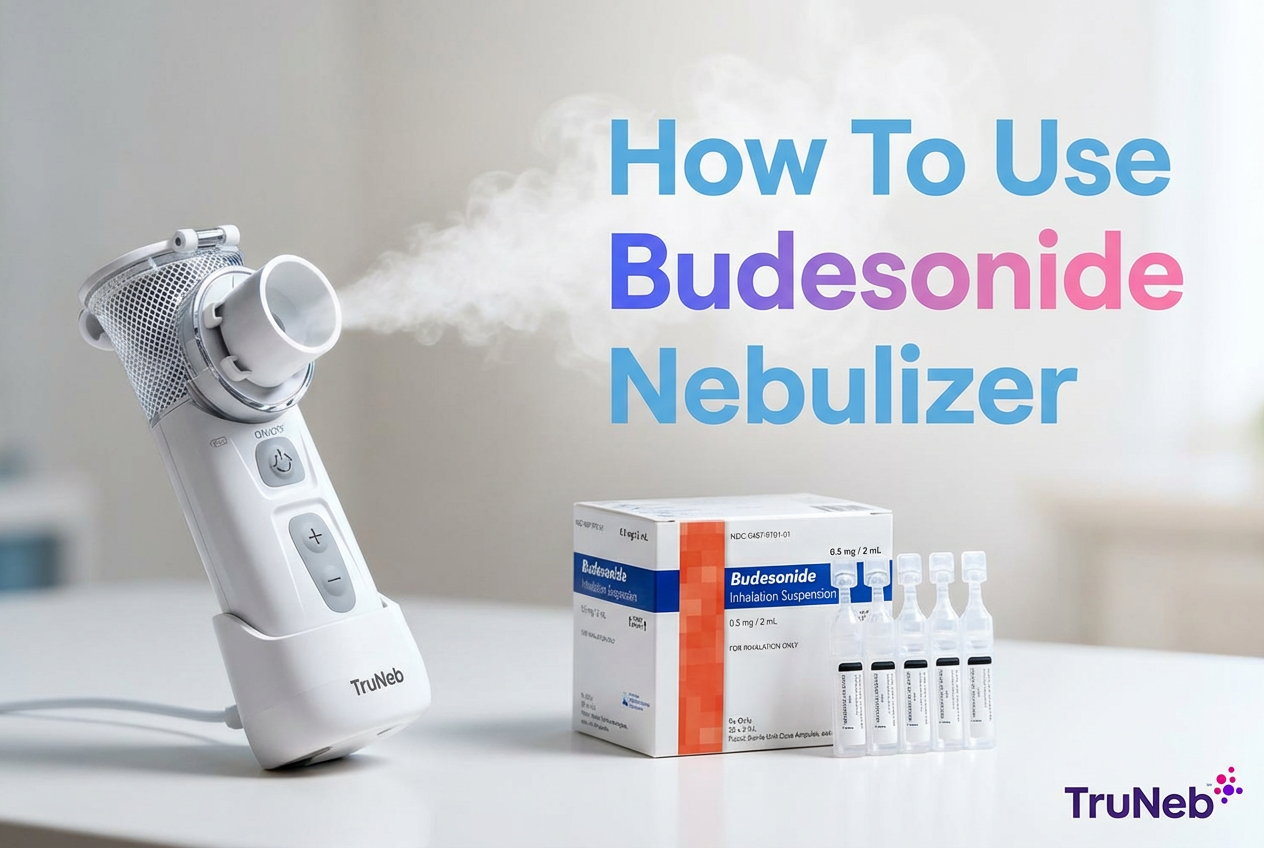
It’s a controller medication, not a rescue treatment. Keep using it exactly as your doctor prescribed, even when you feel well. Many people use single‑dose ampules (brand example: Pulmicort Respules) once or twice a day with a mask or mouthpiece, exactly as prescribed on their budesonide label.
This form is common for young children and for anyone who finds inhalers hard to use. This guide walks you through how to use budesonide inhalation suspension with a nebulizer at home, step by step.
Key takeaway: Budesonide suspension prevents symptoms when used daily; it doesn’t treat sudden attacks.
Preparing for a Budesonide Nebulizer Treatment (Setup & Dosage)
- Wash your hands. Set up on a clean, flat surface.
- Gather your nebulizer (compressor/jet or a portable mesh device), cup, tubing (if compressor), and a mask or mouthpiece.
- Take the single‑dose ampule your doctor prescribed from the foil pouch. Check the date and look for discoloration.
- Budesonide ampules come in different strengths; always match the ampule to what your doctor prescribed on your box.
- Gently shake, hold upright, twist off the top, and empty the full contents into the cup.
- Don’t dilute or mix budesonide with any other medication in the cup unless your doctor tells you to.
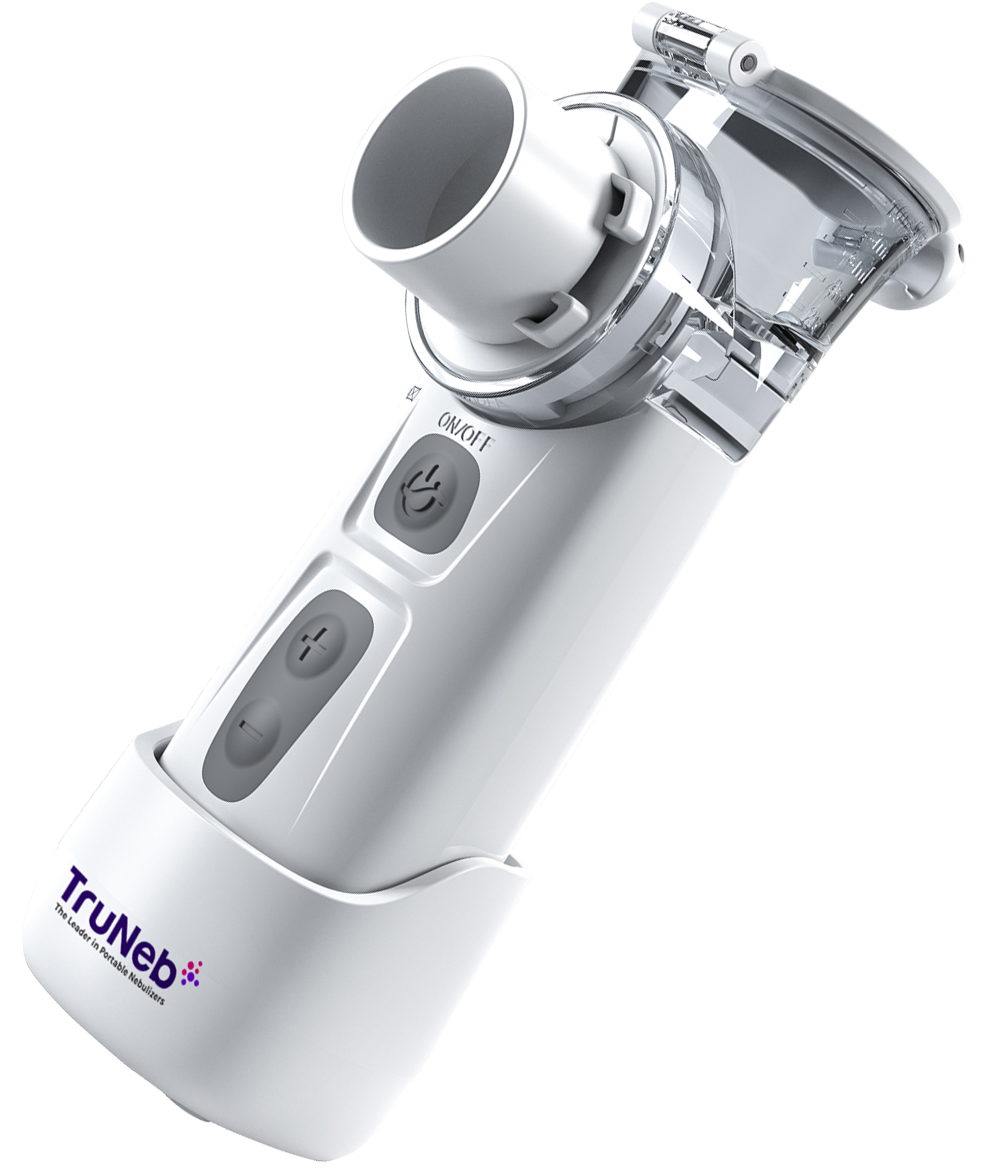
- Connect parts per your device manual. If you use a portable mesh nebulizer like the TruNeb™ Portable Mesh Nebulizer, make sure it’s charged and assembled, and only use it for prescription medications like budesonide if your doctor and the device instructions confirm it’s appropriate.
Key takeaway: Shake the ampule, pour the full dose into the cup, and don’t mix it with other meds.
Step‑by‑Step: How to Use Budesonide with Your Nebulizer
- 1) Sit upright. If treating a child, seat them comfortably on your lap. Keep the medicine cup upright.
- 2) Attach parts. Connect the cup to the mouthpiece or a snug face mask so the mist doesn’t leak or reach the eyes.
- 3) Power on. Connect tubing and turn on the compressor, or start your mesh device. You should see a fine mist.
- 4) Breathe the medicine. Inhale slowly, deeply, and evenly through the mouth until the mist stops. Keep lips sealed on the mouthpiece or the mask in place without gaps. If the child is crying, pause and calm them—crying limits how much medicine reaches the lungs.
- 5) Finish the dose. The session ends when the mist stops and the cup is nearly empty (usually about 5–10 minutes for most nebulizers—follow the timing on your device instructions and your prescription). Don’t stop early.
Tip: Don’t swallow the liquid; the medicine works when inhaled as a mist.
Key takeaway: Inhale calmly through your mouth until no more mist comes out—about 5–10 minutes per ampule.
Aftercare: Rinse, Clean, and Store (Preventing Thrush & Maintenance)
Right after the treatment:
- Rinse your mouth with water and spit it out. Do not swallow the rinse water. This helps prevent oral thrush and hoarseness (thrush is a yeast infection that can cause white patches and soreness in your mouth).
- If a face mask was used, gently wash the child’s face with warm water and mild soap.
Clean your nebulizer parts:
- After each use, rinse the cup and mouthpiece/mask with warm water. Let air‑dry on a clean towel.
- After the last use of the day, wash parts (not the tubing or machine) with warm soapy water, rinse well, and air‑dry. Disinfect per your device manual as directed.
- Mesh devices can clog with suspension meds. Flush the mesh with a little distilled water right after treatments if your manufacturer recommends it.
Store medication correctly:
- Keep ampules in the original foil pouch at room temperature, away from light. Once the pouch is opened, use ampules within 2 weeks. Do not freeze. Keep out of reach of children.
Key takeaway: Rinse and spit after every dose, clean parts daily, and store ampules sealed at room temperature.
Safety Tips and When to Contact Your Doctor
- Budesonide is for daily control, not for sudden breathing problems. If you have sudden wheezing or tightness, follow your asthma action plan (usually this means using your rescue inhaler) and get urgent medical help if symptoms are severe or don’t improve.
- If you miss a dose, drug guides usually say to take it when you remember unless it’s almost time for the next one, and not to double up. Follow the instructions on your prescription label and ask your doctor or pharmacist if you’re unsure.
- Watch for side effects. Call your doctor if you notice white patches in the mouth (thrush), voice changes, a cough that won’t go away, or worsening breathing after a treatment. Reach out if you’re needing your rescue inhaler more than usual—your plan might need an adjustment.
- Children on long‑term therapy should have growth monitored.
- If you have an asthma action plan from your doctor, follow it and contact them if you’re moving into the “yellow” or “red” zones more often.
- Safety note: Talk to your doctor before trying a new medication or changing how you use current medications.
- ⚠️ Call 911 or seek emergency care right away if you have severe trouble breathing, blue lips or face, or can’t speak in full sentences.
Key takeaway: Use budesonide for daily control, not emergencies—and call your doctor if you notice signs of thrush or need your rescue inhaler more than usual.
Choosing the Right Nebulizer: Tips for Easier Daily Treatments
Jet (compressor) nebulizers are common and effective, but they can be bulky and loud. Mesh nebulizers are small, quiet, and easy to carry—good for anxious kids and for treatments on the go. Budesonide labeling has historically recommended a jet nebulizer; always check your device manual and ask your doctor if you’re unsure before running prescription medications like budesonide through any portable or mesh device. Avoid ultrasonic devices for budesonide suspension.
For example, a portable mesh device like the TruNeb portable mesh nebulizer is quiet and handheld, which can make daily sessions easier to stick with. After suspension meds, clean as directed so the mesh doesn’t clog.
⚠️ If you see products labeled steam inhaler, don’t use them for medications like budesonide. Steam inhalers make hot steam, not the medicated mist a nebulizer delivers.
Quick tips:
- Mask vs mouthpiece: younger kids usually do better with a snug mask; older kids and adults can use a mouthpiece for better delivery.
- Comfort: make treatment time “story time” or a short video break.
- Noise hack for compressors: place the unit on a folded towel to reduce vibration noise.
Key takeaway: If the compressor’s noise is a barrier, a quiet mesh device like TruNeb can help—just clean it well after suspension meds.
Nebulizer types at a glance: For budesonide suspension, use a jet nebulizer or a doctor‑approved mesh device; avoid ultrasonic and steam devices.
| Device type | Budesonide compatible? | Noise | Portability | Cleaning notes |
|---|---|---|---|---|
| Jet (compressor) | Yes — recommended on labeling | Loud | Tabletop | Rinse after each use; wash and disinfect per manual |
| Mesh (vibrating mesh) | Confirm with doctor and device manual | Quiet | Pocket‑size | Flush mesh with distilled water after suspensions; clean as directed |
| Ultrasonic | No — avoid for suspensions like budesonide | Quiet | Varies | Not suitable for budesonide suspension |
| Steam inhaler | No — not a medication nebulizer | Quiet | Handheld | Makes hot steam, not medicated mist |
Note: Always follow your device manual and your doctor’s instructions. Budesonide labeling has historically recommended a jet nebulizer.
Can Hypertonic Saline Help? (Mucus Management and Additional Therapies)
Some doctors prescribe hypertonic saline (3% or 7%) to thin thick mucus in certain lung conditions (for example, cystic fibrosis, bronchiectasis, or stubborn mucus in chronic lung disease). It’s not for everyone and can cause coughing, which helps move mucus.
If your doctor recommends it, you’ll usually use it at a different time than budesonide. Do not mix hypertonic saline with budesonide in the cup unless your doctor gives clear instructions. Hypertonic saline is an add‑on therapy in specific conditions and doesn’t replace your steroid controller medication. TruNeb also sells 3% and 7% hypertonic saline solutions. Your doctor can tell you whether hypertonic saline fits your treatment plan.
Key takeaway: Hypertonic saline can thin mucus for some people, but only use it if your doctor prescribes it—and never mix it with budesonide; it doesn’t replace your steroid controller medication.
Frequently Asked Questions
Tap or click a question below to see the answer:
Yes—rinse and spit after each dose to lower your risk of thrush. If a mask was used, wash the face too.
About 5–10 minutes for most nebulizers. Finish when the mist stops and the cup is nearly empty.
Don’t mix medications unless your doctor tells you to. If you use more than one nebulized medicine, your doctor will set the order, typically bronchodilator first, then budesonide. Always follow your doctor’s instructions.
Drug guides usually say to take it when you remember unless it’s almost time for the next one, and not to double up. Follow the instructions on your prescription label and ask your doctor or pharmacist if you’re unsure.
Keep them in the foil pouch at room temperature, away from light; use within 2 weeks of opening the pouch. Don’t freeze. Keep out of children’s reach.
Key takeaway: Quick rules—rinse and spit, don’t mix meds, and finish the mist each session.
Disclaimer: This article is for informational purposes only and is not a substitute for professional medical advice, diagnosis, or treatment. Always talk with your doctor about your symptoms, medications, and treatment plan.