

On this page
Step-by-Step: How to Check Respiratory Rate at Home
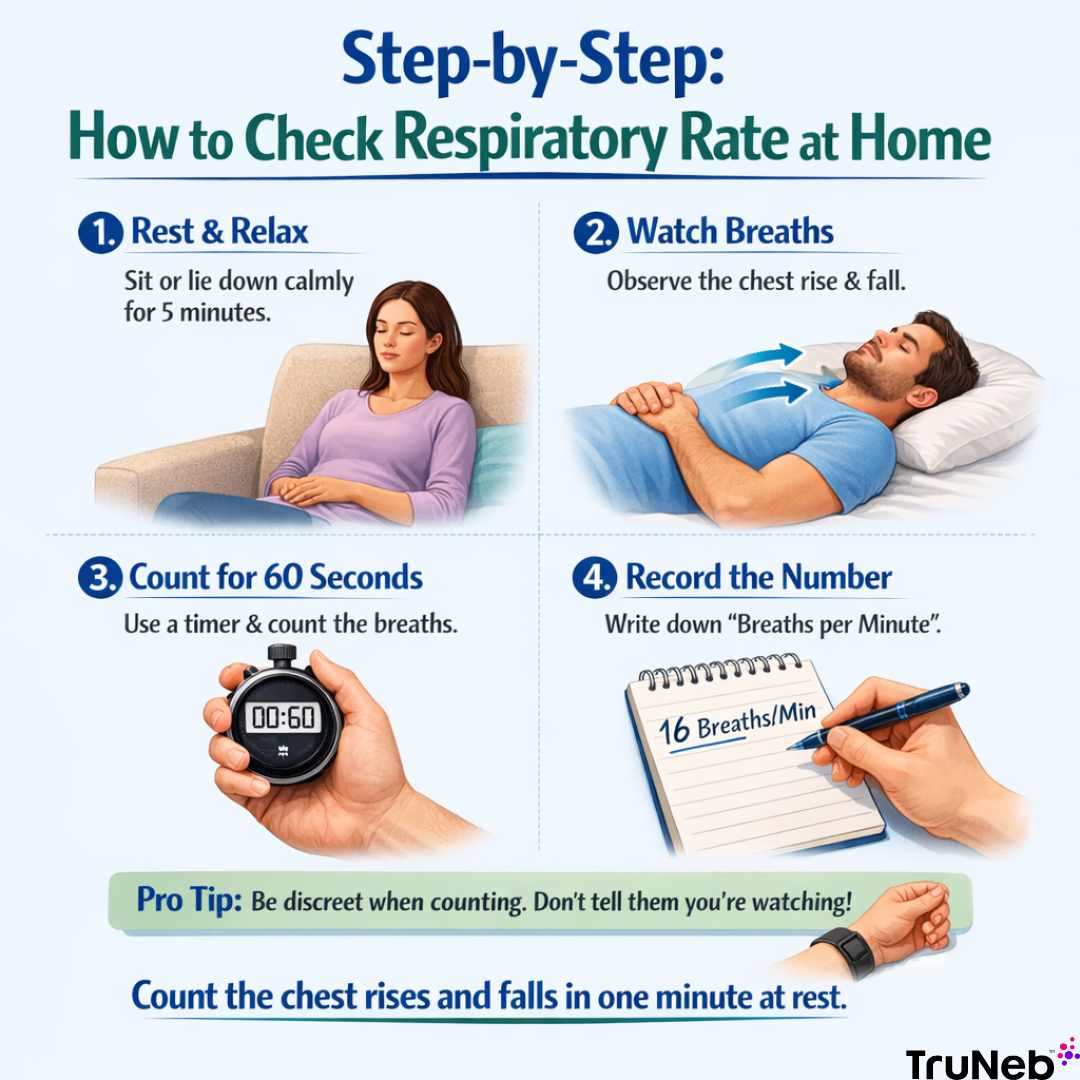
Here’s how to check respiratory rate at home in a few simple steps.
You’re checking respiratory rate by counting how many times the chest rises and falls in one minute while the person is at rest.
- Rest first: Have the person sit or lie down quietly for about 5 minutes. No talking, no recent exercise.
- Watch the chest or belly: Look for the rise and fall. For babies, lightly place your hand on the tummy to feel each breath.
- Count for 60 seconds: Start a timer. Count one breath for each full rise AND fall of the chest.
- Record the number: Write it down as "breaths per minute." You can count 30 seconds and multiply by two, but a full minute is best if breathing is uneven.
Pro tip: Don't announce you're counting. People change how they breathe when they know. Discreetly watch or pretend to check their pulse while you count. If you're checking your own rate, relax and breathe naturally. It's usually easier to have someone else count.
You only need a watch or phone timer and your eyes.
To check respiratory rate at home, count how many times the chest rises and falls in one minute while the person is resting quietly.
What Is a Normal Breathing Rate at Rest
Respiratory rate (breathing rate) is the number of breaths you take in one minute, and for most healthy adults at rest it’s usually between 12 and 20 breaths per minute.
It’s one of the core vital signs doctors check, along with pulse, blood pressure, and temperature. Your number can vary with age, fitness, and recent activity. Measure when you’re calm and still, then compare to your usual baseline.
Normal Respiratory Rate by Age
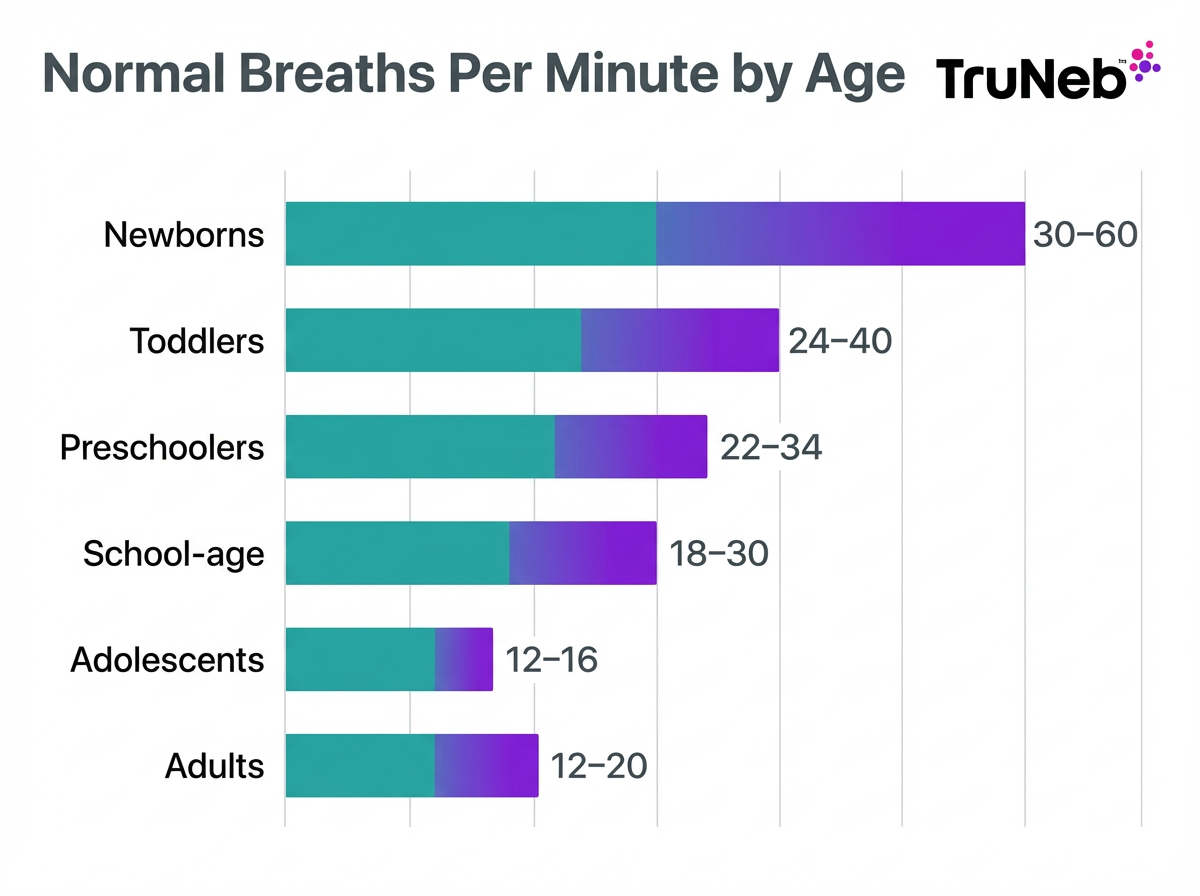
Normal resting breathing rates change as kids grow, then settle into the adult range in the teen years.
- Newborns 0–1 year: about 30–60 breaths per minute
- Toddlers 1–3 years: about 24–40 breaths per minute
- Preschoolers 3–6 years: about 22–34 breaths per minute
- School-age 6–12 years: about 18–30 breaths per minute
- Adolescents 12–18 years: about 12–16 breaths per minute
- Adults 18+ years: about 12–20 breaths per minute
These numbers are for quiet rest. Counting during crying, play, or right after activity will look higher.
| Age group | Normal breaths/min at rest |
|---|---|
| Newborns (0–1 year) | 30–60 |
| Toddlers (1–3 years) | 24–40 |
| Preschoolers (3–6 years) | 22–34 |
| School-age (6–12 years) | 18–30 |
| Adolescents (12–18 years) | 12–16 |
| Adults (18+ years) | 12–20 |
These ranges reflect quiet rest. Activity, crying, fever, or stress can temporarily raise breathing rate.
Different medical sources give slightly different cutoffs, but these ranges cover what’s generally considered normal at rest.
Younger babies and children naturally breathe faster than adults, and normal breathing rates slow down as kids grow.
Normal breathing rates are highest in newborns and gradually slow down through childhood until they reach the adult range in the teen years.
When a Respiratory Rate Is Too High or Too Low
At rest, a rate consistently above about 20 breaths per minute is called tachypnea (fast breathing). A rate below about 12 per minute is called bradypnea (slow breathing).
Common reasons for a high rate:
- Recent exercise or climbing stairs (should settle after rest)
- Stress, anxiety, or a panic attack (hyperventilation)
- Fever or infection (like the flu or pneumonia)
- Lung problems such as an asthma flare or COPD exacerbation
- Heart problems such as heart failure (pain or dehydration can add strain)
Serious problems like pulmonary embolism or diabetic ketoacidosis can also cause rapid breathing, but these typically come with other severe symptoms.
Common reasons for a low rate:
- Deep sleep or very high fitness
- Opioids, sedatives, or alcohol slowing the breathing drive
- Head injury or brain conditions affecting breathing control
- Obstructive sleep apnea with pauses in breathing
Context matters: a rate around 10 breaths per minute can be normal in a sleeping athlete, but the same number in a confused or drowsy adult is a red flag. If the number or symptoms worry you, talk to a doctor.
A respiratory rate outside the normal range at rest can be caused by recent activity, stress, fever, lung or heart problems, or medicines that speed up or slow down breathing.
Warning Signs and When to Seek Medical Attention
Know the red flags. A slightly high or low number may just need watching, but certain levels and symptoms mean it's time for care.
Adults at rest:
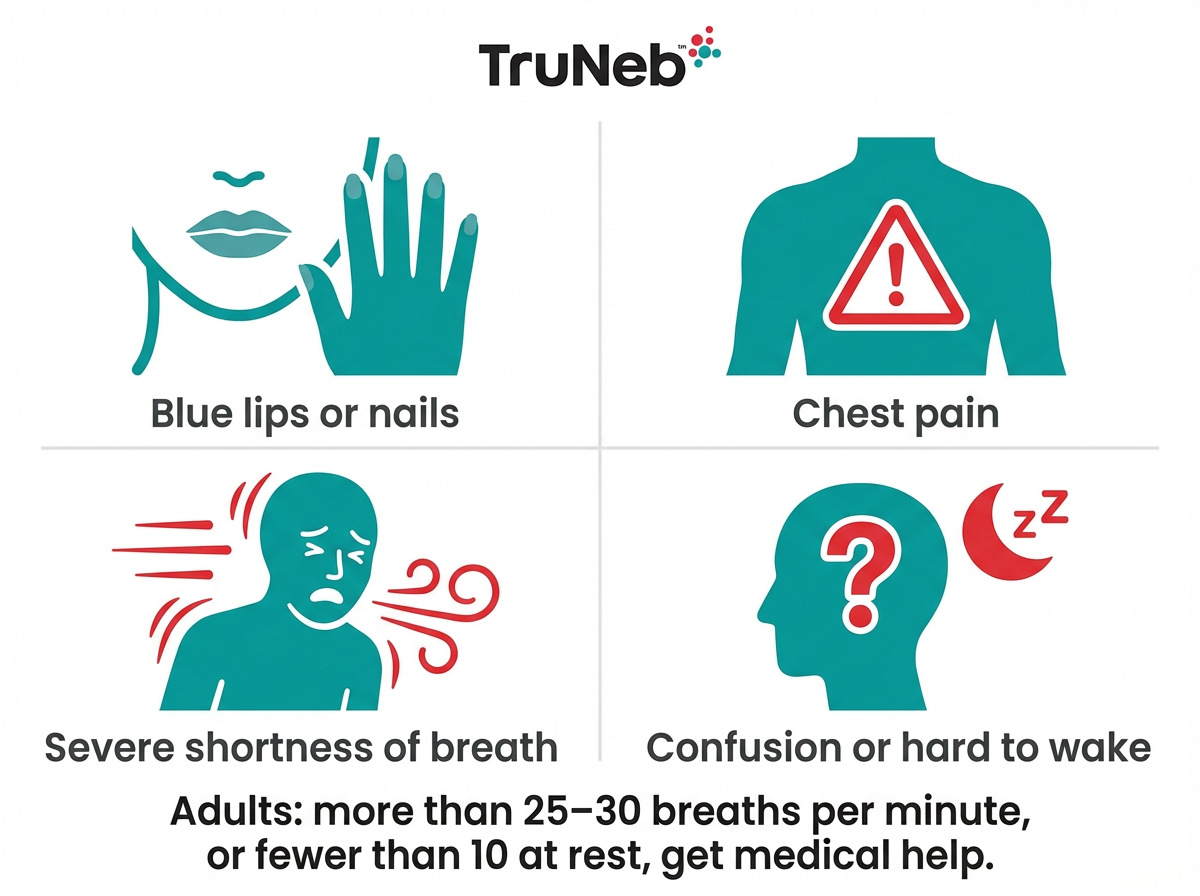
- Get help if breathing stays above about 25–30 per minute, or drops below about 10.
- ⚠️ Call 911 for severe trouble breathing or very slow breathing with unresponsiveness.
Emergency signs:
- Chest pain or pressure with an abnormal rate
- Blue lips, face, or fingernails (cyanosis)
- Gasping, gurgling, or loud wheezing
- Confusion, extreme drowsiness, or inability to stay awake
Infants and children:
⚠️ For babies and children, fast or labored breathing with any of the signs below is an emergency.
- Very fast breathing (for newborns, above ~60/min at rest)
- Nostril flaring, skin pulling in between ribs (retractions), or grunting
- Long pauses in breathing (over 20 seconds)
- Unusual sleepiness or trouble waking up
Seek urgent medical care if an adult's resting breathing rate stays above about 25–30 or below about 10 breaths per minute, especially if it comes with chest pain, blue lips, or confusion.
When in doubt, seek medical care.
Why Monitoring Respiratory Rate Helps in Asthma, COPD, and Other Conditions
If you live with asthma, COPD, or bronchiectasis, your resting breathing rate can be a helpful early warning sign. A steady climb from your usual baseline can point to a flare or an infection starting.
- Asthma: During a flare, airways narrow and your rate typically rises. Follow your action plan and check in with your doctor.
- COPD: Many people have a higher baseline. A sudden bump can signal an exacerbation or pneumonia.
- Bronchiectasis and chronic mucus: Thick mucus can block airflow. A rising rate can mean you need extra airway clearance or a call to your specialist.
Infections like RSV in babies, or RSV and flu in older adults with COPD, can cause a sudden jump in breathing rate and need urgent attention.
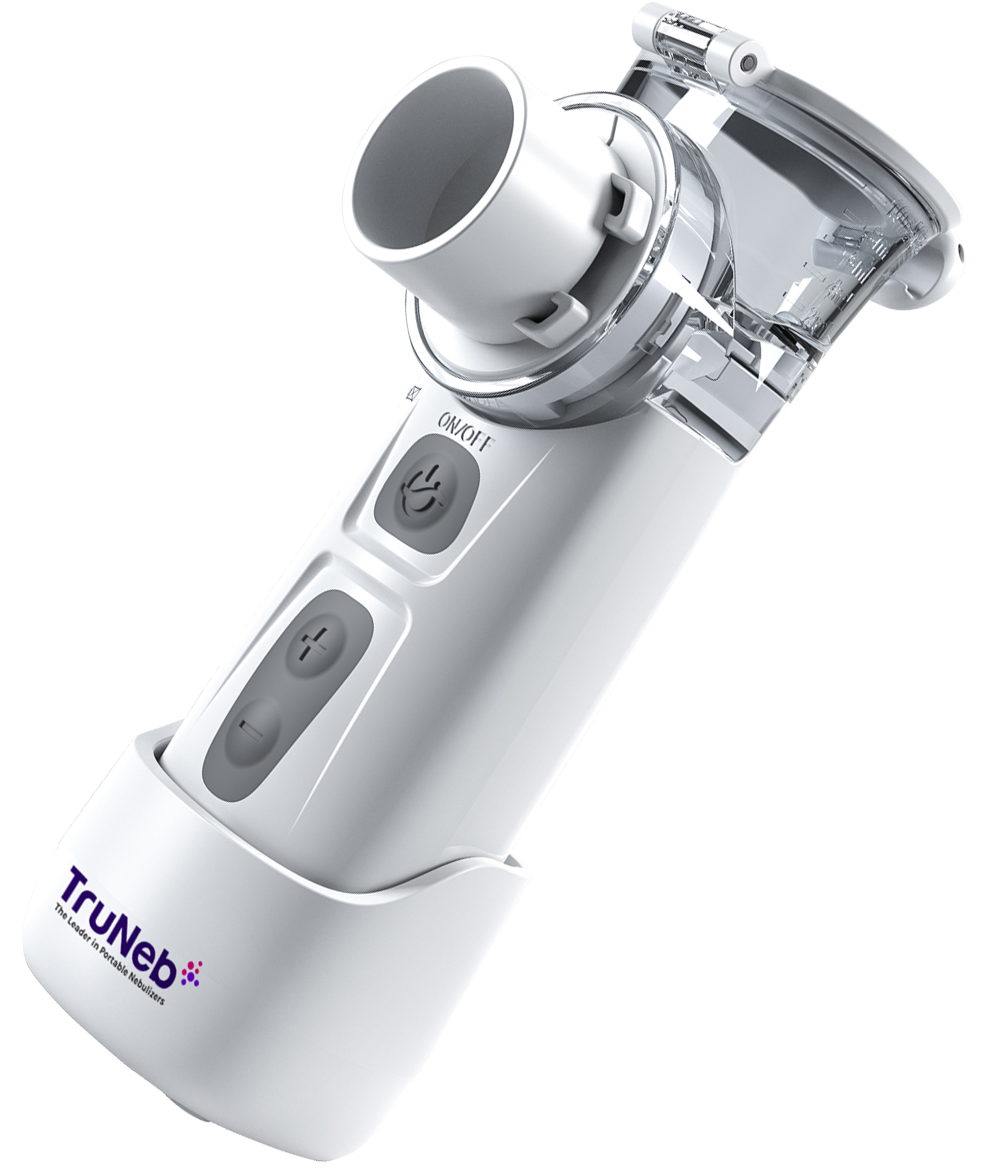
For people who use nebulized medications, convenience matters. A compact, quiet device like the TruNeb™ Portable Mesh Nebulizer can make it easier to take treatments at home or on the go while you keep an eye on your breathing.
For people with asthma, COPD, or bronchiectasis, a rising resting respiratory rate can be an early warning sign of a flare-up or lung infection.
Checking your respiratory rate at home can help you spot changes early, but it doesn't replace regular check-ups and advice from your doctor.
Long-Term Breathing Health: Tips and Treatments
Small habits help your breathing stay steady over time.
- Practice breathing exercises: Diaphragmatic breathing exercises can help your breathing feel easier and more efficient over time, especially when taught by a respiratory therapist.
- Build gentle fitness: Walking or light cycling can lower your resting rate over time.
- Stay hydrated: Fluids help thin mucus so it's easier to clear.
- Avoid smoke and pollution: Protect your airways from irritants.
- Use treatments as prescribed: If your doctor prescribes it, nebulized hypertonic saline (3% or 7%) is commonly used to help thin stubborn mucus in conditions like bronchiectasis or cystic fibrosis. TruNeb offers sterile 3% and 7% hypertonic saline solutions for use with nebulizers.
- Track your numbers: Keep a simple log of breaths per minute and symptoms to share with your doctor.
Simple habits like gentle exercise, breathing drills, avoiding smoke, and using prescribed treatments as directed can support steadier, more comfortable breathing over time.
Talk to your doctor before trying a new medication or starting a new therapy.
Frequently Asked Questions (FAQs)
Tap or click a question below to see the answer:
Most healthy adults at rest breathe 12–20 times per minute.
If you're healthy, you usually don't need to check often. During illness, check a few times a day. With chronic lung disease, follow your doctor's advice.
No. Just a timer and your eyes. Some fitness trackers and smartphone apps estimate breathing rate, but counting breaths yourself for 60 seconds is still the standard at home.
Yes—counting during sleep or quiet rest gives the best resting number. Watch the chest or belly rise and fall.
Fever, anxiety or panic, asthma or COPD flares, and infections like pneumonia can speed up breathing.
If breathing stays above about 25–30 at rest, or if fast breathing comes with the serious symptoms described above, seek urgent care.
Not always. Very fit people or those in deep sleep can be around 10–12 and be fine. Under about 8 while awake, or slow breathing with confusion or blue lips, is an emergency.
Medical Disclaimer
Disclaimer: This article is for informational purposes only and is not a substitute for professional medical advice, diagnosis, or treatment. Always talk to your doctor about any questions you have regarding your health, symptoms, or treatments.