

On this page
How Long Is Bronchitis Contagious? Quick Answer
Acute bronchitis is usually contagious for about 3 to 7 days after symptoms start. You’re most likely to spread it in the first few days. If a doctor confirms bacterial bronchitis and you start the right antibiotic, you’re generally low risk about 24 hours after the first dose.
Bronchitis means your airways are inflamed. The germ is what spreads. Chronic bronchitis is not contagious.
The rest of this guide breaks down a simple timeline and clear steps to protect people around you. The details can vary a little, so the timeline below walks through what usually happens in the first two weeks.
Why Bronchitis Is Contagious
Bronchitis is inflammation in the bronchial tubes that carry air in and out of your lungs. The cause determines whether it spreads to others. Acute bronchitis is sometimes called a "chest cold."
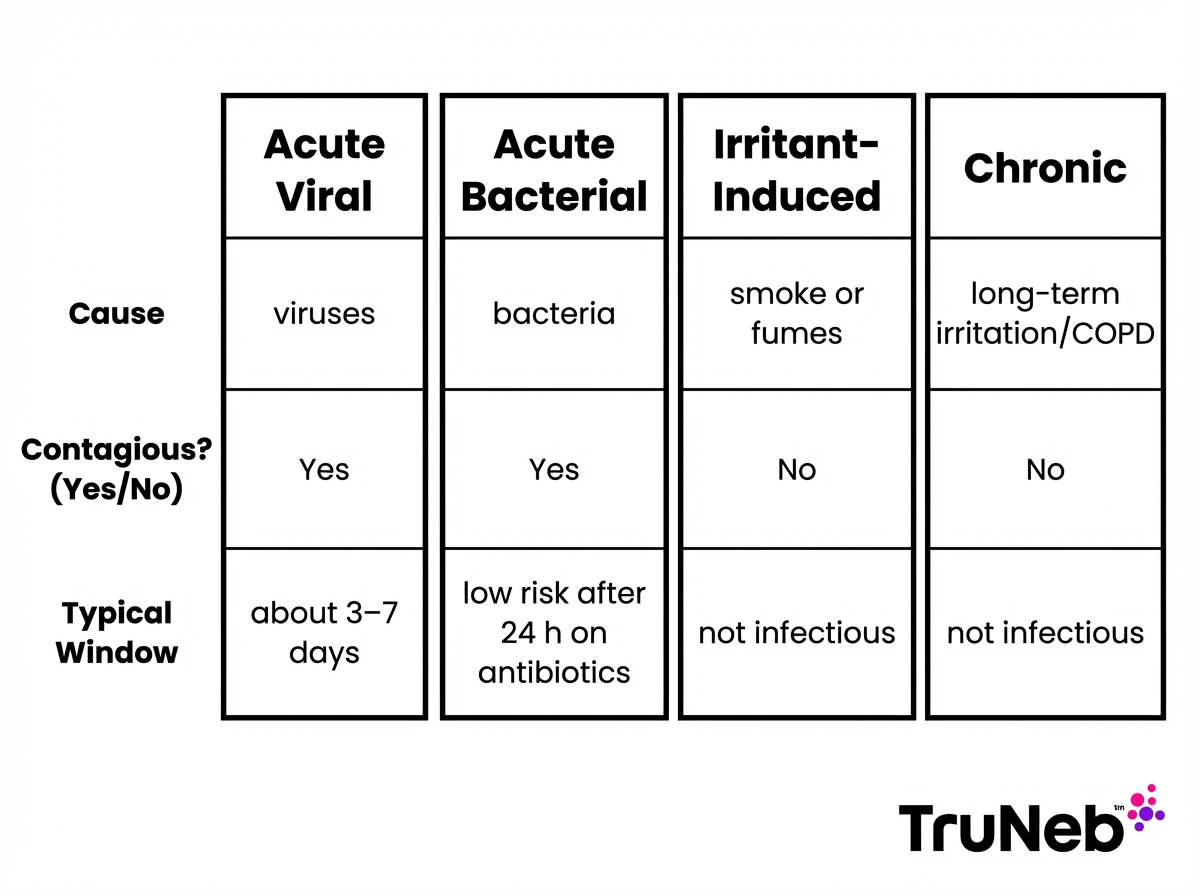
Most acute bronchitis starts with a virus, not bacteria. Viral bronchitis comes from common respiratory viruses such as influenza (the flu), RSV, or COVID-19. These viruses spread in tiny droplets when you cough or sneeze.
Bacterial bronchitis is less common. It can spread, but the risk drops fast once the right antibiotic is started, typically after about a day.
Irritant-induced bronchitis can follow smoke, fumes, or pollution. There’s no germ here, so it isn’t contagious.
Chronic bronchitis is a long-term problem linked to lung irritation and COPD, so it doesn’t spread from person to person.
It’s the germ, not the inflammation, that others can catch.
Bronchitis Contagiousness Timeline
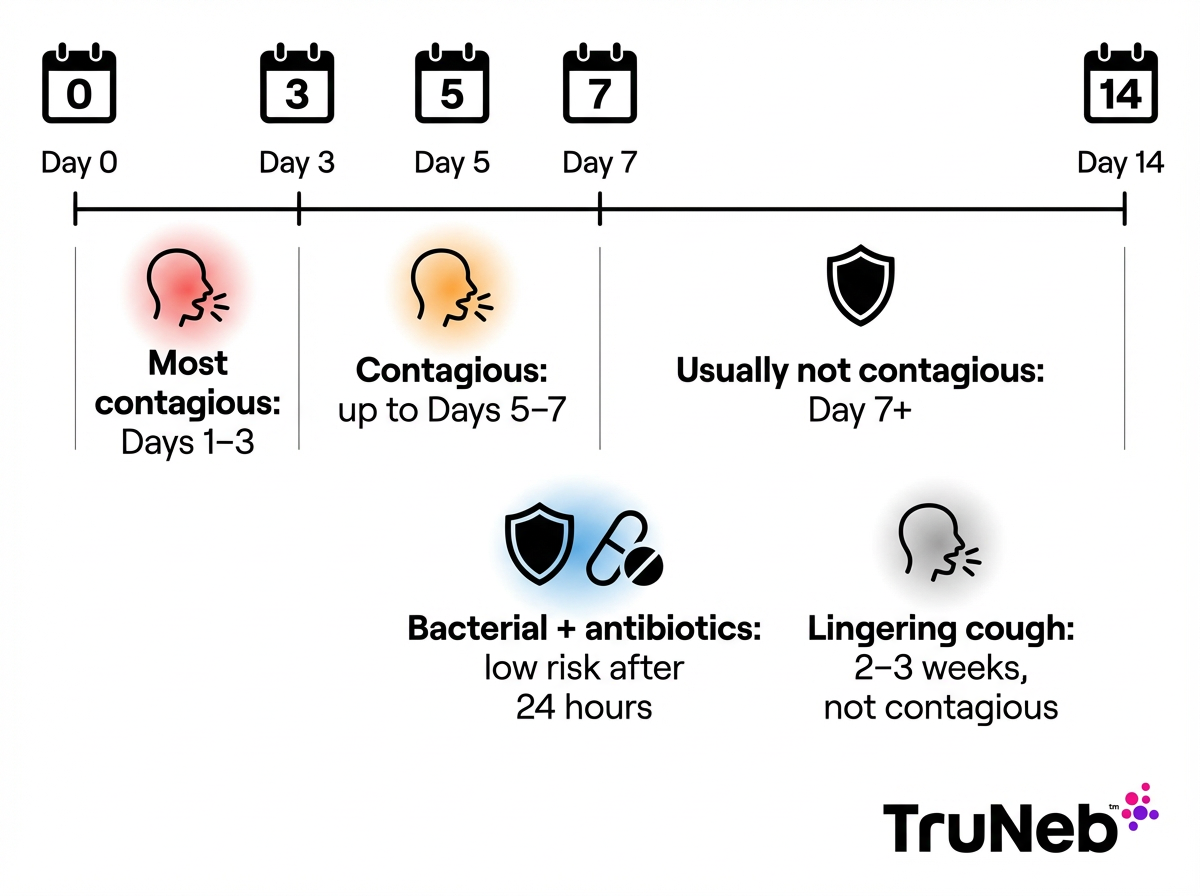
Day 0 to 1: You can be contagious even before a hard cough starts. Contagiousness begins here and usually increases into days 1–3.
Days 1 to 3: Peak spread. Symptoms ramp up. This is the time to stay home and avoid close contact.
Days 3 to 5: People with viral bronchitis can still spread germs. If a doctor diagnosed bacterial bronchitis and you started antibiotics, risk usually drops about 24 hours after the first dose.
Days 5 to 7: Symptoms usually begin to ease. Most people with viral bronchitis are no longer contagious by about day 7.
Days 8 to 14: The infection is usually gone. A cough can linger as your airways heal.
Beyond 2 weeks: Still very sick or getting worse? It’s time to check in with your doctor. Rare causes like pertussis or certain atypical bacteria can spread longer if untreated.
Key point: A cough can last 2 to 3 weeks even after you’re no longer contagious.
Bottom line: In typical acute bronchitis, you’re most contagious in the first 3 days, and most people are no longer contagious by about a week after symptoms start.
Day-by-Day Contagion Quick Reference
Most people are most contagious in the first 3 days and are usually not contagious by about day 7.
| Day range | Contagious? | What to do |
|---|---|---|
| Day 0–1 | Possible | Watch for symptoms and rest if you can. |
| Days 1–3 | Highest risk | Stay home and avoid close contact. |
| Days 3–5 | Still contagious | Keep precautions; if your doctor started antibiotics for bacterial bronchitis, risk usually drops after ~24 hours. |
| Days 6–7 | Low in most viral cases | If fever-free and improving, you’re likely past contagion; follow your doctor’s guidance. |
| Day 8+ | Unlikely | Resume normal life with basic hygiene if you feel better. |
Note: Antibiotics lower contagiousness only for bacterial bronchitis when appropriate; always follow your doctor’s advice.
After One Week: Am I Still Contagious?
If it has been a week since symptoms began and you’re improving, you’re probably no longer contagious. A cough can hang on while your airways heal. If you had bacterial bronchitis and started antibiotics earlier, you were likely low risk much sooner.
If you still have a high fever or feel very ill at one week, check with your doctor.
After Two Weeks: Why the Cough Lingers
Two weeks after acute bronchitis starts, you generally aren’t contagious anymore, even if the cough lingers. The cough usually lasts because your airways are still irritated, not because the germ is active.
Talk to your doctor if your bronchitis symptoms aren’t starting to improve after 1 to 2 weeks, or sooner if you’re worried. Rare infections like pertussis or certain atypical bacteria can spread for longer if untreated.
Acute vs Chronic Bronchitis Contagiousness
Acute bronchitis is short term and usually caused by a virus, sometimes by bacteria. It can spread to others until the infection clears.
Chronic bronchitis is a long-term condition tied to airway irritation and COPD. It doesn’t spread from person to person. Someone with chronic bronchitis can still catch a virus or bacteria and be contagious during that acute flare-up, but the underlying chronic condition itself doesn’t spread.
Key point: Chronic bronchitis is not contagious.
Does No Fever Mean You’re Not Contagious?
No. No fever doesn’t guarantee you’re not contagious. People can spread viruses without a fever.
If you had a fever, a helpful rule is to wait until you’re fever-free for 24 hours without medicine before being around others. That 24-hour fever-free rule is a common guide doctors use for illnesses like the flu and bronchitis. Even then, if it’s still early in the illness, keep up precautions.
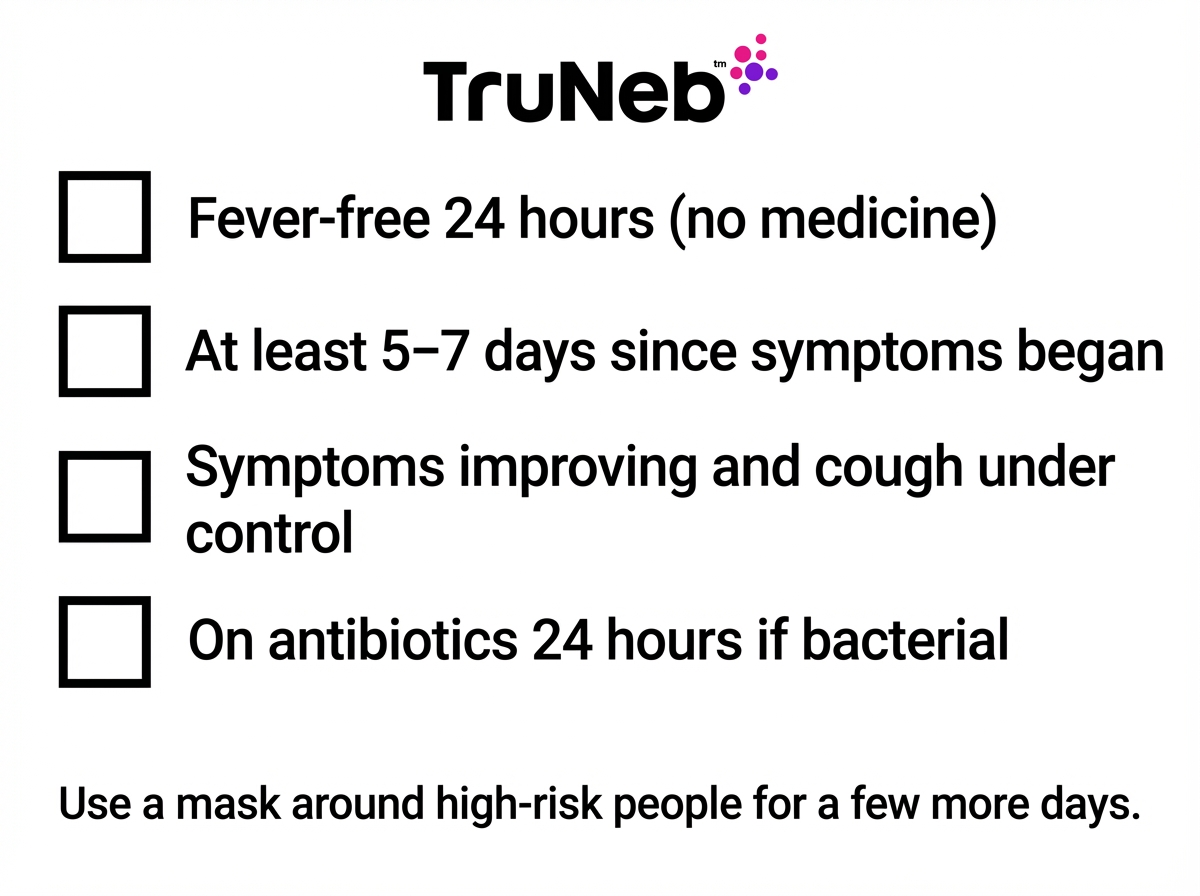
When It’s Safe to Be Around Others Again
You can use this quick check as a general guide, but follow your doctor’s advice and your workplace or school’s rules.
- Fever-free for 24 hours without medicine.
- At least about 5–7 days since symptoms began for viral cases.
- Symptoms are improving and you can control your cough.
- If bacterial, you’ve been on the right antibiotic for about 24 hours.
- Be extra careful if you’ll be near infants, older adults, or anyone with weak immunity.
In general, it’s safest to be around others again once you’ve been fever-free for 24 hours, at least about 5–7 days have passed since symptoms began, and your symptoms are clearly improving.
How To Avoid Spreading Bronchitis
Stay home and rest during the first 3 to 5 days. Wear a mask if you need to be around others. Wash your hands regularly or use sanitizer. Cover coughs and sneezes with a tissue or your elbow. Don’t share cups, utensils, or vapes. Clean commonly touched surfaces and keep rooms ventilated.
Simple steps like staying home early, wearing a mask, washing your hands, and not sharing personal items sharply cut the chances of passing bronchitis germs to others.
Caring For Yourself During Bronchitis
Drink fluids and rest so your body can heal. A warm shower or a clean humidifier can soothe your airways.
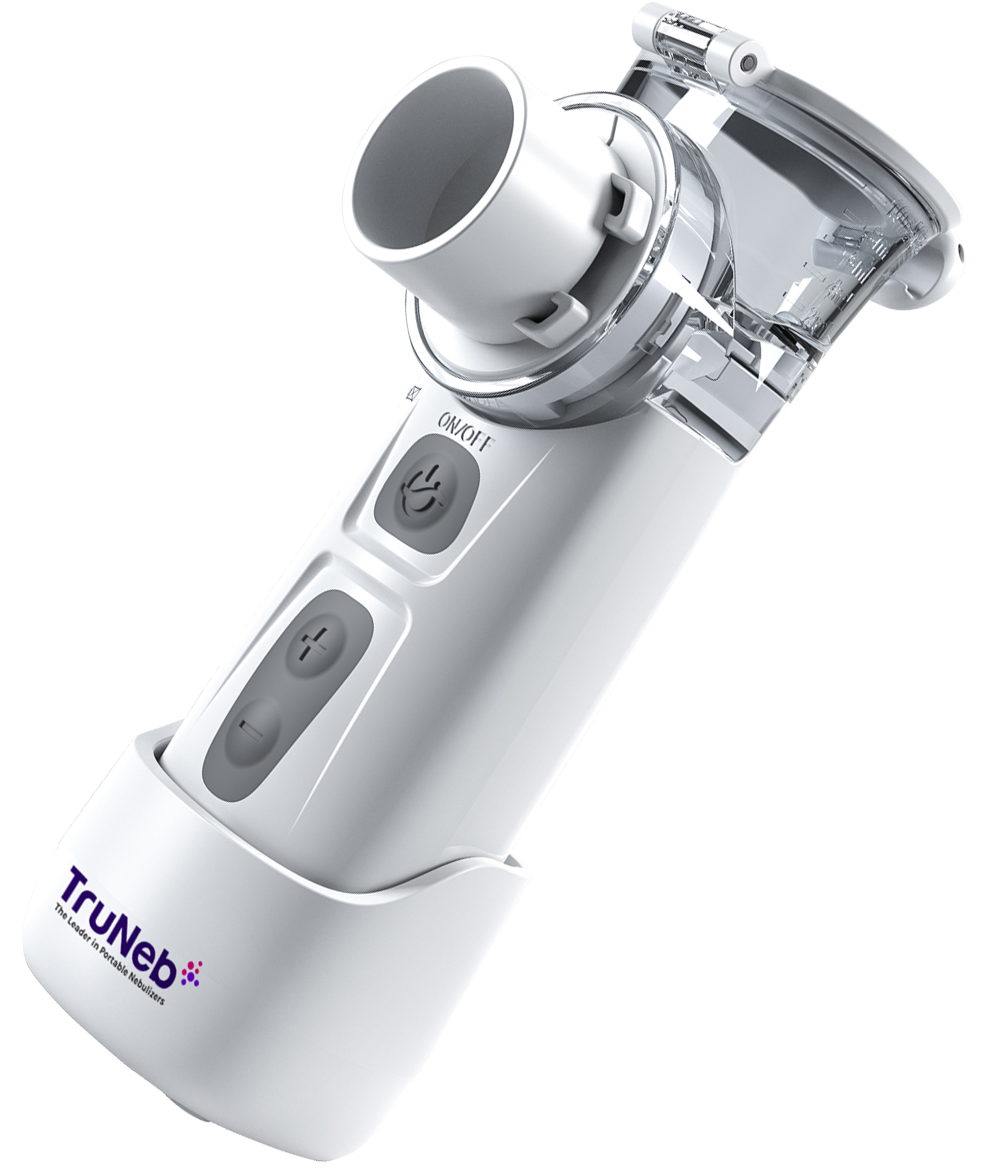
If your doctor prescribed an inhaler or other treatment, use it as directed. A home nebulizer can deliver saline or prescribed medicine and may ease coughing and wheezing. A portable nebulizer like TruNeb™ can be used at home or on the go. Using a nebulizer helps manage symptoms your doctor is treating, but it doesn’t make you less contagious or replace medical advice. Clean the mouthpiece and cup after each use so germs don’t linger.
Over-the-counter pain or fever reducers can help you feel better. Avoid smoke and secondhand smoke, which can make bronchitis worse. If you see products labeled "steam inhaler," remember these aren’t for breathing medications. Don’t put medicine into a simple steam inhaler unless your doctor specifically tells you to.
Basic home care means rest, fluids, humid air, and using inhalers or nebulizers exactly as your doctor prescribes. This helps your body recover while you avoid making others sick.
⚠️ Get emergency medical help right away (call 911 or your local emergency number) if you have trouble breathing, chest pain, bluish lips or face, confusion, or symptoms that suddenly get much worse.
Safety note: Talk to your doctor before trying a new medication.
FAQs: Bronchitis Contagiousness and More
These quick answers sum up the most common questions about how bronchitis spreads and when you’re contagious.
Tap or click a question below to see the answer:
Acute bronchitis is usually contagious because viruses or bacteria spread in droplets when you cough or sneeze. Chronic bronchitis isn’t contagious.
You can catch the virus or bacteria that gave them bronchitis. After a few days, you might develop a chest cold or bronchitis yourself.
In general, it’s best to stay home for the first few days, especially if you have a fever or frequent cough. Go back when you’re fever-free for 24 hours and feel better. Follow the checklist in the section above to decide when it’s safer to go back.
Limit close contact for the first few days. Be extra careful around infants, older adults, and anyone with weak immunity.
Most bronchitis is viral, so antibiotics don’t help. If it’s bacterial and you’re given the right antibiotic, you’re usually low risk after about 24 hours.
Sometimes a separate pneumonia can develop. Pneumonia can be contagious depending on the germ. If you’re not improving or get worse, see a doctor.
Disclaimer: This article is for informational purposes only and is not a substitute for professional medical advice. Always talk to your doctor about your symptoms, diagnosis, and treatment options.