

On this page
RSV vaccines for older adults protect you for at least two RSV seasons, which is more than one year of coverage.
If you have been wondering how long does RSV vaccine last, the short answer is that one dose in eligible adults 60 and older has shown protection across two RSV seasons, while options for pregnancy and infants are designed to cover about one RSV season.
In studies, a single dose in adults 60 and older stayed effective through the RSV season when it was given and the following RSV season. That is why the CDC says the RSV vaccine is not an annual shot right now and is not given every year like the flu shot.
If you get your RSV vaccine this fall, it should help protect you through this winter and next winter from severe RSV illness and hospital stays.
For older adults, the answer is fairly straightforward. For babies, it works differently.
For babies, the picture is different. The infant RSV antibody shot (nirsevimab/Beyfortus) protects for about 5 months, or one RSV season. When pregnant people get the maternal RSV vaccine (Abrysvo) late in pregnancy, it passes antibodies to the baby that last around 6 months after birth. In both cases, the duration of protection is focused on the baby’s first RSV season.
This article breaks these timelines down separately for older adults, pregnancy, and infants so you can quickly find how long protection lasts for you, your baby, or an older parent.
Key point: For older adults, one RSV vaccine dose currently protects for at least two RSV seasons, while infant and pregnancy options are designed to cover a single RSV season.
⚠️ RSV vaccines are different from infant antibody shots, so do not assume the timelines or duration of protection are the same.
For older adults, one RSV vaccine dose can provide meaningful protection against severe RSV illness across two seasons.
RSV Vaccine Protection in Older Adults (60+): One Dose, Two Seasons of Immunity
For adults 60 and older, current RSV vaccines are built to last through more than one RSV season.
In clinical trials, a single dose in adults 60 and older reduced the risk of severe RSV illness and hospitalization through two RSV seasons. That is roughly 12–24 months of protection against the worst outcomes of RSV.
In the first RSV season after vaccination, protection against severe RSV illness and hospitalization was very high, around 80–90% in major trials.
In the second RSV season, protection was still helpful, in the 50–70% range in trial follow-up, depending on which outcome researchers measured.
By the third season, immunity appears to wane more, with protection closer to 40–50% in some studies. There still seems to be some benefit, but it is not as strong as in years one and two.
Because protection holds up across two seasons, the CDC states that the RSV vaccine is not an annual vaccine for older adults and “is not currently an annual vaccine.” Current CDC guidance does not recommend a yearly RSV shot.
Two RSV vaccines for older adults are available in the U.S.:
- Arexvy (GSK)
- Abrysvo (Pfizer)
Both are single‑dose vaccines and both have shown multi‑season duration of protection in trials. Health authorities do not prefer one over the other based on how long they last.
A third option, the Moderna RSV vaccine, was also approved for older adults. Early evidence suggests it provides similar protection across more than one RSV season, though it is newer and has less long-term data.
These vaccines are mainly aimed at reducing severe RSV disease, complications like pneumonia, and hospitalization. You might still catch RSV, but your chances of getting very sick are lower than if you were unvaccinated.
Adults 60 and older should talk with their doctor about whether RSV vaccination is right for them, especially if they have chronic lung conditions, heart disease, diabetes, or a weakened immune system.
In adults 60 and older, one RSV vaccine dose can provide meaningful protection against severe RSV illness across two seasons, even though immunity gradually wanes over time.
Will You Ever Need an RSV Booster? (Current Guidelines & Future Plans)
Right now, there is no routine RSV booster for older adults.
As of 2025, the CDC and its Advisory Committee on Immunization Practices (ACIP) recommend one dose of an RSV vaccine for eligible adults 60 and older. They are not telling people to get an RSV shot every year.
Why no annual booster yet?
Studies show that a single dose keeps protection high in the first year and still helpful in the second. In one large trial, a second dose given 1 year later added little extra benefit on top of the first dose.
Because protection remains solid across two RSV seasons, giving a booster after just one year has not been recommended.
Researchers are still following people for several years after vaccination. As protection drops further by the third RSV season, experts are watching how waning immunity affects the risk of severe disease and whether a booster at 2–3 years could help.
The CDC notes that it is still studying whether additional RSV doses will be needed in the future. As longer-term data on duration of protection comes in, guidance may change and vaccine schedules could be updated.
Current CDC guidance does not recommend a yearly RSV shot. One dose is expected to cover at least two RSV seasons for adults 60 and older.
RSV vaccination is not an annual shot right now, and no routine booster is recommended at this time.
Talk to your doctor before getting any new vaccine or booster, especially if you have a complex medical history or past vaccine reactions.
How Long Does the Maternal RSV Vaccine Protect Newborns?
The maternal RSV vaccine is designed to protect your baby through their very first RSV season, not to provide long-term infant immunity.
Pregnant women and other pregnant people can receive Abrysvo (Pfizer) in late pregnancy, usually between 32 and 36 weeks. The shot helps your body make RSV antibodies, which then cross the placenta and reach your baby before birth.
Those antibodies:
- Are present at birth to help cover the baby’s first RSV season.
- Last for about 5–6 months after birth.
In clinical trials, babies born to vaccinated mothers had a much lower risk of severe RSV illness, bronchiolitis, and hospital stays in the first six months of life. Protection is strongest in the first few months and then slowly fades as your baby grows.
Because the antibodies come from this specific pregnancy, protection applies to that pregnancy only, so doctors recommend discussing RSV vaccination during each pregnancy if you want each baby to have that early protection.
Health organizations like the CDC and professional groups for obstetrics recommend this vaccine during RSV season for eligible pregnant women, especially when RSV is circulating in the community.
The maternal RSV vaccine helps protect a newborn during the first 5 to 6 months after birth.
Talk to your OB‑GYN or midwife about timing, benefits, and any concerns during prenatal visits, and discuss any vaccine decisions with them rather than making changes on your own.
If pregnancy vaccination was not used, the other main option for a baby’s first RSV season is nirsevimab, the long-acting RSV antibody shot given directly to infants.
How Long Does the RSV Antibody (Beyfortus) Last in Infants?
The infant RSV shot is usually nirsevimab, sold as Beyfortus. It is not a vaccine. It is a long‑acting monoclonal antibody.
Instead of teaching the immune system over time, it gives babies ready‑made RSV antibodies in a single injection. Protection is immediate and lasts about 5 months, which lines up with one typical RSV season.
Here is what that means in practice:
- A dose given at the start of RSV season (for example, in October) helps protect the baby through the winter and early spring.
- After about 5 months, the antibody level drops and protection fades.
Most healthy infants get one dose in their first RSV season. Some babies with very high‑risk conditions (such as serious heart or lung disease) may get a second‑season dose the following year if they are still younger than 19 months.
Nirsevimab has largely replaced palivizumab (Synagis), an older antibody that required monthly injections during RSV season.
In most cases, babies born to someone who received the maternal RSV vaccine do not also need nirsevimab, but exceptions can apply based on timing or other risk factors. If the mother was not vaccinated, nirsevimab is often used to cover that first RSV season.
Nirsevimab is a long-acting RSV antibody shot that protects most infants for about 5 months, or one RSV season.
Ask your child’s pediatrician which option fits your baby best, how long protection is expected to last in their situation, and how timing works with other infant vaccines.
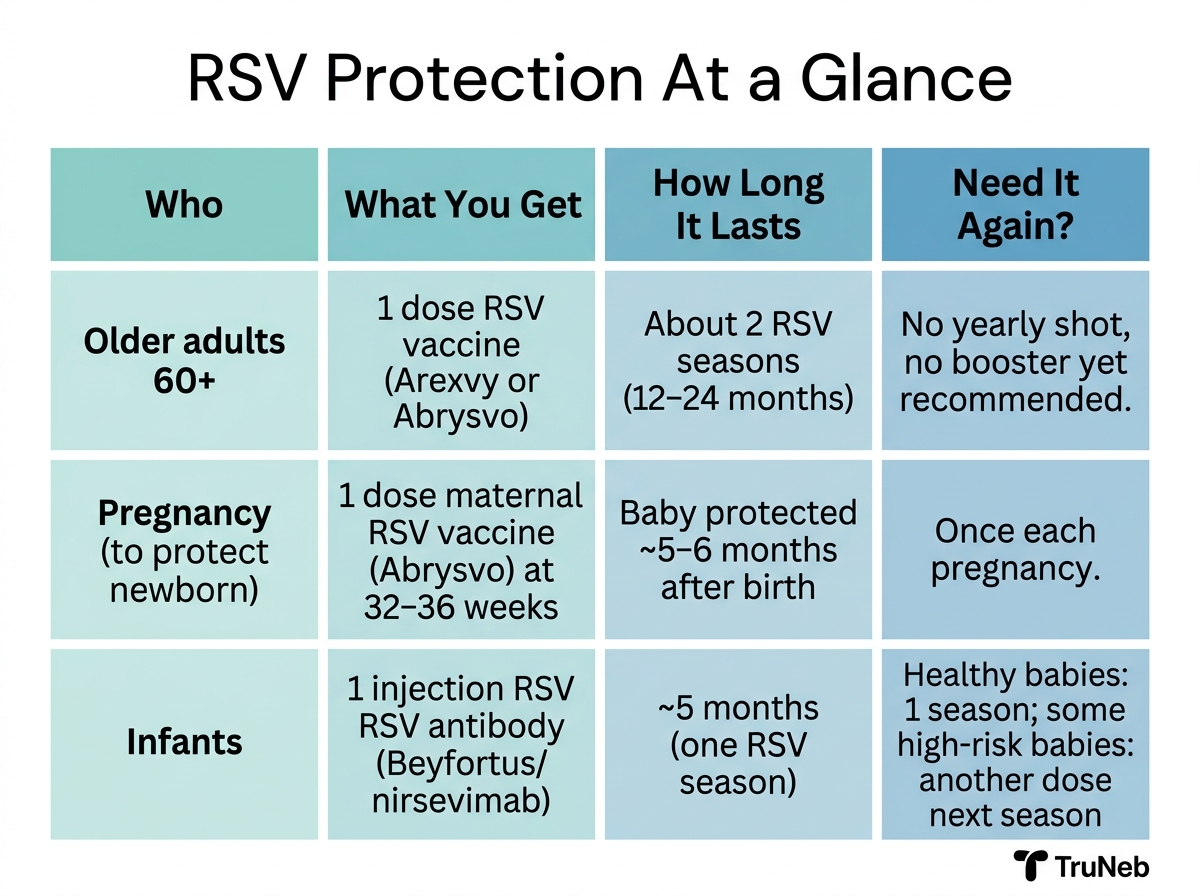
RSV Protection Comparison Chart – Adults, Pregnancy & Infants
This comparison chart summarizes how long RSV protection lasts for older adults, during pregnancy, and for infants, and whether another dose is usually needed.
RSV protection timelines for adults, pregnancy, and infants
| Who | What you receive | Duration of protection | RSV season coverage | Need it again? |
|---|---|---|---|---|
| Older adults 60+ | 1 dose RSV vaccine (Arexvy, Abrysvo, or Moderna vaccine) | About 12–24 months against severe RSV | Generally covers 2 RSV seasons | No yearly shot; no routine booster yet recommended |
| Pregnancy (to protect newborn) | 1 dose maternal RSV vaccine (Abrysvo) at 32–36 weeks | Baby protected about 5–6 months after birth | Covers baby’s first RSV season | Once each pregnancy, if recommended by your doctor |
| Infants | 1 injection RSV antibody (nirsevimab/Beyfortus) | About 5 months | Usually one RSV season | Healthy babies: 1 season; some high‑risk babies: dose again next season |
*Actual protection can vary by child or adult, overall health, and timing within the RSV season. Talk to your doctor or your baby’s pediatrician about what makes sense in your situation.
RSV protection lasts longest in vaccinated older adults and about one season in babies, whether protection comes from pregnancy vaccination or an infant antibody shot.
RSV Vaccines and Chronic Lung Conditions – Extra Protection & Care with TruNeb
If you live with a chronic lung condition, RSV can hit much harder.
People with asthma, COPD, emphysema, bronchiectasis, or other long‑term breathing problems have a higher risk of:
- Severe RSV infections
- Bronchiolitis and pneumonia
- Hospital stays and longer recovery times
That is why experts encourage RSV vaccination for older adults with lung disease. The shot helps lower your chance of ending up in the hospital if you do catch RSV, but it does not guarantee you will not get sick.
Vaccines help lower the risk of severe RSV illness. They do not replace the daily steps you and your doctor use to manage chronic lung disease.
At the same time, the RSV vaccine does not replace everyday lung care. You still need a clear plan for flare‑ups and winter viruses.
That plan can include using inhalers as prescribed, practicing airway clearance, staying active within your limits, and acting early if breathing suddenly worsens.
Many lung specialists also use nebulizer treatments to help thin and move mucus during infections. Doctors sometimes recommend nebulized saline or other inhaled treatments as part of a symptom plan.
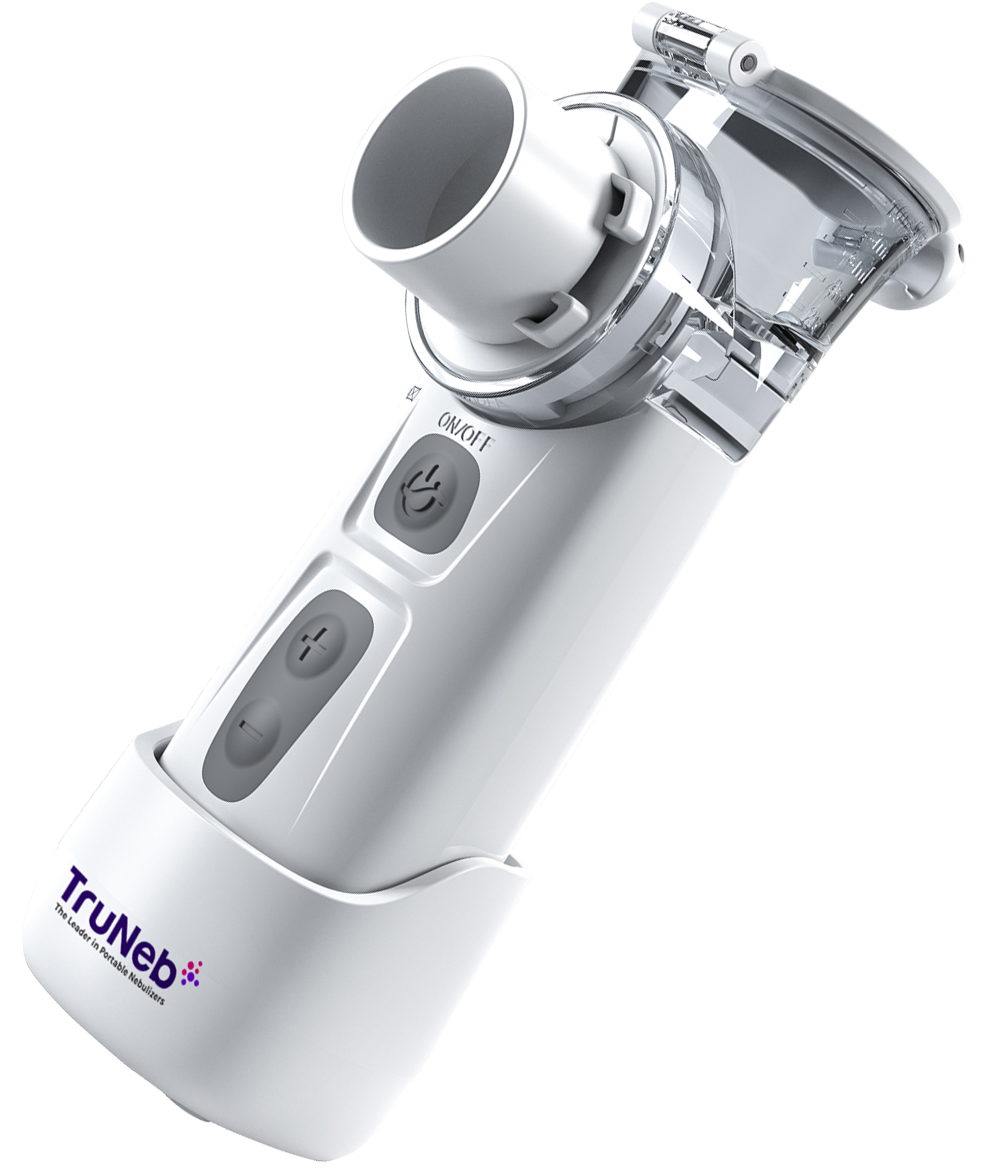
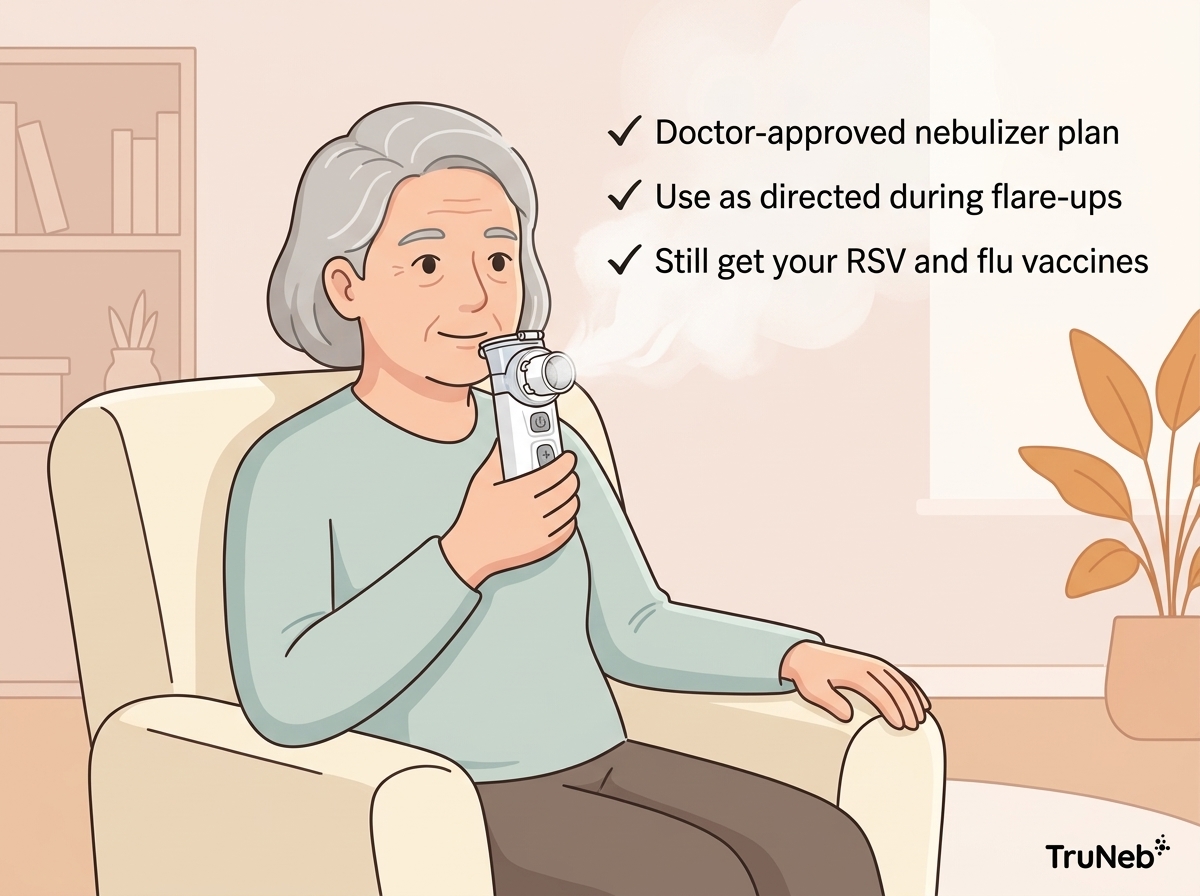
For people who already use nebulized treatments as part of their doctor’s plan, a portable mesh nebulizer like the TruNeb portable mesh nebulizer device can make it easier to take those medications or saline at home or while traveling.
Nebulized saline can help loosen thick mucus so it is easier to cough up, which may ease chest tightness and shortness of breath during a cold or RSV infection. Some people also ask about comparing devices, and the brand’s portable vs jet nebulizer comparison can help explain how these systems differ.
A portable nebulizer is not a vaccine and does not prevent RSV. It is one tool that can support symptom management in some people when used under a doctor’s guidance.
Talk to your doctor about when to get the RSV vaccine if you have chronic lung disease, which breathing treatments to keep on hand at home, and how and when to use a nebulizer like TruNeb during flare‑ups. You can also review the company’s portable nebulizer features overview if you are trying to understand how a mesh device is designed for everyday use.
Always follow your doctor’s instructions for medications, saline strengths, and how often to use treatments. If your clinician recommends saline, products such as 3% hypertonic saline solution or 7% hypertonic saline solution may be part of that broader plan.
⚠️ Seek emergency care right away if you have severe shortness of breath, blue or gray lips or face, chest pain, confusion, or trouble staying awake.
For people with chronic lung disease, the RSV vaccine lowers the risk of severe illness, but it does not replace a doctor-approved plan for managing flare-ups. If you already own a device, following the brand’s nebulizer cleaning instructions can also help support safe routine use.
Frequently Asked Questions about RSV Vaccine Duration and Booster Needs
These quick answers cover the most common questions about RSV vaccine timing, boosters, and how long protection lasts.
Tap or click a question below to see the answer:
No. The RSV vaccine for older adults is not an annual shot right now. The CDC says protection lasts more than one year and is expected to cover at least one full RSV season, and often two. Because of that, there is no recommendation to get an RSV shot every single year the way you do with the flu shot.
Your immune system starts responding right away, but it takes about two weeks to build full protection, similar to other vaccines. That is why doctors suggest getting your RSV shot before RSV activity picks up in the fall, so you are fully protected by the time the season peaks.
If you were vaccinated last RSV season, current evidence suggests you should still have protection this season, especially against severe disease. CDC guidance does not call for an annual RSV booster at this time, and one dose is expected to cover at least two RSV seasons for adults 60 and older.
Natural immunity to RSV tends to be short-lived. People can get RSV again within a year or two, and older adults can sometimes get it in the same season. A past infection might make a later case milder, but it does not appear to protect you as well or as long as vaccination against severe disease.
RSV vaccines were tested in large trials of older adults and are considered safe for most people. The most common side effects are mild, such as a sore arm, tiredness, or headache that clear in a day or two. A small number of Guillain-Barré syndrome (GBS) cases were reported, and health agencies continue to monitor this closely. Current guidance still supports vaccination for eligible adults based on the balance of benefits and risks. Always discuss your personal risks and benefits with your doctor before getting vaccinated.
In the first RSV season after vaccination, the new RSV vaccines reduced the risk of severe RSV illness and hospitalization by about 80–90% in adults 60 and older in clinical trials. Protection stays helpful but somewhat lower in the second season. You might still catch RSV, but your chances of ending up in the hospital are much lower than if you were unvaccinated.
Disclaimer: This article is for informational purposes only and is not a substitute for medical advice, diagnosis, or treatment. Talk to your doctor about vaccines, medications, and any breathing symptoms.
Key point: RSV vaccines can greatly lower your risk of severe illness, but they are not perfect. Keep up with your other vaccines, manage chronic conditions carefully, and talk to your doctor before trying any new medication or treatment.